2027 Can You Get Into a Communication Disorders Degree Master's Program with a Low GPA? Admission Chances & Workarounds

Co-Founder and Chief Data Scientist
A low undergraduate GPA can make communication disorders graduate admissions harder, but it does not automatically end your path to a master's degree. The real question is whether you can show programs that your earlier grades do not reflect your current readiness for graduate-level coursework, clinical training, and professional responsibility.
Most communication disorders and speech-language pathology master's programs are selective because they must prepare students for demanding clinical work and, in many cases, future licensure or certification requirements. A GPA below the typical cutoff may limit your options, but applicants can sometimes strengthen their case through recent coursework, relevant work experience, strong recommendations, certifications, a clear statement of purpose, or conditional admission pathways.
This guide explains how programs commonly evaluate low-GPA applicants, what strategies can improve your chances, and when alternatives such as post-baccalaureate study, online programs, or related graduate fields may be worth considering.
Key Things to Know About Getting Into a Communication Disorders Master's Program with a Low GPA
- Admissions committees assess applicants holistically, valuing relevant clinical experience, strong recommendation letters, and personal statements that demonstrate commitment despite a low GPA.
- Complementing a low GPA with post-baccalaureate coursework or relevant certifications can significantly improve admission chances by evidencing academic improvement and dedication.
- Networking with faculty and gaining hands-on experience through internships or volunteer roles in communication disorders fields enhances practical skills and application strength.
What Is the Minimum GPA for Communication Disorders Master's Programs?
Many communication disorders master's programs list a minimum undergraduate GPA near 3.0 on a 4.0 scale. That threshold is often used as an initial screening standard, not as a guarantee of admission. A 2022 survey found that 78% of communication disorders graduate programs require a minimum GPA of 3.0 for consideration, which means applicants below that mark may need to search more carefully and build a stronger supporting application.
The minimum GPA is also different from the GPA profile of admitted students. Even when a program states a 3.0 minimum, the average GPA of admitted students is often higher, typically 3.3 or above. In practical terms, a 3.0 may make you eligible to apply, while a stronger record in recent or upper-level coursework may be needed to compete.
If your GPA is below the stated minimum, read the admissions page closely before applying. Some programs calculate the GPA from all undergraduate coursework, while others may focus on the last credits earned, major courses, prerequisite courses, or post-baccalaureate work. If the policy is unclear, contact admissions and ask whether applicants below the minimum are reviewed, whether exceptions are possible, and what evidence the committee considers most persuasive.
Applicants who are not ready to apply competitively may also compare adjacent graduate pathways, including MSW programs, especially if their broader goal is to work in human services, healthcare support, schools, or community-based settings.
How Do Graduate Schools Evaluate a Low Undergraduate GPA?
Graduate schools use GPA as evidence of academic readiness, but many do not evaluate it in isolation. For communication disorders master's applicants, committees often look for signs that the applicant can handle science-based coursework, clinical expectations, writing-intensive assignments, and sustained professional preparation.
A low GPA is most damaging when it appears recent, unexplained, or connected to weak performance in prerequisite courses. It is less damaging when the applicant can show a clear academic rebound, strong grades in relevant courses, and credible evidence of maturity and commitment.
- Grade trends: An upward trend can matter more than the cumulative number alone. Strong recent grades suggest that you are better prepared now than you were earlier in college.
- Prerequisite performance: Programs may pay close attention to courses related to speech, language, hearing, anatomy, physiology, psychology, linguistics, statistics, or research methods.
- Relevant experience: Work or volunteer experience in schools, clinics, hospitals, rehabilitation settings, early intervention programs, or disability services can show that you understand the field beyond the classroom.
- Letters of recommendation: Strong letters should do more than describe you as hardworking. The best recommendations give specific evidence of your academic ability, professionalism, communication skills, and readiness for graduate study.
- Standardized test scores: Where required or accepted, test scores may provide another data point. They rarely erase a weak transcript, but they can support an argument that your academic potential is stronger than your GPA suggests.
- Personal statement: A strong statement briefly addresses the low GPA when necessary, then focuses on growth, preparation, clinical motivation, and fit with the program.
A common mistake is over-explaining poor grades without proving improvement. Admissions committees need evidence, not just context. If you mention personal, financial, health, or family challenges, connect that explanation to what changed and how your recent record shows readiness now.
Students comparing broader graduate options sometimes also research an accessible online master's degree, but communication disorders applicants should be especially careful to confirm accreditation, clinical placement expectations, and whether the program supports their intended professional licensure path.
Can Work Experience Compensate for a Low GPA in Communication Disorders Graduate Programs?
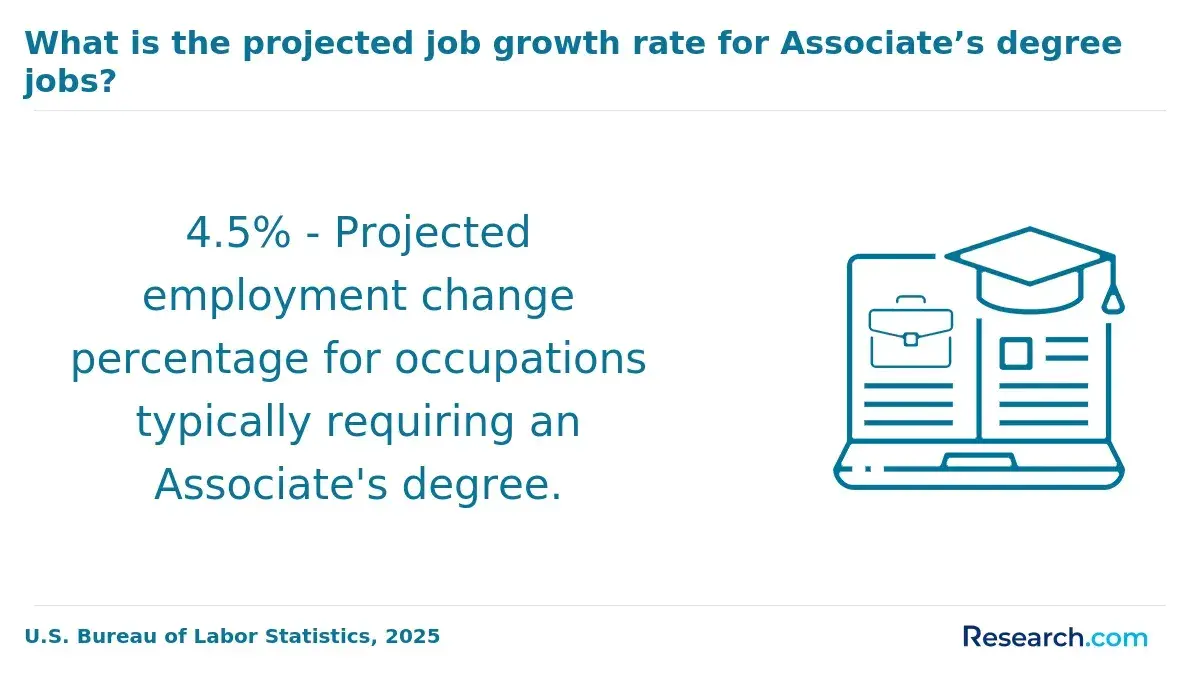
Relevant work experience can strengthen a low-GPA application, especially at programs that use holistic review. It does not usually replace required coursework or minimum GPA rules, but it can help an admissions committee see professional potential that the transcript alone does not show. Data shows that about 30% of candidates with GPAs under 3.0 are admitted when they present meaningful related work experience.
The most useful experience is connected to communication, disability services, education, healthcare, child development, aging, rehabilitation, or client support. Admissions committees are more likely to value experience when you can explain what you learned and how it prepared you for graduate-level clinical training.
- Direct client or patient exposure: Experience with children, adults, older adults, or people with communication, swallowing, hearing, developmental, or learning needs can show practical readiness.
- Professional maturity: Consistent employment or volunteer service can demonstrate reliability, judgment, time management, and ethical awareness.
- Field awareness: Work in clinics, schools, therapy offices, hospitals, community programs, or special education settings can help prove that you understand the daily realities of the profession.
- Communication skills: Roles requiring documentation, teamwork, family interaction, or client support can highlight skills central to communication disorders practice.
- Leadership and initiative: Training peers, coordinating services, managing projects, or taking on added responsibility can show growth beyond entry-level participation.
One communication disorders master's graduate described his path as anything but straightforward. "My undergraduate GPA was far from competitive," he recalled, "but I immersed myself in patient care roles. It was tough balancing jobs and applications, and I often worried applications would be dismissed because of my grades."
He said the turning point was documenting his responsibilities clearly and choosing recommenders who had seen his growth firsthand. "I focused on telling my story through recommendations and practical examples rather than numbers. That approach turned out to be the key."
For low-GPA applicants, the lesson is practical: do not simply list job titles. Show what you did, who you served, what skills you developed, and why that experience makes you a stronger graduate candidate now.
Do Certifications Improve Admission Chances for Low GPA Applicants?
Certifications can help low-GPA applicants, but only when they are relevant and credible. Research shows that over 40% of graduate admissions officers view relevant certifications as a positive factor for candidates with borderline academic records. A certification can signal commitment, recent learning, and practical exposure, especially when your transcript needs additional context.
Certifications are most useful when they support the work you plan to do in communication disorders or related clinical, educational, or support settings. They may strengthen an application by showing that you have taken concrete steps to build field-related skills, but they do not erase missing prerequisites or override firm GPA cutoffs.
- Choose field-aligned credentials: Prioritize certifications connected to healthcare, child development, behavioral support, special education, disability services, language development, or patient care rather than unrelated credentials.
- Use certifications as evidence, not decoration: Explain how the training changed your skills, prepared you for graduate work, or improved your ability to serve clients.
- Pair certifications with experience: A credential is stronger when you have applied it in a real setting, such as a school, clinic, care facility, or community organization.
- Avoid relying on certificates alone: Admissions committees still need to see academic readiness through grades, coursework, writing, recommendations, or other evidence.
Applicants considering flexible learning options should distinguish between a short certificate, a prerequisite sequence, and a full degree program. Each serves a different purpose. A certificate may add professional context, while additional graded coursework may do more to address academic concerns directly.
Students exploring flexible alternatives in other fields may come across options such as the cheapest online business management degree, but communication disorders applicants should choose supplemental credentials based on relevance to clinical preparation, not convenience alone.
Can Taking Additional Undergraduate Courses Raise Your Admission Chances?
Yes. Additional undergraduate coursework is one of the clearest ways to show academic improvement after a low GPA. A report from the Council of Graduate Schools found that over 40% of enrolled graduate students with initially low undergraduate GPAs improved their academic standing through post-baccalaureate or continuing education coursework.
This strategy works best when the new courses are recent, rigorous, relevant, and completed with strong grades. Random easy courses are less persuasive than targeted coursework that proves you can succeed in subjects related to communication disorders.
- Grade replacement policies: Some institutions allow new grades to replace lower grades in GPA calculations. Others count all attempts. Before enrolling, ask how repeated courses will appear on your transcript and how graduate programs may evaluate them.
- Upper-level coursework: Advanced undergraduate classes usually carry more weight than general education courses because they better approximate graduate-level expectations.
- Subject relevance: Courses connected to communication disorders, linguistics, audiology, psychology, anatomy, physiology, statistics, research methods, or human development may strengthen your academic profile.
- Recent performance: Strong grades earned after graduation can show current readiness, especially if your low GPA reflects earlier academic difficulties.
Before taking extra courses, compare the cost and time commitment with the likely benefit. If you are missing prerequisites, the decision may be straightforward. If you already meet prerequisites but need to repair your academic record, ask prospective programs whether they value post-baccalaureate or non-degree coursework and whether they recalculate GPA using recent credits.
Applicants who want a broader foundation in human behavior and development may also consider an online degree in psychology, though a full additional degree is usually a larger commitment than targeted prerequisite or post-baccalaureate coursework.
What Is Conditional Admission for Communication Disorders Master's Programs?
Conditional admission is a provisional acceptance pathway for applicants who show promise but do not fully meet a program's standard admissions profile. In communication disorders master's programs, conditional admission may be used for applicants with a lower GPA, missing prerequisites, or a record that requires closer academic monitoring. Nearly 30% of graduate programs in communication disorders provide some type of conditional or provisional admission.
Conditional admission is not the same as regular admission. It gives students a chance to prove they can succeed, but it also comes with specific requirements and consequences if those requirements are not met.
- Academic performance requirements: Students must usually maintain a minimum GPA, commonly above 3.0, during the initial term or review period.
- Required coursework: Programs may require foundational or prerequisite courses before the student can continue into advanced coursework or clinical training.
- Time limits: Conditional status is typically limited to one or two semesters before the program reviews whether the student can continue.
- Progress evaluation: Faculty may evaluate grades, assignments, exams, professionalism, clinical readiness, and participation before granting full status.
Applicants should ask direct questions before accepting a conditional offer. Find out what grades are required, whether financial aid applies during conditional status, whether clinical placements are delayed, and what happens if you do not meet the conditions. This pathway can be valuable, but only if you understand the rules in writing.
Are Online Communication Disorders Master's Programs Easier to Get Into with a Low GPA?
Online communication disorders master's programs are not automatically easier to enter, but some may offer more flexibility in review policies, scheduling, or applicant backgrounds. Admissions standards still depend on the school, accreditation status, clinical placement model, faculty capacity, and competitiveness of the applicant pool. While some online programs report acceptance rates near 40%, this is generally higher than the 20-30% rates often seen in traditional on-campus programs.
A low GPA still matters. Online programs that prepare students for clinical practice must ensure students can complete rigorous coursework and supervised field experiences. If your goal is speech-language pathology licensure or certification, confirm that the program's accreditation and clinical requirements match your state and career plans. Applicants comparing flexible options may also want to review fully online slp master's programs while checking whether any required clinical placements, intensives, or campus visits apply.
- Admission standards: Some online programs enforce firm GPA minimums, while others may consider experience, recent coursework, recommendations, or conditional admission.
- Program selectivity: Highly recognized online programs can be just as competitive as campus programs and may attract applicants from a wider geographic area.
- Applicant pool size: Online delivery can expand access, but it can also increase competition because students are not limited by location.
- Clinical placement requirements: Online coursework does not remove the need for supervised clinical training. Ask how placements are arranged and whether low-GPA applicants receive the same placement support.
- Fit for working students: Online study may help applicants with professional experience continue working, but graduate clinical programs still require substantial time and scheduling flexibility.
One student admitted to an online communication disorders master's program with a low GPA said strategic school selection mattered as much as persistence. She focused on programs with holistic admissions language, then used her statement of purpose to connect volunteer experience with her long-term professional goals. "I realized programs value dedication and real-world experience," she explained.
Her experience is a useful reminder: online format may expand your options, but it does not remove the need for a focused, evidence-based application.
Can a High GRE Score Offset a Low GPA for Communication Disorders Master's Programs?
A high GRE score can support a low-GPA application when a program requires or accepts the exam, but it rarely offsets the GPA by itself. GRE results may help demonstrate reading, reasoning, writing, and analytical ability, especially if your transcript is uneven. Data from GRE testing services indicate that admitted students typically have an average verbal score above 150.
The value of a GRE score depends on the program's policy. Some programs weigh it meaningfully, some treat it as optional, and others may not require it. Before investing time and money in test preparation, confirm whether your target programs accept scores and whether strong results can help applicants with lower GPAs.
- Verbal score: A strong verbal score can support your readiness for reading-heavy coursework, clinical documentation, research interpretation, and graduate writing.
- Quantitative score: A strong quantitative score can help show comfort with data, research methods, statistics, and analytical problem-solving.
- Analytical writing: A solid writing score can reinforce your ability to organize arguments and communicate clearly in graduate-level assignments.
- Balanced performance: A strong overall profile is more persuasive than one high subsection paired with weak supporting evidence elsewhere.
If your GRE score is strong, connect it to the rest of your application. Pair it with recent academic success, relevant experience, and recommendations that confirm your readiness. If your score is average or not required, focus your energy on higher-impact improvements such as prerequisite grades, post-baccalaureate coursework, clinical exposure, and a stronger statement of purpose.
What Is a Post-Baccalaureate Program for Low-GPA Students?
A post-baccalaureate program is coursework taken after earning a bachelor's degree, often to complete prerequisites, improve academic readiness, or strengthen a graduate school application. For low-GPA communication disorders applicants, it can provide a structured way to show that past grades are not the best measure of current ability.
Post-baccalaureate study can be formal, such as a defined certificate or prerequisite track, or informal, such as taking selected undergraduate courses as a non-degree student. The best option depends on what your transcript lacks and what your target programs expect.
- Academic enhancement: Retaking or adding relevant coursework can show improved study habits, discipline, and readiness for graduate-level material.
- Prerequisite completion: Applicants from other majors may need required courses before they are eligible for a communication disorders master's program.
- Research opportunities: Some programs may offer exposure to research, which can strengthen an application and clarify academic interests.
- Graduate preparation: Post-baccalaureate study can help rebuild skills in academic writing, scientific reading, analysis, and test preparation.
Post-baccalaureate coursework is most effective when you earn strong grades and can explain the purpose of the plan. Before enrolling, ask target graduate programs whether they prefer a formal post-baccalaureate program, a second bachelor's pathway, or selected prerequisite courses. Also ask how they calculate GPA after post-baccalaureate study.
Students who need flexibility may compare options through the best online schools, but they should verify that any coursework will be accepted by their intended communication disorders graduate programs.
For many low-GPA applicants, post-baccalaureate study is not a quick fix. It is a deliberate way to create new academic evidence, meet prerequisites, and enter the next admissions cycle with a stronger record.
Does GPA Impact Starting Salary After a Communication Disorders Master's Degree?
Undergraduate GPA may affect early opportunities in limited ways, but after completing a communication disorders master's degree, employers typically care more about graduate preparation, clinical competence, supervised experience, certifications, licensure eligibility, and fit for the role. Research shows that graduates with GPAs under 3.0 typically start with salaries around $45,000 to $50,000, while those above 3.5 often begin closer to $52,000 to $57,000.
That difference suggests GPA can be part of the early-career picture, but it is not usually the main salary driver once a candidate has completed graduate training. Pay may vary by employer type, location, setting, credentials, and prior experience.
- Employer priorities: Employers focused on clinical performance may place less weight on undergraduate GPA than on demonstrated skills and readiness.
- Graduate credential: The master's degree itself usually matters more than undergraduate grades when applying for communication disorders roles.
- Clinical experience: Internships, practicums, supervised hours, and strong placement evaluations can influence hiring and early salary discussions.
- Licensure and certification readiness: Employers may prioritize whether a graduate is eligible to move through required professional steps for the role.
- Work setting: Schools, clinics, hospitals, rehabilitation centers, private practices, and community organizations may evaluate compensation differently.
For applicants worried about a low undergraduate GPA, the more important long-term question is whether they can enter and complete a program that leads to their intended career path. Once in graduate school, strong clinical performance and professional development can matter more than the undergraduate number that once limited admission options.
What Graduates Say About Getting Into a Communication Disorders Degree Master's With a Low GPA
- : "Getting into a communication disorders master's program with a low GPA felt daunting at first, but Iker found that persistence and showcasing relevant volunteer experience made a huge difference. The cost was manageable thanks to scholarships geared toward students in health-related fields, which really eased my financial stress. Now, I'm proud to say this degree has opened doors to meaningful work as a speech-language pathologist. — Iker"
- : "While a low GPA initially seemed like a barrier, many programs value practical skills and passion equally, which gave me hope. The competitive nature of communication disorders degrees means you have to really stand out in other areas, such as clinical hours or personal statements. Investing in this degree has been transformative for my career advancement, allowing me to advocate effectively for those with speech and language challenges. — Hayden"
- : "From a professional standpoint, the communication disorders master's degree required careful balancing of finances, especially given the program's tuition rates. Although my undergraduate GPA was less than ideal, addressing it head-on in my application and focusing on my clinical experience significantly helped. This degree truly propelled me into roles where I can impact lives directly, making every challenge worth it. — Alexis"
Other Things You Should Know About Communication Disorders Degrees
In 2027, admissions committees for communication disorders programs value factors beyond GPA, such as relevant work or volunteer experience, strong recommendation letters, a compelling personal statement, and demonstrated passion for the field. These elements can showcase an applicant's potential and dedication.
The personal statement is a critical component for applicants with a low GPA as it allows candidates to explain academic challenges and demonstrate resilience and motivation. A well-crafted statement that outlines clear career goals and passion for communication disorders can positively influence admission decisions.
Establishing contact with faculty or program directors can benefit low GPA applicants by providing insights into the program and showing genuine interest. Such networking may also offer opportunities to discuss individual circumstances, potentially yielding personalized advice or consideration.
Students with a low GPA can enhance their qualifications by gaining relevant work experience, obtaining strong letters of recommendation, completing additional coursework to improve their GPA, or excelling in GRE scores. Some programs may also offer provisional acceptance or bridge programs specifically designed to prepare underqualified students for admission.
References
- Post-Baccalaureate Certificate in Communication Sciences and Disorders College of Health and Behavioral Sciences https://www.chapman.edu/crean/academic-programs/postbac-comm-science-disorders.aspx
- Admission to the SLP Master's Program https://www.gvsu.edu/csd/admission-to-the-slp-masters-program-2.htm
- Welcome to Governors State University in Chicago's Southland https://www.govst.edu/DRMHSCD/
- Speech Department Admission Requirements https://www.xula.edu/mainacademics/collegeprogram/departmentprogram/department/department-of-speech-pathology/speech-department-admission-requirements.html
- Communication Disorders Post-Baccalaureate Program | Murray State University https://www.murraystate.edu/academics/CollegesDepartments/CollegeOfEducationandHumanServices/coehsacademicunits/centerforcommunicationdisorders/PostBaccalaureateProgram.aspx
- College of Health and Human Services https://www.utoledo.edu/hhs/speech/AdmissionsProceduresAdvisingFAQ.html
- Communication Disorders Graduate Application Process - School of Graduate and Professional Studies https://grad.southernct.edu/communication-disorders-graduate-application-process/
- University of Montevallo https://bulletin.montevallo.edu/preview_program.php
- Master of Science (MS) in Speech-Language Pathology Curriculum https://www.rushu.rush.edu/college-health-sciences/academic-programs/master-science-speech-language-pathology/master-science-speech-language-pathology-curriculum
- SLP Graduate Programs With High Acceptance Rates | 2026 https://www.speechpathologygraduateprograms.org/blog/slp-graduate-programs-high-acceptance-rates/