2027 Fastest Online Geosciences Bachelor's Degree Programs You Can Finish in 3 Years or Less

Co-Founder and Chief Data Scientist
Many prospective students face the challenge of advancing their careers quickly without compromising the quality of their education. This is especially true for those pursuing an online geosciences bachelor's degree, where time and cost efficiency are crucial. Recent data shows that accelerated online STEM degrees can reduce the typical four-year timeline by up to 25%, helping graduates enter the workforce faster. However, navigating program options, credit transfers, and employer perceptions can be complex. This article explores the fastest online geosciences bachelor's degree programs available, providing a detailed framework to help students complete their degree in three years or less while maintaining academic rigor and affordability.
Key Benefits of the Fastest Online Geosciences Bachelor's Degree Programs
- Fastest online geosciences bachelor's programs offer flexible scheduling, allowing working professionals to balance employment and study without compromising career commitments.
- Accelerated degree formats enable students to acquire essential industry skills faster, often through competency-based learning that emphasizes mastery over seat time.
- These programs provide access to global peer and faculty networks, enhancing professional connections and career opportunities in the evolving geosciences sector.
What Are the Fastest Online Geosciences Bachelor's Degree Programs You Can Complete in 3 Years or Less?
The fastest online geosciences bachelor's degree programs focus on accelerated course terms, year-round enrollment, and competency-based education that lets students complete degrees quickly by demonstrating mastery rather than logging traditional seat time. Typical accelerated terms range from 5 to 8 weeks, significantly shorter than the standard 15-week semester, enabling motivated learners to finish sooner. Year-round enrollment removes long breaks, allowing continuous progress. Programs that support transfer credits and competency models are ideal for those aiming to complete an accelerated online geosciences bachelor's degree in 3 years. Accredited programs currently enrolling students include:
- Oregon State University: Offers a 180-credit Bachelor of Science in Geology fully online, with rolling enrollment and accelerated courses. Tuition is about $31,000 for in-state and $46,000 for out-of-state students, with motivated students finishing in approximately 3 years.
- University of Idaho: Provides an online Bachelor of Science in Geological Sciences with 120 credits. Continuous enrollment facilitates completion in under 3 years, costing roughly $24,000 for residents and $36,000 for non-residents.
- Southern New Hampshire University: Features a Bachelor of Science in Environmental Science with geology electives using a competency-based format. This allows speeding through based on prior knowledge, with a total cost near $38,000 and completion possible in less than 3 years.
- Fort Hays State University: Delivers a Bachelor of Science in Geosciences through 8-week accelerated terms and multiple start dates. Transfer credits can reduce degree time to about 2 years and 9 months, at an estimated $21,000 tuition.
- Colorado State University Global: Offers a Bachelor of Science in Environmental Science online with geology courses, 6-week terms, and flexible pacing. The 120-credit degree costs around $30,000 and can be completed in 3 years or less.
Speed-to-completion varies widely depending on credit load per term, transfer credits accepted, and degree format. Applicants with prior college work or military experience may test out of foundational courses or apply previous credits toward their degree. These factors, combined with program flexibility, shape how quickly a student completes the fastest online geosciences bachelor's degree programs. For students balancing work or family, options like competency-based education can offer a manageable accelerated path. To supplement degree savings, exploring financial aid or certifications online in related fields can further enhance career prospects in the geosciences industry.
How Does an Accelerated Online Geosciences Bachelor's Degree Save You Money Compared to a Traditional 4-Year Program?
Choosing an accelerated online Geosciences bachelor's degree can substantially lower your overall education expenses compared to a traditional four-year program. According to the National Center for Education Statistics (NCES), the average annual tuition and fees for public institutions are around $10,560. Reducing your program length to three years means fewer semesters and less tuition paid. This also decreases recurring incidental costs since each semester adds fees such as technology charges, lab, and library expenses, which accumulate over time.
The financial benefits extend beyond tuition. The U.S. Bureau of Labor Statistics (BLS) reports median weekly earnings of about $1,305 for workers with a bachelor's degree, totaling nearly $67,860 annually. Graduating a year earlier allows you to enter the workforce sooner, capturing a full year's salary ahead of peers in four-year programs. This indirect saving can outweigh the extra effort required for accelerated study and adds significant value to fast-track online Geosciences programs.
Here is a simplified comparison for a representative online Geosciences program:
- 3-Year Program: $31,680 tuition + $1,500 additional fees = $33,180 total
- 4-Year Program: $42,240 tuition + $2,000 additional fees = $44,240 total
- Foregone Earnings Savings: Approximately $67,860 gained by working one year earlier
- Total Estimated Savings: $11,060 in direct costs plus $67,860 in foregone earnings = $78,920
- Lower Tuition Costs: Accelerated programs reduce the number of semesters, cutting total tuition payments proportional to the time saved.
- Reduced Fees and Charges: Each semester adds technology and incidental fees; fewer semesters mean lower cumulative expenses.
- Earlier Workforce Entry: Earning a bachelor's degree faster lets graduates start earning sooner, substantially improving financial returns.
- Opportunity Cost Savings: The financial gain from entering the job market earlier often surpasses the extra study intensity involved.
- Compounded Long-Term Gains: Starting a career earlier frequently accelerates cumulative earnings and professional advancement over time.
For those comparing accelerated degree options, reviewing financial aid availability and credit transfer strategies is essential. Many students leverage prior college credits or choose competency-based education formats to align with their schedules.
To explore more options for affordable graduate school programs that complement your undergraduate plans, visit affordable graduate school.
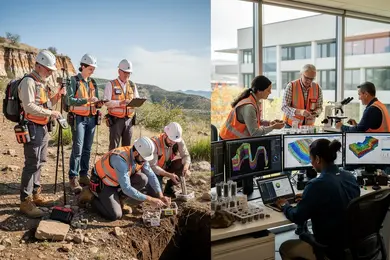
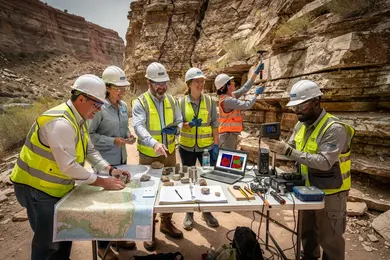
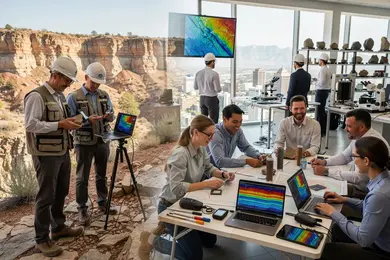
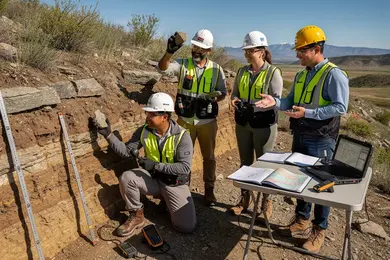
2026 Update: Fieldwork and Lab Requirements That Can Affect Your Timeline
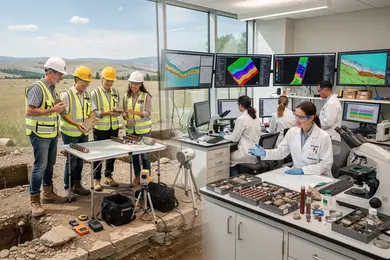
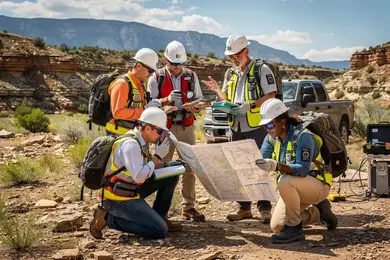
For 2026, this section was added to help students look beyond online course speed and check whether required geosciences labs, fieldwork, or hands-on projects could delay graduation.
- Whether lab courses are fully online, hybrid, or require campus visits.
- If fieldwork is offered every term or only during specific seasons.
- Whether local field experiences can be approved near your home.
- How long required field camps, intensives, or weekend sessions last.
- Whether work, travel, or family obligations fit the fieldwork schedule.
- If prerequisite science labs must be completed before advanced geosciences courses.
- How missed field or lab sessions are made up without extending your timeline.
Checking these requirements early helps you choose a fast online geosciences program that is realistic for your location, schedule, and goal of finishing in three years or less.
Which Accredited Online Colleges Offer the Cheapest Geosciences Bachelor's Degrees That Can Be Completed in Under 3 Years?
Finding affordable, accredited online colleges offering geosciences bachelor's degrees that can be completed in less than three years involves evaluating tuition costs, accreditation types, and accelerated formats. Regional accreditation generally holds more value for employers and credit transfers compared to programmatic accreditation, which focuses on specialized quality.
- Western Governors University: A competency-based model charging about $3,920 per term, regardless of credits, lets students accelerate by proving mastery. Typically, students finish in 2.5 to 3 years. WGU is regionally accredited by NWCCU, making its fast and cost-effective approach a strong contender.
- Fort Hays State University: This public university charges around $226 per credit hour, amounting to roughly $27,000 for 120 credits. Accredited by the Higher Learning Commission (HLC), Fort Hays supports a standard accelerated track allowing completion near 3 years with transfer credits and intensive course loads.
- Columbia Southern University: Tuition runs about $265 per credit. Regionally accredited by the Distance Education Accrediting Commission (DEAC), CSU's flexible online program enables motivated students to finish in three years or less, with options to reduce costs via prior learning assessments.
- National University: Featuring a flat-rate tuition of approximately $370 per quarter unit, students can take unlimited courses per term to speed completion below three years. Accredited by WASC Senior College and University Commission (WSCUC), this model encourages efficient pacing and cost control.
- American Public University System (APUS): Charging about $285 per credit for a total near $34,200, APUS is regionally accredited by the Higher Learning Commission. Its accelerated pacing with eight-week terms and generous transfer credit policies supports finishing between 2 to 3 years.
A professional who enrolled in some of the fastest online geosciences bachelor's degree programs shared that managing course loads alongside a full-time job was challenging but feasible due to flexible formats. He noted, "The ability to leverage prior credits and demonstrate competency saved both time and money." The flat-rate tuition helped him budget without surprise costs, and regional accreditation reassured him that his accelerated credential would be respected by employers and graduate programs. While the pace demanded discipline, the tailored approach made entering a new field within three years achievable and rewarding.
What Admissions Requirements Must You Meet for a Fast-Track Online Geosciences Bachelor's Program?
Admissions criteria for accelerated online geosciences bachelor's programs vary notably by institution. Competitive programs often require a minimum GPA between 2.5 and 3.0, though some waive this for applicants with relevant work experience or strong prerequisite coursework. Prerequisites usually include foundational math, chemistry, physics, or earth sciences; students may need to complete these before enrollment or demonstrate equivalency through testing or professional experience, especially in competency-based formats.
Standardized tests like the SAT or ACT are increasingly optional, with many programs serving transfer students or working adults choosing to waive them, contrasting with traditional universities that might still request these scores. Transfer credit policies for fast-track geosciences degrees should be reviewed carefully, as prior college credits can reduce time to degree completion.
More selective accelerated programs typically ask for portfolio submissions, letters of recommendation, and personal statements to assess motivation and background. Relevant experience in environmental science or natural resource management strengthens applications. Some programs also require background checks due to fieldwork or internships, with additional certifications such as GIS proficiency or OSHA training offering an advantage.
Applicants can enhance their prospects by completing prerequisite courses early and securing strong recommendations. For those evaluating program length and intensity, exploring 18 month MBA programs can offer insight into accelerated degree structures and timelines.
How Many Credit Hours Are Required to Finish an Online Geosciences Bachelor's Degree in 3 Years or Less?
Bachelor's degrees in the U.S. usually require about 120 credit hours. To complete an online geosciences degree in three years, students typically aim for around 40 credits annually, averaging 13 to 14 credits each semester, including summer sessions. This accelerated pace keeps learners on track to finish faster than the traditional four-year timeline while maintaining academic standards.
Transfer credits from previous college coursework, military training, and professional certifications can substantially lower the credits needed. Additionally, Prior Learning Assessments (PLAs) and College-Level Examination Program (CLEP) exams allow students to earn credits by demonstrating prior knowledge, further shortening degree duration. These options depend on individual school policies but often offer significant time and cost savings.
Competency-based education presents an alternative that focuses on students' demonstrated mastery instead of fixed credit hours. This flexibility can enable faster progress as learners move at their own pace, bypassing standard semester requirements.
A sample three-year plan might involve taking 14 credits in fall, 13 in spring, and 13 during summer terms yearly, creating a consistent, year-round study rhythm.
- Credit Hour Requirements: Approximately 120 credits are standard, with accelerated pathways targeting 40 credits per year for timely graduation.
- Transfer and PLA Credits: Utilizing previous academic, military, or exam credits can lessen course loads and reduce expenses.
- Competency-Based Models: Progression based on mastery rather than seat time lets motivated students complete degrees more swiftly.
- Sample Course Plan: A balanced distribution of credits-14 in fall, 13 in spring, and summer-maintains steady progress.
- Recent Trend: Over 60% of online undergraduates now employ transfer credits to expedite their degree paths, according to the National Center for Education Statistics.
A professional who completed an online geosciences degree in under three years reflected on the journey's challenges and rewards. "Balancing a full-time job while managing a heavier credit load was demanding, especially during summer terms," she explained. "However, leveraging my military experience for transfer credits and excelling in competency assessments made a huge difference. The intense schedule required discipline, but knowing I was moving closer to my career goals kept me motivated. Looking back, the ability to customize my pace through competency-based courses was invaluable-it allowed me to focus deeply on areas I needed to master without unnecessary waiting periods." Her experience highlights how careful planning and institutional flexibility can make accelerated degree completion a realistic and rewarding endeavor.
Can You Transfer Credits to Finish Your Online Geosciences Bachelor's Degree Faster - and How Does It Work?
Credit transfer policies can greatly accelerate earning an online Geosciences bachelor's degree by recognizing prior academic work. Universities typically require official transcripts, detailed course descriptions, and sometimes syllabi to evaluate how previous courses align with their degree requirements. This process ensures transferred credits fulfill either general education, major, or elective categories.
Credits from accredited institutions are the most common transfers, often covering foundational and some specialized courses. CLEP exam credits stem from standardized tests on specific subjects and may apply toward elective or introductory classes, though acceptance varies. AP credits, earned through high school exams, are less widely accepted for bachelor-level programs but still provide some advancement. Prior Learning Assessments (PLA) can convert work experience, military training, or certifications into academic credits, though this depends heavily on each institution's criteria.
Some online universities adopt flexible transfer policies, allowing up to 90 credits to be accepted. These generous allowances benefit students with substantial previous college experience, enabling degree completion in as little as two to three years. However, prospective students should be aware that transferring credits often leads to some loss; research shows an average of 13 semester credit hours is typically not transferred. Confirming the applicability of each credit before enrollment is essential to avoid unexpected delays.
- Transcript Evaluation Process: Institutions assess official transcripts and course materials to align former coursework with their academic standards and program needs, ensuring accurate credit application.
- CLEP and AP Credits: These standardized assessments provide alternative credit paths without classroom attendance, but their acceptance level, especially for advanced Geosciences topics, varies widely.
- Prior Learning Assessment: This option recognizes experiential learning and professional training by awarding college credits, subject to individual university policies and documentation requirements.
- Generous Transfer Policies: Certain schools accept large numbers of transfer credits, facilitating faster degree completion and reducing tuition expenses for well-qualified students.
- Credit Loss Awareness: On average, students lose about 13 semester credit hours during transfer; verifying credit transferability beforehand is crucial to maintaining an efficient academic timeline.
Recent data indicates over 70% of online degree students utilize transfer credits to shorten their educational journey, highlighting the importance of understanding credit acceptance policies when selecting a program.
What Financial Aid Options Are Available for Students Pursuing an Accelerated Online Geosciences Bachelor's Degree?
Students pursuing an accelerated online Geosciences bachelor's degree can access multiple financial aid options to support their education without accumulating excessive debt. Applying through the Free Application for Federal Student Aid (FAFSA) is the crucial first step; it determines eligibility for federal grants, loans, and work-study programs based on enrollment status and financial need.
- Federal Grants and Loans: Pell Grants provide non-repayable funds for eligible students, while subsidized federal loans offer low-interest borrowing. Work-study opportunities may be available, but students typically must be enrolled at least half-time, an important consideration for accelerated programs with compressed credit loads.
- Institutional and Merit-Based Scholarships: Many universities offer scholarships targeted at accelerated Geosciences students, rewarding strong academic achievement or relevant experience. These scholarships can reduce tuition costs but often require separate applications or maintaining a specified GPA.
- Discipline-Specific Grants: Grants from professional societies or government initiatives support STEM fields like Geosciences. Funding often targets research, internships, or fieldwork, supplementing federal and institutional aid effectively.
- Enrollment Intensity and Aid Eligibility: Full-time enrollment is generally required for maximum federal aid eligibility. Accelerated students should carefully plan course loads to maintain full-time status despite shortened semesters, as part-time status significantly reduces aid opportunities.
- Employer Tuition Reimbursement: Working students should explore employer tuition assistance programs as supplemental funding. It is essential to confirm if the employer's policy covers online or accelerated programs to avoid surprises.
According to the National Center for Education Statistics, over 40% of undergraduates enrolled in distance education courses received financial aid recently, highlighting the widespread support available to online learners.
How Does Competency-Based Education (CBE) Help You Finish an Online Geosciences Bachelor's Degree Faster?
Competency-based education (CBE) offers a flexible alternative to traditional credit-hour programs by allowing students to advance through a geosciences bachelor's degree by demonstrating mastery of subject matter rather than progressing based on time spent in class. This model is especially effective for students with prior knowledge or experience, enabling some to complete their degrees in as little as 12 to 18 months. Many accredited online universities providing CBE tracks in geosciences qualify for federal financial aid, making these programs both accessible and affordable.
These competency-based models emphasize learning outcomes and practical application, enabling students to fast-track familiar content and engage with real-world scenarios common in geosciences. However, success requires strong self-discipline since students must manage their own pace without fixed class schedules. While competency-based credentials may be less recognized by some employers, accreditation from reputable bodies ensures these degrees meet rigorous academic standards. Many CBE programs are designed with input from employers to align with workforce demands.
- Self-Paced Progress: Students can complete courses when ready, bypassing semester schedules, which benefits those with relevant prior knowledge or experience in geosciences.
- Mastery Over Time Spent: Advancement is based on demonstrated skills, not clock hours, allowing faster completion of subjects once competence is proven.
- Accreditation and Financial Aid: Accredited CBE programs typically qualify for federal loans and grants, supporting affordability without sacrificing quality.
- Discipline and Motivation Needed: Without structured class times, learners must be highly motivated and organized to avoid prolonging degree completion.
- Employer Perception: Graduates should be prepared to explain the value and rigor of competency-based education, as some employers may be less familiar with this credentialing approach.
For students eager to fast-track, understanding how competency based learning speeds up geosciences bachelor completion is crucial when comparing programs. Additionally, exploring benefits of competency based education for online geosciences degrees can reveal potential savings in time and costs. To explore affordability options in related fields, one might consider the cheapest online master's in human resources as a reference point.
What Is the Difference Between an Accelerated Online Geosciences Degree and a Degree-Completion Program?
An accelerated online geosciences degree compresses the traditional four-year curriculum into a shorter, intensive timeline, often by offering faster-paced or year-round courses. This format is ideal for traditional students with no prior college credits who want to complete their bachelor's degree in three years or less without interruptions. In contrast, a degree-completion program focuses on adult learners who have already accumulated 30 to 60 semester hours, such as an associate's degree, and helps them finish remaining requirements in one to two years. Degree-completion programs in geosciences leverage transferable credits and are designed for those who paused education and wish to re-enter quickly.
To determine the best pathway, consider this checklist:
- Existing College Credits: Degree-completion is suitable if you already have an associate's or significant college credits, saving time and tuition costs.
- Starting Fresh: Accelerated degrees serve students beginning their education, enabling a swift, condensed completion of all degree requirements.
- Career Timeline: Adults seeking to rejoin the workforce promptly benefit from degree-completion programs, while recent high school graduates may prefer accelerated formats for a faster start.
- Financial Constraints: Degree-completion often lowers total tuition due to fewer required credits; accelerated programs might increase workload intensity, affecting work-study balance.
- Flexibility and Support: Competency-based or asynchronous formats in some programs accommodate different schedules and learning styles.
Recent trends reveal a 15% enrollment growth in accelerated and degree-completion online geosciences programs among adult learners over the past five years. For those interested in related fields, exploring an online speech-language pathology prerequisites program can offer additional career pathways.
What Does a Typical Curriculum Look Like in a Fast-Track Online Geosciences Bachelor's Program?
Accelerated online Geosciences bachelor's programs compress the standard 16-week semesters into shorter 5 to 10-week terms, creating a brisk pace that demands significant weekly study hours. Students balance foundational general education courses with specialized subjects such as earth systems, mineralogy, environmental geology, and geographic information systems (GIS). Many curricula integrate capstone projects, internships, or practicum experiences, which require careful planning to complete within the condensed timeframe. Ensuring academic quality, accredited programs meet standards set by authoritative bodies like ABET or regional accreditors recognized by the U.S. Department of Education, paralleling on-campus offerings in rigor and content.
- Compressed Course Terms: Sessions lasting 5-10 weeks intensify study loads, requiring disciplined time management and consistent engagement for successful completion.
- Focused Curriculum Structure: Core general education is combined with concentrated geosciences classes, enabling a deep understanding of essential concepts within a shortened period.
- Experiential Learning Components: Capstones, internships, and practicum opportunities provide practical experience, essential for professional readiness and networking.
- Accreditation Assurance: Online degrees retain credibility through adherence to ABET or recognized regional accreditation standards, ensuring value to employers and graduate programs.
- Increased Enrollment Trends: Online accelerated degree programs in geosciences have experienced a 35% rise in enrollment over the past five years, reflecting growing demand for expedited education options.
How Does Employer Perception of an Accelerated Online Geosciences Bachelor's Degree Compare to a Traditional Campus Degree?
Recent surveys reveal an increasing number of employers accept online degrees from regionally accredited institutions as comparable to traditional degrees, regardless of an accelerated format. Accreditation remains the critical factor employers use to assess a geosciences bachelor's degree, emphasizing academic rigor over delivery method or program pace. Prospective students can verify a school's accreditation status using the Council for Higher Education Accreditation (CHEA) database, a reliable source for confirming the legitimacy of institutions and their programs. To boost an accelerated degree's credibility, students should pursue internships, professional certifications, curated portfolios, or accumulate relevant work experience during their studies. These elements showcase practical skills and dedication, improving employment readiness. However, some employers or industries may continue to prefer candidates with conventional campus degrees due to established preferences or perceived advantages. Individuals targeting those sectors should carefully research employer expectations before enrolling in accelerated online options.
- Accreditation Is Key: Employers prioritize regional accreditation as the benchmark for educational quality over whether a degree is earned online or through an accelerated program.
- Verification Resources: The CHEA database provides students and employers a trusted means to confirm institutional and program credibility.
- Building Professional Credibility: Internships, certifications, and portfolios supplement academic credentials with demonstrable skills and real-world experience.
- Industry-Specific Preferences: Some fields still favor traditional degrees, so understanding sector expectations helps align educational choices with career goals.
- Growing Employer Acceptance: Research indicates rising openness toward online and accelerated degrees, reflecting evolving standards in higher education and hiring practices.
What Graduates Say About Their Fast Online Geosciences Bachelor's Degree Program
- Ellie: "Choosing an online geosciences bachelor's degree was a game-changer for me because of the flexible schedule that allowed me to continue working full-time. The affordability compared to traditional programs eased my financial worries, making it easier to focus on the coursework. This degree opened doors to advanced roles in environmental consulting that I hadn't thought possible before."
- Quentin: "Reflecting on my journey, I appreciate how the online geosciences degree balanced rigorous academics with practical relevance. The cost-effectiveness was critical, as I was managing family expenses while studying. Professionally, earning this degree significantly boosted my credibility and enabled me to secure a promotion within the energy sector."
- Jace: "From a professional standpoint, the accelerated online geosciences bachelor's program was perfect to quickly build expertise and enter the field. The lower tuition fees compared to in-person options meant I could invest in other professional development resources simultaneously. This program directly impacted my career trajectory, landing me a position as a geospatial analyst less than a month after graduation."
Other Things You Should Know About Geosciences Degrees
Accelerated online Geosciences bachelor’s programs often use condensed semesters, year-round coursework, and intensive modules to facilitate quicker completion. Students typically enroll in more credits per term and utilize online resources for flexibility, enabling them to graduate within 3 years.
Online geosciences programs maintain quality education through accredited curricula, expert faculty, and virtual labs. They use interactive tools and resources to replicate real-world experiences, ensuring comprehensive training in geoscience principles and industry-relevant skills.
Completing a fast-track online Geosciences bachelor's degree by 2026 opens diverse career opportunities, such as environmental consultant, geologist, or GIS specialist. Some may also pursue advanced degrees in geosciences, enabling higher expertise and better career placement.
References
- Accelerated Degree Pros and Cons| University of Bridgeport https://www.bridgeport.edu/news/accelerated-degree-pros-and-cons/
- Guide to Competency Based Education in a University Setting https://online.uwa.edu/news/competency-based-education/
- Self-Paced Learning: What to Expect From a CBE Program https://www.umassglobal.edu/blog-news/self-paced-learning-expect-a-cbe-program
- Fast Track Your Future: How Accelerated Degrees Benefit Career Starters, Changers and Climbers - Beal University https://beal.edu/fast-track-your-future-how-accelerated-degrees-benefit-career-starters-changers-and-climbers/
- 5 Reasons Why You Should Earn Your Bachelor’s Degree Online https://www.pointloma.edu/resources/accelerated-undergraduate/5-reasons-why-you-should-earn-your-bachelors-degree-online
- How College Credit Transfer Really Works: A Practical Guide https://straighterline.com/blog/transfer-how-college-credit-transfer-really-works-a-practical-guide
- Can You Transfer Credits From a Completed Degree? https://www.edvisorly.com/student-guides/can-you-transfer-credits-from-a-completed-degree
- Master of Science in Applied Geosciences https://www.lps.upenn.edu/degree-programs/msag/master
- How College Credit Transfer Really Works: A Practical Guide https://www.straighterline.com/blog/transfer-how-college-credit-transfer-really-works-a-practical-guide
- Scholarships & Financial Aid https://geos.louisiana.edu/current-students/scholarships-financial-aid