
2027 How to Become a Paraeducator: Salary & Career Paths

Co-Founder and Chief Data Scientist
With over 1.3 million teaching assistants currently employed in the US, paraeducators play a crucial role in today’s classrooms. Yet, many aspiring educators struggle to understand what it takes to enter this profession, the qualifications needed, and how much they can expect to earn. Schools increasingly rely on paraeducators to support teachers, assist students with special needs, and create inclusive learning environments. However, requirements and career advancement opportunities can be confusing for those considering this path. This guide breaks down everything you need to know about becoming a paraeducator for 2027, helping you navigate the steps toward a fulfilling career in education.
Key Things You Should Know About Becoming a Paraeducator
- Many states require at least two years of college coursework, an associate’s degree, or passing a competency assessment, especially in Title I schools.
- Paraeducators support teachers, assist students with special needs, prepare learning materials, and help manage classroom activities.
- While paraeducators start in support roles, further education and certifications can lead to teaching, special education, or administrative positions.
- What education is needed to become a paraeducator?
- What does a paraeducator do in a classroom?
- What skills are the most in-demand for paraeducators for 2027?
- What is the job outlook for paraeducators?
- What is the average salary of a paraeducator for 2027?
- Which states pay paraeducators the highest salaries?
- What are the biggest challenges paraeducators face for 2027?
- Are advanced degrees beneficial for paraeducators?
- Can paraeducators find jobs in higher education institutions?
- How can paraeducators benefit from ongoing professional development?
- Can enhanced English language skills boost a paraeducator’s professional effectiveness?
- Can further education unlock leadership opportunities for paraeducators?
- What emerging trends are shaping the future of paraeducator roles?
- How can paraeducators integrate interdisciplinary approaches into their career growth?
- Are there job opportunities for paraeducators outside of schools?
- What career opportunities are available after working as a paraeducator?
- How can paraeducators leverage affordable online education to advance their careers?
What education is needed to become a paraeducator?
Most paraeducators working in public schools must meet specific education requirements before entering the profession. In many states, this means completing at least two years of college coursework or earning an associate’s degree in education or a related field. Schools participating in Title I programs, which serve students from low-income backgrounds, require paraeducators to meet one of three criteria:
- Hold a two-year college degree
- Complete two years of higher education coursework
- Pass a state or local assessment to demonstrate competency
Associate degree programs for paraeducators typically focus on developing educational materials, observing student progress, and working alongside classroom teachers. Some roles, particularly those supporting students with special needs, may require additional qualifications, such as passing a skills assessment or obtaining certifications in CPR and first aid. Those considering a career shift into education from other fields may find that some coursework, such as a tourism degree, includes transferable skills in communication and problem-solving that are valuable in a classroom setting.
For those looking for a fast-track into the profession, some 12-month certificate programs that pay well offer relevant training in child development and classroom management, helping aspiring paraeducators meet minimum job requirements quickly.
What does a paraeducator do in a classroom?
Paraeducators perform a variety of tasks that support teachers and enhance student learning. Their responsibilities vary based on the school, grade level, and student needs, but common duties include:
- Assisting with lesson delivery – Paraeducators help teachers implement lesson plans by working with small groups or individual students who need extra support.
- Providing one-on-one student support – Some paraeducators work closely with students who have learning disabilities or behavioral challenges, ensuring they stay on task and understand the material.
- Supervising classroom activities – They monitor student behavior, enforce classroom rules, and help maintain an organized learning environment.
- Aiding in special education settings – Many paraeducators assist students with Individualized Education Programs (IEPs), ensuring they receive the modifications and support outlined in their learning plans.
- Preparing learning materials – They help teachers set up instructional materials, grade assignments, and organize classroom resources.
- Supporting students with physical needs – In some cases, paraeducators assist with mobility, feeding, or hygiene for students with physical disabilities.
- Communicating with teachers and parents – They provide feedback on student progress, behavior, and challenges to help improve learning outcomes.
These responsibilities make paraeducators essential members of school communities, ensuring that students receive the personalized support they need to succeed. For those interested in upskilling, exploring accounting certificate programs can open doors to administrative roles in education.
What skills are the most in-demand for paraeducators for 2027?
Employers look for a combination of technical and interpersonal skills when hiring paraeducators. Based on recent job market data, the most in-demand skills for 2027 include:
- Managing Behavioral Issues – Paraeducators must handle classroom disruptions, de-escalate conflicts, and reinforce positive behavior strategies.
- Improving Student Performance – They track student progress, provide academic assistance, and support differentiated learning strategies.
- Supporting IEP Implementation – Special education paraeducators work with students who have Individualized Education Programs (IEPs), adapting lessons to meet their needs.
- Mathematics Assistance – Many paraeducators support students struggling with math concepts, particularly in elementary and middle school settings.
- Early Childhood Education – Working in kindergarten and preschool settings requires patience, creativity, and the ability to manage young learners.
- School Administration Support – Paraeducators often handle clerical tasks, such as attendance tracking and record-keeping.
- CPR and First Aid Certification – Many schools require paraeducators to be CPR-certified, especially those working with young children or special-needs students.
- Other Skills – These include direct supervision, classroom management, language arts instruction, and general education support.
The chart below displays the percentage of paraeducators who included these skills in their resumes.
What is the job outlook for paraeducators?
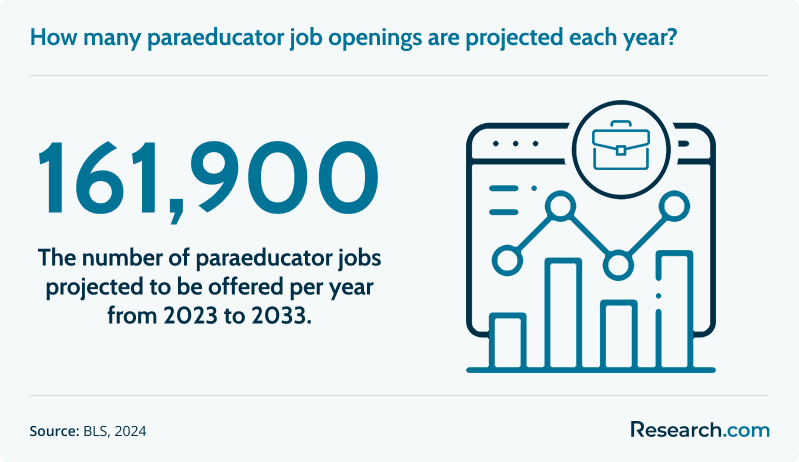
While overall employment for paraeducators is expected to decline by 1% between 2023 and 2033, job opportunities remain steady. The US Bureau of Labor Statistics (BLS) projects approximately 161,900 job openings each year due to retirements and career transitions. This means there will still be demand for paraeducators, particularly in special education and early childhood programs.
The availability of jobs often depends on school district budgets. During periods of financial strain, some schools may reduce paraeducator positions. However, when funding increases, districts typically reinvest in paraeducator roles to provide better student support. Additionally, accredited bookkeeping courses can help paraeducators develop financial management skills, making them valuable for administrative positions in schools.
For those passionate about working in education, paraeducator jobs remain a stable and rewarding option with opportunities for advancement into teaching or specialized support roles.
What is the average salary of a paraeducator for 2027?
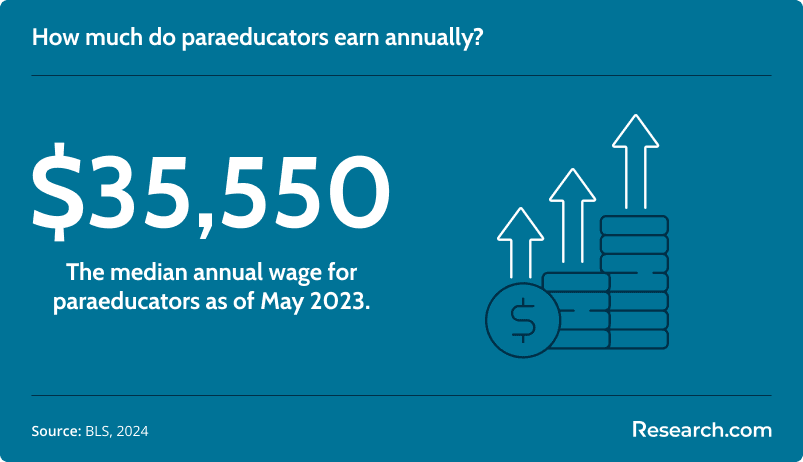
Salaries for paraeducators vary based on location, experience, and type of institution. As of May 2023, the median annual salary for paraeducators was $35,550. Wages differ across school types:
- Public elementary and secondary schools – $36,130
- Private elementary and secondary schools – $35,480
- Child daycare services – $31,060
While paraeducators may earn less than certified teachers, many receive benefits such as health insurance, retirement plans, and tuition assistance for further education. Those looking to advance their careers may consider earning affordable degrees, such as the cheapest online history master’s degree, which can open doors to teaching or administrative roles in education.
Which states pay paraeducators the highest salaries?
Paraeducator salaries vary by state, with some offering significantly higher wages due to the cost of living and demand for educational support staff. According to BLS, the highest-paying states for paraeducators as of 2023 were:
| State | Mean Annual Wage |
| Washington | $46,740 |
| California | $45,080 |
| District of Columbia | $44,720 |
| Massachusetts | $43,620 |
| Connecticut | $41,700 |
These states generally have higher education funding and strong union representation, which contribute to competitive wages. Additionally, paraeducators working in urban school districts or specialized education programs may earn higher salaries. Those interested in advancing their careers can explore graduate programs, such as a library science master's, to transition into school library management or instructional support roles.
What are the biggest challenges paraeducators face for 2027?
Despite the rewarding nature of the job, paraeducators encounter several challenges, including:
- Low Pay and Limited Benefits – Many paraeducators earn modest salaries, making it difficult to sustain a long-term career without additional income or benefits.
- High Workload and Responsibilities – Supporting multiple students, assisting teachers, and managing administrative tasks can be overwhelming, especially in understaffed schools.
- Student Behavior and Classroom Management – Working with students who have behavioral or learning difficulties requires patience, specialized skills, and emotional resilience.
- Limited Career Growth Without Further Education – While paraeducators play a crucial role in education, advancing to a teaching position typically requires additional degrees or certifications.
- Job Stability Concerns – School funding can directly impact paraeducator positions, with budget cuts sometimes leading to job losses or reduced hours.
Despite these challenges, many paraeducators find fulfillment in helping students succeed and use their experience as a stepping stone for further career opportunities in education.
Are advanced degrees beneficial for paraeducators?
Pursuing further education can provide paraeducators with the advanced theoretical and leadership skills needed to transition into higher-level roles. An advanced degree not only deepens subject-matter expertise but also enhances managerial and research competencies, opening doors to administrative positions and policy advisory roles within educational institutions. By obtaining specialized credentials or postgraduate qualifications, paraeducators can position themselves for career advancement that goes beyond classroom support. For example, enrolling in a doctor of education online program can offer a fast-track path to expanding their professional horizons, ensuring they remain competitive in an evolving education landscape.
Can paraeducators find jobs in higher education institutions?
Most paraeducators work in K-12 school settings, but some may find employment in higher education institutions, particularly in student support services. According to BLS, the majority of paraeducators are employed in the following:
While colleges and universities do not typically hire paraeducators in traditional classroom roles, they may employ academic support assistants, tutoring center staff, or disability services aides, which require similar skills. Paraeducators interested in working in higher education can gain a competitive edge by pursuing certifications or specialized training in student support services.
How can paraeducators benefit from ongoing professional development?
Paraeducators can enhance their career trajectories by engaging in targeted professional development opportunities. Accessing specialized workshops, certifications, and mentorship initiatives allows them to stay current with evolving educational practices and classroom technologies. Participation in professional associations and networking platforms fosters valuable connections and the exchange of innovative instructional strategies. Additionally, exploring online PhD programs organizational leadership can provide the advanced skills required for transitioning into leadership and administrative roles.
Can enhanced English language skills boost a paraeducator’s professional effectiveness?
Paraeducators who refine their command of the English language can improve instructional clarity, effectively mediate diverse classroom conversations, and support students’ literacy development. Strengthening communication skills can also aid in crafting clear correspondence with colleagues and parents, thus fostering a collaborative educational environment. For paraeducators seeking to advance their proficiency through accredited online programs, research options like the cheapest online English degree to build a robust foundation in language arts and communication.
Can further education unlock leadership opportunities for paraeducators?
Paraeducators can expand their professional scope by pursuing advanced degrees that focus on leadership, strategic planning, and policy development. Such credentials provide a structured framework for transitioning into administrative roles and amplifying their influence within educational settings. In addition to refining classroom expertise, targeted coursework and research initiatives build credibility and foster mentorship connections with established leaders in education. For those interested in advancing their careers through higher education, enrolling in affordable online EdD programs can be a strategic step toward unlocking leadership opportunities.
What emerging trends are shaping the future of paraeducator roles?
Emerging trends indicate that technological advancements and shifting educational paradigms are redefining the paraeducator role. Increasingly, paraeducators are integrating adaptive learning platforms and digital classroom tools to support personalized instruction. These developments also foster interdisciplinary collaboration, enabling educators to work across diverse settings and connect with nontraditional student support roles. In parallel, evolving job markets have created intersections with information management and research support, encouraging many to explore credentials such as a library science degree jobs. Staying current with these trends through continuous upskilling and industry engagement positions paraeducators to adapt and thrive in a dynamic educational landscape.
How can paraeducators integrate interdisciplinary approaches into their career growth?
Leveraging interdisciplinary approaches can broaden paraeducators’ expertise beyond traditional classroom support. Targeted certifications and specialized training in areas such as technology integration, behavioral sciences, or educational administration can enhance their adaptability and problem-solving skills. For instance, enrolling in an interdisciplinary studies degree program offers an integrated curriculum that combines diverse theoretical frameworks with practical applications. This multifaceted skill set positions paraeducators to navigate evolving educational practices, bridge gaps between different functional areas, and pursue niche roles that extend into administrative, technological, or student services domains.
Are there job opportunities for paraeducators outside of schools?
Paraeducators can apply their skills in various non-school settings, especially in roles that involve child development, instructional support, and special education services. Potential career paths include:
- Community Centers and Nonprofits – Organizations that focus on youth development, literacy programs, and educational outreach often hire paraeducators to support learning initiatives.
- Private Tutoring and Learning Support – Some paraeducators transition into private tutoring, offering specialized assistance for students who need extra help outside of school.
- Behavioral Therapy and Special Needs Support – Paraeducators with experience in IEPs and special education can work as behavioral aides, assisting children with autism and developmental delays.
Expanding into these areas allows paraeducators to leverage their experience while exploring alternative education and support roles beyond the traditional classroom setting.
What career opportunities are available after working as a paraeducator?
Many paraeducators use their experience as a stepping stone to higher-paying or more specialized roles in education and related fields. Career advancement opportunities include:
- Becoming a Certified Teacher – Earning a bachelor’s degree in education and obtaining state certification allows paraeducators to transition into full-time teaching positions.
- Special Education Support Roles – With additional training in special education, paraeducators can move into behavioral therapy, speech pathology assistance, or IEP coordination.
- School Administration and Support Services – Experience in classroom management and school operations can lead to roles such as academic advisors, instructional coordinators, or school office staff.
- Higher Education and Student Services – With a degree in education, psychology, or counseling, former paraeducators can work in college advising, tutoring centers, or student support services.
Those looking to advance their education may consider earning a teaching certification or enrolling in specialized degree programs, helping them transition into more advanced or leadership roles within the education sector.
What do paraeducators say about their career journey?
Starting as a paraeducator was my first step into education, and it completely changed my career path. I gained hands-on experience working with diverse students, which inspired me to pursue my teaching certification. Now, I’m on my way to becoming a special education teacher, and I couldn’t have done it without this role. The skills I’ve developed—classroom management, individualized instruction, and student advocacy—are invaluable. I feel more prepared than ever to lead my own classroom one day. Rose
Every day, I get to make a difference in students’ lives, especially those who need extra support. Seeing a struggling student finally grasp a concept or gain confidence is the most rewarding feeling. It’s not just a job—it’s a chance to be a mentor, motivator, and advocate. Some of my students still reach out years later to share their achievements, and knowing I played a small part in their journey is incredibly fulfilling. I never expected this role to be so life-changing, but it truly is. Carlos
Being a paraeducator isn’t always easy—the workload can be intense, and resources are sometimes limited. But despite the challenges, I love knowing that my support helps both teachers and students succeed. The relationships I’ve built in the classroom make every effort worthwhile. Even on the toughest days, a simple ‘thank you’ from a student or teacher reminds me why I chose this path. I may not be the lead teacher, but I know my role matters, and that’s what keeps me going. Mia
How can paraeducators leverage affordable online education to advance their careers?
Paraeducators seeking career growth can bolster their credentials and acquire essential skills through flexible online programs. Many professionals benefit from enrolling in reputable online bachelor’s degrees that offer comprehensive coursework tailored to modern educational practices. By engaging in these programs, paraeducators can update their pedagogical methods, enhance leadership competencies, and remain competitive for advanced roles within student support and administration. Pursuing affordable academic credentials, such as the cheapest online bachelor's degree in education, provides a cost-effective pathway to career advancement without disrupting their work schedule.
Key Findings
- Despite a 1% decline in employment from 2023 to 2033, about 161,900 paraeducator job openings are expected annually due to workforce transitions.
- As of May 2023, paraeducators earned a median salary of $35,550, with public school paraeducators earning slightly more ($36,130).
- Washington ($46,740), California ($45,080), and the District of Columbia ($44,720) offer the highest wages for paraeducators.
- The majority of paraeducators (71%) work in public elementary and secondary schools, followed by child daycare services (11%) and private schools (9%).
- Managing behavioral issues (9.6%), improving student performance (8.5%), and supporting IEP implementation (8.0%) are among the most sought-after skills for paraeducators.
References:
- BLS. (2024, April 3). Teaching Assistants, Except Postsecondary. BLS.
- BLS. (2024, August 29). Teacher assistants. BLS.
- Zippia. (2025, January 8). Para Educator Demographics and Statistics [2025]: Number of para educators in the US. Zippia.
- Zippia. (2025, January 8). Para Educator skills for your resume and career. Zippia.
Other Things You Should Know About Becoming a Paraeducator
In 2027, aspiring paraeducators typically need a high school diploma or equivalent. Some states or districts might require postsecondary coursework or an associate degree. Strong communication and interpersonal skills, as well as experience working with children, are highly beneficial for this role.
In 2027, paraeducators can enroll in training programs such as the ParaPro Assessment, which is required in many states, and specific workshops offered by school districts. These programs focus on instructional support, classroom management, and collaboration skills crucial for the role.


