
2027 How to Become a Physical Education Teacher in Maryland

Co-Founder and Chief Data Scientist
Maryland offers promising opportunities for aspiring physical education teachers, with the state’s schools investing in wellness and fitness programs to combat rising youth sedentary lifestyles. Data shows that Maryland employs over 2,500 physical education teachers, reflecting steady demand fueled by growing emphasis on student health. Pursuing this career in Maryland not only answers a crucial public health need but also provides stable employment and community impact.
This article, crafted by career planning specialists, explores the essential steps to becoming a certified physical education teacher in Maryland. It guides readers through requirements, certification pathways, and practical advice, empowering them to make informed decisions about their teaching careers in this vibrant state.
Key Things to Know About Becoming a Physical Education Teacher in Maryland
- Earn a bachelor’s degree with a focus on physical education or a related field from an accredited institution to meet Maryland’s teaching standards.
- Complete the Maryland State Department of Education-approved teacher preparation program including student teaching hours to gain practical classroom experience.
- Pass the Basic Skills and Praxis Subject Assessments required by Maryland to obtain a Professional Standard Certificate for physical education teaching.
- What are the education requirements to become a physical education teacher in Maryland? Educational Requirements
- What skills are essential for physical education teachers in Maryland? Skills
- Do PE teachers in Maryland need a teaching license? Do PE teachers in Maryland need a teaching license?
- How do you get certified as a PE teacher in Maryland? Certification
- Can out-of-state teachers transfer their license to Maryland for PE teaching? Can out-of-state teachers transfer their license to Maryland for PE teaching?
- How long does it take to become a PE teacher in Maryland? How long does it take to become a PE teacher in Maryland?
- How much does it cost to become a PE teacher in Maryland? Costs
- What career advancement opportunities are available for PE teachers in Maryland? What career advancement opportunities are available for PE teachers in Maryland?
- Are there scholarships for physical education teaching students in Maryland? Scholarships
- Is there demand for physical education teachers in Maryland? Is there demand for physical education teachers in Maryland?
- What is the average salary of a PE teacher in Maryland? Average Salary
What are the education requirements to become a physical education teacher in Maryland?
Formal education lays the foundation for physical education teachers to create dynamic, inclusive curricula that encourage lifelong physical activity and wellness in Maryland’s schools. With well-structured training, future educators gain the expertise to support diverse learners and address the evolving demands of teaching physical education.
Below is a clear outline of the education requirements for PE teacher in Maryland that aspiring educators typically need to fulfill.
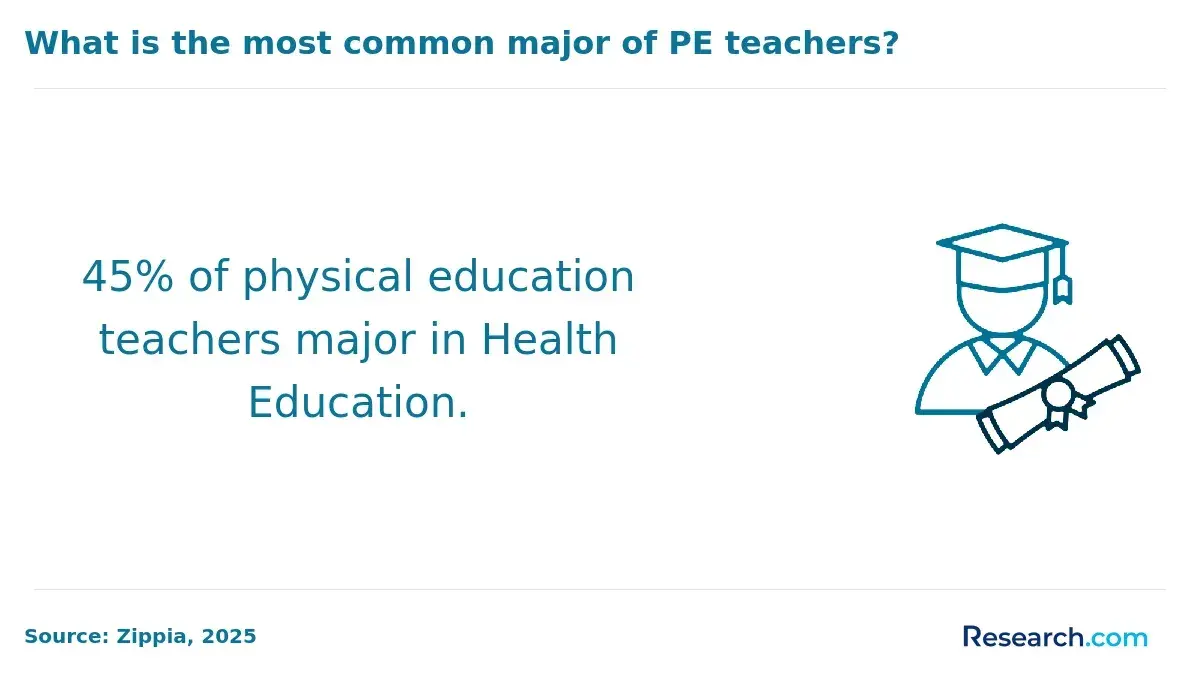
- Bachelor’s Degree in Physical Education or Related Field: Candidates must obtain a bachelor’s degree from an accredited institution, focusing on physical education, kinesiology, or similar fields like exercise science or health education. Programs often offer specialized tracks that blend theory and practice to prepare future teachers comprehensively.
- Completion of a State-Approved Teacher Preparation Program: A crucial step is completing a Maryland state-approved program combining coursework in pedagogy and physical education content with practical teaching internships in local schools. This step strengthens instructional skills while immersing candidates in real classroom environments.
- Required Coursework in Professional Education: Maryland physical education teacher degree requirements include completing a minimum of 21 semester hours in professional education. These courses cover human learning principles, inclusion strategies for special needs students, and methods for integrating reading instruction across subjects.
- Supervised Teaching Experience: Gaining hands-on experience is essential, requiring candidates to complete supervised teaching in their target grade levels or demonstrate at least one year of full-time teaching experience within Maryland public schools. This practice is vital for mastering classroom and behavior management specific to physical education.
For those considering various educational routes, consulting rankings of the best online bachelor's in education can provide valuable guidance on programs that align with these foundational requirements.
What skills are essential for physical education teachers in Maryland?
Success as a physical education teacher in Maryland hinges on a combination of skills that go beyond knowing sports and exercises. These abilities are critical for engaging students effectively, encouraging lifelong healthy habits, and managing diverse classroom environments with sensitivity and confidence. Excelling in this role means cultivating a strong foundation in interpersonal and instructional skills.
Below are some essential physical education teacher skills in Maryland to focus on.
- Communication Skills: Clear and effective communication is at the heart of teaching physical education. Maryland PE teachers must articulate rules, health concepts, and instructions in ways that resonate across different age groups and cultural backgrounds. This skill also plays a significant role in classroom management skills for Maryland PE teachers, as it fosters positive interactions with students, parents, and school staff.
- Leadership and Classroom Management: Leading active, often large groups of students requires a firm but encouraging approach. Physical education teachers in Maryland are expected to manage activities safely, maintain discipline, and inspire participation. Strong leadership ensures that classroom management skills for Maryland PE teachers translate into a productive, inclusive environment where all students feel motivated to improve their fitness and well-being.
- Adaptability and Inclusion: Reflecting Maryland’s commitment to inclusive education, physical educators must adapt lessons for students with diverse abilities and needs. This means tailoring activities, utilizing adaptive equipment, and incorporating multiple perspectives into the curriculum. Such adaptability ensures every student can engage meaningfully and benefit from physical education.
- Knowledge of Fitness, Health, and Pedagogy: Expertise in exercise physiology, motor skill development, and health-related fitness is essential. Teachers should be competent in various content areas like games, dance, and aquatics, applying evidence-based practices to create effective lessons. Staying current with research supports delivering instruction aligned with evolving educational standards.
For those considering this path, exploring what is the best online bachelors degree in special education can also provide valuable insight into the interdisciplinary knowledge beneficial to inclusive teaching strategies in Maryland schools.
Do PE teachers in Maryland need a teaching license?
Licensing ensures that physical education teachers in Maryland meet consistent standards that support quality instruction and positive student outcomes. It confirms that educators have the necessary knowledge, skills, and ethical preparation to promote healthy, active lifestyles among students.
In Maryland public schools, a state-issued teaching license is mandatory for physical education teachers. Obtaining this license typically requires a bachelor's degree in physical education or a related field, completion of a teacher preparation program, and passing the appropriate Praxis exams.
The certification process includes rigorous coursework in physical education content and professional education, along with supervised teaching experience in a Maryland public school.
Licenses come in tiered levels, such as Professional Eligibility and Advanced Professional Certificates, all of which require renewal every five years, including ongoing professional development and background checks. This structured pathway reflects the state's commitment to high standards and consistent quality for public school educators.
Private and charter schools in Maryland often adopt more flexible hiring criteria regarding licensure. While some private schools prefer or require state certification, others accept candidates with alternative qualifications—such as a bachelor’s degree without certification or specialized credentials like those from the American Montessori Society.
This flexibility can create a varied landscape of entry points for aspiring PE teachers, but may also result in less job stability and fewer benefits compared to public school roles. Consequently, those holding state licensure generally enjoy wider and more secure career opportunities, making certification a strategic advantage for long-term success in Maryland’s education sector.
How do you get certified as a PE teacher in Maryland?
Certification plays a vital role in equipping physical education teachers with the expertise needed to nurture student fitness and wellness throughout Maryland’s schools. This rigorous process helps ensure that educators are well-prepared to engage students and promote lifelong healthy habits in diverse classroom environments.
Below are the essential steps involved in becoming a certified physical education teacher in Maryland:
- Complete a Bachelor’s Degree in Physical Education or Related Field: This foundational step requires earning a degree in physical education, kinesiology, or a closely related area from an accredited institution. The coursework should cover anatomy, exercise science, and pedagogy, including a supervised student teaching experience approved by state authorities.
- Finish a State-Approved Teacher Preparation Program: Candidates must complete a program combining theoretical knowledge and hands-on teaching practice. Such programs often include studies on adolescent development, teaching methods, and diversity, capped by a full-time mentored internship in Maryland schools.
- Pass Required State Exams: Prospective teachers are required to pass the Praxis Core Academic Skills for Educators and the Praxis II Physical Education exams, which evaluate both essential academic skills and subject-specific expertise.
- Apply for Maryland PE Teaching Certificate: After meeting educational and testing standards, candidates submit their documentation to receive a Professional Eligibility Certificate valid for five years, qualifying them for employment in public schools.
- Explore Alternate Routes and Advanced Certification: For candidates lacking teacher preparation programs, alternative pathways such as post-baccalaureate or on-the-job training exist. Experienced teachers can pursue higher certification tiers through additional coursework and demonstrated teaching proficiency.
When I spoke with a PE teacher from Maryland who graduated from a local university, he shared how the certification journey was both challenging and rewarding. He recalled moments of uncertainty preparing for the Praxis exams, describing them as rigorous but fair measures of his readiness.
“The student teaching experience was eye-opening,” he said, emphasizing the value of hands-on practice under a mentor’s guidance to build real confidence. Navigating the paperwork and application process with MSDE initially felt overwhelming, but completing it made him feel officially recognized and motivated.
Reflecting on his journey, he noted, “The process truly shaped my professional approach, pushing me to be thoughtful, patient, and adaptive to students’ needs.” His story highlights the personal growth and determination behind the certification steps, illustrating how Maryland’s system supports dedicated educators from preparation to classroom impact.
Can out-of-state teachers transfer their license to Maryland for PE teaching?
Maryland does participate in teacher license reciprocity through the NASDTEC Interstate Agreement, but for physical education teachers relocating from other states, the process is not fully automatic or unconditional. Instead, out-of-state PE teachers must usually apply for Maryland certification and may face additional steps such as passing state-specific tests like the Praxis exams or completing Maryland-focused coursework.
The state often issues provisional or temporary licenses, allowing teachers to start working while they fulfill any unmet requirements. This thorough review ensures that all educators, even those already certified elsewhere, meet Maryland’s professional and curriculum standards before receiving a standard teaching certificate.
Importantly, Maryland typically does not recognize provisional or emergency licenses from other states for full reciprocity, so only teachers with standard certification stand a chance of transitioning smoothly, though still with potential additional obligations.
These requirements affect PE teachers by potentially delaying their full certification and classroom start date. Because physical education standards and licensing vary widely from state to state, Maryland’s additional testing and coursework ensure teachers are prepared for local curricula and student needs. Out-of-state applicants should be ready for a period—often one to two years—of conditional or provisional teaching during which they complete Maryland’s specific mandates.
While this process may seem cumbersome, it reflects the state’s commitment to maintaining educational quality amid a known shortage of certified PE teachers, especially in underserved areas. Experienced teachers who plan ahead, gather their documentation meticulously, and remain flexible about supplementary training can navigate this system successfully and contribute meaningfully to Maryland’s schools.
How long does it take to become a PE teacher in Maryland?
The journey to becoming a physical education teacher in Maryland varies depending on the chosen academic path, state certification demands, and the practical teaching experience required. Timing can range from four to six years or more, influenced by whether candidates follow an undergraduate or graduate route. Understanding this timeline is valuable for planning a successful transition into the teaching profession.
- Earning a Bachelor’s Degree (4 years): This foundational step involves completing a bachelor’s degree in physical education or a closely related field, typically requiring four years of full-time study. Maryland mandates either a major in physical education or at least 30 semester hours in the subject to meet state standards.
- Completing Required Professional Education Coursework (Concurrent or additional 1 year): Candidates must complete 21 semester hours of education coursework covering essential teaching methods and student engagement strategies. Often integrated into the undergraduate program, these courses might extend the timeline by up to a year if pursued separately.
- Participating in Supervised Teaching Experience (1 semester): A supervised student teaching internship in a Maryland public school is required, typically lasting one semester. This hands-on experience is crucial to apply theoretical knowledge in a real classroom setting under experienced mentorship.
- Passing Required Examinations (Several months): Passing the Praxis Core exams and Praxis II content tests in physical education involves months of preparation and planning. Scheduling and successfully completing these tests is a key step in meeting Maryland’s certification benchmarks.
- Completing a Teacher Preparation Program (Up to 1 year): For those without prior education majors, a post-baccalaureate or master’s teacher certification program is necessary. These intensive programs combine coursework with mentored teaching and generally add about a year to the timeline.
- Applying for State Certification (Weeks to months): After fulfilling educational and testing requirements, submitting an application to the Maryland State Department of Education begins the certification process. Processing times vary but usually take several weeks to a few months.
Many aspiring educators wonder how many years to become a PE teacher in Maryland and find that the answer often depends on individual circumstances. Committing to this path means balancing academic rigor with practical experiences, and programs sometimes allow flexible pacing.
For those seeking additional insight, a list of the top education degrees can provide a strong foundation in understanding relevant academic options. Overall, the physical education teacher certification timeline that Maryland candidates face is designed to ensure well-prepared teachers enter the classrooms, ready to inspire healthy, active lifestyles among students.
How much does it cost to become a PE teacher in Maryland?
The cost of physical education teacher certification in Maryland is influenced by various factors, including tuition, testing fees, and additional expenses that arise during the certification process. These elements collectively shape the financial commitment required to enter this teaching field.
Below is a clear breakdown of the main cost components to consider when planning your path.
- Tuition for a Bachelor’s Degree: Earning a bachelor’s degree with a focus on physical education is essential and represents the largest expense. In-state tuition at Maryland public universities generally ranges from $8,000 to $12,000 annually, while out-of-state or private institutions can be significantly more costly.
- PE Teacher Preparation Program Expenses: After the degree, specialized coursework is necessary for certification, often provided through graduate programs. These courses can cost between $700 and $1,000 per credit, adding up to $25,000–$36,000 depending on the program structure and credit requirements.
- Licensing and Exam Fees: Certification requires passing exams such as the Praxis series, costing around $120 to $150 per test. Additionally, a $10 licensing fee and other administrative fees may apply, creating smaller but necessary financial obligations.
- Books, Materials, and Additional Costs: Beyond tuition and fees, expect to spend $800 to $1,500 annually on textbooks and supplies. Background checks and student teaching placements also add to the Maryland PE teacher education expenses, often totaling $50 to $60 or more.
For those weighing educational routes, comparing costs across programs can reveal options—some offer certification through integrated undergraduate courses, potentially reducing overall expenses. Exploring online library science degrees and other efficient pathways can also provide insight into balancing quality education with cost. Thoughtful planning is vital to managing the total investment effectively.
What career advancement opportunities are available for PE teachers in Maryland?
PE teachers in Maryland can pursue a variety of career advancement paths that expand both their instructional and leadership roles. Options include pursuing specialized endorsements (such as adaptive physical education or health education), taking on coaching or athletic director roles, and engaging in continuous professional development programs that lead to administrative or curriculum leadership positions. Many districts offer mentorships, targeted workshops, and partnerships with professional associations that support these growth opportunities. Educators looking to map out their career trajectory may also consider additional academic credentials or certifications to diversify their expertise. For more insight on educator timelines, see how long does it take to become a teacher in Maryland.
Are there scholarships for physical education teaching students in Maryland?
Managing the costs of education and certification is a significant hurdle for many aspiring physical education teachers in Maryland. Scholarships and financial aid make this journey more attainable by easing financial burdens and encouraging dedication to health and wellness education.
- Federal and State Financial Aid: Aid options like Pell Grants and federal loans are accessible through FAFSA. Maryland also offers need-based state grants and scholarships to help cover tuition and educational expenses.
- Teaching Fellows for Maryland Scholarship: This program covers up to 100% of tuition and fees for those committed to teaching in high-need schools, requiring a service commitment post-graduation.
- Institutional Scholarships: Maryland universities award targeted scholarships to physical education majors who meet GPA and experience requirements, rewarding academic performance and commitment to coaching.
- Loan Forgiveness Programs: Federal and local initiatives offer loan forgiveness after teaching in shortage areas for five years, reducing long-term debt burden.
When I spoke with a PE teacher who graduated from a local Maryland school, she recalled the uncertainty of financing her education. "Applying for the Teaching Fellows Scholarship was daunting at first, but it covered everything—tuition, fees, even room and board," she shared. This support allowed her to focus on developing her teaching skills without the constant worry of debt.
She also mentioned how local incentives for working in her district encouraged her commitment, turning financial aid into a stepping stone rather than a barrier. Her experience highlights how these programs not only support education costs but also foster long-term dedication to Maryland’s students.

Is there demand for physical education teachers in Maryland?
The demand for physical education teachers in Maryland is influenced by multiple factors, including student enrollment fluctuations, statewide health initiatives, and a steady retirement rate among current educators.
As school populations grow, the need for qualified teachers increases, while Maryland’s emphasis on youth wellness reinforces the role of physical education in schools. Retirements of veteran teachers further open up new positions, shaping the dynamics of the workforce for prospective educators.
Most of the physical education teacher job openings in Maryland are concentrated within public school systems, particularly in districts experiencing shortages or serving underserved communities. Schools in Montgomery County and Prince George’s County often lead in hiring efforts, though some private schools and independent academies also offer opportunities.
Nationally, projected job growth for physical education teachers is modest at about 3.1% between 2022 and 2032, reflecting a slower expansion compared to other fields. Maryland's market mirrors this trend with a relatively low volume of new postings, but the combination of retirements and state health strategies creates a steady demand, especially for educators who bring extra skills like coaching or health education expertise.
For those exploring an educational path, programs such as an online edd program can provide convenient advancement options to strengthen credentials and better meet these evolving job requirements.
Considering these factors, aspiring PE teachers in Maryland will find a stable yet competitive environment, with opportunities concentrated in high-need areas and urban centers. Adapting to district needs and maintaining a strong professional profile increase the chances of success amid this specialized job market.
What is the average salary of a PE teacher in Maryland?
The average salary for physical education (PE) teachers in Maryland is approximately $60,840, which is slightly below the national average of $61,480. Understanding salary is crucial for those pursuing a career in physical education in Maryland, as it impacts financial stability, job satisfaction, and professional growth.
Prospective teachers should consider several key factors that influence earnings in this field:
- Years of Experience: Salaries increase with experience, starting near $46,160 for entry-level teachers and rising to over $104,370 for those with advanced certifications and many years of service.
- Education Level: Holding advanced degrees, such as a master’s or doctorate, often leads to higher placement on district pay scales and greater earning potential.
- School Type (Public vs. Private): Public schools generally offer higher salaries and better benefits, with some districts like Anne Arundel County averaging $73,443 annually, compared to typically lower private school pay.
- Geographic Location: Urban and suburban districts, particularly Montgomery and Anne Arundel Counties, provide higher wages than rural areas due to budget differences and cost of living.
The earning potential for PE teachers in Maryland reflects the nuanced balance of challenges such as regional disparities and district pay scales, alongside the rewarding nature of fostering student health and education. Investing in qualifications and targeting well-funded districts can significantly enhance career satisfaction and financial outcomes.
What Do Physical Education Teachers in Maryland Say About Their Career?
- Santino: "Completing the physical education program at Chesapeake Bay Academy was a transformative experience that equipped me with both practical skills and deep knowledge about student health. Starting my career in a local school here in Maryland allowed me to witness firsthand the positive effect exercise and teamwork have on young people’s confidence and academic performance. The supportive community and state resources also made it easier to implement innovative activities that fit the diverse needs of my students. I feel proud to contribute to their well-being and see them grow stronger every day. "
- Gracely: "Reflecting on my journey, finishing the program at Baltimore Heights Charter School gave me a solid foundation that prepared me for the realities of teaching PE in Maryland schools. The job stability and professional development opportunities in this state have helped me progress steadily in my career while staying connected to my passion for youth fitness. Additionally, Maryland’s rich natural environment has inspired me to integrate outdoor education into my lessons, making physical activity more fun and meaningful for the students. It’s rewarding to know that my work supports healthier lifestyles and encourages lifelong habits. "
- Kwame: "Starting work as a PE teacher in a Maryland local school introduced me to unique challenges like addressing varying levels of access to sports equipment and facilities among students. However, this also created an incredible chance to innovate and engage with the community to secure resources and promote inclusive programs. My time at Silver Spring Academy really opened my eyes to how much a dedicated educator can impact both individual lives and the broader school environment. I continue to grow professionally thanks to Maryland’s supportive network, and it’s fulfilling to watch my students develop both physically and emotionally through our activities. "
Related Articles for Nearby States
- 2027 How to Become a Physical Education Teacher in Virginia
- 2027 How to Become a Physical Education Teacher in West Virginia
- 2027 How to Become a Physical Education Teacher in Pennsylvania
- 2027 How to Become a Physical Education Teacher in Delaware
- 2027 How to Become a Physical Education Teacher in New Jersey
- 2027 How to Become a Physical Education Teacher in New York
- 2027 How to Become a Physical Education Teacher in Ohio
- 2027 How to Become a Physical Education Teacher in North Carolina
- 2027 How to Become a Physical Education Teacher in Kentucky
- 2027 How to Become a Physical Education Teacher in Connecticut
References:
- Job Announcement: Physical Education Teacher - State of Maryland https://www.jobapscloud.com/MD/sup/BulPreview.asp
- Human Resources Job Descriptions - Montgomery County Public Schools, Rockville, MD https://ww2.montgomeryschoolsmd.org/departments/personnel/classification/descriptions/description.aspx
- Pathways to Initial Licensure https://marylandpublicschools.org/about/Pages/DEE/Certification/Routes-to-Initial-Certification.aspx
- How to Become a PE Teacher in Maryland | Requirements for PE Teacher Jobs in MD https://www.peteacheredu.org/maryland/
- PreK-12 Physical Education, Master of Education (certification, M.Ed.) | University of Maryland Catalog https://academiccatalog.umd.edu/graduate/programs/curriculum-instruction-edci/prek12-physical-education-cert-med/
- How to Become a Teacher in Maryland | 2025 How Test Prep - Teacher Certification https://praxisexam.org/maryland/
- Teach Maryland https://teach.maryland.gov/Pages/default.aspx
- Maryland Teacher Certification Guide | All Education Schools https://www.alleducationschools.com/teacher-certification/maryland/
- Maryland Teacher Certification (MSDE) | Salisbury University https://www.salisbury.edu/academic-offices/education/secondary-and-physical-education/md-certification.aspx
- Position: Physical Education Teacher https://www.pgcps.org/offices/compensation-and-classification/positions/position-physical-education-teacher
Other Things You Should Know About Becoming a Physical Education Teacher in Maryland
To become a physical education teacher in Maryland in 2027, you must hold a bachelor's degree in physical education or a related field and obtain a state teaching certification. Passing the Praxis exams specific to Maryland for health and physical education is also required.
Maryland offers alternative certification options for individuals seeking to become physical education (PE) teachers without following the traditional teacher preparation program. Through programs such as the Maryland State Department of Education's Alternative Teacher Certification program, candidates who hold a bachelor’s degree in a related field can pursue certification by completing required coursework and passing testing requirements.
These pathways provide a streamlined route for career changers or those with prior experience in physical education to enter the teaching profession. However, candidates must still meet specific state standards and complete professional development to maintain certification in PE teaching roles.


