
2027 International Business Degree vs Bootcamp vs Certificate: Which Path Leads to Better Career Outcomes?

Co-Founder and Chief Data Scientist
The real choice is not simply “degree or no degree.” It is whether you need a broad academic credential for long-term international business roles, a faster skills-focused program for a targeted career move, or a short certificate to add a specific competency to an existing resume.
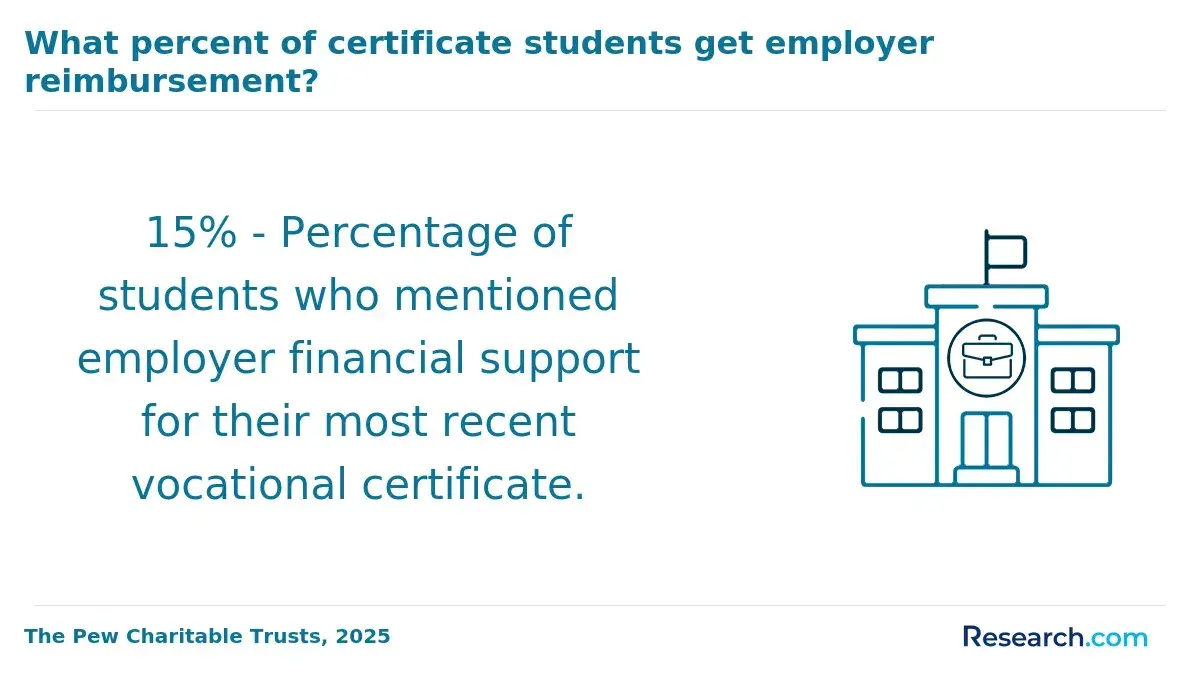
An international business degree usually carries stronger employer recognition, deeper coursework, broader networking, and better long-term mobility. Bootcamps can shorten the path to applied roles in areas such as analytics, digital marketing, or supply chain support. Certificates are often the most flexible option for professionals who want targeted training without committing to a full program. Graduates holding an international business degree report a median starting salary approximately 15% higher than certificate holders, but salary outcomes still depend heavily on prior experience, location, employer type, and role.
This guide compares international business degrees, bootcamps, and certificates across cost, time to completion, admissions, curriculum, salary, job placement, networking, employer preferences, geography, and return on investment so readers can choose the path that best fits their goals.
Key Things to Know About Which Path Leads to Better Career Outcomes: International Business Degree, Bootcamp, or Certificate
- International business degree holders often earn 15% higher salaries over bootcamp or certificate holders-employers favor the degree for leadership roles demanding comprehensive business acumen.
- Bootcamps offer faster job placement rates-typically within 3-6 months-but their networking access and long-term growth potential lag behind traditional degrees.
- Certificates provide strong return on investment for working professionals seeking targeted skills enhancement, yet may limit advancement without broader credentials or extensive experience.
How Does International Business Degree Compare to Bootcamps and Certificates in Total Program Cost and Time to Completion?
An international business degree usually requires the largest investment of time and money, while bootcamps and certificates offer shorter, narrower, and often less expensive routes. The best choice depends on whether the learner needs a recognized academic credential, fast job-ready skills, or a targeted add-on qualification.
| Pathway | Typical Time to Complete | Typical Cost Range | Best Fit |
| International business degree | Associate degrees take about two years; bachelor's degrees typically require four years of full-time study | Tuition and fees for public four-year institutions range from $28,000 to $35,000 for in-state students, according to the National Center for Education Statistics (NCES); private colleges often charge more | Students seeking broad business preparation, stronger employer recognition, and long-term advancement options |
| Bootcamp | 8 to 26 weeks | Usually between $7,000 and $15,000, based on aggregated data from platforms such as SwitchUp and Course Report | Learners who need rapid practical training in a focused area such as global marketing, data analysis, or supply chain tools |
| Professional certificate | A few weeks to several months | Free in some cases, with optional paid certificates, to around $2,000 | Professionals adding a specific skill or testing interest in international business before making a larger commitment |
Degree programs provide the most comprehensive preparation. Students typically study economics, accounting, management, finance, trade, global strategy, cross-cultural communication, and general education subjects. The trade-off is time: full-time bachelor's students usually spend four years completing the credential, and part-time enrollment can extend the timeline.
Bootcamps are built for speed. They usually emphasize applied projects, job tools, and portfolio-ready work rather than broad theory. This can be valuable for someone targeting a practical role quickly, but bootcamps do not usually provide the same academic depth, alumni network, or credential recognition as a degree.
Certificates are the most flexible option. Providers such as Coursera, Google, and industry bodies offer short programs that can help learners develop niche skills. Certificates are useful for supplementing an existing degree or work history, but on their own they may not satisfy employers that require a formal degree.
When comparing total cost, include tuition, fees, books, software, commuting, lost wages, and financing costs. Students comparing online degree affordability may also want to review business administration degree online cost as a related benchmark for business education expenses. For readers considering other accelerated academic routes, quick degrees that pay well can provide additional context for faster credential options.
What Career Outcomes Can International Business Degree Graduates Expect Compared to Bootcamp and Certificate Completers?
International business degree graduates generally have broader access to entry-level corporate roles and stronger long-term advancement prospects than bootcamp or certificate completers. Bootcamps can work well for technical or project-based roles, while certificates are strongest when paired with prior education or work experience.
- Employment rate within six months: Degree holders typically see higher initial employment rates, often above 80%. Bootcamp and certificate completers show more fluctuation, generally between 60% and 75%. Bootcamps may report strong short-term placement for technical roles, but students should check how the provider defines placement.
- Median starting salary: International business degree graduates average median starting salaries between $50,000 and $60,000 annually, per NACE surveys. Bootcamp graduates entering related areas such as business analytics or digital marketing tend to start around $40,000 to $50,000. Certificate earnings vary widely because certificates cover different skill levels, providers, and industries.
- First job title level: Degree holders commonly enter roles such as analyst, associate, or coordinator. Bootcamp graduates may begin as marketing specialists, data analysts, or other skill-specific professionals. Certificate holders often use the credential to qualify for junior professional, administrative, or support roles unless they already have relevant experience.
- Employer credential preferences: Degrees remain important for structured corporate hiring, management-track roles, and positions with broad business responsibilities. Skills-based hiring is helping bootcamp and certificate completers, especially in technical or tool-driven roles.
- Data reliability concerns: Bootcamp outcomes are frequently self-reported. Prospective students should look for independently audited data or verify claims through the Council on Integrity in Results Reporting (CIRR).
- Contextual variables: Outcomes depend on more than the credential. Prior experience, portfolio quality, internships, language skills, geography, networking, and industry focus can change a graduate's results substantially.
The practical takeaway is that a degree is usually the safer choice for broad international business careers, while a bootcamp or certificate can be effective when the learner has a clear target role and can prove job-ready skills. Professionals who already hold a bachelor's degree and want a graduate-level business credential may also compare options such as the cheapest eMBA when evaluating long-term career investment.
Which International Business Pathway - Degree, Bootcamp, or Certificate - Offers the Highest Starting Salary for Graduates?
An international business degree usually offers the highest starting salary among the three pathways, especially for roles in multinational firms, finance, compliance, consulting, and supply chain management. Bootcamps and certificates can lead to competitive entry-level pay in specific technical or digital roles, but their salary advantage is more dependent on the learner's prior experience and portfolio.
- Starting salary: Data from BLS, NACE, LinkedIn Salary Insights, and Glassdoor show degree holders in international business typically begin with median salaries between $55,000 and $65,000 annually. Bootcamp and certificate completers often start around $45,000 to $55,000.
- Employer type: Larger firms and established corporations are more likely to prioritize bachelor's or master's degrees for roles such as international business analyst or trade specialist. Smaller companies and startups may give more weight to applied skills, which can help bootcamp and certificate completers compete.
- Industry sector: International finance, compliance, and supply chain management tend to favor degree holders because these areas require broader business knowledge and stronger screening standards. Tech-driven sectors such as e-commerce may offer stronger entry pay to bootcamp graduates with digital marketing, analytics, or platform skills.
- Job title specificity: Roles that explicitly require a degree, such as international business development manager, usually produce better salary outcomes for degree holders. Bootcamp and certificate graduates more often enter support, specialist, or project-based roles at the beginning of their careers.
- Geographic market: Urban and global business hubs generally pay more, but competition is also stronger. In these markets, a degree may help candidates pass initial screens, while bootcamp and certificate holders need stronger proof of applied ability.
- Salary trajectory: Bootcamp and certificate holders can improve earnings quickly if they enter high-demand niches, but degree holders often have clearer access to promotions, management tracks, and graduate study.
- Individual factors: Prior work experience, program quality, specialization, internships, language ability, and geographic flexibility all affect salary. Median figures are useful benchmarks, not guarantees.
Students choosing primarily for starting salary should compare not only the first job after completion but also the likely second and third roles. A faster pathway may produce income sooner, but a degree may create stronger promotion options over time.
How Do Employers Actually Evaluate International Business Credentials: Does a Degree Still Outrank a Bootcamp or Certificate?
In many international business hiring processes, a degree still outranks a bootcamp or certificate because it is a familiar screening signal. Employers use it to assess academic preparation, communication ability, persistence, and exposure to broad business concepts. However, the strength of that preference depends on the employer, industry, and role.
- Degree dominance: Major multinational companies, government bodies, consulting firms, and regulated industries often treat a bachelor's or master's degree as a baseline requirement or a strong selection factor. This is especially common in finance, trade compliance, procurement, and management-track roles.
- Emerging skills emphasis: Startups, smaller firms, and technology-adjacent employers may be more open to bootcamp and certificate graduates when the role depends on tools, analytics, global digital marketing, or operational execution.
- Skills-based hiring initiatives: Several prominent tech firms, federal agencies, and state governments promote skills-based hiring. In practice, these changes have had more impact on entry-level and technical roles than on mid-level and senior international business positions.
- Sector-specific variation: A certificate may help in a narrow tool-based role, while a degree may be expected for strategic, client-facing, or regulated work. Candidates should match the credential to the employers they actually want to target.
The most competitive resume often combines both forms of evidence: a recognized academic credential plus demonstrable skills. For example, a degree candidate can add certificates in analytics or supply chain software, while a bootcamp graduate can strengthen a resume with internships, projects, client work, and measurable business results. Readers comparing how different fields treat degree flexibility may find a useful contrast in options such as a criminal justice bachelor degree online.
What Are the Admission Requirements and Academic Barriers for International Business Degree Programs Versus Bootcamps and Certificates?
International business degree programs usually have more formal admissions requirements than bootcamps and certificates. Those requirements can create barriers, but they also signal academic rigor to employers. Bootcamps and certificates are easier to enter, which makes them more accessible for career changers, working adults, and learners who need a faster start.
- GPA requirements: Accredited international business degree programs typically require a minimum GPA, often around 3.0, to show academic readiness. Bootcamps and certificate programs generally do not require GPA verification.
- Prerequisite coursework: Degree programs may expect coursework in economics, math, or introductory business. Bootcamps and certificates rarely require prior coursework, although stronger programs may assess readiness for quantitative or technology-heavy content.
- Standardized tests: Many degree programs require exams such as the SAT or ACT, although some campuses are adopting test-optional policies. Bootcamps and certificate programs almost never require standardized tests.
- Letters of recommendation: Competitive degree programs often request letters to assess academic potential, maturity, and fit. This is uncommon for bootcamps and certificate programs.
- Application timeline: Degree programs usually have fixed deadlines and require transcripts, essays, financial aid forms, and other documentation. Bootcamps and certificates often use rolling admissions and shorter applications.
These differences matter because access and selectivity affect the learner experience. A degree program may require more preparation before enrollment, but it can also offer advising, financial aid processes, transfer pathways, and a structured academic environment. A bootcamp or certificate may let learners begin quickly, but students must do more independent due diligence on instructor quality, outcomes data, refund policies, and employer recognition.
Applicants should ask three questions before choosing a pathway: Do I meet the admissions requirements? Can I realistically complete the workload? Will this credential be respected by the employers I want to reach?
How Does Curriculum Depth Differ Between a International Business Degree, a Bootcamp, and a Certificate Program?
The curriculum difference is substantial. A degree teaches international business as a broad discipline. A bootcamp trains specific applied skills. A certificate usually focuses on one topic, tool, or competency. The right depth depends on whether the learner needs career foundation, career transition, or career enhancement.
- Degree programs: International business degrees usually combine general education, core business coursework, and specialized global business subjects. Students may study communication, economics, ethics, accounting, finance, management, global marketing, international finance, supply chain, and cross-cultural management. Many programs include electives, research methods, internships, a thesis, or a capstone project. This depth supports adaptability and long-term growth, but it also delays full-time workforce entry.
- Bootcamps: Bootcamps are intensive and project-centered. They may focus on market analysis, cross-border negotiation, strategy execution, digital marketing, or data analysis in an international business context. The advantage is practical speed: learners build tangible work samples quickly. The limitation is narrower theory, less exposure to adjacent business functions, and fewer opportunities for deep research or broad management preparation.
- Certificate programs: Certificates vary widely. Some introductory certificates from providers such as Coursera or Google help beginners build foundational knowledge. Advanced professional certificates from industry associations may validate specialized expertise. Certificates are useful for targeted upskilling, but they usually do not match the breadth of a degree or the project intensity of a bootcamp.
| Curriculum Feature | Degree | Bootcamp | Certificate |
| Depth | Broad and layered | Focused and applied | Narrow and topic-specific |
| Primary learning goal | Build long-term business foundation | Develop job-ready practical skills | Add a defined competency |
| Typical evidence of learning | Exams, papers, projects, internships, capstone or thesis | Projects, portfolio work, simulations | Assessments, modules, badges, or completion certificates |
Students aiming for management, consulting, global operations, or graduate school usually benefit from the depth of a degree. Learners who already have a degree or relevant experience may get more immediate value from a bootcamp or certificate that fills a specific skills gap.
Which International Business Path Produces the Fastest Return on Investment: Degree, Bootcamp, or Certificate?
Bootcamps and certificates usually produce the fastest short-term return on investment because they cost less and take less time to complete. Degrees often require more upfront investment, but they can produce stronger long-term returns through higher salary ceilings, employer recognition, alumni access, and promotion eligibility.
ROI should include more than tuition. Learners should calculate tuition, fees, materials, software, transportation, financing costs, and the opportunity cost of time spent studying instead of working. Opportunity cost is especially important for adults who would need to reduce hours or leave a job to enroll.
- Recent high school graduate: With little or no prior income lost, opportunity cost is minimal. Degrees carry higher upfront expenses, but their greater salary premiums often produce a positive ten-year ROI. Bootcamps and certificates typically offer faster five-year returns because they cost less and can lead to earlier earnings.
- Mid-career professional: Leaving a $50,000/year job to retrain creates substantial opportunity cost. In this case, bootcamps and certificates often produce stronger five-year ROI because they reduce time away from paid work. A degree may outperform over a decade, but it usually takes longer to break even.
- Part-time learner: Keeping a job while studying reduces opportunity cost. Part-time degree and certificate options can both make financial sense if the learner can manage the workload. Bootcamps may still deliver the quickest skill-based salary gains, while degrees may provide stronger long-term mobility.
Data sourced from NCES cost reports, NACE salary benchmarks, and bootcamp outcome studies support the general pattern: faster, lower-cost credentials often win on short-term ROI, while degrees are more competitive when long-term earnings and advancement are considered.
The best ROI path is not the same for every learner. A person with no college degree who wants corporate advancement may need the degree. A professional with business experience but weak analytics skills may benefit more from a bootcamp. A manager who needs knowledge in one area may only need a certificate.
How Do International Business Bootcamps and Certificate Programs Compare to Degree Programs on Job Placement Rates?
Degree programs often provide more standardized and verifiable placement reporting than bootcamps or certificates, but placement rates are not always directly comparable. Each pathway may define “placed” differently, measure outcomes over different timeframes, and count different types of jobs.
- Degree programs: Placement data usually comes from IPEDS graduate outcomes surveys and institutional career services reports, which are often independently verified. Degree programs may track employment within six to twelve months after graduation and may distinguish full-time roles, part-time roles, internships, continuing education, and employment related to the major.
- Bootcamps: Many bootcamps self-report placement rates, and some align with CIRR standards for transparency. However, placement definitions can vary. Some programs may count jobs in broadly related fields, contract work, freelance income, or any income-generating activity.
- Certificate programs: Certificate programs often publish less formal placement data because they are shorter and may serve learners who are already employed. When data exists, it may come from surveys, testimonials, employer feedback, or provider-reported outcomes rather than rigorous tracking.
Before trusting a placement rate, ask for the details behind it:
- What percentage of all enrolled students completed the program?
- What percentage of completers were employed within the stated timeframe?
- Were jobs full-time, part-time, freelance, internship-based, or temporary?
- Were the jobs directly related to international business?
- What were the salary ranges?
- Was the data independently audited?
Career services can also change outcomes. Employer partnerships, resume coaching, mock interviews, alumni referrals, internship access, and local hiring relationships often matter as much as curriculum. Students comparing transparency across education fields may find online sports degrees useful as another example of how program format and outcomes are presented.
What Role Does Networking and Alumni Access Play in International Business Degree Programs Versus Bootcamps and Certificates?
Networking is especially important in international business because many roles depend on trust, referrals, employer relationships, language ability, cultural fluency, and access to global organizations. Degree programs usually offer the strongest long-term network, but some bootcamps and certificates can provide useful targeted connections.
- International business degree programs: Universities often provide alumni associations, career fairs, faculty mentorship, student organizations, study abroad connections, internship pipelines, and employer relationships. The value of the network depends on the institution's reputation, geographic reach, employer partnerships, and alumni engagement. For students seeking long-term corporate mobility, this network can be one of the degree's biggest advantages.
- Bootcamps: Bootcamp networks are usually smaller and newer, but they can be highly practical. Cohort-based learning can create peer accountability, and strong bootcamps may have employer partners in technology-adjacent areas such as supply chain analytics or digital marketing. The risk is that network value may be concentrated in a specific city, employer niche, or hiring cycle.
- Certificate programs: Certificate networks vary by provider. Prominent credential providers such as Google Career Certificates or Salesforce Trailhead may offer digital communities, peer forums, and connections to broader professional ecosystems. However, long-term career support depends on how actively the provider maintains the community and whether employers recognize the credential.
Students should evaluate networking as a concrete service, not a vague promise. Ask how many employer events are held, whether alumni directories are accessible, how often students receive referrals, whether career advising continues after completion, and whether the network is local, national, or international. Learners exploring how graduate programs can broaden professional networks in other disciplines may also compare options such as a history masters online.
How Does Geographic Location Affect Which International Business Pathway - Degree, Bootcamp, or Certificate - Leads to Better Outcomes?
Location can strongly affect outcomes because international business hiring is concentrated around employer networks, trade hubs, corporate headquarters, logistics centers, financial centers, and major metropolitan areas. The same credential may perform differently depending on where the learner studies and where they plan to work.
- Large metro areas: Cities such as New York, San Francisco, and Chicago offer denser employer networks. Bootcamp and certificate completers may benefit from local hiring relationships, frequent networking events, and proximity to program headquarters.
- Mid-sized cities and rural regions: Employers in smaller markets may be less familiar with alternative credentials and more likely to rely on traditional degrees as hiring signals. In these areas, a degree can carry more weight during resume screening.
- Remote work: Remote roles can expand access for all credential types, but they also increase competition. Candidates may now compete nationally, which makes credential reputation, portfolio quality, language skills, and interview performance more important.
- Relocation: Bootcamp graduates may see stronger placement if they remain near the program's employer network. Moving away from the program hub can reduce the value of local partnerships unless the bootcamp has a national employer base.
Course Report's 2023 analysis found that 70% of bootcamp graduates secure employment within six months, although success rates vary widely with location and market conditions. Students should therefore compare placement data for the specific city or region where they plan to work, not just the provider's overall outcomes.
A practical strategy is to search recent job postings in the target location before enrolling. If most postings require a bachelor's degree, a bootcamp alone may be a risky path. If postings emphasize tools, projects, analytics, or campaign experience, a bootcamp or certificate may be more competitive.
What Do International Business Industry Professionals and Hiring Managers Actually Prefer When Reviewing Resumes?
Hiring managers usually prefer the credential that best reduces hiring risk for the role. For broad business roles, that often means a degree. For technical, project-based, or tool-specific roles, demonstrated skills can matter as much as the credential. The strongest resumes usually combine recognized education with evidence of applied results.
- Degree emphasis: Large corporations, government bodies, and established organizations often use degrees as screening filters. Applicants without the required credential may be excluded before a hiring manager reviews their experience.
- Practical skills focus: Startups and small to mid-sized firms may prioritize portfolios, case projects, internships, work samples, technical assessments, or measurable outcomes over formal education.
- Post-2020 trends: Many major employers publicly reduced degree requirements after 2020, but the actual hiring of non-degree professionals has increased modestly and inconsistently across sectors.
- Outcome-based hiring: Agile employers are more likely to consider bootcamp and certificate alumni who can show relevant projects, business impact, or specialized knowledge. Large firms may still prefer degree holders for structured leadership pipelines.
- Resume strategy: Degree holders should emphasize internships, international exposure, language skills, analytics tools, and business results. Bootcamp and certificate completers should place projects, portfolios, measurable achievements, and relevant prior experience near the top of the resume.
- Research tips: Candidates should conduct informational interviews with recruiters at target organizations and study profiles of recently hired professionals in desired roles. This reveals whether employers in that niche actually hire bootcamp or certificate graduates.
The key is to reverse-engineer the target role. If job postings repeatedly list a degree as required, applicants should treat that requirement seriously. If postings emphasize specific tools, projects, or business outcomes, a bootcamp or certificate may be enough when paired with strong evidence of competence.
What Graduates Say About Which Path Leads to Better Career Outcomes: International Business Degree, Bootcamp, or Certificate
- : "Choosing the International Business degree was a game-changer for me. Although it required a longer commitment, the salary outcomes have been consistently higher compared to bootcamps or certificates. Employers seem to value the depth of knowledge the degree provides, which directly impacted my job placement within a top-tier firm. For those seeking long-term career growth and extensive networking opportunities, this path offers unmatched value. —Shmuel"
- : "Reflecting on my journey, the bootcamp offered the best return on investment, especially for someone like me who needed to switch careers quickly. The hands-on skills and industry connections I gained outweighed the traditional degree in terms of immediate job placement. While certificates are useful, bootcamps strike the perfect balance of employer recognition and rapid upskilling for those with prior work experience. —Shlomo"
- : "From a professional standpoint, certificates in International Business are ideal for learners who want targeted knowledge without the time or financial strain of a full degree. Although they do not carry the same employer prestige as degrees, certificates have surprisingly strong job placement rates in niche roles. I believe this pathway suits part-time learners or those seeking specific skillsets to supplement their careers rather than overhaul them. —Santiago"
Other Things You Should Know About International Business Degrees
International business degree holders generally experience stronger long-term career growth due to the comprehensive curriculum and recognized accreditation that employers value. Bootcamps and certificates can accelerate entry into the field but often lack the depth and networking opportunities that support advancement to senior roles. Over time, degree holders tend to access higher management positions and broader international roles more frequently than those with only bootcamp or certificate credentials.
An international business degree offers comprehensive knowledge and a broad skill set, beneficial for long-term career growth and diverse opportunities. Bootcamps focus on specific skills, providing faster entry into the workforce but with a narrower scope. Certificates supplement existing knowledge, enhancing one's expertise in targeted areas.
During recessions or tight labor markets, international business degrees provide stronger job security due to their broad recognition and comprehensive education. Bootcamps and certificates, while useful for skill supplementation, often face higher volatility because employers may perceive them as less rigorous. Degree holders generally have an advantage in sustaining employment and accessing senior positions when the market contracts.
International business degrees come from accredited universities and hold widespread legitimacy recognized by employers worldwide. Certificates and bootcamps vary widely in accreditation-some are industry-recognized, but many lack formal academic validation. This discrepancy affects employer perception, where degrees often carry more weight, while bootcamp and certificate legitimacy depends largely on the provider's reputation and curriculum relevance.
References
- 7 Things Recruiters Look for on Your Resume https://www.scoperecruiting.com/blog/what-recruiters-look-for-on-your-resume
- CourseCareers https://coursecareers.com/blog-posts/online-courses-vs-bootcamps-vs-college-which-path-gets-you-job-ready-faster-in-2026
- Top 15 Highest Paying Business Degree Jobs in 2025 UK & Global Guide https://apexlearning.org.uk/highest-paying-business-degree-jobs-2025-2026/
- International Business Salaries (Roles & Salary Ranges) https://www.allbusinessschools.com/international-business/salary/
- College Degree vs Bootcamp ROI https://oboe.com/learn/college-degree-vs-bootcamp-roi-688lvz/assessing-certifications-college-degree-vs-bootcamp-roi-3
- INTERNATIONAL COLLEGE DEGREES WITH THE BEST RETURN ON INVESTMENT! https://achivia.in/blog/international-college-degrees-with-the-best-return-on-investment
- Bootcamp vs College: Which Offers Better ROI in 2025? https://www.skillspire.net/post/bootcamp-vs-college-which-path-offers-better-roi-in-2025
- Degree or Certificate? Which Credential Do Employers Value More? - KDnuggets https://www.kdnuggets.com/degree-or-certificate-which-credential-do-employers-value-more
- Alumni Networks: Universities vs. Corporations – Alumni Reach https://alumnireach.com/alumni-networks-universities-vs-corporations/
- Top Study Abroad Programmes That Give Best ROI https://studyabroad.careers360.com/articles/study-abroad-programmes-that-give-best-roi


