
2027 Is Demand for Architecture Degree Graduates Growing or Declining?

Co-Founder and Chief Data Scientist
Choosing an architecture degree is not just a question of interest in design; it is a long-term career decision shaped by licensing requirements, construction cycles, regional hiring, technology, and portfolio strength. The field offers meaningful work in building design, planning, sustainability, preservation, and project delivery, but it is also competitive. According to the U.S. Bureau of Labor Statistics, employment of architects is projected to grow 3% from 2022 to 2032, slower than the average for all occupations.
That does not mean architecture is a poor career choice. It means students need to enter the field with clear expectations. Job prospects are strongest for graduates who combine design ability with technical software skills, sustainability knowledge, communication, and practical experience through studios, internships, or related construction and planning work. This guide explains where demand is coming from, which roles are growing, how geography and degree level affect employability, and how to judge whether an architecture degree fits your goals in the current market.
Key Things to Know About the Demand for Architecture Degree Graduates
- Employment in architecture is expected to grow about 3% from 2022 to 2032, reflecting steady demand but below the average for all occupations.
- Specializing in sustainable design or urban planning enhances job prospects due to increasing focus on environmental impact and city development.
- Technological advancements, like BIM and AI tools, require architects to adapt skills, influencing long-term career opportunities positively.
What Factors Are Driving Demand for Architecture Degree Professionals?
Demand for architecture degree professionals is driven less by one single trend and more by the combined needs of construction, public infrastructure, sustainability, housing, and digital design. Students should evaluate these forces because they influence not only whether jobs exist, but also which skills employers reward.
- Urban development and infrastructure: Commercial buildings, housing projects, civic facilities, transportation upgrades, and public works continue to create work for architects and adjacent professionals. Hiring tends to rise when private development and government investment are active.
- Renovation, adaptive reuse, and preservation: Not all architecture demand comes from new construction. Many firms need graduates who can help modernize older buildings, improve accessibility, update energy systems, and preserve historically significant structures.
- Sustainable design requirements: Stricter energy efficiency expectations, green building standards, and environmental review processes increase demand for graduates who understand climate-conscious design, materials, building performance, and documentation.
- Technology adoption: Building Information Modeling (BIM), sustainable design software, visualization platforms, virtual reality tools, and digital collaboration systems have become central to many workflows. Employers often prefer candidates who can contribute quickly in these tools rather than learning them from scratch on the job.
- Changing housing and community needs: Population growth in metropolitan areas, affordability pressures, mixed-use development, aging populations, and changing work patterns all create demand for adaptable design solutions.
- Cross-functional project delivery: Architecture graduates increasingly work with engineers, contractors, developers, planners, public agencies, and clients. Communication, coordination, and project management skills can be as important as design talent.
Students comparing career paths should also recognize that architecture overlaps with social services, planning, real estate, construction, environmental work, and community development. For a broader view of interdisciplinary education options, some readers also compare pathways such as an MSW degree, especially when their interests include housing policy, community systems, or public-sector work.
Which Architecture Occupations Are Seeing the Highest Growth Rates?
The strongest growth is often found in architecture-adjacent roles rather than in licensed architect positions alone. The U.S. Bureau of Labor Statistics projects that overall employment will grow 5% from 2022 to 2032, and several related occupations show higher projected growth because they connect design knowledge with construction management, planning, compliance, and digital production.
- Construction Managers: Projected to grow by 11%, construction management is one of the more practical routes for architecture graduates who enjoy schedules, budgets, teams, and site coordination. A bachelor's degree combined with relevant construction or design experience is commonly important.
- Landscape Architects: With a 10% growth outlook, landscape architecture benefits from demand for resilient outdoor spaces, stormwater strategies, public parks, campus planning, and environmentally responsive site design. Entry typically requires a bachelor's degree in landscape architecture.
- Building Inspectors: This occupation has a 9% growth rate, supported by building code enforcement, safety review, and regulatory compliance. Certification or an associate degree is typically needed, and architecture coursework can help graduates understand drawings, systems, and construction details.
- Architectural and Civil Drafters: These roles show an 8% increase and are closely tied to CAD, BIM, documentation, and technical drawing production. A certificate or associate degree is usually essential for entry, though bachelor's graduates may also use drafting roles as a bridge into firms.
- Urban Planners: Expected to grow by approximately 7%, urban planners work on land use, transportation, housing, community development, and environmental issues. Many planning roles require a master's degree, particularly in public agencies or policy-focused positions.
The right path depends on whether a student wants to pursue licensure, manage construction, shape public policy, work with landscapes, or specialize in technical documentation. Architecture graduates who also develop business, finance, or management knowledge may find broader opportunities in development or firm operations; some compare complementary study options such as online business degree programs when planning a more diversified career.
Which Industries Hire the Most Architecture Degree Graduates?
Architecture degree graduates are hired across several industries because their training combines design thinking, spatial analysis, technical documentation, client communication, and project coordination. The best-fit industry depends on whether the graduate wants to design buildings, manage construction, influence policy, evaluate properties, or support sustainability goals.
- Architecture and Engineering Services: This is the core employment sector for many graduates. Roles may include architectural designer, junior designer, project coordinator, BIM technician, visualization specialist, or technical staff member. Firms value portfolio quality, software fluency, studio experience, and the ability to work within deadlines and budgets.
- Construction Industry: Construction companies hire architecture graduates for roles that connect drawings with execution. Graduates may work in project coordination, site supervision, estimating, scheduling, quality control, or design-build delivery. This path is often a strong fit for students who like practical problem-solving and field conditions.
- Government and Public Administration: Public agencies hire architecture graduates for planning, permitting, code review, facilities management, preservation, zoning, and environmental review. These roles may offer stability, but hiring can depend on budgets, civil service processes, and local development activity.
- Real Estate and Property Development: Developers and real estate firms use architectural training to assess site potential, evaluate feasibility, coordinate consultants, understand zoning constraints, and improve project value. Graduates in this sector benefit from business judgment as well as design literacy.
- Sustainability Consulting and Digital Design: Firms focused on energy performance, green building strategy, computational design, visualization, and digital delivery increasingly need graduates who can combine architectural knowledge with analytical tools and environmental goals.
A common mistake is assuming an architecture degree leads only to one job title. In practice, graduates who understand their preferred work environment can target employers more effectively: design studios for creative practice, contractors for delivery, agencies for regulation and planning, developers for feasibility, and consultants for specialized technical work.
How Do Architecture Job Opportunities Vary by State or Region?
Architecture hiring is highly regional because projects are tied to local construction activity, population growth, real estate investment, public budgets, and climate or infrastructure needs. A strong market in one state does not guarantee the same opportunities in another.
- High-demand states: California, New York, and Texas lead in architectural employment because of large populations, major metropolitan areas, commercial development, institutional projects, and ongoing urban growth.
- Regional specializations: The Northeast often has stronger demand for historic preservation, institutional work, corporate architecture, and dense urban redevelopment. Sun Belt states frequently see more residential, mixed-use, healthcare, and infrastructure-related projects.
- Urban versus rural markets: Metropolitan areas usually offer more firms, larger projects, better networking, and more entry-level openings. Rural regions may provide fewer openings but can offer broader responsibilities earlier, especially in smaller practices or public-sector roles.
- Cost-of-living trade-offs: Higher salaries in major cities may not always translate into better financial outcomes. Housing, commuting, student debt, licensing costs, and unpaid overtime expectations should be considered before relocating.
- Remote and hybrid limits: Hybrid design work is more common than before, but architecture still often requires office collaboration, client meetings, site visits, construction observation, and coordination with local authorities. Fully remote roles may be more available in visualization, drafting, BIM support, or consulting than in traditional project architecture.
Students should research where firms are hiring before choosing internships, graduate programs, or relocation plans. The strongest regional strategy is to build a portfolio and network connected to the type of work that dominates the target market.
How Does Degree Level Affect Employability in Architecture Fields?
Degree level affects employability because architecture is both a creative field and a credential-sensitive profession. Employers care about portfolios and software skills, but licensure pathways, professional degree requirements, and advanced specialization can strongly influence long-term mobility.
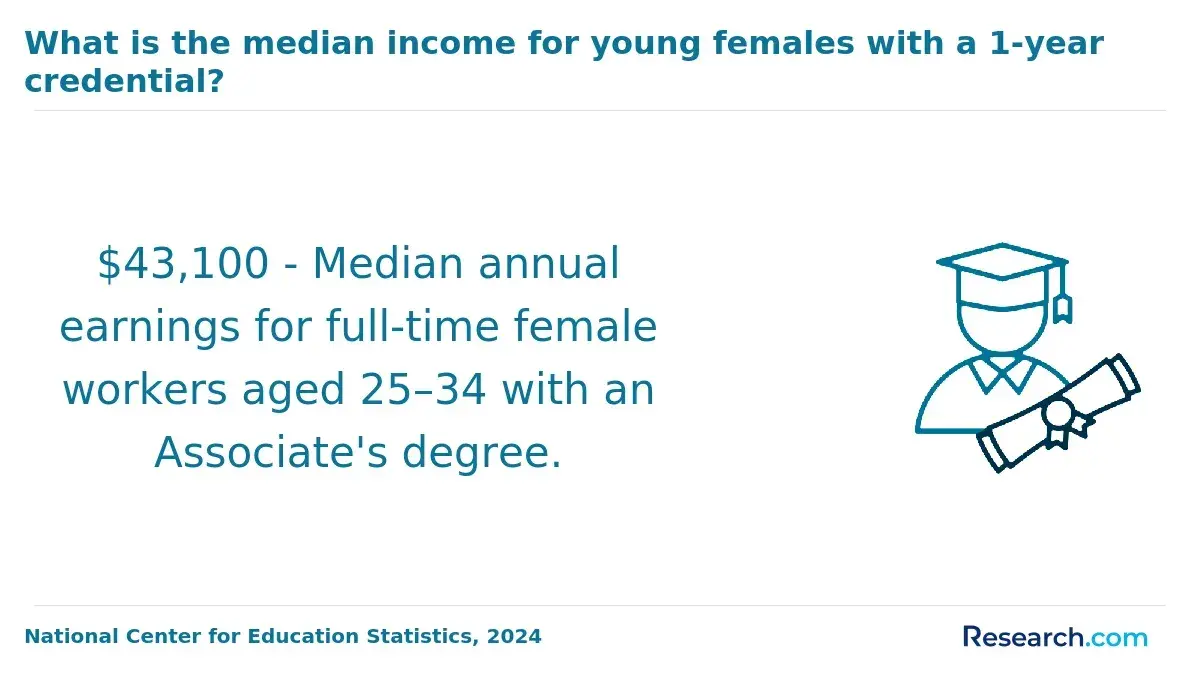
- Associate Degree: An associate degree can prepare students for drafting, CAD, BIM support, architectural technology, or construction documentation roles. It is usually a more direct and lower-cost route into technical support work, but it generally provides less design authority and fewer pathways to licensed architect roles.
- Bachelor's Degree: A bachelor's degree is often the main entry point for design-related roles, especially when it is a professional architecture degree. Graduates may qualify for junior designer, architectural staff, project assistant, or visualization roles, depending on program type, portfolio strength, and local hiring conditions.
- Master's Degree: A master's degree can improve access to advanced design roles, leadership tracks, licensure pathways, teaching opportunities, or specialties such as sustainable architecture, urban design, computational design, or preservation. Graduates holding master's degrees typically experience about 15% higher employment rates in architectural roles than those with only bachelor's degrees.
- Doctorate Degree: A doctorate is less common for traditional practice and is usually most relevant for academic careers, research, high-level consulting, theory, history, technology research, or policy-oriented work.
Students should verify whether a program supports their intended licensing and career goals before enrolling. This is especially important for distance learners comparing an online architecture degree accredited option with campus-based programs, because accreditation, studio format, professional recognition, and internship access can affect outcomes.
Those exploring flexible education models sometimes compare architecture with other fields that offer online pathways, such as affordable online MFT programs, to understand how program structure, supervised experience, and professional requirements differ across disciplines.
What Skills Are Employers Seeking in Architecture Graduates?
Employers want architecture graduates who can move from ideas to buildable, well-documented, code-aware, client-ready work. A strong portfolio matters, but firms also evaluate whether a candidate can function inside a project team.
- Software expertise: Proficiency with AutoCAD, Revit, BIM platforms, modeling tools, rendering software, and digital collaboration systems is often essential. Graduates who can produce clean drawings, update models accurately, and coordinate files are more useful from day one.
- Design judgment: Employers look for candidates who can create thoughtful concepts while respecting budget, site conditions, structure, materials, accessibility, codes, and client priorities. Creativity is valuable only when it can survive real project constraints.
- Technical documentation: Architecture work depends on accurate drawings, details, schedules, specifications, and coordination. Entry-level employees who understand how buildings come together can reduce errors and support project teams more effectively.
- Communication: Graduates must explain ideas clearly to clients, supervisors, consultants, contractors, and public officials. Strong writing and presentation skills help prevent misunderstandings and keep projects moving.
- Project coordination: Firms value graduates who can manage tasks, meet deadlines, track revisions, organize information, and respond professionally to feedback. Reliability is a major employability factor in entry-level roles.
- Sustainability awareness: Knowledge of energy-efficient design, material impacts, green building standards, daylighting, water use, and climate-responsive strategies can improve a candidate's competitiveness.
- Adaptability: Software, codes, client expectations, and delivery methods change quickly. Graduates who keep learning are better positioned than those who rely only on what they learned in studio.
A recent architecture graduate described the transition from school to practice this way: “During my internship, learning to juggle software demands alongside client feedback was challenging. But mastering communication helped me clarify expectations and reduce misunderstandings.” The same graduate noted that creative ideas often had to be revised because of zoning rules, budgets, and constructability. That is the reality of architecture hiring: employers want imagination, but they also need discipline, accuracy, and follow-through.
How Does Job Demand Affect Architecture Graduate Salaries?
Job demand affects architecture salaries by changing how much leverage graduates and experienced professionals have in the market. When firms have more projects than available staff, they may raise starting offers, promote faster, or compete harder for candidates with specialized skills. When construction slows, hiring can tighten and salary growth may weaken.
- Starting salaries: Entry-level pay is more competitive when firms need staff for active project pipelines. Graduates with strong BIM skills, internships, technical documentation experience, and a polished portfolio may have an advantage.
- Wage growth: Salary growth often improves when professionals can manage increasingly complex work, coordinate consultants, lead client communication, or support construction administration. Demand rewards people who reduce risk and help deliver projects.
- Long-term earnings: A stronger labor market can create more opportunities for promotions, bonuses, leadership roles, or movement into higher-paying adjacent fields such as development, construction management, or consulting.
- Market imbalance: If many graduates enter the market during a slowdown, competition can suppress wages. Economic downturns, delayed construction, reduced infrastructure spending, or weak real estate activity can slow hiring and compensation growth.
- Specialization premiums: Graduates with expertise in sustainable design, BIM coordination, healthcare, laboratories, preservation, computational design, or project management may be more resilient than generalists in some markets.
Median annual wages for architects have increased about 3% faster than the national average following construction booms, illustrating how labor demand can influence compensation. Still, students should avoid assuming that an architecture degree automatically leads to high pay immediately after graduation. Salary outcomes depend on region, firm type, portfolio quality, licensure progress, technical skills, and the strength of the construction market.
How Is AI Changing Demand for Architecture Professionals?
AI is changing architecture by automating some production tasks, speeding up design exploration, improving analysis, and increasing expectations for digital fluency. Around 35% of U.S. firms are already integrating AI tools into project workflows, which means graduates should treat AI as part of professional practice rather than a distant trend.
- Routine task automation: AI can assist with drafting support, image generation, early concept studies, code research, specification review, quantity checks, and structural or environmental analysis. This may reduce time spent on repetitive work but does not eliminate the need for professional judgment.
- Higher expectations for entry-level staff: If basic production becomes faster, employers may expect graduates to contribute more quickly to model management, design options, documentation, presentation, and coordination.
- New specialized roles: Architecture professionals who understand computational design, data analysis, AI-assisted workflows, building performance, and intelligent systems may find opportunities in advanced design groups, sustainability consulting, and digital practice teams.
- More emphasis on human judgment: AI can generate options, but architects still need to evaluate context, user needs, safety, codes, constructability, ethics, accessibility, and client goals. The profession is likely to reward those who combine technology with critical thinking.
- Continuous learning: Graduates who ignore AI may become less competitive, while those who use it responsibly can improve productivity and expand their role on project teams.
A recent graduate of an architecture degree program described the shift clearly: “Initially, I was overwhelmed by the need to master new software and analytical tools alongside design courses. However, embracing AI has made me more confident in contributing to innovative projects and has opened doors I hadn't expected.” Her experience reflects a practical reality: AI is not replacing the value of architectural training, but it is changing what job-ready training looks like.
Is Architecture Considered a Stable Long-Term Career?
Architecture can be a stable long-term career for professionals who adapt, build strong technical skills, and understand that demand moves with the economy. It is not recession-proof. The profession depends on construction activity, financing, public budgets, and real estate cycles, so hiring may rise and fall more noticeably than in some other fields.
- Moderate employment growth: The job outlook for architecture graduates in the US indicates continued need for building design, renovations, infrastructure, planning, and sustainable design, but growth is modest rather than rapid.
- Essential role in the built environment: Architecture remains important because communities need safe, functional, efficient, and well-designed buildings. This underlying need supports long-term relevance even when short-term hiring fluctuates.
- Economic sensitivity: Private development slowdowns, interest rate changes, reduced capital budgets, or delayed public projects can affect firm workloads. Graduates should prepare for a cyclical market.
- Licensure and specialization: Professionals who move toward licensure, project leadership, sustainability credentials, technical expertise, or management responsibilities generally improve their long-term security.
- Career flexibility: Architecture training can transfer into construction management, real estate development, planning, facilities management, visualization, product design, sustainability consulting, and public-sector roles.
For professionals who already have a degree and want to broaden their qualifications, flexible programs such as an accelerated bachelors degree online may be useful in some career-change or skill-diversification scenarios. The key is to choose additional education that clearly supports a target role rather than collecting credentials without a plan.
Is a Architecture Degree Worth It Given the Current Job Demand?
An architecture degree can be worth it for students who understand the profession’s demands and are committed to developing both design and technical competence. It is less likely to be worth it for students who expect fast job growth, easy entry-level hiring, or a direct path to high earnings without licensure progress, internships, portfolio development, and software proficiency.
Demand for architecture degree graduates presents a mixed but cautiously positive outlook in the United States labor market. Employment of architects is projected to grow about 3% from 2022 to 2032, which is slower than the overall average for all occupations. That means opportunities exist, but competition remains real, particularly for entry-level roles in desirable cities or prestigious firms.
The degree’s value depends on several factors: whether the program supports licensure goals, how strong the student’s portfolio becomes, whether the student gains internship experience, and whether the graduate can use current tools such as BIM and sustainable design software. A Bachelor or Master of Architecture may offer stronger alignment with traditional architecture practice, while related pathways may be better for students interested in construction, planning, development, or digital design.
Students should also consider the opportunity cost of a long professional education. Architecture can lead to meaningful and varied work, but it requires persistence, continuous learning, and comfort with deadlines, critique, collaboration, and regulation. Those comparing alternatives may also research online degrees in related fields to evaluate different timelines, costs, and labor-market outcomes before committing.
What Graduates Say About the Demand for Their Architecture Degree
- : "Pursuing an architecture degree was a turning point for me; it combined my passion for design with practical skills that opened numerous doors. The investment paid off quickly as I landed a role with a leading firm shortly after graduation, proving the strong ROI of this education. This degree didn't just teach me to build structures-it shaped my career as a creative problem solver. — Aug"
- : "Reflecting on my journey, deciding to study architecture felt like a significant commitment, but it was absolutely worth it. The comprehensive curriculum gave me deep technical knowledge and a broad understanding of urban planning, which enhanced my professional value and opportunities over time. I've found that an architecture degree enriches your perspective, making you more than just a designer. — Clayton"
- : "My choice to obtain an architecture degree was driven by a clear career goal, and it certainly met my expectations in terms of return on investment. The degree equipped me with critical analytical skills and a keen eye for detail, essential in my role managing large-scale projects today. The impact of this education is evident every day in how I approach challenges within the field. — Dewey"
Other Things You Should Know About Architecture Degrees
In 2027, the demand for architecture degree graduates is experiencing moderate growth. Urbanization and sustainability projects are driving job opportunities, although competition remains strong. Technological advancements in design are also influencing the need for new skills among architecture graduates.
Yes, architecture graduates have opportunities in related fields such as urban planning, construction management, historic preservation, and interior design. Many also find roles in real estate development, building code consulting, and sustainability advising. These alternative careers can sometimes have different demand trends compared to traditional architecture jobs.
In 2027, demand for architecture graduates is influenced by sustainable design trends and urban development projects. Graduates often find opportunities in firms focusing on green architecture and smart city planning. This shift prompts growth in non-traditional roles, although competition remains strong.
References
- 7 skills all architectural technologists need https://www.ube.ac.uk/whats-happening/articles/skills-architectural-technologists-need/
- IS BEING AN ARCHITECT A GOOD CAREER? TRUTH, MONEY & JOB SEEKING — ALTER https://alterarchitects.co.uk/is-being-an-architect-a-good-career-truth-money-job-seeking
- ARCHICONNECT https://archiconnect.homes/blog/post/are-architects-in-demand
- A skilled-up future: how skills, competences, and roles in architecture must evolve to meet tomorrow’s challenges https://www.riba.org/work/insights-and-resources/future-business-of-architecture/a-skilled-up-future-how-skills-competences-and-roles-in-architecture-must-evolve-to-meet-tomorrow-s-challenges/
- Is Architecture a Good Career in UK? Salary & Career Path https://formiarchitecture.com/is-architecture-a-good-career/
- Top 10 Highest Paying Architect Careers | Brighton College https://brightoncollege.com/blog/top-10-highest-paying-architect-careers/
- 11 Best Cities for Architecture Careers in 2021 - Monograph https://monograph.com/blog/best-cities-for-architecture-careers
- Anant National University | First DesignX University in India https://www.anu.edu.in/what-employers-are-looking-for-in-an-architecture-graduate/
- The Impact of Artificial Intelligence (AI) on Architecture: What Candidates & Clients Need to Know https://www.uknightedrecruitment.com.au/the-impact-of-artificial-intelligence-ai-on-architecture-what-candidates-clients-need-to-know/


