
2027 Is Demand for Pharmacy Degree Graduates Growing or Declining?

Co-Founder and Chief Data Scientist
Choosing a pharmacy degree now requires a realistic view of demand, not a simple “good job” or “bad job” answer. The field still offers stable healthcare work, strong clinical purpose, and multiple career settings, but the market is uneven. The U.S. Bureau of Labor Statistics projects only a 2% growth in pharmacist employment from 2022 to 2032, which means students should look closely at location, degree level, specialization, and employer type before committing time and tuition.
This guide explains where pharmacy graduates are still needed, which roles are growing fastest, how salaries respond to demand, and how technology is changing the profession. It is designed for prospective PharmD students, current pharmacy students, pharmacy technicians considering advancement, and healthcare professionals comparing pharmacy with adjacent career paths.
Key Things to Know About the Demand for Pharmacy Degree Graduates
- Employment for pharmacy degree graduates remains stable, with over 300,000 pharmacists employed in the U.S. and demand driven by aging populations requiring medication management.
- The U.S. Bureau of Labor Statistics projects a 2% job growth for pharmacists from 2022 to 2032, reflecting slower expansion compared to other healthcare fields.
- Specializations such as clinical pharmacy and pharmaceutical research offer varied career growth, with industry shifts toward personalized medicine influencing long-term opportunities.
What Factors Are Driving Demand for Pharmacy Degree Professionals?
Demand for pharmacy degree professionals is being shaped by two forces at once: healthcare systems need more medication expertise, while automation and retail consolidation are changing where that expertise is used. The strongest opportunities are increasingly tied to clinical judgment, patient counseling, chronic disease management, and technology-enabled care rather than basic dispensing alone.
- Greater medication use across healthcare: More patients rely on complex medication regimens, especially for chronic conditions. This supports demand for pharmacists who can prevent drug interactions, improve adherence, and help patients understand treatment plans.
- Aging population and chronic disease management: Older adults often take multiple prescriptions and require closer monitoring. Pharmacists who can work with physicians, nurses, and care teams are especially valuable in outpatient clinics, hospitals, and long-term care settings.
- Expanded pharmacist responsibilities: Policy changes in many settings have broadened pharmacists’ work in immunizations, medication therapy management, preventive care, and patient education. These expanded services can create new roles, but requirements vary by state and employer.
- Technology and automation: Automated dispensing, telepharmacy, electronic health records, and clinical decision tools reduce some routine tasks while increasing the need for pharmacists who can verify therapy decisions, interpret patient data, and manage safety risks.
- Employer preference for practice-ready graduates: Employers increasingly value graduates who can communicate clearly, document accurately, use pharmacy systems, and contribute to interdisciplinary care from day one.
- Accreditation and licensure requirements: In the United States, graduating from an accredited pharmacy program is central to licensure eligibility and employer confidence. Students should verify accreditation status before enrolling because it directly affects career options after graduation.
The key takeaway is that demand is strongest for graduates who combine pharmacy knowledge with clinical, communication, and technology skills. Students who want to broaden their healthcare training may also compare related advanced options, such as this list of online DNP programs, when planning long-term career mobility.
Which Pharmacy Occupations Are Seeing the Highest Growth Rates?
The fastest-growing pharmacy-related roles are not always the traditional community pharmacist jobs students picture first. Growth is strongest where pharmacy intersects with clinical care, data, biotechnology, and specialized medication management. Healthcare occupations overall are projected to increase by 13% from 2022 to 2032, which helps explain why pharmacy skills remain relevant even when pharmacist employment growth is more modest.
- Pharmacists: Pharmacist roles are projected to grow around 6% in some estimates, with stronger prospects in settings that use pharmacists for patient care, medication management, and collaborative practice. A Doctor of Pharmacy (PharmD) degree is typically required for licensed pharmacist roles.
- Pharmacy Technicians: Pharmacy technician employment is expected to grow about 7%. Demand is tied to prescription volume, pharmacy operations, and the need for trained staff who can support pharmacists in dispensing, inventory, insurance processing, and patient service.
- Clinical Pharmacists: Clinical pharmacist roles are experiencing growth close to 12%. These positions often involve direct collaboration with medical teams, chronic disease management, dosing recommendations, and patient monitoring. Residencies or specialized training can make candidates more competitive.
- Pharmacogenomic Specialists: Growth above 10% reflects the increasing use of genetic information to guide medication selection and dosing. These roles often require additional training in precision medicine, genomics, or clinical research.
- Pharmacy Informatics Specialists: Pharmacy informatics roles are growing rapidly at approximately 11%. These professionals work with electronic health records, medication safety systems, analytics, automation, and clinical decision support.
Students should compare these paths by education requirement, patient contact, salary expectations, and tolerance for technology-driven work. Those who want healthcare employment options outside pharmacy operations may also review medical billing and coding online schools as a lower-credential alternative in the broader healthcare sector.
Which Industries Hire the Most Pharmacy Degree Graduates?
Pharmacy graduates are hired across several parts of healthcare, but each industry values different strengths. Retail employers often prioritize workflow, counseling, and prescription volume. Hospitals value clinical decision-making and collaboration. Pharmaceutical companies look for drug knowledge, regulatory awareness, and research literacy. Choosing the right setting can matter as much as choosing the degree itself.
- Retail Pharmacy: Drugstores, grocery pharmacies, and mass-market pharmacies employ many pharmacy graduates. Work commonly includes dispensing, patient counseling, immunizations, medication synchronization, insurance coordination, and supervising technicians. Retail can offer accessible entry points but may involve high prescription volume and less schedule flexibility.
- Hospital and Healthcare Systems: Hospitals, academic medical centers, ambulatory clinics, and integrated health systems hire pharmacists for inpatient care, medication reconciliation, dosing support, discharge counseling, and specialty services. These roles often reward residency training, clinical rotations, and comfort working with physicians and nurses.
- Pharmaceutical Industry: Pharmacy graduates may work in drug development, medical affairs, pharmacovigilance, regulatory compliance, clinical trials, and drug safety. These positions can be less patient-facing but may offer strong opportunities for graduates interested in research, evidence review, and product strategy.
- Government and Regulatory Agencies: Public agencies hire pharmacy professionals for inspections, drug safety oversight, policy development, public health programs, and regulatory enforcement. These roles require strong knowledge of pharmacy law, documentation, ethics, and patient safety standards.
A practical way to evaluate industries is to ask: Do you want direct patient care, business operations, research, technology, public health, or regulation? Pharmacy training can support all of these paths, but hiring requirements and advancement patterns differ significantly.
How Do Pharmacy Job Opportunities Vary by State or Region?
Pharmacy demand is highly local. A national growth figure can hide major differences between metropolitan retail markets, rural communities, hospital systems, and states with large healthcare networks. Students should research job postings, licensure rules, residency availability, and cost of living in the states where they actually plan to work.
- High-Demand States: California, Texas, and Florida often have elevated need for pharmacy professionals because of large and aging populations. More residents generally mean more prescriptions, more healthcare facilities, and more openings, though competition can still be strong in desirable metro areas.
- Industry Clusters: Regions with major hospitals, academic medical centers, biotechnology firms, or pharmaceutical companies can offer more specialized roles. The Northeast and Pacific Northwest, for example, may provide opportunities beyond traditional retail pharmacy.
- Urban vs. Rural Settings: Urban areas usually offer more employers and more specialized practice environments, but they may also attract more applicants. Rural locations may have fewer total positions yet stronger need, making them worth considering for graduates who want broader responsibilities and community impact.
- Cost-of-Living Impact: A higher salary in an expensive city does not always translate into better financial outcomes. Graduates should compare rent, transportation, taxes, loan payments, and relocation costs before judging an offer.
- Remote and Hybrid Opportunities: Telepharmacy, prior authorization, consulting, informatics, and medication review roles may allow some remote or hybrid work. These options are not equally available everywhere and may depend on state licensure rules and employer infrastructure.
The U.S. Bureau of Labor Statistics projects a 2% growth in pharmacist employment from 2022 to 2032, but that national figure should be treated as a starting point, not a personal forecast. A graduate willing to relocate, work in underserved areas, complete residency training, or pursue specialized practice may face a very different market than someone seeking only conventional retail roles in a saturated city.
How Does Degree Level Affect Employability in Pharmacy Fields?
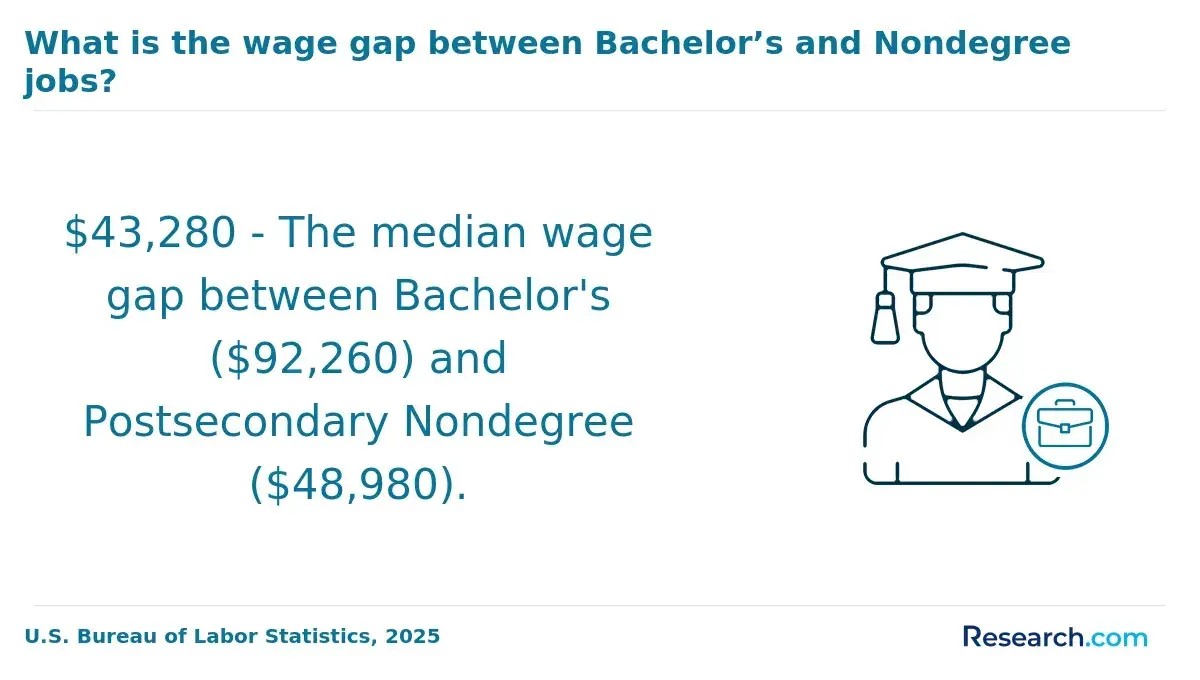
Degree level has a direct effect on what pharmacy jobs a graduate can legally and realistically pursue. The most important distinction is that a PharmD is the standard pathway for licensed pharmacist roles, while lower-level credentials generally lead to technician, support, sales, research, or administrative work.
- Associate Degree: An associate-level path most often supports pharmacy technician or assistant roles. It can be a practical entry point for students who want to work in pharmacy before committing to a doctorate, but advancement is usually limited without additional credentials.
- Bachelor's Degree: A bachelor’s degree can support work in pharmaceutical sales, research assistance, regulatory support, healthcare operations, or preparation for graduate study. It generally does not qualify graduates for licensed pharmacist positions.
- Master's Degree: A master’s degree can improve competitiveness in pharmaceutical research, public health, clinical trials, regulatory affairs, informatics, or management. However, it rarely substitutes for the Doctor of Pharmacy when pharmacist licensure is the goal.
- Doctorate (PharmD): The PharmD is the key credential for licensed pharmacist roles. It provides clinical, therapeutic, patient care, and professional practice training and is strongly tied to broader pharmacy employment options.
When comparing PharmD options, students should evaluate accreditation, experiential rotations, licensure exam preparation, clinical placement quality, and total cost. Online and hybrid formats may be attractive for flexibility, but they still need credible clinical training; comparing the best online pharmacy school options can help students weigh affordability against licensure-focused preparation.
Students interested in healthcare leadership rather than pharmacist licensure may also consider an online healthcare administration degree as a separate pathway into healthcare operations and management.
What Skills Are Employers Seeking in Pharmacy Graduates?
Employers want pharmacy graduates who can protect patient safety while working efficiently in complex healthcare environments. Technical knowledge is essential, but it is not enough. Hiring managers also look for communication, judgment, documentation accuracy, adaptability, and comfort with digital tools.
- Clinical Expertise: Graduates need strong knowledge of pharmacology, therapeutics, dosing, contraindications, drug interactions, and medication monitoring. This is especially important in hospital, ambulatory care, specialty pharmacy, and chronic disease roles.
- Clear Patient Communication: Pharmacists must explain medication instructions, side effects, adherence strategies, and safety concerns in language patients can understand. Communication also matters when resolving issues with prescribers, nurses, insurers, and technicians.
- Accuracy and Detail Orientation: Small errors can have serious consequences. Employers value graduates who can verify prescriptions, document correctly, identify inconsistencies, and maintain focus under time pressure.
- Analytical Thinking: Modern pharmacy work often requires interpreting patient histories, lab values, medication lists, insurance constraints, and clinical guidelines to make safe recommendations.
- Technology Literacy: Pharmacy graduates should be comfortable with electronic health records, pharmacy management systems, drug databases, automation platforms, and digital communication tools.
- Ethical Judgment: Confidentiality, controlled-substance handling, conflict-of-interest awareness, and professional responsibility are central to pharmacy practice.
- Team-Based Practice: Many roles require collaboration with physicians, nurses, case managers, technicians, and administrators. Graduates who can work respectfully across disciplines are more employable.
One pharmacy degree graduate described the early transition into practice as demanding because classroom knowledge had to be applied quickly and accurately. He said, “It was daunting managing multiple tasks while ensuring accuracy.” Over time, mentorship and repeated patient interactions helped him build the judgment employers expect. He added that “being able to explain complex information calmly to patients and coworkers made all the difference.” His experience reflects a common reality: employability depends on both technical competence and the ability to perform under real workplace pressure.
How Does Job Demand Affect Pharmacy Graduate Salaries?
Job demand affects pharmacy salaries through competition. When employers need pharmacists and qualified candidates are limited, pay and incentives may improve. When many graduates compete for the same roles, especially in saturated retail markets, starting offers and wage growth can become less favorable. The U.S. Bureau of Labor Statistics reports a median annual wage of approximately $128,000 for pharmacists in 2022.
- Starting Salaries: New graduates may receive stronger offers in regions, specialties, or settings with staffing shortages. In areas with many applicants, employers may have less pressure to raise starting pay.
- Wage Growth: Salary progression often depends on setting, performance, specialization, and advancement into clinical, management, informatics, or industry roles. Weak local demand can slow raises and limit promotion opportunities.
- Long-Term Earnings: Pharmacists who build expertise in high-need areas may have better long-term earning potential than those who remain in oversupplied roles with limited differentiation.
- Regional and Economic Factors: Healthcare funding, local employer concentration, state demand, and cost of living all affect compensation. A high nominal salary may not be the best offer once living expenses and loan repayment are considered.
Graduates should evaluate compensation as a full package: base salary, schedule, benefits, loan repayment support, relocation assistance, overtime expectations, residency requirements, and advancement potential. Demand matters, but it is only one part of a financially sound career decision.
How Is AI Changing Demand for Pharmacy Professionals?
AI is changing pharmacy demand by reducing the value of purely repetitive work and increasing the value of clinical interpretation, oversight, and patient-centered decision-making. Over 60% of U.S. healthcare organizations have adopted AI tools to assist in pharmacy-related decisions, which means graduates should expect technology to be part of everyday practice.
- Automation of routine tasks: AI and automation can support dispensing, inventory tracking, medication history review, alerts, and workflow management. This may reduce demand for some manual tasks while freeing pharmacists to focus on therapy review and patient safety.
- Growth in specialized roles: AI-supported care creates demand for professionals who can interpret data, evaluate recommendations, monitor medication risks, and apply clinical judgment rather than simply accept automated outputs.
- Higher expectations for data literacy: Graduates who understand informatics, clinical decision support, dashboards, and electronic health record workflows may be more competitive.
- Continued need for human judgment: AI can flag risks, but pharmacists remain responsible for context, ethics, patient counseling, and clinical accountability. Employers still need professionals who can question outputs and communicate decisions clearly.
- Changing entry-level work: New graduates may need to learn more technology faster than previous cohorts. Those who resist digital tools may find fewer opportunities in advanced practice settings.
A recent pharmacy graduate described AI adoption as challenging at first because clinical software required skills beyond traditional coursework. She said the learning curve was steep, but using AI tools improved her confidence and made her more effective. “Working alongside AI tools has elevated my role,” she explained, “and while the learning curve was steep, it made my work more meaningful.” Her experience shows why technology fluency is becoming part of employability, not an optional extra.
Is Pharmacy Considered a Stable Long-Term Career?
Pharmacy can still be a stable long-term career, but stability is stronger for graduates who adapt beyond traditional dispensing roles. The need for medication expertise is unlikely to disappear, yet the profession is changing in where pharmacists work, how they are paid, and what employers expect.
- Ongoing need for medication expertise: Patients, providers, hospitals, insurers, and public health systems continue to depend on professionals who understand drug therapy, safety, adherence, and interactions.
- Essential patient safety role: Pharmacists help prevent medication errors, counsel patients, verify prescriptions, and identify clinical risks. These responsibilities remain central even as technology expands.
- Resilience through specialization: Areas such as oncology, geriatrics, pharmacogenomics, informatics, ambulatory care, and medication therapy management can strengthen long-term career security.
- Exposure to market pressure: Retail consolidation, automation, workload concerns, and regional saturation can make some pharmacy jobs less predictable. Students should not assume every location or setting offers the same stability.
- Advancement options: Pharmacists can move into management, clinical leadership, pharmaceutical industry roles, academia, research, consulting, or regulatory work with the right experience and training.
Students comparing healthcare careers should weigh pharmacy against other licensed and non-licensed paths. For example, those seeking a patient-care profession with different training and demand patterns may review the cheapest online nursing programs as part of a broader career comparison.
Is a Pharmacy Degree Worth It Given the Current Job Demand?
A pharmacy degree can be worth it for students who understand the market and choose their path strategically. It is less compelling for students who expect automatic job security in any city, any retail setting, or any schedule. The U.S. Bureau of Labor Statistics projects pharmacist employment to increase by about 2% from 2022 to 2032, so the decision should be based on fit, cost, licensure goals, and willingness to specialize.
The strongest case for a pharmacy degree is for students who want a clinical healthcare role focused on medication expertise and who are prepared to pursue competitive experiences, residencies, certifications, or specialized practice areas. Graduates with skills in oncology, pharmacogenomics, informatics, ambulatory care, or hospital practice may find more durable opportunities than those relying only on general retail demand.
The main risk is educational cost relative to local job competition. Before enrolling, students should compare tuition, debt, accreditation, licensure outcomes, residency placement, state demand, and the types of employers recruiting from the program. They should also speak with current students, recent graduates, and practicing pharmacists in the region where they want to work.
For some students, another healthcare pathway may offer a better balance of cost, training length, and job demand. Those comparing alternatives can examine options such as the cheapest RN to BSN program online while assessing which credential best matches their career goals and financial situation.
What Graduates Say About the Demand for Their Pharmacy Degree
- : "Pursuing a pharmacy degree was one of the most pivotal decisions I've made. The return on investment truly showed as I quickly found rewarding job opportunities that matched my passion for healthcare. This degree has not only shaped my career but also given me the confidence to make meaningful contributions in my field. — Jennie"
- : "Looking back, choosing to study pharmacy felt uncertain at first, but it has proven invaluable in both professional growth and personal satisfaction. The knowledge and skills I gained opened doors I never expected and have provided a solid foundation for a sustainable career. It's been a journey of continuous learning and meaningful impact. — Denise"
- : "My pharmacy education directly elevated my career trajectory, equipping me with essential expertise crucial for today's healthcare challenges. The tangible ROI is evident through the breadth of roles I now qualify for and the respect I've earned as a healthcare professional. I approach my work with a level of professionalism and insight that this degree made possible. — Callum"
Other Things You Should Know About Pharmacy Degrees
In 2027, the demand for pharmacy degree graduates is expected to remain steady. Factors such as an aging population, increased focus on personalized medicine, and expanded healthcare access contribute to sustained demand, though job competition in urban areas might intensify.
In 2027, pharmacy residencies can significantly enhance job prospects. While not mandatory for all roles, completing a residency can offer specialized training and improve competitiveness, especially in clinical or advanced practice positions. The evolving healthcare landscape emphasizes comprehensive care, making residency-trained pharmacists more appealing to employers.
Demand for pharmacy graduates is influenced by factors such as an aging population, increasing prevalence of chronic diseases, and shifts in healthcare delivery models. Policy changes, like expanded roles for pharmacists in medication management and preventive care, also affect demand. Conversely, trends in automation and mail-order pharmacies may moderate growth in traditional retail pharmacy roles.
References
- Artificial Intelligence (AI) in Pharmacy https://www.rpharms.com/recognition/all-our-campaigns/policy-a-z/ai
- Pharmacy Career Outlook: Is a Career in Pharmacy Worth It? - Roseman University https://www.roseman.edu/student-experience/news/pharmacy-career-outlook-is-a-career-in-pharmacy-worth-it/
- 5 In-Demand Career Paths for B.Pharmacy Graduates to Boost their Earnings https://www.cgcuniversity.in/blog/5-in-demand-career-paths-for-bpharmacy-graduates-to-boost-their-earnings
- Is Pharmacy a Stable Career? https://www.fladgerassociates.net/is-pharmacy-a-stable-career
- 10 Things to Know Before Choosing a Career in Pharmacy https://sageuniversity.in/blogs/choosing-a-career-in-pharmacy
- Whatâs After a Pharmacy Degree for Freshers? A complete Guide on career and study in 2025 | Elite Expertise https://www.eliteexpertise.com.au/whats-after-a-pharmacy-degree-for-freshers-a-complete-guide-on-career-and-study-in-2025
- Skills Every B.Pharm Student Must Learn to Build a Successful Career in the Pharma Industry https://www.gnipst.ac.in/blog/skills-every-b-pharm-student-must-learn-to-build-a-successful-career-in-the-pharma-industry
- Pharmacy Skills: What Are Employers Really Looking For? https://www.rxrelief.com/blog/pharmacy-skills-what-are-employers-really-looking-for/
- Careers for pharmacists https://pharmacistsupport.org/i-need-help-managing-my/work-life/careers-for-pharmacists/
- Soft Skills Every D.Pharm Graduate Should Develope https://kiits.in/soft-skills-every-d-pharm-graduate-should-develope/


