
2027 Is a 2-Year Pharmacy Degree Worth It: Accelerated Bachelor's ROI & Time Trade-Offs

Co-Founder and Chief Data Scientist
A 2-year pharmacy degree can shorten the path into pharmacy-related work, but the payoff depends on what the credential actually qualifies you to do. Some programs prepare students for technician or assistant roles, while accelerated bachelor’s or pre-professional pathways may support later study. The key question is not simply whether the program is fast; it is whether the shorter timeline leads to the job, salary range, licensure path, and debt level you can justify.
That decision matters as accelerated bachelor’s degrees become more common. With accelerated bachelor’s degrees growing in popularity, 28% of pharmacy graduates now enter the workforce earlier than traditional students, but earlier employment does not automatically mean a better return on investment. Students need to compare program length, admission requirements, workload, accreditation, financial aid access, and realistic career outcomes before enrolling.
This guide explains how 2-year pharmacy programs work, what they typically require, how online or hybrid formats fit pharmacy training, what costs to review, and how salaries compare with traditional bachelor’s pathways. It is designed for students who want a practical, decision-focused view of whether an accelerated pharmacy route fits their career and financial goals.
Key Benefits of a 2-Year Pharmacy Degree
- Accelerated 2-year pharmacy degrees reduce time to enter the workforce, enabling earlier salary earnings, which typically range from $60,000 to $80,000 annually, enhancing ROI compared to longer programs.
- Lower tuition costs and fewer lost income years improve financial returns, with graduates often recouping educational expenses within three to five years of employment.
- Hands-on clinical experience integrated in accelerated programs promotes quicker skill acquisition, increasing employability in competitive pharmacy job markets despite the condensed study period.
How Do 2-Year Pharmacy Programs Work?
A 2-year pharmacy program compresses pharmacy-focused coursework into a shorter academic schedule. Depending on the school, the credential may be an associate degree, an accelerated bachelor’s pathway, or a pre-professional program that prepares students for further pharmacy education. Because program titles vary, applicants should confirm exactly what credential is awarded and what jobs or additional degrees it supports.
The main advantage is time. Graduates from accelerated bachelor's degree tracks often save 1.5 to 2 years compared to traditional four-year degrees, which can allow them to start earning sooner. The trade-off is intensity: students usually have fewer breaks, heavier course loads, and less room to recover from a weak term.
- Accelerated calendar: Many programs use year-round enrollment, including summer sessions, so students continue progressing instead of taking long academic breaks.
- Condensed terms: Courses may run on shorter schedules, requiring students to learn material quickly and complete assignments at a steady pace.
- Higher credit load: Students may carry 15 to 20 credits per term, compared with the typical 12 to 15 credits in many standard programs.
- Blended instruction: Programs may combine online lectures, in-person labs, seminars, and supervised skill practice. Pharmacy training usually cannot be completed through lecture-only study.
- Frequent assessment: Quizzes, exams, case work, lab checks, and practical evaluations help faculty confirm that students are keeping up with scientific and medication-related concepts.
- Strict progression rules: Because the curriculum moves quickly, students may need to maintain specific grades in prerequisite or core courses to continue without delay.
Students whose long-term goal is pharmacist licensure should pay close attention to degree level. A short pharmacy-related degree may be useful for entry-level work or preparation, but pharmacist licensure typically requires more advanced professional education. If you are comparing affordable doctoral pathways after an accelerated start, reviewing pharm d online options can help you understand how later pharmacy education may fit into your plan.
What Are the Admission Requirements for a 2-Year Pharmacy Degree?
Admission requirements for 2-year pharmacy programs are meant to identify students who can handle a compressed science-heavy curriculum. The exact standards vary by school and credential level, but most programs look for evidence that applicants are prepared for biology, chemistry, math, healthcare communication, and fast-paced academic work.
Before applying, read the admissions page carefully and verify whether the program admits first-time college students, transfer students, or applicants who have already completed prerequisite coursework. A “2-year” timeline may begin only after prerequisites are finished.
- Prior education: Many programs expect applicants to have completed some college-level coursework, especially in biology, chemistry, anatomy, physiology, math, or related sciences.
- GPA expectations: Applicants generally need a minimum GPA between 2.5 and 3.0 on a 4.0 scale, though competitive programs may set higher expectations or give preference to stronger academic records.
- Prerequisite courses: General chemistry and biology are common requirements. Missing prerequisites can extend the actual time to completion, even if the advertised program length is two years.
- Standardized tests: Some programs may request Pharmacy College Admission Test (PCAT) scores or other assessments, while others waive testing for applicants with strong coursework or prior academic performance.
- Healthcare or pharmacy experience: Work or volunteer experience is not always required, but it can help applicants show commitment and a realistic understanding of pharmacy settings.
- Recommendations and personal statement: Letters of recommendation and a personal statement often help admissions committees evaluate maturity, motivation, communication skills, and readiness for accelerated study.
- Background checks or immunization records: Programs with clinical or lab components may require documentation before students can participate in certain training experiences.
A common mistake is applying based only on program length without checking prerequisites, minimum grades, transfer-credit rules, and progression policies. If a student needs additional science courses before beginning the core curriculum, the total timeline may be longer than expected.
For students comparing other short healthcare training routes, a medical assistant program can provide a useful point of comparison for admission standards, pace, and entry-level healthcare outcomes.
What Does a Typical Week Look Like in a 2-Year Pharmacy Program?
A typical week in a 2-year pharmacy program is structured and demanding. Students should expect a schedule that combines lectures, labs, assignments, group work, and independent review. The workload is manageable for disciplined students, but it leaves little room for falling behind.
- Lectures and class sessions: Students may spend 15 to 20 hours each week in lectures, labs, or scheduled learning activities covering topics such as pharmacology, medication safety, dosage calculations, pharmacy law, and drug interactions.
- Lab and skills practice: Hands-on sessions may focus on compounding, prescription processing, inventory procedures, patient communication, or simulated pharmacy workflows.
- Assignments and assessments: Case studies, quizzes, practical exams, written work, and group presentations are common. In an accelerated format, assessments may occur every week rather than only at midterm and final exam periods.
- Independent study: Learners often need 10 to 15 hours weekly for reading, review, memorization, practice problems, and exam preparation.
- Group collaboration: Team-based work helps students practice communication and problem-solving, both of which matter in pharmacy and broader healthcare settings.
- Instructor interaction: Office hours, tutoring, review sessions, and early feedback are especially important because a weak performance can affect progression quickly.
- Planning time: Students need a weekly system for deadlines, exams, lab preparation, work schedules, and personal responsibilities.
One graduate described the adjustment this way: “At first, it felt overwhelming because lectures, labs, and assignments came quickly. I had to build a routine almost immediately.” The same graduate said study groups helped make difficult material easier to manage and reduced the sense of isolation that can come with an accelerated schedule.
The students who tend to do best are not always those with the most free time; they are often those who plan early, ask for help before grades slip, and review material consistently instead of cramming. Anyone working significant hours should ask the program how many students successfully combine employment with the required course load.
Are 2-Year Pharmacy Programs Available Online?
Some 2-year pharmacy programs include online coursework, but fully online formats are uncommon because pharmacy education often requires labs, skill demonstrations, simulations, or supervised hands-on training. In most cases, students should expect either a campus-based program or a hybrid model.
- Fully online programs: These are rare for pharmacy training because students usually need in-person practice for lab procedures, medication preparation, and workplace readiness skills.
- Hybrid programs: Hybrid formats may place lectures, readings, discussions, and exams online while requiring students to attend campus labs, intensives, or supervised practical sessions.
- Synchronous learning: Live online classes can provide interaction with instructors and classmates, but they require students to be available at specific times.
- Asynchronous learning: Recorded lectures and online modules offer flexibility, but students must be self-directed and disciplined to stay current.
- Technology requirements: Students usually need reliable high-speed internet, a capable computer, webcam access, secure testing tools, and comfort using a learning management system.
- Student support: Online tutoring, academic advising, library access, technical help, and career services matter more in accelerated programs because problems need to be solved quickly.
When evaluating an online or hybrid option, ask where in-person requirements take place, how often students must travel, whether clinical or lab placements are arranged by the school, and whether the delivery format affects eligibility for financial aid, certification, transfer, or future degree programs.
How Much Does a 2-year Pharmacy Degree Cost?
The cost of a 2-year pharmacy degree depends on tuition structure, fees, residency status, required materials, and whether the program is public, private, online, hybrid, or campus-based. A shorter program may reduce total time in school, but it can also concentrate expenses into fewer terms.
Students should calculate total cost, not just advertised tuition. Accelerated programs can appear affordable because they are shorter, yet the required credit load, lab fees, technology charges, and upfront book costs can make each term expensive.
- Tuition structure: Schools may charge by credit hour, term, semester, or program. Accelerated schedules can require more credits per term, increasing short-term bills even if the total number of terms is lower.
- Mandatory fees: Lab, technology, student service, testing, background check, and clinical placement fees can add significantly to the final price.
- Books and digital materials: Pharmacy courses may require textbooks, drug reference tools, software access, or online learning systems. In a fast program, these costs may arrive close together.
- Lab and equipment costs: Students may need supplies, safety materials, uniforms, or tools for hands-on training.
- Transportation and housing: Hybrid students should include travel to campus, parking, lodging for intensives, and commuting time when comparing programs.
- Lost work hours: A compressed schedule may limit the ability to work while enrolled, which can affect affordability even if tuition is lower.
The most useful cost question is: “What will I pay from enrollment through graduation, and what job will this credential realistically help me obtain?” A program with lower tuition may not be the best value if it lacks support, has poor completion outcomes, or does not align with the student’s intended career path.
Students comparing accelerated healthcare degrees may also find it useful to review a fast track healthcare administration degree to see how other healthcare programs structure costs, online delivery, and completion timelines.
Can You Get Financial Aid for 2-Year Pharmacy Programs?
Students may be able to use financial aid for 2-year pharmacy programs, but eligibility depends on the school, accreditation, credential level, enrollment status, and program approval for aid. Before applying, confirm that the program participates in the aid sources you plan to use.
- Federal student aid: Accelerated pharmacy programs that maintain proper accreditation often qualify for federal aid such as Pell Grants and Direct Loans. Students should still confirm eligibility directly with the financial aid office.
- Disbursement timing: Because accelerated terms may not follow a traditional semester calendar, aid disbursement schedules can differ. Students need to know when funds arrive and when tuition is due.
- Satisfactory academic progress: Students must usually maintain required grades and completion rates to keep aid. In a compressed program, falling behind can affect aid eligibility quickly.
- Scholarships and grants: Pharmacy associations, state agencies, nonprofits, and schools may offer awards based on need, merit, service, or healthcare interest.
- Employer tuition assistance: Students already working in healthcare may be able to use employer benefits, especially if the degree supports advancement in a pharmacy or clinical setting.
- Payment plans: Institutional payment plans can spread tuition across a term, which may help students manage cash flow when expenses are concentrated.
One graduate said the financial aid process required as much organization as the coursework: “I had to track tuition deadlines, aid disbursements, and scholarship paperwork closely because the schedule moved fast.” Employer assistance helped cover remaining costs after scholarships, but the graduate emphasized that early communication with the aid office was essential.
Before enrolling, ask the school for a written estimate of tuition and fees, aid eligibility, refund rules, payment deadlines, and what happens financially if you need to repeat or withdraw from a course. These details can materially affect the real ROI of an accelerated program.
What Jobs Can You Get With a 2-Year Pharmacy Degree?
Career outcomes depend on the credential, state rules, employer requirements, and whether the program prepares students for certification or further education. A 2-year pharmacy degree can support entry-level or technical roles, but it does not by itself qualify graduates for pharmacist licensure.
- Pharmacy technician: Graduates may work in retail pharmacies, hospitals, outpatient departments, long-term care settings, or mail-order pharmacy environments. Duties can include prescription processing, inventory support, medication preparation under supervision, and customer service.
- Pharmacy assistant: Assistants support daily pharmacy operations, help with clerical tasks, communicate with patients, and assist licensed pharmacy staff within the limits of state law and employer policy.
- Pharmacy clerk: Clerks often focus on customer interaction, records, inventory, transactions, and administrative support. This can be an entry point for students who want pharmacy workplace experience.
- Healthcare support roles: Graduates may also find opportunities in hospital outpatient departments, long-term care facilities, and pharmaceutical manufacturing companies.
- Further education pathway: A 2-year degree can serve as a stepping stone toward advanced certifications or additional degrees, especially for students who later decide to pursue broader healthcare or pharmacy credentials.
Employment projections from the U.S. Bureau of Labor Statistics indicate steady growth in pharmacy technician positions, which can make accelerated pharmacy programs attractive for students seeking earlier entry into healthcare employment. However, students should distinguish between “pharmacy-related work” and becoming a licensed pharmacist, since those outcomes require different levels of education and credentialing.
Students interested in management, operations, or non-clinical healthcare roles may also compare pharmacy pathways with an online healthcare administration degree.
How Do Salaries Compare for 2-year Pharmacy Degree vs. Traditional Bachelor's Degrees?
Salary is one of the clearest trade-offs between a 2-year pharmacy pathway and a traditional bachelor’s degree. A shorter program can help students start earning sooner and potentially reduce debt, but the starting roles available after a 2-year pharmacy degree often pay less than roles requiring a bachelor’s degree.
- Early-career earnings: Graduates with a 2-year pharmacy degree often enter roles such as pharmacy technician positions, with median salaries around $37,000 annually. Traditional bachelor’s degree holders usually start near $50,000.
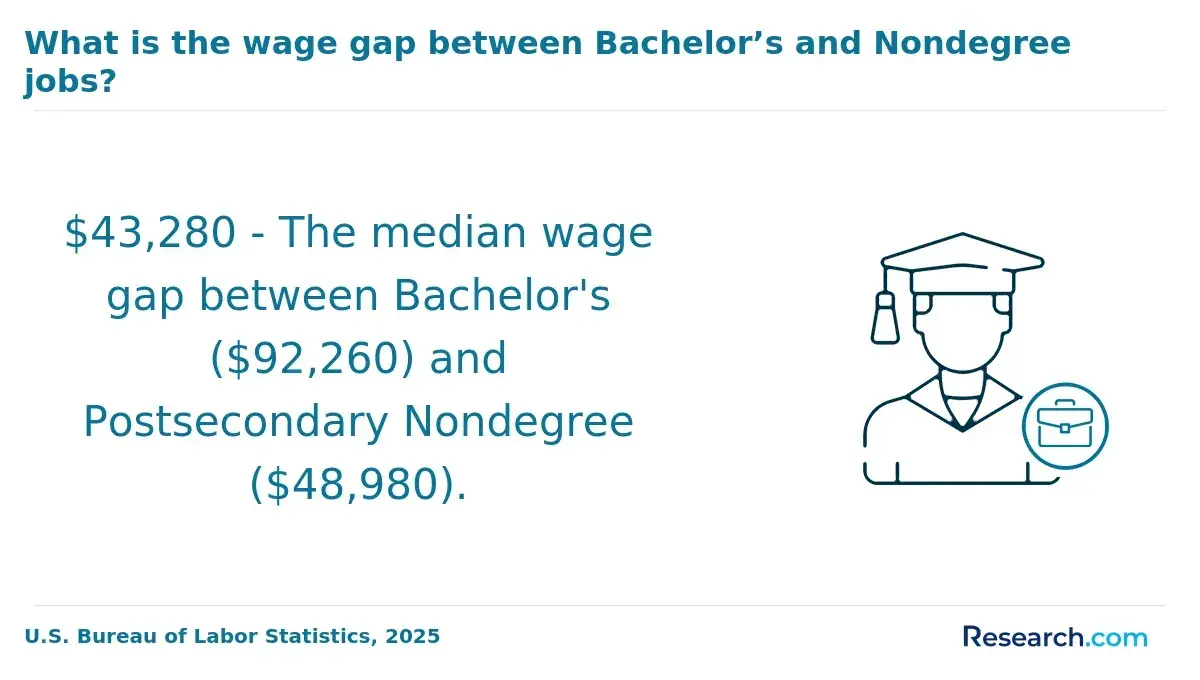
- Long-term earning potential: Bachelor’s degree holders tend to see larger salary growth over time, with median wages rising to approximately $75,000 to $85,000 as they gain experience or move into specialized or managerial positions.
- Career mobility: Employers may prefer bachelor’s degrees for leadership, analytical, regulatory, management, or specialized healthcare roles. A 2-year credential may limit advancement unless paired with certification, experience, or further education.
- Earlier workforce entry: Completing a shorter program can allow students to earn sooner, build experience, and reduce time out of the labor market. This can partly offset lower starting pay for some students.
- Debt and risk: A lower-cost 2-year program may be financially safer for students who want an entry-level healthcare role quickly, while a bachelor’s path may make more sense for students targeting broader advancement and higher long-term pay.
The best comparison is not just first salary versus first salary. Students should compare total tuition, debt, time out of the workforce, expected job title, advancement requirements, and whether additional education will be needed later. A short program can produce a positive ROI when it leads directly to stable employment and keeps borrowing manageable.
For students considering later advancement in healthcare, the most affordable bsn to dnp programs online can also illustrate how additional professional education may influence career and salary growth in another healthcare field.
Which Factors Most Affect ROI for Accelerated Pharmacy Degrees?
The ROI of an accelerated pharmacy degree is shaped by more than tuition. Students need to evaluate how quickly they can graduate, what they can earn afterward, whether the credential supports licensure or certification goals, and how much debt they must take on to complete the program.
- Time-to-completion: Reduced program length—often two to three years instead of the traditional four—can help students enter the workforce sooner and reduce living costs tied to extended enrollment.
- Tuition and total cost: A shorter program may lower total spending, but fees, higher term-by-term credit loads, lab expenses, and reduced ability to work can change the actual cost.
- Opportunity cost savings: Finishing earlier can reduce income lost while studying. For pathways that lead to pharmacist licensure, this can be especially important because a pharmacist’s salary, according to labor data, averages around $128,000 annually with steady growth prospects.
- Credential value: ROI is stronger when the degree clearly connects to the student’s target job, certification, transfer pathway, or future professional program.
- Employment outcomes: Students should ask about completion rates, job placement support, employer partnerships, and the types of roles recent graduates obtained.
- Salary growth: A program with modest starting pay can still be worthwhile if it creates a reliable path to experience, certification, advancement, or further education.
- Industry demand: An aging population and expanding healthcare requirements maintain robust need for pharmacy professionals, which can support job stability across pharmacy settings.
- Transferability of skills: Strong programs teach medication safety, pharmacy calculations, communication, regulatory awareness, and healthcare teamwork—skills that may be useful across retail, clinical, and pharmaceutical environments.
To judge ROI realistically, compare at least three scenarios: entering the workforce after the 2-year program, choosing a traditional bachelor’s degree, and using the 2-year program as a bridge to further pharmacy or healthcare education. The right answer depends on your target role, finances, academic readiness, and timeline.
How Do You Decide If a 2-year Pharmacy Degree Is Right for You?
A 2-year pharmacy degree may be right for you if you want a faster route into pharmacy-related work, can handle an intensive schedule, and understand the credential’s limits. It is usually a stronger fit for students seeking technician, assistant, support, or preparatory roles than for students who assume it will automatically lead to pharmacist licensure.
Use the following questions to make a practical decision:
- What job do I want after graduation? Match the program to actual job postings in your area, not just general pharmacy career descriptions.
- Does the credential meet employer or state requirements? Confirm whether you need certification, registration, licensure, or additional education.
- Can I manage the pace? Accelerated programs require strong time management, steady study habits, and the ability to absorb science-heavy material quickly.
- How much will I borrow? Estimate total debt and compare it with likely starting pay.
- Will I need to work while enrolled? If yes, ask whether current students successfully balance employment with 15 to 20 credits per term.
- Is there a path forward? If you may want higher-paying or licensed roles later, confirm whether credits transfer and whether the program supports further education.
Financially, accelerated pharmacy programs may reduce tuition costs and overall time invested, which can improve educational ROI for some students. However, median salaries for pharmacy technicians with associate degrees generally fall between $36,000 and $42,000 annually, which is lower than pharmacists with doctoral credentials.
The clearest fit is a student who wants to enter the pharmacy workforce sooner, keep education costs controlled, and remain open to certification or further study. Students aiming for advanced clinical responsibility, leadership, or pharmacist licensure should treat a 2-year degree as one possible step—not the final credential.
What Graduates Say About Their 2-Year Pharmacy Degree
- : "The accelerated schedule forced me to become organized quickly. I chose the 2-year pharmacy route because I wanted to start working sooner and avoid spending extra time in school. It was challenging, especially while working part time, but the focused structure helped me build confidence for my first pharmacy role. — Lennon"
- : "For me, the biggest benefit was efficiency. I knew I wanted a healthcare job, and I did not want unnecessary time or financial strain. The workload was heavy, and I had to give up some social time, but graduating sooner made the trade-off worthwhile. — Forest"
- : "I chose an accelerated pharmacy program because I wanted a practical path into the field without delaying my career. The pace required discipline and careful planning, but completing the program helped me move into a pharmacy-related position shortly after graduation. — Leo"
Other Things You Should Know About Pharmacy Degrees
A 2-year Pharmacy degree in 2027 provides students with foundational knowledge and skills in pharmacology and healthcare, facilitating entry into various roles within the pharmaceutical industry, such as pharmacy technicians, research assistants, or sales representatives, while laying the groundwork for further education if desired.
Accelerated programs reduce time spent in school, allowing graduates to enter the workforce and earn income earlier. This time trade-off can improve return on investment (ROI) by lowering education costs and lost wages.
However, because many advanced pharmacy roles require further study, accelerated bachelor's degrees might delay the achievement of top-tier salaries unless followed by continued education.
References
- Pharmacy | Pre-health | Binghamton University https://www.binghamton.edu/pre-health/curriculum/pharmacy.html
- Student Loans for Pharmacy School | Brazos Higher Education https://studentloans.com/student-loans-for-pharmacy-school/
- Why choose study pharmacy? - Education Poland - Study in Europe in English https://educationpoland.pl/why-choose-study-pharmacy/
- Pre-Pharmacy - BAAS https://www.pacific.edu/pharmacy/academics/pre-pharmacy
- Pharmacy Career Outlook: Is a Career in Pharmacy Worth It? - Roseman University https://www.roseman.edu/student-experience/news/pharmacy-career-outlook-is-a-career-in-pharmacy-worth-it/
- Things to Know before Choosing Pharmacy as a Career https://lloydpharmacy.edu.in/blog/pharmacy-as-a-career.html
- PharmD Tuition & Financial Aid https://www.pacificu.edu/pharmacy-pharmd/tuition-financial-aid
- Two year accelerated degrees https://www.staffs.ac.uk/courses/undergraduate/study-options/two-year-accelerated-degrees


