
2027 Liberal Arts Degree Careers That Do Not Require Graduate School

Co-Founder and Chief Data Scientist
A recent liberal arts graduate surveying the job market quickly realizes that while many entry-level roles welcome candidates with a bachelor's degree, others demand advanced qualifications or specialized certifications. Approximately 35% of liberal arts graduates secure jobs in fields that do not require graduate school, reflecting growing employer acceptance of bachelor-level competencies. Understanding which career paths prioritize practical skills and experience over further academic study enables graduates to target opportunities effectively. This article explores liberal arts degree careers that do not require graduate school but offer solid prospects for long-term growth and employability.
Key Things to Know About the Liberal Arts Careers That Do Not Require Graduate School
- Many liberal arts careers allow direct workforce entry with only a bachelor's degree, especially in fields like communications, marketing, and public relations.
- Employers often prioritize relevant skills, certifications, and internship experience over graduate degrees for entry-level roles within liberal arts sectors.
- Labor data shows that practical experience and skill mastery can lead to meaningful career growth without advanced academic credentials in many liberal arts professions.
What Career Paths Can You Pursue with a Liberal Arts Degree Without Graduate School?
A significant number of liberal arts degree holders are able to enter a wide range of careers directly after earning a bachelor's degree, although opportunities vary based on role type and industry demand. According to the National Center for Education Statistics, about 60% of liberal arts graduates secure full-time employment within a year, reflecting strong bachelor's-level hiring trends without the need for graduate school.
Here are several lateral entry careers for liberal arts graduates that highlight accessible job options without requiring advanced degrees:
- Marketing and Communications: These roles value strong writing and analytical skills typical of a liberal arts education. Many entry-level positions hire bachelor's degree holders to support content creation, campaigns, and audience research without demand for graduate credentials.
- Public Relations Specialist: Graduates can apply their communication and cultural literacy skills to coordinate media relations and messaging. Organizations often recruit for these positions at the bachelor's level, appreciating versatility and interpersonal abilities.
- Human Resources Assistant: Tasks in recruitment and employee relations rely on understanding social dynamics and organizational behavior, which liberal arts curricula often cover. These roles commonly welcome applicants without graduate school experience.
- Editorial Assistant and Content Creator: Strong command of language and critical thinking enable graduates to contribute in publishing and media settings. Such jobs typically prioritize bachelor's-level education for entry.
- Social Services Coordinator: Positions supporting community programs and administrative functions benefit from liberal arts knowledge in psychology and sociology. These jobs frequently allow direct entry without requiring graduate degrees.
For those considering further study, exploring the cheapest PhD programs online can provide options, but many high demand jobs for liberal arts degree holders without advanced degrees are accessible immediately after undergraduate completion.
What Are the Highest-Paying Jobs for Liberal Arts Degree Graduates Without a Graduate Degree?
Many of the highest-paying careers for liberal arts graduates are accessible without pursuing graduate school, especially where employers recognize the value of a bachelor's degree combined with strong interpersonal and analytical skills. Data from the U.S. Bureau of Labor Statistics shows that those working in business and communication fields can earn a median annual wage between $60,000 and $80,000, reflecting solid earning potential with just undergraduate education.
Here are some well-compensated positions commonly available to liberal arts graduates:
- Marketing Manager: These professionals often start with degrees in communications, English, or psychology. Their ability to blend creativity with data-driven decision-making helps businesses shape effective marketing strategies, driving revenue growth and commanding high salaries.
- Technical Writer: Specializing in clear, precise documentation for complex industries, technical writers with liberal arts backgrounds in writing or English are in demand. Their expertise reduces errors and boosts product usability, making their roles well-compensated.
- Sales Manager: Leveraging communication and leadership skills, sales managers guide teams to meet targets. Their compensation frequently includes performance incentives linked directly to business results, contributing to their substantial earning potential.
- Public Relations Specialist: Skilled communicators manage an organization's public image and media relations. The critical role they play in reputation management creates a strong market demand and competitive salaries.
- Human Resources Specialist: Focused on recruitment and employee relations, HR specialists impact workforce productivity. Their strategic involvement in talent management supports good compensation without requiring further academic qualifications.
These roles showcase how liberal arts graduates can leverage their education to access financially rewarding careers that emphasize critical thinking, communication, and leadership without the need for advanced degrees.
What Skills Do You Gain from a Liberal Arts Degree That Employers Value?
Liberal arts degree programs cultivate versatile skills highly prized by employers, especially for roles that do not demand graduate-level education. A notable 91% of employers prioritize critical thinking and problem-solving abilities when hiring recent bachelor's degree graduates for entry-level positions.
The following key skills are refined through a liberal arts education, offering graduates a competitive edge.
- Critical Thinking: Liberal arts students are trained to assess information from different angles and construct well-reasoned conclusions. This ability supports sound decision-making and thoughtful problem resolution, making them effective contributors in various professional settings.
- Effective Communication: The curriculum emphasizes clear writing and persuasive speaking, which boosts collaboration and client relations. Strong communication is vital for teamwork, leadership, and customer-facing roles.
- Problem Solving: Exposure to diverse subjects challenges students to identify issues and create innovative solutions. Employers value this trait as it fosters productivity and adaptability without requiring advanced specialized skills.
- Research Proficiency: Through extensive investigation and analysis, graduates learn to gather and interpret data critically. This skill is essential for roles involving market research, data literacy, or ongoing professional development.
- Teamwork and Interpersonal Skills: Group work and discussions nurture empathy, cooperation, and conflict management, which contribute to positive workplace environments and effective collaboration.
A liberal arts degree graduate shared that transitioning into their first role meant applying critical thinking daily to navigate ambiguous tasks, which initially felt challenging but quickly became their strongest asset, demonstrating the real-world relevance of their education's skillset.
What Entry-Level Jobs Can Liberal Arts Graduates Get with No Experience?
Many liberal arts graduates secure entry-level jobs shortly after finishing their bachelor degree, even with no prior professional experience. Employers often design roles specifically for recent graduates, enabling a smooth transition into the workforce without requiring graduate school. According to the National Association of Colleges and Employers, nearly 60% of liberal arts graduates find work within six months, highlighting the strong early career pathways for liberal arts degree holders.
Below are common entry-level opportunities that welcome graduates without previous work history:
- Administrative Support: These roles usually prioritize organizational skills and communication over technical experience. Employers appreciate liberal arts graduates' adaptability and problem-solving abilities, making these positions accessible as entry level liberal arts jobs with no experience needed.
- Customer Service: Many entry-level customer service jobs offer on the job training roles for liberal arts graduates, allowing them to build professional skills while applying their understanding of human behavior and communication.
- Content Creation: Positions in writing, editing, and social media often focus on storytelling and language abilities rather than formal experience, giving recent graduates without prior jobs a foothold in creative industries.
- Human Resources Assistance: Companies frequently hire liberal arts graduates into support roles in HR, where interpersonal skills and generalist knowledge are valued over experience, making these trainee jobs suitable for liberal arts graduates.
For those considering career options, pursuing a bachelor degree online in 2 years can also broaden access to early-career hiring for liberal arts bachelor's graduates seeking entry-level roles.
What Certifications and Short Courses Can Boost Liberal Arts Careers Without Graduate School?
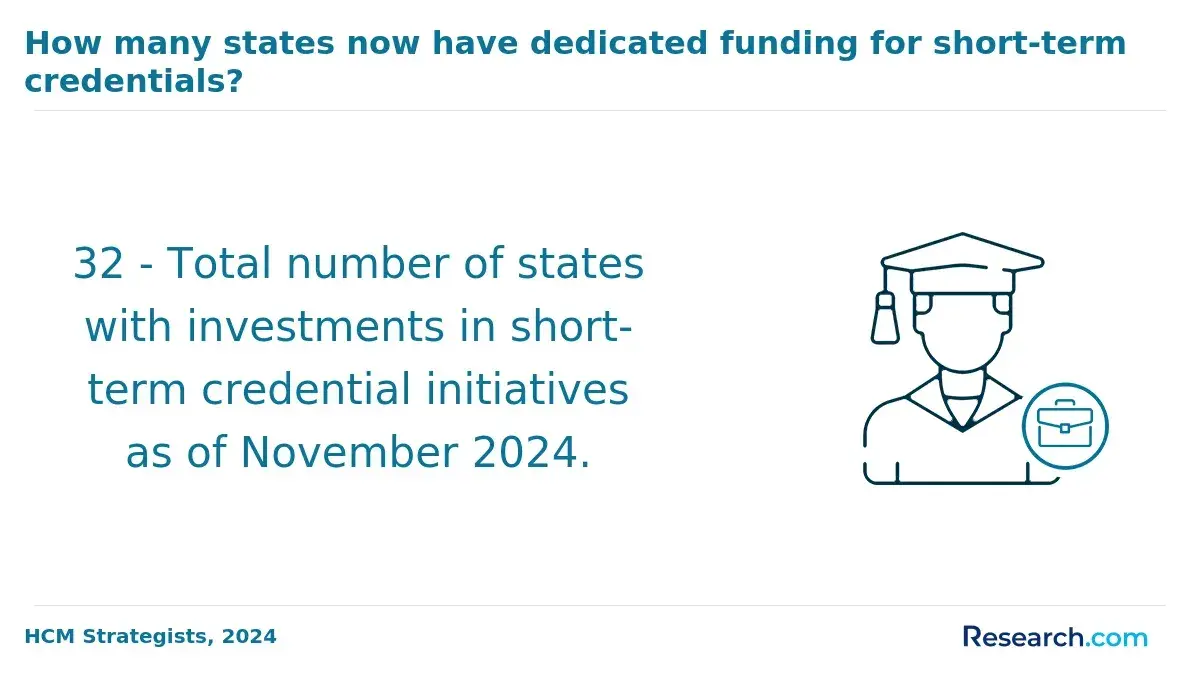
Certifications and short courses offer liberal arts graduates practical skills that improve employability without the need to attend graduate school. These focused credentials help fill gaps between broad academic knowledge and specific job demands, boosting career progress in targeted ways. Research indicates that 78% of employers favor candidates with relevant certifications or specialized training, even absent advanced degrees.
Below are several valuable credentials and courses that can enhance career prospects for liberal arts graduates:
- Project Management Professional (PMP): This certification showcases the ability to lead and organize projects efficiently, a critical skill that can help liberal arts graduates qualify for supervisory roles where strategic coordination is essential.
- Digital Marketing Certificates: Courses covering SEO, social media, and content creation equip graduates with concrete marketing skills, increasing their appeal in roles focused on audience engagement and communications.
- Technical Writing Certification: Training in technical writing strengthens the ability to produce clear, structured documentation, making graduates valuable assets in roles requiring precise communication without a deep technical background.
- Data Analytics Short Courses: These programs develop foundational skills in interpreting and presenting data, aiding graduates in roles that benefit from analytical insight without extensive graduate-level study.
- Human Resources Certification: Credentials such as SHRM-CP or PHR provide essential knowledge of employee relations and organizational policies, preparing graduates for positions centered on workforce management and compliance.
A professional with a liberal arts degree shared how earning a digital marketing certificate transformed their career path. Initially uncertain about how to translate their broad educational background into a specific job, they enrolled in a hands-on course focusing on SEO and content strategy. Although balancing study with a full-time job was challenging, the practical skills gained allowed them to confidently apply for marketing roles. Reflecting on the experience, they noted that this certification not only improved their technical abilities but also increased their confidence in navigating a competitive job market without pursuing graduate school.
Which Industries Hire Liberal Arts Graduates Without Graduate Degrees?
Opportunities for liberal arts graduates without graduate degrees vary across industries due to differing hiring needs and workforce dynamics. Some sectors are particularly receptive to bachelor's-level candidates because of their broad role diversity and significant hiring volume. Notably, about 44% of liberal arts graduates find employment in industries that commonly recruit individuals with only a bachelor's degree, reflecting the importance of sector-specific hiring practices.
Several industries stand out for their accessibility to liberal arts graduates entering the job market without advanced degrees:
- Business and Professional Services: This industry often welcomes liberal arts graduates for roles in marketing, human resources, and client relations. Its consistent demand for adaptable communicators suits the skill set of bachelor's holders.
- Publishing and Media: From journalism to digital media, these fields require strong writing and analytical talents, making them open to bachelor's-level candidates without graduate credentials.
- Government and Public Administration: With a wide range of administrative and policy-oriented positions, this sector routinely hires liberal arts graduates, valuing their generalist backgrounds without mandating advanced degrees.
- Nonprofit Organizations: Nonprofits rely on liberal arts graduates for program coordination, communications, and fundraising, offering flexible entry points based on practical skills and bachelor's qualifications.
- Education (Support Roles): Outside of teaching, many educational institutions offer positions in advising and administration that hire liberal arts graduates without requiring graduate study.
What Freelance, Remote, and Non-Traditional Careers Are Available for Liberal Arts Graduates?
Non-traditional career structures significantly broaden opportunities for liberal arts graduates by reducing dependence on formalized workplace pathways and traditional hiring processes. Digital platforms and independent work models have reshaped how these graduates enter the workforce, emphasizing flexibility and skills over background or location. Recent data from Gallup shows that nearly 45% of full-time U.S. workers have the option to work remotely at least part of the time, highlighting the rise of location-independent career options.
The following freelance, remote, and non-traditional career pathways illustrate how liberal arts graduates can pursue meaningful work without graduate school requirements:
- Distributed Work Systems: Companies without centralized offices employ remote teams, allowing graduates to contribute in content creation, communications, or project coordination. These systems prioritize productivity rather than geography, opening doors for flexible participation.
- Digital-First Labor Markets: Online platforms connect freelancers globally with clients needing writing, editing, digital marketing, or social media skills. This setup allows recent graduates to develop portfolios through diverse assignments, bypassing local networking limitations.
- Project-Based Independent Work Arrangements: Graduates often engage in short-term contracts for research, grant writing, or curriculum development, providing adaptable, skill-focused experiences outside typical office environments.
- Virtual Teaching and Tutoring: Advancements in digital education enable remote instruction in languages, humanities, and writing. These roles leverage communication skills while offering access to international student populations.
- Content Production for Online Media: Roles in podcast scripting, video narration, and blogging suit liberal arts backgrounds well, as these tasks are frequently sourced worldwide, underscoring global access and flexibility.
How Can You Build a Career Without Graduate School Using a Liberal Arts Degree?
Liberal arts graduates often begin building their careers by entering the workforce directly after earning their bachelor's degrees. About 60% of liberal arts holders move into employment without immediately pursuing advanced degrees, focusing instead on entry-level jobs that leverage critical thinking, communication, and analytical skills. Early career momentum usually depends on gaining experience, understanding workplace dynamics, and positioning oneself for future opportunities. This approach aligns well with many entry-level jobs for liberal arts graduates without advanced degrees in industries like education, marketing, and nonprofit organizations.
Long-term career development for liberal arts graduates without graduate school typically involves progressing within organizations through increasing responsibilities and role expansions. Rather than relying on further formal education, many build professional expertise and leadership capacity through practical experience and ongoing engagement. Career growth varies across fields, offering diverse paths in communications, sales, or administrative support that reward adaptability and initiative. For graduates considering the future, it can be useful to explore educational options like PsyD programs that align with their evolving goals.
What Are the Pros and Cons of Skipping Graduate School for Liberal Arts Careers?
Skipping graduate school is a common pathway for many liberal arts graduates, allowing earlier entry into the workforce. This choice can affect immediate job opportunities and long-term professional options depending on the career direction pursued. According to recent data, about 57% of liberal arts graduates enter the workforce without advanced degrees, though they typically face a wage gap compared to those with graduate education.
Here are some key aspects to consider when deciding whether to pursue graduate education:
- Early Workforce Entry: Graduates who skip graduate school can start gaining professional experience sooner, which may outweigh some advantages of advanced degrees in fields that value practical skills and portfolios.
- Opportunity Costs: Avoiding graduate school reduces financial burdens and lost income from additional years of study, making it an attractive choice for those prioritizing financial independence.
- Long-Term Progression Limits: Certain prestigious or specialized roles, especially in academia, research, or large institutions, often require advanced degrees, potentially restricting upward mobility without graduate credentials.
- Flexibility in Career Exploration: Entering the job market earlier allows graduates to explore diverse fields, which can help identify the best fit without committing time to specialized graduate programs.
For graduates considering operations management in liberal arts contexts, comparing online MBA programs comparison can also provide insights on blending graduate education with practical career goals.
What Are the Real-World Career Outcomes and Job Market Trends for Liberal Arts Graduates?
Liberal arts graduates without graduate school generally find diverse employment opportunities, reflecting varied job market outcomes. Labor statistics indicate that bachelor's-level liberal arts holders participate broadly across industries, with median salaries often between $35,000 and $65,000 depending on field and experience. Employment trends for liberal arts degree holders without graduate school show that many secure roles in communications, administration, and public relations, benefiting from transferable skills. While placement rates fluctuate by sector, adaptability and continual skill development are key factors in sustaining career growth.
Job market outcomes for liberal arts graduates vary significantly across different pathways, shaped by broader economic patterns rather than a uniform trend. Roles with higher selectivity and specialized requirements tend to offer better remuneration, while more accessible positions may provide stability and gradual earnings growth. Opportunities span sectors like government policy, arts management, and business, but success often hinges on market demand and personal strengths. Some graduates even pursue advanced studies through top masters in social work programs to diversify their career options.
What Graduates Say About Liberal Arts Careers Even Without Pursuing Graduate School
- Landen: "Graduating with a liberal arts degree gave me a broad skill set that was immediately valuable when entering the workforce. I found that employers appreciated my ability to think critically and communicate effectively, even though I didn't pursue graduate school. Looking back, the real-world adaptability I gained was key to landing diverse opportunities early in my career."
- Nicholas: "My experience with a liberal arts degree was both challenging and rewarding as I transitioned into my first job. The emphasis on problem-solving and interdisciplinary thinking really helped me stand out in a competitive job market. I didn't feel limited without an advanced degree; instead, I was equipped to quickly learn and grow on the job, which was a huge confidence booster."
- Maverick: "Reflecting on my liberal arts education, I see how it prepared me to navigate various career paths without the need for graduate studies. The degree sharpened my cultural awareness and ethical perspective, qualities that employers value highly in leadership roles. I often hear from colleagues that my background makes me especially good at managing complex projects and collaborating across teams."
Other Things You Should Know About Liberal Arts Degrees
Networking is a critical factor for liberal arts graduates entering the workforce without a graduate degree. Building professional relationships through internships, alumni connections, and industry events often opens doors to job opportunities and career growth. Many employers prioritize referrals and personal connections, especially in fields like communications, marketing, and public relations.
Yes, many liberal arts graduates can advance into management and supervisory roles through demonstrated experience and leadership skills. While graduate education might provide an advantage, strong soft skills, problem-solving ability, and a track record of success in entry- or mid-level positions are often sufficient to progress. Employers in nonprofit organizations, media, and corporate sectors frequently promote from within based on performance.
In 2027, liberal arts graduates can pursue entry-level roles such as marketing coordinator, human resources specialist, public relations assistant, and teacher. These positions leverage skills like communication, critical thinking, and problem-solving, commonly developed in a liberal arts education.
Internships and volunteer experiences are vital for skill development and making practical connections in the liberal arts career landscape. These opportunities allow graduates to apply classroom knowledge, build a professional portfolio, and gain valuable recommendations. Many employers consider relevant work experience equally or more important than advanced degrees when hiring for entry-level positions.
References
- What Can You Do With a Liberal Arts Degree? https://www.dean.edu/news-events/dean-college-blog/story/what-can-do-liberal-arts-degree/
- What is a Liberal Arts Degree and What Can You Do With It? https://www.snhu.edu/about-us/newsroom/liberal-arts/what-is-a-liberal-arts-degree
- Liberal arts degree worth it or useless? - MBA Crystal Ball https://www.mbacrystalball.com/liberal-arts-degree-worth-it-or-useless/
- The Benefits of a Liberal Arts Education | Coalition for College https://www.coalitionforcollegeaccess.org/mycoalition-counselor-all/the-benefits-of-a-liberal-arts-education
- 7 Majors for Those Who Don’t Know What They Want to Do After College - Cairn University https://cairn.edu/7-majors-for-those-who-dont-know-what-they-want-to-do-after-college/
- No STEM major, no problem: How to make a liberal arts degree count | KLAS https://www.8newsnow.com/news/national-news/no-stem-major-no-problem-how-to-make-a-liberal-arts-degree-count/
- Have a Liberal Arts Degree? These Companies Want to Hire You https://www.clestatecareers.com/post/have-a-liberal-arts-degree-these-companies-want-to-hire-you
- 10 High-Paying Liberal Arts Careers You Can Pursue in 2024 https://www.cialfo.co/blog/5-high-paying-careers-to-pursue-with-a-liberal-arts-degree
- Opinion — Should liberal arts majors give in and go to graduate school? https://thenorthwindonline.com/3899157/opinion/opinion-should-liberal-arts-majors-give-in-and-go-to-graduate-school/
- 15+ Liberal Arts Degree Jobs (Plus, 4 Tips on How to Land Them) https://www.theforage.com/blog/careers/liberal-arts-degree-jobs


