2027 Online BA in Psychology - General Psychology: Research Experience to Compare Before Applying to a Nonclinical Master's
Audited and Verified:
Our Editorial and Data Verification Process
Research.com uses government datasets, official education statistics and primary institutional information to support its career and degree guides. Our review process checks factual accuracy, occupational definitions, source dates and the requirements associated with the credentials discussed.
How This Article Was Fact-Checked
Our editorial team verifies salary estimates, employment projections, education requirements and program information against original data providers and official organizations. Salary figures are checked against the relevant occupational definitions and reporting periods. Information about licensure, accreditation and required in-person training is reviewed separately.
Fact-checked and verified on:

Co-Founder and Chief Data Scientist
An online BA in general psychology can prepare you for a nonclinical master's, but a program's research opportunities matter more than its delivery label. If you hope to study behavioral science, evaluation, or another research-oriented field, you need a way to practice methods, receive feedback, and show graduate programs what you can do.
This guide explains how to compare those opportunities alongside accreditation, scheduling, cost, and career fit - so you can choose a bachelor's program that supports your next application rather than merely checking a degree box.
Key Things You Should Know
- Compare access to supervised research, not just a required methods course: ask whether online students can join faculty projects, analyze data, and produce a substantial paper or capstone.
- For a research-oriented nonclinical master's, evidence of statistics, research design, ethical data handling, and academic writing may matter more than whether the bachelor's is a BA or BS.
- A psychology bachelor's commonly requires about 120 semester credits, but your remaining time and cost depend on the school's degree audit, transfer decisions, and research-course sequence.
What Is an Online BA in General Psychology?
An online BA in general psychology is a broad undergraduate degree covering psychological science rather than a single practice area. Typically, students study behavior, development, cognition, social processes, and research methods while completing general education and electives. "Online" describes how instruction is delivered; it does not establish whether research meetings, projects, or other activities can be completed remotely.
For a prospective nonclinical master's student, breadth is useful when you are still deciding between experimental, applied, organizational, or other research interests. It is less useful if the program offers no practical route from introductory coursework to a supervised research product. Compare its methods sequence and electives with your intended master's prerequisites.
If your interests are specifically in substance use and recovery, addiction-focused undergraduate psychology degrees offer a different curricular comparison. A specialized focus may help you explore that subject, but it should not replace the statistics and research preparation your target graduate program expects.
Is an Online Psychology Bachelor's Degree Accredited?
Check the institution's accreditation with its recognized accreditor and confirm that the online BA is an authorized degree offered by that institution. Institutional accreditation is important for evaluating academic standing, but it does not establish that a particular BA has strong research mentorship or qualifies graduates for professional licensure.
Do not expect APA accreditation for a general psychology bachelor's: APA accreditation applies to specified professional psychology doctoral programs, internships, and postdoctoral residencies, not general BA programs. If a later goal changes from nonclinical research to counseling, investigate the proposed professional program and the licensing board in the state where you intend to practice. Discussions of tuition-conscious mental health counseling degree choices should be evaluated against those separate credential requirements, not treated as interchangeable with a general psychology master's.
Before applying, ask whether the accreditation and degree information you find applies to your intended entry term and campus or online division.
What Research Experience Should You Compare Before Choosing a Program?
For nonclinical master's preparation, the strongest opportunity is one you can actually access, complete, and explain. A methods course teaches research design; a supervised project lets you demonstrate how you framed a question, handled evidence, interpreted limitations, and revised your work. Publications are not a universal admissions requirement.
The comparison below separates experiences that program descriptions sometimes group together as "research opportunities." Their value depends on your responsibilities and the feedback available, not simply their names.
| Opportunity | Evidence you might develop | What to verify |
| Methods and statistics courses | Design rationale, analysis, and interpretation | Whether assignments involve original reasoning and instructor feedback |
| Faculty research assistantship | Documented contributions to a research team | Online eligibility, selection process, supervision, and available tasks |
| Independent study or thesis | A sustained paper, proposal, or approved study | Faculty availability, prerequisites, and project approval |
| Applied evaluation or capstone | Measures, a research brief, or an evidence-based recommendation | Site permissions, data access, and whether the work is supervised |
Ask a program for recent online-student examples, the criteria for joining research teams, and how students obtain faculty recommendations based on substantive work. If a live project is unavailable, a carefully supervised literature review, secondary-data analysis using permitted data, or research proposal can still show readiness. Do not assume that access to a workplace or community organization gives you permission to use its client data. Human-participant work may require institutional review, consent, site authorization, and privacy safeguards; the appropriate office must determine what applies.
Think ahead to the master's format as well. If you are considering faster forensic psychology master's study for working professionals, check whether the later program leaves room for the research supervision you want. Speed and research depth are separate features at both degree levels.
Campus study may make laboratories, faculty office hours, and informal research-team contact easier to access. Online study can reduce travel and support a wider choice of schools, but it can also make research collaboration more dependent on scheduled video meetings, secure software, and proactive contact with faculty. Neither format guarantees a better graduate-school application.
Compare participation rules rather than advertised flexibility: Are research meetings live? Can remote students hold assistantships? Are exams, capstones, or presentations on campus? What hours must a project partner or supervisor be available? These details are especially consequential if you work or provide care during standard business hours.
An intensive online forensic psychology bachelor's study option illustrates another trade-off: condensed coursework can be appealing, but you should verify that its pace still permits methods courses, feedback, and meaningful research participation. A faster finish is not automatically stronger preparation.
Requirements vary, but a general psychology BA commonly combines introductory psychology, statistics, research methods, core subject areas, electives, and a senior-level writing or integrative experience. For a research-oriented master's, inspect the sequence: Can you complete statistics before advanced methods, and take both early enough to qualify for independent work or an assistantship?
Useful electives depend on your proposed field. Experimental or cognitive interests may call for advanced methods and cognition; organizational or community evaluation may benefit from social psychology, measurement, and additional statistics. A course about psychological assessment can build measurement literacy without qualifying you to administer restricted clinical tests.
If you hope to study recovery services, coursework is only one form of preparation. Reading about roles in community recovery organizations can help you distinguish research and program-evaluation questions from direct-service duties that may have separate training or credential rules.
First-year applicants generally submit prior academic records under the institution's undergraduate admissions rules. Transfer applicants should request a written evaluation that distinguishes credits accepted from credits satisfying psychology, statistics, methods, general education, and residency requirements. Admission to the university does not necessarily settle admission to a major or approval for an advanced research course.
If you have previous college study, assemble course descriptions or syllabi for statistics and methods and ask for a degree audit before relying on an estimated completion date. The institution makes the final equivalency decision; a course counted as an elective may still leave a prerequisite unmet. Resources on finding psychology colleges that consider prior credits can help you build a shortlist, but obtain each school's own evaluation.
A full-time bachelor's pathway is often planned around four academic years and approximately 120 semester credits. Your actual timeline depends on accepted credits, enrollment pace, prerequisite order, course availability, and whether a thesis or capstone requires more than one term. A school's published "time to completion" may not describe your starting point.
For a useful cost comparison, request an estimate based on your degree audit. Include tuition for remaining credits, mandatory online and technology fees, books or software, potential travel, and the cost of an added term if a required course is not offered when needed. Then compare that estimate with what you can realistically pay or finance; do not assume an unpaid research position is cost-free if it reduces working hours.
Programs offering online psychology programs with faster pacing may reduce calendar time, but ask whether accelerated terms overlap with research meetings and when advanced methods courses run. Shorter terms do not necessarily mean lower total tuition or more time for a substantial project.
Possible next steps include general or experimental psychology, applied psychology, industrial-organizational psychology, and research-oriented specializations such as forensic psychology. Admission rules and curricula vary: one program may emphasize a thesis and faculty research fit, while another emphasizes coursework and applied projects. A BA can establish eligibility without making an applicant competitive; review each master's prerequisites, faculty interests, and expectations for quantitative work.
Choose by intended work, not by degree title alone. If your goal is research, ask who supervises projects and what students produce. If your goal is program evaluation, examine opportunities to work with organizations and responsibly analyze service data. If your goal is psychotherapy, a general nonclinical psychology master's is not a substitute for a qualifying professional pathway. Compare short-duration clinical counseling graduate program options only after checking the relevant state board's educational and supervised-practice rules; a short duration does not establish licensure eligibility.
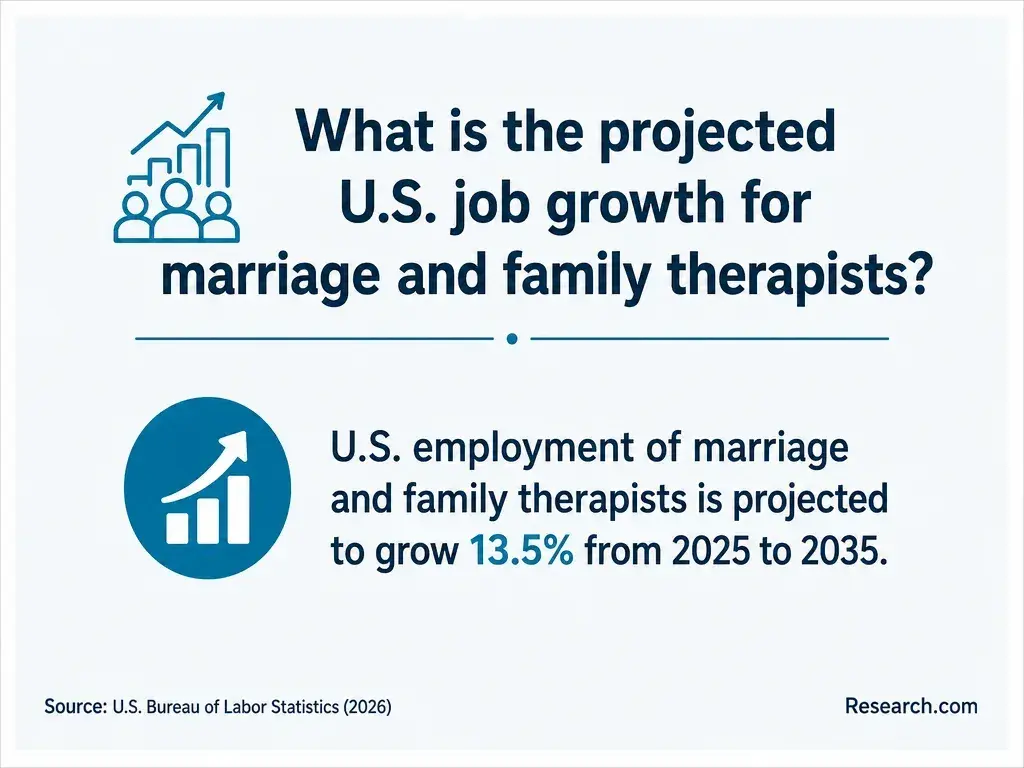
A psychology BA can support applications for nonclinical research support, program coordination, human-services, and organizational roles when you also meet the employer's experience and technical requirements. Research-support work might involve recruitment logistics, literature searches, data cleaning, and documentation under supervision. Your capstone or assistantship can give an employer more specific evidence than the degree title alone.
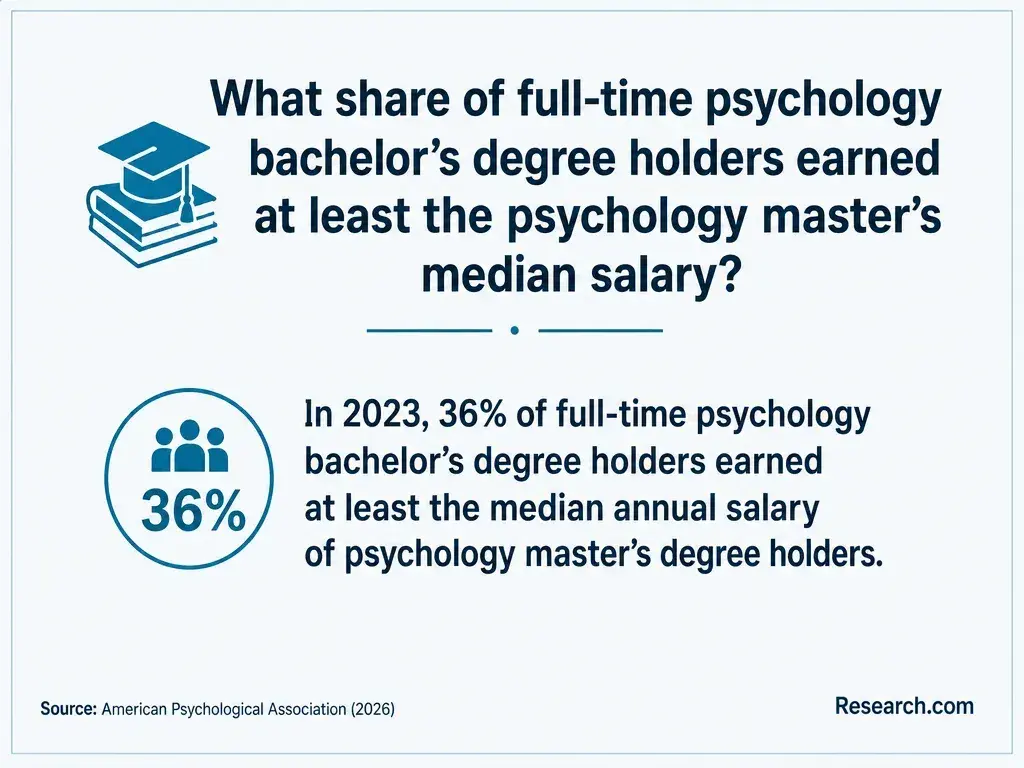
There is no single salary for "psychology BA jobs." Pay depends on the occupation, employer, location, duties, and experience. To assess an offer, compare its actual job title and tasks with the appropriate US Bureau of Labor Statistics Occupational Outlook Handbook occupation and local postings; an occupation-wide median is not a predicted starting salary or an outcome for one degree. The same caution applies to career earnings research for forensic psychology master's students: confirm that any listed role is accessible with the proposed education and credentials before using its pay as a reason to enroll.
Does a Psychology Bachelor's Qualify You for Licensure or Certification?
No general psychology BA, online or campus-based, independently qualifies someone to practice as a licensed psychologist, provide psychotherapy, diagnose conditions, or conduct independent clinical assessments. Those activities require occupation- and jurisdiction-specific education, supervised experience, examinations, and authorization. Some nonclinical jobs or voluntary certifications may accept bachelor's-level applicants, but their rules must be checked individually.
For example, academic study of substance use is different from qualifying as a substance-use counselor. If treatment work is your goal, examine degree pathways for substance use counseling work alongside the requirements of the state and credential you intend to pursue. If your goal remains nonclinical research, prioritize methods training and supervised evidence of research ability rather than assuming a clinical credential is necessary.
Other Things You Should Know About Psychology
Yes, if the application permits it and you label it clearly as a proposal. Explain the question, proposed methods, feasibility limits, and feedback you received; do not present projected results as findings.
Not necessarily. Relevant methods, sound reasoning, and a clear explanation of how your interests connect can matter more than an identical topic. Check whether the prospective adviser is available to supervise students.
Share only material you have permission to disclose. Remove identifying information, respect collaborators' contributions and course rules, and use a methods summary or permitted excerpt when the underlying data cannot be published.
Describe what the evidence did and did not show, the design's limitations, and what you would investigate next. Careful interpretation demonstrates research judgment; an unsupported hypothesis is not, by itself, a failed project.
- Training the Next Generation of Clinical Psychological Scientists | nih.gov https://pmc.ncbi.nlm.nih.gov/articles/PMC9086080/
- Student Opportunities | NIH Office of Intramural Research https://oir.nih.gov/sourcebook/personnel/ipds-appointment-mechanisms/student-opportunities
- NSF REU: Information for Students https://www.nsf.gov/funding/initiatives/reu/students
- Online students | OURS Program https://ours.thecollege.asu.edu/students
- Research - Getting Started https://curf.ku.edu/research-getting-started
- Writing Samples for Grad School | Creighton Blog https://www.creighton.edu/blog/how-choose-writing-sample-graduate-school
- Responsible Conduct of Research - Research and Innovation https://research.uoregon.edu/plan/training-opportunities/responsible-conduct-research
- getting into research workshop | ucla.edu https://sciences.ugresearch.ucla.edu/get-started/
- How to Add Research Experience to Your Resume or CV | Binghamton University, State University of New York https://careertools.binghamton.edu/resources/how-to-add-research-experience-to-your-resume-or-cv/
- Master of Arts in Psychology | CUNY SPS https://sps.cuny.edu/academics/graduate/master-arts-psychology-ma