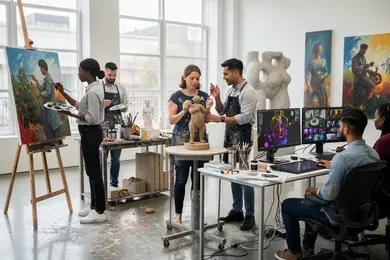
2027 Most In-Demand Fine Arts Master's Specializations

Co-Founder and Chief Data Scientist
Shifts in employer expectations and the evolving complexity of creative industries demand a nuanced approach to evaluating fine arts master's specializations. Rather than treating demand solely as popularity or salary rankings, prospective students must analyze factors such as curriculum rigor, skill applicability across sectors, and alignment with certification standards.
Regional labor-market variations and the distinction between short-term hiring trends and long-term career sustainability critically shape specialization value. For instance, interdisciplinary programs integrating digital media with traditional art practices can offer enhanced adaptability. Understanding these dynamics supports strategic choices that balance immediate employment prospects with future career mobility and advancement potential.
Key Things to Know About the Most In-Demand Fine Arts Master's Specializations
- Digital media specialization offers strong employer demand due to evolving content platforms; however, students face rapid skill obsolescence, requiring ongoing learning beyond the master's program.
- Traditional studio arts maintain steady niche markets, but limited industry growth signals a competitive landscape where portfolio uniqueness weighs more heavily than degree prestige.
- Arts administration degrees align with expanding non-profit funding but often demand costly internships before employment, posing timing and financial challenges for career changers.
What Makes a Fine Arts Master's Specialization "In Demand"?
What defines an in-demand fine arts master's specialization lies in a blend of labor-market need, the cultivation of specialized skills, and the alignment with enduring or emerging professional roles within fine arts fields. Demand fluctuates based on factors such as geographic region, type of employer, industry sector, technology integration, and regulatory environments.
Specializations that prepare students for roles with stable employment prospects rather than fleeting spikes in hiring offer more strategic value. For instance, sectors like digital media and interactive arts are experiencing significant growth, making certain specializations more relevant according to labor market trends for fine arts master's degrees.
Relying solely on demand as a selection criterion can be misleading, as job posting volume, enrollment popularity, and salary claims often reflect short-term trends or marketing rather than long-term fit or career sustainability.
Candidates should critically assess program elements such as curriculum rigor, opportunities for experiential learning, relevance of certifications, faculty expertise, and alumni success. A specialization's transferability across related roles also matters because it enhances adaptability amid shifting employer expectations. These factors collectively provide a more nuanced view than raw demand data alone.
Graduates who are working professionals, career changers, or advancement-focused learners benefit most from choosing highly demanded specializations that closely mirror employer needs and industry dynamics.
Aligning graduate study with clear occupational pathways improves prospects for meaningful employment and professional growth. Those weighing options might also consider programs recognized as among the easiest online masters degree offerings to maximize flexibility without compromising strategic value.
The 10 Most In-Demand Fine Arts Master's Specializations
Choosing a master's specialization in fine arts today involves balancing creative ambitions with practical labor market realities. Rapid technological shifts, evolving industry demands, and interdisciplinary skill requirements influence which fields offer sustainable employment prospects.
This analysis highlights ten fine arts concentrations shaped by current hiring patterns, job function integration, and long-term adaptability.
- Digital Media Arts: Meets the rising need for specialists capable of producing content across streaming, gaming, and advertising platforms. Employers favor candidates skilled in animation, interactive design, and multimedia workflows, reflecting a projected 13% occupational growth signaled by the U.S. Bureau of Labor Statistics through 2032.
- Graphic Desig: Remains essential as branding and user experience dominate digital marketing. Despite automation pressures, demand persists for designers with expertise in custom visuals tailored for e-commerce and mobile interfaces, illustrating how technology reshapes rather than replaces this role.
- Art Therapy: Capitalizes on mental health integration trends in healthcare settings. With employment projected to rise sharply, success relies on proficiency in clinical art modalities and understanding healthcare frameworks, positioning graduates for roles in medical and community-based therapeutic programs.
- Illustration: Benefits from merging traditional artistry with emerging AI-driven digital tools. Specialists who adapt by blending manual skills with technology serve dynamic markets such as publishing, animation, and gaming, where hybrid competencies enhance employability.
- Photography: Persists through niches like commercial and event photography where technological savvy-especially in digital editing and drone usage-creates competitive advantage amid an oversupplied generalist market.
- Industrial Design: Connects artistic vision with product usability and innovation. Demand growth is tied to sectors emphasizing sustainable consumer electronics and user-centered aesthetics, requiring multifaceted skill sets spanning conceptual design to technical prototyping.
- Film and Video Production: Expands alongside streaming content needs, favoring candidates with comprehensive skills in directing, editing, and post-production workflows. Industry analytics expect an 18% rise in related positions, highlighting rapid sector expansion.
- Fashion Design: Maintains relevance through its pivot toward sustainability and inclusivity. Designers adept in ethical production methods and niche market identification are positioned to navigate evolving consumer expectations and regulatory considerations.
- Art Education: Addresses increasing institutional emphasis on arts integration in diverse communities. Specialized educators combining digital tools and multicultural awareness meet growing policy-driven demand despite overall slower sector growth.
- Curatorial Studies and Museum Management: Leverage digital curation and outreach to broaden cultural engagement. This specialization thrives on public and private investment trends in preservation, requiring proficiency in both traditional collection management and new media strategies.
The student considered multiple specializations by analyzing job boards, employer feedback, and alumni outcomes. Initially drawn to graphic design for its versatility, skepticism arose about automation's impact and uncertain long-term demand.
Exploring digital media arts revealed stronger growth projections and practical alignment with personal interests in multimedia.
However, the student hesitated, weighing program curriculum depth and practicum opportunities against fashion design's ethical focus, driven by personal values.
Ultimately, a careful comparison of faculty expertise, certification options, and sector-specific hiring norms informed a decision that balanced market data with individual career goals, highlighting the complexity behind choosing an in-demand fine arts master's path.
Which Fine Arts Master's Specializations Lead to the Highest-Paying Careers?
Fine arts careers are often associated with creative freedom rather than predictable salary paths, but certain master’s specializations are more closely tied to high-paying roles in commercial industries, entertainment, luxury markets, and large-scale production environments.
The strongest earning potential typically comes from fields where artistic expertise directly supports business, media, or technology outcomes.
- Digital Arts and Media Production: Focuses on digital illustration, animation, video production, and interactive media. Graduates often work in film, gaming, advertising, and tech companies with strong compensation potential.
- Graphic Design and Visual Communication: Emphasizes branding, advertising, and corporate visual identity. Experienced designers in agencies or in-house creative teams can move into well-paid senior or creative director roles.
- Animation and Motion Graphics: Covers 2D/3D animation, visual effects, and motion design for entertainment and advertising. Professionals in this field are highly valued in film studios, streaming platforms, and game development companies.
- Game Art and Interactive Design: Focuses on character art, environment design, and interactive storytelling for video games. The gaming industry often offers competitive salaries for skilled artists in production pipelines.
- Fine Arts Entrepreneurship and Creative Practice Management: Combines artistic development with business, marketing, and professional practice skills. This specialization supports higher earning potential through gallery representation, commissions, and commercial work.
- Illustration for Commercial and Editorial Markets: Focuses on applied illustration for publishing, advertising, and media. Successful illustrators working with major clients or agencies can achieve strong income levels.
- Luxury and Fashion Art Direction: Emphasizes visual storytelling for luxury brands, fashion houses, and high-end advertising campaigns. Art directors in this sector often command premium compensation due to brand value impact.
Which Fine Arts Master's Specializations Offer the Best Job Growth?
Evaluating which fine arts master's specializations offer the best job growth requires analyzing employment projections, employer demand, and shifts within related industries rather than relying on popularity alone.
Specializations linked to digital and media arts often benefit from expanding sectors like gaming and advertising, where evolving technology drives ongoing need for advanced skills.
The U.S. Bureau of Labor Statistics projects that employment for multimedia artists and animators will grow by 16% through 2032, far outpacing average occupational growth, highlighting the importance of technological fluency and adaptable competencies.
Additionally, assessing how specialized skills transfer across adjacent roles and regulatory or credentialing demands enables a more realistic view of career resilience in changing labor markets tied to top fine arts master's specializations with strong career prospects.
However, job growth projections should not be the sole criterion for selecting a specialization. Geographic concentration, cyclical funding in nonprofit sectors, and saturation in creative roles can restrict opportunities despite nominal growth rates.
Licensing requirements, portfolio expectations, or internship access may delay employment entry, affecting part-time students balancing multiple commitments. Crucially, some fields like art therapy require credentialing that reflects longer-term career pathways rather than immediate job availability.
Working professionals and career changers must weigh whether a specialization supports both short-term entry and sustainable advancement, and considering flexible options such as online psychology master's programs may complement fine arts training in mental health or therapeutic contexts.
Which Fine Arts Master's Specializations Are Best for Career Changers?
Career changers benefit most from fine arts master's specializations that emphasize transferable skills and offer clear pathways into related industries. Programs focusing on graphic design, digital media, interaction design, and arts administration often require fewer intensive studio prerequisites, making them more accessible for applicants without extensive fine arts backgrounds.
Curricula that integrate hands-on projects, internships, or capstone experiences aligned with entry-level or mid-career roles provide crucial opportunities to build practical portfolios and industry connections.
According to the U.S. Bureau of Labor Statistics in 2024, design-related occupations are expected to grow by 8% over the next decade, underscoring the value of specializations that marry technical competence with applied learning and workplace readiness.
However, selecting a specialization solely because it is in demand can overlook significant hurdles. High technical learning curves in fields like UX/UI design require rapid mastery of specialized software and methodologies often unfamiliar to newcomers.
Gaps in prior industry knowledge or professional networks can limit access to competitive internships and job placements, while credentialing standards may disadvantage those lacking direct experience.
Additionally, competition with candidates who possess domain-specific expertise means applicants must carefully evaluate how well a specialization can realistically bridge their existing skills with employer expectations, rather than assuming demand guarantees opportunity.
One graduate entered a fine arts master's program uncertain whether to pursue graphic design or arts administration. Having a background in nonprofit communications but limited formal art training, they weighed how each specialization might leverage previous skills while also addressing knowledge gaps.
Their decision hinged on the availability of internship placements that aligned with prior experience, as well as faculty support for portfolio development.
While initially hesitant about switching tracks mid-program, they ultimately found that targeted networking and hands-on projects helped recalibrate their strategy, enabling a smoother transition than anticipated despite an uneven technical foundation.
Which Fine Arts Master's Specializations Are Best for Working Professionals?
Working professionals assessing fine arts master's specializations must weigh employer demand, program delivery methods, and the direct applicability of acquired skills to their current roles.
Specializations with clear links to in-demand careers, such as art education and digital media design, often offer more tangible paths to advancement and better alignment with full-time employment constraints.
According to the 2024 National Arts Workforce Report, 67% of employers in creative sectors prioritize candidates with expertise in digital platforms and educational facilitation, highlighting the premium on these skills.
To find flexible fine arts master's programs for career advancement, candidates should prioritize options that integrate seamlessly with their work schedules while supporting immediate skill transfer.
Programs offering online or hybrid formats with asynchronous coursework, project-based assignments tied to real-world responsibilities, and practicums adaptable to working professionals tend to be more suitable.
Art education, for example, benefits from alignment with certification pathways and positions in academic or community institutions, while digital media design provides transferable technical skills that resonate across industries like marketing and entertainment.
These programs avoid the extensive studio time or full-time internships that can disrupt careers, enabling learners to build marketable expertise without stepping away from employment. Such pragmatic program features are critical when choosing the best master's specialization in fine arts for working professionals balancing diverse commitments.
Conversely, highly technical or research-intensive specializations, or those requiring substantial field placements-such as painting or sculpture-may deliver deep artistic mastery but pose scheduling and resource challenges.
These tracks often demand longer completions and additional income sources, limiting immediate career impact. Working professionals should evaluate how these trade-offs align with long-term goals and current job responsibilities within a context that recognizes both practical constraints and workforce realities.
Those seeking a strategic education pathway may also consider related disciplines like the masters in psychology for complementary skill sets supporting creative and educational professions.
How Do Online and Flexible Fine Arts Master's Specializations Compare?
Online and flexible fine arts master's specializations differ notably in structure, impacting key academic and professional outcomes. Fully online programs typically rely on asynchronous coursework, which can disrupt traditional cohort progression and reduce opportunities for close faculty mentorship or collaborative studio work.
Hybrid formats aim to blend remote learning with scheduled in-person residencies, enhancing hands-on experience and critique opportunities essential to disciplines like painting or sculpture.
These structural choices influence how easily students access internships, applied projects, and portfolio-building activities that align with specific career paths in creative industries.
Flexibility alone does not enhance a specialization's value without rigorous curriculum design and recognized experiential components. Accreditation status and depth of practical engagement remain critical for employer acceptance, particularly where portfolios and real-world exhibitions are decisive.
Many online programs compensate for limited studio access with virtual critiques or local internships, but these can vary significantly in quality and professional credibility.
Additionally, technology infrastructure and available career services play pivotal roles in whether a flexible format genuinely supports competencies sought in competitive fine arts roles rather than simply offering scheduling convenience.
For working professionals or career changers, flexible Fine Arts master's tracks offer the advantage of balancing education with ongoing employment, though this requires careful assessment of workload intensity and networking opportunities.
As noted in the 2024 National Graduate Education Trends Report, a significant share of students in such programs struggle to translate virtual collaboration into career-relevant networks, highlighting a risk for early-career creative professionals.
Therefore, learners must weigh program pacing and experiential depth against their long-term goals, ensuring the specialization's structure delivers more than just access but meaningful preparation for evolving market demands.
What Skills Do Students Learn in In-Demand Fine Arts Master's Specializations?
In-demand fine arts master's specializations function as comprehensive skill-building pathways shaped by labor-market demands, curriculum design, and shifting professional expectations.
These programs extend well beyond narrow concentration categories to equip students with applied competencies increasingly valued by employers across diverse creative and administrative roles.
- Technical Mastery in Media and Methods: Students develop advanced proficiency in specific artistic media such as painting, sculpture, digital design, or curatorial practices through studio work, labs, and project-based learning. This hands-on expertise is essential for sustaining creative craftsmanship while adapting to emerging digital tools and production techniques.
- Critical and Analytical Thinking: Engagement with critical theory, art history, and interdisciplinary research methodologies fosters the ability to contextualize artistic work within complex cultural, historical, and sociopolitical frameworks.
- Leadership and Project Management: Reflecting employer demand, curricula emphasize skills in directing exhibitions, managing creative teams, and coordinating arts initiatives. Applied learning experiences such as practicums and capstone projects cultivate the managerial acumen necessary to lead multifaceted teams and programs in dynamic arts environments.
- Effective Communication Across Audiences: Fine arts master's candidates refine written and oral communication skills with a focus on articulating nuanced artistic concepts to diverse stakeholders including patrons, scholars, and collaborators. This communication proficiency is critical for advocacy, fundraising, and pedagogical roles within the arts sector.
- Research and Methodological Rigor: Original inquiry and evidence-based decision-making are integral to the curriculum, preparing students for roles that demand innovation and evaluative precision in artistic practice and cultural programming. Skills in research design and ethical methodologies enhance adaptability amid evolving creative and institutional contexts.
A 2024 report by the National Endowment for the Arts highlights that approximately 68% of fine arts master's graduates secure employment in hybrid roles requiring both artistic expertise and project coordination, underscoring the necessity of combining creative and administrative competencies for long-term career viability.
What Are the Admissions Requirements for Popular Fine Arts Master's Specializations?
Admissions requirements for popular master's fine arts specializations serve not only as eligibility screens but also as indicators of how closely programs align with specific career pathways and skill demands.
Variations in criteria reflect differing emphases on technical mastery, conceptual depth, or professional credentials, impacting applicant focus and preparation strategies.
- Academic Prerequisites and GPA Thresholds: Most programs expect a bachelor's degree in fine arts or related disciplines, although some accommodate candidates from other fields if prerequisite courses are completed. GPA requirements typically hover around 3.0, but highly selective programs may set higher standards to ensure readiness for advanced study and competitive fields.
- Portfolio and Creative Work: A curated portfolio remains the centerpiece of applications, emphasizing technical skill, thematic coherence, and originality. This requirement reflects the practical, outcome-driven nature of graduate fine arts education and is often weighted more heavily than standardized test scores, which many programs have abandoned in recent years.
- Standardized Testing and Alternative Assessments: Reflecting shifts in graduate admissions, approximately 65% of master's fine arts programs have dropped GRE requirements as of 2024, per the National Association of Schools of Art and Design. This change prioritizes direct demonstrations of creative and analytical capabilities over quantitative metrics.
- Supplemental Materials and Interviews: Writing samples, letters of recommendation, and interviews or live critiques help assess communication skills and professional fit. These elements indicate an applicant's reflective capacity, engagement with critical discourse, and potential to contribute meaningfully in specialized tracks.
- Specialized Credentials and Work Experience: Some tracks, such as art therapy or curatorial studies, mandate additional certifications or clinical experience aligned with licensure or industry standards. Programs may also recognize relevant professional experience or portfolio substitutes for career changers, underscoring the importance of practical competencies beyond academic records.
In considering graduate program prerequisites for fine arts specializations, applicants should evaluate how these admission elements reflect career alignment and skill demands, rather than viewing them purely as bureaucratic hurdles.
For those balancing career shifts or seeking targeted skill acquisition, exploring competency based programs can offer flexible pathways tailored to existing expertise and professional objectives.
How Should Students Compare Cost, Financial Aid, and ROI by Fine Arts Specialization?
When comparing online fine arts master's curricula, students must assess several critical factors beyond course listings. Curriculum quality is paramount, focusing on how well the program integrates modern artistic practices with foundational theory.
Programs that clearly align their specialization tracks-such as digital media, art education, or studio practice-with evolving industry demands tend to offer greater career relevance and justify different cost structures based on specialization.
Incorporating financial aid options and return on investment in fine arts graduate programs is essential to understanding true program value.
Course sequencing is another vital aspect, as a logical progression from core principles to advanced techniques enables deeper mastery. Applied learning components, including virtual studios, portfolio development, and collaborative projects, provide practical experience that employers prioritize.
Research from the National Art Workforce Survey 2024 found that 67% of arts employers highly value demonstrated applied skills over theoretical knowledge alone, underscoring this need. Specializations with intensive practicum or internship requirements often influence total costs and time to degree completion significantly.
Faculty expertise also directly influences curriculum value. Students should verify that instructors possess both academic credentials and relevant professional backgrounds, ideally with current industry involvement.
Accreditation or adherence to recognized professional standards ensures program rigor and transferability of credentials, which is crucial for licensure preparation or eligibility for specialized certifications. These factors also impact financial aid eligibility and employer tuition support prospects, an often-overlooked aspect when comparing cost.
Career relevance requires examining how course content prepares students for specific occupations and emerging trends. For example, programs offering specialization in interactive media are increasingly important given the rise of arts roles in gaming and virtual reality.
Those considering a masters in digital marketing as a complementary skill may find such interdisciplinary focus enhances long-term employability and ROI. Additionally, adaptability of skills taught, such as cross-disciplinary competencies, can significantly affect long-term employability in a rapidly evolving arts economy.
Choosing among fine arts master's specializations requires viewing cost and ROI as shaped by program design, labor-market alignment, and the student's career stage, rather than a simple tuition-to-earnings calculation.
- Tuition and Fee Variability: Specializations often differ in cost due to unique fees for studio materials, technology access, or lab usage. Some programs bundle these costs, while others require separate payments that raise total debt exposure beyond base tuition.
- Fieldwork and Practicum Expenses: Programs demanding internships, residencies, or site visits entail additional time and travel expenses, affecting opportunity costs and financial aid applicability. These requirements can extend the time-to-degree and impact earnings during study.
- Certification and Licensing Costs: Certain specializations prepare students for credentialing that involves exam fees, renewal costs, or additional coursework. Factoring these expenses helps avoid underestimating overall investment and clarifies post-graduation financial planning.
- Employer Tuition Support and Scholarship Availability: Students currently employed might receive partial reimbursement that varies by specialization depending on institutional agreements and workforce demand. Likewise, scholarship funds may target high-growth areas, altering net cost and enhancing ROI.
- Overvaluing Short-Term Salary Signals: Some specializations show higher entry salaries but limited upward mobility, while others offer steady growth linked to adaptability. Assessing long-term career fit relative to the financial aid structure mitigates the risk of pursuing a costly degree with limited lifetime value.
What Do Graduates Say About Their Fine Arts Master's Specializations?
- Azrael: "After completing my master's in fine arts with a focus on digital media, I quickly realized that employers in the field weigh portfolios and hands-on experience more heavily than just academic credentials or licensure. I spent significant time building an internship network while in school, which proved crucial when I transitioned to freelance projects and remote work, allowing me to enter the workforce faster than many peers who opted for traditional gallery paths."
- Alvaro: "The versatility I gained through my fine arts specialization opened doors to multidisciplinary roles but also presented challenges. Without licensure, climbing the traditional salary ladder in academic or institutional settings remains limited, so I've embraced project-based consulting, which has offered more financial flexibility and creative control even if it lacks job stability. Navigating this balance has made me more pragmatic about career progression in the arts."
- Robert: "Graduating with a master's in fine arts made me aware of how competitive some entry-level positions are, especially those tied to well-known studios or public art commissions. I pivoted from pursuing licensing to focusing on certifications and collaborative projects that strengthened my network. The experience taught me that adaptability and continuous portfolio development often outpace formal credentials when trying to secure meaningful work."
Other Things You Should Know About Fine Arts Degrees
In 2027, popular fine arts master's specializations include digital media, art curation, and environmental and public art. This trend reflects a growing interest in new technologies, sustainable practices, and interactive art forms, which are becoming increasingly relevant in today's art world.
Employment prospects vary significantly depending on whether you target commercial or non-profit environments. Specializations aligned with digital arts, animation, or design tend to carry more weight in commercial sectors valuing market-driven work and client interaction.
Conversely, traditional disciplines like painting or sculpture might align better with non-profit galleries, public institutions, or community arts organizations that value cultural engagement over marketability. When selecting a specialization, consider the emphasis your preferred sector places on innovation, reproducibility, and audience reach, as this influences both job availability and portfolio expectations.
Workload intensity varies widely with specialization due to differing time demands for studio production, research, and critique. For example, specializations requiring large-scale installations or mixed-media projects often involve extended studio hours and material costs, whereas those focused on digital media may require intensive software use and deadlines aligned with technology trends.
Understanding the anticipated workload can prevent burnout and mismatch with your life circumstances, especially if balancing employment or family obligations. Prioritizing specializations with manageable work rhythms can improve learning outcomes and long-term engagement.
A GPA of 3.0 or higher is generally required for admission into top in-demand fine arts master's programs in 2027. Some programs might have higher requirements or consider holistic factors in their application reviews.
References
- The MFA program: 5 things to consider when choosing a fine arts degree https://www.cca.edu/newsroom/five-reasons-why-choosing-mfa-program/
- Master in Fine Arts: Subjects, Specializations, Scope & Career 2026 https://www.cguonline.edu.ge/blog/master-in-fine-arts-subjects-specializations-scope-career/
- 6 Highest-Paying Careers With a Master of Arts in Education https://online.meca.edu/news-events/2025-06-15/6-highestpaying-careers-with-a-master-of-arts-in-education
- What Can You Do With A Master of Fine Arts Degree? | Lendwise.com https://lendwise.com/blog/what-can-you-do-mfa/
- Discover the Highest Paid Jobs in the Art Field https://rossettiart.com/blogs/news/what-is-the-highest-paid-job-in-art
- Top 10 Highest Paying Jobs for Arts Majors - Best Colleges Online https://www.bestcollegesonline.org/highest-paying-jobs/arts-majors/
- Exploring Diverse Specializations Within Master of Arts Programs https://amrapali.ac.in/blog/2025/06/09/exploring-diverse-specializations-with-in-master-of-arts-programs/
- Fine Art MA (Online) https://www.falmouth.ac.uk/study/online/postgraduate/fine-art
- These are the artistic careers with the most job opportunities - TAI ARTS https://taiarts.com/en/blog/artistic-careers-with-job-opportunities/
- Top Online MFA (Master of Fine Arts) Programs for 2025 https://www.onlinemastersdegrees.org/best-programs/fine-arts-mfa/