2027 Online BA in Psychology - General Psychology for Work in Health Education Organizations: Compare Degree Fit and Hiring Requirements
Audited and Verified:
Our Editorial and Data Verification Process
Research.com uses government datasets, official education statistics and primary institutional information to support its career and degree guides. Our review process checks factual accuracy, occupational definitions, source dates and the requirements associated with the credentials discussed.
How This Article Was Fact-Checked
Our editorial team verifies salary estimates, employment projections, education requirements and program information against original data providers and official organizations. Salary figures are checked against the relevant occupational definitions and reporting periods. Information about licensure, accreditation and required in-person training is reviewed separately.
Fact-checked and verified on:

Co-Founder and Chief Data Scientist
An online BA in general psychology can teach you why people make health decisions, but health education organizations also need employees who can plan programs, communicate clearly, and evaluate results. If you are considering the degree for nonprofit, community, or public-health work, the distinction matters before you commit tuition and time.
This guide compares the degree with actual role requirements, explains where supervised experience and CHES eligibility fit, and shows when a health education or public health program may be a more direct choice.
Key Things You Should Know
- A general psychology BA can support entry into health education organizations, but it does not automatically meet a health education specialist job posting or establish eligibility for the Certified Health Education Specialist (CHES) exam.
- Look for program planning, health communication, statistics, evaluation, and supervised community work - not just psychology course titles. A typical bachelor's degree requires about 120 semester credits, but transfer decisions determine how many you still need.
- The U.S. Bureau of Labor Statistics reported a $62,860 median annual wage for health education specialists in May 2024; that occupation-wide figure is not an expected starting salary for psychology graduates.
What Is an Online BA in General Psychology for Health Education Work?
An online BA in general psychology is a broad undergraduate degree covering behavior, development, social influences, research, and statistics. It is not normally a professional health education qualification. For this career goal, its value depends on whether you can use electives and applied work to study prevention, health behavior, communication, and community needs.
That breadth can be useful if you are still deciding among outreach, program support, research, and further study. It is less efficient if you already know you want a position that explicitly requires a health education or public health major. When comparing psychology degrees available through online study, examine the actual degree plan rather than assuming every BA offers the same health-related electives or placements.
The BA also does not authorize psychotherapy, diagnosis, or independent psychological assessment. Health education work generally concerns information, prevention, access, and program improvement - not clinical treatment.
Can a General Psychology Bachelor's Degree Lead to Health Education Careers?
Yes, particularly when an employer accepts a related bachelor's degree and the applicant can demonstrate relevant work. A psychology graduate might help develop accessible educational materials, coordinate workshops, recruit community partners, document outreach, or summarize feedback. Coursework alone is a weaker application than coursework paired with supervised outreach or evaluation experience.
The best degree choice depends on the job you want, not simply the word "health" in its title. This comparison separates flexible academic preparation from more occupationally targeted routes.
| Route | Potential advantage | Limitation to check |
| General psychology BA | Behavioral science and research skills that can apply across organizations | May omit health education planning or required CHES-related coursework |
| Health education or public health bachelor's | More direct preparation for outreach, population health, and program evaluation | Curriculum and CHES eligibility still require individual verification |
| Existing degree plus targeted training and experience | May be quicker for an experienced nonprofit or community worker | Will not replace a bachelor's degree where the employer requires one |
If your goal is substance-use counseling rather than prevention outreach, check your state's credential rules first. An addiction counseling program selection guide addresses a different pathway; a general psychology BA does not itself qualify you to provide addiction treatment.
What Hiring Requirements Do Health Education Organizations Expect?
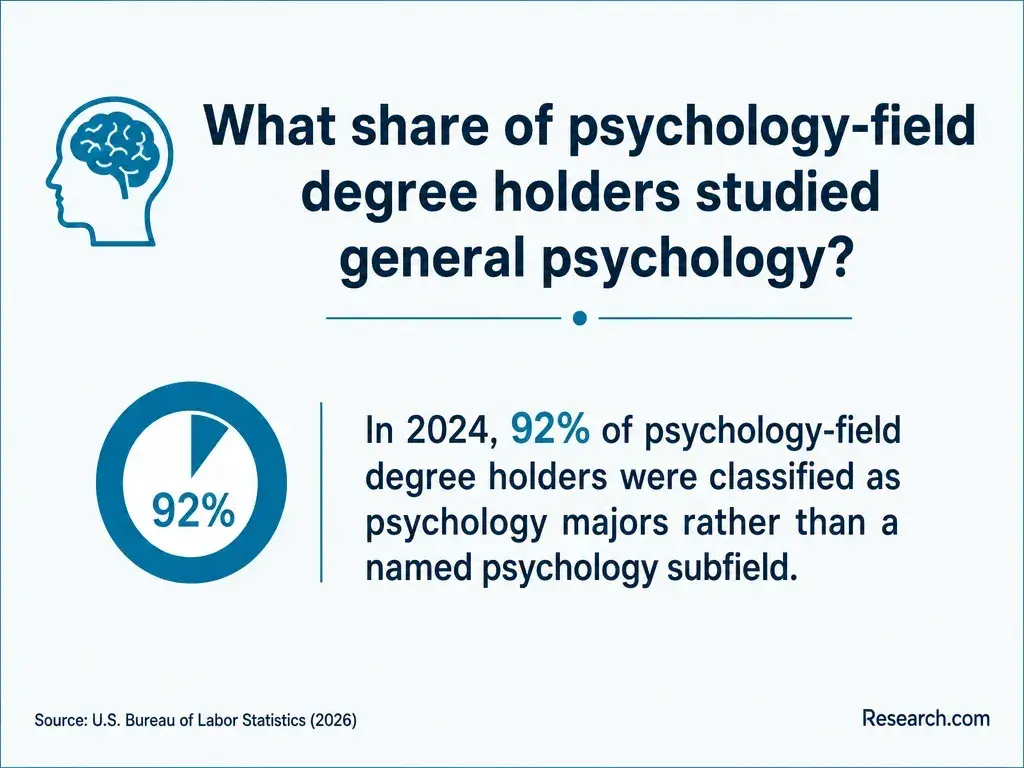
Start with the duties and required qualifications in postings from the organizations where you want to work. The Bureau of Labor Statistics describes a bachelor's degree as typical entry-level education for health education specialists, while some employers prefer a health education major, relevant experience, or CHES certification. Community health worker positions can have different entry requirements and often emphasize local knowledge and outreach experience.
For specialist jobs, look for evidence that you can assess an audience's needs, plan and deliver appropriate education, work with partners, and evaluate whether a program reached its goals. Employers may also seek writing, facilitation, data management, language skills, or experience serving a particular community. A student project can demonstrate these abilities if your contribution, methods, and limitations are clear.
Read "required" separately from "preferred." Ask a recruiter whether a psychology major qualifies when a posting names health education or a related field, and whether CHES must be held at hiring. If the position instead involves counseling or treatment, investigate a qualifying professional degree and state licensure requirements; choosing a shorter clinical mental health counseling master's is a separate decision from preparing for nonclinical outreach work.
Employers usually care more about a credible degree and demonstrated skills than whether psychology lectures were online. The practical difference is access: campus students may find it easier to meet faculty and local partners, while online students may be able to study without relocating. Neither format guarantees an internship, research role, or flexible schedule.
Before choosing an online BA, check whether courses have live meetings, group assignments, fixed exam times, or required campus visits. Ask who helps arrange community placements near you, who approves a site, and whether supervision can occur remotely. A working student may find an asynchronous course manageable yet still need weekday availability for an outreach placement.
Do not confuse online undergraduate coursework with online professional training. The scheduling and supervised-practice demands discussed in intensive schedules in accredited mental health counseling study illustrate why delivery format alone cannot tell you how flexible a pathway will be.
Prioritize courses that connect an explanation of behavior to a health education task. Social and developmental psychology can inform audience-sensitive communication; learning and motivation can inform educational design. Statistics and research methods help you interpret needs assessments and evaluate programs without mistaking an observed association for proof that an intervention worked.
For this goal, useful electives may include health psychology, public health, health communication, cultural psychology, community psychology, and program evaluation. Availability varies by school. A course on psychopathology may improve your understanding of referral contexts, but it does not teach or authorize clinical diagnosis.
Ask whether the degree permits an approved nonclinical internship or project with a community organization. A feasible example is developing an evidence-based outreach brief and evaluating anonymous attendance or feedback data with the site's permission.
Client records, survey recruitment, and publication require appropriate organizational authorization and, where applicable, research review. If your intended work is specifically substance-use education, compare this course plan with the cost and duration of substance abuse counseling bachelor's degrees - then distinguish prevention work from any state-regulated counseling duties.
Confirm that the institution holds recognized institutional accreditation; this matters for degree recognition and can affect access to federal student aid. Then investigate CHES separately. Institutional accreditation, a psychology major, and a course labeled "health psychology" do not by themselves establish eligibility for the Certified Health Education Specialist exam.
The National Commission for Health Education Credentialing (NCHEC) sets CHES eligibility and examines qualifying academic preparation against health education responsibilities. Before enrolling, obtain the proposed course list and ask NCHEC how its current eligibility rules apply to your planned degree and transcript. Ask the school which courses address those responsibilities, whether they are regularly offered online, and whether it will document relevant coursework. Do not rely on an advisor's informal assurance as a certification decision.
APA accreditation is not the accreditation test for a general psychology BA; APA accreditation applies to specified professional psychology programs and training. Counseling programs and their accreditation or licensure rules are another distinct category. If you are weighing that clinical route, comparing mental health counseling program costs should accompany a separate check of state licensure eligibility - not stand in for CHES planning.
Requirements depend on whether you are entering from high school or transferring college work. Schools commonly request prior transcripts and an application; a transfer applicant should also ask whether there are separate standards for admission to the psychology major. Requirements, deadlines, and any minimum grades are set by the institution.
For a returning student, the decisive document is a degree audit showing where accepted credits apply. Credit accepted by the university might count as an elective rather than satisfy statistics, research methods, general education, or the major. Ask about course equivalencies, minimum grades, residency requirements, and the sequence in which remaining courses are offered. These checks are especially important before comparing psychology degree options for college transfer students.
Keep copies of transcripts and course descriptions for disputed equivalencies. Request a written evaluation from the office authorized to make transfer decisions; an estimated credit count is not a graduation plan.
A bachelor's degree commonly totals about 120 semester credits, but that is not the number every applicant must take at the new school. Completion time depends on accepted credits, credits that satisfy specific requirements, course sequencing, and how many courses you can realistically take while working. An accelerated calendar will not help if a required methods course or approved placement is offered infrequently.
Compare the full cost of each viable route, not an advertised per-credit price alone. Multiply the school's published tuition rate by the credits remaining on your written degree audit, then add mandatory fees, materials, any travel or placement costs, and the cost of courses needed for a health education goal but outside the major. Ask about aid eligibility and employer tuition assistance without assuming either will cover the expense. Finding an affordable psychology degree route is most useful after you know your remaining requirements.
If you already hold a bachelor's degree and target employers accept it, compare the price and time of relevant courses, supervised experience, or certification preparation before funding a second BA.
Possible nonclinical roles include outreach coordinator, program assistant, community health worker, and - where the employer accepts the applicant's preparation - health education specialist. Titles overlap, so compare duties: a community health worker may focus on outreach and connecting people with services, while a health education specialist may have greater responsibility for planning and evaluating educational programs.
The Bureau of Labor Statistics reported a $62,860 median annual wage for health education specialists in May 2024. That is the midpoint for workers in the occupation nationwide, across experience levels and educational backgrounds; it is not a salary forecast for a new psychology BA graduate. Local nonprofit budgets, public-sector pay scales, duties, and experience can substantially change an offer.
Build applications around evidence of the particular work: a clearly written educational resource, a documented outreach contribution, or a responsibly prepared evaluation summary. If your desired job is licensed counselor, do not compare its salaries with health education wages as though the credentials were interchangeable. The shorter clinical mental health counseling master's cost guide concerns that separate graduate and licensure pathway.
What Is the Job Outlook for Health Education and Psychology Careers?
Health education organizations employ people with several degree backgrounds, so growth in an occupation does not measure demand for general psychology graduates specifically. The Bureau of Labor Statistics projects employment by occupation - not by undergraduate major - and its projection periods change. Check the latest health education specialist and community health worker profiles alongside current postings in your location before treating a national outlook as evidence of local openings.
For a stronger personal outlook, track which local employers accept psychology, request CHES, and offer entry-level work that builds planning or evaluation responsibility. If openings consistently specify another major or credential, adjust your education plan before enrolling. Likewise, comparing accelerated psychology degree options is worthwhile only if faster completion still leaves room for the courses and experience those employers request.
The most defensible choice is the least costly feasible pathway that meets the postings you actually intend to pursue. A broad online BA fits someone seeking behavioral-science flexibility and able to add relevant field experience; a targeted health education program may fit better when specialist preparation or CHES coursework is central to the goal.
Other Things You Should Know About Psychology
Usually, if your organization permits it and the version you share excludes confidential, identifiable, or restricted information. Explain your own contribution and obtain approval before using workplace materials.
It can help with outreach when it matches a community's needs. Employers may assess professional proficiency; language skills do not replace accurate translation practices or other job qualifications.
Possibly, but only if the degree program approves the site, supervisor, duties, and learning objectives. Existing employment is not automatically academic fieldwork.
Yes. Check the organization's rules and your instructor's requirements before recruitment or data collection. A project may also require institutional research review depending on its design and intended use.
- HRTP: A Public Health Internship Program | NYC Health https://www.nyc.gov/site/doh/about/employment/hrtp-internship.page
- Credentialing, Licensing, and Education | NCCIH - NIH https://www.nccih.nih.gov/health/credentialing-licensing-and-education
- Online Bachelor's Degree in Psychology | Purdue Global https://www.purdueglobal.edu/degree-programs/psychology/bachelor-degree-psychology-online/
- How to Become a Certified Health Education Specialist | UF HEB https://hebmastersonline.hhp.ufl.edu/articles/how-to-become-certified-health-education-specialist/
- Certified Health Education Specialist (CHES) | missouri.edu https://healthsciences.missouri.edu/certified-health-education-specialist-ches/
- What Is CHES Certification? | North Carolina Central University https://online.nccu.edu/blog/what-is-ches-certification/
- Bachelor of Arts in Psychology - Texas State's online programs https://online.txst.edu/degrees/undergraduate/ba-psychology/
- Online Bachelor's Degree (BA) in Psychology - ECU Flight Path https://onlineprograms.ecu.edu/programs/undergraduate-degrees/ba-psychology/
- Career Guide: Community Health Worker | American College of Education https://ace.edu/student-success/career-guides/community-health-worker/
- General Psychology | Online Bachelor's Degree | Capella University https://www.capella.edu/online-psychology-degrees/bs-psychology-program/bachelors-general-psychology/