2027 Online Educational Policy Doctorate Program Costs: Tuition, Fees, Financial Aid, and Employer Reimbursement
Audited and Verified:
Our Editorial and Data Verification Process
Research.com uses government datasets, official education statistics and primary institutional information to support its career and degree guides. Our review process checks factual accuracy, occupational definitions, source dates and the requirements associated with the credentials discussed.
How This Article Was Fact-Checked
Our editorial team verifies salary estimates, employment projections, education requirements and program information against original data providers and official organizations. Salary figures are checked against the relevant occupational definitions and reporting periods. Information about licensure, accreditation and required in-person training is reviewed separately.
Fact-checked and verified on:

Co-Founder and Chief Data Scientist
An online Educational Policy doctorate can support senior leadership, research, and policy roles, but the cost can be difficult to judge from tuition alone. NCES data published in 2024 shows average graduate tuition and required fees were $12,596 at public institutions and $29,931 at private nonprofit institutions for 2022-23, before living costs, loans, or program fees. This guide is for educators, administrators, analysts, and working professionals comparing online doctorate options while student debt remains a major concern. You will learn how to estimate total cost, compare formats, reduce borrowing, and decide whether the degree fits your career goals.
Key Things to Know About Online Educational Policy Doctorate Program Costs
- There is no single official national average for online Educational Policy doctorates, so applicants should compare total tuition by multiplying required credits by the per-credit rate and then adding technology, dissertation, residency, and graduation fees.
- Federal graduate borrowing can be expensive: for 2024-25, Direct Unsubsidized Loans for graduate students carry an 8.08% fixed interest rate, while Grad PLUS Loans carry a 9.08% fixed interest rate, making scholarships, assistantships, and employer support especially important.
- Employer tuition assistance may cover part of an online doctorate when the degree aligns with the employee's role; under current federal tax rules, up to $5,250 in qualifying employer educational assistance can generally be excluded from taxable income each year.
What is the average tuition cost of an online Educational Policy doctorate program?
The most accurate answer is that online Educational Policy doctorate tuition varies by institution, credit load, residency policy, and whether the program is an EdD or PhD. Federal datasets do not publish a separate national average for this exact online specialty, so the better planning method is to build a tuition-only estimate from the school's required credits and published per-credit rate.
As a benchmark, NCES graduate tuition data published in 2024 shows that public institutions remain less expensive on average than private nonprofit institutions, but doctoral students should not assume a public online program is automatically cheaper after out-of-state rates and fees are included. Many online education doctorates require roughly 45 to 60 post-master's credits, while some programs require more if research, cognate, or dissertation credits are added.
The table below shows how total tuition changes when the same doctorate requires different credit prices. Use it as a calculation model, not as a promise that any specific school will match these figures.
| Per-credit tuition | 54-credit doctorate | 60-credit doctorate | What it means for budgeting |
| $600 | $32,400 | $36,000 | Typical of lower-cost public or highly affordable online options |
| $900 | $48,600 | $54,000 | A midrange planning point for many online education doctorates |
| $1,200 | $64,800 | $72,000 | Commonly high enough that employer support or grants can materially affect affordability |
| $1,600 | $86,400 | $96,000 | A premium-cost scenario where ROI should be reviewed carefully before borrowing |
Applicants comparing cheapest online EdD programs should look beyond the advertised per-credit rate. A lower tuition rate can lose its advantage if the program requires more credits, charges dissertation continuation fees, or requires travel for residencies.
A practical cost formula is: required credits multiplied by tuition rate, plus mandatory fees, plus travel, books, software, background checks if required, and loan costs if borrowing. This gives a clearer "real cost" than the tuition number featured on a program page.
Are online Educational Policy doctorate programs subject to distance learning or technology fees?
Yes, many online Educational Policy doctorate programs charge distance learning, technology, online course, library, student services, or platform fees. These fees may be charged per credit, per course, per term, or as a flat mandatory amount, and they are often easy to miss when students focus only on tuition.
Technology fees matter because doctoral programs run for several years. Even a modest per-credit or per-term fee can add up across 50 or more credits, especially if the dissertation stage takes longer than planned. Some institutions include these costs in a flat online tuition rate, while others list them separately in the tuition and fees schedule.
Before enrolling, ask the school to confirm which charges are mandatory and which are optional. The most important fee questions are:
- Is there a separate online, distance learning, or technology fee for each course, credit, or semester?
- Are dissertation, candidacy, comprehensive exam, library, graduation, or transcript fees charged separately?
- Do students pay full tuition for dissertation continuation, or is there a reduced continuous-enrollment rate?
- Are required synchronous sessions, campus visits, or professional conferences built into the cost of attendance?
- Will fees increase if tuition rises during the years I am enrolled?
A common mistake is comparing two programs by tuition alone and ignoring fee structure. A program with a slightly higher tuition rate but fewer separate fees may be more predictable than a cheaper-looking option with multiple recurring charges.
What out-of-pocket expenses should online Educational Policy doctorate students anticipate?
Online students often save on relocation and daily commuting, but they still face expenses that may not appear in the tuition line. Educational Policy doctorates can include research software, books, association memberships, dissertation editing, data collection, exam fees, and travel for residencies or defense presentations.
The table below summarizes common out-of-pocket expenses and why they matter. Schools may include some of these items in the official cost of attendance, but students should verify what is actually covered by aid eligibility.
| Expense category | Typical reason it appears | Budget risk |
| Books and digital materials | Policy, leadership, statistics, and research methods courses | Costs vary widely by course and may not be included in tuition |
| Research and analysis software | Dissertation data analysis, qualitative coding, surveys, or citation management | Some tools are free through the university, while others require student licenses |
| Residency travel | Required campus intensives, orientations, research seminars, or dissertation milestones | Airfare, lodging, meals, parking, and unpaid work time can be substantial |
| Dissertation expenses | Editing, transcription, data collection, printing, or participant recruitment | Costs often arise late in the program when students are already paying continuation fees |
| Professional development | Conference attendance, policy association memberships, or leadership networking | Useful for career mobility but not always required or reimbursed |
To avoid underbudgeting, request the school's full cost-of-attendance estimate and compare it against your personal situation. A working superintendent, policy analyst, or higher education administrator may have different costs than a full-time student because travel timing, work leave, and childcare needs can change the real price of attendance.
Residency status can have a major impact, but the effect depends on the school's pricing model. Some public universities charge separate in-state and out-of-state graduate tuition even for online students. Others use a flat online rate for all students, which can make a public university attractive to out-of-state applicants.
The table below shows the main tuition models applicants are likely to encounter. This comparison helps you identify whether residency will help, hurt, or have no effect on your total cost.
| Tuition model | How it works | Best fit | Cost caution |
| In-state and out-of-state rates | Residents pay a lower public tuition rate; nonresidents pay more | Students applying to a public university in their own state | Out-of-state online students may pay much more unless a waiver applies |
| Flat online rate | All online students pay the same tuition regardless of residence | Working professionals comparing programs nationally | The flat rate may still be higher than a local in-state option |
| Private institution rate | Tuition is usually the same regardless of state residency | Students prioritizing fit, specialization, cohort model, or faculty expertise | Institution type alone does not determine value; compare outcomes and total cost |
Students should also ask whether moving, military status, educator discounts, state employee benefits, or regional tuition agreements affect eligibility. Residency classification rules can be strict, and changing status after enrollment is not always easy.
Online doctorates are often more convenient for working professionals, but they are not always cheaper on tuition. The biggest savings usually come from avoiding relocation, maintaining full-time employment, and reducing commuting costs rather than from a lower per-credit price.
For educators comparing timelines, accelerated options such as 1 year EdD programs online may look appealing, but speed should be weighed against workload, dissertation readiness, transfer credit rules, and whether the credential's structure fits Educational Policy career goals.
The table below compares common cost differences between online and campus-based doctorate formats. It is most useful for identifying which costs move from the school bill to the student's personal budget.
| Cost factor | Online doctorate | On-campus doctorate | Decision point |
| Tuition | May be flat-rate, in-state/out-of-state, or private-rate | Often tied to campus graduate tuition rules | Compare total credits and fees, not format alone |
| Employment continuity | Often designed for working professionals | May require more daytime presence | Keeping income can be the largest affordability advantage |
| Housing and relocation | Usually not required | May require moving near campus | Campus costs can rise sharply if relocation is needed |
| Travel | May include limited residencies | Regular commuting or campus attendance | Online is cheaper only if residency travel is limited and predictable |
| Networking | Often virtual, cohort-based, or residency-based | More frequent in-person access | Career value depends on faculty access, policy networks, and placement support |
An online program can make the most financial sense if you can continue earning, use employer benefits, and avoid relocation. A campus program may be worth considering if it offers a funded assistantship, lower in-state tuition, stronger research access, or a policy network directly tied to your target career path.
Yes, but online doctoral students should confirm eligibility early. Graduate assistantships, fellowships, tuition waivers, research grants, and institutional scholarships can reduce costs, but some are reserved for full-time campus-based students because they require teaching, research, or administrative work on site.
Assistantships are most common in research-intensive PhD pathways, but EdD students may still find departmental scholarships, dissertation grants, leadership fellowships, or project-based research support. Educational Policy students with quantitative analysis, program evaluation, grant writing, or K-12 leadership experience may be competitive for funded work that aligns with faculty projects.
Use this sequence when asking about institutional funding:
- Ask the program director whether online doctoral students are eligible for assistantships, fellowships, or tuition waivers.
- Request separate funding information from the graduate school, college of education, and department, because awards may be administered differently.
- Ask whether awards require full-time enrollment, campus presence, minimum GPA, research hours, or teaching duties.
- Find out whether funding applies to tuition only or can also cover fees, research travel, and dissertation expenses.
- Ask whether funding is renewable and what happens if you slow enrollment during the dissertation stage.
A major red flag is assuming that "doctoral funding available" applies equally to online students. Always ask for written confirmation before choosing a program based on expected aid.
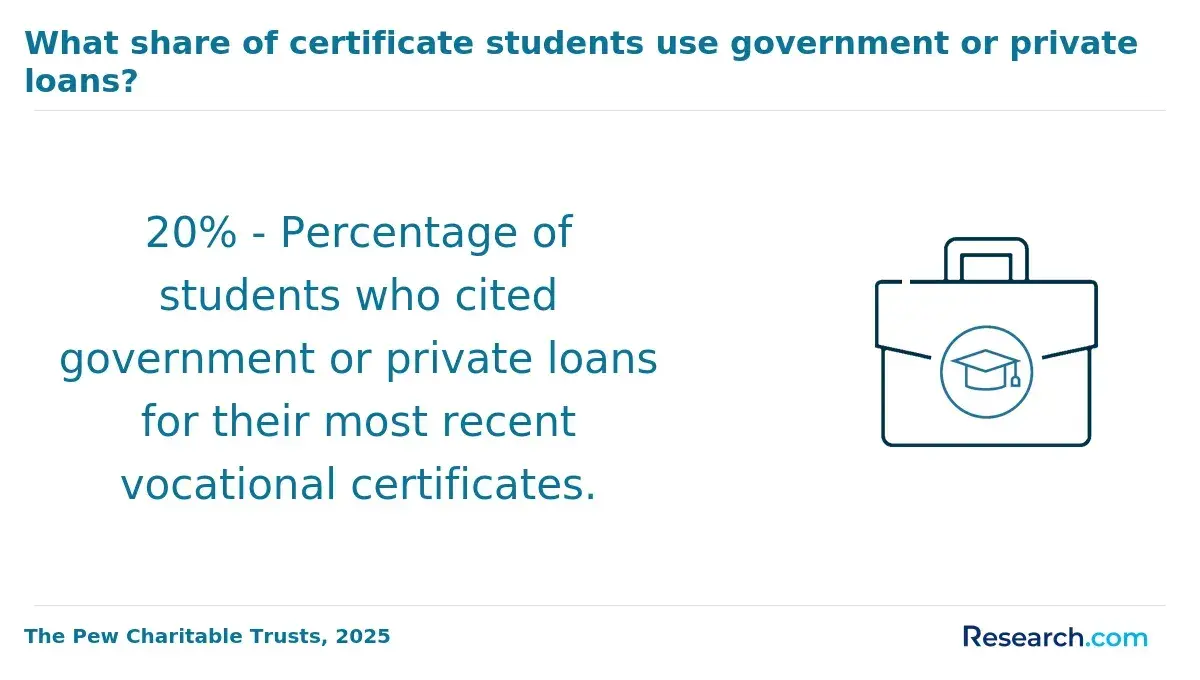
Students in accredited online Educational Policy doctorate programs may be eligible for federal loans, institutional aid, scholarships, grants, employer assistance, veterans benefits, and payment plans. Eligibility depends on accreditation, enrollment status, satisfactory academic progress, and the school's participation in federal student aid programs.
The federal loan environment is important for cost planning. For 2024-25, graduate students can borrow up to $20,500 per year in Direct Unsubsidized Loans before considering Grad PLUS Loans, which can cover remaining eligible costs but carry a higher fixed interest rate. This makes non-loan aid especially valuable.
The table below compares major funding options by how they reduce cost. It can help you decide which options to pursue before relying heavily on loans.
| Funding option | How it helps | Key limitation |
| Federal Direct Unsubsidized Loan | Provides graduate borrowing up to the annual limit | Interest accrues and borrowing may not cover the full cost |
| Grad PLUS Loan | Can cover remaining eligible cost of attendance after other aid | Higher interest rate and credit check requirements |
| Institutional scholarship | Reduces tuition without repayment | May be competitive, limited, or tied to enrollment intensity |
| Graduate assistantship or fellowship | May include stipend, tuition support, or fee support | Online eligibility may be restricted |
| Employer reimbursement | Offsets cost while the student remains employed | May require grades, preapproval, service commitments, or annual caps |
| Veterans or military education benefits | Can reduce or cover eligible tuition and fees | Benefit level depends on individual eligibility and institutional certification |
Applicants who are not fully committed to a doctorate may also compare adjacent graduate pathways, such as the best online instructional design master's programs, if their goal is curriculum strategy, learning systems, or educational technology rather than policy leadership or doctoral-level research.
Before borrowing, complete the FAFSA, ask for the school's official aid package, and request a year-by-year estimate. If the aid package relies mostly on Grad PLUS borrowing, calculate the monthly payment under several repayment scenarios before enrolling.
Employer tuition reimbursement can cover an online Educational Policy doctorate when the degree supports the employee's current role or a documented leadership pathway. This is common among school districts, universities, education agencies, nonprofit organizations, consulting firms, and policy-focused employers, but coverage rules vary widely.
Many employers reimburse only after a course is completed with a minimum grade. Others pay the school directly, cap benefits annually, exclude fees or books, or require employees to remain with the organization for a set period after receiving assistance. Current federal tax rules generally allow up to $5,250 in qualifying employer educational assistance to be excluded from taxable income each year, but employees should confirm details with payroll or a tax professional.
Employer support is most likely when the doctorate solves a business or institutional need. For an Educational Policy doctorate, the strongest cases often connect coursework and dissertation research to measurable outcomes such as policy implementation, student success strategy, compliance, workforce development, assessment systems, or leadership succession.
Do not assume an online format will be excluded. Many employers focus on accreditation, relevance, and cost documentation rather than whether classes meet on campus. Ask for approval before enrolling, and keep syllabi, receipts, invoices, grades, and proof of accreditation for reimbursement review.
Working professionals have a stronger chance of receiving sponsorship when they present the doctorate as an employer-aligned investment rather than a personal credential. The proposal should show why the program is relevant, how the schedule will protect job performance, and what the employer gains in return.
Prepare a concise business case before speaking with a supervisor or HR representative. A strong request usually includes the following:
- Identify the employer's problem, such as policy compliance, leadership succession, program evaluation, accreditation preparation, curriculum governance, or student outcome improvement.
- Connect specific courses, research methods, or dissertation plans to that problem.
- Show the full cost, including tuition, fees, books, and expected annual reimbursement amount.
- Explain the schedule and how coursework will not interfere with core work responsibilities.
- Offer a return commitment, such as sharing research findings, leading an internal project, training staff, or remaining employed for a defined period.
- Ask whether the employer can provide direct billing, tuition reimbursement, paid professional development time, conference funding, or dissertation data access.
Negotiation works best when the request is specific. Instead of asking whether the employer will "pay for a doctorate," ask whether it can fund a defined amount per year, cover a particular course sequence, sponsor dissertation research, or approve the program under an existing professional development policy.
A common mistake is waiting until after enrollment to ask. Many employers require preapproval, and missing that step can make otherwise eligible tuition nonreimbursable.
What ROI can graduates expect from an online Educational Policy doctorate?
ROI depends on the student's current salary, total program cost, debt level, career target, and whether the doctorate is required or merely preferred. An Educational Policy doctorate is usually strongest for professionals pursuing senior roles in school districts, higher education administration, education agencies, research organizations, foundations, consulting, or policy leadership.
BLS data published in 2024 reported a median annual wage of $102,610 for postsecondary education administrators, using May 2023 wage data. That figure is not a doctorate-specific salary promise, but it helps applicants compare the degree cost against leadership roles where advanced credentials may be valued.
The table below frames ROI by career direction rather than assuming one universal payoff. Use it to decide whether the doctorate aligns with the role you actually want.
| Career direction | How the doctorate may help | ROI consideration |
| District or state education leadership | Builds policy analysis, systems leadership, and evidence-based decision skills | Best if the credential supports promotion, salary lane movement, or executive eligibility |
| Higher education administration | Supports roles in academic affairs, institutional effectiveness, student success, or policy compliance | Value depends on institutional hiring norms and whether experience is also strong |
| Policy research or evaluation | Develops research design, data interpretation, and program evaluation capacity | ROI improves when the program includes strong methods training and dissertation relevance |
| Consulting or nonprofit leadership | Can strengthen credibility for education reform, grants, and strategic initiatives | Income may vary, so borrowing heavily can be riskier |
| Academic faculty path | May support teaching in education leadership or policy programs | A PhD may be preferred for tenure-track research roles at some institutions |
Students considering related education careers should also verify whether their target role has specialized accreditation or licensure expectations. For example, those leaning toward pupil services rather than policy leadership may need to compare requirements for school psychology programs online accredited by NASP instead of assuming an Educational Policy doctorate will meet practice requirements.
The degree is most likely to be worth it when it directly supports a promotion path, leadership credential expectation, dissertation project with professional value, or employer-funded development plan. It is less likely to be worth the cost if the student is unsure of the career goal, must borrow the full amount at high interest, or expects the doctorate alone to create a salary increase without relevant experience.
Other Things You Should Know About Educational Policy
Sometimes. Schools may accept prior doctoral credits, but limits are common and master's credits often do not reduce a post-master's doctorate unless the curriculum allows advanced standing. Ask for an official transfer review before estimating savings.
Part-time enrollment can make payments easier to manage, but it does not always reduce total cost. If the program charges annual fees, dissertation continuation fees, or tuition increases each year, a slower pace can increase the final price.
Choose based on career goal first. EdD programs often fit working leaders and may be easier to complete while employed, while PhD programs may offer more research funding but can require more intensive academic commitments. The cheaper option depends on funding, time, and program structure.
Qualified 529 funds can generally be used for eligible higher education expenses at qualifying institutions, including many graduate programs. Confirm the school's eligibility and check which expenses qualify before withdrawing funds.
- Weighing the Benefits of a Tuition Reimbursement Program https://www.tasb.org/news-insights/weighing-tuition-reimbursement-program
- Financial Aid at Online Colleges | OEDB.org https://www.oedb.org/ilibrarian/financial-aid-for-online-colleges/
- Affordable Doctoral Programs in 2026: How ACE Is Keeping Education Accessible When Others Are Cutting Back | ACE Blog https://ace.edu/blog/affordable-doctoral-programs-in-2026/
- 25 Cheapest Online EdD Programs of 2025 https://www.eddprograms.org/schools/affordable-online-doctor-of-education-programs/
- Ph.D. Student Voices: The Highlights and Challenges of Navigating a Hybrid Doctorate - OJDLA https://ojdla.com/articles/ph-d-student-voices-the-highlights-and-challenges-of-navigating-a-hybrid-doctorate
- THE STATE OF EDUCATION BENEFITS https://www.brighthorizons.com/-/media/bh/edassist/pdfs/report-state-of-education-benefits.ashx
- Online EdD Programs in Education Policy - Doctor of Education https://www.onlineeddprograms.com/specializations/education-policy
- Talent Studies: Investing in employee education benefits everyone https://www.luminafoundation.org/our-work/talent-investments/
- Tuition Assistance – What Students Want and What Institutions Can Do https://www.encoura.org/resources/wake-up-call/tuition-assistance-what-students-want-and-what-institutions-can-do/
- Financial Aid for Online Colleges | CollegeAtlas https://www.collegeatlas.org/financial-aid-for-online-colleges