2027 Online MS in Psychology - Forensic Psychology After an Undergraduate Degree Without Statistics: Compare Prerequisites and Admission Options
Audited and Verified:
Our Editorial and Data Verification Process
Research.com uses government datasets, official education statistics and primary institutional information to support its career and degree guides. Our review process checks factual accuracy, occupational definitions, source dates and the requirements associated with the credentials discussed.
How This Article Was Fact-Checked
Our editorial team verifies salary estimates, employment projections, education requirements and program information against original data providers and official organizations. Salary figures are checked against the relevant occupational definitions and reporting periods. Information about licensure, accreditation and required in-person training is reviewed separately.
Fact-checked and verified on:

Co-Founder and Chief Data Scientist
An undergraduate transcript without statistics does not necessarily rule out an online MS in forensic psychology. It does, however, change which programs you can enter now, which may require a course first, and how prepared you will be for graduate research.
This guide is for applicants comparing those options. It explains how to read prerequisite policies, document alternative preparation, and weigh the time and cost of filling the gap against the degree's nonclinical career value.
Key Things You Should Know
- No universal undergraduate statistics prerequisite applies to online forensic psychology master's programs; the admitting program decides whether it is required, recommended, or absent from its admission criteria.
- Compare 3 possibilities: direct admission, admission with an approved course to complete, or taking statistics before applying. Get the applicable policy and deadline in writing.
- A forensic psychology MS does not itself qualify you as a licensed psychologist or authorize forensic evaluations; check the credential required for your intended job before paying for the degree.
What Is an Online MS in Forensic Psychology?
An online MS in forensic psychology is graduate study of psychological science in legal and justice-related settings. Depending on the curriculum, students may examine research on eyewitness memory, decision-making, violence, victimization, corrections, and the ethical use of psychological evidence. "Online" describes course delivery, not necessarily every research meeting or applied requirement.
Programs differ substantially: one may emphasize research methods and a thesis, while another emphasizes applied coursework and a capstone. Compare the actual degree and requirements, not the concentration label alone. A guide to choosing forensic psychology study by cost and entry criteria can help organize a shortlist, but the institution's current catalog and admissions office control its requirements.
Can You Earn a Forensic Psychology Master's Without Undergraduate Statistics?
Yes, potentially. Some programs do not specify an undergraduate statistics course for admission; others require one, accept an equivalent, or allow an outstanding prerequisite to be completed on a set timetable. Admission without that course does not mean the graduate curriculum avoids statistics: research-methods, measurement, and evidence-evaluation work may assume quantitative literacy.
The useful distinction is between an official admission prerequisite and recommended preparation. A transcript showing research methods, economics, data analysis, or another quantitative subject may support a request for equivalency, but it does not create a waiver. Ask the program to review the syllabus and transcript, identify who approves substitutions, and confirm whether approval applies to admission, graduation, or both.
If the school requires undergraduate statistics, an approved course before enrollment may be more efficient than ruling out the degree. Applicants still completing a bachelor's can investigate moving existing credits into psychology study, but only their institution can decide whether a course satisfies its degree or prerequisite rules.
What Are the Admission Requirements for Online Forensic Psychology Programs?
Start with the published requirements for your intended entry term. A completed bachelor's degree is the central credential; policies on major, GPA, psychology coursework, statistics, research methods, recommendations, statements, tests, and interviews vary. A criminal justice or other non-psychology major is not automatically disqualifying. Experience in justice or human services may strengthen an application without replacing a stated academic prerequisite.
For an applicant missing statistics, compare programs using the same questions. This table separates admission status from assumptions about readiness.
| Published policy | What it means for an applicant without statistics | What to confirm |
| Statistics required before admission | Complete an approved course before the school's deadline. | Accepted course level, credits, grade, and completion date. |
| Statistics may be completed after admission | Admission may be possible, but the missing course can affect course sequencing. | Written conditions, cost, and the last allowable term. |
| Statistics recommended, not required | You may be eligible now but should assess quantitative readiness. | Whether first-term methods courses presume prior statistics. |
| No statistics policy stated | Do not infer that no preparation is expected. | Admissions interpretation and graduate curriculum expectations. |
Send the admissions office your transcript and, where relevant, course descriptions or syllabi; ask for a written answer tied to the entry term. If you have not yet finished your undergraduate degree, speeding up an online psychology degree matters only if the resulting course sequence still meets the master's program's requirements. Never assume that an accelerated schedule resolves a missing prerequisite.
Delivery format does not change the need to learn research methods or meet admission standards. Online study can reduce commuting, while campus study may offer easier access to on-site research teams and local professional contacts. Either format can include scheduled seminars, group projects, a thesis, or an approved placement. Ask for a sample term schedule and written details about any required visits and placement location.
Compare formats against your goal, not convenience alone. If you need intensive research mentorship for a later doctorate, investigate actual faculty access and opportunities to produce supervised work. If your goal is clinical counseling rather than nonclinical forensic study, compare the separate clinical mental health counseling course pace and accreditation requirements rather than treating the two online degrees as interchangeable.
Coursework often combines psychological theory with research methods, statistics or data interpretation, ethics, and legal-system applications. Possible subjects include psychology and law, victimology, correctional settings, and the limits of psychological assessment. A thesis or capstone may require a more substantial research sequence than a coursework-only program.
For applicants without undergraduate statistics, the important question is when quantitative work begins. Request the course sequence and first-term syllabi: a required graduate methods course may be a difficult place to learn basic statistical concepts for the first time. If a licensing-oriented career is your aim, clinical counseling master's course sequencing illustrates a different professional-training route; forensic subject matter alone does not turn an MS into counseling preparation.
Completion time depends on required credits, course availability, enrollment pace, and whether a thesis or placement extends beyond scheduled classes. A missing prerequisite can add a course and delay entry or progression, even when the school offers conditional admission.
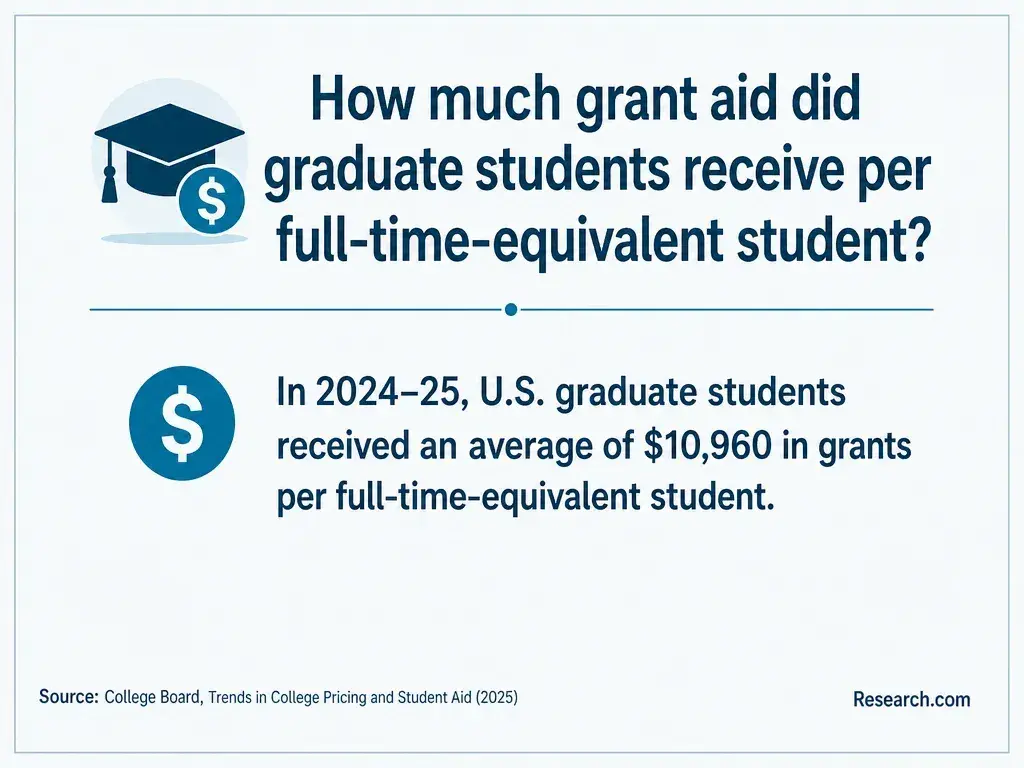
Compare a written estimate of total tuition and mandatory fees, not just a per-credit price. Include the approved statistics course, textbooks or software, any travel, and potential placement-related expenses. Ask whether prerequisites count toward graduate credits and whether changing enrollment intensity affects aid. A comparison of finding a lower-cost psychology master's degree is a starting point; obtain a program-specific estimate before committing.
Check the institution's accreditation status with its recognized accreditor and confirm that the degree is awarded by that institution. Institutional accreditation and eligibility for a particular professional credential are separate questions. Do not assume an online, nonclinical forensic psychology MS has APA program accreditation or meets a state psychologist-licensing board's education rules.
If your actual target is a different regulated occupation, check that occupation's state requirements and any applicable program recognition before choosing a degree. For example, academic routes into addiction counseling have their own credential considerations; forensic psychology accreditation claims cannot answer those questions.
The degree may support applications for nonclinical roles in victim services, corrections program support, justice-related research, or agency program evaluation. Hiring depends on the duties, employer, jurisdiction, and your experience - not the degree title alone. Someone with criminal justice experience, for instance, may use graduate research skills in an existing agency role, while a new entrant may need supervised support or research experience first.
Before enrolling, examine several postings for your target job. Separate skills the MS teaches from required credentials, government hiring rules, and experience you must obtain elsewhere. Addiction recovery job families are a useful reminder that similarly service-oriented roles can have different duties and credentials; a forensic concentration does not substitute for role-specific training.
Not by itself. A nonclinical forensic psychology MS generally should not be treated as a route to independent psychological practice. Licensed forensic evaluation and other regulated psychological services require the education, supervised experience, examinations, and permissions specified by the relevant state board. Nor does forensic coursework confer police authority or permission to practice law.
If your goal is therapy or another regulated service, identify the exact license and state first, then compare programs against that board's rules. A qualifying counseling or social work program may be a more direct educational choice. Even the economics of a lower-level alternative deserve comparison: information on funding an online bachelor's in substance abuse counseling may be relevant if that distinct credential pathway - not forensic research - is the actual goal.
What Are the Salary and Job Outlook for Forensic Psychology Graduates?
There is no single reliable US salary or growth figure for "forensic psychology MS graduates." The Bureau of Labor Statistics reports occupations, not outcomes for this particular degree, and jobs commonly associated with forensic study span different education and licensing levels. A psychologist wage figure, for example, would be misleading as an expected salary for someone whose MS does not qualify them to practice psychology.
Use the occupation matching the duties and credentials in your target job postings, then compare its current Bureau of Labor Statistics wage and outlook with local public-agency pay schedules where relevant. Treat discussions of earning potential after a master's in forensic psychology as leads for researching specific roles, not as a prediction of your earnings. Weigh likely job eligibility against the program's full cost and any additional education the role requires.
Other Things You Should Know About Psychology
Only if the program accepts it under its stated policy. Ask whether it requires a transcripted college course and who decides equivalency.
Do not assume so. It may demonstrate preparation, but a program requiring academic credit can reject noncredit training as a substitute.
It may, if the graduate program approves its level, credits, content, and grade. Request approval before registering.
Send the course description and transcript to admissions for an equivalency review. The receiving program determines whether the credit amount and content meet its rule.
- Cost of Attendance (Budget) | 2025-2026 Federal Student Aid Handbook https://fsapartners.ed.gov/knowledge-center/fsa-handbook/2025-2026/vol3/ch2-cost-attendance-budget
- Admission Requirements | Quantitative Psychology Graduate Program https://quantpsych.unc.edu/admission-requirements/
- Application Process | UCLA MASDS https://master.stat.ucla.edu/application-process.html
- Medschool, Admissions, Application Requirements | usuhs.edu https://medschool.usuhs.edu/admissions/application-requirements
- 2023-2024 Admission Criteria | 2026-2027 School of Education Graduate Bulletin https://soegrbul.sites.iu.edu/archive/2023-2024/admissions/admission-criteria.html
- Majors - UW Undergraduate Advising - University of Washington https://advising.uw.edu/degree-overview/majors/