
2027 Best Forensic Psychology Degree Programs in Florida: Online & Campus

Co-Founder and Chief Data Scientist
Choosing a forensic psychology degree in Florida is not just about finding a school with an interesting course catalog. The right program should match your career goal, whether you want to work in mental health, courts, corrections, law enforcement support, victim services, research, or eventually pursue psychologist licensure.
Florida students have several options, from associate and bachelor’s programs that introduce psychology and criminal justice concepts to graduate programs that build advanced clinical, assessment, research, and legal-system skills. The challenge is that program names can sound similar while leading to very different outcomes.
This guide explains what forensic psychology programs in Florida typically offer, how online and campus formats compare, what admissions requirements to expect, what courses and concentrations matter, how to think about cost and financial aid, and which career paths may be realistic at different degree levels.
Quick answer: What should you know before choosing a forensic psychology program in Florida?
A forensic psychology degree in Florida can be a strong fit if you want to apply psychology in legal, correctional, public safety, victim advocacy, or forensic mental health settings. However, students should choose carefully: bachelor’s programs usually prepare graduates for entry-level or support roles, while independent clinical practice as a psychologist generally requires doctoral-level training, supervised experience, and licensure.
The best program for you depends on your intended career, accreditation needs, fieldwork access, format preference, total cost, and whether the curriculum includes forensic assessment, ethics, research methods, criminal behavior, and applied experience with justice or mental health systems.
Key benefits of forensic psychology degree programs in Florida for 2027
- More flexible study options: Florida students can compare online, hybrid, and campus-based formats. Existing enrollment data cited for this topic notes a 25% increase since 2023, reflecting stronger interest in flexible pathways.
- Applied learning tied to justice and mental health settings: Many programs emphasize internships, practicum experiences, case-based learning, or partnerships with courts, correctional agencies, counseling sites, and public safety organizations. Existing program data cites graduate employability gains of over 30% in forensic settings when applied experience is part of the pathway.
- Curriculum that is adapting to newer forensic issues: Programs increasingly discuss AI, digital evidence, cyber-related behavior, and digital forensics alongside traditional forensic psychology topics. Existing projections cited for this field point to 15% job growth in forensic psychology by 2028.
- What forensic psychology degree options can students find in Florida in 2027?
- Is an online or on-campus forensic psychology program better in Florida?
- What admissions requirements do Florida forensic psychology programs usually have in 2027?
- Which forensic psychology concentrations are available in Florida in 2027?
- What classes are common in a Florida forensic psychology degree?
- How much can forensic psychology programs cost in Florida in 2027?
- How can Florida forensic psychology students pay for their degree in 2027?
- What careers can a forensic psychology degree lead to in Florida?
- How much do forensic psychology graduates earn in Florida in 2027?
- How should you choose a forensic psychology program in Florida?
What forensic psychology degree options can students find in Florida in 2027?
Florida offers forensic psychology-related study at several levels. Some programs use the title “forensic psychology,” while others combine psychology, criminal justice, forensic studies, counseling, or forensic science coursework. Before enrolling, students should look beyond the program title and confirm what the degree actually prepares them to do.
Degree level matters because forensic psychology careers vary widely. Some roles focus on case management, advocacy, rehabilitation, or law enforcement support. Others require graduate clinical training, supervised practice, or a doctoral degree.
| Degree level | Typical focus | Common format in Florida | Best fit for | Important limitation |
| Associate degree | Introductory psychology, criminal justice, human behavior, and general education | Campus-based or hybrid | Students planning to transfer or explore the field before committing to a bachelor’s degree | Usually not enough for specialized forensic psychology positions |
| Bachelor’s degree | Psychological theory, research methods, criminal behavior, courts, corrections, and social science foundations | Online, campus, or hybrid | Students seeking entry-level roles or preparation for graduate school | Does not qualify graduates to work independently as licensed psychologists |
| Master’s degree | Advanced forensic psychology, assessment concepts, ethics, legal issues, research, and applied practice | Online, campus, or hybrid | Students targeting advanced support roles, case management, research, or preparation for doctoral study | Clinical scope depends on program design and state requirements |
| Doctoral degree, including PhD or PsyD | Clinical training, research, assessment, supervised practice, and specialization in forensic applications | Mostly campus-based or hybrid | Students aiming for psychologist licensure, expert testimony work, forensic evaluation, or academic research | Requires a substantial time commitment and careful licensure planning |
Associate programs commonly take about two years and can be useful for transfer students. Bachelor’s programs offer broader preparation and are often the minimum academic foundation for graduate-level forensic psychology training. Master’s programs may offer accelerated pathways within 18 to 24 months, especially in online or hybrid formats, while doctoral programs often require four to seven years because of clinical training, research, and supervised placements.
Students who are interested in evidence analysis, crime laboratories, or scientific investigation rather than human behavior and mental health may also want to compare forensic psychology with forensic science. Research.com’s guide to online forensic science programs can help clarify that difference.
Is an online or on-campus forensic psychology program better in Florida?
The better format depends on your schedule, learning style, career goal, and need for supervised experience. Online forensic psychology programs can work well for students who need flexibility, while campus-based programs may offer stronger access to labs, faculty, peer networks, and structured field placements.
Forensic psychology is an applied field, so students should not choose online study based only on convenience. If your target role involves clinical work, assessment, counseling, or field-based services, you need to know exactly how the program handles practicum, internship, supervision, and site placement requirements.
Online forensic psychology programs
- Best for working adults and students with fixed schedules: Many online programs use asynchronous coursework, allowing students to complete lectures, readings, and assignments outside standard classroom hours.
- Demand continues to rise: Existing source material cites a 20% year-over-year growth reported by the Florida Department of Education and BLS, suggesting that online forensic psychology education is becoming more visible and accepted.
- Case-based learning can translate well online: Programs may use simulations, mock reports, recorded interviews, and virtual case studies to teach legal reasoning, ethics, and behavioral analysis.
- Fieldwork can be the biggest challenge: Fully online students may still need approved local placements, background checks, or occasional campus visits. Always ask who is responsible for securing practicum or internship sites.
On-campus forensic psychology programs
- Stronger face-to-face interaction: Students can ask questions in real time, build closer relationships with faculty, and participate in classroom discussion around sensitive forensic cases.
- Better access to campus resources: Psychology labs, counseling centers, research teams, libraries, and guest lectures can strengthen academic preparation.
- More structured internship access: Existing program information cites internship rates between 70% and 85% in top Florida universities, which can be valuable for students who need direct exposure to criminal justice or forensic mental health environments.
- More networking opportunities: Campus programs may make it easier to meet local practitioners, agency representatives, alumni, and faculty involved in forensic work.
| Choose online if... | Choose on campus if... |
| You need to keep working while studying | You want frequent in-person faculty access |
| You are comfortable arranging local fieldwork if required | You want stronger built-in networking and internship support |
| Your goal is a nonclinical, research, administrative, or graduate-preparation pathway | Your goal requires intensive supervised clinical or assessment training |
| You can stay self-motivated without weekly campus attendance | You learn best through live discussion, labs, and direct feedback |
Students comparing online versus campus programs should also consider the Bureau of Labor Statistics projection cited in the source material: a 12% growth in psychologist roles statewide. If your goal is to become a licensed psychologist, confirm that the format, accreditation, supervised experience, and curriculum align with that long-term pathway.
For a broader view of institutional options and forensic-related academic environments, Research.com also lists the top forensic science colleges in the US.
What admissions requirements do Florida forensic psychology programs usually have in 2027?
Admissions requirements vary by degree level. Undergraduate programs generally focus on high school preparation, transfer credits, and general admission standards. Graduate programs usually expect prior college coursework in psychology, research, statistics, or a related social science field.
Applicants should review each program’s requirements early because forensic psychology programs may also require background checks, interviews, writing samples, recommendation letters, or proof of readiness for fieldwork.
- Academic background: Many graduate programs expect a bachelor’s degree from an accredited institution. Psychology, criminal justice, sociology, social work, or related majors may be especially relevant, though some programs consider other majors if applicants have the required prerequisite coursework.
- GPA expectations: Competitive programs commonly look for a cumulative GPA between 3.0 and 3.5 on a 4.0 scale. More selective programs may weigh GPA alongside recommendations, experience, and writing ability.
- Prerequisite courses: Common prerequisites include general psychology, statistics, research methods, and abnormal psychology. Helpful supporting courses may include developmental psychology, cognitive psychology, criminal law, and ethics.
- Testing policies: Some programs may still accept or request GRE scores, but many schools have moved toward optional testing or waivers as part of a broader holistic admissions approach.
- Relevant experience: Volunteer or work experience in mental health, victim services, corrections, court services, law enforcement support, crisis response, or social services can strengthen an application.
- Technology and compliance requirements: Online students need reliable internet access and compatible devices. Students completing fieldwork may need background checks, immunization documentation, liability coverage, or site-specific clearance.
How to strengthen your application
- Take statistics and research methods seriously; forensic psychology relies heavily on evidence, documentation, and interpretation.
- Seek experience with populations connected to the legal or mental health system, such as youth services, reentry programs, crisis lines, shelters, or community agencies.
- Write a focused personal statement that explains your career goal, not just your interest in crime-related topics.
- Ask recommenders who can speak to your judgment, ethics, writing ability, emotional maturity, and readiness for sensitive work.
- Contact admissions staff before applying if you have a nontraditional background or missing prerequisites.
Which forensic psychology concentrations are available in Florida in 2027?
Forensic psychology concentrations help students tailor their coursework toward a specific professional direction. The right concentration depends on whether you are more interested in clinical evaluation, correctional rehabilitation, criminal behavior, juvenile justice, advocacy, or research.
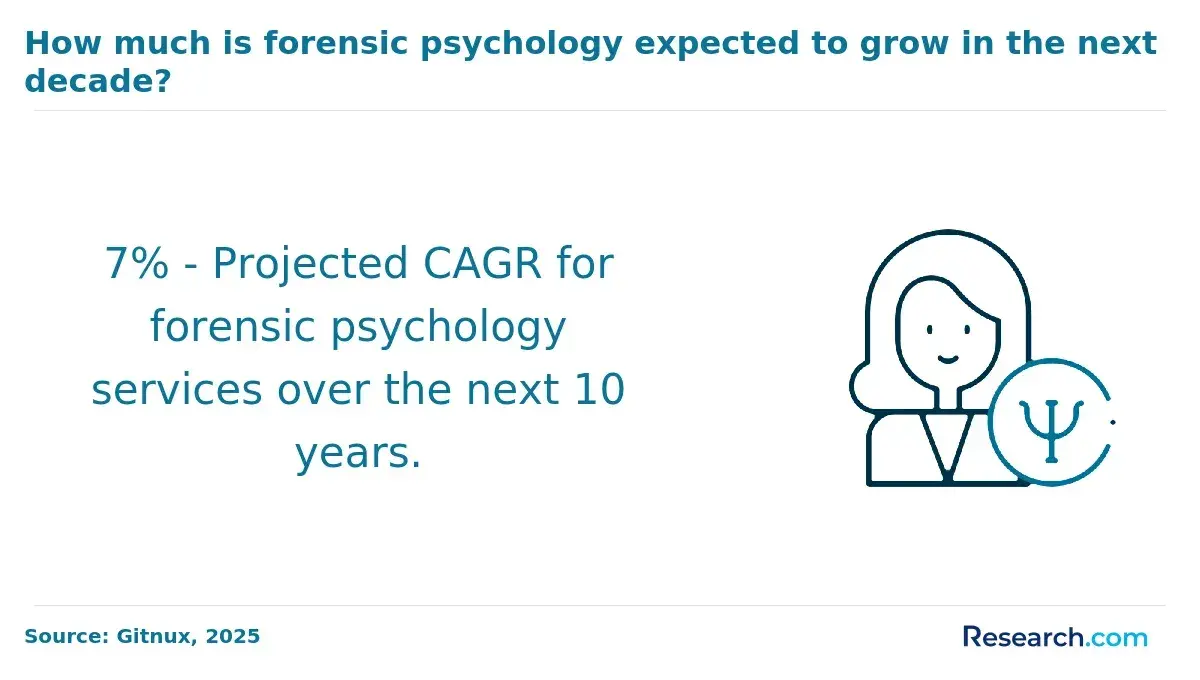
Existing field projections cited for this topic suggest growth of roughly 12% over the next decade, but students should remember that job outcomes depend on degree level, licensure status, experience, and local employer needs.
| Concentration | What it emphasizes | Potential settings | Good fit for students who... |
| Clinical forensic psychology | Assessment, treatment, mental health law, psychopathology, and court-related psychological issues | Hospitals, courts, correctional facilities, forensic mental health programs | Want a clinical or evaluation-focused path and may pursue doctoral training |
| Forensic assessment and evaluation | Competency, risk assessment, interviewing, testing, and report writing concepts | Courts, juvenile justice agencies, rehabilitation programs, assessment units | Are detail-oriented and interested in structured evaluation work |
| Criminal behavior and investigative psychology | Behavioral patterns, motive analysis, profiling concepts, interviewing, and investigative support | Law enforcement support units, investigative agencies, research teams | Want to understand offender behavior and assist investigative decision-making |
| Correctional psychology | Inmate mental health, behavioral intervention, substance abuse, crisis response, and rehabilitation | Jails, prisons, reentry programs, probation-related services | Want to work with justice-involved individuals and support rehabilitation |
Students should avoid choosing a concentration only because it sounds exciting. Ask whether the concentration includes fieldwork, whether faculty have relevant expertise, and whether graduates move into the roles you want.
For a deeper look at degree levels, outcomes, and compensation, see Research.com’s forensic psychology degree salary guide.
What classes are common in a Florida forensic psychology degree?
Forensic psychology coursework combines behavioral science, research, law, ethics, and applied decision-making. Strong programs do more than discuss criminal behavior; they teach students how to evaluate evidence, understand legal standards, communicate clearly, and recognize professional boundaries.
- Introduction to forensic psychology: Covers the role of psychology in courts, corrections, law enforcement support, victim services, and forensic mental health systems.
- Criminal behavior and psychology: Examines theories of offending, behavioral patterns, risk factors, victim-offender dynamics, and evidence-based approaches to understanding crime.
- Psychological assessment and evaluation: Introduces testing, clinical interviewing, competency concepts, risk assessment, and documentation used in forensic contexts.
- Legal and ethical issues in forensic psychology: Reviews confidentiality, informed consent, expert testimony, dual relationships, professional limits, and responsibilities when legal and clinical systems overlap.
- Research methods and statistics: Builds the ability to read studies, evaluate data, design research, and avoid unsupported conclusions in high-stakes legal settings.
- Juvenile justice and delinquency: Focuses on youth behavior, prevention, rehabilitation, family systems, trauma, and legal responses involving minors.
- Correctional psychology: Explores mental health services in jails, prisons, probation-related programs, crisis response, behavior change, and reentry support.
- Forensic mental health: Addresses psychological disorders, treatment planning, competence-related questions, violence risk concepts, and the interface between diagnosis and law.
What strong coursework should help you do
- Write clearly for legal, clinical, and agency audiences.
- Understand the difference between clinical opinion, research evidence, and legal findings.
- Recognize when a role requires licensure, supervision, or additional training.
- Apply ethical standards when working with vulnerable or justice-involved populations.
- Use research and statistics to evaluate claims instead of relying on assumptions about criminal behavior.
Students often find the curriculum demanding because it combines emotionally sensitive subject matter with rigorous documentation, legal concepts, research, and field-based learning. The most useful programs connect classroom theory to realistic case scenarios, supervised practice, and careful feedback on professional writing.
How much can forensic psychology programs cost in Florida in 2027?
The cost of a forensic psychology degree in Florida depends on degree level, institution type, residency status, delivery format, fees, fieldwork requirements, and whether the student studies full time or part time. Tuition is only one part of the total price.
Existing cost information for this topic cites online tuition at public institutions at roughly $150 to $300 per credit, while on-campus rates are cited between $200 and $400 per credit hour. Actual costs can vary by school, program, residency classification, and fees.
| Cost category | Online students should check | Campus students should check |
| Tuition per credit | Whether the online rate differs for in-state and out-of-state students | Whether tuition changes by residency, campus, degree level, or program type |
| Mandatory fees | Technology fees of $20 to $50 per credit may apply | Campus, library, facility, lab, and activity fees may total $1,000 to $2,000 annually |
| Technology and lab costs | Software, secure testing tools, webcams, and learning platforms | Lab fees, assessment materials, printing, parking, and campus-based resources |
| Living and travel expenses | Usually lower unless travel is required for residencies or fieldwork | Housing and transportation can add $10,000 to $15,000 yearly |
| Fieldwork expenses | Background checks, local travel, liability coverage, or site documentation | Commuting, placement-related fees, background checks, and required materials |
How to compare program cost more accurately
- Calculate the total number of credits, not just the per-credit rate.
- Ask whether tuition is locked or can increase while you are enrolled.
- Include fees, textbooks, assessment materials, technology, parking, commuting, housing, and fieldwork expenses.
- Compare part-time and full-time pacing because a slower timeline may increase total living or opportunity costs.
- Ask whether transfer credits, prior learning, or prerequisite completion can reduce the total cost.
How can Florida forensic psychology students pay for their degree in 2027?
Financial aid planning should start before you apply. Graduate tuition costs cited in the source material range from $8,000 to $15,000 annually, and students may also need to budget for fees, books, assessment materials, travel, and fieldwork-related expenses.
Most students begin with the FAFSA, then compare federal aid, institutional scholarships, assistantships, employer support, and state or professional organization funding.
- Federal Pell Grant: This need-based grant is primarily for undergraduate students and does not require repayment. Eligibility is determined through the FAFSA.
- Federal Supplemental Educational Opportunity Grant, or FSEOG: This grant supports students with exceptional financial need. Funding is limited and is typically administered by participating institutions.
- Federal Direct Unsubsidized Loan: Graduate students may use this loan even without demonstrating financial need. Interest accrues during all periods, so students should borrow carefully.
- Grad PLUS Loan: This loan can help graduate students cover costs left after other aid is applied. It requires a credit check and should be compared against other borrowing options.
- State scholarships and grants: Florida students may review programs administered by the Florida Department of Education, including Bright Futures Scholarship opportunities, along with awards from psychology or criminal justice organizations.
- Work-study and assistantships: Some programs offer research, teaching, or administrative assistantships that may provide stipends, tuition support, or both. These roles can also build relevant experience.
Practical funding steps
- Submit the FAFSA as early as possible.
- Ask each school for a full cost-of-attendance estimate, not just tuition.
- Request scholarship information from the psychology department, graduate school, and financial aid office.
- Ask whether assistantships are available to master’s students, doctoral students, or both.
- Compare loan repayment scenarios before borrowing the maximum amount offered.
- If you work in public service, ask your employer about tuition assistance or professional development support.
Students who successfully manage costs often combine several funding sources rather than relying on one award. Early planning matters because grants, assistantships, and institutional scholarships may have priority deadlines.
What careers can a forensic psychology degree lead to in Florida?
A forensic psychology degree can lead to several career directions, but the available roles depend heavily on degree level, licensure, experience, and employer requirements. A bachelor’s degree may support entry-level positions in advocacy, case management, corrections, probation-related services, or research support. Graduate and doctoral training can open more advanced forensic mental health, assessment, leadership, or academic pathways.
Existing outlook information cited for this field notes that employment is expected to rise by approximately 14% over the next decade, with demand connected to public safety, rehabilitation, legal mental health evaluations, and support services.
| Career path | What the work may involve | Typical preparation consideration |
| Forensic psychologist | Assessment, evaluation, consultation, expert testimony, and work with legal or correctional systems | Usually requires advanced clinical training and licensure planning |
| Criminal profiler | Behavioral analysis, investigative support, pattern interpretation, and collaboration with law enforcement | Often requires specialized experience and strong research or investigative knowledge |
| Victim advocate | Support for crime victims, crisis response, court navigation, safety planning, and referral coordination | May be accessible with undergraduate preparation plus relevant training or experience |
| Correctional counselor | Rehabilitation planning, behavioral support, case documentation, reentry preparation, and crisis management | Requirements vary by agency and may depend on counseling or human services credentials |
| Forensic case manager | Coordinating services for individuals involved in legal, treatment, or correctional systems | Strong fit for students with organization, documentation, and interagency communication skills |
Who should consider forensic psychology?
- Students who can handle sensitive topics such as trauma, violence, mental illness, victimization, and incarceration.
- People who are comfortable with documentation, ethics, legal standards, and professional boundaries.
- Students who want to work across systems, including courts, agencies, hospitals, schools, law enforcement, and correctional environments.
- Future graduate students who want a foundation for forensic mental health, clinical psychology, counseling, research, or public policy work.
Who may want a different path?
- Students who mainly want to collect or analyze physical evidence may be better served by forensic science.
- Students who want to become attorneys should consider pre-law or legal studies pathways.
- Students who want general counseling careers should compare counseling, social work, and clinical psychology programs.
- Students who are uncomfortable with legal documentation, crisis situations, or high-stakes decision-making may want a less forensic-focused psychology path.
To compare roles, credentials, and long-term options, review Research.com’s guide to forensic psychology degrees and careers.
How much do forensic psychology graduates earn in Florida in 2027?
Forensic psychology-related earnings in Florida vary by role, employer, degree level, licensure, experience, specialization, and location. The salary range cited in the source material for related roles is between $65,000 and $90,000, but students should not treat that range as a guaranteed outcome.
Graduates in support, advocacy, case management, or correctional roles may earn less than licensed doctoral-level psychologists or experienced professionals in specialized evaluation, consultation, or private practice settings.
- Role and title: Licensed forensic psychologists generally have different earning potential than entry-level support staff, victim advocates, or case managers.
- Experience: New graduates often begin near the lower end of available ranges, while experienced professionals may qualify for higher-level roles.
- Specialization: Skills in forensic assessment, criminal behavior, correctional mental health, or court-related evaluation can influence job options and pay.
- Work setting: Government agencies, hospitals, universities, correctional systems, nonprofit organizations, and private practices may offer different salary structures and benefits.
- Credentials: Licensure, certifications, supervised experience, and graduate training can affect eligibility for advanced positions.
Students comparing salary potential should look at job postings for the exact roles they want, then check degree, license, and experience requirements. Research.com’s overview of forensic psychology careers in criminal justice can help connect education choices with realistic career paths.
How should you choose a forensic psychology program in Florida?
The right forensic psychology program should connect your current academic level to your intended professional outcome. A flexible online program may be ideal for one student, while another may need a campus-based program with supervised practicum placements and faculty who specialize in forensic assessment.
Use the following factors to compare programs before applying.
- Curriculum fit: Look for coursework in criminal behavior, psychological assessment, research methods, legal systems, ethics, forensic mental health, and correctional or juvenile justice topics. If you want emerging areas such as cybercrime or digital evidence, check whether they are included rather than assuming they are covered.
- Accreditation: Accreditation affects transferability, employer recognition, financial aid eligibility, and licensure planning. Students should verify institutional accreditation, such as SACSCOC, and programmatic accreditation when relevant. Doctoral students planning clinical practice should pay close attention to APA-related requirements.
- Faculty background: Faculty with forensic research, clinical practice, correctional experience, court consultation, or legal-system expertise can provide stronger mentorship and professional context.
- Field training: Internships, practica, research placements, or agency partnerships are especially important in applied forensic work. Existing source material cites Bureau of Labor Statistics (2023) information noting that hands-on training can improve employability and salary prospects in forensic psychology.
- Program format: Online, hybrid, and campus formats can all work, but students should confirm how the program handles fieldwork, supervision, testing, residency requirements, and student support.
- Admissions transparency: Review GPA expectations, prerequisite coursework, recommendation letters, writing samples, interviews, deadlines, and background-check policies before investing time and money in an application.
- Student support: Strong advising, career counseling, writing support, mental health resources, and placement guidance can make a major difference, especially in emotionally demanding fields.
Questions to ask before enrolling
| Question | Why it matters |
| Is the institution properly accredited? | Accreditation can affect financial aid, credit transfer, graduate admission, and employer recognition. |
| Does the program prepare students for my specific career goal? | A bachelor’s, master’s, and doctoral program can lead to very different outcomes. |
| Who arranges internships or practicum placements? | Some schools place students directly; others expect students to find approved sites. |
| Will this program meet licensure-related expectations if I pursue clinical practice? | Students aiming for licensed psychologist roles must plan carefully and verify requirements. |
| What is the full cost, including fees and fieldwork expenses? | Tuition alone does not show the real price of attendance. |
| What do graduates actually do after completing the program? | Outcomes data and alumni roles can reveal whether the program aligns with your goals. |
Common mistakes to avoid
- Choosing by program title alone: “Forensic psychology” can mean different things at different schools. Review the curriculum and outcomes.
- Ignoring accreditation: A low-cost program is not a good deal if it creates problems with transfer credit, graduate admission, or licensure planning.
- Assuming online means no in-person requirements: Some online programs still require internships, residencies, supervised placements, or local site approvals.
- Focusing only on tuition: Fees, books, technology, travel, background checks, and housing can change the total cost substantially.
- Overestimating bachelor’s-level career options: Many advanced forensic psychology roles require graduate study, licensure, or extensive experience.
- Relying only on rankings: Rankings can be useful, but your best-fit program is the one that matches your career goal, budget, support needs, and credential requirements.
What forensic psychology graduates in Florida say about their degree
- Studying forensic psychology online in Florida gave me the flexibility to manage family responsibilities while building the academic foundation I needed for my work at Coral Springs High School. The format helped me stay on track, and the coursework gave me a better understanding of the psychological challenges students can face in a diverse community. I now feel more prepared to support safer and more responsive school environments. Wagner
- My on-campus forensic psychology program in Florida changed the direction of my career. After graduating, I moved into a higher position that allowed me to take on more advanced casework and leadership responsibilities. Learning in a multicultural state with access to varied forensic resources pushed me to grow professionally and personally. Zoey
- Completing my forensic psychology studies in Florida helped me connect classroom learning with real community needs. The combination of coursework and applied experience in Florida’s legal and cultural environment shaped how I think about forensic cases. It also motivated me to keep developing professionally and contribute to criminal justice reform. Quinn
Related Articles for Nearby States
- 2027 Best Forensic Psychology Degree Programs in Georgia: Online & Campus
- 2027 Best Forensic Psychology Degree Programs in Alabama: Online & Campus
- 2027 Best Forensic Psychology Degree Programs in South Carolina: Online & Campus
- 2027 Best Forensic Psychology Degree Programs in Mississippi: Online & Campus
- 2027 Best Forensic Psychology Degree Programs in Tennessee: Online & Campus
- 2027 Best Forensic Psychology Degree Programs in North Carolina: Online & Campus
- 2027 Best Forensic Psychology Degree Programs in Louisiana: Online & Campus
- 2027 Best Forensic Psychology Degree Programs in Kentucky: Online & Campus
- 2027 Best Forensic Psychology Degree Programs in Arkansas: Online & Campus
- 2027 Best Forensic Psychology Degree Programs in Virginia: Online & Campus
Key insights
- Degree level determines opportunity. Associate and bachelor’s programs can introduce the field and support entry-level work, but advanced forensic psychology roles often require graduate study, supervised experience, and sometimes licensure.
- Online programs offer flexibility, but fieldwork still matters. If your goal involves assessment, counseling, corrections, or forensic mental health, ask how the program handles practica, internships, and supervision.
- Accreditation should be nonnegotiable. Verify institutional accreditation and check programmatic expectations if you plan to pursue clinical or psychologist licensure.
- Cost comparisons must include more than tuition. Fees, technology, housing, travel, fieldwork, and time to completion can significantly affect the total investment.
- Specialization should follow your career goal. Clinical forensic psychology, correctional psychology, forensic assessment, and investigative psychology prepare students for different types of work.
- Do not assume salary outcomes are guaranteed. The cited range of $65,000 and $90,000 depends on role, experience, employer, credentials, and licensure status.
- The best program is the one that fits your next step. Choose based on curriculum, field training, faculty expertise, accreditation, cost, student support, and alignment with the exact job or graduate pathway you want.
References:
- Forensic Psychology https://www.fastweb.com/directory/scholarships-for-forensic-psychology-majors
- 2026 Application Deadlines and Requirements Master's https://graduate.ucf.edu/application-deadlines-and-requirements/masters/2026/
- Forensic Science Colleges in Florida - Schools for Forensics in FL https://www.forensicscolleges.com/usa/florida
- 16 Best Online Master’s in Psychology Programs for 2026 - Online Psychology Programs https://onlinepsychologyprograms.org/masters/
- How Much Do Forensic Psychologists Make? | 2025 Salary https://www.allcriminaljusticeschools.com/forensic-psychology/salary/
- What Forensic Psychology Degrees Offer | All Psychology Schools https://dev.allpsychologyschools.com/degrees/forensic-psychology/
- Forensic Psychology Salary (How Much Do They Make?) | 2024 https://www.allpsychologyschools.com/forensic-psychology/salary/
- Top Careers in Forensic Psychology: Jobs and Pathways https://www.mobap.edu/news/top-careers-in-forensic-psychology/
- Forensic Studies BS https://www.fgcu.edu/cas/departments/js/fsbs/
- Spring 2026 Courses » Forensic Medicine Distance Education Program » College of Medicine » University of Florida https://forensicmedicine.med.ufl.edu/courses/springcourses/
Other Things You Should Know About The Best Forensic Degree Programs in Florida
In 2027, Florida's standout forensic psychology programs are notable for blending robust academic instruction with practical, hands-on experience. Institutions like the University of Central Florida excel in offering cutting-edge research opportunities, while Florida Institute of Technology is renowned for its expert faculty and comprehensive forensic internships.
Most top forensic psychology programs in Florida require prerequisite courses like Introduction to Psychology, Statistics, and Research Methods. These foundational courses ensure students have the necessary background for advanced studies in forensic psychology. Check specific program requirements for additional prerequisites.


