2027 Regional vs Programmatic Accreditation for Teaching Master's Degrees

Co-Founder and Chief Data Scientist
Prospective students often face uncertainty when choosing between regionally and programmatically accredited teaching master's programs. This confusion can affect financial aid eligibility and job market recognition, critical factors for securing a teaching position. A 2023 study found that 42% of school districts prefer candidates with degrees from regionally accredited institutions, impacting employment chances. Without understanding accreditation types, students risk investing time and money into programs that do not meet licensing or hiring criteria.
This article will clarify the distinctions between regional and programmatic accreditation in teaching master's degrees and guide readers in making informed decisions that align with their academic and career goals.
Key Things to Know About Regional vs Programmatic Accreditation for Teaching Master's Degrees
- Regional accreditation ensures broad academic recognition, enhancing career advancement opportunities across diverse educational institutions and state licensure boards.
- Programmatic accreditation focuses on specialized skill acquisition in teaching methodologies and curriculum, aligning with industry standards and certification requirements.
- Degrees from regionally accredited programs statistically correlate with higher earning potential, with graduates earning up to 15% more annually than those from non-accredited or solely programmatically accredited programs.
What Is Regional Accreditation for a Teaching Master's Degree?
Accreditation serves as a primary indicator of academic quality and institutional integrity for colleges and universities. Regional accreditation is especially significant in the United States, with more than 3,000 degree-granting institutions holding this recognition, making it the industry standard for quality assurance. This form of accreditation confirms that an institution meets rigorous standards in curriculum design, faculty qualifications, and student support, which are critical for teaching master's programs.
Below are some essential details about regional accreditation requirements and benefits.
- Credit Transferability: Regional accreditation ensures that credits earned during a teaching master's degree are widely accepted and transferable to other regionally accredited institutions, facilitating students' academic mobility and progression.
- Licensing and Certification: Graduates from regionally accredited programs are more likely to satisfy state education departments' licensure and certification requirements, an important consideration for those pursuing teaching careers.
- Financial Aid Eligibility: Enrollment in a regionally accredited institution often qualifies students for federal financial aid programs, making graduate studies more accessible.
- Continuous Quality Improvement: Institutions undergo regular assessments to maintain high education standards, ensuring teaching master's degree programs stay current with evolving educational practices.
- Faculty Qualifications and Resources: Accreditation requires institutions to employ qualified faculty with advanced degrees and provide sufficient resources to support student success throughout their graduate studies.
Choosing a teaching master's program with regional accreditation is crucial for assuring academic legitimacy and long-term career value. For students exploring their options, consulting data on the best degree choices can help align their goals with reputable programs that meet these rigorous standards.
What Is Programmatic Accreditation for Teaching Master's Programs?
Programmatic accreditation is a targeted form of quality assurance that evaluates the specific curriculum and professional standards within a teaching master's program, distinct from regional accreditation, which reviews the institution as a whole. In the U.S., about 60 specialized accrediting bodies, many recognized by the Council for Higher Education Accreditation (CHEA), focus on these standards, with a significant percentage of top-tier programs pursuing programmatic accreditation to ensure professional validation and meet regional requirements versus programmatic accreditation in teaching degrees.
This type of accreditation demonstrates a program's commitment to preparing effective educators. The advantages of programmatic accreditation include the following:
- Enhanced Curriculum Quality: Programs are required to align with the latest pedagogical research and state certification standards, ensuring that students receive relevant and rigorous training.
- Improved Graduate Employability: Graduates from accredited programs are often preferred by school districts, as accreditation indicates that candidates meet essential professional criteria.
- Professional Credibility: Accreditation confirms that graduates have satisfied established industry benchmarks, enhancing their standing among employers and peers.
- Access to Funding: Enrollment in an accredited program can be a prerequisite for scholarships or grants, helping students finance their education.
- Continuous Improvement: Accredited programs engage in ongoing evaluations and updates, maintaining high standards that benefit both students and faculty.
Students seeking specialized credentials may also explore related options through online certificates, which can complement their teaching master's degree and enhance career opportunities.
Do You Need Both Regional and Programmatic Accreditation for a Teaching Master's Degree?
Regional and programmatic accreditation often work together to ensure a teaching master's degree program delivers a thorough and credible educational experience. About 85% of top-tier teaching master's programs in the U.S. hold both regional and programmatic accreditation, demonstrating how common this dual accreditation requirement is among highly ranked institutions. The combined use of these accreditations offers multiple significant benefits for students pursuing teaching master's degrees. Below are key considerations regarding the implications of maintaining both accreditations.
- Financial Aid Eligibility: Dual accreditation increases eligibility for federal financial aid options and improves the chances of transferring credits between institutions, easing educational and financial pathways.
- Certification and Licensure: Holding both regional and programmatic accreditation requirements for teaching master's degrees often aligns with state licensure criteria, enhancing prospects for obtaining necessary certification to teach.
- Professional Recognition: Employers tend to respect and recognize graduates from programs with both accreditations as better prepared, reinforcing the program's reputation in the education field.
- Access to Resources: Programs with this dual validation usually offer stronger professional development opportunities and networking connections, aiding career growth.
- Academic Quality Assurance: Combining broad institutional review with focused program evaluation ensures rigorous curriculum standards and relevance to evolving educational practices.
For those exploring specialized credentials, such as cacrep-accredited programs, understanding these layered accreditation benefits is crucial.
Breakdown of Private Fully Online Nonprofit Schools

Which Accreditation Is Required for Teaching Licensure?
State regulatory boards heavily depend on accreditation as a key measure to assess whether candidates are prepared for clinical or technical roles. According to the Council for Higher Education Accreditation (CHEA), over 90% of state education boards require programmatic accreditation from specialized agencies to approve licensure applications, underscoring the legal and professional risks of enrolling in unaccredited or improperly accredited programs. Below are some of the primary accrediting organizations involved in setting these standards for teaching programs:
- Council for the Accreditation of Educator Preparation (CAEP): This agency provides programmatic accreditation focused specifically on educator preparation programs. Its recognition ensures that candidates complete curricula aligned with state teaching requirements, directly influencing licensure eligibility.
- Teacher Education Accreditation Council (TEAC): Also offering programmatic accreditation, TEAC evaluates the quality and effectiveness of teacher preparation programs. Its endorsement supports state certification processes by validating program rigor and relevance.
- Accrediting Commission for Schools, Western Association of Schools and Colleges (WASC): Offering regional accreditation, WASC assesses entire institutions rather than individual programs. While it verifies overall academic quality, it may not substitute for programmatic accreditation needed for teaching licensure.
- Middle States Commission on Higher Education (MSCHE): Another regional accreditor, MSCHE ensures institutional standards across various academic offerings. Graduating from an MSCHE-accredited institution satisfies part of state licensure requirements but often requires complementary programmatic accreditation.
- Southern Association of Colleges and Schools Commission on Colleges (SACSCOC): SACSCOC grants regional accreditation primarily covering institutional quality. Although necessary, its accreditation alone might not fulfill all state-specific teaching certification mandates without additional program approval.
Programmatic accreditation confirms that teacher preparation programs meet state-aligned educational standards, which purely regional accreditation may not fully guarantee. It is vital for prospective graduate students to carefully verify both regional and programmatic accreditation to ensure seamless progression toward professional teaching licensure and certification.
Which Accreditation Is Required for Teaching Master's Financial Aid Eligibility?
Regional accreditation is the key requirement for federal Title IV financial aid eligibility for students pursuing a teaching master's degree. The U.S. Department of Education mandates that institutions hold regional accreditation to qualify for federal student loans and grants, with around $120 billion in federal aid distributed annually to students enrolled in these accredited schools. This accreditation also plays a crucial role in qualifying for private scholarships and corporate tuition reimbursement programs, which often require attendance at regionally accredited institutions as a standard of quality.
While programmatic accreditation enhances the professional reputation of specific teaching programs, it does not independently affect financial aid eligibility. Together, these accreditation standards help ensure the degree remains both academically rigorous and financially accessible over time.
When asked about his experience navigating accreditation requirements during his master's, a graduate of a teaching program shared that understanding the importance of regional accreditation was initially challenging amid the many options available. "I remember feeling overwhelmed by all the different accrediting bodies and unsure which mattered most," he explained. The process included verifying accreditation status to secure federal aid and exploring scholarship opportunities, which required careful attention to institutional credentials. "Knowing my school was regionally accredited gave me peace of mind, especially when applying for loans and tuition assistance." His reflections highlight how accreditation awareness is vital to managing both the financial and administrative hurdles of graduate education.
Does Online Format Affect Regional vs Programmatic Accreditation Status?
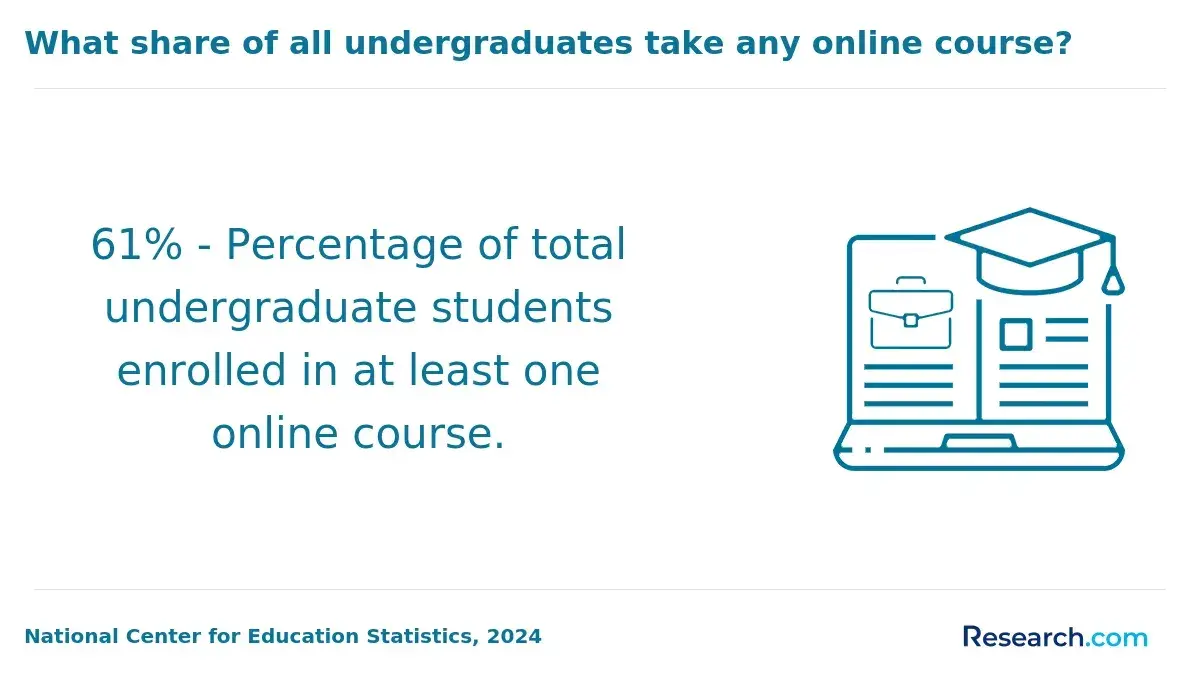
Reputable universities ensure that their online teaching master's degrees adhere to the same rigorous regional and programmatic accreditation standards as their traditional on-campus programs. In fact, data from the National Center for Education Statistics shows that in 2018, nearly 35% of U.S. graduate students were enrolled exclusively in distance education, highlighting the growing acceptance of online learning. Below are key considerations regarding accreditation for online teaching programs.
- Regional Accreditation: This type of accreditation applies to the entire institution and remains consistent regardless of whether the courses are delivered online or in person, ensuring overall academic quality.
- Programmatic Accreditation: Specialized education accreditors assess the specific teaching program's curriculum and effectiveness without distinguishing between delivery formats, maintaining standards for both online and campus-based tracks.
- Equivalence of Resources: Institutions must provide online students with access to comparable academic resources, faculty engagement, and assessment methods as offered to on-campus students to meet accreditation requirements.
- Review Processes: Online teaching programs undergo regular evaluations and quality assurance reviews similar to traditional programs, which may include virtual site visits to verify compliance.
- Value of Accredited Degrees: Degrees earned through accredited online teaching programs hold the same recognition as on-campus degrees for professional certification, licensure, and employment purposes.
Do Employers Care About Regional vs Programmatic Accreditation in Teaching Fields?
While regional accreditation confirms a baseline quality standard for an institution as a whole, programmatic accreditation often acts as a specialized "seal of approval" for teaching programs. This distinction matters because hiring managers frequently weigh programmatic accreditation more heavily when evaluating candidates. According to a survey by the Council for the Accreditation of Educator Preparation (CAEP), 73% of hiring administrators consider programmatic accreditation a significant factor in reviewing credentials. The following points highlight how accreditation influences employer expectations.
- Verification of Standards: Accreditation verifies that a candidate's degree program meets recognized educational criteria, assuring employers of consistent academic quality.
- Subject-Specific Competency: Programmatic accreditation focuses on pedagogy and practical skills relevant to specific teaching fields, increasing a candidate's credibility in the classroom.
- Licensure and Eligibility: Certain school districts require degrees from programmatically accredited programs to qualify for licensure or employment, making this type of accreditation essential for job access.
- Credential Portability: Accreditation affects how easily teaching credentials transfer across states, which is important for educators seeking positions in different regions.
- Career Advancement: Employers may use accreditation status to inform salary scales and promotion opportunities within educational institutions.
When asked about her experience after completing a teaching master's degree, one professional reflected on the subtle but impactful role accreditation played in her job search. She recalled, "It wasn't just about having a degree from a reputable school; interviewers asked specifically about the program's accreditation. That focus on programmatic approval reassured them I was prepared for the specific demands of the classroom." She found that understanding these accreditation distinctions helped her confidently explain her qualifications and navigate employment challenges with greater clarity.
Does Accreditation Type Influence Salary Potential in Teaching Careers?
Higher recognized academic quality strongly correlates with long-term earning power, particularly in teaching careers. According to data from the National Center for Education Statistics, individuals with degrees from regionally accredited institutions earn about 10-15% more on average than those with degrees from non-regionally accredited programs. This salary difference highlights the impact of regional versus programmatic accreditation on teaching salary and its role in your return on investment (ROI). Below are specific ways that accreditation influences compensation and career outcomes.
- Employer Recognition: Regional accreditation is generally seen as a mark of overall institutional quality, leading many employers and school districts to prefer candidates from regionally accredited programs. This preference can translate into higher starting salaries and better job opportunities.
- Licensure and Salary Scale Eligibility: Many states require degrees from regionally accredited institutions for licensure or to qualify for certain salary schedules, making regional accreditation essential for maximizing earnings potential in public K-12 teaching roles.
- Credit Transfer and Mobility: Graduates from regionally accredited institutions often benefit from wider acceptance of credits and increased ease when transferring between school districts or pursuing advanced degrees, supporting salary negotiation leverage.
- Program Quality and Job Readiness: Programmatic accreditation ensures specialized curriculum standards tailored to educational needs, enhancing job readiness and potential for advancement within specific teaching fields.
- Financial Aid and Debt Reduction: Regional accreditation typically expands student eligibility for financial aid programs, which can reduce debt burden and improve net ROI from earning a teaching master's degree.
The choice between regional and programmatic accreditation affects not only educational quality but also salary differences based on teaching master's degree accreditation type. For those exploring advanced degrees with a focus on family and relationship education, it's helpful to consider accredited options like mft masters programs as well, where accreditation impacts both earning potential and career flexibility.
How Do You Check If a Teaching Master's Program Has Legitimate Accreditations?
Verifying the legitimacy of a teaching master's program's accreditation is essential to protect students from "accreditation mills," which offer fake or unrecognized credentials. According to the U.S. Department of Education, only schools accredited by recognized agencies qualify for federal financial aid, highlighting the importance of checking official government and non-profit databases. The following steps outline how to perform a thorough accreditation check.
- Use Official Databases: Check regional accreditation for teaching master's degrees in the United States by searching the U.S. Department of Education's Database of Accredited Postsecondary Institutions and Programs (DAPIP), which confirms if a school holds recognized institutional accreditation.
- Consult CHEA Resources: Review the Council for Higher Education Accreditation (CHEA) website to verify the legitimacy of accrediting agencies, including programmatic bodies like the Council for the Accreditation of Educator Preparation (CAEP) that focus on educator preparation.
- Confirm Programmatic Accreditation: Verify programmatic accreditation specific to teaching graduate programs in your state, as this influences licensure eligibility and employment prospects in the education field.
- Request Institutional Documentation: Contact the institution directly to obtain official proof of accreditation and cross-check it against information on the accreditor's official site.
- Avoid Unrecognized Agencies: Be cautious of accreditation claims from agencies not listed by the U.S. Department of Education or CHEA, as these are often accreditation mills lacking legitimacy.
Understanding both regional and programmatic accreditation helps students assess institutional quality alongside the specific educational standards relevant to their Teaching credentials. For those exploring options, it's valuable to research the best online degree programs that maintain recognized accreditation status.
What Are the Pros and Cons of Regional vs Programmatic Accreditation for Teaching Master's Degrees?
Both regional and programmatic accreditation demonstrate quality but serve distinct functions: regional accreditation validates an institution's overall stability and governance, while programmatic accreditation ensures that the teaching curriculum aligns with specific industry standards. Nearly 94% of U.S. colleges and universities hold regional accreditation, underscoring its widespread adoption and influence in higher education.
Regional Accreditation
- Institutional Credibility: Confirms that the entire college or university meets established academic and administrative standards, providing students with a reliable educational environment.
- Credit Transferability: Facilitates easier transfer of credits between institutions, which is beneficial for students changing programs or schools.
- Financial Aid Eligibility: Grants access to federal financial aid programs, making graduate education more affordable for many students.
- Limited Specialty Focus: While broad in scope, it may not ensure the teaching program specifically meets professional licensure or field-specific requirements.
Programmatic Accreditation
- Curriculum Rigor: Assures that the teaching program meets industry benchmarks and prepares students for the demands of classroom practice.
- Licensure Support: Aligns with state and professional licensing requirements, enhancing graduates' eligibility for certification and employment.
- Employer Recognition: Often prioritized by school districts and education employers seeking candidates with verified specialized training.
- Institutional Limitations: Focuses narrowly on the program, which means the overall quality of the institution may not be guaranteed, and credit transfer outside the field can be restricted.
What Graduates Say About Regional vs Programmatic Accreditation for Teaching Master's Degrees
- Tobias: "I chose my master's degree program specifically because it held regional accreditation, which gave me confidence in the quality and recognition of my education. The affordable tuition rates made it possible to pursue advanced studies without undue financial stress. Since graduating, the accreditation has been a crucial factor in securing a teaching position that values rigor and professionalism."
- Hannah: "Reflecting on my experience, the programmatic accreditation of my teaching master's was essential in assuring that the curriculum met industry standards. It truly felt like an investment worth making, especially considering the reasonable costs compared to other programs. Today, I see how this accreditation opened doors for me professionally and gave me credibility among peers and employers."
- Arianne: "As someone who values practical outcomes, I appreciated that my teaching degree came from a regionally accredited institution, which enhanced my resume significantly. The cost was manageable and transparent, which made the decision straightforward. This accreditation has not only helped in my career advancement but also in my ongoing professional development."
Other Things You Should Know About Teaching Degrees
Many state teaching certification boards recognize programmatic accreditation as a key factor in approving master's programs for teacher preparation. This form of accreditation focuses on the program's adherence to national teaching standards, which states use to evaluate the readiness of candidates for licensure. However, requirements vary by state, so candidates should verify specific board policies.
Regional accreditation assures that the institution as a whole meets academic quality expectations, but it does not specifically assess the professional standards of Teaching programs. This means a regionally accredited school may offer a Teaching master's program without the specialized review that programmatic accreditation provides. For this reason, programmatic accreditation is often valued for professional preparation in education fields.
References
- Quality Standards and Accreditation of Distance Education Programs in a Pandemic - OJDLA https://ojdla.com/articles/quality-standards-and-accreditation-of-distance-education-programs-in-a-pandemic
- Best Online CAEP Accredited Teaching Programs, Updated 2023 https://www.teachingdegrees.com/online/caep-accredited-programs
- Why both institutional accreditation and programmatic accreditation are important? https://www.qahe.org/article/why-both-institutional-accreditation-and-programmatic-accreditation-are-important/
- Accreditations Impact on Employer Perception and Graduate Opportunities https://higheredme.com/accreditations-role-employer-perception-and-graduate-opportunities/
- Choosing a Quality Program Begins With Accreditation https://www.brighthorizons.com/article/education/institutional-programmatic-accreditation-higher-education
- Regional Accreditation vs National: Understanding Key Differences and Benefits - The Scholarship System https://thescholarshipsystem.com/blog-for-students-families/regional-accreditation-vs-national-understanding-key-differences-and-benefits/
- Regional Accrediting Organizations https://www.chea.org/regional-accrediting-organizations
- 18 Scholarships & Grants for Teachers & Education Majors https://www.salemu.edu/blog/how-can-teachers-pay-for-a-masters-degree/
- How Do You Know If A University Is Accredited? https://www.accreditedschoolsonline.org/accreditation/
- How Accreditation Works and Why It Matters - OnlineColleges.net https://www.onlinecolleges.net/for-students/accreditation-guide/