
2027 How to Become a Special Education Teacher in Honolulu, HI: Education Requirements & Certification

Co-Founder and Chief Data Scientist
Finding the right special education program, understanding Hawaii’s teacher licensing process, completing testing requirements, and landing a job in your area—each step presents its own set of challenges. Many future teachers in Honolulu feel stuck because they lack a clear path forward. Without the proper guidance, it’s easy to make mistakes that delay your goal.
Yet with 720 special education teachers already working in Honolulu schools, this career path is not only possible—it’s in reach. This article will walk you through every education and certification step required in 2025, backed by expert insight to help you succeed with confidence.
Key Things to Know About Becoming a Special Education Teacher in Honolulu, HI
- Strong demand for special education teachers in Honolulu is driven by inclusive education policies and the diverse needs of students.
- Certification in special education and knowledge of local regulations are essential for employment in Honolulu schools.
- The average annual salary for a special education teacher in Honolulu is approximately $66,067.
- The job outlook for special education teachers in Honolulu is positive, driven by the growing student population.
- What are the coursework requirements for special education certification in Honolulu, HI?
- How do you get certified to teach special education in Honolulu, HI?
- How much does it cost to get certified as a special education teacher in Honolulu, HI?
- How long does it take to complete special education teacher training in Honolulu, HI?
- What is the average salary for special education teachers in Honolulu, HI?
- Are special education teachers in demand in Honolulu, HI?
- What financial support options are available for aspiring special education teachers in Honolulu, HI?
- What are the benefits of pursuing BCBA certification for special education teachers in Honolulu, HI?
- Can you become a special education teacher in Honolulu, HI without a teaching degree?
- How do you maintain your special education certification in Honolulu, HI?
- What are the most common challenges faced by special education teachers in Honolulu, HI?
- Which school districts in Honolulu, HI are hiring special education teachers?
- How can special education teachers in Honolulu, HI access mental health support?
What are the coursework requirements for special education certification in Honolulu, HI?
Aspiring special education teachers in Honolulu, HI, typically engage in coursework designed to equip them with both foundational teaching skills and specialized knowledge in disabilities and inclusive education. Core courses often include Introduction to Special Education, Behavioral Management Strategies, Assessment and Evaluation of Students with Disabilities, and Instructional Methods for Diverse Learners. These courses emphasize adapting curriculum and teaching methods to meet the individual needs of students, a critical skill in special education settings.
Programs range from undergraduate degrees, such as a Bachelor of Education with a focus on special education, to graduate-level certifications and master's degrees in special education. Many candidates begin their journey with a general education degree before pursuing specialization through additional certification or a master’s program.
In Honolulu, some of the top institutions offering strong special education programs include the University of Hawaiʻi at Mānoa, Chaminade University of Honolulu, and Hawaiʻi Pacific University. These schools provide a combination of theory, practical fieldwork, and student teaching opportunities that are required for state licensure.
One Honolulu special education teacher shared that navigating the licensure requirements was both daunting and rewarding. They recalled the challenge of balancing rigorous coursework with practicum experiences at local schools, where every student presented unique learning needs.
They emphasized the emotional growth that came with learning to advocate for students, stating that the educational journey was as much about developing empathy and patience as it was about mastering academic content. This teacher found that connecting with local support organizations, such as the Hawaii State Council on Developmental Disabilities, provided invaluable community insights and professional guidance.
Success in these programs often depends on proactive engagement with both academic materials and community resources. Aspiring teachers should seek mentorships, join local professional groups like the Hawaii Council of Administrators of Special Education, and utilize university tutoring centers. These strategies not only aid in mastering complex content but also foster a network of support essential for professional growth in special education.
How do you get certified to teach special education in Honolulu, HI?
To meet the special education teacher certification requirements in Honolulu, HI, candidates must complete several key steps, ensuring they possess the necessary academic foundation and practical experience. First, obtaining a bachelor’s degree from an accredited institution is essential. While the degree does not have to be in education specifically, candidates typically need to maintain a minimum GPA of 2.5.
Following this, candidates must complete a state-approved teacher education program specializing in special education or an equivalent course of study. Programs offered locally, such as those at the University of Hawaiʻi at Mānoa or Chaminade University, provide pathways that combine coursework with essential field experience.
Hands-on experience is crucial; Hawaii mandates at least 10 weeks of student teaching or supervised practicum in special education settings. This requirement helps candidates develop the skills necessary to support students with diverse learning needs. Additionally, aspiring teachers must pass the Praxis II exam specific to special education, which assesses both content knowledge and instructional strategies. Preparing well for this exam can be challenging, but it is vital for progressing through the certification process.
For those wondering how to get a special education license in Honolulu, leveraging local resources is highly recommended. Universities frequently offer exam review sessions and study workshops, while the Hawaii Department of Education provides seminars and mentorship programs pairing new teachers with experienced educators. Joining study groups can also enhance understanding and retention of material. Candidates may find that online preparation resources, including official Praxis practice tests, complement these supports effectively.
It is essential to note that special education certification in Honolulu may take various forms, depending on the student populations served, such as mild to moderate or more intensive disabilities. Candidates should carefully select programs and exams aligned with their intended certification area. Financial aid opportunities, including stipends targeting high-need areas like special education, may be available through university partnerships and federal funding.
Those interested in accelerated pathways might consider who should consider an accelerated online teaching program to reduce time to certification while maintaining program quality. Overall, following these steps thoughtfully increases readiness and success in becoming a certified special education teacher in Honolulu, HI.
The chart below lists the industries with the highest level of employment for special education teachers at a secondary school level, as reported by the BLS in 2024.
How much does it cost to get certified as a special education teacher in Honolulu, HI?
The cost of becoming a special education teacher in Honolulu, HI, varies widely depending on the chosen certification pathway. Tuition and fees for special education certification in Honolulu options include the University of Hawai‘i at Mānoa’s Post-Baccalaureate Certificate in Special Education, which charges approximately $15,500 for an 18-month, 33-credit resident program. This can be a significant investment, but the state Department of Education stipends may cover the full cost for those committed to teaching in Hawaii public schools, making it effectively tuition-free for some candidates.
Alternatively, more affordable routes exist, such as iTeach’s program, which charges a total fee of $4,949, plus smaller expenses, including a $99 enrollment fee and licensure exams, such as the Praxis II, which typically cost $120 to $150 per attempt. Additional costs that impact affordability include background checks, materials, and the higher cost of living in Honolulu, which can increase the total investment required. The duration of the program, as well as whether it is online, hybrid, or in-person, also affects costs and accessibility.
Those already holding a Hawaii teaching license may reduce costs by adding a special education field through fewer semester hours or passing an approved licensure test. For those seeking advanced credentials, exploring a PhD in special education online could offer flexible and potentially cost-effective options while advancing their career.
How long does it take to complete special education teacher training in Honolulu, HI?
The duration of special education teacher training in Honolulu, HI, depends mainly on your starting point. For those already holding a Hawaii teaching license, the University of Hawai‘i offers an Add-a-Teaching-Field program that can be completed in about 18 months. This hybrid program requires 18 credits and balances in-person and online learning, making it one of the fastest routes for licensed teachers to earn special education credentials.
For individuals without prior credentials, the process is more extensive. It typically involves earning a bachelor’s degree, which takes four years, followed by completing a State-Approved Teacher Education Program (SATEP) that includes student teaching. After completing coursework, candidates must pass the Praxis exams and submit their applications to the Hawai‘i Teacher Standards Board (HTSB), which may take up to six weeks to process. Altogether, this approach usually spans four to five years. This timeframe reflects the time it takes to become a special education teacher in Honolulu for those starting from scratch.
The timeline may be shorter for those enrolling in accelerated or summer-intensive courses, although no officially accelerated programs exist in Honolulu. Conversely, it may extend if additional prerequisites are necessary or if students study part-time, encounter exam delays, or face slow application processing.
To optimize your timeline, consider taking courses year-round, including summer sessions, and prepare for certification exams well in advance. Keeping documentation organized and seeking programs with hybrid or accelerated options can also help. Exploring the best teacher certification programs may provide further guidance on efficient pathways.
What is the average salary for special education teachers in Honolulu, HI?
Special education teachers in Honolulu, HI, earn an average annual salary of approximately $66,067, reflecting both the region’s cost of living and demand for qualified educators. On an hourly basis, this translates to about $27.66 per hour, with monthly wages averaging around $4,793. These figures align closely with the broader statewide averages, which range from about $62,797 to $67,719, suggesting that the compensation in Honolulu is competitive within Hawaii’s education sector.
When considering the average special education teacher salary in Honolulu, HI, it is essential to note that salaries typically range from $52,083 at the 25th percentile to $86,531 at the 75th percentile, with top earners earning as much as $105,162 annually.
Entry-level special education teachers in Honolulu typically start with lower salaries, with an average annual salary of around $39,352 at the 10th percentile. This means that new teachers should anticipate starting salaries in the lower half of the pay scale but can expect salary growth over time through experience and additional qualifications. Compared to other professions in the state, such as medical billers and coders, special education teachers generally earn more, underscoring the relative earning potential in this teaching field.
Salary progression in Honolulu is influenced by multiple factors, including years of experience, performance evaluations, and the attainment of advanced degrees or certifications. Teachers who pursue specialized credentials, such as a master’s degree or National Board Certification, or who work in high-need areas, often see increased pay. Additionally, taking on leadership roles, coaching, or extracurricular responsibilities can provide supplemental income.
For educators interested in further advancing their qualifications, exploring an affordable online gifted education masters program can be a strategic step to enhance earning potential and career growth within the field of special education teacher pay range in Honolulu.
Are special education teachers in demand in Honolulu, HI?
The demand for special education teachers in Honolulu, HI, remains steady, supported by consistent employment figures and a positive employment outlook. While precise current employment numbers fluctuate, Honolulu typically employs a robust workforce of special education teachers compared to smaller cities in the state of Hawaii. This reflects the city’s larger student population and greater number of specialized programs.
When compared to other metropolitan areas, Honolulu’s special education teacher employment is moderate but stable, aligning with national trends that show an ongoing need for qualified educators in this field.
Considering the employment outlook, forecasts suggest steady growth in special education positions in Honolulu, driven by increasing awareness of diverse student needs and legislative emphasis on inclusive education. However, this growth may be tempered by budget constraints and policy changes, which could affect hiring rates. Prospective teachers should critically assess these factors and remain adaptable to shifts in demand.
Common requirements for special education teachers seeking employment in Honolulu include holding a valid Hawaii teaching license with a special education endorsement, a bachelor’s degree in education or a related field, and often a passing score on state-required exams. Advanced certifications and degrees may enhance job prospects and salary potential. For those interested in accelerating their qualifications, exploring a list of short doctor of education online degrees can be beneficial.
Overall, individuals researching average special education teacher salaries in Honolulu, HI, should also consider the employment stability and certification requirements as key factors influencing career decisions in this sector.
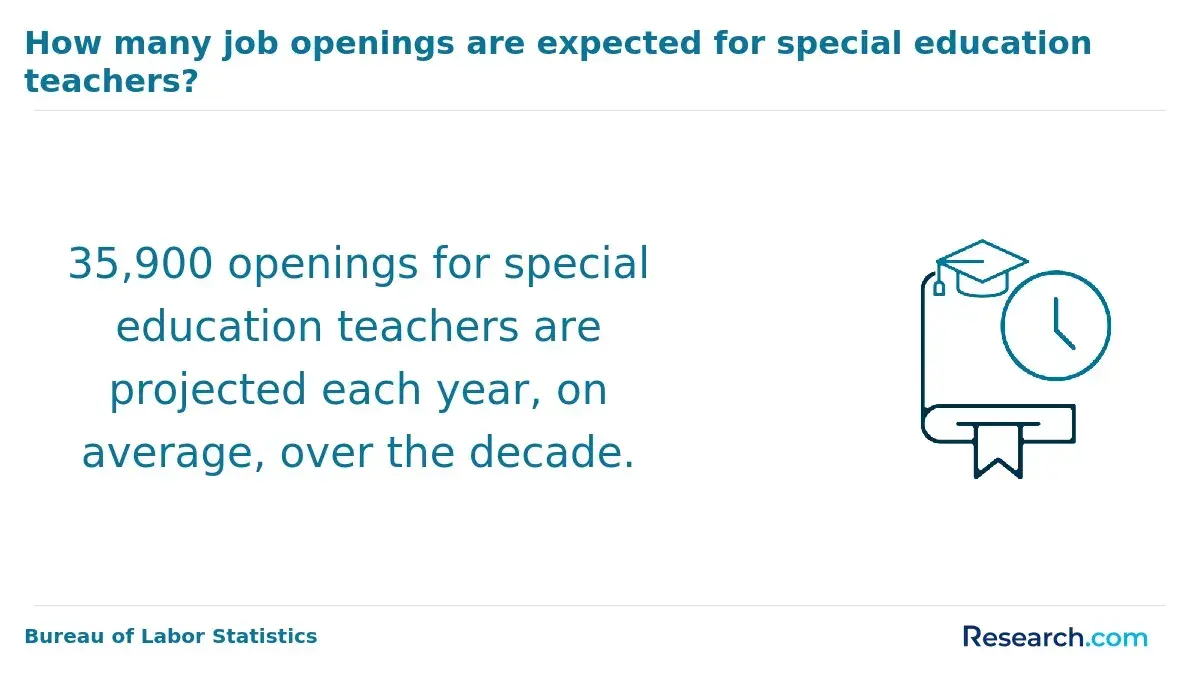
The chart below lists the projected demand for special education teachers at various school levels, as reported by the BLS in 2024.
What financial support options are available for aspiring special education teachers in Honolulu, HI?
Many aspiring special education teachers can access targeted financial assistance programs that ease the cost of certification and training. Local institutions and state initiatives often provide scholarships, grants, and loan forgiveness options specifically geared toward educators entering high-need fields. Carefully researching available funding—ranging from institutional aid to federal assistance—can help reduce tuition and related costs. Prospective teachers should also consider programs offering stipends or additional incentives for serving in under-resourced areas. For more details on affordable pathways, refer to the cheapest way to become a teacher in Honolulu for streamlined certification options.
What are the benefits of pursuing BCBA certification for special education teachers in Honolulu, HI?
Supplementing a special education teaching credential with BCBA certification can enhance your expertise in behavior analysis and intervention strategies, directly benefiting diverse classroom environments. This advanced credential is particularly relevant in Honolulu, where culturally responsive and individualized approaches are essential. Prospective educators can review BCBA certification requirements in Honolulu to understand the detailed criteria, including coursework and examination processes. Integrating this certification with your existing qualifications may offer a competitive edge in job markets focused on inclusive practices and continuous instructional innovation.
Can you become a special education teacher in Honolulu, HI without a teaching degree?
In Honolulu, HI, you generally cannot become a fully licensed special education teacher without holding at least a bachelor’s degree. The state mandates a minimum of a bachelor’s degree as a foundational requirement for licensure. However, if you lack an initial teaching degree, alternative pathways exist to enter the field of special education.
One pathway is enrolling in post-baccalaureate certificate programs, such as those offered by the University of Hawai‘i at Mānoa, which provide necessary coursework and clinical experience. Alternative certification programs target career changers with a bachelor’s degree, combining intensive coursework and supervised teaching, sometimes allowing provisional licensure during training.
National Board Certification in Exceptional Needs offers another route by demonstrating teaching proficiency through rigorous assessments. Additionally, licensure by exam, such as the Praxis II in Special Education, allows qualified candidates to demonstrate content knowledge, often as an add-on to existing licenses.
Key requirements include passing the Praxis II content exam, clearing a professional fitness background check by the Hawai‘i Teacher Standards Board (HTSB), and completing supervised teaching experiences or internships. To succeed, start early with official Praxis II study guides, engage in local study groups or mentorships, and leverage support services.
Local resources include the University of Hawai‘i at Mānoa’s Department of Special Education, Chaminade University of Honolulu, and the Hawai‘i Teacher Standards Board, each providing programs, licensure guidance, and test preparation support.
How do you maintain your special education certification in Honolulu, HI?
To maintain your special education certification in Honolulu, HI, you must complete a renewal process every five years as mandated by the Hawaii Teacher Standards Board (HTSB). The process is conducted online and can be initiated up to six months prior to your license expiration. Renewal requires submitting documentation that verifies your recent teaching experience, completing specific forms, and demonstrating continued professional competence.
Although Hawaii does not mandate a fixed number of professional development hours, you should be prepared to provide evidence of professional growth activities if requested during an audit.
The key steps for renewing a math teaching license in Honolulu, which are also applicable to special education certifications, include:
- Verify One Full Year of Recent P-12 Teaching Experience: Document at least one full year of full-time P-12 teaching within the last five years.
- Pass the HTSB Professional Fitness Check: Undergo a background check to meet the board’s ethical and legal standards for educators.
- Submit Valid Identification and Social Security Card Copies: Provide official documents to confirm your identity and eligibility.
- Complete and Maintain Required Forms: Include Verification of Experience for Renewal signed by your supervisor, and Verification of Satisfying Hawaii Teacher Performance Standards Documentation for potential audits.
- Provide Documentation of Professional Growth Activities (if audited): Be ready to show evidence of ongoing professional development and teaching effectiveness.
- Renew Online and Pay Fees: Finalize the renewal through the HTSB online portal and pay the applicable fees.
Local resources to assist with certification renewal include the Hawaii Teacher Standards Board (HTSB), which manages licensing requirements and the online renewal system. The University of Hawai‘i at Mānoa’s College of Education – Department of Special Education offers courses and support for maintaining licensure. Additionally, Happy Teacher Professional Development offers accredited graduate programs and professional development opportunities that are well-regarded among Hawaii educators.
What are the most common challenges faced by special education teachers in Honolulu, HI?
Special education teachers in Honolulu, HI, face a multifaceted set of challenges shaped by both local conditions and broader systemic issues. These challenges affect teacher retention, workload, and the quality of education provided to students with disabilities.
A chronic shortage of qualified special education teachers remains a pressing concern. Hawaii relies heavily on emergency hires and substitutes, with turnover rates rising significantly over the past decade. This staffing instability increases workloads for existing teachers and disrupts the consistency of student support.
Compliance with federal benchmarks presents additional difficulties. Special education students in Hawaii often score lower in reading and math proficiency and are less frequently included in general education classrooms compared to their peers on the mainland. Teachers must navigate complex regulations and coordinate with multiple specialists and families, which can be time-consuming and demanding.
Resource limitations further complicate teaching efforts. Although federal funding supports many students, potential cuts threaten the continuity of services. Larger caseloads reduce opportunities for individualized instruction and professional development.
Retention efforts include a $10,000 annual shortage differential for licensed teachers, yet leaders emphasize that collaboration time and relevant training are crucial for sustaining an effective workforce. The ongoing recruitment and retention challenges directly impact service continuity and student outcomes, underscoring the need for comprehensive support systems.
Which school districts in Honolulu, HI are hiring special education teachers?
Three key school districts in Honolulu, HI, are currently hiring special education teachers, each with distinct qualifications and expectations.
The Hawaii State Department of Education (HIDOE) is the largest employer, offering positions at both elementary and secondary levels. Applicants typically need at least a bachelor’s degree from an accredited institution, preferably in education or a related field. State teacher licensure with a special education endorsement is generally required.
The hiring process involves submitting transcripts, certifications, and successfully passing a background check. This formal structure ensures that candidates meet statewide professional standards, but it may also limit entry to those who meet rigid credential criteria.
Hawaii Public Charter Schools operate under the oversight of the State Public Charter School Commission but handle recruitment individually. They mainly seek K-6 and middle school special education teachers. While candidates must meet state certification standards similar to those of HIDOE, additional school-specific requirements may also apply. This variability suggests that applicants should carefully research each charter school’s expectations, striking a balance between standardized qualifications and localized flexibility.
The Moanalua Complex Area Schools, part of HIDOE but often listing separate openings, include Moanalua High and nearby elementary and middle schools. Besides a bachelor’s degree and state licensure, they emphasize specialized training or experience working with students with disabilities and may prefer teachers with experience in fully self-contained classrooms. This focus highlights the complexity and specialization sometimes required within sub-districts.
As of March 2025, over 37 special education teaching positions were available, indicating both ongoing demand and challenges for qualified educators in Honolulu.
The chart below illustrates the gender distribution of special education teachers, as reported by Data USA in 2023.
How can special education teachers in Honolulu, HI access mental health support?
Special education teaching demands exceptional emotional resilience, and targeted mental health support is critical to sustaining long-term career success. In Honolulu, educators can leverage school-based programs, district-sponsored counseling, and community resources to address stress and prevent burnout. Proactive engagement in structured peer support networks and mental health workshops is also essential. Additionally, exploring professional opportunities, such as learning how to become a mental health counselor in Honolulu, can provide valuable insights into effective self-care and mental health strategies tailored to educators’ needs.
What do special education teachers in Honolulu, HI have to say about their careers?
Completing my special education certification at the University of Hawaii at Manoa was a transformative experience. The program’s close connection to local schools allowed me to apply what I learned in real time, and I felt supported every step of the way. Teaching in Honolulu has given me the chance to make a genuine difference in a diverse community that values inclusivity and respect. The vibrant culture here enriches my teaching approach and keeps me motivated to grow alongside my students. I truly love how my career blends professional growth with meaningful community impact. — Kai
My journey through the Hawaii Pacific University special education program was both challenging and rewarding. The unique cultural context of Honolulu requires creativity and sensitivity, which helped me develop skills beyond traditional teaching methods. I appreciate the stability and career advancement opportunities available through the local school districts, which encourage continuous professional development. Reflecting on my work, I feel proud to contribute to a community that embraces diversity and supports children with special needs in such a nurturing way. — Leila
Graduating from Chaminade University’s special education program opened doors I hadn’t imagined before. Honolulu’s rich environment offers unique challenges, such as addressing language barriers and incorporating Hawaiian values into individualized learning plans. These experiences have strengthened my passion for teaching and deepened my understanding of how education can empower families. Professionally, the access to workshops and leadership roles here has encouraged me to pursue advanced certifications and mentorship opportunities, fueling my career development. — Manfred
Related Articles for Nearby States
- 2027 How to Become a Special Education Teacher in Alaska: Requirements & Certification
- 2027 How to Become a Special Education Teacher in California: Requirements & Certification
- 2027 How to Become a Special Education Teacher in Oregon: Requirements & Certification
- 2027 How to Become a Special Education Teacher in Washington: Requirements & Certification
- 2027 How to Become a Special Education Teacher in Nevada: Requirements & Certification
- 2027 How to Become a Special Education Teacher in Arizona: Requirements & Certification
- 2027 How to Become a Special Education Teacher in Idaho: Requirements & Certification
- 2027 How to Become a Special Education Teacher in Utah: Requirements & Certification
- 2027 How to Become a Special Education Teacher in Montana: Requirements & Certification
- 2027 How to Become a Special Education Teacher in Wyoming: Requirements & Certification
References:
- AllEducationSchools.com. (n.d.). Learn How to Earn Teacher Certification in Hawaii. Teacher Certification. AllEducationSchools.com.
- Bureau of Labor Statistics (BLS). (2024). Special Education Teachers. Occupational Outlook Handbook. BLS.
- Bureau of Labor Statistics (BLS). (2025). Area: Urban Honolulu, HI. Occupational Employment and Wage Statistics. BLS.
- Chaminade University of Honolulu. (n.d.). Education Licensure Requirements. Chaminade University of Honolulu.
- Data USA. (2023). Special education teachers. Data USA.
- Hawaiʻi State Department of Education. (n.d.). Licensure & Certification. Hawaiʻi State Department of Education.
- Hawaiʻi State Teachers Association. (n.d.). Ending Hawaiʻi’s Teacher Shortage Crisis. Hawaiʻi State Teachers Association.
- Hawaii Public Schools. (2023). Obtaining a Hawaii Teaching License. Hawaii Public Schools.
- Honolulu Magazine. (2013). What Special Education looks like now in Hawaii's Public Schools. Honolulu Magazine.
- McCoy, D. P. (2022). Schools are struggling to hire special education teachers. Hawaii may have found a fix. Education. NPR.
- Special Education Guide. (n.d.). How to Become a Special Education Teacher in Hawaii. Special Education Guide.
- Terrell, J. (2015). Special Education Is Backsliding in Hawaii, Teachers and Advocates Say. Education. Civil Beat.
Other Things You Should Know About Becoming a Special Education Teacher in Honolulu, HI
To meet Hawaii's certification requirements in 2027, you must have a bachelor's degree, complete a state-approved teacher preparation program, pass PRAXIS exams specific to special education, and apply for a teaching license through the Hawaii Teacher Standards Board.
In 2027, cultural competence is crucial for special education teachers in Honolulu due to the city’s diverse population. Understanding and integrating students' cultural backgrounds enhances communication and creates an inclusive learning environment, ensuring effective teaching tailored to each student’s unique needs.


