
2027 How to Become a Licensed Therapist (LPC) in St. Petersburg, FL

Co-Founder and Chief Data Scientist
Florida employs over 24,600 counselors who specialize in mental health, substance use, and behavioral disorders. As the demand for these services increases, cities like St. Petersburg are seeing a steady need for trained mental health professionals.
Graduates who become an LPC in St. Petersburg are equipped to provide therapy, crisis intervention, and long-term mental health care. Their work helps individuals and families navigate emotional challenges and improve quality of life.
In this guide, we will explore the process of becoming an LPC in St. Petersburg. You will find information on licensure steps, job outlook, salary expectations, and what to consider when planning your counseling career.
Key Things to Know About Becoming an LPC in St. Petersburg
- St. Petersburg offers a supportive community with growing mental health needs, making it an ideal location for Licensed Professional Counselors (LPCs) or Licensed Mental Health Counselors (LMHCs) to establish their practice.
- The average salary for LPCs in St. Petersburg is approximately $33,000 to $87,000 annually.
- Noteworthy employers include BayCare Health System, Johns Hopkins All Children’s Hospital, and the University of South Florida’s Counseling Centers, all prominent in the region.
1. What are the educational requirements to become an LPC in St. Petersburg?
2. How do you apply for licensure as a counselor in St. Petersburg?
3. Which schools in St. Petersburg offer programs for aspiring LPCs?
4. Are there internship or practicum opportunities for counseling students in St. Petersburg?
5. How much do LPCs make in St. Petersburg?
6. What are the supervision requirements for LPCs in St. Petersburg?
7. Can LPCs specialize in substance abuse counseling in St. Petersburg?
8. Can LPCs transition into marriage and family therapy in St. Petersburg?
9. How can aspiring LPCs manage education costs effectively in St. Petersburg?
10. What Are the Professional Development Opportunities for LPCs in St. Petersburg?
11. What additional credentials can boost your LPC career in St. Petersburg?
12. Is St. Petersburg a good place to work as an LPC?
13. How competitive is the job market for LPCs in St. Petersburg?
14. Are there counseling associations in St. Petersburg?
15. Which are the most popular employers of LPCs in St. Petersburg?
What are the educational requirements to become an LPC in St. Petersburg?
Becoming a Licensed Professional Counselor/Licensed Mental Health Counselor in St. Petersburg involves a clear set of academic milestones. The following list highlights the essential educational requirements you'll need to explore on your way to earning your LPC credential.
- Earn a master’s degree in mental health counseling accredited by either the Council for Accreditation of Counseling and Related Educational Programs (CACREP) or the Masters in Psychology and Counseling Accreditation Council (MPCAC) or a closely related discipline that aligns with Florida’s Board of Clinical Social Work, Marriage & Family Therapy, and Mental Health Counseling standards.
- Complete 60 semester hours of coursework covering key areas such as human development, counseling theories and practice, and assessment and diagnostic techniques, providing a solid foundation for your counseling career.
- Fulfill approximately 700 hours of supervised internship and practicum work, accumulating real-world counseling experience under professional guidance, a requirement consistent throughout Florida.
- Consider enrolling in universities in nearby areas, like Tampa, Fort Myers, or Orlando, which offer CACREP-accredited graduate counseling degrees.
According to the Rural Health Information Hub, St. Petersburg is designated as a mental health professional shortage area. With a ratio of just one mental health provider for every 350 residents, the need for licensed counselors and related professionals remains high. Therefore, completing the educational requirements in St. Petersburg ensures that aspiring counselors are well-positioned to enter a field with strong demand and make a meaningful impact in their local community.
How do you apply for licensure as a counselor in St. Petersburg?
Becoming an LPC in St. Petersburg, Florida, is an exciting journey guided by a clear and structured licensure process. The Florida Board of Clinical Social Work, Marriage & Family Therapy, and Mental Health Counseling oversees this pathway to ensure that candidates meet rigorous standards of professional competence and ethical conduct.
The key stages include:
- Submitting a completed application to the Board and paying the required fees.
- Providing documentation of supervised clinical experience that meets Florida’s mandated hours.
- Passing the National Clinical Mental Health Counseling Examination (NCMHCE).
- Completing the mandated Florida Laws and Rules, HIV/AIDS, and Domestic Violence courses from a Board-approved provider.
- Undergoing a background check, including fingerprinting, to ensure candidates meet ethical and legal standards.
Florida places strong emphasis on postgraduate supervised experience after earning the necessary degree, reinforcing the importance of hands-on clinical training. The St. Petersburg LPC licensure application process also highlights the need to understand local laws and ethical guidelines, which are essential for effective counseling practice in the region. Preparing your documentation thoroughly and respecting state deadlines can make the path smoother and less daunting.
For those curious about career options after licensure, exploring counseling jobs can reveal a variety of rewarding opportunities that await licensed professionals in Florida and beyond.
Which schools in St. Petersburg offer programs for aspiring LPCs?
Exploring the best LPC programs in St. Petersburg reveals several reputable options nearby, ideal for those eager to pursue a counseling degree. While the city itself has limited direct offerings, the surrounding areas provide quality accredited programs that prepare students for licensure.
Here are some notable schools for prospective LPC/LMHC candidates:
- University of South Florida, Tampa: USF offers an MA in Clinical Mental Health Counseling accredited by CACREP, ensuring a curriculum that covers essential counseling theories, ethics, and clinical practice.
- National Louis University - Tampa: It offers an MS in Clinical Mental Health Counseling that emphasizes ethical counseling, cultural sensitivity, and hands-on clinical training in a variety of mental health environments.
- Florida Gulf Coast University: Its MA in Clinical Mental Health Counseling program prepares students to support individuals and groups through assessment, diagnosis, and therapeutic techniques.
For those interested in expanding their counseling credentials, it’s worth exploring accredited genetic counseling programs as well. These programs offer a different but related path within the counseling profession.
These schools represent the primary options when searching for St. Petersburg counseling degree schools, opening doors to accredited, comprehensive mental health counseling education in the region.
Are there internship or practicum opportunities for counseling students in St. Petersburg?
For counseling students aiming to become Licensed Mental Health Counselors (LMHCs) in St. Petersburg, gaining hands-on experience through internships or practicum placements is a vital step. These opportunities offer practical training and supervised clinical hours essential for meeting Florida’s licensing requirements. Below is a selection of notable local placements that provide diverse experiences and professional growth.
- Suncoast Center, Inc.: Interns support outpatient mental health services by conducting client intake interviews, leading group therapy sessions, and contributing to treatment plan development while maintaining ethical and cultural sensitivity.
- BayCare Behavioral Health: This institution emphasizes crisis intervention and case management, with interns actively involved in multidisciplinary team discussions and assisting clients through stabilization and recovery phases.
- Integrative Counsel, St. Petersburg: It provides internship opportunities for future LMHCs seeking experience in holistic and experiential forms of therapy. Interns gain practical training in approaches like art therapy and somatic techniques.
These placements not only satisfy the Florida Board’s supervised experience mandate but also immerse students in the varied counseling environments of St. Petersburg, cultivating essential skills for their future careers.
When asked about her internship experience, a therapist from St. Petersburg reflected, "Navigating the balance between client needs and documentation was challenging at first, but it taught me resilience and adaptability." She also noted how the mentorship she received helped transform moments of uncertainty into valuable learning experiences, shaping her professional confidence.
This chart reveals the number of graduates of CACREP-accredited programs.
How much do LPCs make in St. Petersburg?
Exploring a career as an LPC/LMHC in St. Petersburg can open doors to meaningful work in mental health. Understanding the financial landscape helps set realistic expectations for those embarking on this path. Salary trends here reflect a blend of expertise, experience, and the specific local demand for licensed therapists.
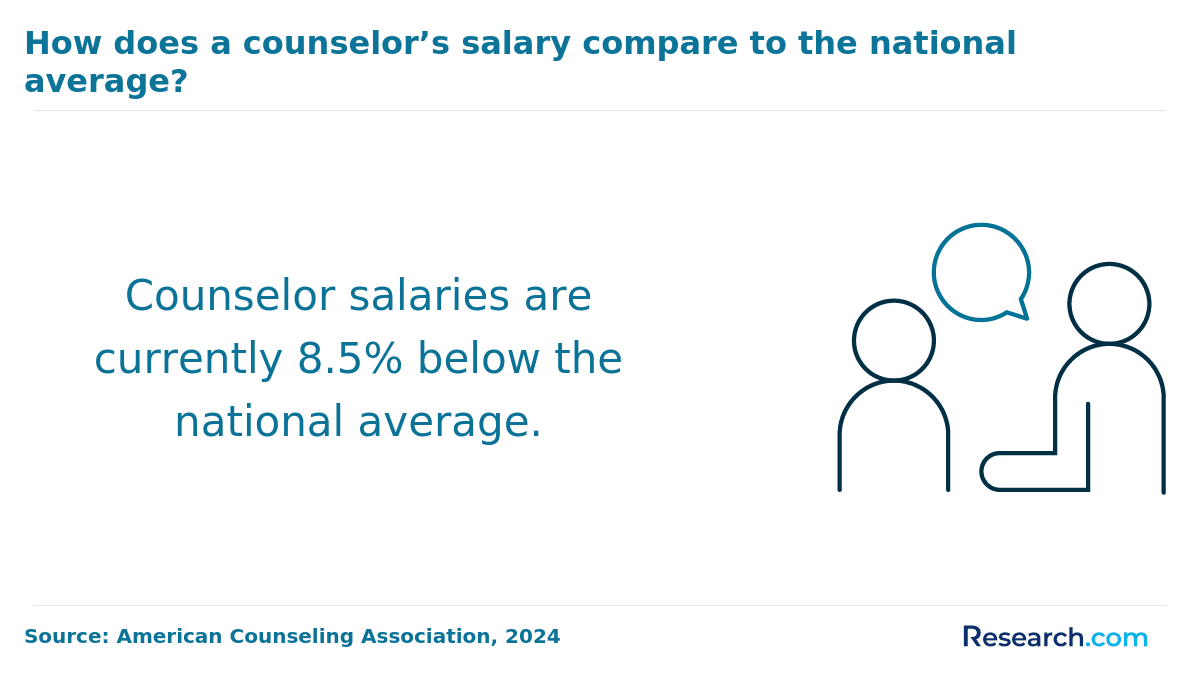
Substance abuse, behavioral disorders, and mental health counselors in St. Petersburg earn $59,920, which is lower than the state's average ($60,480) and the national average ($65,100) for the profession, according to data from the U.S. Bureau of Labor Statistics. Moreover, the income range for mental health counselors in St. Petersburg is between $33,850 and $87,840.
Entry-level LPCs or those working in community-based organizations often start near the lower end of this spectrum. In contrast, those with several years of experience or employed in private practice or healthcare facilities tend to earn toward the higher end. This range aligns with the broader average licensed therapist pay St. Petersburg professionals receive.
However, when compared to related roles, LPCs generally command higher salaries due to their advanced licensure and expanded scope of practice. For example, social workers in the area typically earn between $36,030 and $79,750, slightly below the LPC average. This pay difference highlights the value the local mental health field places on the LPC credential.
The type of employer plays a significant role in compensation. LPCs working at hospitals or specialized clinics often receive higher salaries and benefits, while those in nonprofit or educational settings might earn less but gain unique professional experiences.
Moreover, LPCs who establish private practices have the potential to increase their income considerably, though managing a business and client acquisition presents its own challenges. For those interested in advancing their credentials, exploring the best graduate certificate programs in counseling online can be a valuable step toward career growth.
What are the supervision requirements for LPCs in St. Petersburg?
Embarking on the path to becoming an LPC or LMHC in St. Petersburg involves an important phase of guided experience. This stage is designed to deepen your practical skills through hands-on work under expert supervision. Understanding the specific supervision requirements is key to navigating this journey successfully.
Prospective LPCs must complete a minimum of 100 hours of supervised experience in at least 100 weeks, 1,500 hours of face-to-face psychotherapy with clients, and one hour of supervision every two weeks for two years. This allows ample time to develop clinical competence and professional insight. The supervision is conducted by licensed professionals who hold recognized credentials approved by the Board.
These supervised hours are typically gained in diverse clinical environments such as community mental health centers, private practices, or hospitals where direct client interaction occurs. Regular supervision sessions offer ongoing evaluation and constructive feedback, fostering growth in therapeutic methods and decision-making abilities. This immersive experience not only hones your counseling techniques but also exposes you to a variety of client backgrounds and challenges.
Through this process, you have the chance to explore different approaches to mental health care while building confidence for independent practice. The commitment required during this period reflects its vital role in preparing LPCs to deliver effective and ethical counseling services in their future careers.
Can LPCs specialize in substance abuse counseling in St. Petersburg?
Substance abuse counseling represents a vital niche within the mental health field in St. Petersburg. LPCs opting to specialize in this area can enhance their expertise by engaging in dedicated training programs, which often include advanced coursework, targeted clinical supervision, and certification in evidence-based practices essential for treating substance use disorders. These specialized pathways help professionals develop a focused skill set that addresses the unique challenges of substance abuse treatment, including relapse prevention, motivational interviewing, and crisis intervention. For detailed guidance and step-by-step requirements, review how to become a drug counselor in St Petersburg FL.
Can LPCs transition into marriage and family therapy in St. Petersburg?
Licensed Professional Counselors in St. Petersburg can enhance their scope by pursuing additional credentials specific to marriage and family therapy. This transition involves meeting further educational requirements, completing specialized supervised hours, and passing additional state examinations tailored to family systems and couples counseling. Leveraging existing clinical experience, professionals can diversify their practice and address a broader range of relational issues. For detailed guidance on this career pathway, review how to become a marriage and family therapist in St Petersburg FL.
How can aspiring LPCs manage education costs effectively in St. Petersburg?
Prospective LPCs should evaluate cost-efficient strategies to ensure a sustainable educational investment. Consider leveraging scholarships, grants, and state-funded initiatives that specifically support mental health studies. Additionally, investigate local community programs and institution-specific tuition plans that may offer competitive rates or flexible payment structures. For professionals exploring alternative or dual credential pathways, reviewing our article on the cheapest way to become a teacher in St. Petersburg, FL can provide valuable insights into financially viable academic options.
What Are the Professional Development Opportunities for LPCs in St. Petersburg?
LPCs can leverage a range of professional development resources to enhance their skills and advance their careers. Local organizations, specialized training workshops, and accredited continuing education programs offer avenues to refine therapeutic techniques and expand service capabilities. These opportunities enable counselors to remain current with emerging trends in mental health care and adapt to evolving client needs. For guidance on initiating your career and exploring further training pathways, review our guide on how to become a mental health counselor in St. Petersburg.
What additional credentials can boost your LPC career in St. Petersburg?
LPCs seeking to diversify their expertise can benefit from targeted certifications that complement counseling practice. For example, acquiring advanced credentials in behavior analysis can open new service avenues and enhance professional credibility. Professionals interested in expanding their practice should review BCBA certification requirements in St. Petersburg for detailed guidance on achieving this designation, which may provide a competitive advantage in multidisciplinary mental health settings.
Is St. Petersburg a good place to work as an LPC?
Considering a career as an LPC in St. Petersburg means stepping into a dynamic community shaped by distinctive social and economic factors. The city’s evolving landscape offers both opportunities and challenges that influence the counseling profession in unique ways. Here are some key aspects to keep in mind when exploring this vibrant Florida city as your workplace.
- Expanding and Diverse Population: By 2045, residents of St. Petersburg, along with all the residents in Pinellas County, will reach one million. This steady population growth and cultural variety increase the need for mental health services, pushing LPCs to embrace cultural sensitivity and tailored approaches to meet varied client backgrounds.
- Economic Inequality: Despite thriving neighborhoods, considerable economic disparities exist, making access to private mental health care difficult for many. LPCs often work with Medicaid or sliding-scale fees, which might affect earnings in private practice.
- Moderate State Support for Mental Health: Florida’s mental health funding is somewhat limited, impacting positions in public agencies and hospitals. This can influence job availability and wage levels for LPCs in these sectors.
- Strong Demand Amid Competition: Like many places nationwide, St. Petersburg faces a shortage of mental health providers, creating openings in schools, clinics, and private settings. However, LPCs need to cultivate specialized skills to stand out in a competitive urban market.
A therapist from St. Petersburg shared, "Navigating the balance between serving diverse clients and managing limited resources is a constant challenge. Yet, the rewarding moments when clients break through barriers make the complexities of this city’s landscape truly worthwhile."
How competitive is the job market for LPCs in St. Petersburg?
Exploring the job market for licensed professional counselors or licensed mental health counselors in St. Petersburg reveals a landscape that is moderately competitive yet promising. This city offers a unique balance for those curious about opportunities outside larger metropolitan hubs.
From 2022 to 2032, Pinellas County, where St. Petersburg is located, will expect a job growth of 15.3% for substance abuse, behavioral disorders, and mental health counselors. This is equal to around 2,246 total annual openings.
The licensed professional counselor job outlook St. Petersburg benefits from a growing public awareness of mental health and an expanding population seeking qualified support. Employers and clients increasingly prefer LPCs due to their credentials, which are often necessary for insurance reimbursement and establishing professional credibility.
Additionally, the expected transfers and workforce exits over the coming decade will create more openings for aspiring counselors in the county. If you are considering how to navigate this career path, researching the most affordable online counseling degrees can be a practical first step toward licensure and success in this vibrant job market.
This chart shows the average growth in employment of mental health professionals in the U.S.
Are there counseling associations in St. Petersburg?
Exploring counseling associations in St. Petersburg reveals a vibrant network of professional groups dedicated to supporting licensed therapists. These organizations provide invaluable resources, opportunities for growth, and community connections that enhance a therapist’s career. For those curious about St. Petersburg therapy organizations, here are some key associations to consider:
- Florida Mental Health Counselors Association (FMHCA): This statewide group supports mental health professionals, including LMHCs in St. Petersburg. FMHCA offers continuing education, advocacy for licensure and practice standards, and resources designed to keep therapists up to date with state regulations and clinical advances.
- Florida Counseling Association (FCA): As a national organization with Florida chapters, the American Counseling Association provides extensive professional development, ethical guidelines, and research materials. LPCs in St. Petersburg benefit from ACA’s conferences, specialized interest groups, and a strong community focused on counseling excellence and client advocacy.
According to the latest report from KFF, 32.3% of Florida residents report experiencing symptoms of anxiety or depression. This underscores the growing demand for skilled mental health professionals who can address these widespread concerns. Becoming a member of professional counseling organizations can play a vital role in a counselor’s career by providing access to training, enhancing professional reputation, and promoting involvement in mental health policy advocacy at the local and state levels.
For those wondering about career options, understanding the landscape of counseling associations in St. Petersburg is essential. It can also be helpful to explore the highest paying jobs with counseling degree to see how professional affiliations might open doors to advanced roles and specializations.
Which are the most popular employers of LPCs in St. Petersburg?
Exploring career paths as an LPC/LMHC in St. Petersburg reveals a vibrant mental health landscape with several key organizations leading the way. These employers offer dynamic roles that allow counselors to engage with diverse client needs and collaborate within multidisciplinary teams. Here are some of the top employers where LPCs can thrive:
- Suncoast Center: This community-centered behavioral health agency hires LPCs to deliver individual and group therapy focused on challenges like substance misuse, trauma, and mood disorders. Counselors here develop tailored treatment plans, perform clinical assessments, and work closely with various health professionals to coordinate comprehensive care.
- BayCare Behavioral Health: As part of a larger healthcare network, BayCare provides LPCs with opportunities to serve as outpatient counselors or crisis intervention experts. Their work involves applying evidence-based therapies, maintaining detailed case records, and partnering with psychiatrists and social workers to ensure well-rounded patient support.
- Johns Hopkins All Children's Center for Behavioral Health: LMHCs in this clinic will focus on children's mental and emotional well-being. The center delivers a full range of services, from psychological evaluations to therapeutic treatments, within a collaborative, research-informed healthcare setting.
What LPCs in St. Petersburg Say About Their Careers
- "Working as an LPC in St. Petersburg has given me a profound sense of connection to the community. Graduating from the University of South Florida, I now counsel clients at a local nonprofit, focusing on trauma recovery. It’s rewarding to witness personal growth not just in individuals but in the larger neighborhood as we support one another through challenging times." – Jocelyn
- "The unique blend of urban vibrancy and coastal calm in St. Petersburg creates a special environment for therapy. I’ve found that clients are more open to exploring creative approaches, especially with access to the city’s numerous wellness resources. Having recently started my practice downtown, I appreciate how the local culture encourages innovation and resilience in my work." – Preston
- "After over 20 years practicing counseling here, I appreciate St. Petersburg’s balance between professional opportunity and quality of life. The affordable living costs allow me to maintain a comfortable lifestyle while mentoring younger therapists at a community health center. This city supports both career growth and family time, which is essential as I prepare for the next chapter of my career." – Maia
Related Articles for Nearby Cities
- 2027 How to Become a Licensed Therapist (LPC) in Tampa FL: Counselor License Requirements
- 2027 How to Become a Licensed Therapist (LPC) in Orlando, FL: Counselor License Requirements
- 2027 How to Become a Licensed Therapist (LPC) in Port St. Lucie, FL
- 2027 How to Become a Licensed Therapist (LPC) in Jacksonville, FL
- 2027 How to Become a Licensed Therapist (LPC) in Miami FL: Counselor License Requirements
- 2027 How to Become a Licensed Therapist (LPC) in Atlanta, GA: Counselor License Requirements
- 2027 How to Become a Licensed Therapist (LPC) in New Orleans, LA
- 2027 How to Become a Licensed Therapist (LPC) in Charlotte, NC
- 2027 How to Become a Licensed Therpist (LPC) in Huntsville, AL: Counselor License Requirements
- 2027 How to Become a Licensed Therapist (LPC) in Winston-Salem, NC
References:
- County Health Rankings & Roadmaps. (2025). Florida. Retrieved May 15, 2025, from https://www.countyhealthrankings.org/health-data/florida?year=2025&measure=Mental+Health+Providers&tab=0
- Florida Board of Clinical Social Work, Marriage & Family Therapy and Mental Health Counseling. (n.d.). Licensed Mental Health Counselor. Retrieved May 15, 2025, from https://floridasmentalhealthprofessions.gov/licensing/licensed-mental-health-counselor
- Florida Commerce. (n.d.). Employment Projections. Retrieved May 15, 2025, from https://floridajobs.org/workforce-statistics/data-center/statistical-programs/employment-projections
- KFF. (n.d.). Mental Health in Florida. Retrieved May 15, 2025, from https://www.kff.org/statedata/mental-health-and-substance-use-state-fact-sheets/florida
- Pinellas County Housing and Community Development Department. (n.d.). Introduction: Vision. Retrieved May 15, 2025, from https://plan.pinellas.gov/vision
- Rural Health Information Hub. (2025). Health Professional Shortage Areas: Mental Health, by County, April 2025 - Florida. https://www.ruralhealthinfo.org/charts/7?state=FL
- U.S. Bureau of Labor Statistics. (2025, May 15). Occupational Employment and Wage Statistics - Tampa-St. Petersburg-Clearwater, FL, May 2024. Occupational Employment and Wage Statistics Query System. Retrieved May 15, 2025, from https://data.bls.gov/oes/#/area/0045300
Other Things You Should Know About Becoming an LPC in St. Petersburg
In 2027, aspiring LPCs in St. Petersburg, FL must complete 1,500 hours of post-graduate supervised experience under a qualified supervisor. This requirement ensures that candidates gain necessary practical skills and insights into client interactions before earning their full licensure.
LPCs in St. Petersburg, FL must complete 30 hours of continuing education every two years to maintain their license. This includes ethics, HIV/AIDS, and domestic violence components as specified by the Florida Board of Clinical Social Work, Marriage & Family Therapy, and Mental Health Counseling.
In 2027, apply through the Florida Board of Clinical Social Work, Marriage & Family Therapy, and Mental Health Counseling. Submit a completed application, proof of 3,000 supervised hours, passing scores from the National Counselor Examination, and required fees.


