
2027 How to Work in a Hospital as an FNP

Co-Founder and Chief Data Scientist
Working in a hospital as a Family Nurse Practitioner (FNP) offers both a rewarding career path and growing opportunities, with nurse practitioner roles projected to increase by 35% from 2024 to 2034, far outpacing the average for all occupations. An FNP in a hospital setting provides comprehensive, patient-centered care across diverse departments, from emergency medicine to inpatient services.
This guide will walk you through everything you need to know, from education and licensing requirements to scope of practice, job outlook, and salary expectations, so you can confidently prepare for and succeed in a hospital-based FNP role.
Key things you should know about working in a hospital as an FNP:
- Hospital work as an FNP often involves fast-paced, high-stakes decision-making across diverse patient populations.
- Strong collaboration with physicians, nurses, and other healthcare staff is essential to ensure quality patient care.
- Nurse practitioners in hospitals earn an average salary of $129,210, reflecting their advanced skills and responsibilities.
- What degree do you need to become a Family Nurse Practitioner in a hospital setting? Degree Requirements
- How long does it take to complete FNP school and obtain hospital privilege Completion Time
- What certification exam is required for FNP licensure to work in a hospital? Certification Exam
- What clinical roles can a Family Nurse Practitioner perform in a hospital? Clinical Roles
- How much is the average salary for FNPs working in a hospital? Average Salary
- What is the scope of practice for FNPs in hospital environments? What is the scope of practice for FNPs in hospital environments?
- What essential clinical skills should an FNP master for hospital-based practice? Clinical Skills
- What other industries can nurse practitioners work in? What other industries can nurse practitioners work in?
- How can an FNP advance their career within hospital hierarchies? How can an FNP advance their career within hospital hierarchies?
- What is the job outlook for FNPs and other types of nurse practitioners in general? Job Outlook
What degree do you need to become a Family Nurse Practitioner in a hospital setting?
Becoming an FNP in a hospital setting requires a combination of formal education, clinical experience, and professional certification. Each step builds on the last, ensuring you are prepared to provide advanced, high-quality care to patients across the lifespan. Here’s a breakdown of the key requirements:
- Registered Nurse (RN) License: You must first earn a Bachelor of Science in Nursing (BSN) and obtain an active RN license, or consider programs like a fast track paramedic to RN bridge online to accelerate the transition into nursing. This provides the foundational clinical experience needed before advanced practice training.
- Master of Science in Nursing (MSN) or Doctor of Nursing Practice (DNP): An MSN or DNP with a family practice focus is required to become an FNP. These programs provide advanced clinical training, leadership skills, and evidence-based practice knowledge.
- FNP Certification: After completing your graduate degree, you must pass a national FNP certification exam. This credential allows you to practice independently in hospital and outpatient settings.
How long does it take to complete FNP school and obtain hospital privileges?
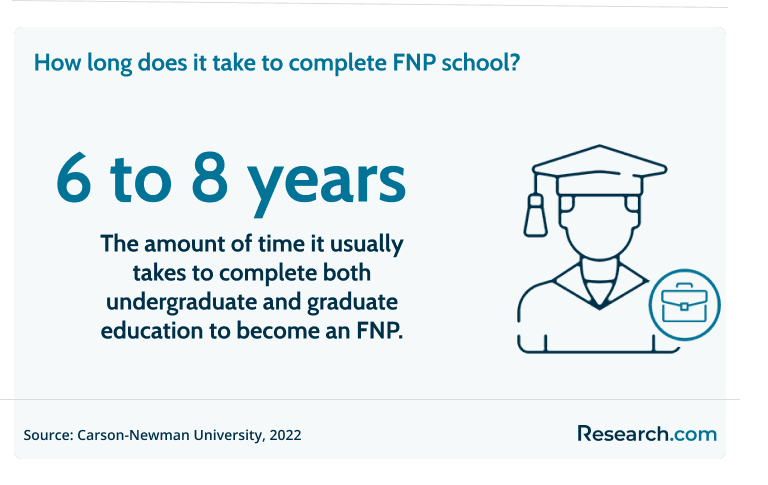
Completing FNP school generally takes about 6 to 8 years in total when you account for both undergraduate and graduate education. A Bachelor of Science in Nursing (BSN) program is usually four years, after which aspiring Family Nurse Practitioners enroll in a graduate program.
A Master of Science in Nursing (MSN-FNP) typically requires 2 to 3 additional years, while a Doctor of Nursing Practice (DNP) pathway may extend training to 3 to 5 years, depending on prior credentials and whether you study full-time or part-time. In short, the exact length of schooling varies with the program type, pace of study, and whether you already hold a nursing degree.
After graduation, passing the national FNP certification exam and obtaining state licensure are required before applying for hospital privileges. Understanding the difference between FNP and AGNP can help clarify the scope of practice and guide professional development as you prepare for hospital credentialing.
The hospital credentialing process, sometimes referred to as privileging, includes verification of your education, license, board certification, malpractice coverage, and background checks. This process can take 3 to 6 months, depending on the hospital’s policies and review committees.
What certification exam is required for FNP licensure to work in a hospital?
To work as an FNP in a hospital, obtaining national certification is a crucial step. This certification verifies that you have the knowledge and skills necessary to provide advanced care across diverse patient populations.
- FNP Certification Exam: You must pass a national certification exam offered by either the American Nurses Credentialing Center (ANCC) or the American Academy of Nurse Practitioners Certification Board (AANPCB). This exam tests your advanced clinical knowledge and ensures you meet professional standards for family practice.
- State Licensure: After passing the certification exam, you apply for state licensure as an FNP. Holding both certification and licensure legally allows you to practice independently in hospital and outpatient settings.
- Clinical Experience Requirements: Most certification exams require a minimum number of supervised clinical hours completed during your MSN or DNP program. This hands-on experience prepares you for real-world hospital practice.
- Continuing Education: FNP certification must be maintained through ongoing continuing education courses. This ensures that you stay current with evolving medical practices and maintain high standards of patient care.
- Specialty and Hospital Privileges: Some hospitals may require additional onboarding, specialty training, or privileges for specific procedures. These requirements ensure that you are fully qualified to work in a fast-paced hospital environment.
For aspiring FNPs who are still in the early stages of their nursing education, there are nursing programs that don't require TEAS, offering a more accessible path to begin a nursing career. These programs allow students to focus on foundational coursework and clinical training without the added pressure of entrance exams, making it easier to transition toward advanced practice and eventual FNP certification.
What clinical roles can a Family Nurse Practitioner perform in a hospital?
FNPs are essential members of hospital care teams, providing advanced, patient-centered medical services. They bridge the gap between primary care and acute care, managing complex cases while supporting physicians, nurses, and other healthcare professionals. Here’s a breakdown of the key clinical roles an FNP can perform in a hospital:
- Patient Assessment and Diagnosis: FNPs perform comprehensive physical exams, review medical histories, and diagnose acute and chronic conditions. They develop individualized care plans based on these assessments.
- Ordering and Interpreting Tests: FNPs can order lab work, imaging studies, and other diagnostic tests, and having knowledge of procedures highlighted in fast track sterile processing technician certificate programs online can help them better understand the workflow and handling of specimens. They interpret results to guide treatment decisions and monitor patient progress.
- Prescribing Medications and Treatments: FNPs have prescriptive authority in most states, allowing them to manage medications, therapies, and other interventions. They adjust treatments based on patient response and clinical guidelines.
- Care Coordination: FNPs collaborate with physicians, nurses, and other healthcare professionals to ensure seamless patient care. They often coordinate discharge planning, referrals, and follow-up care.
- Patient Education and Counseling: FNPs educate patients and families on disease prevention, treatment plans, and healthy lifestyle choices. They provide guidance to improve adherence and overall health outcomes.
- Procedural Support: Depending on the hospital, FNPs may assist with minor procedures, perform wound care, or manage intravenous lines. This hands-on involvement enhances patient care efficiency.
- Leadership and Quality Improvement: FNPs contribute to hospital committees, protocol development, and quality improvement initiatives. They help implement evidence-based practices to enhance patient safety and outcomes.
How much is the average salary for FNPs working in a hospital?
This comparison highlights that while FNPs are well compensated for their expertise in primary and hospital care, other advanced practice specialties may command higher pay due to the complexity or specialization of their responsibilities.
For example, the role of an FNP in a hospital setting combines broad clinical expertise with the ability to manage patients across diverse units, reflecting both versatility and demand.
- Nurse practitioners ($129,210): Nurse practitioners, including Family Nurse Practitioners, have an average salary of $129,210 per year. Their compensation reflects both the advanced clinical skills they provide and their growing demand in hospitals and outpatient settings.
- Nurse anesthetists ($223,210): Nurse anesthetists earn the highest salaries among advanced practice nurses, averaging $223,210 annually. This reflects their highly specialized training and critical role in administering anesthesia and monitoring patients during surgery.
- Nurse midwives ($128,790): Nurse midwives earn an average salary of $128,790 annually. This competitive salary highlights their specialized expertise in maternal and reproductive health, as well as their crucial role in delivering babies and providing prenatal care.
In summary, while Family Nurse Practitioners earn a competitive salary averaging around $129,210, their earnings are positioned slightly lower than nurse anesthetists but nearly identical to nurse midwives.
For comparison, those curious about how much does a medical administrative assistant make can see the stark difference in earning potential within healthcare roles. The chart below clearly shows these salary comparisons, making it easy to see where FNPs stand in relation to other advanced practice nursing careers.
What is the scope of practice for FNPs in hospital environments?
Family nurse practitioners working in hospital environments have a broad scope of practice that spans patient populations, care settings, and certification types. The scope of practice for FNPs and other nurse practitioners in hospital settings reflects a balance of broad family-focused care and specialized roles in adult, pediatric, psychiatric, and acute care
In a hospital, an FNP's responsibilities can include managing patients in inpatient settings, but typically those with less complex or acute conditions. They are often found in departments such as hospital medicine, observation units, and emergency departments, where they may assess, diagnose, and treat patients.
Their scope often includes ordering and interpreting diagnostic tests, prescribing medications, and coordinating care with the rest of the healthcare team. In many states, FNPs have the legal authority to admit and discharge patients, which is a significant component of their practice in this setting.
For FNPs interested in focusing their hospital practice on cardiovascular health, exploring how to work in cardiology as an FNP can open the door to highly specialized roles. These positions often involve collaborating with cardiologists in inpatient or outpatient cardiac units, assisting in procedures, and managing patients with chronic heart conditions—all while maintaining the holistic, family-centered approach that defines the FNP role.
The chart below highlights how FNPs and other nurse practitioner specialties are distributed, which in turn reflects the range of practice areas in hospital care.
What essential clinical skills should an FNP master for hospital-based practice?
Family nurse practitioners working in hospitals need a diverse set of clinical skills to manage patients safely and effectively. Mastery of these skills ensures they can provide high-quality care, respond to acute situations, and collaborate seamlessly with the healthcare team.
The role of an FNP in a hospital is particularly dynamic, requiring them to balance direct patient care with interdisciplinary teamwork in fast-paced environments.
Here’s a breakdown of the essential clinical skills an FNP should master for hospital-based practice:
- Advanced Patient Assessment: FNPs conduct thorough physical exams and take detailed medical histories for every patient. They also recognize subtle changes in patient conditions to provide timely and appropriate interventions.
- Diagnostic Reasoning and Test Interpretation: FNPs analyze lab results, imaging studies, and other diagnostic data to guide clinical decisions. They apply critical thinking to develop effective treatment plans and monitor patient progress.
- Medication Management and Prescribing: FNPs safely prescribe and adjust medications while considering drug interactions and individual patient needs. They monitor patient responses to treatments and make adjustments as necessary to optimize outcomes.
- Procedural Competence: FNPs perform hospital procedures such as wound care, IV line management, and catheterization. Their proficiency in these procedures enhances patient safety and improves clinical efficiency.
- Patient Education and Counseling: FNPs educate patients and families about diagnoses, treatment plans, and lifestyle modifications. They provide guidance that encourages adherence and promotes long-term health outcomes.
In addition to mastering advanced patient assessment, diagnostic reasoning, and procedural skills, FNPs benefit from understanding the administrative aspects of hospital care. Familiarity with concepts like a medical billing and coding job description can help NPs appreciate how documentation, coding accuracy, and clinical notes impact hospital workflows and reimbursement.
What other industries can nurse practitioners work in?
Nurse practitioners have a wide range of career opportunities beyond hospitals, allowing them to apply their advanced skills in various healthcare and non-traditional settings. Many NPs pursue roles that combine clinical care, education, research, and administration.
- Primary Care Clinics: NPs provide routine exams, preventive care, and chronic disease management in outpatient settings. They develop treatment plans and educate patients to promote long-term health.
- Urgent Care Centers: NPs assess and treat acute illnesses and minor injuries in fast-paced environments. They perform diagnostic tests, prescribe medications, and manage follow-up care efficiently.
- Corporate and Occupational Health: NPs offer workplace health services, including screenings, injury management, and wellness programs. They implement preventive strategies to improve employee health and productivity.
- Telehealth and Virtual Care: NPs deliver care remotely through telemedicine platforms, providing consultations, monitoring chronic conditions, and prescribing treatments. They increase access to healthcare for patients in underserved or rural areas.
- Research and Academia: NPs contribute to clinical research, data analysis, and nursing education. They advance medical knowledge, mentor students, and promote evidence-based practice.
- Public Health and Policy: NPs work in government or nonprofit organizations to develop health policies, manage community programs, and address population health needs. Organizations like the American Public Health Association (APHA) provide resources and support for NPs working in these roles, helping to improve healthcare access and outcomes at the community level.
Many nurse practitioners also explore specialized or niche areas of healthcare. For example, those interested in child and adolescent health often ask, “can family nurse practitioners work in pediatrics?” The answer is yes—FNPs are trained to care for patients across the lifespan, including children. With additional pediatric experience or certifications, they can work in pediatric clinics, schools, or hospitals, providing essential preventive and developmental care for younger populations.
How can an FNP advance their career within hospital hierarchies?
Family nurse practitioners can advance their careers within hospital hierarchies by combining clinical expertise with leadership, education, and administrative skills. Career growth for an FNP in a hospital setting often involves taking on expanded responsibilities, influencing policy, and contributing to organizational improvements.
- Clinical Specialization: FNPs can pursue specialty certifications in areas such as cardiology, oncology, or critical care. This expertise allows them to manage complex cases and take on higher-level clinical responsibilities.
- Leadership Roles: FNPs can move into positions such as nurse manager, clinical coordinator, or director of advanced practice providers. These roles involve overseeing teams, developing protocols, and guiding patient care strategies.
- Teaching and Mentorship: FNPs can mentor new nurses and NPs or teach in hospital-based training programs. Sharing knowledge enhances team performance and positions them as leaders in clinical education.
- Research and Quality Improvement: FNPs can lead research projects or quality improvement initiatives. Their contributions help implement evidence-based practices and improve patient outcomes across the hospital.
- Advanced Certifications and Degrees: Obtaining certifications in specialized areas or completing a Doctor of Nursing Practice (DNP) can open doors to executive-level roles. Higher education enhances credibility and expands career opportunities.
FNPs can also transition into roles in hospital administration, policy development, or program management, and pursuing an accelerated master's in public administration online can provide the leadership and organizational skills needed for these positions. These roles influence organizational decisions and shape healthcare delivery at a broader level.
What is the job outlook for FNPs and other types of nurse practitioners in general?
The job outlook for Family Nurse Practitioners (FNPs) and other nurse practitioners is exceptionally strong, reflecting the growing demand for accessible, high-quality healthcare across the United States.
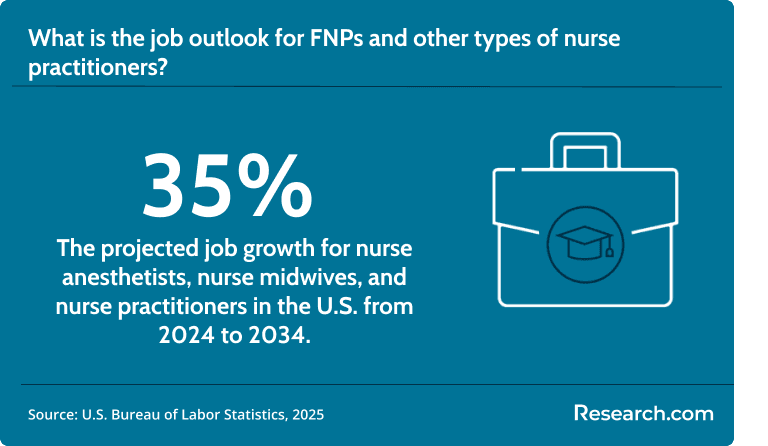
According to the U.S. Bureau of Labor Statistics, overall employment of nurse anesthetists, nurse midwives, and nurse practitioners is projected to grow 35 percent from 2024 to 2034, which is much faster than the average for all occupations. This rapid growth is fueled by increasing patient volumes, physician shortages, and a greater reliance on advanced practice nurses in hospitals, primary care, and specialty settings.
For FNPs specifically, the broad scope of practice and ability to care for patients across the lifespan make them especially versatile and in demand. Hospitals, outpatient clinics, and community health centers increasingly employ FNPs to expand patient access and reduce wait times.
This strong job outlook not only ensures steady employment opportunities but also positions FNPs for competitive salaries, career advancement, and long-term stability within the healthcare workforce.
For those who wish to expand their clinical expertise and transition into more specialized or hospital-based roles, pursuing an FNP to acute care certification can open new career paths in critical care, cardiology, and emergency medicine settings—further enhancing their professional value and adaptability in a rapidly evolving healthcare system.
Here’s what graduates have to say about being an FNP in a hospital:
- Miranda: "Working as an FNP in a hospital has allowed me to directly impact patient outcomes every single day. I love the fast-paced environment and the opportunity to collaborate with a multidisciplinary team while continuing to learn and grow. The ability to manage complex cases while making a real difference is incredibly rewarding."
- Charlie: "Choosing a hospital FNP career gave me the balance of clinical autonomy and professional support I was looking for. I can treat patients independently while having access to experienced physicians and specialists for guidance. It’s a challenging, yet fulfilling path that keeps me motivated and passionate about healthcare. "
- Janice: "Being an FNP in a hospital has opened doors I never imagined, from specialized procedures to leadership opportunities. I feel empowered knowing my work directly improves patients’ lives while allowing me to grow both professionally and personally. The sense of purpose I get every day is unmatched."
Key Findings
- Hospital FNPs provide a wide range of services, from acute care management to patient education and procedural support.
- Becoming a hospital-based FNP typically requires 6 to 8 years of education and clinical experience, including a BSN and a graduate degree.
- The average salary for NPs is $129,210, reflecting their advanced skills and responsibilities in patient care.
- Demand for FNPs in hospitals is growing due to physician shortages and increasing patient needs.
- Career advancement opportunities are plentiful, including specialization, leadership roles, research, and administrative positions.
References:
- American Association of Nurse Practitioners. (2022). Nurse Practitioners in Primary Care. AANP
- American Association of Nurse Practitioners. (2025). 2024 AANP Practice Report. AANP
- Indeed. (2025). Nurse practitioner salary in United States. Indeed
- Post University. (2025). How nurse practitioners are filling gaps in primary care. Post University
- University of St. Augustine for Health Sciences. (2025, March 17). What is a family nurse practitioner (FNP)? And how to become one | USAHS. USAHS.
- U.S. Bureau of Labor Statistics. (2025). Occupational Outlook Handbook: Nurse Anesthetists, Nurse Midwives, and Nurse Practitioners. U.S. BLS
Other things you should know about working in a hospital as an FNP
An FNP must hold a valid RN license, complete a Master's or Doctorate in nursing, and obtain national certification as an FNP. Hospitals may also require additional credentials, such as BLS or ACLS certifications, to work in their facilities in 2027.
In 2027, FNPs might face challenges such as integrating new healthcare technologies, addressing staffing shortages, and navigating evolving telehealth practices. Additionally, they may encounter difficulties with adjusting to new regulatory requirements and ensuring effective collaboration with multidisciplinary teams.


