
2027 How to Work in Cardiology as an FNP

Co-Founder and Chief Data Scientist
Transitioning into a specialty like cardiology as a Family Nurse Practitioner (FNP) can be a complex process, often requiring a tailored approach beyond a standard FNP curriculum. As a career and education expert, I understand the frustrations of finding reliable information on this career path.
This guide will provide clear, actionable steps, addressing common questions about the necessary clinical experience, post-graduate training, and professional certifications. My goal is to equip you with an authoritative roadmap, eliminating the guesswork so you can confidently pursue a fulfilling career in cardiology.
What are the benefits of working in cardiology as an FNP?
- Career advancement: Specializing in cardiology opens pathways to advanced practice roles and leadership positions within hospital systems and private practices, allowing you to manage complex patient populations and mentor junior staff.
- Earning potential: Nurse practitioners who specialize in cardiology often command higher salaries ranging from $125,000 to $160,000 annually.
- Flexible work settings: The role offers flexibility across inpatient hospital units, outpatient cardiology clinics, cardiac rehabilitation centers, and a growing number of telehealth platforms.
What can I expect from a cardiology specialty transition as an FNP?
- Focused advanced topics: Expect intensive on-the-job learning in arrhythmia management, heart failure, electrophysiology, and interpretation of diagnostic tests such as EKGs and stress tests.
- Structured mentorship: A formal mentorship under experienced cardiologists and cardiology NPs guides you through complex cases and procedures.
- Applied strategic knowledge: You’ll develop and implement comprehensive treatment plans, adjust medications, and provide patient education on lifestyle modifications.
- Condensed timeline: While learning is continuous, most FNPs feel comfortable and competent within 6–12 months of dedicated clinical practice and mentorship.
- Networking opportunities: Build connections with cardiologists, surgeons, and other advanced practice providers that support long-term growth.
Where can I work in cardiology as an FNP?
- Hospital systems: Provide inpatient care for cardiac admissions and collaborate with multidisciplinary teams.
- Private cardiology practices: Manage an outpatient panel, including routine follow-ups, medication management, and patient education.
- Cardiac rehabilitation centers: Oversee recovery after cardiac events with a focus on exercise, nutrition, and risk reduction.
- Academic medical centers: Participate in clinical research and care for complex or rare cardiovascular conditions.
- Telehealth and remote patient monitoring: Manage chronic heart conditions using virtual consultations and home monitoring technologies.
- Electrophysiology practices: Assist with patients who have arrhythmias and implanted devices (pacemakers, defibrillators).
How much can I make working in cardiology as an FNP?
- Entry-level roles: New FNPs specializing in cardiology typically start at $110,000 to $130,000.
- Experienced FNP: With 3–5 years of experience, salaries commonly range from $135,000 to $155,000.
- Senior & specialized roles: Highly experienced NPs—or those in electrophysiology or advanced heart failure—often earn $160,000+ annually.
- How does one work in cardiology as an FNP? FNP Cardiology
- What does a cardiology nurse practitioner do? Cardiology NP Roles
- What FNP education and certification are required for cardiology practice? Education & Certification
- How can FNPs gain clinical experience in cardiac care units? Clinical Experience
- What cardiology skills and knowledge should FNPs master? Cardiology Skills
- What licensing and scope of practice rules affect cardiology FNPs? Licensing
- How do FNPs find cardiology nurse practitioner jobs? How do FNPs find cardiology nurse practitioner jobs?
- Should FNPs complete a cardiology fellowship or residency? Fellowship & Residency
- How can mentorship and training advance a cardiology FNP career? How can mentorship and training advance a cardiology FNP career?
- What is the salary and job outlook for cardiology nurse practitioners? Salary & Jobs
- What are some current and future trends in cardiology? Trends
How does one work in cardiology as an FNP?
Becoming a Family Nurse Practitioner (FNP) who specializes in cardiology (FNP in cardiology) involves a multi-step process that builds on foundational nursing and nurse practitioner education. Below are the key steps and considerations:
- Gain foundational clinical experience: Before or after your FNP program, work in a cardiology-related setting such as a cardiac intensive care unit (CICU), telemetry unit, or cardiac catheterization lab to strengthen your knowledge base.
- Obtain your FNP degree and certification: Complete an accredited FNP program and pass the national board certification exam through either the AANP or ANCC. Check out some 1 year NP programs for quicker progress.
- Secure a cardiology position: Apply for FNP roles in cardiology clinics, hospital cardiology departments, or specialized practices. Emphasize your cardiology interest in your cover letter and interviews.
- Complete a post-graduate fellowship (optional but recommended): Participate in a fellowship program focused on cardiology to gain structured, hands-on training. These typically last 6–12 months.
- Seek mentorship and on-the-job training: Once employed, actively pursue mentorship from a cardiologist or experienced cardiology NP to master the complexities of the specialty.
- Pursue professional certification: Obtain credentials such as the Cardiovascular Nurse Practitioner Certification (CVNP-BC) from the ANCC to validate your expertise and commitment.
- Engage in continuous education: Stay current with advancements in cardiology by attending conferences, reviewing journals, and completing continuing medical education (CME) credits.
According to the 2024 Nurse Practitioner Practice Report, a significant concentration of nurse practitioners is focused on primary care clinical areas. Family practice leads with a 16.9% distribution, followed by primary care at 9.4%, indicating a strong trend toward foundational healthcare roles. More specialized fields have a smaller, though notable, distribution, with cardiology and internal medicine both at 4.2%, while pediatrics-general is the lowest in the top ten at 2.6%.
Overall, the data, shown in the graph below, indicates that nurse practitioners are primarily concentrated in broad-based, primary care roles, though their distribution into specialty areas is clearly defined.
What does a cardiology nurse practitioner do?
A cardiology nurse practitioner (NP) or FNP in cardiology is an advanced practice registered nurse (APRN) who specializes in the diagnosis, treatment, and management of patients with cardiovascular conditions. They work collaboratively with cardiologists, cardiac surgeons, and other healthcare professionals as part of a multidisciplinary team.
A common pathway for nurses includes RN to FNP programs offered by accredited universities online. Here are the common core responsibilities of a cardiology nurse practitioner.
- Patient assessment and diagnosis: Conduct comprehensive physical exams, evaluate medical history, assess risk factors for heart disease, and diagnose conditions such as hypertension, heart failure, and arrhythmias.
- Treatment planning and management: Develop and implement individualized treatment plans that may include prescribing medications, ordering and interpreting diagnostic tests (e.g., EKGs, echocardiograms, stress tests), and recommending evidence-based lifestyle modifications.
- Patient and family education: Teach patients and their families about cardiovascular conditions, medication adherence, and preventive strategies to support long-term heart health.
- Procedural and post-operative care: Assist with or perform selected procedures under a cardiologist’s supervision, such as managing pacemakers or inserting central lines. Provide essential post-operative care for patients recovering from cardiac surgery.
- Collaboration: Act as a key liaison between patients and the broader healthcare team, coordinating care across specialties to ensure a holistic, integrated approach.
Based on data from the American Heart Association's 2025 report, cardiovascular disease (CVD) is a major health concern in the United States and globally, causing one in five deaths in the U.S., and is responsible for 605,000 first heart attacks and 795,000 total strokes annually. In 2020, cardiovascular disease was responsible for 928,741 deaths in the U.S. This trend is consistent globally, where approximately one in every four deaths is due to cardiovascular disease. The total annual cost of CVD in the U.S. was estimated at $407.3 billion in 2020, with $53.9 billion attributed to strokes alone.
The prevalence of cardiovascular disease and its risk factors is widespread among U.S. adults. From 2019 to 2020, 121.5 million U.S. adults were living with some form of cardiovascular disease. The data reveals a strong link between common lifestyle factors and cardiac conditions, with one in three adults having hypertension and one in four having high LDL cholesterol. Some of these are shown in the graphic below.
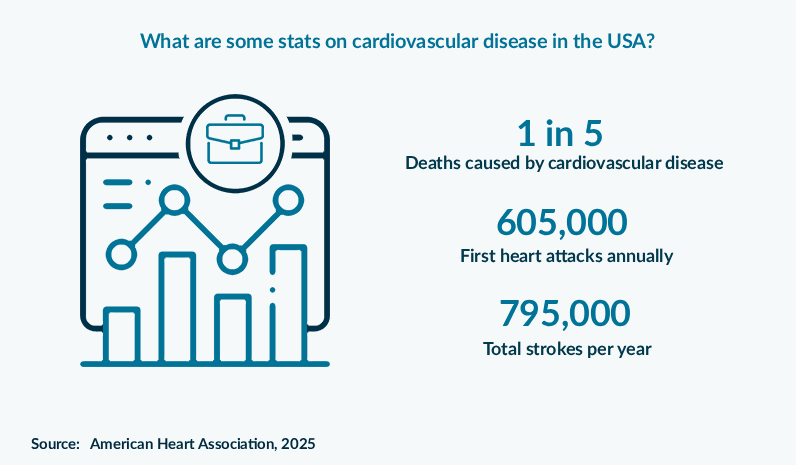
Additionally, one in five adults smokes, and an equal number has obesity, both significant risk factors. This trend extends to children, where one in six is obese, highlighting the need for prevention at all age levels. These statistics underscore a significant public health challenge in addressing and preventing cardiovascular disease in the USA.
For nurses interested in exploring other specializations, learning how to work in pediatrics as an FNP can open equally rewarding career paths. Family nurse practitioners can gain pediatric expertise through targeted coursework, clinical rotations, and post-graduate certifications, enabling them to provide high-quality care to children and adolescents while maintaining broad family practice skills.
What FNP education and certification are required for cardiology practice?
Working in cardiology as a Family Nurse Practitioner (FNP) requires a strong educational foundation and proper certification. While there is no separate cardiology-specific degree for FNPs, the following education and credentials are the standard path:
- FNP degree: A Master of Science in Nursing (MSN) or a Doctor of Nursing Practice (DNP) from an accredited program is the required educational foundation. Many accelerated NP programs online can help you get an FNP degree quickly.
- National certification: You must be board-certified as an FNP by a national organization, such as the American Association of Nurse Practitioners (AANP) or the American Nurses Credentialing Center (ANCC).
- RN licensure: Maintaining an active, unencumbered Registered Nurse (RN) license is a prerequisite for FNP practice.
- Cardiac/Vascular Nurse Practitioner Certification (CVNP-BC): Offered by the ANCC, this is a valuable post-graduate certification that demonstrates specialized knowledge to employers.
- Adult-Gerontology NP certification: Some employers in adult-focused cardiology settings may prefer or accept an Adult-Gerontology Acute Care Nurse Practitioner (AGACNP-BC) or Adult-Gerontology Primary Care Nurse Practitioner (AGPCNP-BC) certification.
While the FNP is a broad practice degree, adding a cardiology-focused certification signals a commitment to the specialty and enhances competitiveness in the job market.
How can FNPs gain clinical experience in cardiac care units?
Gaining relevant clinical experience is a critical step for FNPs looking to transition into cardiology. This experience provides the hands-on skills and knowledge needed to manage complex cardiovascular patients:
- Cardiac-focused RN experience: Work as an RN in a cardiac-specific setting, such as a Cardiac Intensive Care Unit (CICU), telemetry unit, or cardiac surgical unit.
- Clinical rotations during FNP school: Seek opportunities to complete your FNP program’s clinical hours in a cardiology practice, whether in a hospital or an outpatient clinic.
- Postgraduate fellowships: Participate in structured cardiology fellowships, which provide intensive, supervised clinical hours and didactic training.
- Internal transfers: If you work in a large hospital, look for opportunities to transition from your current role to a cardiology department.
- Volunteer or shadow: Volunteer in a hospital’s cardiology department or shadow experienced cardiology FNPs or cardiologists.
- Network with professionals: Build connections with cardiology providers, as networking can lead to informal training opportunities or job referrals.
- Higher education: A terminal degree (DNP) may also serve you if it offers a cardiology avenue in a teaching hospital or higher education institution. Many online DNP programs can accommodate this pathway.
A strong background in cardiac-specific patient care is often a deciding factor for employers hiring FNPs for cardiology roles.
According to the Heart Failure Society of America's 2024 report, 6.7 million Americans have heart failure, and this number is projected to increase significantly to 8.7 million by 2030, 10.3 million by 2040, and 11.4 million by 2050. This alarming growth trend is fueled by a growing at-risk population, with one in three U.S. adults at risk (Stage A) and 24% to 34% having pre-HF (Stage B), as shown in the graphic below.
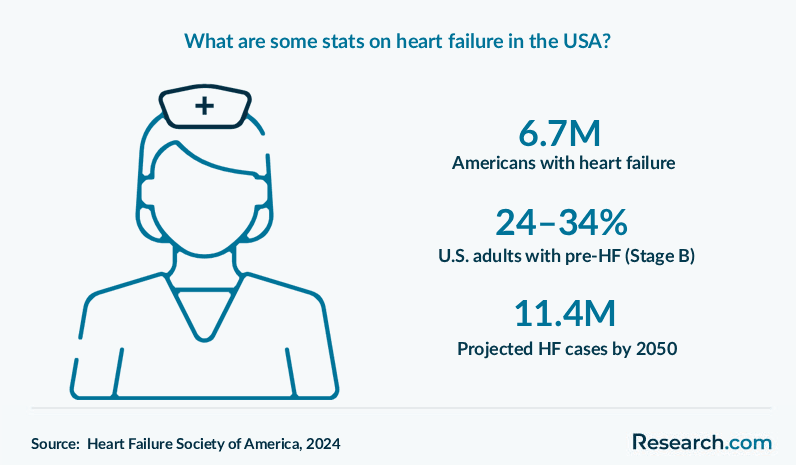
The data reveals troubling trends in heart failure mortality and demographics. Heart failure was linked to 425,147 deaths in 2021, accounting for 45% of all cardiovascular-related deaths and showing a rise in mortality since 2012. Mortality rates are disproportionately high in certain groups, with Black, American Indian, and Alaskan Native individuals experiencing the highest rates.
Deaths in Black individuals under 65 increased significantly from 2010 to 2020. This trend also extends to geography, with the highest death rates in the Midwest, Southeast, and South, as well as in rural areas compared to urban ones. These statistics highlight a clear and growing public health crisis that is disproportionately affecting younger, minority, and rural populations.
What cardiology skills and knowledge should FNPs master?
To practice effectively, an FNP in cardiology must master a range of specialized skills and a deep knowledge base that extends beyond the general curriculum of a family nurse practitioner program:
- Advanced EKG interpretation: Accurately interpret complex EKGs, including arrhythmias, ischemia, and heart blocks.
- Pharmacology of cardiac medications: Understand cardiovascular drugs, including mechanisms of action, side effects, and titration protocols.
- Diagnostic testing: Order and interpret echocardiograms, stress tests, cardiac catheterization reports, and advanced imaging such as CT angiography and cardiac MRI.
- Patient assessment: Conduct comprehensive cardiovascular physical exams, evaluating heart sounds, peripheral pulses, jugular venous pressure, and signs of heart failure or shock.
- Disease management: Manage conditions such as heart failure, coronary artery disease, arrhythmias, hypertension, valvular disorders, and peripheral artery disease.
- Procedural skills: Learn to interrogate and manage cardiac implantable electronic devices (CIEDs) such as pacemakers, defibrillators, and loop recorders; assist with procedures like cardioversion and stress testing.
- Patient education: Provide education on risk factor modification, medication adherence, and lifestyle changes such as diet, exercise, and smoking cessation.
- Emergency response: Recognize and respond rapidly to acute cardiac emergencies such as myocardial infarction, cardiac arrest, or decompensated heart failure.
- Preventive cardiology: Apply evidence-based strategies for cardiovascular risk reduction, including lipid management, blood pressure control, and diabetes management.
- Research and guidelines: Stay current with evolving cardiology guidelines (e.g., ACC/AHA) and integrate evidence-based practices into patient care.
- Interprofessional collaboration: Work closely with cardiologists, electrophysiologists, and cardiac surgeons to ensure coordinated, team-based care.
Mastering these skills distinguishes a general FNP from a competent and confident cardiology provider. In fact, these same competencies also help answer a common question—can family nurse practitioners work in hospitals? The answer is yes. Many FNPs apply their clinical expertise in hospital settings, particularly in cardiology, internal medicine, or acute care units, where they assist with complex case management, perform advanced assessments, and collaborate with multidisciplinary teams to deliver high-quality patient care.
What licensing and scope of practice rules affect cardiology FNPs?
Licensing and scope of practice for cardiology FNPs are governed by state-level regulations, which vary significantly. Understanding these rules is essential for safe, legal practice:
- State licensure: Practice authority is tied to state laws that dictate the scope of services an FNP can provide.
- Full practice authority: In these states, FNPs can evaluate, diagnose, interpret diagnostic tests, prescribe medications, and manage treatment plans without physician supervision.
- Reduced practice authority: Requires a collaborative agreement with a physician for certain aspects of practice, such as prescriptive authority or advanced procedures.
- Restricted practice authority: Requires direct physician supervision for most aspects of patient management.
- Institutional policies: Even in full-practice states, hospitals or clinics may establish internal policies that limit FNP autonomy.
- Prescriptive authority nuances: Some states allow FNPs to prescribe controlled substances independently, while others limit or prohibit this authority.
- Reimbursement policies: Insurance and Medicare/Medicaid reimbursement can be tied to state scope of practice laws, affecting how FNP services are billed.
- Credentialing and privileging: Hospitals may require additional credentialing steps before FNPs can perform certain cardiology procedures or order advanced tests.
- Evolving legislation: State legislatures regularly review and update practice acts, meaning FNPs must stay informed on changes that may expand or restrict their scope.
- Interstate practice: Telehealth expansion and multistate licensure compacts are beginning to impact how and where FNPs can provide cardiology care across state lines.
These frameworks collectively define the level of autonomy available to cardiology FNPs and shape how they deliver care within various healthcare settings.
For those preparing to enter advanced practice, it’s worth noting that online FNP programs that find preceptors can be a valuable option. These programs help students meet clinical placement requirements more efficiently—especially in states with strict supervision or licensing rules—ensuring they gain hands-on cardiology experience under qualified mentors while completing their education.
How do FNPs find cardiology nurse practitioner jobs?
Finding a specialized FNP job in cardiology requires a targeted and strategic search:
- Professional networking: Connect with cardiologists and cardiology NPs via organizations and conferences.
- Specialty job boards: Use NP-focused or cardiology-specific job sites.
- Hospital and clinic websites: Check postings directly on large healthcare system sites.
- Recruiters: Work with recruiters specializing in advanced practice providers.
- Fellowship programs: Leverage connections and placement opportunities from fellowships.
- Clinical rotations: Build relationships during training that may lead to job offers.
- Tailored applications: Highlight cardiac experience and certifications on your resume and cover letter.
A proactive, focused approach is key to landing a cardiology role for FNPs in cardiology.
Additionally, understanding the settings an acute care NP can work in—such as hospitals, specialty cardiac units, ICUs, and outpatient clinics—can help broaden your job search. Many of these same healthcare environments also employ cardiology-focused FNPs, creating opportunities to collaborate across acute and primary care settings while gaining valuable experience with complex cardiac cases.
Should FNPs complete a cardiology fellowship or residency?
While not required, cardiology fellowships or residencies are highly recommended and can accelerate career development:
- Intensive training: Provide year-long immersive didactic and clinical training across inpatient and outpatient cardiology.
- Bridging the gap: Transition general FNP training into specialized cardiology expertise.
- Confidence-building: Enhance skills through mentored, hands-on experience in managing complex cardiovascular cases.
- Competitive edge: Increase marketability in a competitive field where employers value advanced specialty preparation.
- Networking opportunities: Build professional ties with cardiologists, surgeons, and advanced practice providers.
- Paid positions: Many programs provide salary and benefits, easing the financial burden of further training.
- Subspecialty exposure: Gain experience in areas such as electrophysiology, heart failure, interventional cardiology, or preventive cardiology.
- Research opportunities: Participate in clinical trials or quality improvement initiatives that strengthen your professional profile.
- Leadership preparation: Fellowships often include training in clinical leadership, preparing FNPs for supervisory or program director roles.
- Credentialing advantage: Some institutions give preference to fellowship-trained NPs when granting privileges for advanced procedures.
Fellowships are a worthwhile investment in long-term career growth, offering advanced expertise, broader opportunities, and professional credibility.
A market analysis report from Research and Markets shows that the cardiologists industry in the U.S. is experiencing steady growth due to several key factors. Industry revenue is projected to reach $59.6 billion in 2024, with a modest gain of 0.1% in the same year, as shown in the graphic below. This positive trend is primarily driven by an aging population, which is more susceptible to heart conditions, and rising obesity rates among both adults and children.
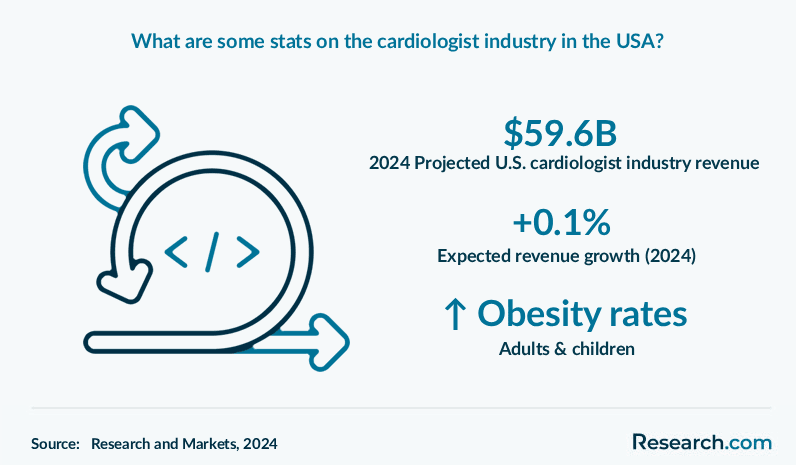
The analysis also notes that economic factors have played a role in supporting this growth. Increases in per capita disposable income, government funding for Medicare and Medicaid, and a rise in private health insurance have all bolstered reimbursements and payments to cardiologists. While cardiologists tend to cluster in densely populated areas with robust healthcare services, this concentration also intensifies competition for workers and referrals in those saturated markets. Overall, a positive growth trend is expected to continue for the cardiologists industry.
How can mentorship and training advance a cardiology FNP career?
Mentorship and continuous training provide a pathway for growth and advancement of FNP in cardiology nurses,
- Skill refinement: Direct feedback on clinical decision-making, diagnostics, and patient care.
- Complex case management: Guidance on handling advanced and unusual cardiovascular cases.
- Professional networking: Introductions to leaders, collaborators, and professional organizations in cardiology.
- Leadership development: Support in transitioning to administrative, academic, or program director roles.
- Career guidance: Personalized advice for long-term planning and professional advancement.
- Staying current: Continued education through CME, workshops, specialty conferences, and certification renewals.
- Confidence-building: Ongoing mentorship reinforces clinical judgment and autonomy in high-stakes situations.
- Exposure to subspecialties: Mentors can connect FNPs to training in electrophysiology, interventional cardiology, and advanced heart failure.
- Publication and research support: Guidance on publishing case studies, contributing to clinical guidelines, or engaging in quality improvement projects.
- Work-life balance strategies: Mentors can provide practical advice on managing the demands of cardiology practice while maintaining personal well-being.
Strong mentorship and lifelong learning are vital for a sustainable cardiology career, ensuring both clinical excellence and professional fulfillment.
What is the salary and job outlook for cardiology nurse practitioners?
The salary and outlook for cardiology NPs are very favorable, reflecting both demand and value:
- Average salary: Typically ranges from $125,000 to $160,000 annually.
- Salary progression: Experienced NPs in subspecialties (e.g., electrophysiology, advanced heart failure) may earn $160,000–$200,000+.
- High demand: NP roles, including cardiology, are growing much faster than average.
- Growing market: Driven by an aging population and rising cardiovascular disease prevalence.
- Job security: High demand ensures stability across healthcare settings.
Cardiology NP roles combine excellent pay with long-term job security.
According to Salary.com's 2025 data, cardiac nurse practitioner salaries show a clear trend of increasing with experience and specialization, as shown in the graph below. An entry-level cardiac nurse practitioner can expect an average of $114,662, with salaries gradually rising to $119,151 for those at the expert level. Additionally, geography significantly impacts earning potential, as shown by the wide range in average salaries across states.
For instance, while Arizona's average salary is $113,810, states such as California and the District of Columbia offer significantly higher average pay at $128,830 and $129,320, respectively. This data indicates that a cardiac nurse practitioner's income is tied to both their level of expertise and their practice location.
What are some current and future trends in cardiology?
Cardiology is currently undergoing a period of rapid and profound change, driven by advancements in technology, genetics, and new models of healthcare delivery. The future of the field is shifting away from reactive treatment and toward proactive prevention and highly personalized care.
Technological and therapeutic advancements
Several emerging technologies and treatments are reshaping how cardiovascular disease is managed. These innovations emphasize being less invasive, more precise, and more effective.
- Minimally invasive procedures: Transcatheter aortic valve replacement (TAVR) has become a standard intervention, and this trend is expanding to other valves such as the mitral and tricuspid. These techniques allow valve repair and replacement through catheters, avoiding the need for open-heart surgery.
- RNA-targeted therapies: A new frontier in drug development, these therapies move beyond symptom management to target the biological systems underpinning disease. For example, some experimental drugs are designed to dramatically lower cholesterol and treat hypertension by addressing root causes, potentially requiring only twice-yearly injections.
- Anti-obesity drugs: Medications such as GLP-1 receptor agonists, originally developed for diabetes and weight loss, are now demonstrating significant benefits in reducing major cardiovascular events. This highlights the growing recognition of the link between metabolic health and cardiac outcomes.
- Pulsed-field ablation (PFA): Pulsed-field ablation (PFA) is a newer, safer, and more precise approach to treating atrial fibrillation (AFib). PFA uses rapid, high-voltage electrical fields to isolate and destroy heart tissue responsible for abnormal rhythms.
Data-driven and personalized medicine
The ability to analyze vast amounts of data is transforming diagnostics, risk prediction, and treatment planning in cardiology.
- Artificial intelligence (AI): AI tools are increasingly used to analyze patient data, from ECGs to imaging scans, with speed and accuracy that can surpass human capabilities. Algorithms can detect subtle signs of heart failure or other conditions long before symptoms appear, enabling earlier and more precise diagnosis.
- Genomics: Advances in cardiovascular genomics are helping clinicians understand how a patient’s genetic profile influences disease risk. Polygenic risk scores, which analyze multiple genetic variants, are being developed to guide customized prevention strategies and treatments.
- Remote monitoring and telehealth: Wearable devices and remote monitoring systems are becoming essential for managing chronic conditions. These technologies allow providers to track vital signs and heart rhythms in real time, enabling more proactive and effective care.
- Shift to outpatient care: A growing trend is moving cardiovascular care out of hospitals into more cost-effective and convenient settings, such as ambulatory surgery centers. Advances in technology are making complex procedures increasingly feasible in outpatient environments.
The burden of cardiovascular disease
Despite remarkable progress, cardiovascular disease remains a significant global challenge.
- Aging population: As the global population ages, the crude prevalence of cardiovascular disease and related deaths is expected to rise. A good strategy is to research online AGNP programs for additional training in gerontology and aging populations.
- Rising costs: The American Heart Association projects that by 2035, the cost burden of cardiovascular disease in the U.S. will approach $1 trillion, underscoring the urgent need for preventive and cost-effective solutions.
Here's What Graduates Say About Their Cardiology FNP Degrees
- Olivia: "Being a cardiology FNP has given me the autonomy I always wanted in my career. I love the intellectual challenge of managing a patient's entire cardiac care, and the deep satisfaction of knowing my advanced training in pharmacology and physiology makes a direct impact on their safety. The high earning potential and job security are great, but the true reward is the professional respect and confidence I've gained."
- Omar: "The journey from a BSN to a cardiology FNP was intense, but it was absolutely worth it. The clinical training was so immersive, and I developed invaluable hands-on skills in managing heart failure and arrhythmias. Now, as a cardiology FNP, I find immense fulfillment in working with patients and seeing their quality of life improve."
- Winnie: "My experience as a cardiology FNP has transformed my entire perspective on nursing. The specialized education pushed me to think critically and lead with confidence, knowing I have a profound understanding of complex medical conditions. I am so proud to be part of a profession that is vital to modern healthcare, and I am grateful for the deep sense of purpose it has given me."
Key Findings
- Primary care focus: According to the 2024 Nurse Practitioner Practice Report, a significant concentration of nurse practitioners is focused on primary care clinical areas, with family practice leading at 16.9% and primary care at 9.4%.
- Specialty distribution: The report also shows that specialized fields have smaller distributions, with cardiology and internal medicine both at 4.2%, while general pediatrics is the lowest among the top ten at 2.6%.
- Cardiovascular disease impact: Based on the American Heart Association’s 2025 Heart Disease and Stroke Statistics Update, cardiovascular disease remains a major health concern, responsible for one in five deaths in the U.S. annually, with approximately 605,000 first heart attacks and 795,000 total strokes each year.
- Economic burden of CVD: The total annual cost of cardiovascular disease in the U.S. was estimated at $407.3 billion in 2020, including $53.9 billion attributed to strokes alone.
- Heart failure projections: The Heart Failure Society of America’s 2024 report projects that the number of Americans living with heart failure will grow from 6.7 million to 11.4 million by 2050, driven by a large at-risk population.
- Cardiologist industry trends: A market analysis from Research and Markets projects cardiologist industry revenue to reach $59.6 billion in 2024, fueled by population aging and rising obesity rates.
- Cardiac NP salary trends: According to Salary.com’s 2025 data, cardiac nurse practitioner salaries increase with experience, from an entry-level average of $114,662 to an expert-level average of $119,151.
- Geographic salary variation: Salary.com’s 2025 data also shows that salaries vary significantly by location, ranging from an average of $105,520 in Arkansas to $129,320 in the District of Columbia.
References:
- American Association of Nurse Practitioners. (2024). 2024 nurse practitioner practice report. American Association of Nurse Practitioners.
- American Heart Association. (2025). Heart disease and stroke statistics—2025 at-a-glance. American Heart Association.
- Heart Failure Society of America. (2024). HF Stats 2024: Heart failure epidemiology and outcomes statistics. Heart Failure Society of America.
- Research and Markets. (2024, August 27). US cardiologists industry analysis trends and forecasts 2024–2029. Yahoo! Finance.
- Salary.com.. (2025, July 1). Cardiac Nurse Practitioner (NP) salary in the United States. Salary.com.
- Tsao, C. W., et al. (2023). Heart disease and stroke statistics—2023 update: A report from the American Heart Association. American Heart Association.
Other Things You Should Know About Cardiology FNP Programs
Gaining experience in acute care settings, such as cardiology units or cardiac intensive care, is highly recommended for FNPs focusing on cardiology in 2027. Exposure to cardiac diagnostics and procedures can greatly enhance expertise and prepare FNPs for this specialization.
In 2026, cardiology nurse practitioners can expect an average salary range between $110,000 and $135,000 annually, depending on experience, location, and specific responsibilities. Factors such as geographic region and demand for specialized cardiovascular care can significantly influence earnings.


