
2027 Best Organizational Leadership Degree Programs in California: Online & Campus

Co-Founder and Chief Data Scientist
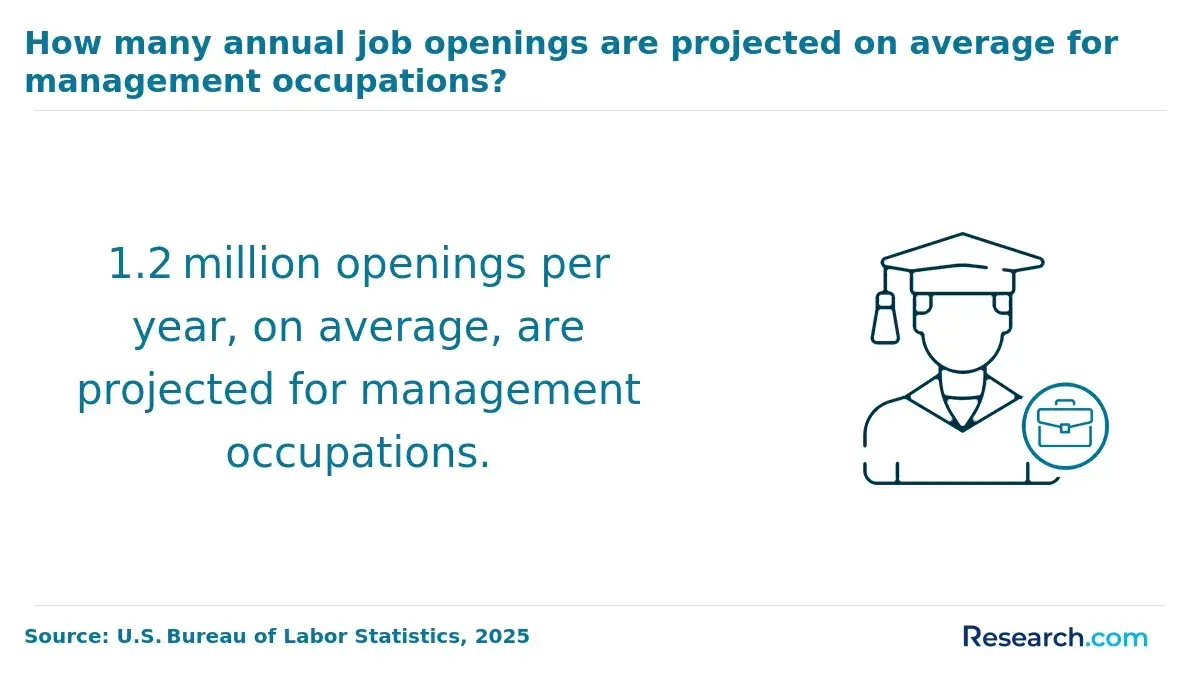
Choosing an organizational leadership degree in California is not just a question of finding a nearby school or the lowest tuition. The better question is whether a program fits your career stage, schedule, budget, leadership goals, and preferred learning format. That decision matters because California is projected to see a 15% growth in management occupations by 2030, and employers increasingly expect leaders who can manage change, communicate across diverse teams, and make practical decisions in complex organizations.
This guide is for working adults, transfer students, career changers, aspiring managers, and current supervisors comparing online and campus-based organizational leadership programs in California. It explains what these programs teach, how admissions work, how long completion may take, what costs to expect, which jobs may be available, how salaries can vary, and how to avoid choosing a program that does not support your long-term goals.
Quick Answer: Key Things to Know About Organizational Leadership Programs in California
- Organizational leadership degrees focus on leading people, improving workplace systems, managing change, making ethical decisions, and aligning teams with organizational goals.
- California students can choose online, on-campus, hybrid, full-time, part-time, accelerated, and degree-completion options depending on their work schedule and transfer credits.
- Programs usually include coursework in leadership theory, organizational behavior, strategic management, communication, ethics, team dynamics, and change management.
- Total tuition can range from around $8,000 to $40,000, but the final cost depends on degree level, credits needed, residency status, fees, transfer credits, and financial aid.
- Career outcomes are broad rather than tied to a single licensed occupation. Graduates may pursue management, operations, project leadership, human resources, nonprofit leadership, healthcare administration, public-sector leadership, or education-related leadership roles.
- Accreditation matters. Students should confirm institutional accreditation first, then look for relevant business-related programmatic accreditation when applicable.
- 2026 guide to organizational leadership degree programs in California
- How do online organizational leadership programs compare to campus degrees in California?
- What are the admission requirements for organizational leadership degrees in California?
- How long does it take to complete an organizational leadership program in California?
- What courses are included in an organizational leadership degree program in California?
- What skills do students gain in an organizational leadership program in California?
- How much do organizational leadership programs in California cost?
- What financial aid options are available to organizational leadership students in California?
- What jobs can you get with an organizational leadership degree in California?
- How much can organizational leadership graduates earn in California?
- Are organizational leadership programs in California accredited?
2026 Guide to Organizational Leadership Degree Programs in California
An organizational leadership degree is designed for people who want to lead teams, improve systems, manage workplace change, and move into supervisory or strategic roles. Unlike a narrowly technical business degree, organizational leadership usually emphasizes people-centered management: communication, motivation, decision-making, ethics, culture, conflict resolution, and organizational effectiveness.
In California, this degree can be especially relevant for professionals in education, healthcare, technology, nonprofit organizations, public agencies, logistics, business services, and community-based organizations. The state’s workforce is large and diverse, so leadership programs often appeal to students who need practical skills for multicultural teams, hybrid work environments, cross-functional projects, and fast-moving industries.
| Best Fit | Why an Organizational Leadership Degree May Work | When Another Option May Be Better |
| Working adults seeking promotion | The curriculum connects directly to team management, communication, and organizational problem-solving. | An MBA may be stronger if the goal is finance, consulting, entrepreneurship, or executive business strategy. |
| Transfer students with prior credits | Degree-completion formats can help students finish a bachelor’s degree while focusing on applied leadership. | A more specialized major may be better for students who need technical preparation in accounting, engineering, nursing, or analytics. |
| Career changers | The degree builds transferable leadership skills that can apply across industries. | Students entering regulated fields should verify whether a separate license, certification, or field-specific degree is required. |
| Current supervisors | Coursework can strengthen decision-making, coaching, conflict management, and change leadership. | A short certificate may be enough if the student already has a degree and only needs targeted leadership training. |
How do online organizational leadership programs compare to campus degrees in California?
Online and campus organizational leadership programs can lead to similar academic outcomes when they are offered by accredited institutions and use comparable curriculum standards. A widely cited trend is that over 70% of higher education institutions in the U.S. offer online degrees with comparable quality to their campus programs, showing that online learning has become a mainstream option rather than an unusual alternative.
The right format depends less on whether online or campus is “better” and more on how you learn, how much structure you need, how often you can attend scheduled classes, and whether you want local in-person networking. Students pursuing an organizational leadership career path should compare format, support services, faculty access, networking, and total cost before enrolling.
Online Programs
- Academic content: Many online programs use the same core learning outcomes as campus-based programs, especially when the degree is offered by the same school or department.
- Schedule control: Online courses may be asynchronous, synchronous, or a mix of both. Asynchronous courses are often better for students with rotating shifts, caregiving responsibilities, or long commutes.
- Student interaction: Instead of meeting in a classroom, students usually collaborate through discussion boards, video meetings, digital group projects, and learning platforms.
- Instructor access: Faculty support typically happens through email, online office hours, video calls, assignment feedback, and course messaging tools.
- Learning demands: Online study requires discipline. Students must keep track of deadlines, participate consistently, and communicate early when they need help.
- Employer view: Employers are generally more focused on accreditation, relevant experience, skills, and school reputation than on whether a legitimate degree was completed online or in person.
On-Campus Programs
- Academic content: Campus programs often cover the same leadership foundations, including organizational behavior, strategy, ethics, communication, and change leadership.
- Predictable structure: In-person programs usually follow fixed class times, which can help students who want routine but may be difficult for those balancing full-time employment.
- Networking: Campus learning can create more natural face-to-face connections with classmates, faculty, guest speakers, and local employers.
- Mentoring: Students who value direct conversations may benefit from in-person advising, faculty meetings, and campus-based academic support.
- Learning environment: Some students focus better in a physical classroom, especially when class discussion and live feedback are central to the course.
- Recognition: Campus degrees remain familiar to employers, though accredited online degrees have become more accepted as online education has matured.
| Factor | Online Organizational Leadership Degree | Campus Organizational Leadership Degree |
| Best for | Working adults, parents, commuters, military-affiliated students, and students outside major metro areas | Students who want in-person discussion, campus services, local networking, and a set weekly routine |
| Main advantage | Flexibility and reduced commuting or relocation demands | Immediate classroom engagement and easier access to campus-based activities |
| Main challenge | Requires self-management and comfort with technology | Less flexible for students with demanding work or family schedules |
| Networking style | Virtual groups, online discussions, alumni platforms, and remote events | Classroom discussion, campus events, local employer visits, and in-person faculty access |
| Cost considerations | May reduce transportation and housing costs but can include technology fees | May include commuting, parking, housing, and campus service costs |
What are the admission requirements for organizational leadership degrees in California?
Admission requirements vary by school, degree level, and whether the program is designed for first-time college students, transfer students, working adults, or graduate applicants. Recent data shows that enrollment in leadership-focused degree programs has risen by more than 20% over the past five years, so applicants should prepare a complete and focused application rather than assuming leadership programs are automatically easy to enter.
Students comparing California programs, including those looking for the easiest online organizational leadership degree options, should check each school’s official requirements before applying. “Easier” admissions should not be the only criterion; accreditation, graduation support, transfer credit policy, course quality, and employer relevance matter just as much.
- Previous education: Bachelor’s applicants usually need a high school diploma or equivalent. Master’s applicants normally need a completed undergraduate degree from an accredited institution.
- GPA expectations: Many schools set minimum GPA standards, commonly between 2.5 and 3.0 on a 4.0 scale, although requirements differ by institution and program level.
- Test policies: Some graduate programs may request GRE or GMAT scores, while others use test-optional admissions, particularly for applicants with meaningful professional experience.
- Work or leadership background: Graduate programs may prefer applicants who have supervised teams, managed projects, trained staff, served in the military, led community work, or held other leadership responsibilities.
- Recommendation letters: Schools may ask for two or three recommendations from supervisors, instructors, mentors, or professional contacts who can speak to the applicant’s readiness and leadership potential.
- Personal statement: A strong statement should connect the applicant’s career goals, leadership experience, motivation for the degree, and reasons for choosing that specific program.
- Transfer documentation: Transfer and degree-completion applicants should be ready to submit official transcripts from every prior college attended.
| Applicant Type | What to Prepare | What to Ask Before Applying |
| First-time bachelor’s student | High school records, application form, personal statement if required, and financial aid documents | Does the program include general education requirements, and how are leadership courses sequenced? |
| Transfer student | All college transcripts, course descriptions if requested, and proof of completed credits | How many credits will transfer, and will they count toward major requirements or only electives? |
| Graduate applicant | Undergraduate transcript, resume, recommendations, statement of purpose, and possible test scores | Is work experience required, preferred, or optional? |
| Working professional | Resume, employer support documents if using tuition assistance, and schedule availability | Are courses asynchronous, evening-based, weekend-based, or cohort-based? |
How long does it take to complete an organizational leadership program in California?
Completion time depends on degree level, credit load, transfer credits, course availability, and whether the student studies full time or part time. Program length also affects cost: the longer a student remains enrolled, the more likely they are to pay additional fees, buy more materials, or delay a promotion that requires the credential.
Most students should compare the advertised completion timeline with a realistic schedule based on work hours, family responsibilities, and the number of courses they can handle without sacrificing performance.
Online Programs
- Flexible pacing: Online programs may allow students to complete coursework around employment and family obligations, especially when classes are asynchronous.
- Typical range: Most online organizational leadership degrees in California span from one to four years, depending on credential level and enrollment intensity.
- Degree level differences: Certificate and associate programs usually require one to two years, bachelor’s programs commonly take three to four years, and master’s programs often take one to two years.
- Accelerated study: Some online programs allow year-round enrollment, condensed terms, or heavier course loads for students who want to finish sooner.
- Part-time trade-off: Part-time enrollment can make school manageable for working adults, but it usually extends the overall timeline.
On-Campus Programs
- Set schedules: Campus programs usually follow fixed academic calendars and class meeting times, which can support steady progress but leave less room for schedule changes.
- Standard timelines: Full-time on-campus bachelor’s degrees usually require about four years, while associate and certificate options typically take one to two years.
- Graduate duration: Master’s programs often range from one to two years, depending on course sequencing and whether the student attends full time.
- Acceleration limits: Campus programs may offer accelerated options, but fixed class schedules can make rapid completion harder than in some online formats.
- Part-time impact: Taking fewer courses per term reduces weekly pressure but can significantly lengthen time to graduation.
| Program Type | Common Completion Range | Best For |
| Certificate | One to two years | Professionals who want focused leadership training without committing to a full degree |
| Associate degree | One to two years | Students beginning college or building toward a bachelor’s degree |
| Bachelor’s degree | Three to four years | Students seeking a full undergraduate credential for management or advancement roles |
| Master’s degree | One to two years | Professionals preparing for higher-level leadership, organizational development, or administrative roles |
What courses are included in an organizational leadership degree program in California?
The best organizational leadership curriculum should do more than introduce leadership buzzwords. It should help students understand how organizations work, why teams struggle, how leaders influence culture, and how to make practical decisions with incomplete information. Industry projections indicate a 10% growth in leadership roles over the next decade, which makes curriculum relevance an important part of program selection.
Students considering a bachelor’s, master’s, or organizational leadership master's degree online should review course descriptions, capstone expectations, internship options, and whether assignments are connected to real workplace problems.
- Leadership theory: Students examine major leadership models and learn when different approaches may be useful for teams, departments, and organizations.
- Organizational behavior: This subject explores motivation, group behavior, workplace culture, conflict, power, and decision-making inside organizations.
- Strategic management: Coursework focuses on setting priorities, analyzing internal and external conditions, and connecting leadership decisions to long-term organizational goals.
- Ethics and decision-making: Students learn to evaluate choices through ethical, legal, stakeholder, and organizational lenses.
- Communication: Courses build written, verbal, digital, and interpersonal communication skills for leaders who must persuade, coach, present, and manage conflict.
- Change management: Students study how to plan transitions, reduce resistance, communicate change, and support people through organizational shifts.
- Team dynamics: This area covers collaboration, role clarity, psychological safety, conflict resolution, team motivation, and performance improvement.
| Course Area | What Students Learn | How It Applies at Work |
| Leadership theory | Leadership styles, influence, motivation, and team direction | Supervising teams, coaching employees, and adjusting leadership style by situation |
| Organizational behavior | Workplace culture, group dynamics, employee behavior, and conflict | Improving morale, addressing team problems, and supporting organizational effectiveness |
| Strategic management | Planning, goal alignment, environmental scanning, and execution | Connecting department work to broader organizational priorities |
| Ethics | Responsible decision-making, accountability, fairness, and stakeholder impact | Handling difficult personnel, budget, compliance, or policy decisions |
| Change management | Transition planning, communication, resistance, and adoption | Leading restructuring, technology changes, process improvements, or culture initiatives |
What skills do students gain in an organizational leadership program in California?
Organizational leadership programs are built around transferable skills. That makes them useful for students who want flexibility across industries, but it also means students should be intentional about building evidence of those skills through projects, internships, work examples, portfolios, and measurable accomplishments.
- Leadership and influence: Students learn how to guide people toward shared goals, adapt their leadership approach, and build trust across different personalities and work styles.
- Communication: Programs emphasize clear writing, persuasive speaking, active listening, meeting facilitation, digital communication, and stakeholder messaging.
- Decision-making: Students practice evaluating problems, comparing options, using available evidence, and making timely decisions under real-world constraints.
- Ethical reasoning: Coursework helps students recognize ethical issues, evaluate competing responsibilities, and lead with accountability.
- Change management: Students learn how to support teams through new processes, restructuring, technology adoption, policy updates, and organizational growth.
- Teamwork: Group assignments and leadership exercises develop collaboration, delegation, role clarity, feedback, and conflict resolution.
- Problem-solving: Students learn to define problems accurately, identify root causes, build action plans, and measure whether a solution is working.
- Strategic thinking: Programs help students connect day-to-day decisions to long-term goals, resource constraints, market shifts, and organizational mission.
| Skill | Evidence Employers May Look For | How Students Can Build It During the Program |
| Leadership | Supervisory experience, team results, training responsibilities, or project ownership | Lead group projects, document workplace improvements, and request stretch assignments |
| Communication | Presentations, reports, facilitation experience, and stakeholder updates | Create a portfolio of papers, presentations, and communication plans |
| Change management | Examples of process improvement, adoption support, or transition planning | Choose capstone topics tied to real organizational changes |
| Strategic thinking | Planning work, budget awareness, metrics, and goal alignment | Use coursework to analyze a current employer, nonprofit, or public agency challenge |
| Ethical judgment | Sound decision-making, accountability, and policy awareness | Apply ethical frameworks to case studies and professional experiences |
How much do organizational leadership programs in California cost?
Students pursuing organizational leadership degree programs in California can generally anticipate total tuition costs ranging from around $8,000 to $40,000. That range is wide because programs differ by institution type, credential level, credit requirements, delivery format, and how many prior credits a student can transfer.
Tuition is only one part of the price. Students should calculate the total cost of attendance, including fees, books, technology, commuting, parking, housing if needed, and lost income if they reduce work hours.
- Program length: Longer programs usually cost more because students complete more credits and remain enrolled for additional terms.
- Residency status: Public institutions may charge different tuition rates for in-state and out-of-state students, so California residency can affect affordability.
- Delivery format: Online programs may reduce commuting and housing expenses, but they can still include technology, online learning, or materials fees.
- Required fees: Student services, campus facilities, graduation, technology, books, and course materials can increase the final bill.
- Transfer credits: Students who transfer accepted credits may reduce the number of courses needed, which can lower both cost and completion time.
- Enrollment pace: Part-time study may help with cash flow but can extend the period during which students pay fees and remain in school.
| Cost Factor | Why It Matters | Question to Ask the School |
| Tuition per credit or term | This is the base academic cost and varies widely by institution. | What is the full tuition estimate for the credits I still need? |
| Mandatory fees | Fees can change the real cost beyond advertised tuition. | Which fees are required for online students, campus students, and part-time students? |
| Transfer credit policy | Accepted credits can reduce the number of courses required. | Can I receive an official transfer evaluation before committing? |
| Books and materials | Leadership courses may require textbooks, case materials, or software access. | What are typical book and materials expenses per term? |
| Commuting or housing | Campus attendance may add transportation, parking, relocation, or housing costs. | Are evening, hybrid, or online options available to reduce travel? |
What financial aid options are available to organizational leadership students in California?
Financial aid can make a meaningful difference for organizational leadership students, especially because California program costs vary by school and format. With the average student loan debt for California graduates nearing $26,000, students should prioritize grants, scholarships, employer assistance, and transfer credit before relying heavily on loans.
Students considering advanced options, including a doctor in organizational leadership pathway, should ask each institution whether funding differs by degree level, enrollment status, and online or campus format.
- Federal grants and loans: Eligible undergraduate students may qualify for Pell Grants, while federal Direct Subsidized and Unsubsidized Loans can help cover remaining costs. Graduate students may have access to federal graduate loan options.
- California state aid: Cal Grants support qualifying California residents at eligible institutions, and the Middle Class Scholarship may help moderate-income families with tuition expenses.
- Scholarships: Schools, foundations, professional associations, nonprofits, and community organizations may offer awards based on leadership potential, academic merit, field of interest, background, or financial need.
- Employer tuition assistance: Working students should check whether their employer reimburses tuition, pays upfront, requires a minimum grade, limits eligible schools, or requires continued employment after funding.
- Military and veteran benefits: Service members, veterans, and eligible family members may be able to use the Post-9/11 GI Bill and related education benefits for qualifying programs.
- Payment plans: Some schools allow students to spread tuition payments over a term, which may reduce immediate out-of-pocket pressure.
| Aid Source | Does It Usually Require Repayment? | Best Next Step |
| Federal grants | No, if eligibility rules are met | Submit the FAFSA and confirm the school participates in federal aid programs. |
| Federal loans | Yes | Borrow only after calculating expected monthly repayment and total debt. |
| Cal Grants and Middle Class Scholarship | No, if eligibility rules are met | Review California residency, income, institution, and academic requirements. |
| Scholarships | No | Apply early and look beyond the school’s own scholarship page. |
| Employer tuition assistance | Usually no, but conditions may apply | Ask human resources about eligible programs, reimbursement limits, and service commitments. |
| Military and veteran benefits | No, if benefit rules are met | Confirm benefit eligibility and school approval before enrolling. |
What jobs can you get with an organizational leadership degree in California?
An organizational leadership degree does not train students for one single job title. Instead, it prepares graduates for roles that require coordination, communication, personnel management, project execution, and strategic thinking. In California, those skills may apply in business, healthcare, education, government, nonprofit organizations, technology companies, and community services.
Students interested in business-centered advancement may also compare online MBA organizational leadership programs, especially if they want more coursework in finance, accounting, marketing, or business analytics alongside leadership training.
- Management positions: Graduates may supervise teams, coordinate operations, manage performance, support budgets, and help departments meet goals.
- Operations roles: These positions focus on improving workflows, managing resources, solving process problems, and increasing efficiency.
- Human resources management: HR-focused roles may involve recruiting, employee relations, training, compliance support, and workplace culture initiatives.
- Project leadership roles: Project-based positions require planning, coordinating people, tracking timelines, communicating with stakeholders, and managing scope.
- Nonprofit leadership: Graduates may help manage programs, volunteers, community partnerships, fundraising efforts, and mission-driven strategy.
- Healthcare administration and public-sector leadership: These roles may involve service delivery, compliance awareness, staff coordination, policy implementation, and organizational improvement.
| Career Area | Typical Responsibilities | Useful Degree Skills |
| Team management | Supervise staff, set expectations, coach employees, and monitor performance | Leadership, communication, conflict resolution, motivation |
| Operations | Improve processes, coordinate resources, and address workflow problems | Problem-solving, strategic thinking, change management |
| Human resources | Support hiring, training, employee relations, and workplace policy | Communication, ethical reasoning, organizational behavior |
| Project leadership | Plan work, manage deadlines, coordinate teams, and report progress | Decision-making, stakeholder communication, planning |
| Nonprofit or public leadership | Lead programs, manage community partnerships, and support mission outcomes | Collaboration, ethics, strategy, cultural awareness |
How much can organizational leadership graduates earn in California?
Organizational leadership graduates in California generally earn between $50,000 and $180,000 annually, depending on role, industry, years of experience, employer size, location, and level of responsibility. A degree can support advancement, but it does not guarantee a specific salary. Employers usually weigh experience, measurable results, technical knowledge, communication ability, and leadership track record alongside education.
- Entry-level: Salaries for early-career graduates typically range from $50,000 to $70,000. These roles may include coordinator, team lead, supervisor, assistant manager, or administrative leadership responsibilities.
- Mid-career: Professionals with more experience may earn approximately $75,000 to $110,000 in roles such as department manager, project leader, operations manager, or program manager.
- Senior leadership: Senior roles may pay between $120,000 and $180,000 or more, depending on sector, organizational scale, decision-making authority, and performance expectations.
| Career Stage | Salary Range Stated | Common Factors That Influence Pay |
| Entry-level | $50,000 to $70,000 | Prior work experience, internship or supervisory exposure, industry, and location |
| Mid-career | $75,000 to $110,000 | Team size, project scope, budget responsibility, and performance record |
| Senior leadership | $120,000 to $180,000 or more | Organizational size, executive responsibility, strategic authority, and sector |
Are organizational leadership programs in California accredited?
Yes, many organizational leadership programs in California are offered by accredited institutions, but students should verify accreditation before applying. Accreditation affects federal financial aid eligibility, credit transfer, graduate school recognition, and employer confidence. It is one of the most important quality checks in the enrollment process.
- Institutional accreditation: This applies to the college or university as a whole. In California, many universities hold accreditation from the WASC Senior College and University Commission (WSCUC), which reviews institutional quality and academic standards.
- Programmatic accreditation: This applies to specific programs or schools within an institution. Organizational leadership programs housed in business schools may have accreditation from organizations such as the Accreditation Council for Business Schools and Programs (ACBSP) or the Association to Advance Collegiate Schools of Business (AACSB).
- Financial aid connection: Students who need federal aid should confirm that the institution is eligible to participate in federal student aid programs.
- Transfer and graduate study: Credits from accredited institutions are more likely to be reviewed favorably by other schools, though transfer is never automatic.
Current Trends Affecting Organizational Leadership Students in California
Leadership education is changing because workplaces are changing. Students should look for programs that address current management realities rather than relying only on traditional leadership theory.
- Hybrid and distributed teams: Leaders now need to manage communication, accountability, morale, and collaboration across in-person, remote, and hybrid environments.
- AI and workplace technology: Leaders do not need to be software engineers, but they increasingly need to understand how technology affects workflows, employee roles, decision-making, and change adoption.
- Change fatigue: Many organizations face frequent restructuring, new tools, shifting customer expectations, and budget pressure. Change management has become a practical leadership skill, not just a course topic.
- Skills-based hiring: Employers may look beyond degree titles and ask for evidence of communication, project management, people leadership, and measurable workplace impact.
- Equity and inclusive leadership: California’s diverse workforce makes cultural awareness, ethical decision-making, and inclusive communication especially relevant for managers.
How to Choose the Right Organizational Leadership Program in California
The strongest program for one student may be a poor fit for another. Before enrolling, compare programs based on your goal, schedule, transfer status, budget, and preferred learning style.
- Define the job outcome you want. Decide whether you are aiming for promotion, career change, graduate school, nonprofit leadership, HR, operations, project leadership, or public-sector advancement.
- Check accreditation first. Confirm institutional accreditation before comparing tuition, rankings, or convenience.
- Request a transfer credit review. If you have prior credits, ask how many will apply to the degree and which requirements they satisfy.
- Compare total cost, not only tuition. Include fees, materials, technology, commuting, parking, and potential income changes.
- Review the curriculum. Look for courses in strategy, communication, ethics, organizational behavior, change management, and applied leadership projects.
- Ask about career support. Find out whether the school offers resume help, interview preparation, alumni connections, employer events, and internship or capstone support.
- Match format to your life. Choose online if flexibility is essential, campus if in-person engagement matters, or hybrid if you want both.
- Evaluate faculty and assignments. Programs are more useful when instructors connect theory to real workplace challenges.
| Question to Ask | Why It Matters |
| Is the institution accredited? | Accreditation affects aid, transfer, employer recognition, and graduate school options. |
| How many credits do I need to complete? | This determines time, cost, and workload. |
| Are courses asynchronous, live, hybrid, or campus-based? | Format affects whether the program fits your work and family schedule. |
| What career services are available to online and campus students? | Support should not disappear because you choose an online format. |
| Does the curriculum include applied projects? | Projects can help you demonstrate leadership skills to employers. |
| What are the graduation and retention expectations? | Student outcomes can indicate whether learners receive adequate support. |
Common Mistakes to Avoid
- Choosing only by tuition. A low-cost program may become expensive if few credits transfer, support is weak, or the curriculum does not match your goals.
- Ignoring accreditation. Enrolling before checking accreditation can create problems with financial aid, transfer, employer recognition, or graduate admission.
- Assuming online means easier. Online programs can be rigorous and often require strong time management.
- Overlooking hidden costs. Technology fees, books, parking, travel, and graduation fees can change the real price.
- Relying only on rankings. Rankings can be useful, but fit, accreditation, curriculum, cost, and support services are more important for individual decision-making.
- Expecting guaranteed salary outcomes. Pay depends on experience, industry, role, employer size, geography, and performance.
- Not connecting coursework to career evidence. Students should turn class projects into portfolio examples, interview stories, and measurable workplace improvements.
What Organizational Leadership Graduates in California Say About Their Degree
- Completing my organizational leadership program fully online helped me keep working while preparing for a stronger leadership role in education. After finishing the degree, I accepted a position at Lincoln Elementary School in Sacramento and began applying new strategies to support teachers and engage students. The program’s attention to California’s diverse communities strengthened my understanding of culturally responsive leadership, and I now feel more prepared to contribute to long-term improvement in the school environment. Elvira
- My on-campus organizational leadership experience in California changed the direction of my career in education administration. The coursework was demanding, and the practical assignments helped me move with more confidence into a higher-level academic leadership position. I valued how the program addressed challenges that California schools often face, including resource management and cultural inclusivity. The degree expanded my skills and renewed my commitment to equitable learning environments. Jina
- Studying organizational leadership on a California campus pushed me to grow personally and professionally. The program made me think more deeply about leadership structures, community impact, and youth well-being, which motivated me to begin local outreach work. California’s cultural diversity and innovation-focused environment shaped my view of collaborative leadership and social responsibility. I left the program with greater confidence and a clearer sense of how I can contribute beyond my immediate workplace. Zedrick
Related Articles for Nearby States
- 2027 Best Organizational Leadership Degree Programs in Nevada: Online & Campus
- 2027 Best Organizational Leadership Degree Programs in Oregon: Online & Campus
- 2027 Best Organizational Leadership Degree Programs in Arizona: Online & Campus
- 2027 Best Organizational Leadership Degree Programs in Idaho: Online & Campus
- 2027 Best Organizational Leadership Degree Programs in Utah: Online & Campus
- 2027 Best Organizational Leadership Degree Programs in Washington: Online & Campus
- 2027 Best Organizational Leadership Degree Programs in New Mexico: Online & Campus
- 2027 Best Organizational Leadership Degree Programs in Colorado: Online & Campus
- 2027 Best Organizational Leadership Degree Programs in Montana: Online & Campus
- 2027 Best Organizational Leadership Degree Programs in Wyoming: Online & Campus
Key Insights
- Organizational leadership is a practical, people-centered degree for students who want to lead teams, manage change, improve workplace systems, or move into broader management roles.
- Online and campus programs can both be valid choices. Online study is often better for flexibility, while campus study may offer stronger face-to-face networking and structure.
- Students should verify accreditation before comparing price, convenience, or admissions flexibility.
- Program cost can range from around $8,000 to $40,000, but transfer credits, fees, residency status, and financial aid can significantly change the final amount paid.
- Common courses include leadership theory, organizational behavior, strategic management, ethics, communication, change management, and team dynamics.
- Career options are broad and may include management, operations, human resources, project leadership, nonprofit leadership, healthcare administration, education-related leadership, and public-sector roles.
- Salary potential varies widely. Organizational leadership graduates in California generally earn between $50,000 and $180,000 annually depending on role, experience, sector, and responsibility level.
- The best program is the one that matches your career target, accepts the most useful transfer credits, fits your schedule, provides credible support, and helps you produce evidence of leadership ability.
References:
- California State University, Dominguez Hills admissions information for organizational leadership: https://www.csudh.edu/organizational-leadership-bs/admissions/
- Concordia University Irvine overview of career paths for MA in Organizational Leadership graduates: https://www.cui.edu/townsend/articles/post/top-career-paths-for-graduates-of-an-ma-in-organizational-leadership
- San Joaquin Valley College Bachelor of Science in Organizational Leadership program page: https://www.sjvc.edu/program/bachelor-of-science-in-organizational-leadership/
- Alliant International University PhD in Organizational Leadership information: https://www.alliant.edu/business/organizational-leadership/phd
- CSU Global guide to organizational leadership degree career options: https://csuglobal.edu/blog/what-can-you-do-degree-organizational-leadership
- Point Loma Nazarene University resource on organizational leadership jobs and salary opportunities: https://www.pointloma.edu/resources/business-leadership/organizational-leadership-job-salary-opportunities
- California Lutheran University BS in Organizational Leadership degree-completion program details: https://www.callutheran.edu/programs/undergraduate/bs-in-organizational-leadership/
- Pepperdine University article on salary opportunities for master’s in education graduates with an organizational leadership concentration: https://gsep.pepperdine.edu/blog/posts/top-14-salary-opportunities-for-ms-in-org-leadership-graduates.htm
- California Coast University online Master of Arts in Organizational Leadership program page: https://www.calcoast.edu/m.a.-master-of-arts-in-organizational-leadership.html
- University of San Francisco scholarships and aid information for organization and leadership students: https://www.usfca.edu/education/programs/masters/organization-leadership/scholarships-aid
Other Things You Should Know About the Best Organizational Leadership Degree Programs in California
Look for programs accredited by recognized organizations such as the Accreditation Council for Business Schools and Programs (ACBSP) or the Western Association of Schools and Colleges (WASC). These accreditations ensure the program meets quality standards and can enhance career prospects.
Most organizational leadership programs in California require a bachelor's degree for admission. Some programs may also ask for relevant work experience or completion of foundational courses in management or leadership theory. Always check specific university requirements for 2027.


