
2027 Best Organizational Leadership Degree Programs in North Carolina: Online & Campus

Co-Founder and Chief Data Scientist
Choosing an organizational leadership program in North Carolina is not just a school-search decision. It affects how quickly you can move into management, whether your credits will transfer, how much debt you may take on, and whether the degree format fits your work and family responsibilities. The right program should help you build practical leadership skills while matching your schedule, budget, career stage, and long-term goals.
This guide is for working adults, transfer students, recent graduates, military-affiliated learners, and professionals considering online or campus-based organizational leadership degrees in North Carolina. It explains how programs compare, what admissions teams usually look for, how long completion may take, what courses and skills to expect, how much programs may cost, and what career outcomes are realistic.
Quick Answer: What should you know before choosing an organizational leadership degree in North Carolina?
An organizational leadership degree in North Carolina can be a practical option for students who want to move into supervision, operations, human resources, project leadership, nonprofit administration, healthcare administration, education leadership, or public-sector management. Online programs usually work best for employed adults who need flexibility, while campus programs may be better for students who want structured schedules, face-to-face mentoring, and stronger in-person networking.
Before enrolling, confirm that the school is accredited, compare total program cost rather than tuition alone, ask how transfer credits are handled, review whether the curriculum matches your target role, and evaluate whether the program offers career support, internships, applied projects, or employer connections in North Carolina.
Key Things to Know About Organizational Leadership Programs in North Carolina
- Organizational leadership programs in North Carolina typically focus on leadership theory, communication, ethics, organizational behavior, team development, strategic planning, and change management. These areas align with workforce needs as management-related demand is described as rising nearly 10% annually in the state and the broader workforce is expected to grow 6% by 2030.
- Many programs serve working professionals by offering online, hybrid, evening, or accelerated options. Campus-based programs may provide more direct faculty access, structured peer interaction, and local networking opportunities.
- Because job placement and salary outcomes vary by experience, industry, location, and employer, students should not choose a program based only on advertised outcomes. Ask schools how they calculate placement rates, whether the rate is above the national average of 70% within six months, and which employers hire graduates.
- Accreditation matters. It can affect federal financial aid, transfer credit, graduate school admission, and employer recognition.
- Costs can vary widely. Students should compare tuition, fees, technology charges, commuting or housing costs, books, transfer-credit policies, and the length of time needed to finish.
- Online vs. campus organizational leadership programs in North Carolina
- Admission requirements for organizational leadership degrees in North Carolina
- How long organizational leadership programs take
- Common organizational leadership courses
- Skills students build in organizational leadership programs
- Program costs in North Carolina
- Financial aid options
- Jobs for organizational leadership graduates
- Salary expectations in North Carolina
- Accreditation
- Graduate perspectives
- Does program reputation affect job placement?
- Can the degree support a career change?
- Can transfer students enroll?
- Is organizational leadership a useful degree?
- References
How do online organizational leadership programs compare to campus degrees in North Carolina?
Online and campus organizational leadership programs often cover similar academic content, but they create very different learning experiences. The better choice depends on your schedule, learning style, need for networking, access to transportation, and how much structure you want. A frequently cited trend notes that over 70% of employers now view online education as credible, especially when the degree comes from an accredited institution.
If you are comparing online organizational leadership degrees in North Carolina with traditional campus programs, focus on fit rather than assuming one format is automatically better.
| Factor | Online organizational leadership programs | Campus organizational leadership programs |
| Best for | Working adults, parents, military-affiliated students, rural learners, and students who need schedule flexibility. | Students who prefer in-person discussion, fixed class times, campus resources, and direct access to peers and faculty. |
| Curriculum | Usually mirrors the same leadership, management, communication, ethics, and strategy content offered on campus. | Typically includes the same core academic foundation, often with more live classroom discussion and in-person activities. |
| Schedule | May offer asynchronous coursework, part-time pacing, accelerated terms, or evening-friendly formats. | Often follows a semester schedule with set meeting times and less flexibility around work shifts or family responsibilities. |
| Networking | Requires intentional effort through virtual discussions, group projects, faculty meetings, and online career events. | Can make relationship-building easier through class meetings, campus events, advising, and local employer connections. |
| Faculty access | Usually available through email, video calls, learning platforms, and virtual office hours. | May provide easier face-to-face mentoring, informal conversations, and immediate classroom feedback. |
| Employer perception | Generally strongest when the institution is accredited and the student can show measurable leadership results at work. | Still widely recognized, especially when the school has strong regional employer relationships. |
When an online program makes more sense
- You cannot commute regularly to campus.
- You need to keep a full-time job while studying.
- You already work in a field where you can apply leadership assignments to real workplace problems.
- You are looking for flexible pacing or an accelerated path.
- You are comfortable managing deadlines without frequent in-person reminders.
When a campus program may be the better choice
- You learn best through live conversation and classroom interaction.
- You want stronger access to campus events, student organizations, or local networking.
- You need a structured weekly schedule to stay on track.
- You value in-person mentoring and immediate feedback.
- You are entering college directly from high school and want a traditional student experience.
Students comparing career outcomes should also review how leadership roles pay across industries. Research.com’s guide to the salary range for organizational leadership degree holders can help you connect degree decisions with realistic career planning.
What are the admission requirements for organizational leadership degrees in North Carolina?
Admissions requirements vary by school, degree level, and format. Undergraduate programs usually focus on academic readiness and prior credits, while graduate programs often look more closely at professional experience, leadership potential, career goals, and writing ability. Around 60% of programs nationwide are described as using holistic admissions, meaning applicants may be evaluated on more than GPA alone.
Use the admissions process as an early test of program fit. A school that clearly explains transfer policies, prerequisite expectations, credit evaluation, and career alignment is often easier to navigate once you enroll.
| Requirement | What applicants usually need | What to check before applying |
| Prior education | Undergraduate applicants commonly need a high school diploma or associate degree. Graduate applicants generally need a bachelor’s degree from an accredited institution. | Ask whether prior business, leadership, military, or technical coursework can count toward degree requirements. |
| GPA | Many programs list a minimum GPA between 2.5 and 3.0 on a 4.0 scale. | Find out whether the school considers upward grade trends, work experience, or conditional admission for applicants below the preferred GPA. |
| Standardized tests | Some programs use test-optional policies for exams such as the SAT or GRE. | Ask whether test scores are required, optional, waived for experienced applicants, or used for scholarship review. |
| Professional or leadership experience | Graduate programs may value experience supervising teams, leading projects, serving in the military, volunteering, or managing operations. | Clarify whether experience is required or simply strengthens the application. |
| Recommendations | Programs may request two or more letters from supervisors, instructors, or professional contacts. | Choose recommenders who can describe specific examples of leadership, judgment, reliability, and communication. |
| Personal statement | Applicants may need to explain their goals, leadership background, and reasons for choosing the program. | Use the essay to connect your career plan with the program’s curriculum rather than writing a generic statement. |
Admissions questions to ask
- Is the program open to first-time college students, transfer students, working adults, or only applicants with prior college credit?
- How many credits can I transfer into the program?
- Are there start dates throughout the year or only once or twice annually?
- Does the program require work experience?
- Can military, professional training, or prior learning be evaluated for credit?
- What happens if my GPA is below the preferred range?
How long does it take to complete an organizational leadership program in North Carolina?
Completion time depends on degree level, transfer credits, course load, term structure, and whether you study full time or part time. Time-to-degree is especially important for adult learners because a program that looks affordable may become more expensive if it takes longer than expected.
| Program type | Common completion timeline | What can shorten or lengthen the timeline |
| Online bachelor’s degree | About four years for students starting from the beginning. | Transfer credits, prior learning credit, accelerated terms, and part-time enrollment can change the timeline. |
| Campus bachelor’s degree | Usually about four years of full-time study. | Course sequencing, major requirements, general education credits, and changing majors can affect completion. |
| Online master’s degree | Often 1.5 to 3 years, depending on pace. | Accelerated formats may allow some students to finish in as little as one year for master’s programs. |
| Campus master’s degree | Commonly about 1.5 to 2 years for full-time students. | Part-time enrollment, cohort schedules, internship requirements, or capstone timing may extend the timeline. |
Online timeline considerations
- Online programs may allow students to reduce their course load during demanding work or family periods.
- Some students finish faster by taking accelerated courses or enrolling year-round.
- Flexibility can be helpful, but it also requires strong self-management. Without a weekly campus routine, deadlines can become easier to miss.
Campus timeline considerations
- Campus programs often make scheduling more predictable because classes follow fixed calendars.
- Required courses may not be offered every term, so students should map out the full degree plan early.
- Part-time campus study can add one or two extra years depending on course availability and personal obligations.
A North Carolina graduate of an online organizational leadership program described the timeline as both flexible and demanding. While working full time and parenting as a single parent, she found that unexpected family needs and job deadlines sometimes slowed her progress. The online format allowed her to pause and adjust without abandoning the degree, but she said her real breakthrough came from building small daily study habits rather than waiting for long blocks of free time.
What courses are included in an organizational leadership degree program in North Carolina?
Organizational leadership curricula are designed to prepare students to guide people, improve systems, manage change, and make decisions in complex workplaces. With 71% of organizations placing emphasis on leadership development when hiring managers, course selection matters because it shapes the skills you can demonstrate to employers.
| Course area | What students study | Why it matters for leadership careers |
| Leadership theory | Major leadership models, styles, and frameworks. | Helps students understand when to use coaching, collaborative, directive, transformational, or adaptive approaches. |
| Organizational behavior | How individuals, teams, culture, incentives, and structure affect performance. | Supports better team management, motivation, conflict resolution, and workplace communication. |
| Strategic management | Planning, goal setting, resource alignment, competitive analysis, and execution. | Prepares students to connect daily decisions with broader organizational priorities. |
| Ethics and decision-making | Ethical reasoning, accountability, stakeholder impact, and responsible judgment. | Helps leaders make defensible decisions under pressure or uncertainty. |
| Communication | Professional writing, presentations, listening, persuasion, and stakeholder messaging. | Builds the ability to explain goals, reduce confusion, and influence teams. |
| Change management | Organizational transitions, resistance, implementation planning, and adoption strategies. | Useful for leaders managing restructuring, new technology, growth, policy change, or process improvement. |
| Team dynamics | Collaboration, group roles, trust, conflict, and performance improvement. | Supports effective supervision, project leadership, and cross-functional work. |
Students reviewing a North Carolina leadership degree program curriculum should compare required courses with their target role. For example, a student aiming for operations leadership may want stronger coursework in strategy and process improvement, while a future HR leader may prioritize communication, ethics, conflict resolution, and organizational behavior. If speed is a priority, Research.com’s guide to the fastest online bachelors in organizational leadership can help you understand accelerated options.
What skills do students gain in an organizational leadership program in North Carolina?
Organizational leadership programs are not limited to theory. Their value comes from helping students turn leadership concepts into workplace behaviors: clearer communication, better judgment, stronger team coordination, and more effective change management. These skills can apply across business, healthcare, education, nonprofit, government, and military-to-civilian career paths.
| Skill | How students develop it | Where it is used |
| Leadership and influence | Case studies, leadership assessments, group projects, and reflection on leadership styles. | Supervision, team management, training, department leadership, and executive support roles. |
| Communication | Presentations, written reports, peer discussions, and stakeholder communication assignments. | Staff meetings, policy rollouts, client communication, conflict resolution, and cross-functional coordination. |
| Decision-making | Analysis of scenarios involving competing priorities, limited information, and ethical trade-offs. | Operations, project management, public service, healthcare administration, and business leadership. |
| Ethical reasoning | Discussion of accountability, fairness, compliance, transparency, and organizational responsibility. | HR, management, public-sector work, education administration, and nonprofit leadership. |
| Change management | Planning for transitions, managing resistance, and evaluating implementation strategies. | Technology adoption, restructuring, policy changes, process improvement, and growth initiatives. |
| Teamwork | Collaborative assignments that require delegation, trust-building, feedback, and conflict management. | Project teams, department leadership, committee work, and community partnerships. |
| Problem-solving | Applied projects, workplace analysis, root-cause thinking, and creative solution design. | Operations improvement, employee relations, customer service, and organizational planning. |
| Strategic thinking | Long-term planning, environmental analysis, goal alignment, and resource prioritization. | Management, consulting, nonprofit administration, healthcare leadership, and executive roles. |
Current workplace trends affecting organizational leadership students
- AI and automation: Leaders increasingly need to guide teams through technology adoption, workflow redesign, and ethical use of data-driven tools.
- Hybrid work: Managers must communicate clearly across remote, in-person, and mixed teams.
- Skills-based hiring: Employers may look for evidence of project results, communication ability, and leadership experience in addition to the degree itself.
- Change fatigue: Organizations need leaders who can manage transitions without losing employee trust or productivity.
- Accountability and ethics: Leaders are expected to make decisions that consider compliance, fairness, transparency, and stakeholder impact.
How much do organizational leadership programs in North Carolina cost?
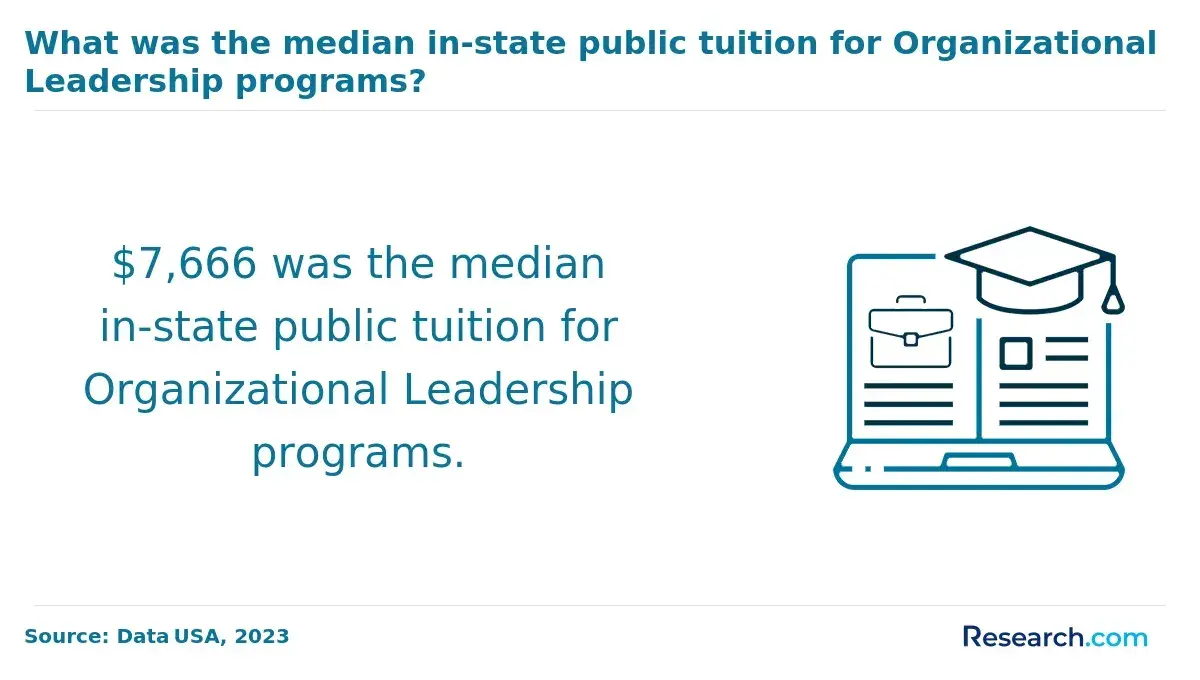
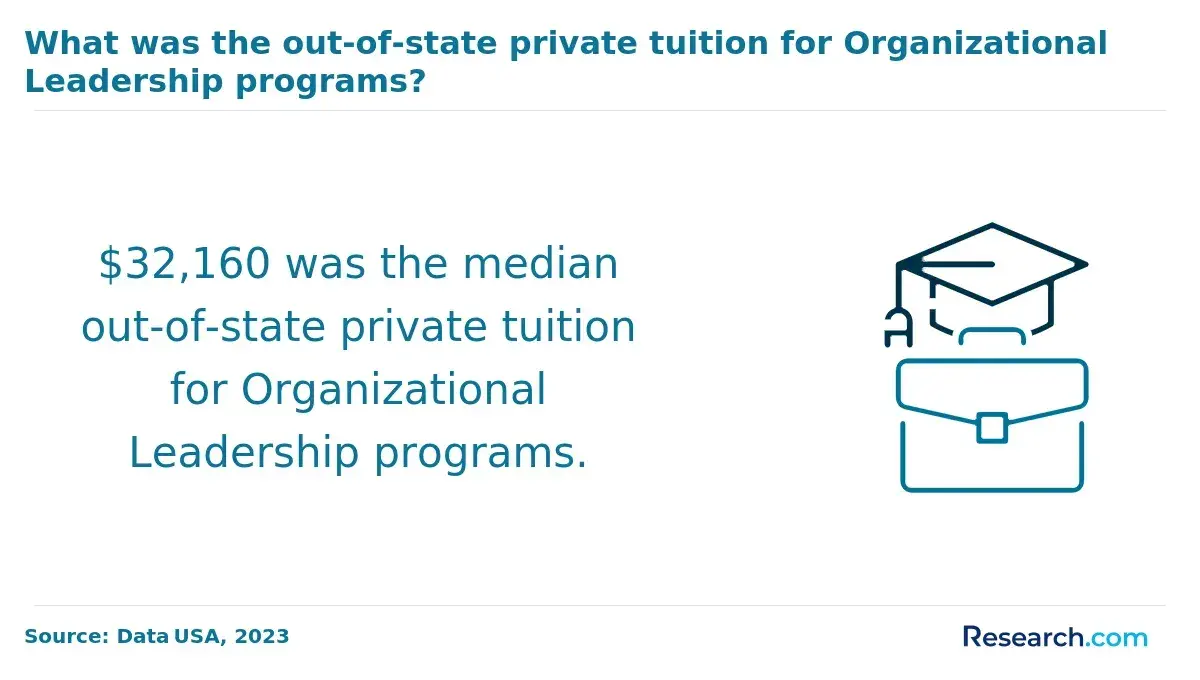
Organizational leadership degrees in North Carolina generally cost between $5,000 and $25,000 for a full degree program. The actual amount depends on the school, residency status, degree level, transfer credits, delivery format, fees, and how long you remain enrolled.
Do not compare programs by tuition alone. The lowest advertised tuition may not be the lowest total cost if the program has high fees, limited transfer credit, required campus visits, or a longer completion timeline.
| Cost factor | Why it changes the total price | Question to ask the school |
| Program length | More terms can mean more tuition payments, fees, materials, and opportunity cost. | How many credits are required, and how long do students like me usually take to finish? |
| Residency status | In-state students often pay lower tuition than out-of-state students. | Am I classified as in-state, out-of-state, online, or distance education for tuition purposes? |
| Delivery format | Online study may reduce commuting or housing costs, but some programs charge technology or per-credit fees. | What mandatory online, technology, course, graduation, or student service fees will I pay? |
| Transfer credits | Accepted credits can reduce the number of courses needed and lower total cost. | How many of my previous credits apply to this specific degree, not just general electives? |
| Books and materials | Textbooks, software, subscriptions, and assessment tools can add to the budget. | Are course materials included, low-cost, open educational resources, or billed separately? |
| Living and transportation costs | Campus students may need to budget for commuting, parking, housing, meals, and time away from work. | Are there required campus meetings, internships, weekend sessions, or residency components? |
One graduate of an on-campus organizational leadership program in North Carolina described the financial side as more complicated than the tuition figure suggested. He balanced work hours, housing costs, and school fees while using scholarships and payment plans when available. He said the in-person mentoring and campus resources were valuable, but he also emphasized that students should request a full cost estimate before committing.
What financial aid options are available to organizational leadership students in North Carolina?
Financial aid can significantly affect whether an organizational leadership degree is affordable. This is especially important because the average student loan debt for graduates reached approximately $32,731 in 2023. Students should start with the FAFSA, confirm program eligibility, and compare aid packages after accounting for total program cost.
| Aid source | How it may help | Important caution |
| Federal grants and loans | Pell Grants may provide need-based funding that does not need to be repaid. Direct Subsidized and Unsubsidized Loans can help cover tuition and related costs. | Loans must be repaid, so borrow only what you need and understand repayment terms. |
| North Carolina state aid | Programs such as the Education Lottery Scholarship may support eligible in-state residents. | Eligibility rules, award amounts, and deadlines can vary, so verify details each aid year. |
| Institutional scholarships | Schools may offer merit-based, need-based, transfer, adult learner, military, or program-specific awards. | Ask whether scholarships renew automatically or require a minimum GPA or enrollment level. |
| Private scholarships and grants | Professional associations, nonprofits, employers, and community organizations may offer leadership-related awards. | Apply early and avoid scholarship services that charge unnecessary fees. |
| Employer tuition assistance | Some employers reimburse tuition for workers developing management or leadership skills. | Check grade requirements, annual limits, repayment obligations, and whether you must stay with the employer after receiving aid. |
| Military and veteran benefits | Eligible service members, veterans, and family members may use federal benefits such as the GI Bill and state-specific tuition programs. | Confirm that the program, delivery format, and school are approved for the specific benefit you plan to use. |
Students considering advanced leadership study can also review organizational leadership doctoral programs to understand how funding options may differ at the doctoral level.
What jobs can you get with an organizational leadership degree in North Carolina?
An organizational leadership degree is broad by design. It does not train students for one single occupation; instead, it builds leadership, communication, operations, and change-management skills that can apply in many sectors. In North Carolina, graduates may pursue roles in business, healthcare, education, public administration, nonprofit organizations, logistics, human resources, and project-based work.
| Career area | Typical responsibilities | How the degree helps |
| Management | Supervise employees, set goals, monitor performance, improve workflows, and support team development. | Leadership theory, communication, motivation, and decision-making courses prepare graduates for people-management responsibilities. |
| Operations management | Improve processes, coordinate resources, reduce bottlenecks, and support organizational efficiency. | Strategic thinking, problem-solving, and organizational behavior help graduates analyze systems and implement improvements. |
| Human resources leadership | Support hiring, employee relations, workplace culture, training, compliance, and performance processes. | Ethics, communication, conflict management, and team dynamics are directly relevant to HR work. |
| Project leadership | Coordinate timelines, budgets, stakeholders, team roles, and deliverables. | Students learn delegation, collaboration, decision-making, and change management. |
| Nonprofit leadership | Lead programs, manage volunteers, support fundraising, plan services, and align work with mission goals. | The degree supports resource management, communication, strategic planning, and community-focused leadership. |
| Healthcare and public-sector leadership | Guide teams, manage administrative processes, support policy implementation, and improve service delivery. | Leadership, ethics, organizational change, and stakeholder communication are valuable in complex service environments. |
Students should compare career goals with degree requirements before enrolling. If cost is a major factor, Research.com’s overview of organizational leadership program cost can help you evaluate the degree alongside affordability and career planning.
How much can organizational leadership graduates earn in North Carolina?
Organizational leadership graduates in North Carolina typically earn between $45,000 and $130,000 annually, depending on experience, role level, industry, employer size, location, and the scope of responsibility. The degree can support advancement, but it does not guarantee a specific salary.
| Career stage | Typical salary range | Common role characteristics |
| Entry-level | $45,000 to $60,000 per year | Assistant manager, coordinator, supervisor, team lead, or early-career administrative leadership roles. |
| Mid-career | $65,000 to $90,000 per year | Department management, operations leadership, HR leadership, project management, or program leadership roles. |
| Senior leadership | $95,000 to over $130,000 per year | Director, senior manager, executive, or high-responsibility leadership positions with strategic oversight. |
What affects salary after graduation?
- Years of work and management experience before earning the degree.
- Industry, with some sectors paying more for leadership roles than others.
- Size and complexity of the employer.
- Location within North Carolina.
- Whether the graduate can show measurable results, such as improved retention, stronger operations, completed projects, or successful change initiatives.
- Additional credentials, technical skills, or industry-specific experience.
Are organizational leadership programs in North Carolina accredited?
Accreditation should be one of the first things students verify. It affects academic quality, federal financial aid eligibility, credit transfer, graduate school options, and employer confidence. This applies to bachelor’s, master’s, certificate, and doctoral options, including an affordable doctorate in organizational leadership online.
| Accreditation type | What it means | Why students should care |
| Regional accreditation | This is institutional accreditation. North Carolina institutions commonly hold accreditation through the Southern Association of Colleges and Schools Commission on Colleges, or SACSCOC. | It is important for federal financial aid, transfer credit, graduate admission, and general academic recognition. |
| Programmatic accreditation | Organizational leadership does not have one universal specialized accreditor, but related business or education units may hold recognition such as AACSB or CAEP. | Programmatic accreditation may signal additional quality review in business, management, or education-related leadership areas. |
| Professional alignment | Some programs align coursework with organizations such as the Institute of Leadership and Management or the Society for Human Resource Management. | Professional alignment can be useful when students want leadership development, HR preparation, or certification-relevant coursework. |
How to verify accreditation before enrolling
- Search the school’s accreditation page and confirm the accreditor name.
- Check whether accreditation applies to the institution, the college, or a specific program.
- Ask whether online students are covered under the same accreditation as campus students.
- Confirm that the program is eligible for federal financial aid if you plan to use aid.
- Ask how credits transfer to other North Carolina institutions or graduate programs.
- Be cautious with schools that make vague claims such as “recognized,” “approved,” or “licensed” without naming a legitimate accrediting body.
What Organizational Leadership Graduates in North Carolina Say About Their Degree
Graduate experiences can reveal how a program works in real life, but they should not replace independent research. Use alumni feedback to identify patterns: faculty support, workload, career relevance, networking, cost transparency, and whether assignments connect to workplace leadership problems.
- Rynor described the campus-based organizational leadership experience in North Carolina as a major turning point that helped lead to a role at Greenfield Elementary. He valued coursework connected to local education standards and said faculty support helped him apply leadership concepts in practical school settings. Rynor
- Avelyn said the online format made it possible to keep working while preparing for a higher administrative position within the state’s education system. She found North Carolina’s mix of urban and rural school contexts useful for understanding different leadership challenges and equity-focused decision-making. Avelyn
- Colson said studying on campus strengthened his connection to local communities and helped him understand how leadership can affect underserved areas. He pointed to the program’s attention to regional culture, economic diversity, and resource management as especially meaningful. Colson
Does organizational leadership program reputation affect job placement in North Carolina?
Program reputation can help, but it is only one factor. Employers are more likely to value a degree when the institution is accredited, the curriculum is relevant, and the candidate can show leadership results. A well-known school may provide stronger alumni networks or employer relationships, but students should still ask for clear career-services data.
Questions to ask about reputation and placement
- Which North Carolina employers have hired recent graduates?
- Does the school track job placement within six months?
- How is placement calculated?
- Are online and campus graduates included in the same outcome data?
- Does the program include internships, capstone projects, employer panels, or networking events?
- Can the career center support working adults and online students?
Can an organizational leadership degree help with career changes in North Carolina?
Yes, it can support a career change when paired with relevant experience, networking, and a clear target role. The degree is especially useful for people moving from individual contributor roles into supervision, from military service into civilian management, from technical work into operations leadership, or from frontline work into administrative roles.
However, the degree alone may not be enough for highly specialized fields. For example, healthcare, finance, education administration, analytics, or HR roles may require additional credentials, licenses, technical skills, or industry experience. Students should choose electives, projects, internships, and certificates that support the specific field they want to enter.
Can transfer students enroll in organizational leadership programs in North Carolina?
Many organizational leadership programs are transfer-friendly, especially online bachelor’s completion programs designed for adults with prior college credit. Transfer students should request a formal credit evaluation before enrolling because not all credits apply equally to major, general education, or elective requirements.
Transfer-student checklist
- Request an unofficial transfer review before applying, if available.
- Ask how many credits can apply to the degree.
- Confirm whether credits count toward major requirements or only electives.
- Check grade minimums for transferred courses.
- Ask whether associate degree graduates receive block transfer credit.
- Review North Carolina transfer resources, including the UNC System transfer information listed in the references.
Is organizational leadership a useful degree in North Carolina?
An organizational leadership degree can be useful if your goal is to lead people, coordinate projects, improve operations, manage change, or move into administrative responsibility. It is most valuable for students who already have work experience or a clear plan for applying leadership skills in a specific industry.
It may be less useful if you need a highly technical credential, a licensed profession, or a degree with a narrowly defined occupational pathway. Before enrolling, compare the curriculum with job postings you want, talk to admissions and career advisors, and calculate whether the expected career benefit justifies the total cost.
Common Mistakes to Avoid When Choosing a Program
- Choosing without checking accreditation: Accreditation affects aid, transfer, and recognition. Verify it before applying.
- Comparing tuition but ignoring total cost: Fees, books, commuting, technology charges, and extra terms can change affordability.
- Assuming online automatically means easier: Online programs require discipline, planning, and consistent communication.
- Ignoring transfer-credit policies: A generous transfer policy can save time and money, while a limited policy can extend the degree.
- Relying only on rankings: Rankings can be useful, but they do not tell you whether a program fits your schedule, goals, budget, or learning style.
- Assuming salary outcomes are guaranteed: Pay depends on role, experience, industry, location, and performance.
- Skipping career-services questions: Ask how the school supports online students, adult learners, and job changers.
- Overlooking employer tuition benefits: Working students should ask HR about reimbursement before borrowing more than necessary.
Key Insights
- Online organizational leadership programs in North Carolina are usually best for students who need flexibility, while campus programs may offer stronger in-person networking and structure.
- Admissions requirements commonly include prior education, GPA review, possible test-optional policies, recommendations, and a personal statement. Graduate programs may place more weight on leadership or professional experience.
- Completion time varies. Bachelor’s programs often take about four years from the beginning, while master’s programs may take 1.5 to 3 years online or about 1.5 to 2 years on campus full time.
- Program cost generally falls between $5,000 and $25,000, but students should compare full cost, transfer credits, fees, residency status, and time-to-completion.
- Graduates may pursue management, operations, HR, project leadership, nonprofit, healthcare, public-sector, and education-related leadership roles.
- Reported salary ranges in North Carolina run from $45,000 to $130,000 annually, with senior leadership roles reaching $95,000 to over $130,000 per year. These figures depend heavily on experience and role scope.
- Accreditation is non-negotiable. It supports financial aid eligibility, credit transfer, graduate study, and employer recognition.
- The best program is not always the cheapest, fastest, or highest-ranked. The right choice is the one that aligns with your career goal, schedule, budget, learning style, and ability to complete the degree.
Related Articles for Nearby States
- 2027 Best Organizational Leadership Degree Programs in South Carolina: Online & Campus
- 2027 Best Organizational Leadership Degree Programs in Virginia: Online & Campus
- 2027 Best Organizational Leadership Degree Programs in Georgia: Online & Campus
- 2027 Best Organizational Leadership Degree Programs in Tennessee: Online & Campus
- 2027 Best Organizational Leadership Degree Programs in West Virginia: Online & Campus
- 2027 Best Organizational Leadership Degree Programs in Kentucky: Online & Campus
- 2027 Best Organizational Leadership Degree Programs in Florida: Online & Campus
- 2027 Best Organizational Leadership Degree Programs in Maryland: Online & Campus
- 2027 Best Organizational Leadership Degree Programs in Alabama: Online & Campus
- 2027 Best Organizational Leadership Degree Programs in Pennsylvania: Online & Campus
References:
- Organizational Management https://leadership.carolinau.edu/program/doctor-philosophy/organizational-management
- Organizational Leadership Degree in North Carolina https://www.organizationalleadershipedu.org/degrees/north-carolina/
- Transfer Students - UNC System https://www.northcarolina.edu/students/transfer/
- Executive Master' | North Carolina Wesleyan University https://ncwu.edu/academics/graduate-programs/executive/executive-strategic-leadership/
- Organizational Leadership Graduate Certificate at Queens https://www.queens.edu/graduate/organizational-leadership-graduate-certificate/
- UNC-Chapel Hill to offer this in-demand online degree program that has six-figure salary potential | Fortune Education https://fortune.com/education/articles/unc-chapel-hill-to-offer-this-in-demand-online-degree-program-that-has-six-figure-salary-potential/
- Online Bachelor of Arts in Organizational Leadership Program https://www.claremontlincoln.edu/programs/bachelor-organizational-leadership/
- Enroll in the Master in Leadership Program Today https://belmontabbeycollege.edu/academics/graduate-studies/ma-leadership/
- Tuition, Fees, and Funding - Educational Leadership https://edld.charlotte.edu/programs/edd-educational-leadership/costs-and-funding-2/
- Online Transfer Students – Montreat College https://www.montreat.edu/online/transfer/
Other Things You Should Know About Organizational Leadership Degree Programs in North Carolina
Students in North Carolina's top organizational leadership programs typically have access to career support services like internship placements, career counseling, and networking events. These services assist students in securing leadership roles upon graduation by connecting them with potential employers and industry mentors.
Transfer students can enroll in organizational leadership programs in North Carolina. Most universities offering these degrees welcome transfer applicants, provided they meet the institution's credit and GPA requirements. Transfer students often benefit from flexible credit evaluations, allowing them to apply previously earned credits toward their organizational leadership degree. Both online and campus programs typically support transfer admissions to accommodate working adults and those changing careers. Prospective students should check specific schools' transfer policies and articulation agreements to ensure a smooth transition.
The best organizational leadership degree programs in North Carolina for 2027 typically require applicants to have a completed application, a bachelor’s degree, and possibly a certain GPA. Some programs may also require letters of recommendation, a statement of purpose, or relevant work experience. Check specific program websites for detailed requirements.


