
2027 Best Restaurant Management Schools & Degrees

Co-Founder and Chief Data Scientist
Choosing a restaurant management school is not only about finding a program with hospitality courses. The better question is whether the degree will help you build the operational, financial, staffing, customer service, and technology skills needed to run a profitable food service business. For students who want to move into restaurant leadership, food and beverage operations, catering, hotel dining, resort hospitality, or entrepreneurship, the right program can provide structured training, supervised experience, and industry contacts that are difficult to gain through entry-level work alone.
This guide explains what to expect from a restaurant management degree, how long it takes, what it can cost, which careers it can support, and how to compare schools without relying only on rankings. It also highlights restaurant management degree programs for 2027 and gives practical decision criteria for students comparing associate, bachelor’s, online, campus-based, and business-focused options.
Quick answer: Is a restaurant management degree worth it?
A restaurant management degree can be worthwhile if you want a structured path into supervisory or leadership roles in food service, hospitality, catering, lodging, or restaurant entrepreneurship. The degree is most useful when the program combines business coursework, food safety training, cost control, technology, internships, and employer connections. It may be less necessary for students who already have substantial restaurant leadership experience and need only targeted certifications or business training.
What are the main benefits of earning a restaurant management degree?
- Broader leadership options. Graduates may pursue roles such as restaurant manager, food service director, catering manager, hospitality consultant, or business owner, depending on experience and local hiring demand.
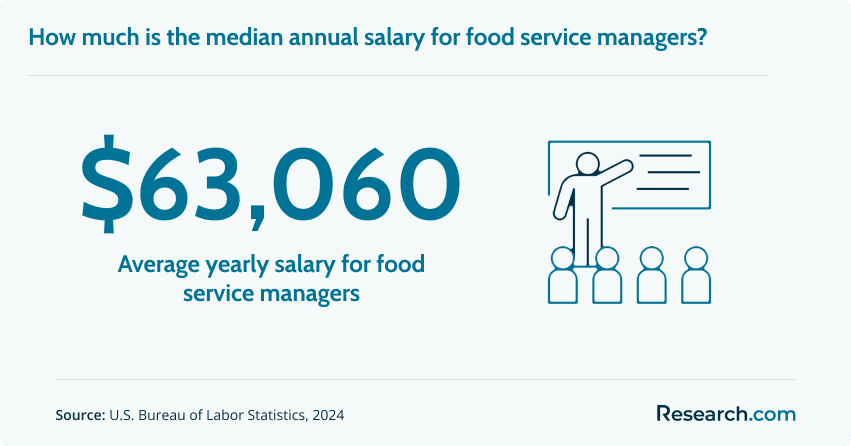
- Documented earning potential. The median salary for food service managers is $63,060 per year, with compensation often influenced by restaurant type, location, employer size, and management responsibility.
- Stronger business foundation. Degree programs usually teach budgeting, purchasing, labor scheduling, marketing, guest service, compliance, and operations—skills that directly affect restaurant performance.
What can I expect from a restaurant management degree?
A restaurant management degree blends hospitality training with applied business education. Students usually study restaurant operations, food safety, cost controls, guest experience, marketing, hospitality law, human resources, and leadership. The strongest programs do more than explain how restaurants work; they give students repeated practice solving staffing, inventory, service, compliance, and profitability problems.
Many programs include a required internship, practicum, or capstone project. A capstone may ask students to build a restaurant business plan, analyze a struggling operation, design a menu with cost targets, or recommend improvements to service flow. Internships can be especially valuable because employers in hospitality often care about both formal education and proof that a graduate can perform in a fast-moving service environment.
Tuition varies widely, ranging from $10,000 to $40,000 per year, depending on the school and program level. Online restaurant management programs commonly use recorded lectures, live discussions, case studies, simulations, digital menu planning tools, and operations projects. However, students should check whether an online program includes local internship options or requires any campus-based culinary or hospitality labs.
Common restaurant management degree formats
| Program type | Typical purpose | Best fit | Key trade-off |
| Certificate | Short-term training in food safety, supervision, customer service, or hospitality basics | Working adults who need focused skills quickly | May not carry the same weight as a degree for management-track hiring |
| Associate degree | Entry-level preparation for restaurant operations and food service supervision | Students seeking a faster, lower-cost pathway into the field | May limit advancement into corporate or director-level roles without further education |
| Bachelor’s degree | Comprehensive preparation in hospitality, finance, marketing, leadership, and operations | Students targeting management, hotel dining, resort, or corporate hospitality careers | Requires a larger time and financial commitment |
| MBA or graduate business degree | Advanced leadership, finance, analytics, strategy, and organizational management | Experienced professionals aiming for regional, corporate, ownership, or executive roles | Often less focused on restaurant-specific operations unless paired with industry experience |
Where can I work with a restaurant management degree?
Restaurant management graduates can work in more than traditional restaurants. Career options may be found in full-service dining, quick-service operations, hotels, resorts, casinos, event venues, catering companies, corporate cafeterias, healthcare food service, government dining operations, universities, and nonprofit organizations that manage large-scale meal programs.
Some graduates move into entrepreneurship by opening restaurants, food trucks, catering businesses, ghost kitchens, bakery cafes, or hospitality consulting practices. In these cases, the degree can be useful because owners must understand pricing, staffing, compliance, vendor relationships, marketing, guest retention, and cash flow—not just food quality.
The restaurant industry employs over 15 million people in the U.S., creating many management layers across local businesses, regional groups, franchises, and national brands. Graduates who can combine communication, problem-solving, financial discipline, and team leadership are better positioned to adapt across these settings.
How much can I make with a restaurant management degree?
The average salary for food service managers is $63,060 per year, according to the U.S. Bureau of Labor Statistics. Actual earnings can vary significantly by employer, region, restaurant concept, revenue volume, schedule expectations, bonus structure, and years of experience.
Entry-level managers typically start around $45,000 per year, while experienced professionals in high-end establishments can make over $90,000 annually. Managers in fine dining, luxury hospitality, large resorts, major metropolitan areas, and high-volume restaurant groups may have stronger earning potential than managers in smaller or lower-margin operations. Certifications such as Certified Food and Beverage Executive (CFBE) may also support advancement, especially when combined with measurable leadership results.
| Career level | Typical role examples | Salary detail stated in this guide | What can affect pay |
| Entry level | Shift manager, assistant manager, catering coordinator | Entry-level managers typically start around $45,000 per year | Prior restaurant experience, schedule availability, local market, employer size |
| Mid-career | Restaurant manager, banquet manager, food service manager | The average salary for food service managers is $63,060 per year | Sales volume, team size, cost-control performance, location |
| Experienced leadership | General manager, food and beverage director, hospitality consultant | Experienced professionals in high-end establishments can make over $90,000 annually | Luxury segment, resort market, bonuses, multi-unit responsibility, ownership stake |
- Best restaurant management degree programs for 2027
- How long does it take to complete a restaurant management degree program?
- What is the average cost of a restaurant management degree program?
- What are the financial aid options for students enrolling in a restaurant management degree program?
- What are the prerequisites for enrolling in a restaurant management degree program?
- What are the emerging trends in restaurant management?
- What is the return on investment for a restaurant management degree program?
- What courses are typically in a restaurant management degree program?
- Can an online MBA boost your restaurant management career?
- How can an advanced MBA complement a restaurant management degree?
- How can digital innovation and project management skills boost operational efficiency in restaurant management?
- Should I pursue a restaurant management degree or an MBA for hospitality leadership?
- What types of specializations are available in a restaurant management degree program?
- How to choose the best restaurant management degree program
- What career paths are available for graduates of a restaurant management degree program?
- How do accreditation and industry partnerships influence program quality?
- What is the job market for graduates with a restaurant management degree program?
Best Restaurant Management Degree Programs for 2027
How should students use this ranking?
A ranking can help you build a shortlist, but it should not be the only reason you choose a school. Restaurant management students should compare accreditation, cost, required credits, internship access, food and beverage facilities, alumni outcomes, transfer policies, and whether the curriculum matches their career goal. A student who wants to manage hotel dining may need a different program than a student planning to open a catering company or work in franchise operations.
How do we rank schools?
Because a degree requires a significant investment of time and money, Research.com uses a data-informed process to evaluate schools. Our ranking process draws from sources such as the IPEDS database, Peterson's database, the College Scorecard database, and the National Center for Education Statistics. These sources help assess factors connected to affordability, academic quality, institutional information, and student outcomes. Readers who want more detail can review Research.com's ranking methodology.
1. Niagara University
Niagara University offers a hotel and restaurant management pathway designed for students who want leadership preparation in hospitality. The program combines business fundamentals with focused study in hotel operations, food and beverage management, and luxury hospitality. Students can strengthen their resumes through internships, advising, alumni connections, and career support.
- Required Credits to Graduate: 120
- Cost: $36,100 per year
- Accreditation: Accreditation Commission for Programs in Hospitality Administration (ACPHA)
2. Baker College of Muskegon
Baker College offers an Associate of Applied Science in Food and Beverage Management for students seeking practical preparation for food service leadership. The curriculum emphasizes restaurant operations, catering, banquet sales, and applied management. Graduates can pursue entry-level managerial opportunities in food and beverage settings.
- Required Credits to Graduate: 60
- Cost: $450 per credit hour
- Accreditation: American Culinary Federation Education Foundation Accrediting Commission (ACFEFAC)
3. Husson University
Husson University provides a Bachelor of Science in Hospitality and Tourism Management that prepares students for hospitality leadership roles. The program emphasizes business management, communication, critical thinking, technology-supported learning, and hands-on experience. Students may also pursue an accelerated path or complete an MBA in just five years.
- Required Credits to Graduate: 120
- Cost: $712 per credit hour
- Accreditation: New England Commission of Higher Education (NECHE)
4. The University of Alabama
The University of Alabama offers a Bachelor of Science in Hospitality Management with preparation for leadership across hospitality settings. Students can choose concentrations such as restaurant management, hotel and lodging, event management, and sport operations. The program also offers internship opportunities and options to earn industry certifications.
- Required Credits to Graduate: 120
- Cost: $11,380 per year (in-state students), $33,372 (out-of-state students)
- Accreditation: Southern Association of Colleges and Schools Commission on Colleges (SACSCOC)
5. SUNY College at Plattsburgh
Plattsburgh State University offers a Bachelor of Science in Hospitality Management that combines liberal arts study with business-oriented hospitality preparation. The program includes 600 hours of internships across areas such as lodging, food service, and event management, giving students practical exposure before graduation.
- Required Credits to Graduate: 120
- Cost: $3,535 per year (in-state students), $8,490 (out-of-state students)
- Accreditation: Middle States Commission on Higher Education (MSCHE)
6. Drexel University
Drexel University offers food and hospitality management programs that connect academic work with applied industry experience. Students can study areas such as culinary arts, food science, and hospitality business while benefiting from faculty networks, co-op opportunities, and access to Philadelphia hospitality venues. The program is designed to help students graduate with both knowledge and workplace experience.
- Required Credits to Graduate: Varies by program
- Cost: $20,014 per year
- Accreditation: Middle States Commission on Higher Education (MSCHE)
7. Johnson & Wales University-Denver
Johnson & Wales University offers a Bachelor of Science in Hospitality Management for students interested in applied hospitality leadership. Coursework includes hotel management, tourism, strategic marketing, and experiential learning. Students may specialize in food and beverage, hotel and resort management, or sustainable tourism while building industry awareness through partnerships and hands-on work.
- Required Credits to Graduate: 120 (or 90 for the accelerated three-year track)
- Cost: $43,872 per year
- Accreditation: New England Commission of Higher Education (NECHE)
8. College of the Ozarks
College of the Ozarks offers hospitality management training supported by The Keeter Center, a working learning environment that includes fine dining, lodging, and event services. Students study hotel and restaurant management, culinary arts, and event planning while developing practical skills in a hospitality setting.
- Required Credits to Graduate: 120
- Cost: $23,900 per year
- Accreditation: Higher Learning Commission (HLC)
9. Delaware Valley University
Delaware Valley University offers a B.S. in Restaurant and Food Service Management with an emphasis on hospitality leadership and entrepreneurship. Students study areas such as food purchasing, business law, marketing, and finance. Its location near Philadelphia and New York City can support internship searches and professional networking.
- Required Credits to Graduate: 120
- Cost: $21,700 per year
- Accreditation: Middle States Commission on Higher Education (MSCHE)
10. New York Institute of Technology
New York Institute of Technology offers School of Management programs built around business preparation, technology, experiential learning, and global market awareness. Students interested in restaurant or hospitality leadership may find value in business-focused study areas such as finance, marketing, management, and entrepreneurship. Flexible options can help students align coursework with career goals.
- Required Credits to Graduate: Varies by program
- Cost: $46,000 per year
- Accreditation: Association to Advance Collegiate Schools of Business (AACSB)
How long does it take to complete a restaurant management degree program?
The time required to finish a restaurant management program depends on credential level, transfer credits, enrollment pace, and whether the program requires internships or labs. Some students complete short certificate programs in a few months, while a bachelor’s degree generally takes four years for full-time students.
Degree types and typical timelines
- Certificate programs. These programs may take a few months to a year and often focus on targeted competencies such as food safety skills, guest service, supervision, and hospitality operations.
- Associate degrees. These two-year programs introduce students to restaurant operations, business management, food service systems, and leadership fundamentals.
- Bachelor’s degrees. These four-year programs go deeper into financial management, marketing, human resources, hospitality law, strategic planning, and advanced restaurant operations.
What can shorten or lengthen your completion time?
- Enrollment pace. Full-time students usually finish faster, while part-time students may need an additional year or two.
- Online or campus format. Online programs can offer scheduling flexibility, but some may still require local internships, labs, or synchronous sessions.
- Transfer credits. Prior college coursework, military learning, industry certifications, or approved experiential credit may reduce the number of courses needed.
- Internship requirements. A required practicum can improve career preparation but may affect scheduling, especially for working adults.
What is the average cost of a restaurant management degree program?
The median in-state tuition for public restaurant management schools is $6,470 per year, while private universities charge a median tuition of $31,334 per year. For cost-conscious students, an in-state public college can reduce the total price substantially, especially for a four-year bachelor’s degree.
Tuition is only one part of the full cost of attendance. Students should also account for required supplies, living costs, fees, transportation, uniforms, knives or culinary tools if required, and any internship-related expenses.
- Books and materials. $500 to $1,500 per year, depending on course requirements.
- Room and board. $10,000 to $15,000 per year for students living on campus. Off-campus costs can differ widely by city.
- Technology fees. $100 to $500 per year for students in online or hybrid programs.
Students comparing hospitality programs with culinary training should also review culinary arts degree costs, since hands-on culinary programs may have different equipment, lab, and supply expenses than management-focused degrees.
Cost questions to ask before enrolling
| Question | Why it matters |
| Is tuition charged by credit, semester, or year? | Pricing structure affects the total cost, especially for part-time and transfer students. |
| Are internships paid, unpaid, or variable? | Internship income, travel, and scheduling can affect affordability. |
| Does the program require uniforms, tools, lab fees, or travel? | Restaurant and hospitality programs may include costs beyond standard textbooks. |
| Can prior credits transfer into the program? | Accepted transfer credits can reduce both completion time and total tuition. |
| What scholarships are available specifically for hospitality students? | Program-level and industry scholarships may lower out-of-pocket expenses. |
What are the financial aid options for students enrolling in a restaurant management degree program?
Students considering restaurant management schools should compare financial aid before committing to a program. The goal is to understand the net price after grants and scholarships, not just the advertised tuition. A lower sticker price is helpful, but a school with stronger aid may sometimes cost less overall.
Federal and state financial aid
The FAFSA, or Free Application for Federal Student Aid, is the starting point for most federal aid. Students may qualify for Pell Grants, loans, and work-study depending on eligibility. State grants and scholarships may also be available for students pursuing hospitality, business, culinary, or restaurant management study.
Scholarships and grants
Industry organizations and colleges may offer scholarships for students committed to hospitality careers. The National Restaurant Association Educational Foundation (NRAEF) Scholarships support students pursuing restaurant industry education, while American Hotel & Lodging Educational Foundation (AHLEF) Scholarships can assist students in hospitality-related fields. Schools may also offer merit-based, need-based, or department-specific awards.
Work-study and employer tuition assistance
Federal Work-Study can help eligible students earn money through part-time employment while enrolled. Students already working in restaurants, hotels, resorts, or food service companies should ask employers about tuition reimbursement, professional development funds, or promotion pathways tied to completing a degree.
Private loans and other funding
Private student loans from banks or credit unions may fill remaining gaps, but they should be reviewed carefully because terms, interest rates, and borrower protections vary. Some students also use personal savings, payment plans, family support, or crowdfunding platforms such as GoFundMe.
What are the prerequisites for enrolling in a restaurant management degree program?
Admission requirements vary by school and credential level. Certificate and associate programs may have open or broad admission policies, while bachelor’s programs can ask for a more complete application package.
High school diploma or GED
Most degree programs require applicants to have a high school diploma or General Education Development (GED) certificate. This is usually the minimum academic requirement for college admission.
Application and transcripts
Applicants generally submit an application and official transcripts from high school and any colleges previously attended. Some institutions may set a minimum GPA or ask transfer students to meet additional academic standards.
Standardized test scores
Some schools may request SAT or ACT scores, although many colleges now use test-optional policies. Applicants should confirm current admissions requirements with each school rather than assuming test scores are required or waived.
Prerequisite courses
Certain programs may expect prior coursework in math, business, economics, communications, or related subjects. Others may require students to complete introductory college courses before taking advanced hospitality or restaurant management classes.
Recommendation letters
Some schools request letters from teachers, supervisors, employers, or mentors. Strong recommendations can be especially helpful for students with restaurant experience who want to demonstrate work ethic, leadership potential, or customer service ability.
Personal statement or essay
An essay may ask applicants to explain their interest in restaurant management, career plans, and reasons for choosing the program. A strong statement should connect real experience or goals with specific features of the school.
Students interested in food, wellness, and service careers may also compare restaurant management with adjacent fields. For example, someone drawn to nutrition-focused work may research holistic nutritionist salary information before deciding whether hospitality management, nutrition, or another health-related path fits better.
What are the emerging trends in restaurant management?
Restaurant management is becoming more technology-driven, data-informed, and operationally complex. Managers increasingly work with advanced point-of-sale systems, mobile ordering, contactless payments, loyalty platforms, delivery integrations, digital reservations, and analytics dashboards. These tools can improve service speed and decision-making, but they also require managers who understand implementation, staff training, privacy, vendor selection, and return on technology investment.
Sustainability and ethical sourcing are also influencing restaurant operations. Customers, investors, and employers may pay closer attention to food waste, responsible purchasing, packaging, energy use, and transparency. Managers who understand both cost control and responsible operations can help restaurants respond to these expectations without weakening profitability.
Students who want broader business preparation beyond hospitality may compare restaurant management programs with an affordable online business degree, especially if they are considering corporate operations, entrepreneurship, or multi-unit leadership.
What is the return on investment for a restaurant management degree program?
The return on investment for a restaurant management degree depends on total education cost, debt, opportunity cost, work experience, career target, and the program’s ability to connect students with relevant employers. A low-cost program with strong internships may offer better ROI than a higher-cost program without clear industry access.
Students should compare tuition, fees, completion time, transfer credit policies, graduation outcomes, internship quality, alumni support, and job placement information. They should also compare expected career earnings with realistic starting roles, not only long-term executive or ownership outcomes.
For students who want stronger financial analysis skills later in their careers, an online master's in finance degree may complement restaurant management experience, especially for roles involving budgeting, expansion planning, investment decisions, or corporate food service strategy.
How to estimate ROI before choosing a program
- Calculate the full cost. Include tuition, fees, books, housing, transportation, supplies, and lost income if you reduce work hours.
- Subtract grants and scholarships. Focus on net price rather than published tuition.
- Estimate debt at graduation. Compare monthly loan payments with realistic entry-level earnings.
- Review internship and employer access. Programs with strong local or national hospitality connections may improve early career momentum.
- Compare degree level to your goal. An associate degree may be enough for some supervisory roles, while bachelor’s or graduate study may be more useful for corporate or director-level paths.
What courses are typically in a restaurant management degree program?
Restaurant management programs usually combine business, hospitality, culinary, and operations courses. The objective is to help students understand how food service businesses make money, satisfy guests, manage employees, control risk, and maintain quality under pressure.
- Introduction to hospitality management. This course explains the structure of the hospitality industry, including guest service, departments, operations, and management roles. Students also learn how excellent customer service practices influence reputation and repeat business.
- Food and beverage management. Students study menu planning, purchasing, inventory, supplier relationships, sanitation, and cost controls for food and beverage operations.
- Restaurant operations. This course covers front-of-house and back-of-house coordination, staffing, scheduling, service standards, kitchen workflow, and daily problem-solving.
- Financial management for hospitality. Students learn budgeting, profit and loss statements, cost control, revenue analysis, and financial reporting for restaurants and hospitality businesses.
- Marketing for the hospitality industry. Coursework applies marketing principles to restaurants, including branding, promotions, advertising, social media, local outreach, and guest loyalty.
Skills students should expect to build
| Skill area | Why it matters in restaurant management |
| Labor scheduling | Labor is one of the largest controllable costs in restaurant operations. |
| Food cost control | Pricing, waste, inventory, and purchasing decisions directly affect margins. |
| Guest recovery | Managers must resolve complaints quickly while protecting the brand. |
| Compliance and safety | Food safety, labor rules, alcohol service, and workplace policies reduce risk. |
| Team leadership | Retention, training, and communication affect service quality and turnover. |
| Data interpretation | POS reports, sales trends, reviews, and inventory data support better decisions. |
Can an online MBA boost your restaurant management career?
An online MBA can strengthen a restaurant management career when the student already has hospitality experience and wants broader leadership, finance, analytics, strategy, or executive preparation. It may be especially useful for professionals pursuing general manager, regional manager, franchise leadership, ownership, or corporate hospitality roles.
However, an MBA is not always the first credential a new student needs. Someone without restaurant experience may benefit more from a restaurant management bachelor’s degree, associate degree, or entry-level hospitality role before moving into graduate business study. Experienced professionals who need faster advancement may explore one-year online MBA programs as a way to add business training without stepping away from work for several years.
How can an advanced MBA complement a restaurant management degree?
A restaurant management degree develops industry-specific operating knowledge, while an MBA can add higher-level skills in finance, leadership, organizational strategy, analytics, and competitive positioning. Together, these credentials can be useful for professionals who want to move from managing one location to leading multiple units, advising hospitality companies, launching a restaurant group, or entering corporate food service.
Students comparing graduate business options should examine accreditation, curriculum, faculty experience, networking opportunities, and flexibility. For working hospitality professionals, affordable AACSB-accredited online MBA degree programs may be worth comparing because they combine business accreditation with online access.
How can digital innovation and project management skills boost operational efficiency in restaurant management?
Restaurant managers increasingly oversee technology projects that affect ordering, payments, inventory, reservations, employee scheduling, loyalty programs, and delivery platforms. Poor implementation can disrupt service, confuse staff, or increase costs. Strong project management skills help managers plan rollouts, train teams, track results, and adjust operations based on data.
Digital tools can also improve forecasting, menu decisions, customer engagement, and labor planning when managers know how to interpret the information. Students who want formal training in implementation, process improvement, and operational change may compare hospitality programs with the quickest online project management degree options, especially if they are interested in restaurant technology, multi-site operations, or corporate systems roles.
Should I pursue a restaurant management degree or an MBA for hospitality leadership?
The better choice depends on your experience and career target. A restaurant management degree is usually the stronger fit for students who need industry-specific preparation in operations, food and beverage management, guest service, hospitality law, and restaurant cost controls. An MBA is often better for experienced professionals who already understand hospitality operations and now need broader strategy, finance, leadership, or corporate management skills.
| Choose this path | When it makes sense | What to watch for |
| Restaurant management degree | You are starting your hospitality career or want structured training in restaurant operations. | Make sure the program includes internships, food service operations, and business coursework. |
| MBA | You already have management experience and want corporate, regional, ownership, or executive roles. | Confirm that the curriculum supports hospitality goals, not only general business theory. |
| Both over time | You want deep industry knowledge first and advanced business leadership later. | Consider cost, timing, debt, and whether your employer offers tuition support. |
Professionals who want flexible graduate business study can compare online MBA programs after evaluating whether they need broad business training or a more restaurant-specific credential first.
What types of specializations are available in a restaurant management degree program?
Specializations allow students to align coursework with a specific segment of hospitality. The right concentration can make a program more relevant, especially for students with a clear goal such as catering, hotel dining, sustainable food service, or restaurant entrepreneurship.
- Food and beverage management. Focuses on restaurant, bar, beverage, banquet, and catering operations.
- Culinary arts management. Combines kitchen knowledge with supervision, purchasing, menu planning, and operations.
- Event planning and catering. Prepares students to coordinate weddings, banquets, corporate events, and large-scale food service functions.
- Hospitality marketing. Emphasizes branding, digital promotion, guest loyalty, social media, and market positioning.
- Sustainable hospitality management. Covers environmentally aware practices, sourcing, waste reduction, and responsible operations.
- Restaurant finance and operations. Concentrates on cost controls, budgeting, inventory, pricing, and process efficiency.
- Hotel and resort management. Supports students interested in lodging, tourism, resort dining, and broader hospitality operations.
Students researching niche degree paths may notice that specialization matters across many fields. For example, someone comparing hospitality concentrations with unrelated specialized graduate options such as the cheapest master's in library science can use the same principle: choose the curriculum that matches the work you actually want to do.
How to choose the best restaurant management degree program
The best restaurant management program is the one that fits your career goal, budget, location, schedule, and learning style. A program with a strong name but weak internships may be less useful than a more affordable school with excellent local restaurant and hospitality partnerships.
- Check accreditation first. Confirm that the institution is accredited and, when relevant, whether the hospitality program has specialized recognition.
- Review the curriculum closely. Look for coursework in hospitality law, food safety, marketing, financial management, human resources, technology, and restaurant operations.
- Prioritize hands-on learning. Internships, practicum placements, campus restaurants, hotel labs, and employer partnerships can improve career readiness.
- Evaluate faculty experience. Instructors with restaurant, hotel, catering, or hospitality leadership backgrounds can connect theory to real operational problems.
- Ask about career support. Review job placement assistance, alumni networks, employer events, and internship placement processes.
- Compare format and flexibility. Online, hybrid, and campus options serve different students. Learners comparing flexibility across fields may look at resources such as online physical therapy assistant programs to understand how program format can affect scheduling, labs, and hands-on requirements.
- Calculate net cost. Compare tuition, fees, scholarships, financial aid, transfer credits, and expected debt before choosing.
Common mistakes to avoid
| Mistake | Better approach |
| Choosing only by ranking | Use rankings as a starting point, then compare curriculum, cost, internships, and outcomes. |
| Looking only at tuition | Estimate total cost, including fees, housing, supplies, transportation, and lost work hours. |
| Ignoring accreditation | Verify institutional accreditation and any relevant program-level recognition before applying. |
| Assuming online means fully flexible | Check for live sessions, internship requirements, campus visits, labs, or practicum hours. |
| Skipping transfer credit review | Ask for a formal transfer evaluation before enrolling if you have prior coursework. |
| Expecting the degree alone to guarantee a management job | Build experience through internships, part-time work, certifications, and measurable leadership achievements. |
Questions to ask admissions or program advisors
- What restaurant, hotel, catering, or food service employers regularly recruit students from this program?
- Are internships required, and who helps students secure placements?
- What percentage of credits can transfer from another institution?
- Does the program include food safety, alcohol service, or other industry certifications?
- Are online students eligible for the same career services as campus students?
- What are the most common first jobs graduates obtain after completing the program?
- How often is the curriculum updated to reflect technology, delivery platforms, sustainability, and labor challenges?
What career paths are available for graduates of a restaurant management degree program?
Restaurant management graduates can pursue roles across food service, lodging, events, consulting, and entrepreneurship. Career level usually depends on a mix of education, work history, leadership ability, and the size or complexity of the employer. Some students also combine hospitality knowledge with other business or operations fields; for example, those interested in restaurant development, facilities planning, or build-outs may compare hospitality study with the fastest online construction management degree options.
- Restaurant manager. Oversees daily operations, staff performance, guest satisfaction, inventory, scheduling, and basic financial controls.
- General manager. Leads the full restaurant operation, including budgeting, marketing, hiring, service standards, vendor relationships, and strategic planning.
- Food and beverage director. Manages food and beverage services for larger venues such as hotels, resorts, clubs, casinos, or cruise ships.
- Event coordinator or event manager. Plans and executes banquets, weddings, corporate meetings, and special events in restaurants, hotels, or event spaces.
- Catering manager. Coordinates catering operations, client communication, staffing, logistics, menu execution, and service quality for off-site or large-scale events.
- Hospitality consultant. Advises restaurants or hospitality businesses on operations, service quality, profitability, staffing, concept development, or guest experience.
- Restaurant owner or entrepreneur. Launches or manages a restaurant, food truck, catering company, cafe, or related food business.
Career path comparison
| Career path | Best suited for | Useful preparation |
| Restaurant manager | Students who like fast-paced operations and team leadership | Internships, scheduling, food safety, guest service, cost control |
| Food and beverage director | Students interested in hotels, resorts, clubs, or large venues | Banquet operations, beverage management, budgeting, vendor relations |
| Catering or event manager | Students who enjoy logistics, client communication, and planning | Event courses, catering practicum, sales, service coordination |
| Hospitality consultant | Experienced professionals who can diagnose business problems | Operations analytics, financial management, strong industry portfolio |
| Owner or entrepreneur | Students comfortable with risk, sales, finance, and long hours | Business planning, marketing, legal basics, accounting, real-world operations |
How do accreditation and industry partnerships influence program quality?
Accreditation matters because it signals that a school has been reviewed against recognized educational standards. For students, accreditation can affect credit transfer, graduate school eligibility, employer perception, and access to certain forms of financial aid. Program-level hospitality or culinary accreditation may also indicate that the curriculum has been evaluated for industry relevance.
Industry partnerships are equally important in a hands-on field. Strong connections with restaurants, hotels, resorts, catering companies, food service vendors, and hospitality associations can lead to internships, guest speakers, mentoring, site visits, competitions, and recruiting opportunities. These experiences help students test classroom knowledge in real service environments.
Students considering advanced business credentials should apply the same quality checks to graduate programs. For example, those comparing doctoral-level business pathways can review online DBA programs while paying attention to accreditation, faculty expertise, and practical relevance.
What is the job market for graduates with a restaurant management degree program?
Graduates with a restaurant management degree enter a large hospitality labor market, but conditions can vary by region, employer type, and experience level. As of February 2025, employment in the leisure and hospitality sector in the United States stood at approximately 16.95 million, reflecting continued recovery and expansion in the sector.
Industry growth and employment opportunities
The U.S. leisure and hospitality sector added an average of 39,000 jobs per month in 2023, contributing to a total of 15.9 million jobs by the end of the year. For students, this points to a broad industry with many entry points, though competition can still be strong for higher-paying management roles.
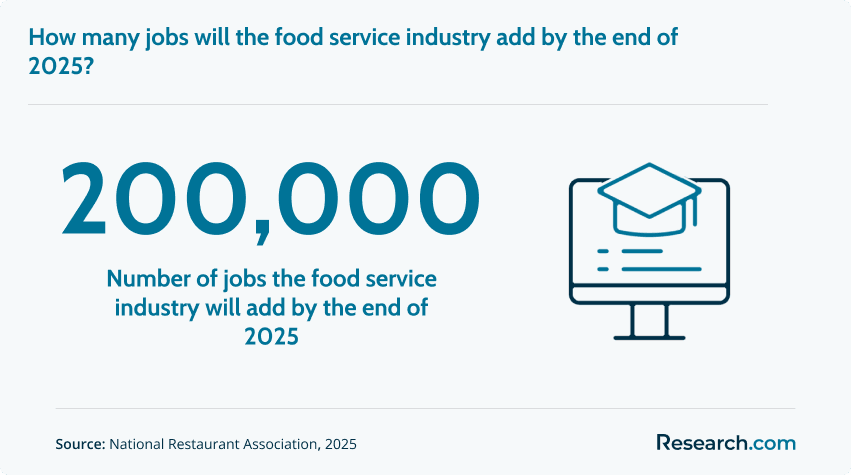
Nationally, the restaurant industry is projected to reach $1.5 trillion in sales by 2025, with an expected addition of 200,000 jobs, bringing total employment in the sector to 15.9 million by the end of that year. Earlier industry discussions also noted the restaurant industry expected to grow by $1 trillion in sales by 2025, underscoring why many schools continue to emphasize restaurant leadership and operational training.
Global market outlook
Globally, the foodservice industry is projected to grow by 16.5% in 2023, reaching a value of $3.6 trillion. This growth surpasses pre-pandemic levels and shows the continued importance of foodservice across markets.
In 2023, the global foodservice industry generated revenues of $4.33 trillion, with a compound annual growth rate (CAGR) of 1.5% from 2018 to 2023. The Asia-Pacific region held the largest market share at 37.5%, closely followed by North America at 37.2%.
Career outlook considerations
The restaurant industry’s size supports many roles, including restaurant manager, general manager, food and beverage director, event coordinator, catering manager, hospitality consultant, and entrepreneur. Still, graduates should not assume that a degree alone guarantees a high-paying job. Employers often look for evidence of reliability, service judgment, scheduling ability, cost control, and leadership under pressure.
Labor shortages remain a challenge in parts of the industry. Five years after the onset of the COVID-19 pandemic, the restaurant industry continues to face staffing shortages, especially among experienced workers. Some employees have moved to other industries in search of stability, benefits, or different working conditions. For graduates, this can create opportunity, but it also means managers must be prepared to recruit, train, retain, and motivate teams effectively.
Key insights
- A restaurant management degree is most valuable when it combines business fundamentals with internships, food service operations, technology, and leadership practice.
- Students should compare total cost, not only tuition. Public in-state options can be much less expensive, but scholarships, transfer credits, and living costs can change the final price.
- The median salary for food service managers is $63,060 per year, but actual pay depends heavily on experience, market, employer type, restaurant volume, and management scope.
- Associate degrees can support faster entry into the field, while bachelor’s degrees may offer broader preparation for management, hotel dining, corporate hospitality, or entrepreneurship.
- An MBA is usually best for experienced hospitality professionals seeking strategic, regional, corporate, or ownership roles—not necessarily for beginners who still need restaurant operations training.
- Accreditation, internship access, employer partnerships, and career services should carry more weight than rankings alone.
- Digital ordering, analytics, sustainability, labor challenges, and customer experience technology are changing what restaurant managers need to know.
- The best program is the one that matches your career goal, budget, schedule, and preferred segment of hospitality—not simply the most recognizable school name.
References:
- Data USA. (n.d.). Hospitality management. Data USA.
- Education Data Initiative. (2024). Average cost of college. Education Data.
- National Restaurant Association. (2025). Restaurant industry poised for growth in 2025: Industry expected to employ 15.9 million people and rise in demand for restaurant meals. National Restaurant Association.
- U.S. Bureau of Labor Statistics. (2024, March 4). Food service managers. U.S. Department of Labor.
- Zippia. (2024). Restaurant manager job description. Zippia.
Other Things You Should Know About Restaurant Management Degree Programs
Students should consider factors like a school's curriculum, faculty expertise, internship opportunities, and graduate success rates when choosing a restaurant management school. Accreditation and industry partnerships can also be crucial for ensuring a high-quality education and smoother transition into the industry post-graduation.
Graduates of restaurant management schools in 2027 can pursue careers as restaurant managers, food service directors, or culinary consultants. Advanced positions may include roles like hospitality executives or franchise owners, offering diverse opportunities in the hospitality industry.


