2027 Best Online MBA Concentrations for Career Growth

Co-Founder and Chief Data Scientist
Many professionals face uncertainty when selecting an online MBA concentration that will enhance their career prospects amid rapidly changing industries. Without clear guidance, they risk investing time and money in specializations that may not align with market demand or personal goals. This challenge affects those shifting from unrelated academic backgrounds seeking a flexible and accredited pathway to meaningful advancement. Understanding which concentrations offer the best return on investment can significantly impact career growth and job security. This article explores the top online MBA concentrations, providing insight to help prospective students make informed choices that align with evolving professional landscapes.
Key Things You Should Know
- Online MBA concentrations in data analytics, healthcare management, and technology continue to drive career growth, reflecting a 20% rise in demand across U.S. industries by 2025.
- Choosing a specialty aligned with high-growth sectors can increase salary potential by up to 30%, according to recent labor market analyses.
- Flexible online MBA programs with industry partnerships enhance networking and practical experience, crucial for career advancement in competitive job markets.
What MBA concentrations offer the best career growth and salary potential?
Finance, technology management, and healthcare management represent some of the best MBA concentrations for career advancement with impressive salary growth. Finance continues to lead as the highest paying concentration, exemplified by Warwick Business School's online MBA graduates earning an average salary of $214,141 three years post-graduation, according to Financial Times Online MBA Ranking via find-mba.com. This specialization targets roles in investment banking, corporate finance, and private equity, where robust quantitative skills foster rapid career progress.
Technology management is rising swiftly as organizations focus on digital transformation. Concentrations such as data analytics, cybersecurity, and IT leadership prepare graduates for executive positions like chief information officer or product manager. Salaries in tech management MBAs generally exceed general management tracks by 15%-25% within five years.
Healthcare management remains lucrative due to expansions in healthcare delivery and biotech, training graduates for leadership in hospital administration, health policy, and pharmaceutical business units. Increasing regulatory complexity supports salary growth in this sector.
Emerging fields include supply chain management and entrepreneurship. Supply chain MBAs address global logistics with salaries climbing as companies optimize operations. Entrepreneurship concentrations attract ambitious professionals, though income varies with business success.
Choosing the highest paying MBA concentrations in the US requires aligning specialization with market demand, personal skills, and long-term goals. Prospective students can also explore cheapest and easiest online MBA programs to balance cost and career potential.
How do online MBA programs compare to traditional campus-based formats?
Online MBA program benefits compared to traditional formats are significant for many working professionals and career changers. These programs offer comparable academic rigor and curriculum flexibility while allowing students to balance education with ongoing employment. This flexibility reduces opportunity costs and enables real-time application of newly acquired skills.
Campus-based vs online MBA program career outcomes vary, but online students often gain access to diverse cohorts unrestricted by geography, enhancing peer learning and networking opportunities. However, traditional formats tend to provide stronger in-person engagement, spontaneous collaboration, and access to on-campus recruiting events. Prospective students should consider their learning style and career goals carefully when choosing between formats.
Specialized concentrations, such as marketing, demonstrate clear career benefits regardless of delivery method. For example, Santa Clara University's online MBA alumni with a marketing concentration report median salaries over $150,000 and enjoy connections to Silicon Valley networks, which support placements in high-growth tech firms. This shows that online programs linked to robust industry ecosystems can rival or even surpass campus-based career outcomes.
To address concerns about networking and recruiting in online environments, students should actively participate in virtual events, alumni networks, and internships. Accreditation and faculty expertise are also vital to ensuring the quality of education across formats. Those exploring programs may find useful information in lists of online MBA accredited by AACSB, which highlight recognized credentials and affordability.
What accreditation standards should you verify when choosing an online MBA program?
Verify regional and specialized accreditation when evaluating any online MBA program accreditation criteria to ensure academic quality and employer recognition. The top regional accrediting bodies in the U.S. include the Higher Learning Commission (HLC), Middle States Commission on Higher Education (MSCHE), and Southern Association of Colleges and Schools Commission on Colleges (SACSCOC). They certify an institution's overall academic standards.
For business-specific accreditation, check if the program is accredited by the Association to Advance Collegiate Schools of Business (AACSB), Accreditation Council for Business Schools and Programs (ACBSP), or International Accreditation Council for Business Education (IACBE). Among these, AACSB accreditation is the most prestigious, awarded to fewer than 5% of business schools, reflecting demanding faculty qualifications and rigorous curricula.
Specialized accreditations play a vital role in validating curriculum relevance, faculty expertise, and measurable learning outcomes, directly influencing career advancement. For instance, programs with AACSB accreditation offering data science or analytics concentrations tend to equip students with skills that lead to higher salary growth. Graduates in these fields report 45% greater salary increases compared to general MBA holders, with average earnings of $165,000 within two years of graduation, according to the Poets&Quants 2025 Online MBA Career Impact survey.
Prospective students should assess whether the program's accreditation aligns with their career ambitions, whether faculty are experts in their area of focus, and if the curriculum stays current with industry trends. Neglecting these factors can limit employer acceptance and reduce post-MBA salary potential. Always verify accreditation directly via school websites and the U.S. Department of Education's database to avoid unrecognized degrees or diploma mills.
When researching options, consider exploring the cheapest EMBA programs as well to balance cost with quality. This approach ensures you find an affordable, accredited pathway that supports your professional goals in the competitive business landscape.
Which MBA concentrations align with high-demand job markets and industries?
High-demand job markets closely align with MBA concentrations linked to growing industry sectors such as technology management, healthcare administration, finance, and entrepreneurship. Technology management addresses the increasing need for leaders who blend business strategy with cutting-edge digital tools like AI and cybersecurity. Healthcare administration remains crucial amidst the U.S. healthcare sector's expansion due to aging demographics and heightened regulatory demands, requiring skilled managers to improve operations and compliance.
Finance specializations continue to align with investment banking, corporate finance, and fintech sectors, driven by rising demand for data-focused decision-making and regulatory expertise. These roles have shown consistent growth and offer lucrative career opportunities. Meanwhile, entrepreneurship-focused mba programs provide the most significant career impact, delivering a 50% return on investment within three years, according to the UNC Online MBA Salary Guide 2025. Alumni of these programs often launch startups securing a median funding of $2.5 million.
Specific roles such as digital product management, healthcare consulting, financial risk analysis, and startup leadership illustrate how these concentrations support career advancement. For students considering the most in-demand MBA specializations for regional job markets, factoring in emerging fields like sustainable business practices and data analytics can provide a competitive edge.
Strong MBA career alignment results from targeting sectors with ongoing investment and innovation. Graduates benefit most by selecting concentrations that sharpen their ability to tackle sector-specific challenges, whether optimizing patient outcomes or managing financial portfolios, to improve both job security and growth. For flexible options, many consider pursuing an MBA online no GMAT to enter these fields.
What are the typical admission requirements and prerequisites for online MBA programs?
Admission to online MBA programs typically requires a bachelor's degree from an accredited institution, a competitive undergraduate GPA (usually above 3.0), and relevant professional experience, often two to five years. Applicants are expected to submit a detailed resume highlighting career progression and leadership roles. Many programs ask for standardized test scores such as the GMAT or GRE, though an increasing number waive these requirements for candidates with significant managerial experience or advanced degrees. Letters of recommendation, typically from supervisors or academic mentors, may also be requested to validate candidates' capabilities and potential for success.
Prerequisites often include foundational coursework in business-related subjects like accounting, finance, statistics, and economics. Those without this background might need to take bridge courses before or alongside the core curriculum. Demonstrated strategic decision-making or supervisory experience can strengthen applications, especially for concentrations in leadership or management. Data shows that 75% of University of Michigan Ross Online MBA alumni focusing on these areas report promotions during or soon after their studies, illustrating the value of relevant work experience.
Successful applicants usually prepare a personal statement or essay outlining career goals, leadership vision, and reasons for their chosen concentration. Interviews may be part of the process at more selective schools. International students often need to prove English proficiency through tests like TOEFL or IELTS. Early contact with admissions offices is recommended to clarify specific requirements.
How long does an online MBA take to complete, and what are typical costs?
Online mba programs generally require between 18 and 36 months to complete, depending on enrollment status and program design. Full-time students may finish within 18 to 24 months, whereas part-time learners often take up to three years. Accelerated tracks are available at some schools, enabling faster completion by taking additional courses each term or attending summer sessions. This flexibility supports working professionals balancing career and education but can also increase overall costs if extended timelines apply.
Total tuition for online MBA programs varies widely, typically from $20,000 to over $60,000. Public universities tend to offer more affordable options, especially for in-state students, while private institutions often have higher fees. Additional expenses may include technology charges, course materials, and exam proctoring fees. Prospective students should verify whether tuition covers specialized concentrations or requires extra payment.
Choosing an online MBA concentration that aligns with job market demand can enhance career prospects. For instance, a healthcare management concentration projects 28% job growth through 2032, outpacing general business roles by 12 percentage points, according to the US Bureau of Labor Statistics via OnlineMBA.com 2025 rankings. This suggests stronger opportunities and salary potential for graduates.
Evaluating personal goals, time availability, and finances is essential when selecting a program's duration and pricing. Students may also benefit from transfer credits or employer tuition assistance to reduce both costs and time commitments.
Employment Distribution of MBA Graduates by Industry in 2025 (in percentage)

What core and elective coursework is included in specialized MBA concentrations?
Specialized MBA concentrations blend core business fundamentals with electives that enhance skills in specific sectors. Core courses often include financial accounting, marketing management, organizational behavior, business strategy, and operations management, providing essential leadership skills and business acumen applicable across industries.
Electives vary by concentration, targeting practical and strategic expertise. For instance, a technology management focus might involve IT strategy, data analytics, innovation management, and cybersecurity. According to University of Florida's online MBA data, graduates in technology management see a 41% average salary increase to $126,535 within three years, supported by the program's STEM designation (findmbaonline.com).
Other common electives include supply chain logistics, healthcare policy, and financial modeling. Many programs also require a capstone project or consulting practicum, enabling students to apply knowledge to real-world business challenges.
Students should align electives with career objectives, such as:
- Investment analysis, risk management, and corporate valuation for finance professionals
- Venture capital, business planning, and innovation ecosystems for aspiring entrepreneurs
Choosing a concentration with relevant electives allows students to specialize while retaining the broad management perspective gained from core coursework, preparing them for diverse leadership roles.
What career roles and job titles do MBA graduates typically pursue by concentration?
Graduates with an MBA pursue varied career paths based on their concentration, each offering specialized roles matched to distinct skills. For finance, common positions include financial analyst, investment manager, corporate treasurer, and risk manager. Marketing graduates often become brand managers, digital marketing directors, or product development specialists, focusing on customer engagement and market expansion.
Operations and supply chain MBAs fill roles like supply chain manager, operations director, logistics coordinator, and procurement specialist. These roles are vital given ongoing global supply challenges. According to the OnlineMBA.com Specialization Rankings 2025, supply chain specialists earn about 35% more than generalists, with an average salary of $142,000.
Technology and information systems concentrations prepare students for jobs such as IT manager, data analyst, chief information officer, or cybersecurity consultant. Healthcare MBAs step into roles like healthcare administrator, hospital manager, or pharmaceutical project leader, combining clinical insight with business expertise.
Other common career options include entrepreneurship-focused positions like startup founder or venture capital analyst, and human resources roles such as HR manager or talent acquisition director. Executive-level jobs such as chief operating officer and management consultant are accessible across concentrations.
Choosing the right concentration can influence earning potential and career trajectory, with supply chain and operations currently offering strong salary advantages due to market demand.
How do employers evaluate online MBA credentials compared to traditional degrees?
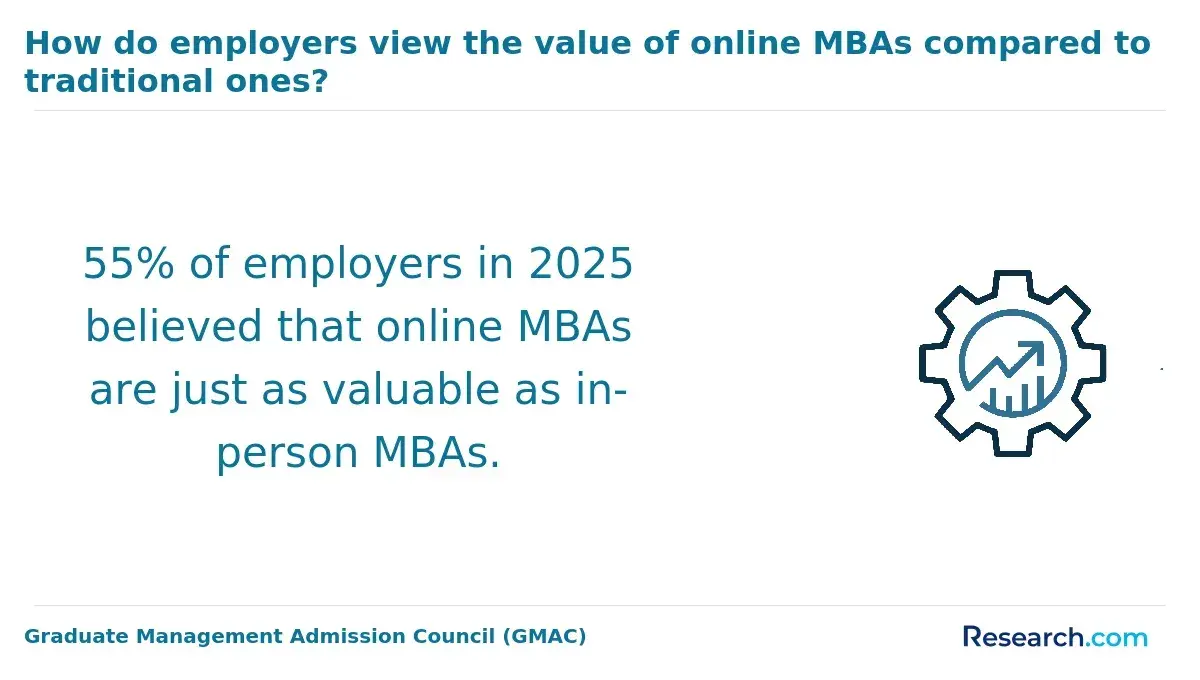
Employers primarily evaluate online MBA credentials based on the accreditation, reputation, and rigor of the program, not just the delivery method. A respected institution known for high academic standards often lends credibility to online MBA graduates. Many top schools offer online MBAs with curricula and faculty identical to their traditional programs, such as the International Business Concentration from IE Business School's Global Online MBA. Alumni report 36% salary growth and 92% international mobility, according to Financial Times via findmbaonline.com, demonstrating strong employer confidence.
Hiring managers focus on skills gained and real-world experience rather than whether the MBA was completed online. Successful completion of live case studies, internships, or group projects in online formats can be as valuable as traditional hands-on learning. Employers seek verified program completion and evidence of professional development to ensure the credential reflects mastery rather than convenience.
Industry differences matter: finance and consulting often favor traditional MBAs, while tech, healthcare, and international firms emphasize skills over format. Prospective students should research employer preferences and choose programs with robust alumni networks or corporate connections.
Working professionals can highlight salary increases, promotions, and positive outcomes supported by credible rankings or alumni testimonials to address employer concerns about the value of an online MBA.
What professional certifications or licensing requirements complement specific MBA concentrations?
Professional certifications significantly boost the value of MBA concentrations by validating expertise and enhancing career opportunities. For accounting students, obtaining Certified Public Accountant (CPA) licensing is often essential for advancing into leadership roles within finance. Those focusing on finance benefit from the Chartered Financial Analyst (CFA) credential, which deepens investment analysis skills and improves eligibility for senior positions. Project management concentrations align well with the Project Management Professional (PMP) certification, recognized worldwide for excellence in project delivery.
Healthcare management MBAs gain advantage through certifications like Certified Healthcare Financial Professional (CHFP) or Fellow of the American College of Healthcare Executives (FACHE), demonstrating specialized skills in healthcare finance and operations. Marketing focuses often complement their studies with digital marketing certifications, such as those from the American Marketing Association (AMA) or Google Analytics, to refine data-driven marketing strategies.
Sustainability and ESG concentrations see accelerated career growth, with graduates reporting 32% faster promotion rates and average salaries near $155,000, driven by corporate net-zero goals. Relevant credentials include Sustainability Accounting Standards Board (SASB) and Global Reporting Initiative (GRI) certifications, solidifying expertise in environmental, social, and governance matters. IT-focused MBAs can enhance their qualifications with Certified Information Systems Security Professional (CISSP) or Certified Information Systems Auditor (CISA) certifications, which emphasize IT governance and risk management leadership.
Other Things You Should Know About MBA
Online MBA programs are widely recognized by employers, especially when the program is accredited by reputable agencies. Graduates from well-established online MBAs generally receive the same consideration as those from traditional programs. The growing acceptance reflects the quality and flexibility modern online education delivers to working professionals.
Yes, an MBA is designed to equip students with versatile business skills applicable across industries. Many individuals use an MBA to transition into new fields by selecting concentrations aligned with their career goals. The degree also enhances leadership abilities and strategic thinking, which are valuable in diverse roles.
In 2027, Technology Management is expected to offer substantial career growth potential for online MBA students. As digital transformation continues to reshape industries, expertise in this area will be invaluable, providing opportunities in leadership roles tied to technology integration and innovation across various sectors.
Specializing in a concentration can improve job prospects by demonstrating expertise in a specific business area. MBA concentrations help graduates stand out in competitive markets and often align with roles requiring targeted skills. However, general management skills gained in an MBA remain valuable across many industries.
References
- 12+ Certification Courses For MBA Aspirants! https://unstop.com/blog/12-much-needed-certification-courses-for-mba-aspirants
- Online MBA vs Campus MBA Program - Which one to choose https://rcu.education/online-mba-vs-campus-mba-programs/
- Most Popular MBA Specializations https://www.princetonreview.com/business-school-advice/popular-mba-specializations
- What Accreditations Should One Look for Before Enrolling in an Online MBA Program? - Finance, Tech & Analytics Career Resources | Imarticus Blog https://imarticus.org/blog/what-accreditations-should-one-look-for-before-enrolling-in-an-online-mba-program/
- MBA Alternative Courses vs. Professional Certifications: Which Path Offers More Value? - GRMI https://grm.institute/blog/mba-alternative-courses-vs-professional-certifications/
- Add-On Certification Courses to Boost MBA Career Growth https://www.ipeindia.org/add-on-certification-courses-after-mba-career-growth/
- Best Online MBA Specializations in 2025 | IIMRT Distance Education https://www.iimrtedu.com/blogs/the-most-in-demand-online-mba-specializations-in-2025
- MBA Curriculum Breakdown: Core Courses, Electives, and Specializations | Articles | Unimy https://www.unimy.com/article/mba-curriculum-breakdown-core-courses-electives-and-specializations
- Top 15 Online MBA Specializations for Career Growth - Blog https://manavrachnaonline.com/blogs/top-15-online-mba-specializations-for-career-growth/
- Highest Paying MBA Specializations: Top Careers, Roles & Salaries https://testbook.com/mba-entrance-exams/highest-paying-mba-specializations