2027 Is an Online MBA Worth It? Salary & Job Data

Co-Founder and Chief Data Scientist
An online MBA can be a strong career investment, but it is not automatically the right move for every professional. The real question is whether the degree can help you reach a specific outcome: a promotion, a move into management, a career change, a stronger professional network, or a higher salary that justifies the cost.
Because online MBA programs vary widely in price, admissions standards, career support, brand recognition, flexibility, and student profile, salary outcomes also vary. A lower-cost program may produce excellent value for a working professional who earns a promotion, while a more expensive program may make sense for someone targeting consulting, finance, technology leadership, or a major career pivot.
This guide explains what online MBA graduates can reasonably expect in terms of salary growth, job options, industry differences, networking value, return on investment, and the role of prior work experience. Use it to evaluate whether an online MBA fits your career plan before you commit time, money, and effort.
Key Benefits of Knowing Whether an Online MBA Program is Worth It Based on Salary and Job Data
- Informed financial planning: Understanding potential salaries helps you budget for tuition, living expenses, and loan repayment.
- Career alignment: Salary and job data show which industries or roles offer the best return on investment, helping you target the right opportunities.
- Risk reduction: Knowing expected outcomes reduces the chance of investing in a program that doesn’t improve your career prospects.
- Goal setting and motivation: Clear data on job outcomes and earning potential can guide your career trajectory and keep you focused on long-term objectives.
How much can graduates of online MBA programs expect to earn?
Online MBA salaries depend heavily on the graduate’s pre-MBA experience, industry, job function, location, employer, and the reputation and network of the program. The degree can improve earning potential, but it does not create the same salary outcome for every student.
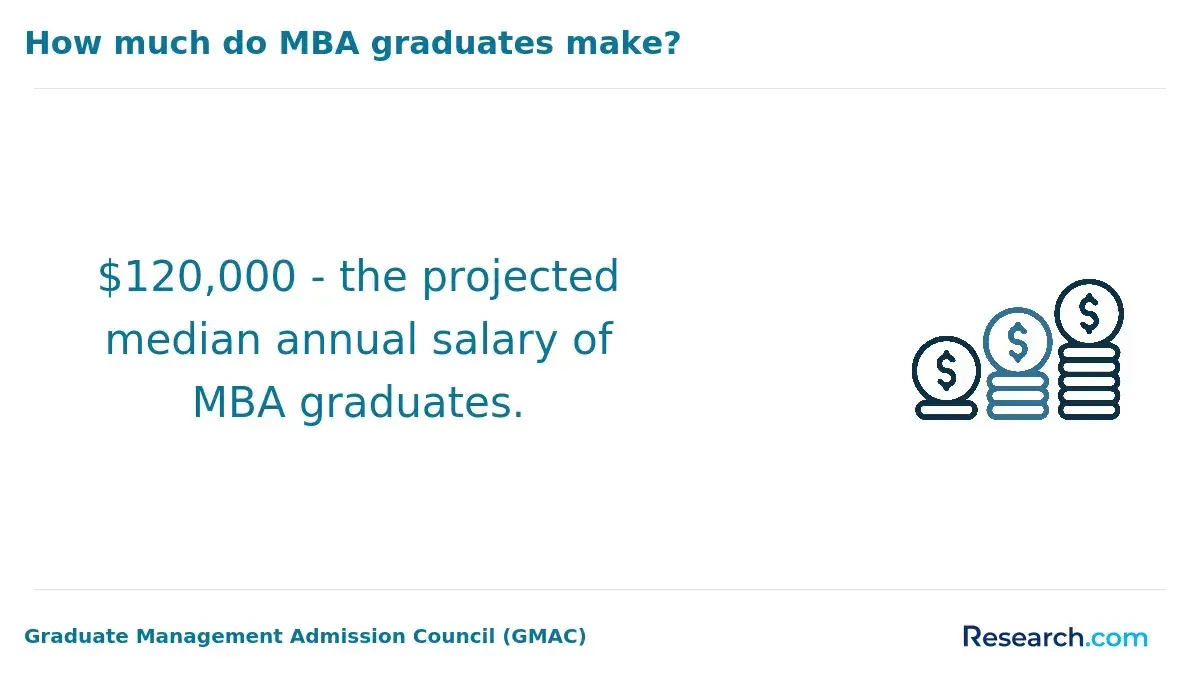
As a general range, entry-level roles may start in the $70,000–$90,000 range, while mid-career professionals can see salaries well over $120,000 annually. Senior leadership positions often exceed $150,000, especially when the graduate already has substantial management experience or moves into a high-paying sector.
The most important salary question is not simply “How much do MBA graduates earn?” It is “How much more could I realistically earn compared with my current path?” A professional already earning a high salary may need a larger post-MBA increase to justify the investment, while someone using the MBA to move into management may see value through faster advancement, broader responsibilities, and long-term earning growth.
Cost also matters. Programs described as inexpensive MBA programs can still offer strong value when they provide relevant coursework, credible accreditation, practical faculty experience, and access to networking or career resources. A lower tuition bill can improve return on investment, but only if the program supports the student’s intended career outcome.
Before enrolling, compare expected salary outcomes with total program cost, time to completion, employer tuition support, and the opportunity cost of studying. The strongest financial outcomes usually come from matching the program to a clear target role rather than choosing an MBA only because it is flexible or affordable.
Does an online MBA lead to higher salary growth compared to not having an MBA?
An online MBA can lead to higher salary growth than remaining with only a bachelor’s degree or work experience, particularly for professionals moving into management, strategy, finance, consulting, operations, product, or executive-track roles. The degree can signal business training, leadership preparation, and commitment to advancement. However, salary growth is not guaranteed; it depends on how well the MBA connects to the graduate’s career path.
The strongest gains often occur when students use the program to solve a specific career barrier. Examples include qualifying for leadership roles, moving from a technical role into business management, changing industries, building finance or analytics skills, or gaining access to a stronger alumni and employer network.
Available data suggests that MBA and graduate management education can be associated with meaningful income gains:
- According to GMAC’s 2023 Enrolled Students Survey, those enrolled in graduate business education reported a 33% increase in median base salary after completing their program.
- GMAC’s Corporate Recruiters Survey for 2024 found that MBA graduates’ median starting salaries are about 1.75× higher than those for bachelor’s degree holders in the U.S.
- From a broader GMAC survey, GME graduates, which includes MBA graduates, globally reported a median total compensation increase of ~29%.
- According to BusinessBecause, 68% of MBA graduates say their MBA supported their financial goals, and many report large gains in earnings.
- Specifically for online MBAs, BusinessBecause reports that graduates from online MBA programs saw about a 44% salary increase, based on a comparison of pre- and post-MBA pay.
These figures are useful benchmarks, but prospective students should avoid assuming they will automatically match them. A student already in a strong management role may experience a different salary lift than someone using the MBA to enter a new function. Employer demand, geography, negotiation, prior leadership experience, and school network all affect the result.
A practical way to evaluate the degree is to compare three scenarios: your likely salary path without an MBA, your likely salary path with a low-cost online MBA, and your likely salary path with a higher-cost or more selective program. The best choice is the one that improves your career options enough to justify the cost and time.
How does industry choice impact salary after an online MBA?
Industry choice is one of the biggest drivers of salary after an online MBA. The same degree can produce very different compensation depending on whether a graduate enters finance, consulting, technology, healthcare, manufacturing, nonprofit leadership, or the public sector.
Higher-paying industries often reward MBA graduates for analytical ability, strategic planning, revenue impact, and leadership under pressure. Other industries may offer lower compensation but stronger mission alignment, stability, public impact, or specialized leadership experience.
- Finance and consulting: These are often among the highest-paying paths for MBA graduates. Roles in investment banking, corporate finance, private equity support, management consulting, and strategy consulting may offer strong compensation, but they can also be competitive and demanding.
- Technology: Technology companies value MBA graduates in product management, business operations, partnerships, analytics, strategy, and growth roles. Compensation can be competitive, especially for professionals who combine business training with technical fluency.
- Healthcare and pharmaceuticals: MBA graduates may pursue leadership roles in administration, operations, strategy, finance, or healthcare innovation. Salary growth can be strong, especially for professionals who understand regulation, patient systems, and organizational complexity.
- Manufacturing and operations: These roles often focus on productivity, supply chain performance, quality, logistics, and process improvement. Salary growth may depend on plant, regional, or enterprise-level management responsibility.
- Nonprofit and public sector: Salaries tend to be lower than in many private-sector roles, but graduates may gain leadership experience, mission-driven work, policy exposure, and networks that can support future advancement.
The best industry choice is not always the one with the highest starting salary. Consider total compensation, work-life expectations, advancement speed, job stability, geographic flexibility, and whether the industry values online MBA credentials. If salary growth is the main goal, target industries and functions with clear demand for MBA-level skills before choosing a program.
Are there differences in career outcomes between part-time and full-time online MBA students?
Yes. Part-time and full-time online MBA students can both improve their career prospects, but they often do so in different ways. The right format depends on whether the student’s priority is speed, flexibility, income continuity, or career change.
- Full-time online MBA students: These students may be able to move faster because they can devote more time to coursework, career planning, internships, projects, and networking. This format can be helpful for students seeking a significant career pivot or faster transition into a new function.
- Part-time online MBA students: These students usually continue working while enrolled. That can reduce opportunity cost, preserve income, and allow immediate application of new skills at work. Salary growth may happen gradually through promotions, expanded responsibilities, or post-graduation moves.
The trade-off is straightforward: full-time study may create more room for a rapid transition, while part-time study offers continuity and lower career disruption. For working professionals with family responsibilities, employer tuition support, or a strong current role, part-time study may be the more realistic and financially sensible option.
Career changers should examine whether a part-time format provides enough career support, experiential learning, and networking access to make the pivot. Career advancers should ask whether the schedule allows them to perform well at work while completing the degree. In both cases, outcomes depend less on the label and more on how actively the student uses the program’s resources.
How long does it typically take to see a return on investment from an online MBA?
The return on investment timeline for an online MBA depends on total cost, salary increase, promotions, employer tuition support, and whether the student changes into a higher-paying role. Many graduates recoup their tuition and related expenses within 3 to 5 years through higher salaries and promotions, but the timeline can be shorter or longer depending on the circumstances.
Students entering higher-paying areas such as finance, consulting, or technology may reach ROI faster if the MBA helps them move into better-compensated roles. Graduates in nonprofit, public sector, education, or mission-driven organizations may take longer to recover the cost financially, though they may value the degree for leadership access, stability, or career flexibility.
To estimate ROI before enrolling, consider:
- Total program cost: Include tuition, fees, books, travel for residencies if required, and technology costs.
- Lost income or reduced hours: Full-time students or students who scale back work should account for income changes during the program.
- Expected salary increase: Use realistic outcomes based on your current role, target industry, and program employment data.
- Employer support: Tuition reimbursement can meaningfully reduce the amount you need to recover after graduation.
- Career services and network: Strong placement support can shorten the time between graduation and a higher-paying opportunity.
Choosing an AACSB accredited MBA may strengthen employer confidence because AACSB accreditation is widely recognized in business education. Accreditation alone does not guarantee a salary increase, but it can be an important quality signal when comparing programs.
A faster ROI usually comes from combining a reasonable program cost with a clear career plan. If the program is expensive and the expected salary increase is uncertain, the financial risk is higher. If the program is affordable, reputable, and aligned with a realistic promotion or job move, the degree may pay off more quickly.
What Role Do Networking Opportunities Play in Job Placement After an Online MBA?
Networking can be one of the most important parts of an online MBA, especially for job placement, promotion, and career change. Many strong opportunities come through referrals, alumni introductions, faculty connections, project teammates, and informal conversations rather than public job postings alone.
Online students should not assume networking will happen automatically. Because the format is remote, students often need to be more intentional about building relationships. The best programs create structured ways to connect through live classes, group projects, virtual events, alumni panels, career workshops, student organizations, and optional residencies.
Effective networking can help online MBA students:
- Learn which employers value MBA graduates in their target function.
- Get referrals for roles that may not be widely advertised.
- Understand salary expectations and hiring timelines in a specific industry.
- Find mentors who can explain promotion paths or career-change strategies.
- Build credibility with classmates who may later become colleagues, clients, founders, or hiring managers.
Students comparing programs should ask specific questions about networking access. How active is the alumni network? Are online students included in the same career events as other MBA students? Are there industry-specific groups? Do faculty and career coaches help students make introductions? A program with a strong network can provide value well beyond the coursework.
Are certain schools’ online MBAs more likely to boost salaries than others?
Yes. School choice can influence salary outcomes because employers may respond differently to program reputation, selectivity, alumni network, career services, and the professional profile of admitted students. However, a school name by itself does not guarantee a salary increase. Outcomes depend on the student’s experience, target industry, location, and how effectively they use the program.
Some program-reported or publicly cited examples show substantial salary gains among online MBA graduates:
- Carnegie Mellon University (Tepper): Graduates saw a salary jump of $57,728, or 63%, with post-MBA pay averaging $149,773.
- University of Washington (Foster): Foster online MBA alumni reported an average increase of $42,234, taking their post-MBA salary to about $155,167.
- University of North Carolina (Kenan-Flagler): Their online MBA alumni reported a salary increase of about $35,684.
- University of Minnesota (Carlson – Online MBA): According to their employment report, the mean post-graduation base salary for online MBA graduates is $114,112, based on program-reported data.
The takeaway is that well-recognized schools may provide stronger salary momentum, especially when they combine a respected brand with active career support and a high-quality peer network. But these programs may also cost more, so students should evaluate net value rather than reputation alone.
When comparing schools, look beyond the advertised salary figure. Ask whether salary data reflects all graduates or only respondents, whether bonuses are included, what industries graduates enter, how much experience students had before enrolling, and whether outcomes align with your own background. A high average salary may be less useful if it is driven by students who already had senior-level experience before starting the program.
How does previous work experience affect post-MBA salary outcomes?
Previous work experience has a major effect on post-MBA salary because employers typically pay for a combination of education, skills, leadership record, and industry knowledge. An online MBA can strengthen a candidate’s profile, but it usually works best when layered on top of meaningful professional experience.
Professionals with several years of relevant experience often see stronger outcomes because they can connect MBA coursework to real business problems. Those with managerial or leadership experience may be especially competitive for roles involving strategy, people management, budgeting, operations, or executive decision-making.
Professionals with limited experience can still benefit from an MBA, but the early salary lift may be smaller. For these students, the degree may function more as a long-term accelerator than an immediate ticket to senior management. They may need to build experience through projects, internships, internal stretch assignments, or entry-level management roles before seeing larger compensation gains.
Admissions requirements can also shape the student profile. Programs such as online MBA without GMAT options may appeal to working professionals who want a more accessible admissions pathway. Applicants should still evaluate whether they have enough work experience to benefit from the curriculum and compete for the roles they want after graduation.
A useful rule is to ask what the MBA will add to your existing resume. If it fills a clear gap, such as financial knowledge, leadership training, strategic thinking, or business credibility, it may improve salary potential. If your career goal requires experience you do not yet have, the MBA should be paired with a plan to gain that experience during or soon after the program.
Is an online MBA worth it for career changers or those looking to advance in their current field?
An online MBA can be worth it for both career changers and career advancers, but the value proposition is different for each group. The degree is strongest when it is tied to a specific career move rather than pursued as a general credential.
- Career changers: An online MBA can provide business fundamentals, a recognized credential, and access to new networks. It may help professionals move into fields such as finance, consulting, technology, healthcare administration, operations, or product management. Career changers should prioritize programs with strong coaching, alumni access, experiential projects, and employer connections in the target industry.
- Career advancers: Professionals staying in their field may use the MBA to move from individual contributor to manager, from manager to director, or from functional leadership to broader strategic responsibility. In this case, the degree can help strengthen finance, leadership, analytics, communication, and decision-making skills while preserving employment continuity.
For career changers, the main risk is assuming the degree alone will replace industry experience. A successful pivot often requires targeted electives, networking, internships or projects, and a clear explanation of transferable skills. For career advancers, the main risk is choosing a program that does not align with promotion criteria at their current employer or industry.
The best candidates for an online MBA usually have a defined goal, enough work experience to apply the material, and a plan for using the network and career resources. If the program’s cost, format, reputation, and outcomes match that plan, an online MBA can be a practical path to higher earning potential and stronger long-term career mobility.
Other Things You Should Know About Job and Salary Data for Online MBA Graduates
The cost of an online MBA directly impacts its return on investment. Programs with higher tuition may offer stronger brand recognition, larger alumni networks, and access to high-paying roles, but inexpensive programs can still provide substantial career benefits. Evaluating post-MBA salary potential against program cost helps determine if the degree is financially worthwhile. Scholarships, employer tuition reimbursement, and part-time options can also improve overall value.
Yes, many online MBA graduates experience comparable promotions and career advancement as traditional students. Employers increasingly recognize the rigor and credibility of online programs, especially from accredited schools. Success depends largely on how graduates leverage their new skills, network, and prior work experience. Participation in leadership projects and virtual networking can enhance promotion opportunities.
In 2027, online MBAs increasingly offer robust networking opportunities. Many programs provide virtual career fairs and access to a wide network of alumni and recruiters, similar to traditional MBAs. However, some employers may still perceive on-campus networking as more valuable.
References
- Allen, N. (2020. November 15). Online MBA Programs With The Best Salary Outcomes. Poets & Quants.
- Carnegie Mellon University - Tepper School of Business. (2023). Compensation Highlights. CMU.
- Garner, B. (2022, March 2). MBA ROI: 9 In 10 Graduates Say Business School Delivers Strong Returns. Business Because by GMAC.
- Graduate Management Admission Council (GMAC). (2023, September). 2023 Enrolled Students Survey: Summary Data Report. MBA.com.
- Graduate Management Admission Council (GMAC). (2022, September 14). Business School Students in High Demand: Nearly 9 in 10 Landed Jobs Prior to Graduation. GMAC.
- Graduate Management Admission Council (GMAC). (2024). Corporate Recruiters Survey 2024 Regional Profile | United States. GMAC.
- Wise, L. (2023, May 16). Is An Online MBA Worth The Money? Business Because by GMAC.