2027 How to Choose the Right Online MBA Program in the U.S.

Co-Founder and Chief Data Scientist
Choosing an online MBA is less about finding the “best” program overall and more about finding the program that fits your career goal, budget, schedule, and preferred way of learning. A strong online MBA can help working professionals build management, finance, analytics, leadership, and strategy skills without leaving their jobs. A poor fit, however, can lead to unnecessary debt, weak career support, or a learning format that is difficult to sustain.
The right choice depends on several practical questions: Is the school properly accredited? Does the curriculum support your target role or industry? Can you realistically manage the workload? Are the tuition and fees reasonable compared with the career support and outcomes? This guide walks through the main factors to compare so you can narrow your options with confidence and choose an online MBA program that supports your next professional move.
Key Benefits of Choosing the Right Online MBA Programs
- Better career advancement opportunities through a program that aligns with your industry and long-term goals.
- Higher return on investment by selecting a school with strong outcomes, reputable accreditation, and competitive tuition.
- Improved learning experience with courses, faculty, and technology that match your preferred learning style.
- Stronger professional network built through meaningful connections with classmates, alumni, and faculty.
What factors should I consider when choosing an online MBA program in the U.S.?
When comparing online MBA programs in the U.S., start with the factors that affect degree credibility, learning quality, cost, and career value. Rankings can be useful, but they should not replace a careful review of whether a program fits your professional goals and day-to-day realities.
The most important factors to evaluate include:
- Accreditation and school reputation: Confirm that the institution is accredited and that the business school has recognized business accreditation when possible.
- Curriculum and specializations: Look for courses and concentrations that match your target field, such as finance, marketing, analytics, entrepreneurship, healthcare management, or operations.
- Faculty background: Review whether instructors bring both academic qualifications and current business experience.
- Program format: Compare synchronous, asynchronous, and hybrid delivery based on your work schedule, learning style, and need for live interaction.
- Total cost: Look beyond tuition and include fees, books, technology costs, travel requirements, and the time you may need to invest away from work or family.
- Career services and alumni network: Determine whether online students receive access to coaching, employer connections, networking events, and alumni support.
- Student support and technology: Evaluate the learning platform, advising, tutoring, library access, technical support, and responsiveness of program staff.
A useful way to compare programs is to separate “must-have” factors from “nice-to-have” features. For example, if cost is your main constraint, you may prioritize accredited affordable MBA programs online. If you want to switch industries, career coaching, networking opportunities, and a relevant concentration may matter more than maximum scheduling flexibility.
How can I evaluate the curriculum to ensure it fits my career goals?
To evaluate an online MBA curriculum, compare what the program teaches with the skills your target roles require. A curriculum should do more than list standard business courses; it should show a clear path from foundational management knowledge to practical, career-relevant application.
Start by reviewing the core courses. Most MBA programs include business fundamentals such as accounting, finance, economics, marketing, operations, strategy, organizational behavior, and leadership. These courses are important if you want broad management preparation. However, if you already know your target area, the electives and specialization options may be just as important.
Look closely at these curriculum features:
- Core business coverage: Make sure the program builds a solid foundation in decision-making, financial analysis, strategy, communication, and leadership.
- Relevant specializations: Check whether the school offers electives or tracks aligned with your goals, such as business analytics, supply chain, human resources, international business, or entrepreneurship.
- Applied learning: Prioritize programs with capstone projects, case studies, simulations, consulting projects, or portfolio-based assignments that let you practice solving business problems.
- Industry relevance: Review course descriptions for current topics, tools, and methods used in modern organizations.
- Customization: Determine whether you can choose electives freely or whether the curriculum is mostly fixed.
- Experiential options: If internships, consulting labs, global projects, or employer-sponsored projects are available, confirm whether online students can participate.
A good curriculum fit should be easy to explain: “This program helps me move toward this role because it teaches these specific skills.” If that connection is unclear, the program may still be reputable but not the best match for your goals.
How important is accreditation, and which accrediting bodies matter most?
Accreditation is essential when choosing an online MBA because it helps verify that the school and program meet recognized academic standards. It can affect employer perception, transferability of credits, financial aid eligibility, and the long-term value of the degree. An online MBA should never be evaluated only by convenience or price; accreditation is one of the first quality checks to complete.
There are two levels to review. First, confirm that the university itself is institutionally accredited. Second, check whether the business school or MBA program holds specialized business accreditation. For business programs in the U.S., the three accrediting bodies most often discussed are:
- AACSB (Association to Advance Collegiate Schools of Business): widely regarded as the most prestigious and internationally recognized business accreditation.
- ACBSP (Accreditation Council for Business Schools and Programs): emphasizes teaching quality, student learning, and outcomes-focused business education.
- IACBE (International Accreditation Council for Business Education): focuses on mission-based, outcomes-driven business programs.
If you are comparing similarly priced programs, business accreditation can be a strong differentiator. Programs recognized as AACSB MBA programs may be especially appealing for students who want broad employer recognition, academic rigor, or future access to doctoral study. Still, accreditation should be considered alongside curriculum fit, cost, support, and career outcomes rather than as the only selection factor.
What should I look for in faculty credentials and teaching experience?
Faculty quality matters because online MBA students rely heavily on instructors to connect business theory with real workplace decisions. Strong faculty members should be academically prepared, professionally relevant, and effective in an online classroom.
When reviewing faculty profiles, look for evidence of both expertise and engagement:
- Academic qualifications: Faculty should hold advanced degrees, such as MBA or doctoral degrees, in fields related to the courses they teach.
- Professional experience: Executive leadership, consulting, entrepreneurship, board service, or industry roles can help instructors bring practical insight into class discussions.
- Current scholarship or practice: Publications, research, industry projects, or professional certifications may show that faculty remain active in their fields.
- Online teaching experience: Teaching online requires different skills from teaching in person. Look for faculty who use discussion boards, live sessions, multimedia tools, timely feedback, and applied assignments effectively.
- Student access: Check whether instructors offer virtual office hours, respond promptly, provide meaningful assignment feedback, and participate in discussions.
Do not assume a well-known school automatically provides strong faculty interaction in every online course. Ask admissions representatives how courses are staffed, whether full-time faculty teach online MBA students, and how much direct contact students typically have with instructors.
How can I determine whether a program offers strong career support and job placement outcomes?
Career support is one of the clearest signs that an online MBA program is designed for professional advancement rather than only course completion. This is especially important if you want to change industries, move into leadership, pursue a higher-paying role, or build a stronger professional network.
Look for career services that are available specifically to online MBA students, not only to on-campus students. Strong support may include:
- Career coaching: One-on-one advising to clarify goals, identify target roles, and build a job search strategy.
- Résumé and LinkedIn support: Help translating MBA coursework, leadership experience, and measurable achievements into employer-ready materials.
- Interview preparation: Mock interviews, case interview practice, salary negotiation guidance, and executive communication coaching.
- Employer access: Virtual career fairs, employer information sessions, internship or project connections, and recruiting partnerships.
- Alumni networking: Mentorship programs, alumni directories, regional events, and industry-specific networking groups.
- Outcome reporting: Publicly available information on employment, promotions, salary outcomes, or career advancement after graduation.
Be cautious if a program speaks generally about career success but does not explain what services online students receive. Ask direct questions: Are online MBA students eligible for the same career services as campus students? Are there dedicated MBA career advisors? Does the school publish job placement statistics, such as post-graduation employment rates and salary outcomes? How active is the alumni network in your target field?
How can I compare tuition, financial aid, and overall return on investment?
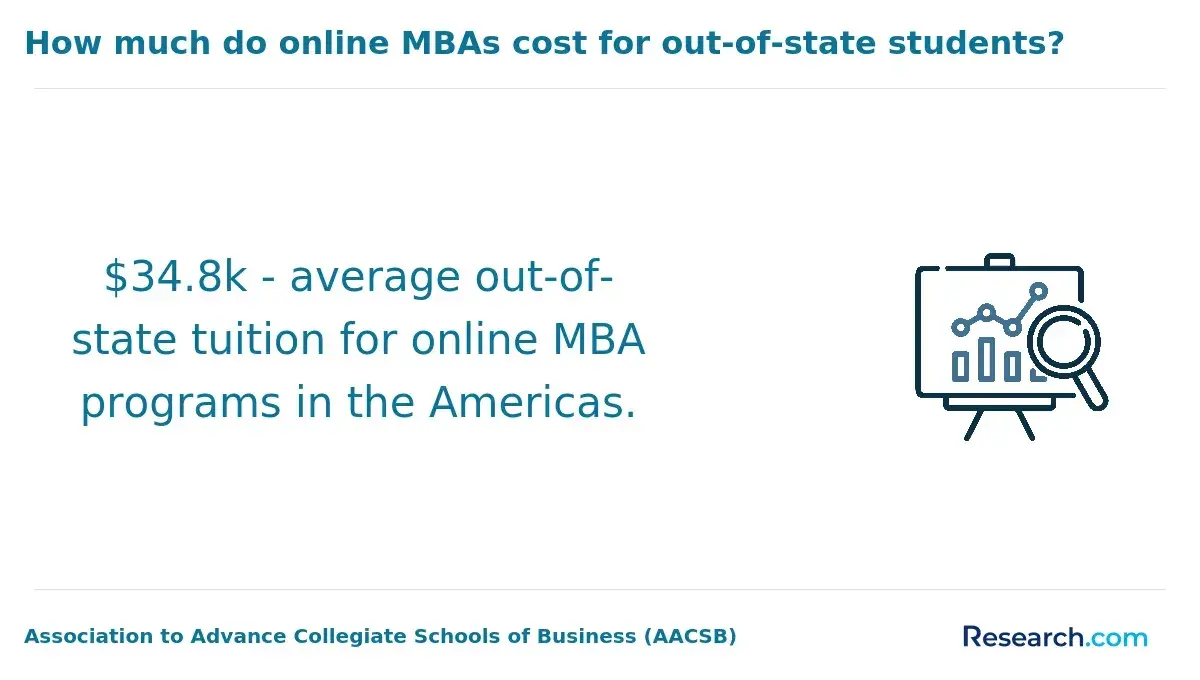
To compare the cost of online MBA programs, calculate the full price of earning the degree and then weigh that cost against the likely career value for your specific situation. The least expensive option is not always the best value, and the most expensive option is not automatically the strongest investment.
When comparing costs, include:
- Tuition: Determine whether tuition is charged per credit, per course, per term, or for the full program.
- Required fees: Account for technology fees, distance learning fees, graduation fees, student service fees, and other mandatory charges.
- Books and materials: Some programs require textbooks, software, case packets, or subscriptions.
- Residency or travel costs: If the program includes in-person residencies, immersions, or campus visits, estimate travel, lodging, meals, and time away from work.
- Financing options: Review scholarships, grants, federal financial aid eligibility, employer tuition reimbursement, veteran benefits, and payment plans.
Return on investment depends on your goals. A student pursuing a leadership promotion with employer reimbursement may evaluate ROI differently from a career changer paying entirely out of pocket. Consider whether the program can help you gain skills, credentials, professional connections, and credibility that support your next step.
Use the following questions to compare value:
- Will the degree help you qualify for roles you cannot reasonably access now?
- Does the school have strong career services for online MBA students?
- Are graduates reporting promotions, salary growth, or career transitions?
- Can you complete the program without taking on debt that feels disproportionate to your expected career benefit?
- Does the program’s brand or accreditation matter in your target industry or employer market?
If you are comparing executive-format programs, a best value executive MBA should balance cost, schedule, leadership focus, peer quality, and career outcomes rather than price alone.
How do student reviews and alumni outcomes help me assess program quality?
Student reviews and alumni outcomes can help you see how an online MBA performs in practice. Marketing materials usually highlight strengths, while reviews and graduate experiences may reveal issues such as limited faculty interaction, weak advising, unclear assignments, or poor networking opportunities. They can also confirm whether students feel supported and whether graduates see meaningful career progress.
Use reviews carefully. A single negative or positive comment should not drive your decision. Instead, look for patterns across multiple sources and compare those patterns with your priorities.
Pay attention to:
- Course quality: Do students describe the coursework as rigorous, current, and relevant to real business problems?
- Faculty engagement: Are instructors responsive, present in discussions, and helpful with feedback?
- Online learning experience: Is the platform reliable and easy to use? Are courses well organized?
- Student support: Do students report timely help from advisors, financial aid staff, career services, and technical support?
- Alumni career progression: Look for evidence of promotions, salary growth, leadership roles, or successful career changes after graduation.
- Networking value: Do students and alumni mention meaningful peer connections, mentorship, or access to professional communities?
Alumni outcomes are especially useful when they match your intended path. If you want to move into product management, healthcare administration, finance, consulting, or entrepreneurship, try to find graduates who pursued similar goals. Their experiences can help you judge whether the program’s strengths align with your own career plan.
How can I tell whether an online MBA program fits my schedule and lifestyle?
An online MBA is only a good fit if you can complete it consistently without sacrificing work performance, family responsibilities, or health. Before enrolling, compare the program’s flexibility with the actual time and energy you can commit each week.
Review these schedule and lifestyle factors:
- Course format: Asynchronous classes offer more control over when you study, while synchronous classes require live attendance at scheduled times.
- Weekly workload: Ask how many hours students typically spend on readings, lectures, assignments, discussions, exams, and group projects.
- Program pace: Compare part-time, full-time, accelerated, and self-paced options. A faster path may reduce time to graduation but increase weekly pressure.
- Term structure: Shorter terms may be intense, while longer semesters may provide more breathing room.
- Group work expectations: MBA programs often use team projects. Consider time zones, meeting availability, and collaboration tools.
- Residency requirements: Confirm whether any campus visits, immersion weekends, or travel experiences are required.
- Pause or leave policies: Understand what happens if work, health, caregiving, or financial circumstances interrupt your studies.
A practical test is to map a sample week. Include your job hours, commute, family responsibilities, exercise, sleep, and personal commitments, then identify realistic study blocks. If the schedule only works under ideal conditions, consider a slower-paced or more flexible program.
Do admission requirements matter when choosing an online MBA program?
Admission requirements matter because they indicate whether a program is realistic for your background and whether the student cohort is likely to match your learning needs. Requirements can also reveal how selective or professionally oriented a program may be.
Common admission criteria include:
- Work experience: Some programs prefer or require professional experience, which can improve classroom discussion because students bring real workplace examples.
- Academic history: Schools may review undergraduate GPA, transcripts, prerequisite coursework, or evidence of quantitative readiness.
- Standardized tests: Some programs require the GMAT or GRE, while others waive tests or do not require them.
- Recommendations: Letters from supervisors, colleagues, or mentors can help show leadership potential and professional readiness.
- Personal statement or essays: These materials help admissions committees understand your goals and whether the MBA fits your career plan.
- Interview: Some programs use interviews to assess communication skills, motivation, and fit.
Flexible admissions can be helpful, especially for experienced professionals whose strengths are not fully reflected by test scores. If standardized testing is a barrier, you may want to compare options for an online MBA without GMAT. However, do not choose a program only because it is easier to enter. Make sure it is still accredited, academically credible, and strong enough to support your goals.
What role does program format (asynchronous vs. synchronous) play in choosing the right MBA?
Program format affects how you learn, how much flexibility you have, and how connected you feel to faculty and classmates. The best format depends on your schedule, learning habits, need for structure, and desire for live interaction.
Asynchronous programs allow you to complete lectures, readings, discussions, and assignments on your own schedule within set deadlines. This format is often best for working professionals with unpredictable hours, frequent travel, caregiving responsibilities, or different time zones. The trade-off is that you must be self-directed and comfortable managing your own study schedule.
Synchronous programs require live online sessions at scheduled times. This format can offer stronger real-time discussion, accountability, and relationship-building with classmates and instructors. The trade-off is reduced flexibility, especially if sessions conflict with work meetings, family obligations, or time zone differences.
Hybrid or blended formats combine independent coursework with live sessions, residencies, or occasional in-person experiences. These programs may offer a balance between flexibility and networking, but they can also introduce travel costs or scheduling constraints.
Use this comparison to decide which format fits you best:
| Format | Best for | Main trade-off |
| Asynchronous | Students who need maximum flexibility and can manage deadlines independently | Less live interaction unless the program intentionally builds in engagement |
| Synchronous | Students who learn best through live discussion, structure, and immediate feedback | Requires attendance at fixed times |
| Hybrid or blended | Students who want flexibility plus some live networking or in-person connection | May involve travel, residencies, or more complex scheduling |
Before choosing a format, ask to see a sample course schedule or learning module. This can show how much interaction, group work, instructor feedback, and deadline structure you can expect before you commit.
Other Things You Should Know About Choosing the Right Online MBA in the U.S.
International students should consider accreditation, program format, time zone differences, support services, and visa implications, even for online programs. It is vital to verify that the program is recognized globally and offers flexible options to accommodate different time zones.
Yes, international applicants often need to provide additional documentation, such as English proficiency test scores, transcripts evaluated for U.S. equivalency, and proof of financial resources. Some programs may also offer visa support if in-person residencies are required. It’s important for international students to confirm admission requirements and any technology or time zone considerations. Many U.S. online MBA programs are designed to accommodate global learners.
The transfer credit policy is vital as it affects the time and cost of completing your degree. In 2027, ensure the online MBA program you choose has a flexible transfer credit policy compatible with your prior coursework to optimize your learning experience.
References
- Accreditation Council for Business Schools and Programs. (n.d.). ACBSP accreditation Overview - Accreditation Council for Business Schools and programs. acbsp.org.
- Accreditation Council for Business Schools and Programs. (n.d.). Why Accreditation Matters. acbsp.org.
- Bleizeffer, K. (2024, December 16). 2025 Online MBA Ranking: How Graduates Rated The Degree’s Career Impact. Poets & Quants.
- Graduate Management Admission Council (GMAC). (2021, June 30). What Employers Say About Online MBAs. mba.com.
- Santa Clara Leavey School of Business. (2024, September 4). The Evolution of Online MBA Programs: Past, Present and Future. scu.edu.
- William & Mary - Raymond A. Mason School of Business. (2023, September 13). Evaluating Online MBA Program Rankings and Accreditation. mason.wm.edu.