
2027 How to Become an HVAC Tech in Kentucky

Co-Founder and Chief Data Scientist
Aspiring HVAC technicians in Kentucky can earn a sufficient income, considering different factors, including median wages, the local living wage, household size, education, and years of work experience. For instance, heating, air conditioning, and refrigeration mechanics and installers in the Bluegrass State had a 2024 median hourly wage of $28.31, which is higher than the $21.99 median hourly wage of all occupations in Kentucky in the same year [US Bureau of Labor Statistics (BLS), 2025]. Notably, it is also higher than the $20.09 living wage for single, childless adult residents in Kentucky in 2025 (Glassmeier & Massachusetts Institute of Technology, 2025).
To help you get started on your career as an HVAC tech in the Bluegrass State, I created this in-depth guide to educational requirements, available HVAC programs, licensure requirements, income potential, and job outlook.
Key Points about Becoming an HVAC Tech in Kentucky
- In 2024, heating, air conditioning, and refrigeration mechanics and installers in the state of Kentucky had a median hourly wage of $28.31, which translates to $58,880 a year (US BLS, 2025).
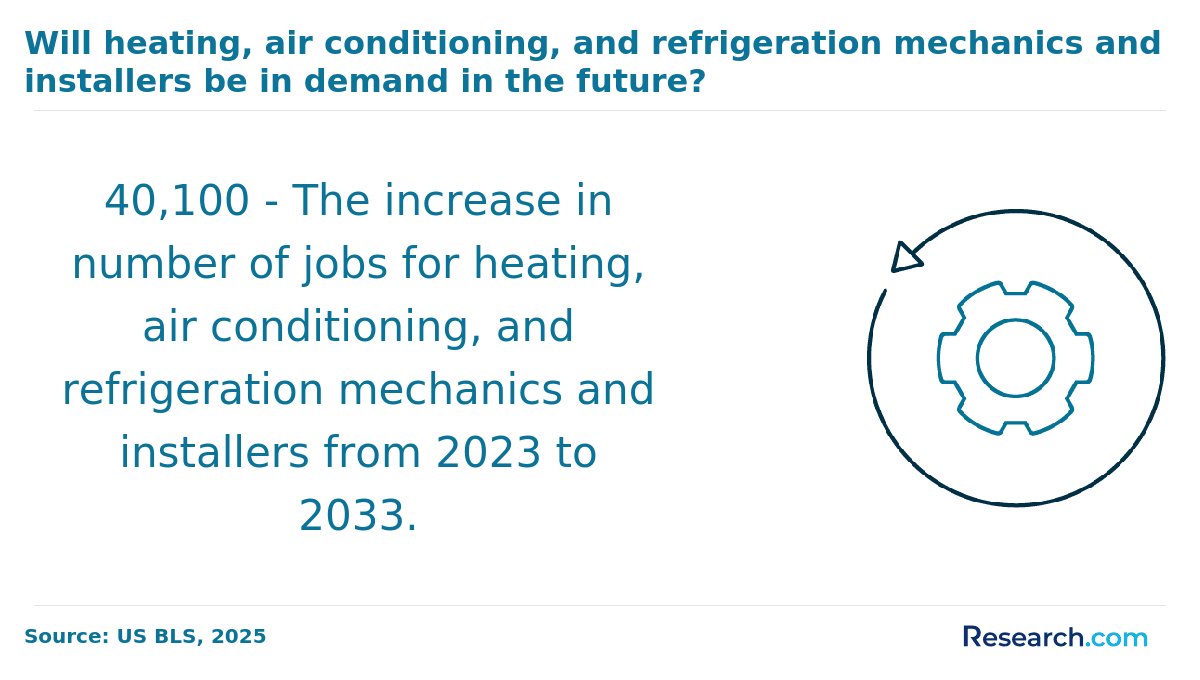
- Across the US, employment for heating, air conditioning, and refrigeration mechanics and installers is expected to increase by 9% between 2023 and 2033, which is equivalent to an average of about 42,500 job openings annually (US BLS, 2025).
- Kentucky offers affordable living costs and plenty of hands-on training programs, making it a great place to start and grow your HVAC career.
- What are the educational requirements to become an HVAC Tech in Kentucky?
- Which schools in Kentucky offer HVAC programs?
- Do HVAC techs need licensure or certification in Kentucky?
- What are the requirements for HVAC licensure in Kentucky?
- What is the licensing process for HVAC technicians in Kentucky?
- How long does it take to become an HVAC tech in Kentucky?
- Will a Kentucky HVAC license allow you to work in other states?
- Can HVAC Technicians Expand Their Skillset Beyond HVAC?
- What are the career advancement opportunities for HVAC technicians in Kentucky?
- How much do Kentucky HVAC technicians earn?
- What Continuing Education Options Are Available for HVAC Technicians in Kentucky?
- How will emerging technologies impact HVAC careers in Kentucky?
- Is there a demand for HVAC technicians in Kentucky?
- Is Kentucky a good place to work as an HVAC tech?
- Can Business Education Enhance HVAC Career Success in Kentucky?
What are the educational requirements to become an HVAC Tech in Kentucky?
Thinking about a career as an HVAC tech in Kentucky? It’s a great choice with a clear path to get started. The process is pretty straightforward, focusing on building solid skills through education and hands-on experience.
Here’s a quick look at the typical requirements for HVAC training programs in Kentucky:
- High school diploma or GED: This is the basic educational foundation needed to enter any HVAC program.
- Enrollment in an HVAC training program: You’ll find these at community colleges, technical schools, or trade schools across Kentucky. Programs usually cover heating, ventilation, air conditioning, and refrigeration basics and last from six months to two years, depending on whether you’re pursuing a certificate or an associate degree.
- Completion of a 3 to 5-year apprenticeship: Unlike some states that emphasize licensing exams, Kentucky prioritizes apprenticeships. This on-the-job training lets you learn under seasoned pros, applying classroom knowledge in real-world settings.
Kentucky’s approach emphasizes hands-on learning more than strict licensing, which means gaining solid experience is key. For those curious about career outlook and trade school salaries, you can check out some helpful info at trade school salaries. This makes the path not just practical but also promising financially.
If you’re exploring Kentucky HVAC technician education requirements, keep in mind that combining formal training with apprenticeship experience gives you the best shot at success in this field.
Which schools in Kentucky offer HVAC programs?
If you’re exploring options for becoming an HVAC tech in Kentucky, you’ll find several solid choices among Kentucky HVAC training schools that can help launch your career. These programs blend hands-on experience with technical knowledge, making it easier to get started in this steady-demand field.
- Bluegrass Community and Technical College in Lexington offers a comprehensive HVAC program covering refrigeration, heating systems, and electrical components. It’s a hands-on course that usually takes about two years to complete, with tuition around $4,500 for in-state students. This program strikes a good balance between theory and practical skills.
- Jefferson Community and Technical College in Louisville provides both an HVAC certificate and an associate degree. Their curriculum focuses on installation, maintenance, and troubleshooting HVAC systems, including preparation for EPA certification, which is necessary for handling refrigerants legally. Tuition ranges from $4,000 to $5,000 for in-state students.
- Murray State University, located in western Kentucky, offers HVAC training within their technical education programs with an emphasis on advanced diagnostics and energy efficiency—an important skill set in today’s market.
These are some of the best HVAC programs in Kentucky, each designed to equip you with the skills needed to succeed. If you want to understand more about what qualifications are needed to become an HVAC technician, there are plenty of resources out there to guide you.
With Kentucky’s climate and ongoing construction growth, HVAC techs remain in steady demand, making this a smart career move if you’re ready to invest in quality training.
What skills do you need to become an HVAC Tech in Kentucky?
To thrive as an HVAC technician in Kentucky, you’ll need a solid mix of hands‑on skills and technical know-how. This job isn’t just about turning wrenches; it requires a good grasp of electrical and mechanical systems to keep heating and cooling setups running smoothly.
Here are the key skills you should have:
- Electrical expertise: Being comfortable with wiring, circuit boards, and control systems helps you troubleshoot and repair electrical parts of HVAC units.
- Mechanical know‑how: Installing and fixing components like compressors and fans takes some serious mechanical smarts.
- Refrigeration knowledge: Understanding how refrigerants work and the cooling cycle is crucial for keeping systems efficient.
- Familiarity with local codes: Knowing Kentucky’s building regulations and safety standards ensures your work is up to code and keeps everyone safe.
- Problem-solving skills: HVAC techs often face tricky issues, so being able to quickly identify and fix problems is a huge plus.
What are the requirements for HVAC licensure in Kentucky?
Becoming an HVAC tech in Kentucky means you’ll need to meet a few key requirements before you can get licensed. These requirements are designed to make sure you’re ready for the job and understand the state’s specific standards.
- Work Experience: You must have at least four years of relevant work experience in the HVAC field to qualify for licensure.
- Licensing Exam: Passing the Kentucky HVAC licensing exam is essential; it tests your knowledge of installation, maintenance, and safety as per Kentucky’s regulations.
- Background Check: A clean criminal background check is required to ensure you meet the state’s professionalism and trustworthiness standards.
Kentucky’s approach to HVAC licensure leans more on hands-on experience rather than formal education, which is different from some other states. If you’re curious about how to get HVAC license in Kentucky, focusing on gaining real-world experience and preparing thoroughly for the licensing exam will set you up for success.
For anyone considering this career path, HVAC work is one of the high-paying trade jobs you can learn quickly, making it a great option if you want to start working and earning sooner rather than later.
What is the licensing process for HVAC technicians in Kentucky?
Thinking about starting a career as an HVAC technician in Kentucky? Great choice! Getting licensed is a key step if you want to work on your own or run your own HVAC business in the state. The process is pretty clear-cut but involves several important requirements.
- Application Submission: Fill out the official form and pay the necessary fees through the Kentucky Department of Housing, Buildings and Construction.
- State Exam: Pass a licensing exam that covers HVAC system knowledge, safety protocols, and local building codes.
- Work Experience Proof: Show evidence of hands-on experience, usually a few years working under a licensed contractor.
- Liability Insurance: Provide documentation of insurance to protect yourself and your clients.
If you plan to work for someone else or under their license, you might not need your own contractor license immediately. Still, having your own license can open doors and lead to more independence. Remember that licenses must be renewed every two years, which means keeping up with continuing education and state requirements to stay certified.
When I spoke with an HVAC tech from Kentucky about her licensing journey, she shared how balancing work and study was tougher than she expected. “Passing the exam wasn’t just about knowing HVAC systems,” she said, “it was about understanding local codes and safety rules that sometimes felt overwhelming.” She also mentioned the importance of gaining solid experience under a seasoned contractor, which helped build confidence before going solo. “Renewing the license keeps me on my toes,” she added, “but it also makes me feel more professional and prepared for any job.” Her story really shows how the licensing process is not just a formality but a crucial part of growing in the field.
How long does it take to become an HVAC tech in Kentucky?
Wondering how long it takes to become an HVAC technician in Kentucky? The process involves a mix of education, hands-on training, and licensure that typically spans a couple of years. If you’re curious about kentucky HVAC technician training duration, here’s a simple breakdown to get you started.
- 6 months to 2 years for education: Most folks attend technical schools or community colleges, earning either a certificate or an associate degree depending on how deep they want to go.
- About 1 year (2,000 hours) of apprenticeship: Kentucky requires practical experience through an apprenticeship or internship, giving you real-world skills beyond the classroom.
- Passing the state licensing exam: After meeting education and experience requirements, you’ll need to pass Kentucky’s licensing exam to become a certified HVAC tech.
All in all, from starting your coursework to becoming fully licensed, you’re looking at about 1.5 to 3 years. If you want to explore more options for your education, consider checking out this ranking of the best online HVAC trade schools to find a program that fits your needs.
The chart below provides a visualization of the educational attainment levels of HVAC techs in the US, according to 2025 data from Zippia.
Will an HVAC license from Kentucky allow you to work in other states?
Thinking about using your Kentucky HVAC license to work in another state? Unfortunately, Kentucky doesn’t have license reciprocity agreements for HVAC technicians with other states. This means you can’t simply take your Kentucky license and start working somewhere else without some extra steps. Each state has its own licensing rules, so if you want to move and work elsewhere, you’ll probably need to:
- Apply for a new HVAC license in the state where you plan to work
- Fulfill that state’s specific requirements, which could include passing exams or completing additional training
- Provide documentation of your experience and education
So, if you’re eyeing jobs in nearby states, be ready to navigate their licensing process. It might involve some extra effort, but it’s all about making sure HVAC professionals meet the local standards for safety and quality.
Can HVAC Technicians Expand Their Skillset Beyond HVAC?
Diversifying technical expertise can open new avenues for career growth in Kentucky’s competitive trades market. Pursuing complementary skills—such as electrical work—can not only enhance problem-solving capabilities on the job but also provide opportunities for higher-paying roles and broader service offerings. Cross-training in areas like electrical systems increases versatility and can position a technician for leadership roles or specialized projects. For professionals interested in integrating additional expertise into their career portfolio, consider exploring our article on how to get electrician license in Kentucky.
What are the career advancement opportunities for HVAC technicians in Kentucky?
As professionals gain experience, pursuing advanced certifications and specialized skills can significantly broaden career prospects. HVAC technicians in Kentucky often enhance their profiles by enrolling in targeted training programs, undertaking apprenticeships for leadership roles, and obtaining additional credentials in areas such as system diagnostics and energy efficiency. This strategic skill diversification can pave the way to roles with greater responsibility, elevated earnings, and opportunities to manage teams or projects. For technicians exploring lateral skill sets, consider reviewing how to become a mechanic in Kentucky to further complement career development.
How much do Kentucky HVAC technicians earn?
If you're thinking about becoming an HVAC technician in Kentucky, you might be curious about the pay. On average, these techs make about $45,000 a year, but that can vary quite a bit depending on your background and focus. If you’re just starting out, expect something closer to $30,000 to $35,000 annually. With more time and experience, especially after a few years on the job, salaries can climb to $55,000 or even higher.
What you specialize in matters too. HVAC techs who work with refrigeration systems or handle commercial projects usually take home more cash than those mainly doing residential work. Plus, having certifications, like the EPA 608, can really help boost your paycheck. Where you work also makes a difference—urban centers like Louisville or Lexington tend to pay better than more rural areas.
- Experience level impacts your wage—more years generally mean more money.
- Commercial HVAC jobs typically offer higher pay compared to residential roles.
- Certifications add value and can increase your earning potential.
- Location matters; cities often provide better salaries than rural towns.
The chart below provides a visualization of the 2025 highest paying states for HVAC techs in the US, according to 2025 data from the World Population Review.
What Continuing Education Options Are Available for HVAC Technicians in Kentucky?
Ongoing education can play a pivotal role in maintaining technical proficiency and ensuring safety compliance for HVAC professionals in Kentucky. Regular participation in refresher courses, industry seminars, and specialized workshops helps technicians stay current with emerging technologies, updated codes, and evolving safety practices. Local trade associations and technical schools frequently offer online and in-person modules that address practical challenges and regulatory changes. Additionally, comparing structured educational pathways—such as those outlined in Kentucky education requirements for radiologic technologist—can provide alternative perspectives on effective continuing education frameworks.
How will emerging technologies impact HVAC careers in Kentucky?
Emerging technologies are rapidly reshaping HVAC work in Kentucky by introducing smart diagnostic tools, energy-efficient systems, and IoT-enabled devices that streamline maintenance and installation practices. Technicians who adapt to these innovations gain a competitive edge as digital systems allow for predictive maintenance and real-time performance monitoring. Additionally, tailored training modules on these emerging solutions are increasingly being integrated into existing curricula, ensuring that professionals remain proficient in the latest industry advancements. For those interested in technology-driven career expansions, exploring related specialized training—such as how to become an ultrasound technician in Kentucky—can reveal valuable insights into adapting to evolving technical landscapes.
Is there a demand for HVAC technicians in Kentucky?
If you’re curious about the HVAC technician job demand in Kentucky, the good news is it’s steady and promising. The growth outlook for Kentucky’s HVAC industry is expected to stay around the national average, roughly 5-7% over the next ten years. This means plenty of job openings will appear as experienced techs retire and the need for heating, cooling, and refrigeration services keeps increasing.
Kentucky’s climate—with hot summers and cold winters—keeps HVAC skills in constant demand. Both residential and commercial sectors need experts, especially those skilled in HVAC system installation and maintenance. Refrigeration techs also find strong opportunities in the food processing and storage industries across the state. If you’re thinking about getting into this field, exploring online trade courses can be a great way to start building your skills and credentials.
So whether you’re into fixing air conditioners or setting up complex heating systems, Kentucky offers a solid market for HVAC pros ready to jump in and start working.
Is Kentucky a good place to work as an HVAC tech?
If you’re thinking about starting or growing your career as an HVAC technician in Kentucky, you’ll find some pretty good reasons to consider it. The state offers a mix of affordable living and steady work, making it a solid choice for many folks in this line of work.
Here’s why Kentucky can be a smart spot for HVAC pros:
- Affordable Living: The cost of living is generally lower than the national average, which means your paycheck stretches further and you can enjoy a comfortable lifestyle without sweating your budget.
- Year-Round Demand: Kentucky’s weather swings between hot summers and chilly winters, so HVAC systems always need maintenance and repairs, keeping your work steady throughout the year.
- Growing Job Market: Cities like Louisville, Lexington, and Bowling Green have expanding populations and construction projects, which means more opportunities for skilled HVAC techs.
- Accessible Training: The state has plenty of trade schools and community colleges offering HVAC programs, making it easy to find local education and apprenticeships without traveling far.
- Standardized Licensing: Licensing requirements in Kentucky match up with national standards, so your credentials will hold value both in-state and beyond.
What HVAC Technicians in Kentucky Say About Their Careers
- “Working as an HVAC technician in Kentucky has given me incredible job stability, especially with the state's growing demand for energy-efficient systems. The average salary here is competitive, which really motivates me to keep advancing my skills. I feel proud knowing my work keeps homes comfortable year-round.” —Matt
- “Kentucky’s unique climate means I get to tackle a wide variety of HVAC challenges, from humid summers to cold winters, which keeps every job interesting and rewarding. The hands-on experience I've gained here has sharpened my problem-solving skills and made me confident in my trade. It’s a fulfilling career that constantly pushes me to learn more.” —James
- “The professional development programs available for HVAC technicians in Kentucky are top-notch, offering certifications that have truly boosted my career prospects. The local trade schools and workshops provide continuous learning opportunities, making it easy to stay updated with new technologies. I appreciate the supportive community here for helping me grow professionally.” —Patrick
Can Business Education Enhance HVAC Career Success in Kentucky?
HVAC professionals seeking to advance their careers can gain a competitive edge by integrating business education into their skillset. Enhancing knowledge in areas such as management, finance, and strategic operations facilitates the transition toward supervisory or entrepreneurial roles. For HVAC technicians looking to expand their scope beyond technical expertise, targeted business courses may lead to improved project management, increased operational efficiency, and stronger leadership capabilities. Pursuing studies at one of the best business schools in Kentucky offers specialized instruction that can directly impact career growth and long-term success.
Related Articles for Nearby States
- 2027 How to Become an HVAC Tech in Indiana
- 2027 How to Become an HVAC Tech in Ohio
- 2027 How to Become an HVAC Tech in Tennessee
- 2027 How to Become an HVAC Tech in West Virginia
- 2027 How to Become an HVAC Tech in Virginia
- 2027 How to Become an HVAC Tech in Illinois
- 2027 How to Become an HVAC Tech in Missouri
- 2027 How to Become an HVAC Tech in North Carolina
- 2027 How to Become an HVAC Tech in Georgia
- 2027 How to Become an HVAC Tech in Mississippi
References:
- Faraday. (n.d.). HVAC Technician Salary: Guide to Wages, Jobs, & More. https://faradaycareers.com/careers/hvac-technician-salary
- FieldEdge. (2022, June 14). HVAC License Guide for Every State in 2025. https://fieldedge.com/blog/hvac-license-guide-for-every-state
- Field Promax. (2025, April 04). HVAC License Reciprocity: License Guide for Every State. https://www.fieldpromax.com/blog/hvac-license-reciprocity-by-states
- FieldPulse. (2024, August 09). HVAC License Reciprocity By State. https://www.fieldpulse.com/resources/blog/hvac-license-reciprocity-by-state
- Glassmeier, A. K. & Massachusetts Institute of Technology. (2025). Living Wage Calculation for Kentucky. https://livingwage.mit.edu/states/21
- HVACCertification.Org. (n.d.). Kentucky HVAC Certification and License Requirements. https://www.hvaccertification.org/kentucky-hvac-license
- Jobber. (2023, October 02). Kentucky HVAC License: How to Become an HVAC Professional. https://www.getjobber.com/academy/hvac-license/kentucky
- RocketCert Staff. (2021). How to Get Your HVAC License in Kentucky. ROCKETCERT. https://rocketcert.com/blog/168-construction/637-how-to-get-your-hvac-license-in-kentucky
- Scalisi, T. (2024, June 11). Contractor License Reciprocity: Working Across State Lines. Procore. https://www.procore.com/library/contractor-license-reciprocity
- Servgrow. (n.d.). Kentucky HVAC License: All to Know About Licensing in K.Y. https://www.servgrow.com/hvac-license/kentucky
- US Bureau of Labor Statistics. (2025, April 18). Heating, Air Conditioning, and Refrigeration Mechanics and Installers. Occupational Outlook Handbook. https://www.bls.gov/ooh/installation-maintenance-and-repair/heating-air-conditioning-and-refrigeration-mechanics-and-installers.htm
- US Bureau of Labor Statistics. (2025, May 23). Occupational Employment and Wage Statistics, Area: Kentucky. Occupational Employment and Wage Statistics Query System. https://data.bls.gov/oes/#/area/2100000
- Workwave. (n.d.). HVAC Technician Salary in Every State: Complete 2024 Guide. https://insights.workwave.com/industry/hvac/hvac-technician-salary
Other Things You Should Know About Becoming an HVAC Tech in Kentucky
In Kentucky, HVAC technicians must obtain an EPA Section 608 Certification to handle refrigerants legally. Additional certifications, such as the KY Journeyman HVAC Mechanic License, are also recommended. These certifications ensure compliance with state laws and enhance employability in 2027.
The costs to become an HVAC technician in Kentucky in 2026 can range from $1,500 to $15,000. This includes tuition fees for trade school or community college programs, exam and licensing fees, and the cost of necessary tools and study materials.


