
2027 How to Become an Ultrasound Technician in Kentucky

Co-Founder and Chief Data Scientist
Kentucky’s healthcare workforce continues to expand, with 3,810 radiologic technologists employed statewide in 2022. This figure highlights the essential role imaging professionals play in diagnosing and treating patients across hospitals, clinics, and specialty centers. As healthcare needs grow, ultrasound technicians are becoming increasingly important in supporting timely and accurate medical care.
In this article, I will guide you through the steps to become an ultrasound technician in Kentucky, from meeting education requirements to earning certifications. I will also cover the salary expectations, job growth, and career advancement opportunities within the state’s healthcare system.
Key Things to Know About Becoming an Ultrasound Technician in Kentucky
- In Kentucky, you must complete an ultrasound technology program accredited by the Commission on Accreditation of Allied Health Education Programs (CAAHEP), which typically takes 1–2 years to finish.
- Earning the American Registry for Diagnostic Medical Sonography (ARDMS) certification is highly recommended, as most Kentucky employers prefer or require certified sonographers.
- Ultrasound technicians in the state have about 1,200 job opportunities and earn a median annual salary of $85,353, with higher wages available in certain roles or settings.
- What education is required to become an ultrasound technician in Kentucky?
- What specialties can ultrasound technicians choose from in Kentucky?
- Which certification exams are required to become an ultrasound technician in Kentucky?
- Is a license required to practice as an ultrasound technician in Kentucky?
- What to expect during ultrasound technician clinical training in Kentucky?
- How much does it cost to become an ultrasound technician in Kentucky?
- What is the average salary for ultrasound technicians in Kentucky?
- What is the job outlook and demand for ultrasound technicians in Kentucky?
- What are the career advancement steps for ultrasound technicians in Kentucky?
- What are the common challenges ultrasound technicians face in Kentucky?
- Which professional associations can boost your ultrasound career in Kentucky?
- How are technological advancements altering ultrasound practices in Kentucky?
What education is required to become an ultrasound technician in Kentucky?
If you're aiming to become an ultrasound technician in Kentucky, you'll need to complete a few key educational steps. These ensure you’re prepared with both knowledge and hands-on experience.
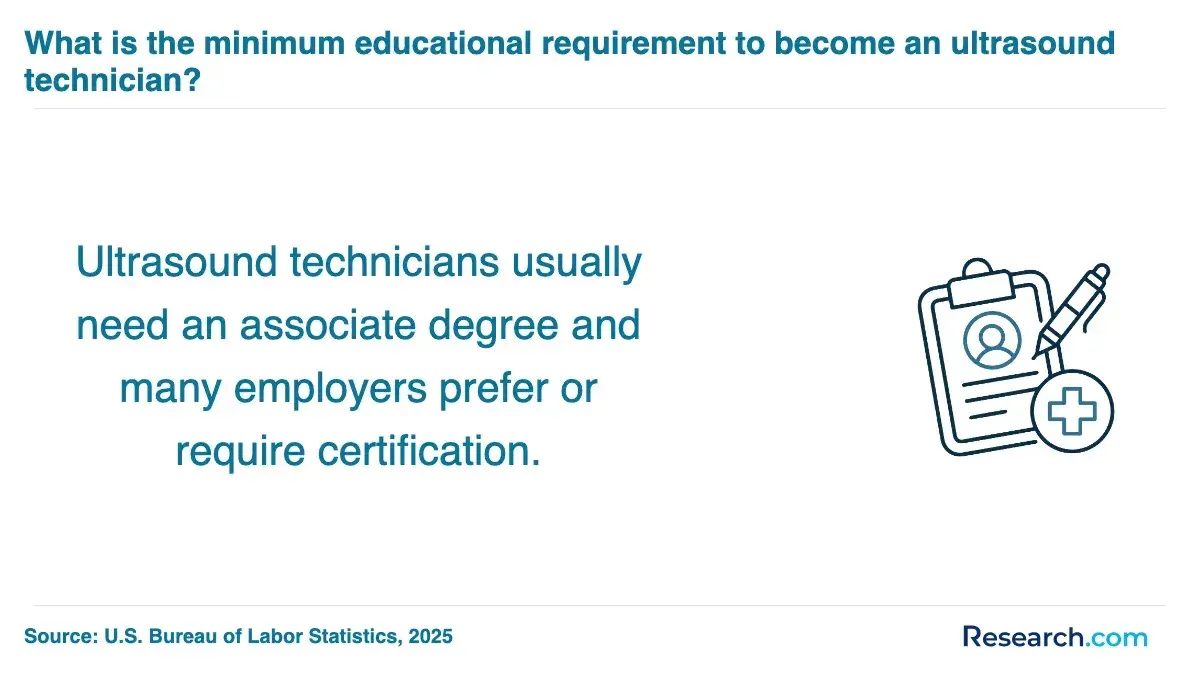
- Minimum Degree Requirement: You must earn an Associate of Science or Associate of Applied Science in Diagnostic Medical Sonography, which is considered a must for this field.
- Accredited Programs: Graduating from accredited ultrasound technician programs in Kentucky is essential, typically those approved by CAAHEP.
- Program Duration: Most associate degree programs take about 22 months to finish, giving you a solid mix of classroom learning and practical training.
- Clinical/Practicum Hours: Hands-on clinical training is built into the curriculum, offering crucial real-world experience with ultrasound equipment and patient interaction.
- Prerequisite Courses: Some programs require specific courses like anatomy, physiology, and algebra before or during the program to ensure you’re ready.
- GPA Standards: A minimum cumulative GPA, often around 2.5, may be needed for admission to meet Kentucky ultrasound technician education requirements.
- Certification Preparation: While Kentucky doesn’t mandate certification, most employers expect you to be certified, with graduation allowing you to take exams like the ARDMS SPI. For more on timelines, check out how many years to become a radiology tech.
The chart below from Zippia shares the college majors of ultrasound technicians.
What specialties can ultrasound technicians choose from in Kentucky?
If you're thinking about a career as an ultrasound tech in Kentucky, you have some solid specialty options to consider. These choices let you focus on different parts of the body or patient groups, making your work more interesting and varied.
Below is a quick rundown of common specialties for ultrasound technicians in Kentucky.
- Abdominal Sonography: This specialty involves imaging organs like the liver and kidneys in the abdomen, a key skill used across Kentucky hospitals and clinics.
- Obstetric and Gynecologic Sonography: Focused on the female reproductive system and monitoring babies during pregnancy, this area has a steady demand for prenatal and women’s health care.
- Cardiac (Echocardiography) Sonography: Specializing in heart imaging, this field is offered as a dedicated track at some Kentucky colleges, making it a strong choice within larger medical centers.
- Vascular Sonography: Concentrating on blood vessels and circulation, it’s an important specialty available in distinct programs across the state.
- Pediatric and Neonatal Sonography: Involving ultrasound for infants and children, this less common specialty is important in pediatric hospitals and clinics.
- Musculoskeletal Sonography: Used to diagnose injuries in muscles, tendons, and joints, this growing field serves orthopedic and sports medicine practices.
For anyone researching pathways in vascular and cardiac sonography programs, Kentucky offers great options to get specialized training. You can find more on varied radiology career options that include sonography, helping you make an informed choice about your future.
Which certification exams are required to become an ultrasound technician in Kentucky?
Certification exams are a big deal for ultrasound technicians in Kentucky, even though the state doesn’t officially require them for employment. Most healthcare employers expect or prefer candidates who hold these certifications, making them key to standing out and advancing in this field.
- American Registry for Diagnostic Medical Sonography (ARDMS) Exams – These are the most recognized credentials and include certifications like Registered Diagnostic Medical Sonographer (RDMS) and Registered Vascular Technologist (RVT). The exams test your knowledge on sonography principles plus specialties such as abdomen or cardiac sonography. To be eligible, you generally need to graduate from an accredited program and complete clinical experience. While Kentucky doesn’t have additional state exams, passing ARDMS tests is often required to finish your program and impress employers. The ARDMS organization administers these exams.
- American Registry of Radiologic Technologists (ARRT) Sonography Exam – This exam leads to the RT(S) credential and focuses on general sonography knowledge, patient care, and safety standards. To qualify, you must complete an ARRT-approved educational program and meet ethics requirements. Kentucky recognizes ARRT credentials for related imaging licenses, and some licensing routes in the state may require ARRT certification. The American Registry of Radiologic Technologists provides this exam.
- Cardiovascular Credentialing International (CCI) Exams – If you’re aiming for cardiac or vascular ultrasound specialties, the CCI offers certifications like Registered Cardiac Sonographer (RCS). These exams cover echocardiography and vascular ultrasound skills, with eligibility based on education and clinical experience. Though not mandatory in Kentucky, CCI certifications boost your employability in specialized areas. Cardiovascular Credentialing International runs these exams.
Passing these nationally recognized exams boosts your credibility and opens doors in Kentucky’s ultrasound tech job market. They show you meet high professional standards and help you keep pace with evolving healthcare expectations in the state.

Is a license required to practice as an ultrasound technician in Kentucky?
A state license isn’t required to work as an ultrasound technician in Kentucky. National certification, however, is highly recommended and usually expected by employers. This matters because while many healthcare jobs need state licensure, Kentucky relies more on national standards for ultrasound techs, which affects how you qualify for jobs and how your skills are recognized. So, getting certified nationally opens more doors than just meeting state rules.
Kentucky doesn’t have laws that require ultrasound technicians to hold a state license. Instead, the Kentucky Board of Medical Imaging and Radiation Therapy regulates licensing only for certain professionals, like radiologic technologists, not sonographers. The key to working in Kentucky is earning certification from national bodies like ARDMS, ARRT, or CCI.
To get certified, you generally have to pass the SPI exam plus a specialty test if you want ARDMS credentials. Even though the state doesn’t mandate this, most employers insist on it because certification proves you know your stuff and follow high standards. Meeting these requirements improves your job chances and helps you maintain credibility in the field.
I spoke with an ultrasound technician from Kentucky who graduated from a local program about their experience. They shared how, even without a state license, the journey wasn’t simple; passing the SPI and specialty exams was challenging but rewarding. “I remember feeling nervous before the tests,” they said, “because I knew certification was the real ticket to getting hired around here.”
They felt the exams validated their skills and made them confident stepping into roles that demanded both knowledge and trust. This approach’s clarity helped them focus on strengthening their training rather than worrying about a separate licensing process.
What to expect during ultrasound technician clinical training in Kentucky?
Clinical training in Kentucky is where your classroom knowledge meets real-life ultrasound practice, giving you the hands-on experience you need to become a confident and skilled sonographer. This phase is supervised and designed to prepare you for professional certification and employment by sharpening your technical and patient care abilities.
- Hands-On Patient Care: You’ll work directly with patients under supervision, learning how to perform ultrasound exams safely and compassionately while gathering medical histories and explaining what’s happening.
- Supervised Use of Imaging Equipment: Expect to operate advanced ultrasound machines with guidance from experienced professionals, getting comfortable with image capturing and basic equipment upkeep.
- Specialty Rotations: Your training will likely include rotations through OB/GYN, vascular, abdominal, and cardiac sonography, giving you the chance to explore a range of diagnostic specialties.
- Mentorship from Licensed Professionals: You’ll receive one-on-one feedback and coaching from licensed sonographers who’ll help you grow professionally and ethically.
- Competency Evaluations: Regular evaluations assess your technical skills, patient interaction, and image interpretation to ensure you’re ready to graduate from the program.
- Clinical Hour Requirements: Most Kentucky programs require at least 960 clinical hours, usually spread over six months of full-time training to guarantee solid hands-on experience.
These clinical experiences not only gear you up for national certification exams but also sharpen your real-world skills, making you job-ready in Kentucky’s healthcare settings.
How much does it cost to become an ultrasound technician in Kentucky?
The total cost to become an ultrasound technician in Kentucky usually falls between $10,000 and $45,000. This range covers tuition along with extra expenses like clinical training, certification exams, and living costs.
Knowing details below helps you plan better for your education budget.
- Tuition and Fees: Associate degree programs at public colleges typically cost $9,000 to $11,000 for in-state students, while bachelor’s or private school programs can range from $27,000 to over $41,000. Certificate programs often have similar prices to associate degrees but take less time to complete.
- Clinical Training Expenses: Costs for lab fees, uniforms, malpractice insurance, and travel to clinical sites usually add between $500 and $2,000, depending on your program’s setup.
- Certification and Exam Fees: Most employers expect certification from ARDMS, with exam fees around $225 to $250 each. You might have to take more than one specialty exam.
- Licensing or State Fees: Kentucky does not require a state license for sonographers, so no extra fees here, but ARDMS certification renewals may involve some costs.
- Books and Materials: Textbooks, supplies, and software generally cost $500 to $1,000 throughout the program.
- Living Expenses: Full-time students should budget about $10,000 to $15,000 per year for housing, food, transportation, and personal needs.
The cost of ultrasound technician programs in Kentucky varies depending on whether you attend a public or private school and the degree type you choose. Financial help, like scholarships or employer tuition aid, can ease this financial load. For those looking to explore more options, consider checking out the best accelerated online sonography and ultrasound degrees available nationwide. To add perspective on the workforce itself, the chart below from Zippia shows the age breakdown of ultrasound technicians.
What is the average salary for ultrasound technicians in Kentucky?
The average yearly pay for an ultrasound technician in Kentucky is $85,353, though salaries can vary greatly depending on experience, certification, and work setting. Weekly earnings range from as low as $618 to as high as $2,597, with most technicians falling between $1,061 (25th percentile) and $2,121 (75th percentile). This wide range reflects the diversity of opportunities within Kentucky’s healthcare system, from small community clinics to major hospitals.
Geographic location also plays a critical role in wage differences. For example, technicians in Florence earn about 14.3% above the state average, while Harlan pay even higher, surpassing the average by 16%. Urban centers and regions with greater demand for diagnostic imaging services tend to offer more competitive salaries. These variations underscore how both regional demand and cost of living shape earning potential for ultrasound technicians across Kentucky.
What is the job outlook and demand for ultrasound technicians in Kentucky?
Jobs for ultrasound technicians in Kentucky are projected to grow by 4% between 2022 and 2032, reflecting slower-than-average national trends. Despite this modest rate, the field still offers consistent opportunities, with an estimated 220 annual job openings across the state during this period. This steady demand highlights ultrasound technology as a reliable healthcare career choice in Kentucky, particularly for those seeking long-term stability in a specialized medical field.
- Population Growth and Aging: As more people age in Kentucky, there’s a bigger need for imaging to catch and monitor health issues early, keeping sonographers busy.
- Healthcare Expansion: New hospitals and clinics are popping up across the state, creating more job openings, especially in places that are building up their healthcare services.
- Technological Advancements: With ultrasound tech constantly improving, like specialized heart and vascular imaging, technicians get to learn new skills and take on more focused roles.
- Preventive Care Trends: Early diagnosis is a big deal now, so sonographers play a key role in routine check-ups and non-invasive screenings that help catch problems before they get serious.
- Regional Demand Variations: Cities like Louisville and Lexington usually offer more jobs and higher pay, while rural areas may have fewer openings but still need skilled techs to fill in important gaps.
One ultrasound technician from Kentucky, who graduated from a local school, shared her experience about working in this field here. She mentioned that while the job market isn’t exploding, the demand feels consistent enough to build a solid career. “In smaller towns, you really become a vital part of the community’s health,” she said, explaining how sometimes she’s the only tech available for miles.
She also noted that keeping up with new ultrasound methods has been challenging but rewarding, and overall, the steady workload and variety of cases make the career satisfying. Her journey highlights that in Kentucky, this is a dependable path with room to grow, especially if you’re ready to adapt and keep learning.
What are the career advancement steps for ultrasound technicians in Kentucky?
Ultrasound technicians in Kentucky have several paths to boost their careers by focusing on specialization, earning advanced certifications, or stepping into leadership roles. These options not only help increase earning power but also build lasting professional influence. Exploring advanced sonography specialties in Kentucky gives technicians a leg up in this competitive field.
- Specialization: Focusing on areas like OB/GYN, vascular, or cardiac sonography sharpens your skills and opens more job opportunities with better pay.
- Advanced Certifications: Credentials from the ARDMS, CCI, or ARRT prove your expertise and make you a strong candidate for top roles in medical imaging.
- Higher Education: Pursuing a bachelor’s or master’s degree in medical imaging or healthcare management expands career options and prepares you for advanced clinical and research positions.
- Leadership Roles: With experience, ultrasound techs can move into supervisory or administrative jobs that involve managing imaging departments and overseeing staff.
- Education and Training: Experienced sonographers can become instructors or clinical trainers, helping to educate the next wave of ultrasound professionals.
- Research or Technology Development: Some technicians participate in pioneering research or collaborate with manufacturers to improve ultrasound equipment and techniques.
Pursuing these steps in career advancement for ultrasound technicians in Kentucky not only boosts your earning potential but also broadens your impact in healthcare. For those eager to explore options, checking out the best ultrasound technician certification program is a great way to get started.
What are the common challenges ultrasound technicians face in Kentucky?
Getting a clear picture of the challenges for ultrasound technicians in Kentucky helps you prepare better for the realities of the job and plan your career smartly. Knowing what to expect can make a big difference when navigating the ultrasound technician job market in Kentucky, which isn’t always smooth sailing. Here’s a quick rundown of the main hurdles you might face:
- Physical Strain and Ergonomics: Repetitive scanning, long hours on your feet, and handling heavy machines often cause musculoskeletal issues if you’re not careful.
- Emotional Stress: Dealing with tough patient situations, like prenatal complications or abortion procedures, can be emotionally draining for many techs.
- Workload and Staffing Shortages: High patient loads and limited staff make it tough to juggle patient care and paperwork without getting worn out.
- Certification and Continuing Education Requirements: Staying certified through organizations means fitting ongoing education into an already busy schedule.
- Technology Adaptation: Ultrasound gear and software change fast, so staying up to date can be a real challenge, especially without enough training support.
- Job Market Competition: Demand varies by region, pushing some techs to specialize or relocate to land the right job.
Being aware of these challenges helps you find the right strategies to stay healthy, keep learning, and grow in your career. If you’re just starting out, check out the medical sonographer job requirements to get a solid foundation on what’s ahead.
Which professional associations can boost your ultrasound career in Kentucky?
Ultrasound technicians can benefit from joining industry-specific professional associations that offer targeted continuing education, networking events, and career development resources. These organizations provide access to emerging trends, regulatory updates, and specialized mentorship programs that further enhance technical proficiency and professional confidence. By engaging with such associations, technicians can expand their knowledge base and explore cross-disciplinary insights—for example, learning practical strategies from fields like how to become a nurse midwife in Kentucky—thereby positioning themselves for broader career opportunities within the evolving healthcare landscape.
How are technological advancements altering ultrasound practices in Kentucky?
Ultrasound technicians in Kentucky are increasingly integrating advanced imaging software, portable diagnostic tools, and AI-assisted methodologies to enhance their workflow and diagnostic precision. Staying updated with these innovative tools is crucial for maintaining competitive expertise in patient care. Regular participation in targeted training seminars, certification courses, and hands-on workshops can streamline the transition to emerging imaging technologies. For technicians considering broader diagnostic roles, exploring strategies on how to become a radiology technician in Kentucky may also reveal complementary career pathways that leverage cutting-edge trends in medical imaging.
What do ultrasound technicians in Kentucky say about their careers?
- Completing my ultrasound technician program at Jefferson Community College was a turning point in my life. The hands‑on training and supportive instructors truly prepared me for the job market, especially in Kentucky where healthcare is growing steadily. Starting my career in a local school setting allowed me to combine my love for education with my technical skills, giving me a fulfilling way to contribute to young people's health awareness. I appreciate how the state's blend of urban and rural communities offers unique challenges and learning experiences every day. This career has not only given me stability but also a meaningful purpose. - Tara
- Reflecting on my journey, finishing the diagnostic medical sonography program at Bluegrass Community and Technical College helped build a solid foundation for my professional growth. Working at a local academic institution in Kentucky has been rewarding because it allowed me to develop programs that improve preventative care education among students. The sense of community here encourages collaboration and innovation in healthcare, which matches my desire to make a positive impact beyond the clinical setting. This role challenges me intellectually while rewarding me emotionally, knowing my efforts reach diverse populations across the state. - Shannon
- Training at Gateway Community and Technical College gave me the technical competence I needed to enter the ultrasound field with confidence. Kentucky’s unique healthcare environment, with its mix of rural health concerns and emerging technologies, has created exciting opportunities for career advancement and specialization. Working in an academic setting means I regularly see how our work directly supports the well‑being of young people, which fuels my passion every day. The balance of professional development and community impact here is unmatched, encouraging me to stay passionate and committed to my field long term. - Dave
Related Articles for Nearby States
- 2027 How to Become an Ultrasound Technician in Indiana
- 2027 How to Become an Ultrasound Technician in Ohio
- 2027 How to Become an Ultrasound Technician in Tennessee
- 2027 How to Become an Ultrasound Technician in West Virginia
- 2027 How to Become an Ultrasound Technician in Virginia
- 2027 How to Become an Ultrasound Technician in Illinois
- 2027 How to Become an Ultrasound Technician in Missouri
- 2027 How to Become an Ultrasound Technician in North Carolina
- 2027 How to Become an Ultrasound Technician in Georgia
- 2027 How to Become an Ultrasound Technician in Mississippi
References:
- Data USA (n.d.). Diagnostic Medical Sonographers. Retrieved from https://datausa.io/profile/soc/diagnostic-medical-sonographers?redirect=true
- O*NET OnLine (n.d.). Kentucky Employment Trends 29-2034.00 - Radiologic Technologists and Technicians. Retrieved from https://www.onetonline.org/link/localtrends/29-2034.00?st=KY
- Zippia (2025). Ultrasound Technologist Demographics and Statistics in the US. Retrieved from https://www.zippia.com/ultrasound-technologist-jobs/demographics/
- Zippia (2025). Ultrasound Technologist Education Requirements. Retrieved from https://www.zippia.com/ultrasound-technologist-jobs/education/
- ZipRecruiter (2025). Ultrasound Tech Salary in Kentucky. Retrieved from https://www.ziprecruiter.com/Salaries/Ultrasound-Tech-Salary--in-Kentucky
Other Things You Should Know About Being an Ultrasound Technician in Kentucky
To become an ultrasound technician in Kentucky in 2027, you need to complete an accredited diagnostic medical sonography program, which typically results in an associate degree. Successful completion of both didactic coursework and clinical internships is essential. Graduates are encouraged to pass the ARDMS certification for employment competitiveness.
Ultrasound technicians in Kentucky looking to advance their careers may consider pursuing specialized certifications in areas like abdominal or breast sonography. Additionally, obtaining further education, such as a bachelor's or master's degree in diagnostic medical sonography, can open up opportunities for leadership roles or teaching positions in the field.


