2027 Online MBA for IT Professionals Moving Into Management

Co-Founder and Chief Data Scientist
Many IT professionals face challenges when transitioning from technical roles to management positions. They often lack formal business training, making it difficult to understand organizational strategy, finance, and leadership principles. This gap can hinder career advancement and impact team performance.
Finding a flexible, credible program that balances technical expertise with business acumen is essential for a successful shift into management. This article explores online MBA options tailored for IT professionals, highlighting how these programs offer practical skills and scheduling flexibility to help bridge the knowledge gap and accelerate career growth in managerial roles.
Key Things You Should Know
- Online MBA programs in 2026 increasingly emphasize IT management, blending technical skills with leadership, addressing a 23% projected IT management job growth through 2032.
- Flexible online MBAs allow IT professionals to balance work and study, with 68% completing degrees part-time while employed, facilitating career advancement without career interruption.
- Curricula now integrate emerging tech trends like AI, cybersecurity, and data analytics, preparing graduates for strategic decision-making in evolving IT landscapes.
What is an online MBA for IT professionals moving into management?
An online MBA for IT professionals moving into management is designed to bridge the gap between technical skills and leadership capabilities. This specialized graduate program develops expertise in project management, finance, marketing, and human resources, specifically tailored to IT environments. It equips students to manage teams, oversee budgets, and lead digital transformation efforts effectively.
The MBA curriculum for IT managers transitioning to leadership roles often includes courses such as cybersecurity management, data analytics, and innovation leadership. These focus areas help professionals from software development or network engineering backgrounds align IT initiatives with broader business strategies and improve communication with stakeholders beyond technical teams.
Demand for IT managers is projected to grow by 15% through 2033, according to the U.S. Bureau of Labor Statistics Occupational Outlook Handbook. This growth stems from expanding cybersecurity needs and ongoing digital transformation in many industries, making an online MBA a strategic career investment.
Online programs offer flexibility, commonly featuring asynchronous classes and opportunities to network with peers and faculty. Students can select specialized tracks such as technology innovation or information systems management to tailor their education.
When choosing a program, prospective students should assess accreditation, faculty expertise in IT management, and industry connections to maximize career opportunities. For those seeking affordable options, exploring low-cost MBA online programs can provide valuable alternatives without compromising quality.
What are the best online MBA programs for IT management careers?
Top online MBA programs for IT management careers focus on blending business fundamentals with technology leadership. Schools like Indiana University Kelley School of Business, University of North Carolina Kenan-Flagler, and Carnegie Mellon Tepper School of Business are consistently recognized for supporting IT professionals moving into management roles.
These universities offer specialized tracks or electives in technology management, IT strategy, and data analytics that address current industry needs. For instance, Kelley's online MBA includes courses on digital transformation and project management, preparing students to lead complex IT projects. Kenan-Flagler emphasizes leadership development by integrating core MBA skills with advanced IT business strategies.
Tepper's program is known for its strong analytics and innovation focus, suitable for professionals leveraging tech for a competitive advantage. When selecting among the best online MBA programs for IT management careers, consider accreditation, reputation in both business and technology education, flexibility, networking opportunities, and career services focused on IT management placements.
Salary potential is an important consideration. According to the Robert Half 2025 Salary Guide for Technology Professionals, IT professionals with an MBA earn a median salary of $152,640 annually, which is 42% higher than those with only a bachelor's degree in IT. Programs that include practical capstone projects or consulting experiences add value by simulating real-world challenges. Prospective students might also explore affordable AACSB online MBA options to balance quality and cost.
How does an online MBA benefit IT professionals transitioning to management?
Online MBA programs deliver targeted benefits for IT professionals moving into management by equipping them with essential business acumen, leadership skills, and strategic insight. These programs fill critical gaps in competencies such as financial management, organizational behavior, and project leadership, areas not typically addressed in technical roles.
For example, an IT specialist promoted to management gains proficiency in budgeting, resource allocation, and team dynamics through courses tailored for these disciplines. Advancing their careers with an online MBA for management roles also offers significant flexibility, enabling working professionals to balance study with job responsibilities. This flexibility makes applying new knowledge in real time easier, easing the transition to overseeing teams or departments without interrupting one's career trajectory.
The return on investment supports this strategic upskilling: graduates in IT management report an average five-year ROI of 125%, alongside a lifetime earnings premium exceeding $1.2 million compared to peers without an MBA credential (Georgetown University Center on Education and the Workforce, 2025 MBA ROI Report). This demonstrates the tangible financial advantages of completing an online MBA, including better salary prospects and advancement opportunities.
Practical benefits include improved negotiation skills for contracts and vendor relationships, enhanced analytics for data-driven decision-making, and refined communication strategies for diverse stakeholders. Graduates become effective bridges between technical teams and executive leadership, which is essential for roles such as IT project managers, CIOs, or product managers.
Prospective students seeking flexible options might explore specialized pathways like the executive MBA online to further enhance their management skills.
What accreditation should an online MBA for IT management have?
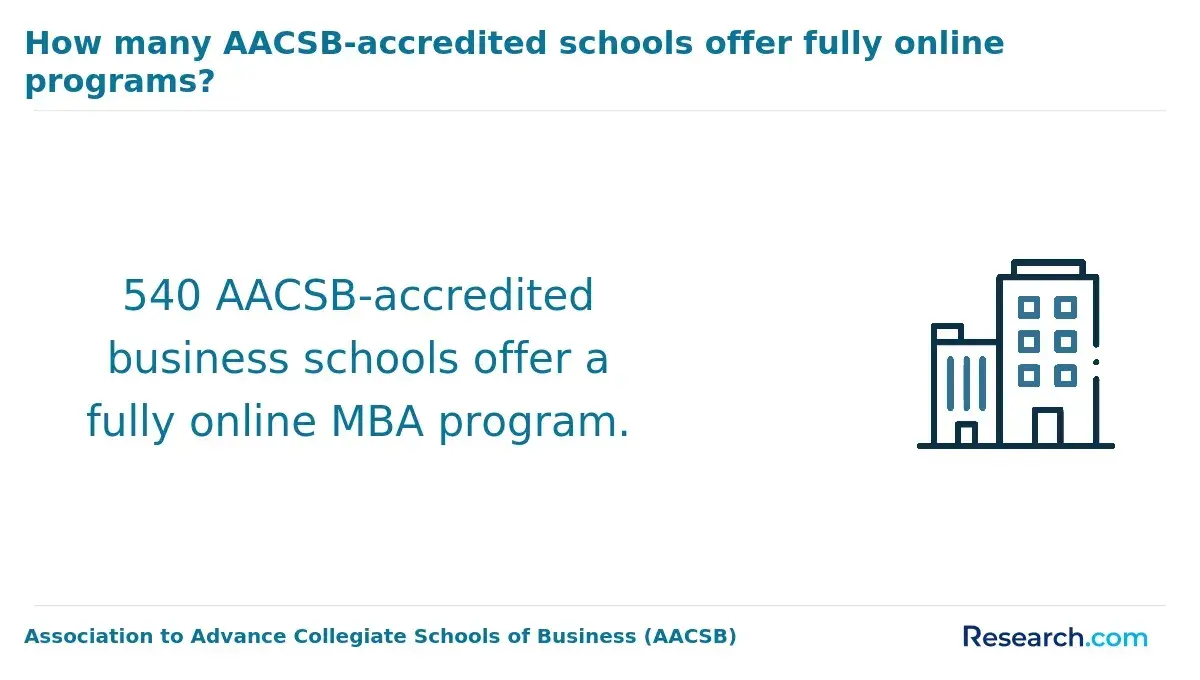
An online MBA accreditation for IT management programs should come from recognized bodies such as the Association to Advance Collegiate Schools of Business (AACSB), Accreditation Council for Business Schools and Programs (ACBSP), or International Accreditation Council for Business Education (IACBE). AACSB is often regarded as the gold standard, emphasizing quality faculty, curriculum, and student outcomes.
With 78% of organizations reporting a leadership skills gap in IT departments and business acumen as the top deficiency (Gartner 2025 CIO Agenda Survey), choosing a top accredited online MBA degree for IT professionals is essential. Such accreditation ensures curriculum balances business fundamentals with IT leadership competencies, addressing skills gaps in finance, strategy, and organizational leadership within technology.
Emphasis on accreditation recognized by employers boosts credibility in competitive IT management roles. Candidates should also seek programs aligned with specialized IT leadership certifications to enhance real-world skills. For those seeking accessible options, programs offering an online MBA with no GMAT requirement can provide flexibility without sacrificing quality.
What are the admission requirements for online IT management MBAs?
Admission requirements for online IT management MBA programs vary but generally focus on academic background, professional experience, and leadership potential. Applicants must hold a bachelor's degree from an accredited institution and typically provide official transcripts showing a minimum GPA of 3.0. Some schools accept lower GPAs if compensated by strong IT work experience, which usually ranges from two to five years.
Standardized tests like the GMAT or GRE are sometimes required; however, many programs waive these scores for candidates with substantial work experience or advanced degrees. Specialized admission criteria often prioritize leadership potential, especially for IT professionals moving into management roles.
Essays and personal statements help applicants explain career goals and motivations for pursuing an MBA in IT management. Interviews are common to assess communication skills and cultural fit. Industry trends show healthcare leads IT management hiring, with 28% of new positions by 2025 driven by AI-powered digital health, surpassing finance. Highlighting such trends in applications can improve candidacy in this evolving job market.
What does the curriculum cover in online MBAs for IT leaders?
Online MBA curricula for IT leaders blend technical knowledge with strategic management skills essential for leadership roles. Core courses often include advanced project management, IT strategy, data analytics, organizational behavior, and financial management to help students align technology initiatives with business goals.
With artificial intelligence reshaping IT operations, forecasted to automate 25% of tasks by 2026, programs now emphasize AI governance, ethics, and integration management. This prepares graduates to effectively oversee AI-driven organizational transformations.
Specialized modules on cybersecurity management, cloud computing strategies, and digital innovation develop expertise in risk assessment and fostering innovation. Quantitative methods, including financial modeling and decision analytics, enhance data-driven decision-making.
Leadership theory and change management address vital soft skills for guiding teams and managing organizational change. Electives in emerging areas like the Internet of Things (IoT) and blockchain provide customization to industry trends. Many programs also feature capstone projects or consulting engagements for practical experience.
How long do online MBA programs for IT professionals take?
Online MBA programs for IT professionals usually range from 18 to 36 months, depending on program design, enrollment status, and course load. Full-time students often complete their degree within 18 to 24 months, while part-time options support working professionals by extending the timeline up to three years. Accelerated tracks are available in some programs, allowing completion in as few as 12 to 15 months, though these require a more demanding study schedule.
Flexibility is a major benefit, especially since 62% of IT management roles in 2025 will offer fully remote work, a rise from 45% in 2023. This growth allows students to balance online learning with work and life commitments. Many programs offer customizable pacing, enabling students to take fewer courses per term to better align with their job demands.
When selecting a program, consider how the duration fits your career objectives. IT professionals aiming for management roles should prioritize timely completion to leverage expanding remote leadership opportunities. Programs blend core business principles with IT management electives but vary in course frequency and asynchronous learning options.
Prospective students should ask about accelerating the degree, minimum credit loads per term, and how part-time status may affect tuition assistance deadlines. Contacting admissions and reviewing course details helps ensure the program fits both professional goals and schedules.
What are the costs of online MBAs for IT management roles?
Online MBA costs for IT management roles range significantly due to factors like institution prestige, program length, and format. Tuition typically falls between $20,000 and $90,000, with public universities offering rates often under $30,000, while private and prestigious business schools charge $70,000 or more. Additional expenses include technology fees, textbooks, and residency requirements for hybrid programs.
Financial aid, scholarships, and employer tuition assistance can substantially lower expenses. Accelerated tracks allow completion in under two years, potentially reducing overall costs, while part-time programs extend duration, possibly increasing living and opportunity costs despite incremental tuition payments.
Return on investment (ROI) should be a key consideration when examining career advancement after graduation. The Deloitte 2025 Women in Technology Report shows women hold only 22% of IT manager roles but represent 35% of MBA graduates in IT, highlighting ongoing gender gaps. Hidden fees, credit transfer policies, and mentorship programs play important roles in total cost and career support.
Programs offering real-world projects and networking opportunities can justify higher expenses through improved employability. Transparent cost breakdowns and flexible payment plans are essential for busy IT professionals moving into management. Prospective students are advised to seek detailed information to make strategic educational investments aligned with their career goals.
What careers and salaries follow an online IT management MBA?
An online IT management MBA prepares graduates for leadership roles overseeing technology in business settings. Common positions include IT project manager, chief information officer (CIO), IT director, and technology consultant. These roles require managing teams, budgets, and aligning IT strategies with organizational goals.
Salary ranges vary widely. IT project managers earn a median annual wage of nearly $150,000, CIOs can surpass $180,000, and IT directors typically make between $130,000 and $170,000, depending on company and industry factors.
Online IT management MBA programs are a cost-effective alternative to traditional degrees, costing roughly 40% less-about $25,000 compared to $42,000-while maintaining strong career advancement opportunities. According to the U.S. News & World Report 2025 Best Online MBA Value Rankings, 88% of employers recognize online degrees equally, translating into comparable hiring and promotion prospects.
Graduates gain skills in organizational change, budget management, cybersecurity, and data analytics, preparing them for hybrid roles such as IT portfolio manager, cloud solutions manager, or cybersecurity director. Online programs offer flexibility for working professionals to immediately apply learning in their roles, enhancing both expertise and earning potential concurrently.
What is the job outlook for IT managers with an MBA?
The job outlook for IT managers with an MBA is strong and continues to improve through 2030. The IDC 2025 Future of Work in IT Forecast predicts that 85% of enterprises will seek IT leaders who possess both business and technical expertise, leading to 2.1 million new management positions globally. This emphasizes the rising demand for hybrid skill sets that blend technology knowledge with strategic decision-making.
IT managers holding an MBA are better equipped to lead cross-functional teams, oversee budgets, and align technology initiatives with overall business goals. These management roles are found across diverse sectors such as finance, healthcare, manufacturing, and technology services, all requiring the ability to connect IT departments with executive leadership.
Common scenarios IT managers with an MBA encounter include:
- Overseeing digital transformation projects that require strong project management and financial acumen.
- Implementing cybersecurity strategies while managing organizational risk and compliance.
- Driving innovation in cloud computing or data analytics aligned with business growth targets.
Given the competitive nature of the job market, earning an MBA enhances eligibility for senior roles like chief information officer (CIO), IT director, or technology consultant. Employers prioritize candidates who integrate technical skills with business insight to optimize operations and maximize ROI.
For professionals evaluating MBA programs, selecting curricula that emphasize leadership, finance, and technology management supports advancement into IT executive roles. Continuous skill development alongside an MBA remains critical to meet evolving industry demands and capture expanding management opportunities.
Other Things You Should Know About MBA
Yes, many online MBA programs for IT management are designed with working professionals in mind. They often offer flexible scheduling, allowing students to complete coursework during evenings or weekends without interrupting their careers. This flexibility enables professionals to apply new skills in real time while managing their current job responsibilities.
Online MBA programs often provide virtual networking events, discussion boards, group projects, and alumni connections to foster community among students. Some programs also host in-person residencies or conferences to enhance peer interaction and industry engagement. These opportunities help IT professionals develop leadership networks critical for career advancement.
Yes, many online MBA programs offer concentrations or electives in cybersecurity, data analytics, or other IT-related fields. These specializations allow students to develop expertise in high-demand areas while gaining broader management skills. Choosing a relevant specialization can make graduates more competitive for leadership roles that require both technical and managerial knowledge.
References
- Top Online MBAs for Accreditations | FIND MBA Online https://findmbaonline.com/lists/top-10-online-mbas-with-the-best-accreditations
- Top Online MBA Courses for IT Professionals in 2026 https://bschool.careers360.com/articles/top-online-mba-courses-for-it-professionals-in-2026
- Affordable Online MBA Costs for Working Professionals | Online MBA program 2025 https://ebsedu.org/blog/online-mba-costs-for-working-professionals/
- Highest Paying Careers After Online MBA | Top Roles & Salary https://www.onlinecu.in/blog/cu/highest-paying-careers-after-an-online-mba.php
- Online MBA in IT Management - Swiss School of Business and Management Geneva https://www.ssbm.ch/online-mba-in-it-management/
- Online MBA Degree: 10 Reasons Why Working Professionals Prefer It https://www.dypatilonline.com/blogs/online-mba-10-reasons-for-professionals-preference
- How Long Does An Online MBA Take? | StudyNext Australia https://studynext.com/au/resources/how-long-does-an-online-mba-take
- The Digital MBA for Technology Leaders - CTO Academy https://cto.academy/the-digital-mba-for-technology-leaders/
- MBA Information Technology https://rkc.swiss/online-mba-information-technology