
2027 Political Science vs. Economics Degree: Explaining the Difference

Co-Founder and Chief Data Scientist
Choosing between political science and economics is really a choice between two ways of studying power, policy, and decision-making. Political science asks how governments, institutions, voters, courts, parties, and international actors shape public life. Economics asks how people, businesses, governments, and markets allocate resources under constraints.
Both degrees can lead to policy, public service, research, consulting, law, finance, nonprofit, and international careers. The better fit depends on what kind of problems you want to solve, how much quantitative work you want in your coursework, and whether you prefer argument-based analysis or data-driven modeling. This guide compares the curriculum, skills, difficulty, costs, and career outcomes of political science degree programs and economics degree programs so you can choose with clearer expectations.
Key Points About Pursuing a Political Science vs. Economics Degree
- Political Science degrees often focus on government, law, and public policy, leading to careers in law, public administration, or diplomacy, with average tuition around $30,000 per year for in-state students.
- Economics programs emphasize quantitative analysis, markets, and finance, preparing graduates for roles in business and finance sectors; tuition averages about $35,000 annually, often lasting four years.
- Both degrees typically take four years, but Economics may offer higher starting salaries-around $60,000 versus $50,000 for Political Science majors in the US job market.
What are Political Science Degree Programs?
Political science degree programs study how power is organized, contested, and used in society. Students examine governments, constitutions, elections, public policy, political movements, courts, international relations, and political ideas. A bachelor's program typically takes four years and requires about 120 credit hours to complete.
The major is especially suited to students who want to understand how laws are made, how public institutions operate, why voters and leaders behave as they do, and how domestic and global conflicts are managed. Coursework often covers American politics, comparative politics, international relations, political theory, public administration, and policy analysis.
Political science is not only about current events. Strong programs train students to evaluate evidence, compare political systems, read legal and policy documents, analyze institutions, and build persuasive arguments. Students may use qualitative methods such as case studies, interviews, historical analysis, and document review, as well as basic statistics for polling, public opinion, and policy research.
Admission requirements vary by institution, but students generally need a high school diploma and a strong academic record. Some programs may prefer applicants with preparation in history, government, economics, writing, international relations, or social studies.
Graduates commonly use the degree as a foundation for careers in government, policy research, law, advocacy, journalism, campaign work, public administration, nonprofit leadership, or international affairs. Students who want highly specialized roles, such as attorney, diplomat, professor, or senior policy researcher, often pursue graduate or professional education after the bachelor's degree.
What are Economics Degree Programs?
Economics degree programs study how individuals, firms, governments, and societies make choices when resources are limited. Students learn how markets work, how incentives shape behavior, how policies affect growth and inequality, and how data can be used to explain or forecast economic outcomes. Undergraduate economics programs generally span four years.
The core curriculum usually begins with microeconomics and macroeconomics. Microeconomics focuses on decisions made by households, workers, consumers, firms, and industries. Macroeconomics examines larger systems, including inflation, unemployment, interest rates, economic growth, fiscal policy, and monetary policy.
Economics programs are more quantitatively demanding than many social science majors. Students often take calculus, statistics, econometrics, and research methods. Econometrics is especially important because it teaches students how to test economic relationships using data rather than relying only on theory.
Many programs also offer specialized coursework in international trade, labor markets, public finance, behavioral economics, environmental economics, health economics, economic development, and financial economics. These concentrations help students connect economic theory to specific industries or policy problems.
Admission requirements typically include a competitive GPA and completion of foundational math classes. Students who are comfortable with algebra, calculus, statistics, spreadsheets, and data interpretation are usually better prepared for the major's analytical demands.
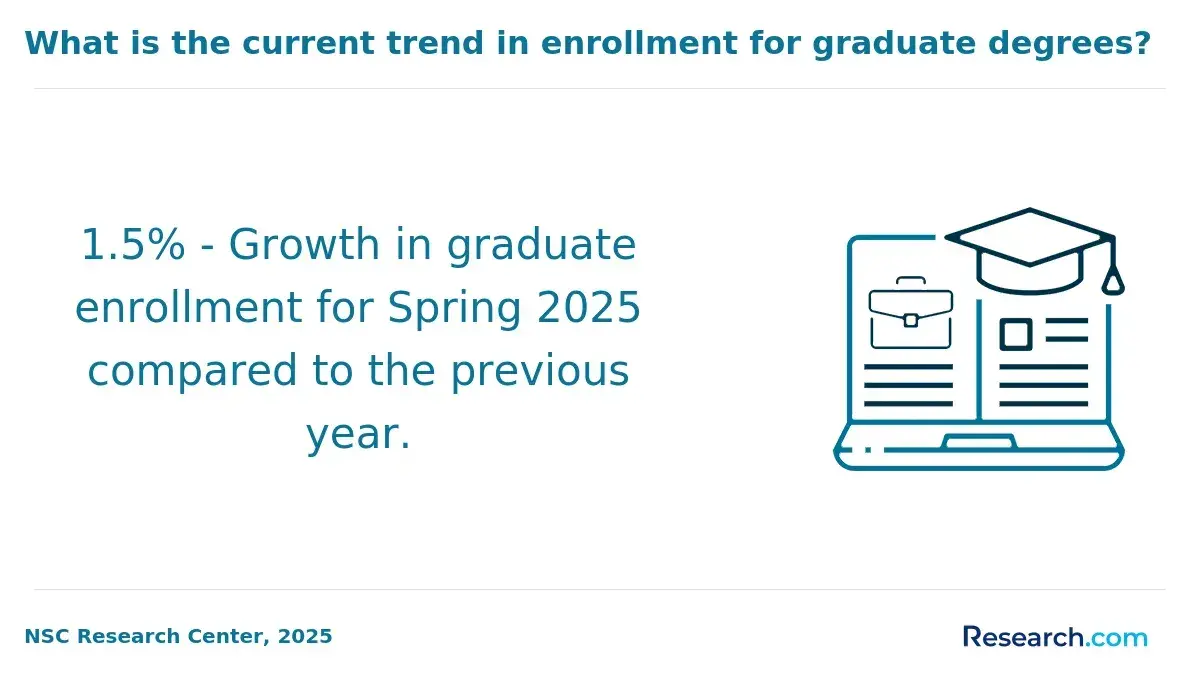
What are the similarities between Political Science Degree Programs and Economics Degree Programs?
Political science and economics are both social science degrees that help students understand how societies function. They differ in emphasis, but both examine institutions, incentives, policy decisions, public problems, and the consequences of collective choices.
- Both study large social systems: Political science focuses on governments, political institutions, laws, and power relationships. Economics focuses on markets, resources, incentives, and financial behavior. In practice, the two often overlap in areas such as taxation, regulation, welfare policy, trade, development, and public budgeting.
- Both require evidence-based reasoning: Students in both fields learn to make claims using evidence rather than opinion. Political science may rely more heavily on legal texts, historical records, interviews, public documents, and case comparisons. Economics often relies more heavily on data sets, statistical models, and mathematical reasoning.
- Both include research methods: Research design, statistics, and data interpretation appear in both majors. Political science students may use surveys, polling data, and policy evaluation. Economics students typically go deeper into econometrics, forecasting, and quantitative modeling.
- Both prepare students for policy-related work: Graduates can contribute to policy analysis, public administration, consulting, advocacy, research, journalism, and international organizations. The main difference is whether they approach problems primarily through political institutions and governance or through markets and resource allocation.
- Both can support graduate study: Political science can lead to law school, public policy, public administration, international relations, or doctoral study. Economics can lead to graduate programs in economics, finance, public policy, business analytics, or related fields.
- Both usually follow similar degree timelines: Bachelor's degrees typically last four years and master's programs two years, often culminating in a research project or dissertation emphasizing independent inquiry.
- Both value strong academic preparation: Admission criteria commonly reward strong high school performance, especially in mathematics and social studies, along with analytical writing and logical reasoning skills.
Because the fields intersect, some universities offer interdisciplinary options such as International Political Economy. These programs can be a strong fit for students interested in trade, development, global institutions, political risk, and economic policy.
Students who want a lower-cost or flexible starting point may also consider the fastest online associates degree programs before transferring into a bachelor's program in political science, economics, public policy, or a related field.
What are the differences between Political Science Degree Programs and Economics Degree Programs?
The main difference is the lens each degree uses. Political science asks who has power, how decisions are made, and how institutions govern behavior. Economics asks how incentives, scarcity, markets, and policies influence choices and outcomes.
- Subject focus: Political science investigates government systems, elections, lawmaking, political behavior, public administration, international affairs, and political theory. Economics concentrates on economic theory, markets, production, consumption, labor, trade, inflation, development, and fiscal policies.
- Typical coursework: Political science students take courses in comparative politics, American government, international relations, constitutional systems, political theory, public policy, and qualitative research methods. Economics students take microeconomics, macroeconomics, statistics, econometrics, calculus, and sometimes programming skills like R or Python.
- Primary assignments: Political science courses often require essays, policy briefs, case studies, debates, literature reviews, and research papers. Economics courses often include problem sets, exams, data analysis projects, models, and empirical research.
- Research style: Political science students may analyze legislation, court decisions, public opinion, institutional behavior, or political campaigns. Economics students are more likely to analyze data trends, build models, test hypotheses, and evaluate measurable outcomes.
- Internship settings: Political science majors often intern in government offices, courts, campaigns, advocacy groups, think tanks, NGOs, or international organizations. Economics majors often intern in finance, consulting, business analytics, economic research, policy research, and government agencies.
- Career direction: Political science graduates often move toward public service, law, diplomacy, campaigns, policy, advocacy, or academia. Economics graduates often pursue finance, consulting, data analysis, market research, business strategy, and economic policy roles with generally higher salary potentials.
- Skill emphasis: Political science builds institutional analysis, persuasive writing, policy interpretation, and political judgment. Economics builds quantitative analysis, statistical reasoning, forecasting, and model-based decision-making.
A simple way to compare the two: choose political science if you want to understand how decisions are made through institutions and power. Choose economics if you want to understand how decisions are shaped by incentives, resources, and measurable trade-offs.
What skills do you gain from Political Science Degree Programs vs Economics Degree Programs?
Both degrees develop analytical thinking, but they train students to analyze different kinds of evidence. Political science emphasizes institutions, arguments, policy documents, public behavior, and governance. Economics emphasizes numbers, models, trends, incentives, and measurable outcomes.
Skills gained in Political Science Degree Programs
- Qualitative research: Students learn to gather and interpret evidence from interviews, speeches, legislation, court opinions, historical records, policy documents, and case studies.
- Policy analysis: Political science majors learn to evaluate how laws and programs are designed, who they affect, and why implementation succeeds or fails.
- Critical reading: Students practice reading dense texts, including political theory, legal materials, government reports, and academic research.
- Argument construction: The major strengthens the ability to build a clear claim, support it with evidence, address counterarguments, and explain implications.
- Written and oral communication: Students often write policy briefs, research papers, memos, and essays, and may present arguments in class discussions, simulations, or debates.
- Institutional understanding: Graduates learn how legislatures, courts, executives, agencies, parties, interest groups, and international organizations operate.
Skills gained in Economics Degree Programs
- Quantitative analysis: Economics students use statistics and mathematical reasoning to analyze behavior, markets, policies, and economic outcomes.
- Mathematical modeling: Students learn to simplify complex problems into models that can clarify incentives, constraints, trade-offs, and likely effects.
- Econometrics: Training in regression analysis and econometrics helps students test relationships, evaluate policies, and interpret data with more rigor.
- Data interpretation: Students build skill with tools such as Excel, R, or Stata to organize data, identify patterns, and communicate findings.
- Forecasting and scenario analysis: Economics students learn how to reason through likely outcomes under changing market, policy, or business conditions.
- Cost-benefit thinking: The major develops a habit of comparing alternatives, weighing trade-offs, and identifying opportunity costs.
Students comparing analytical skills in political science vs economics should focus on the type of analysis they want to use most often. Political science leans toward systems, institutions, public reasoning, and persuasion. Economics leans toward numerical reasoning, modeling, measurement, and forecasting. Both can support strong communication and critical thinking skills, especially for students who choose internships, research projects, and writing-intensive courses.
If academic difficulty is part of your decision, you may also want to compare the easiest bachelor's degree to get with your actual career goals rather than choosing a major only because it appears more manageable.
Which is more difficult, Political Science Degree Programs or Economics Degree Programs?
Economics is often considered more technically difficult because it requires more mathematics, statistics, and quantitative modeling. Political science can be equally demanding for students who struggle with heavy reading, abstract theory, writing, and open-ended analysis. The harder major depends on your strengths.
Economics degree programs typically involve calculus, statistics, econometrics, graphs, models, technical exams, and problem sets. Students must be comfortable translating real-world issues into mathematical or statistical frameworks. The average GPA of 2.95 indicates the challenging nature of the coursework. Students who dislike math-heavy work may find economics frustrating even if they enjoy policy or business topics.
Political science degree programs usually require extensive reading, argumentative writing, theoretical interpretation, and qualitative research. Assignments may include essays, policy memos, research papers, class debates, and case analyses. Students who prefer clear numerical answers may find political science difficult because many questions require weighing competing evidence and defending a position rather than solving for a single result.
Which students may find economics harder?
- Students who are uncomfortable with calculus, statistics, or data analysis
- Students who dislike technical exams and problem sets
- Students who prefer discussion-based learning over model-based reasoning
- Students who struggle to interpret charts, equations, or statistical results
Which students may find political science harder?
- Students who dislike long reading assignments
- Students who struggle with essay writing and argument structure
- Students who prefer exact answers over interpretive analysis
- Students who find political theory, law, or institutional analysis too abstract
If cost is also part of your decision, reviewing how much is an associate degree can help you compare lower-cost pathways before committing to a bachelor's program in either field.
What are the career outcomes for Political Science Degree Programs vs Economics Degree Programs?
Political science and economics can both lead to strong careers, but they tend to open different first doors. Political science is more directly connected to government, policy, law, advocacy, diplomacy, and public affairs. Economics is more directly connected to finance, consulting, analytics, market research, business strategy, and economic policy.
Career Outcomes for Political Science Degree Programs
Political science graduates in the United States often pursue careers in government, public administration, public policy, law-related work, campaigns, nonprofit organizations, journalism, lobbying, advocacy, and international affairs. Income potential varies by role, region, employer, and education level, and it often increases with advanced degrees or specialized experience.
- Policy analyst: Researches public issues, evaluates policy options, and develops evidence-based recommendations for agencies, think tanks, nonprofits, or elected officials.
- Legislative assistant: Supports lawmakers through research, constituent communication, hearing preparation, bill tracking, and policy drafting.
- Public relations executive: Manages communication strategies for political organizations, campaigns, public agencies, advocacy groups, or policy-focused organizations.
- Campaign or political staff member: Works on voter outreach, messaging, field operations, fundraising, research, or communications.
- Nonprofit or advocacy professional: Uses policy knowledge to support issue campaigns, community programs, grant work, or public education.
Many competitive roles, including civil service, diplomacy, law, and senior policy positions, may require exams, internships, graduate education, professional networks, or specialized credentials. Students interested in law should also remember that political science can be useful preparation, but it is not a law degree.
Career Outcomes for Economics Degree Programs
Economics graduates are often valued for their quantitative reasoning and ability to interpret data. In India and elsewhere, the economics degree job prospects and salary in India often reflect opportunities in finance, consulting, analytics, government, and research. Starting salary potential can be stronger when graduates also have technical skills in statistics, programming, spreadsheets, or business analytics.
- Financial consultant: Advises clients or organizations on investments, financial planning, risk management, and long-term financial decisions.
- Market research analyst: Studies market trends, consumer behavior, pricing, competitors, and demand to support business decisions.
- Economist: Analyzes economic data, studies policy effects, prepares forecasts, and supports decision-making in government, research, finance, or business settings.
- Data or business analyst: Uses economic reasoning and quantitative tools to interpret performance, costs, demand, and operational trends.
- Consulting analyst: Helps organizations evaluate markets, pricing, strategy, policy effects, or investment decisions.
Industries hiring economics graduates include banking, investment firms, consulting companies, research organizations, government agencies, and business strategy teams. Students aiming for economist titles should check job requirements carefully because some positions may prefer or require graduate study.
For students considering flexible ways to build credentials, the top non profit accredited online colleges can help identify accredited options for advancing in either political science or economics.
How much does it cost to pursue Political Science Degree Programs vs Economics Degree Programs?
The cost of a political science or economics degree depends more on the institution than on the major. Tuition varies by public or private status, in-state or out-of-state residency, online or on-campus format, degree level, and available aid. Students should compare total cost of attendance, not tuition alone, because housing, fees, books, transportation, and lost work time can significantly affect affordability.
For Political Science bachelor's programs, public institutions typically charge between $15,000 and $20,000 annually for residents, while private universities often ask for $50,000 to $60,000 each year. Online master's degrees in Political Science can reduce expenses significantly, with some accredited programs costing around $7,300 per year. On-campus master's programs may range from $10,000 up to $40,000 annually. Doctoral studies in this field are frequently supported by assistantships, though costs at private universities can exceed $60,000 yearly without financial aid.
Economics undergraduate programs show similar pricing patterns: public universities usually keep tuition under $20,000 for residents, while top-tier private schools average approximately $60,000 yearly. Economics master's degrees can be quite costly, often falling between $50,000 and $70,000 in total tuition, particularly at elite institutions. Like Political Science doctorates, Economics doctoral candidates often receive funding through teaching or research roles, which can substantially reduce out-of-pocket fees.
Cost factors to compare before enrolling
- Residency status: In-state public tuition is often much lower than out-of-state or private tuition.
- Delivery format: Online programs may reduce housing and commuting expenses, but students should still compare fees and course requirements.
- Program level: Master's and doctoral costs vary widely, and doctoral funding can make a major difference in out-of-pocket expenses.
- Internship location: Political science students may benefit from being near government centers, courts, or policy organizations. Economics students may benefit from access to finance, consulting, or research hubs.
- Financial aid: Scholarships, grants, work-study, assistantships, employer tuition support, and in-state tuition benefits can change the real cost substantially.
- Return on investment: Compare expected career paths, not just tuition. A lower-cost program with strong internship placement may be more valuable than a higher-priced option with limited career support.
Before committing, ask each program for net price estimates, transfer credit policies, internship support, job placement resources, and information about graduate funding if you plan to continue beyond the bachelor's degree.
How to choose between Political Science Degree Programs and Economics Degree Programs?
Choose political science if you are more interested in government, law, elections, diplomacy, public institutions, social movements, public administration, and policy debates. Choose economics if you are more interested in markets, money, data, incentives, forecasting, business decisions, and measurable policy outcomes.
- Clarify your career goals: Economics graduates often enter finance, consulting, analytics, and business roles with higher median salaries. Political science majors tend to work in public administration, policy, advocacy, law-related fields, campaigns, and international affairs.
- Be honest about your academic strengths: Economics requires comfort with mathematics, statistics, and data analysis. Political science rewards strong reading, writing, argumentation, and conceptual thinking.
- Review the actual curriculum: Do not choose based only on the major title. Look at required courses, math prerequisites, research methods, capstone expectations, and available concentrations.
- Compare internship access: Economics internships often focus on data analysis, finance, consulting, and research. Political science internships often involve government offices, NGOs, campaigns, courts, advocacy organizations, or policy institutes.
- Think about graduate school: Political science can be a strong foundation for law, public policy, public administration, international relations, and academic research. Economics can support graduate study in economics, finance, analytics, business, and public policy.
- Consider a combined path: Students interested in both fields can look for minors, double majors, or interdisciplinary programs in public policy, political economy, international political economy, public administration, or data analytics.
- Test your interest early: Take introductory political science and economics courses before declaring if possible. Your performance and motivation in those courses can reveal which major fits better than general career descriptions.
A practical decision rule is this: if you want to explain how institutions make decisions, political science is likely the better fit. If you want to measure how choices affect markets, costs, growth, and behavior, economics is likely the better fit.
Students still comparing programs can review top schools with national accredited status to evaluate accredited options, delivery formats, and program requirements. Accreditation, cost, transferability, faculty expertise, internship access, and career services should all factor into the final choice.
What Graduates Say About Their Degrees in Political Science Degree Programs and Economics Degree Programs
- Uri: "Political Science opened my eyes to the intricate mechanisms of governance and policy-making. Though the coursework was challenging, it sharpened my critical thinking and research skills-tools I've leveraged daily in my role at a public policy institute. The program's emphasis on practical internships gave me a unique foothold in the political landscape, accelerating my career trajectory."
- Errol: "Studying Economics taught me not just theory but how to apply quantitative methods to real-world problems. I particularly valued the econometrics training, which enhanced my analytical abilities and confidence in data-driven decision-making. These skills have been invaluable, allowing me to transition smoothly into a financial analyst role at a major firm."
- Mark: "Undertaking a Political Science degree pushed me to see perspectives beyond the classroom. Engaging in simulations and debates prepared me for the complexities of diplomacy and international relations. Professionally, the degree has provided steady growth and a rewarding career in government services."
Other Things You Should Know About Political Science Degree Programs & Economics Degree Programs
In 2027, Political Science focuses on government systems, public policy, and international relations, while Economics emphasizes quantitative analysis in markets. Graduate studies in Political Science might lead to specializations like International Relations, whereas Economics often branches into areas like Finance or Development Economics.
In 2027, Political Science degrees often include courses in political theory, international relations, and public policy. Economics degrees focus on microeconomics, macroeconomics, and econometrics. Each program requires a mix of core classes and electives specific to their discipline.
References
- 'Charting Your Career Path as an Economics and/or Political Science Graduate' – a Career Talk by YB Dr Ong Kian Ming - The University of Nottingham - Malaysia Campus 'Charting Your Career Path as an Economics and/or Political Science Graduate' – a Career Talk by YB Dr Ong Kian Ming https://www.nottingham.edu.my/Economics/Newsitems/Charting-Your-Career-Path-as-an-Economics-andor-Political-Science-Graduate-%E2%80%93-a-Career-Talk-by-YB-Dr-Ong-Kian-Ming.aspx
- Economics vs. Political science - College Majors - College Confidential Forums https://talk.collegeconfidential.com/t/economics-vs-political-science/2064475
- What is Economics? | Department of Economics | Illinois https://economics.illinois.edu/academics/undergraduate-program/what-economics
- Choosing between Economic degree and Political science degree — ECONOMICS, POLITICS AND SOCIAL SCIENCES - Laurea - Bologna https://corsi.unibo.it/1cycle/EconomicsPoliticsSocialSciences/choosing-between-economic-degree-and-political-science-degree
- Simon Says: Why economics majors earn more money - Augusta Business Daily https://augustabusinessdaily.com/simon-says-why-economics-majors-earn-more-money/
- The Economic Value of a Political Science Major https://www.easternct.edu/political-science/highlights/2016/the-economic-value-of-a-political-science-major.html
- BA in Economics vs. BA in Political Science https://sophiaonlinecollege.com/ba-in-economics-vs-ba-in-political-science/
- Careers & Outcomes - Politics and Economics | Calvin University https://calvin.edu/academics/school-humanities-arts-and-social-sciences/politics-and-economics/careers-outcomes
- Marketable Skills https://polisci.indiana.edu/career-preparation/marketable-skills.html
- Should I Major in Economics or Political Science? https://www.youtube.com/watch


