2027 Best Online MBA Programs for Entrepreneurship & Startups

Co-Founder and Chief Data Scientist
Choosing an online MBA for entrepreneurship is not the same as choosing the lowest-cost or highest-ranked MBA. If your goal is to launch a company, grow a family business, move into venture-backed startups, or lead innovation inside an established organization, the program must give you more than general management theory. You need practical coursework in opportunity testing, startup finance, business model design, customer discovery, scaling, and pitching—plus access to mentors, peers, and alumni who understand early-stage business risk.
This guide explains how to compare online MBA programs for entrepreneurship and startups in a practical way. You will find a shortlist of notable programs, key curriculum differences, expected time and cost ranges, admissions considerations, accreditation issues, career outcomes, format trade-offs, and emerging trends shaping entrepreneurship-focused MBA education.
Key Benefits of Getting Into Online MBA Programs for Entrepreneurship & Startups
- This degree can lead to roles such as startup founder, innovation manager, venture capital associate, or business development lead in a growth-stage company.
- Graduates of entrepreneurship-specialised MBA programs earn median salaries that reflect strong business and financial occupations, with reported figures around $80,000 and above.
- Getting this degree online offers flexibility to continue working, balance personal commitments, reduce commuting/housing costs, and immediately apply learning to your startup or side hustle.
What are the best online MBA programs for entrepreneurship & startups?
The best online MBA program for entrepreneurship depends on your goal: launching a venture, growing an existing business, joining a startup, managing a family enterprise, or moving into corporate innovation. The programs below are useful starting points because they offer entrepreneurship-oriented coursework, concentrations, specializations, or program positioning that may fit startup-minded students.
- Indiana University – Kelley School of Business – Online MBA with Concentration in Entrepreneurship & Corporate Innovation.
- University of North Carolina at Chapel Hill – Kenan‑Flagler Business School – Online MBA@UNC with an Entrepreneurship concentration.
- Ohio University – Online MBA with a Business Venturing & Entrepreneurship concentration.
- Louisiana State University Shreveport – Online MBA in Entrepreneurship & Family Enterprise, often considered a strong option for cost-conscious students.
- University of West Florida – Online MBA with an Emphasis in Entrepreneurship and AACSB accreditation.
- Syracuse University – Whitman School of Management – Online MBA with Specialization in Entrepreneurship.
- Babson College – Online MBA, part-time, with a strong orientation toward entrepreneurial leadership and innovation.
- Colorado Technical University – Online MBA in Entrepreneurship, with attention to startups and small business challenges.
- University of North Carolina Wilmington – Online MBA with Specialization in Entrepreneurship & Business Development, offered 100 % online.
- Southern New Hampshire University – MBA in Entrepreneurship, online, with an entrepreneurship track that may suit students seeking a flexible business degree.
Treat any list of “best” programs as a shortlist, not a final answer. The right program should match your stage of entrepreneurship. A first-time founder may need customer discovery, venture planning, and mentor access. A working manager moving into innovation may need corporate entrepreneurship, product strategy, and change leadership. A family business owner may benefit more from succession planning, finance, operations, and growth strategy.
Use these criteria when comparing programs:
- Accreditation: Confirm institutional and business-school accreditation before weighing rankings or marketing claims.
- Entrepreneurship depth: Look for more than one elective. Strong programs include venture creation, startup finance, innovation, scaling, and a capstone or pitch component.
- Format: Compare asynchronous and synchronous delivery, required residencies, group work expectations, and whether you can study part time.
- Network access: Ask whether online students receive meaningful access to faculty, mentors, alumni founders, startup competitions, or incubators.
- Total cost: Compare tuition, fees, travel, books, technology costs, and the opportunity cost of time away from your venture.
If price is a major factor, review the most affordable online MBA programs alongside entrepreneurship-focused options. A lower-cost MBA can be a better decision if it is accredited, flexible, and aligned with your business goals; a more expensive program may be worth it only if the network, brand, and venture support justify the added cost.
How do online MBA programs for entrepreneurship differ from general online MBAs?
An online MBA in entrepreneurship differs from a general online MBA by focusing less on managing established business units and more on identifying, testing, funding, launching, and scaling new opportunities. Both types of MBA usually cover core business disciplines such as finance, accounting, marketing, strategy, leadership, and operations. The difference is how those skills are applied.
| Program feature | General online MBA | Online MBA for entrepreneurship |
| Curriculum focus | Broad management, leadership, finance, marketing, operations, and strategy | Venture creation, innovation, startup finance, business model design, market validation, and scaling |
| Typical projects | Case studies, corporate strategy projects, functional business analysis | Business plans, pitch decks, customer discovery, venture feasibility studies, or startup capstones |
| Peer network | Managers and professionals across industries | Founders, small business owners, product builders, innovation managers, and startup-oriented professionals |
| Career emphasis | Promotion, management transition, consulting, or corporate leadership | Startup launch, venture growth, business development, product leadership, family enterprise, or corporate innovation |
| Success measures | Career advancement, salary growth, leadership responsibility | Venture progress, funding readiness, market traction, innovation roles, and business growth |
The best entrepreneurship MBA programs are practical. They should help you test whether a business idea has a real market, understand how to finance growth, decide when to pivot, and communicate your venture clearly to customers, partners, lenders, or investors. A weak entrepreneurship concentration may simply add one or two electives to a standard MBA; a stronger one integrates venture-building throughout the student experience.
Cost and accreditation still matter. Some students can find strong value by comparing cheap AACSB online MBA programs, especially if they want a recognized business credential without taking on unnecessary debt. The best choice is not automatically the most expensive program; it is the one with the right mix of credibility, flexibility, curriculum depth, and network access.
Online delivery can also be an advantage for entrepreneurs. A flexible program may let you keep working, running a business, testing a product, or building customer relationships while applying MBA coursework directly to real decisions.
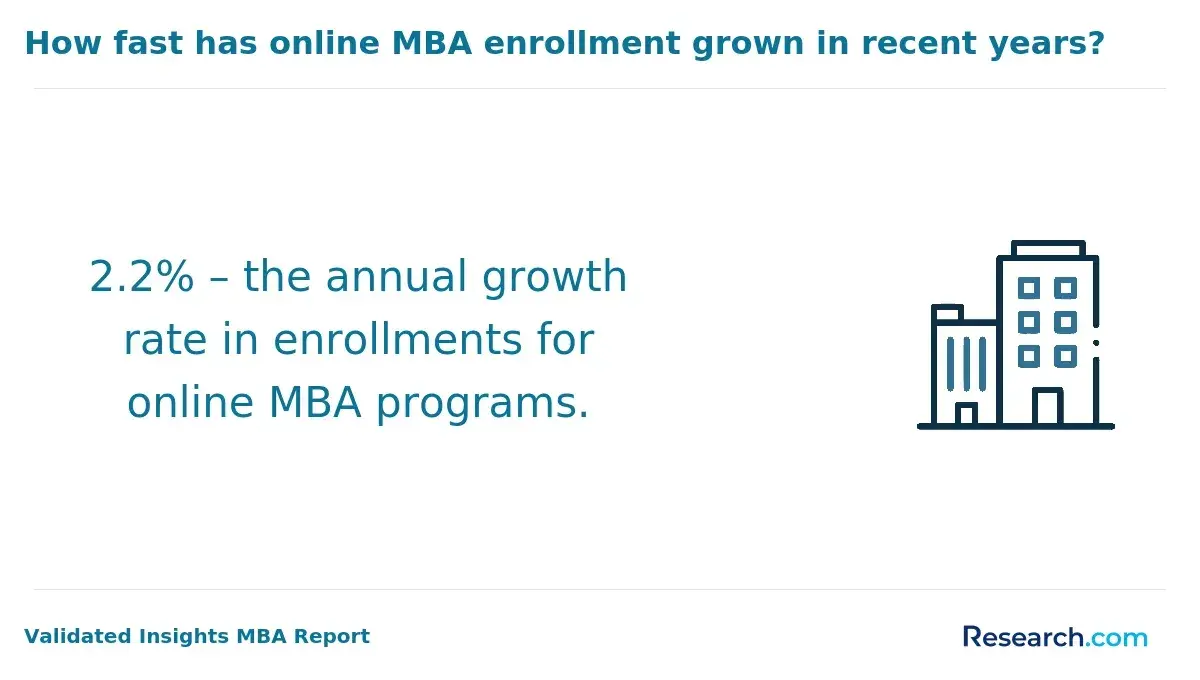
What should aspiring startup founders look for in an online MBA curriculum?
Aspiring founders should look for an online MBA curriculum that helps them move from idea to evidence. The strongest programs do not only teach how businesses work; they help students evaluate whether a venture should be built, how it should make money, who the customer is, what risks matter most, and how growth will be financed.
Essential curriculum features
- Core business foundation: Accounting, finance, marketing, operations, strategy, leadership, and analytics are still essential. Founders need to read financial statements, price products, manage cash, understand customers, hire teams, and make trade-offs under uncertainty.
- New venture creation: Look for courses in opportunity recognition, business model design, market validation, customer discovery, and new venture formation.
- Startup finance: A strong curriculum should cover bootstrapping, cash-flow planning, valuation basics, fundraising, investor expectations, and financial forecasting.
- Growth and scaling: Useful courses may address sales strategy, growth marketing, product-market fit, operations, hiring, partnerships, and international or digital expansion.
- Innovation and product strategy: Founders benefit from learning how to turn customer problems into viable products, services, or platforms.
- Capstone or venture project: Ideally, you should be able to build, test, revise, and present a venture plan or pitch using your own business idea.
- Mentorship and feedback: Programs with faculty mentors, entrepreneur-in-residence models, alumni advisors, incubators, or pitch events can provide more useful feedback than coursework alone.
- Flexible delivery: Asynchronous classes, part-time pacing, and multiple start dates can be important if you are actively building a company.
Questions to ask before applying
- Can I use my own startup idea in assignments, projects, and the capstone?
- Do online students get the same access to entrepreneurship centers, pitch events, alumni, and mentors as campus students?
- Are entrepreneurship courses taught by faculty with research expertise, startup experience, investment experience, or both?
- Does the program include work on customer discovery and market testing, or does it focus mainly on business-plan writing?
- How much group work is required, and will the schedule work with founder responsibilities?
Students with substantial management experience may also compare affordable executive MBA programs. An executive format may be more appropriate if you are already leading teams, managing budgets, or building a company while seeking higher-level strategy, leadership, and innovation training.
The main warning sign is a program that uses the word “entrepreneurship” but offers little evidence of founder-focused learning. Look for specific course titles, sample syllabi, capstone descriptions, mentor access, and alumni outcomes before committing.
How much time and cost should you expect for an online MBA in entrepreneurship?
Most online MBA programs in entrepreneurship take about 10 to 24 months, depending on whether the program is accelerated, full time, part time, or self-paced. Some programs can be completed in about 10 months. Students balancing work, family, or a startup often choose a slower pace because the value of the MBA depends on being able to absorb and apply the material, not just finish quickly.
Cost varies widely. Recent data show combined tuition from under $10,000 to over $150,000 depending on institution, length and format. That range makes careful comparison essential. A lower tuition program may be financially safer for a founder preserving startup capital, while a higher-cost program may be reasonable if it provides a stronger brand, alumni network, investor exposure, or specialized venture resources.
| Cost factor | Why it matters |
| Tuition | The largest direct cost and the easiest number to compare across programs. |
| Fees | Technology, student service, graduation, materials, and program fees can increase the total price. |
| Residencies or travel | Hybrid or residency-based online MBAs may require airfare, lodging, meals, and time away from work or your venture. |
| Books and materials | Some programs include materials; others require separate purchases. |
| Opportunity cost | Time spent studying is time not spent selling, building, fundraising, hiring, or managing operations. |
| Financing cost | Loans can increase the real cost of the degree through interest and repayment obligations. |
Before enrolling, calculate the full cost of attendance and ask whether scholarships, employer tuition assistance, payment plans, military benefits, or graduate aid may apply. Founders should be especially cautious about taking on debt if their income is unstable or if they also need capital for a business.
Admissions testing can also affect time and cost. Some students consider online MBA without GMAT options to reduce test preparation time, application friction, and upfront expenses. A test waiver can be useful, but it should not outweigh program quality, accreditation, curriculum fit, and total cost.
What career outcomes can you achieve with an online MBA in entrepreneurship?
An online MBA in entrepreneurship can support several career paths, but outcomes vary more than they do in traditional corporate tracks. Startup earnings, founder income, and equity value depend heavily on business performance, funding, timing, market conditions, and execution. For that reason, students should evaluate the degree by how well it improves decision-making, credibility, network access, and venture capability—not only by salary projections.
Common outcomes include:
- Founder or co-founder: Launching a new business, building a product, opening a service company, or commercializing an idea.
- Small business owner or operator: Improving finance, marketing, operations, and growth strategy for an existing business.
- Family enterprise leader: Preparing for succession, expansion, professionalization, or modernization of a family-owned company.
- Startup employee: Moving into business development, product operations, growth, partnerships, strategy, or general management at an early-stage company.
- Corporate innovation manager: Leading new product development, internal ventures, digital transformation, or strategic growth initiatives inside an established organization.
- Consultant or advisor: Supporting startups, small businesses, or innovation teams with planning, market research, financial modeling, or go-to-market strategy.
Salary data for entrepreneurship-related paths are difficult to generalize because founders may earn little at first, draw owner income later, or benefit from equity only if the business succeeds. For broader business and financial occupations, the median annual wage in recent years was around $80,920.
When comparing programs, ask for concrete outcome information. Useful questions include how many students launched companies, how many joined startups, what kinds of roles graduates accepted, whether alumni raised funding, and whether the school tracks venture survival or growth. If the program cannot provide entrepreneurship-specific outcome data, evaluate whether its broader MBA career services and alumni network still support your goals.
The degree can be valuable even if you do not launch immediately. Many students use entrepreneurship coursework to become more effective product leaders, business developers, consultants, operators, or innovation managers before starting a company later.
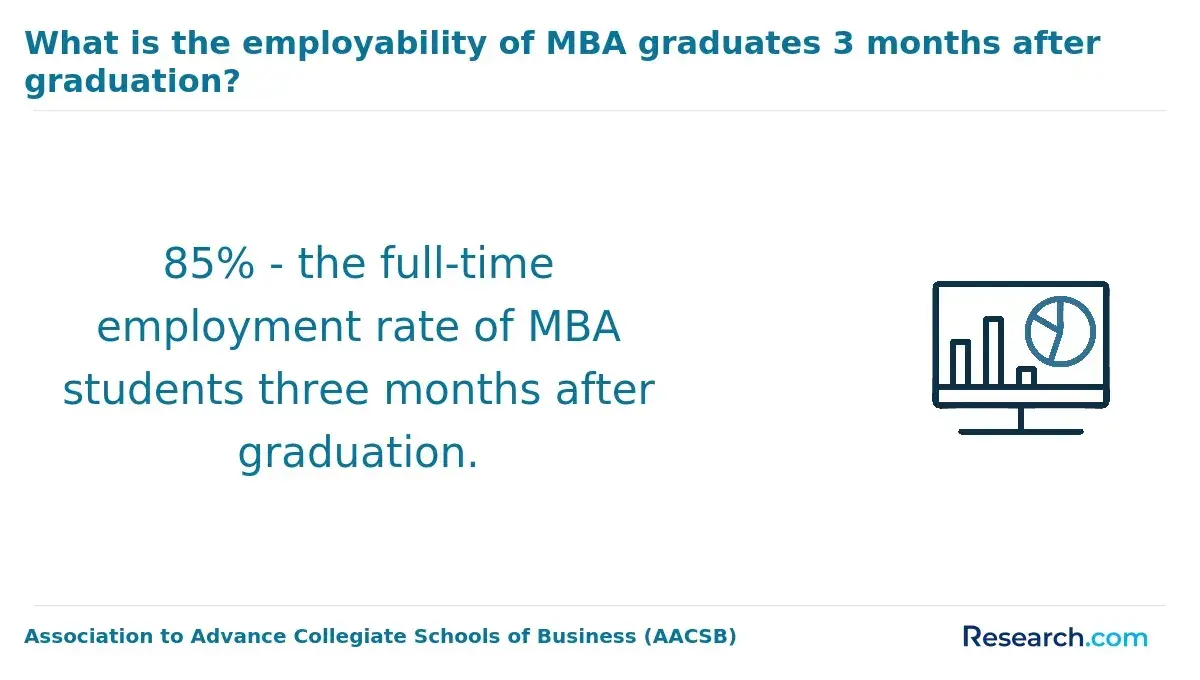
How do accreditation impact the value of an online MBA for entrepreneurship?
Accreditation affects the value of an online MBA because it helps verify that the institution or business program meets recognized standards for academic quality, faculty qualifications, curriculum review, and student support. For entrepreneurship students, accreditation does not guarantee startup success, but it can reduce the risk of investing in a weak or poorly recognized degree.
Common accreditation signals include Association to Advance Collegiate Schools of Business (AACSB), Accreditation Council for Business Schools and Programs (ACBSP), and regional agencies. AACSB and ACBSP are business-focused accreditors, while regional accreditation applies to the institution. Students should confirm accreditation directly through the school and accreditor rather than relying only on advertising language.
Rankings can be useful, but they should be treated as one data point. A ranked program may have a stronger reputation, broader alumni network, or better-resourced entrepreneurship ecosystem. However, rankings use different methodologies and may not measure what matters most to you, such as online student access to mentors, startup competitions, incubators, or founder alumni.
How to evaluate credibility
- Check accreditation status: Verify both institutional accreditation and business-school accreditation where applicable.
- Review entrepreneurship depth: Count the number of entrepreneurship-specific courses and examine whether they are electives, concentrations, or integrated program requirements.
- Look for real venture support: Strong programs may provide mentor networks, pitch events, incubator access, startup labs, or alumni founder connections.
- Ask about online access: Make sure online students can use the same entrepreneurship resources advertised by the school.
- Examine outcomes carefully: Ask whether the school tracks startups launched by alumni, innovation roles, funding activity, or business growth.
For startup founders, school reputation can help with credibility in some settings, but it is not a substitute for traction, customers, revenue, product quality, or execution. Choose an accredited program that strengthens your venture skills and network rather than relying on ranking alone.
What are the admission requirements for online MBA programs in entrepreneurship?
Admission requirements for online MBA programs in entrepreneurship are usually similar to general MBA requirements, with added emphasis on professional experience, leadership potential, and entrepreneurial goals. Some programs welcome applicants who have already started a business, while others are designed for working professionals who want to move into startups, innovation, or business ownership.
Typical requirements include:
- A bachelor’s degree from an accredited institution
- Official transcripts and any required minimum GPA threshold
- A resume showing professional work experience, leadership, business ownership, startup involvement, or relevant career progression
- A statement of purpose, personal essay, or goal statement explaining your entrepreneurial interests
- Letters of recommendation from supervisors, faculty, clients, investors, mentors, or business partners
- GMAT or GRE scores, if required, though some online programs offer waivers or test-optional pathways
- An interview, in some programs
Many applicants have 2-5 years of professional experience, though some programs may consider less traditional backgrounds, especially for founders or applicants with meaningful business experience. Industry sources note that many entrepreneurship-MBA programs cover 36–54 credits and allow completion in 1-4 years.
Your application should connect your background to a clear goal. If you have a startup, describe the problem you are solving, the market you are exploring, your progress so far, and how the MBA would help. If you do not yet have a company, explain the industries, customer problems, or innovation areas you want to pursue.
Before applying, check deadlines, start-dates, test waiver policies, transcript requirements, prerequisite coursework, residency expectations, and synchronous class commitments. A program may be online, but that does not always mean it is fully self-paced or free of scheduled obligations.
Can you launch a startup while pursuing an online MBA in entrepreneurship?
Yes. Many students launch or grow a startup while pursuing an online MBA in entrepreneurship, and for some founders the combination is especially useful because coursework can be applied immediately. A finance assignment can become a cash-flow model. A marketing project can become customer research. A capstone can become a pitch deck or venture plan.
The challenge is time. Building a company is unpredictable, and MBA coursework has deadlines. The best fit is usually a program with flexible pacing, asynchronous content, practical assignments, and faculty who allow students to connect projects to real ventures.
Look for these features if you plan to build while enrolled:
- Venture-based assignments: The ability to use your own startup idea for market research, financial modeling, strategy projects, and capstones.
- Startup track or concentration: Clear course sequences in entrepreneurship, innovation, business venturing, or new venture creation.
- Mentor access: Faculty, alumni, entrepreneurs-in-residence, incubator staff, or experienced founders who can give feedback.
- Pitch opportunities: Competitions, demo days, investor panels, or internal presentations that help refine your message.
- Flexible pacing: Part-time options, multiple start dates, and policies that help if your business demands spike.
- Peer network: Classmates who may become co-founders, advisors, early customers, partners, or sources of feedback.
To manage both responsibilities, treat school and startup work as connected rather than separate whenever possible. Use assignments to answer real business questions. Build a weekly schedule with protected blocks for coursework, customer conversations, product work, and rest. Decide in advance which business milestones matter most during each term so you do not spread attention across too many priorities.
Launching during an MBA is not the easiest path, but it can be productive when the program is flexible and the venture becomes a living laboratory for what you are learning.
How do you choose an MBA for entrepreneurship format?
The right MBA format depends on your schedule, learning style, location, budget, and stage of entrepreneurship. Online, hybrid, and on-campus formats can all support entrepreneurship, but they offer different trade-offs.
| Format | Best for | Main advantages | Potential drawbacks |
| Fully online | Working professionals, remote students, active founders, parents, and students who need maximum flexibility | Less travel, more scheduling flexibility, ability to apply coursework while working or building a venture | Networking may require more initiative; some startup resources may be less accessible unless designed for online students |
| Hybrid | Students who want online convenience with some in-person networking | Combines flexibility with residencies, campus events, or face-to-face relationship building | Travel, lodging, and time away from work or the business can add cost and complexity |
| On-campus | Students who can relocate or attend regularly and want immersion in a campus startup ecosystem | Strong in-person networking, easier access to events, faculty, teams, incubators, and local venture communities | Less flexible for founders or full-time workers; may require relocation or schedule disruption |
For entrepreneurship specifically, do not assume online means weaker. A well-designed online MBA can include live pitch sessions, virtual mentoring, group venture projects, alumni panels, and digital collaboration tools. The key question is whether the school has intentionally built entrepreneurship support for online students rather than simply streaming general MBA courses.
Ask these questions before choosing a format:
- Does the online format include meaningful virtual networking with classmates, faculty, mentors, and alumni?
- Are residencies required, optional, or unavailable?
- Can online students join pitch competitions, incubators, entrepreneurship centers, or startup clubs?
- How much synchronous attendance is required?
- Can you slow down, pause, or shift course loads if your startup requires more attention?
- Will group projects work across time zones and professional schedules?
If you are already operating a company, a fully online format may be the most practical choice. If you are still forming your network and can travel, a hybrid program may provide useful relationship-building. If you want the most immersive campus ecosystem and can commit to it, an on-campus format may be worth considering.
What emerging trends are shaping online MBA programs for entrepreneurship and startups?
Online MBA programs for entrepreneurship are changing as startups become more digital, data-driven, global, and capital-efficient. Candidates should look for programs that update coursework and student support as business models, technology, and funding conditions change.
- Digital technology in entrepreneurship coursework: Many programs now include content related to AI, blockchain, web3, data analytics, digital platforms, and technology-enabled business models.
- Modular and stackable learning: Some programs allow students to complete micro-credentials or certificates that can build toward the full MBA over time, which may help working founders manage workload.
- Global online cohorts: Online MBA programs increasingly bring together students from different regions, industries, and markets, which can strengthen cross-border thinking and peer learning.
- More applied venture work: Programs are placing greater emphasis on live projects, accelerator-style experiences, investor-style pitch feedback, and venture launch support.
- Corporate innovation pathways: Entrepreneurship education is no longer only for founders. More students use it to lead new product lines, internal ventures, transformation projects, and growth initiatives within established companies.
- Flexible formats for working builders: Programs are adapting to students who are employed, freelancing, managing family responsibilities, or building businesses while enrolled.
These trends make program evaluation more important. Ask when entrepreneurship courses were last updated, whether faculty address current startup tools and funding realities, how online students participate in venture-building activities, and whether the program teaches both startup creation and innovation inside established organizations.
The strongest online MBA for entrepreneurship is not simply a business degree with a startup label. It is a program that helps you make better decisions under uncertainty, test ideas faster, understand money and markets, build useful relationships, and turn business knowledge into action.
Other Things You Should Know About Online MBA Programs for Entrepreneurship and Startups
In 2027, a comprehensive online MBA curriculum for entrepreneurship should include courses in innovation management, venture financing, business modeling, and digital marketing. Additionally, access to entrepreneurial labs, workshops, and networking opportunities with industry experts is vital to provide practical learning experiences.
Many online MBA programs for entrepreneurship in 2027 offer flexible learning options, such as asynchronous classes, allowing working professionals to study at their own pace. Schools like the University of North Carolina and Indiana University's Kelley School provide weekend and evening sessions to accommodate busy schedules.
References
- Bisoux, T. (2025, November 4). What trends are shaping business education? | AACSB. aacsb.edu.
- Harland, N. (2024, September 16). Should MBAs rethink their idea of entrepreneurship? | AACSB. aacsb.edu.
- Kent State University. (n.d.). MBA Statistics and Trends | Ambassador Crawford College of Business and Entrepreneurship | Kent State University. kent.edu.
- Menlo Coaching. (2025, October 8). Applying to MBAs with a GMAT (or GRE) Waiver. menlocoaching.com.
- Online Education. (2024, February 22). MBA Programs: AACSB vs. ACBSP vs. IACBE Accreditation. onlineeducation.com.