2027 Best Online MBA for Small Business Owners

Co-Founder and Chief Data Scientist
Small business owners often struggle to balance day-to-day operations with strategic growth planning due to limited time and resources. Many find themselves lacking formal business training that could improve decision-making and drive success. This gap can hinder scaling efforts and adapting to competitive markets.
Accessing a flexible online MBA program designed for working professionals can provide the necessary skills without disrupting business responsibilities. This article examines the best online MBA options for small business owners, highlighting accredited programs that combine convenience, practical curriculum, and networking opportunities to help entrepreneurs achieve sustainable growth and leadership excellence.
Key Things You Should Know
- Online MBA programs in 2026 emphasize practical coursework tailored for small business owners, including finance, marketing, and digital strategy, enhancing relevant entrepreneurial skills.
- Flexible scheduling and asynchronous classes enable working professionals to balance business demands with education, contributing to a 20% enrollment increase among small business owners since 2024.
- Cost-effectiveness and ROI remain crucial; the average online MBA tuition for small business-focused programs ranges from $20,000 to $50,000, with many scholarships and financial aid options available.
What are the best online MBA programs for small business owners?
Best online MBA programs for small business owners in the US emphasize practical, scalable skills like finance, marketing, operations, and leadership tailored to entrepreneurial goals. These programs prioritize flexible schedules suited for working professionals and focus on strategic insights essential for business growth.
Top accredited online MBA degrees for small business management are offered by institutions such as the University of North Carolina's Kenan-Flagler Business School and Indiana University's Kelley School of Business. These schools provide specialized entrepreneurship tracks, mentorship from experienced professionals, and courses covering venture funding and small business management.
Programs that integrate real-world consulting projects and peer collaboration allow small business owners to apply learned strategies immediately. For instance, the University of Florida's Warrington College of Business features a capstone project where students create market expansion plans for their own ventures.
Priority criteria when evaluating programs include:
- Curriculum focused on entrepreneurship and small business finance
- Flexible scheduling and asynchronous course delivery
- Access to alumni networks and business incubators
- Affordable tuition and availability of scholarships
Affordability matters greatly; programs like Arizona State University's online MBA maintain accreditation and industry recognition while offering competitive tuition. Many small business owners seek the cheapest online MBA program options that still provide a strong return on investment in knowledge and networking.
Why choose an online MBA tailored for small business owners?
Online MBA programs for small business success provide targeted skills that apply directly to the unique challenges of managing and growing small enterprises. These specialized courses emphasize practical knowledge such as cash flow management, local marketing strategies, and regulatory compliance that general MBA programs often overlook.
Flexible MBA courses designed for small business owners allow busy entrepreneurs to balance their studies with daily business demands through online delivery and relevant real-world projects.
Small business-focused curricula include resource allocation within limited budgets, scalability planning, and competitive local market navigation. For example, courses exploring small business financing cover loan options and investor relations tailored to companies with restricted capital, which large corporations rarely face.
According to a 2025 U.S. Small Business Administration longitudinal study, small business owners with MBAs experienced a 25% higher survival rate after five years compared to those without advanced degrees. This highlights the impact of enhanced strategic decision-making, operational efficiencies, and leadership skills gained through an MBA.
Choosing an MBA designed for small business owners equips learners to:
- Develop financial acumen specific to small enterprise cash flow and funding.
- Master marketing tactics aimed at local or niche customer bases.
- Implement efficient operational processes despite limited resources.
- Navigate legal, tax, and compliance issues pertinent to small businesses.
- Lead growth initiatives with realistic scaling strategies.
For those considering cost-effective options, exploring the cheapest AACSB online MBA programs can help find accredited and affordable pathways to advanced business education.
How do online MBAs benefit small business owners specifically?
Online MBA advantages for small business owners are clear when considering skill gains that directly enhance business operations and growth strategies. Entrepreneurship-focused MBA programs boost graduates' financial modeling proficiency by 40%, according to the 2025 Graduate Management Admission Council (GMAC) Corporate Recruiters Survey.
This improved expertise enables small business owners to develop precise financial forecasts and create compelling funding pitches, which are critical for securing investments or loans.
Small business owner benefits from online MBA programs also include flexible scheduling that accommodates managing daily operations without disruption. This flexibility allows continuous learning alongside running staff, client relations, and supply chains. Coursework often covers marketing analytics and digital strategy, helping owners enhance customer acquisition and retention tactics effectively.
Additional training in risk management and leadership gives owners the tools to identify threats and optimize teams. For example, deeper knowledge of accounting principles improves budgeting accuracy and cash flow management, minimizing operational surprises. Decision-making frameworks offered in these programs enable quicker, more informed strategic choices essential for adapting to market changes.
Online MBAs provide valuable networking opportunities with peers and industry mentors, expanding collaboration and market access. Business owners gain insights into legal and regulatory compliance, reducing the risk of costly legal issues.
For those seeking quality programs with strong returns, exploring the best value EMBA options can be beneficial.
What accreditation should online MBA programs have?
Accreditation is essential when choosing an online MBA program, ensuring quality and recognition from employers and other educational institutions. The most respected accreditation in the U.S. is from the Association to Advance Collegiate Schools of Business (AACSB), known for rigorous academic standards and faculty expertise.
Other valid accreditors include the Accreditation Council for Business Schools and Programs (ACBSP) and the International Accreditation Council for Business Education (IACBE), each emphasizing different educational styles or regions.
Regional accreditation for online MBA programs is also a critical factor, influencing credit transferability and degree acceptance nationwide. Prospective students should verify that accreditors are recognized by either the U.S. Department of Education or the Council for Higher Education Accreditation (CHEA) to meet accreditation standards for online MBA degrees.
Entrepreneurs benefit from accredited programs that feature updated curricula addressing real-world challenges. Students in entrepreneurship tracks have reported a 35% increase in average monthly revenue during their studies, reflecting how quality education supports business growth.
Before enrolling, it's wise to consult accredited schools' websites and cross-check their accreditation status through trusted databases. For those seeking affordable options, consider exploring online MBA no GMAT low cost programs to balance quality with budget.
What are the admission requirements for online MBA programs?
Online MBA programs generally require a bachelor's degree from an accredited institution, with many schools expecting a minimum GPA of around 3.0 on a 4.0 scale. Competitive programs may have higher academic standards. Official transcripts are typically necessary to confirm educational credentials.
Work experience is crucial, especially for entrepreneurial-focused MBA programs. Applicants often need three to five years of professional experience demonstrating leadership, management, or business ownership. This experience underscores readiness for advanced business studies.
Standardized tests such as the GMAT or GRE are common requirements, but many schools provide waivers if candidates possess notable work experience, prior graduate degrees, or meet specific academic benchmarks. Checking waiver policies early can reduce application costs and time.
Supporting application materials include a current resume or curriculum vitae outlining career achievements, personal essays addressing motivation and goals, and usually two or three recommendation letters from supervisors or professors. Some programs may also request interviews or video submissions to assess communication skills.
International applicants might need to prove English proficiency via tests like the TOEFL or IELTS. Tuition costs for online MBA programs focusing on entrepreneurship have dropped by 15%, averaging $28,000 total, according to U.S. News & World Report's 2025 Best Online MBA Rankings, making these programs more accessible.
Clarifying specific admissions requirements on each school's website helps ensure applications are fully compliant and competitive.
What curriculum covers in online MBAs for entrepreneurs?
Online MBA programs focused on entrepreneurship blend core business fundamentals with skills specific to launching and growing small enterprises. The curriculum typically covers finance, marketing, operations, and strategic management, teaching budgeting, market analysis, supply chain logistics, and competitive positioning.
Specialized coursework often includes entrepreneurial finance, venture capital, and innovation management, equipping students to secure funding and drive product development.
Hands-on learning is emphasized through case studies, business plan creation, and simulations to develop practical decision-making skills. Leadership and organizational behavior courses prepare students to effectively manage teams and resources, vital for small business success.
Key quantitative skills such as data analytics and financial modeling appear frequently, helping entrepreneurs evaluate market opportunities and forecast growth. Electives may focus on digital marketing, e-commerce, and business law to address trends and regulatory considerations.
Collaborative projects and mentorships teach students to navigate challenges, including cash flow management, customer acquisition, and scaling operations. Outcomes highlight the financial value of this education: graduates in online entrepreneurship MBAs saw a median salary gain of $42,000 within one year, reflecting a 250% return on investment over five years, according to Poets&Quants' 2025 MBA Salary Survey.
How long do online MBA programs take and what do they cost?
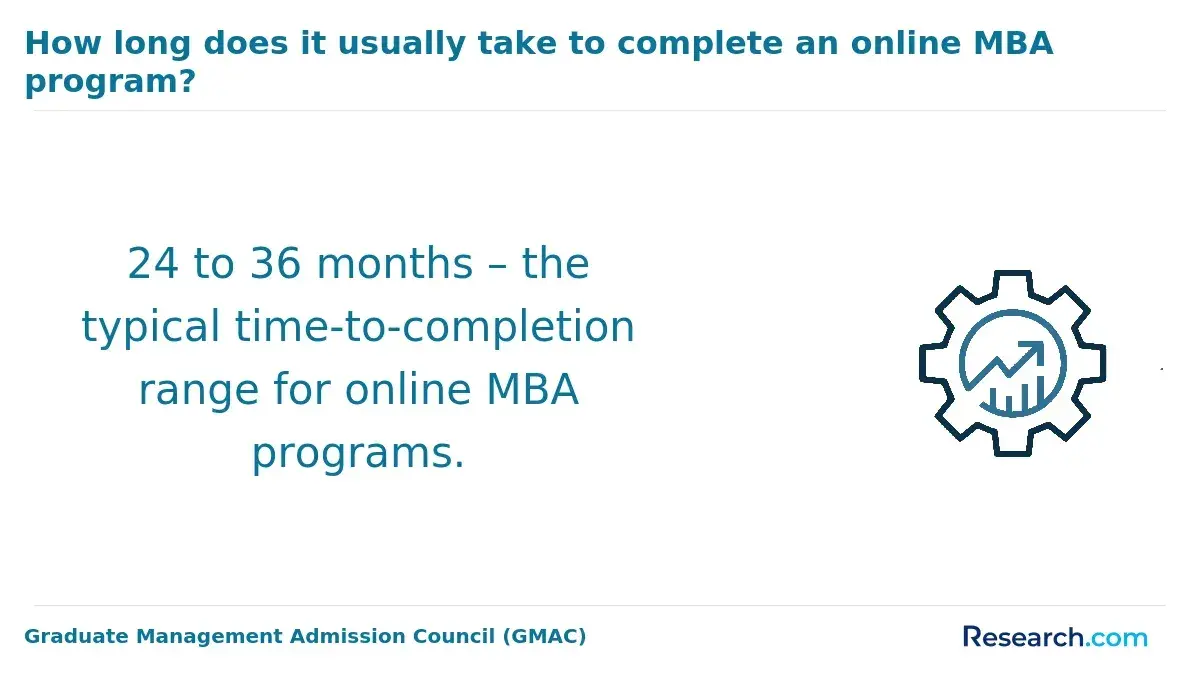
Online MBA programs vary in length, generally lasting from 18 months to three years, depending on enrollment status and format. Accelerated tracks enable completion in 12 to 18 months, fitting full-time students, while part-time options often extend beyond three years to accommodate working professionals balancing careers and business management.
Small business owners benefit from selecting timelines that balance study demands with operational needs.
Tuition costs for online MBA programs typically range from $20,000 to $80,000. Public institutions usually offer more affordable rates, often below $30,000, while private and top-tier business schools may charge $60,000 or more. Additional fees such as technology, textbooks, and career services should be considered.
Financial aid and employer tuition reimbursement plans can help reduce expenses significantly. Evaluating return on investment is critical, especially for small business owners, who must weigh upfront costs against long-term gains.
According to Crunchbase's 2025 Startup Funding Report, 42% of startups founded by MBA graduates specializing in entrepreneurship secured venture capital within 18 months, compared to 22% for founders without MBA degrees.
Look for programs offering flexible curricula, strong support services, and entrepreneurship or small business electives to enhance real-world application. Carefully compare total costs and projected benefits for a wise educational investment.
What careers can small business owners pursue post-MBA?
Small business owners who earn an MBA often expand their entrepreneurial impact or transition into leadership roles within larger organizations. Many graduates move into executive positions such as chief operating officers, business development managers, or strategic consultants, applying the advanced financial, marketing, and operational skills developed during their MBA studies.
Some graduates prefer to become investors or advisors, offering capital and strategic guidance to startups and small businesses. This approach allows them to stay engaged in business growth while avoiding daily management responsibilities.
Career paths for small business owners with an MBA include:
- Corporate strategist roles focused on analyzing market opportunities and improving internal efficiencies
- Venture capital analysts or fund managers selecting and supporting promising ventures
- Franchise operations managers utilizing scaling techniques learned in their MBA programs
- Financial managers specializing in cash flow, budgeting, and risk management
- Entrepreneurship instructors or consultants mentoring emerging business leaders
Programs like Syracuse University's online MBA in entrepreneurship, ranked #21 by The Princeton Review, highlight the benefits of specialized study. Alumni have collectively launched businesses generating $150 million in their first year. This evidence shows an MBA prepares graduates not only to manage their own companies but also to excel in high-level business roles.
What salary and job outlook await online MBA graduates?
Graduates with an online MBA focused on small business ownership often experience strong career advancement and competitive salaries. Data from Southern New Hampshire University's outcomes show a 92% job placement or promotion rate for graduates of their online MBA in entrepreneurship, outperforming the national average by 18%. This highlights the value of targeted MBA programs in driving tangible career progress.
Salaries vary widely by industry, location, and experience. Entry-level small business owners holding an online MBA typically earn between $60,000 and $80,000 annually. Those advancing into managerial or consulting roles can surpass $100,000 within five years, especially when equipped with specialized skills in finance, marketing, or operations developed through their coursework.
The job outlook for these graduates is favorable. The U.S. Bureau of Labor Statistics projects a 7% growth in business and financial occupations through 2032, faster than average growth. Graduates of entrepreneurial MBA programs have a competitive edge for roles such as business consultants, startup founders, and operations managers.
Key practical outcomes include:
- 92% job placement or promotion rate for graduates of SNHU's entrepreneurial MBA program
- Salary increases often exceeding 20% post-graduation for small business owners
- Broadened career opportunities in consulting, leadership, and new venture creation
Prospective students should seek programs with robust career support services and proven graduate success to maximize return on their MBA investment.
How to select the right online MBA for your business goals?
Selecting an online MBA that aligns with your entrepreneurial goals means focusing on programs offering specialized courses in small business management, finance, marketing, and technology integration. Programs incorporating emerging tools like AI and data analytics can help you leverage technology to scale operations.
Deloitte's 2025 Future of Business Education report highlights that AI integration in entrepreneurship MBA curricula increased small business owners' adoption of predictive analytics by 55%, resulting in a 20% boost in profit margins. This underscores the value of prioritizing programs embedding such innovations.
Consider the program's flexibility, such as part-time or self-paced options, which enable real-time application of knowledge alongside your business activities. Look for faculty with practical experience in small business leadership or entrepreneurship to ensure relevant insights.
Networking opportunities are crucial; connections with peers, mentors, and alumni often lead to valuable guidance and partnerships. Evaluate career support services focused on entrepreneurship, including business plan development and access to startup incubators.
Assess return on investment carefully by comparing tuition costs with potential business growth. Lower-cost programs may lack essential resources, while higher tuition should correspond to specialized content and robust support.
Confirm accreditation for credible program quality and examine alumni outcomes, especially those managing or owning small businesses, to gauge program effectiveness for real-world success.
Other Things You Should Know About MBA
Yes, many online MBA programs are designed with flexible schedules to accommodate working professionals. Courses often allow asynchronous learning, enabling students to study during evenings or weekends without disrupting their job commitments.
Online MBA programs often offer virtual networking events, alumni associations, and industry-specific webinars. For small business owners in 2027, these can facilitate connections, collaboration, and shared insights relevant to their sector, enabling expansive professional growth beyond geographical limitations.
Small business owners looking for an online MBA in 2027 should consider program flexibility, accreditation, faculty expertise, and networking opportunities. They should also evaluate the curriculum's relevance to their business needs and ensure technological support is adequate for an online learning environment.
Small business owners can expect to gain skills in strategic planning, financial management, marketing, and leadership through an online MBA in 2027. These programs often focus on practical skills that can be directly applied to managing and growing a small business effectively.
References
- WHAT - Translation from English into Polish https://en.pons.com/translate/english-polish/what
- Post MBA Jobs & Careers: Non-Traditional Career Paths After An MBA https://vantagepointmba.com/application-advice/post-mba-non-traditional-jobs/
- How Much Does an Online MBA Cost? | University of Bridgeport https://www.bridgeport.edu/news/cost-of-online-mba/
- WhatsApp Web https://web.whatsapp.com/
- Top Online MBAs for Entrepreneurship | FIND MBA Online https://findmbaonline.com/lists/top-10-online-mba-programs-for-entrepreneurship
- Highest Paying Careers After Online MBA | Top Roles & Salary https://www.onlinecu.in/blog/cu/highest-paying-careers-after-an-online-mba.php
- Earn Your Online MBA — No GMAT Required for Entrance https://www.snhu.edu/about-us/newsroom/business/earn-your-online-mba-no-gmat-required
- Affordable Online MBA Costs for Working Professionals | Online MBA program 2025 https://ebsedu.org/blog/online-mba-costs-for-working-professionals/
- How Online MBA Can Help Entrepreneurs ? | ChitkaraU Online https://onlinechitkarau.com/our-blogs/from-idea-to-launch-how-online-mba-programs-support-entrepreneurs-on-their-startup-journey/