
Oracle Siebel vs SAP Sales Cloud – 2027 Comparison

Co-Founder and Chief Data Scientist
Oracle Siebel vs SAP Sales Cloud Table of Contents
- What is Oracle Siebel?
- Who is Oracle Siebel for?
- Key Benefits of Oracle Siebel
- What is SAP Sales Cloud?
- Who is SAP Sales Cloud for?
- Key Benefits of SAP Sales Cloud
- Who are Oracle Siebel and SAP Sales Cloud best for?
- Oracle Siebel vs SAP Sales Cloud Feature Comparison
- Oracle Siebel vs SAP Sales Cloud Pricing
- Oracle Siebel Pros and Cons
- SAP Sales Cloud Pros and Cons
- Do Oracle Siebel and SAP Sales Cloud meet enterprise security and compliance requirements?
- What level of customer support do Oracle Siebel and SAP Sales Cloud provide?
- Industry-Specific Use Cases for Oracle Siebel and SAP Sales Cloud
- Verdict – Oracle Siebel vs SAP Sales Cloud: Which software is better?
What is Oracle Siebel?
Oracle Siebel is an all-in-one CRM that helps streamline the sales and contact management operations of large organizations and offers flexible tools that allow it to scale with smaller ones. The application, which can be deployed on-premise or in the cloud, offers numerous solutions, including account management, order management, partner relationship management, campaign management, email marketing, and customer portals. It also has specific solutions for over 20 industries.
The platform improves managers' visibility and account planning over an organization's sales operations through its pipeline management tools. These can be used for assigning leads and segmenting territories. The platform also allows users to quickly prepare quotes, see customers' transaction and communication histories, digitize and automate workflows, track quotes, and optimize marketing operations.
Oracle Siebel leverages AI to improve business intelligence. The software can provide accurate sales forecasts, analyze sales pipelines, provide insights on pricing activities, track the performance of sales and marketing teams, and automate application testing. In addition, the platform supports mobile sales, integrates with other Oracle products and widely used third-party applications, and provides an open UI framework to allow IT teams to customize solutions for their organizations.
Featured CRM Software Products

$9 to $150/user/month
Yes, up to 2 users
E-signature software, call transcription, conversation routing
Editor's Take
HubSpot CRM is a powerful customer relationship management platform designed to help businesses manage their sales, marketing, and customer service efforts in one centralized place. Its user-friendly interface allows teams to track leads, monitor customer interactions, and automate sales pipelines. With built-in tools for email marketing, contact management, and analytics, HubSpot CRM provides deep insights into customer behavior and sales performance. The platform also supports seamless collaboration between marketing and sales teams through real-time updates and integrations with tools like Gmail, Outlook, and Slack. Additionally, its automation features help reduce manual tasks, enabling teams to focus on building relationships and closing deals. HubSpot CRM is scalable, making it ideal for businesses of all sizes, from startups to large enterprises.
Expert Score
In evaluating SaaS software, a comprehensive and structured methodology ensures a fair and accurate comparison across key metrics. This approach focuses on the most critical aspects that affect user experience, functionality, and business value. The following metrics—general features, cost, customer service, integrations, and mobile support—are evaluated to provide a holistic view of each software solution’s strengths and weaknesses. These metrics are selected based on their direct impact on software usability, scalability, and long-term effectiveness for businesses.
1. General Features - scoring weight 40%
This metric evaluates the core functionalities and tools the software offers. It involves assessing the comprehensiveness of the features, their relevance to the target users, and the ease of use. This is important because robust and well-designed features determine the software's overall utility and efficiency in solving user problems.
2. Cost - scoring weight 15%
Cost analysis focuses on pricing models, value for money, and scalability. It's crucial to evaluate whether the software’s features justify its price, considering different plans for small and large organizations. This is vital for businesses to ensure they invest in cost-effective solutions that fit their budget.
3. Customer Service - scoring weight 15%
This evaluates the responsiveness, quality, and availability of customer support, including channels like chat, email, or phone. Good customer service is essential for troubleshooting and ensuring smooth software usage, which reduces downtime and frustration for users.
4. Integrations - scoring weight 15%
This examines how well the software integrates with third-party tools (e.g., CRM, payment systems, collaboration apps). Seamless integrations are key for creating a unified workflow and enhancing productivity by connecting multiple systems, which is crucial for operational efficiency.
5. Mobile Support - scoring weight 15%
Mobile support assesses the software’s functionality and performance on mobile devices, including apps and mobile web versions. With increasing remote work and on-the-go usage, strong mobile support is critical to ensure users can access and utilize the software effectively, regardless of location.

Custom
No
Sales automation, customer service, marketing
Editor's Take
NetSuite CRM is a comprehensive customer relationship management solution designed to support businesses in managing their entire customer lifecycle. It offers a full suite of tools for sales automation, customer service, marketing, and partner management, helping teams improve efficiency and build stronger customer relationships. With real-time visibility into customer interactions, NetSuite CRM enables businesses to track leads, manage opportunities, and forecast sales accurately. Its built-in analytics and reporting features provide deep insights into sales performance and customer behavior. NetSuite CRM integrates seamlessly with NetSuite’s enterprise resource planning (ERP) system, offering a unified platform for managing business operations. This scalability and flexibility make it ideal for growing businesses and enterprises seeking an all-in-one solution for customer relationship management.
Expert Score
In evaluating SaaS software, a comprehensive and structured methodology ensures a fair and accurate comparison across key metrics. This approach focuses on the most critical aspects that affect user experience, functionality, and business value. The following metrics—general features, cost, customer service, integrations, and mobile support—are evaluated to provide a holistic view of each software solution’s strengths and weaknesses. These metrics are selected based on their direct impact on software usability, scalability, and long-term effectiveness for businesses.
1. General Features - scoring weight 40%
This metric evaluates the core functionalities and tools the software offers. It involves assessing the comprehensiveness of the features, their relevance to the target users, and the ease of use. This is important because robust and well-designed features determine the software's overall utility and efficiency in solving user problems.
2. Cost - scoring weight 15%
Cost analysis focuses on pricing models, value for money, and scalability. It's crucial to evaluate whether the software’s features justify its price, considering different plans for small and large organizations. This is vital for businesses to ensure they invest in cost-effective solutions that fit their budget.
3. Customer Service - scoring weight 15%
This evaluates the responsiveness, quality, and availability of customer support, including channels like chat, email, or phone. Good customer service is essential for troubleshooting and ensuring smooth software usage, which reduces downtime and frustration for users.
4. Integrations - scoring weight 15%
This examines how well the software integrates with third-party tools (e.g., CRM, payment systems, collaboration apps). Seamless integrations are key for creating a unified workflow and enhancing productivity by connecting multiple systems, which is crucial for operational efficiency.
5. Mobile Support - scoring weight 15%
Mobile support assesses the software’s functionality and performance on mobile devices, including apps and mobile web versions. With increasing remote work and on-the-go usage, strong mobile support is critical to ensure users can access and utilize the software effectively, regardless of location.

$25 per user per month
14 days
marketing automation, sales automation, no code customization
Editor's Take
CRM Creatio is a comprehensive customer relationship management (CRM) solution designed to streamline and enhance business processes across sales, marketing, and customer service functions. Known for its low-code platform, Creatio allows businesses to customize and automate workflows without requiring extensive technical expertise. This adaptability makes it particularly appealing to organizations seeking to align the software with their specific needs.
The platform's marketing module provides tools for multi-channel campaign management, lead generation, and personalized customer engagement. Its sales module offers functionality for pipeline management, opportunity tracking, and analytics to help teams close deals more efficiently. Additionally, the customer service module supports case management, service level agreement (SLA) monitoring, and omnichannel communication, enabling businesses to provide exceptional customer support.
Creatio stands out with its intuitive interface, robust analytics, and AI-powered tools that provide actionable insights. The low-code development tools allow non-technical users to create applications and automate processes, reducing the dependency on IT teams. Integration capabilities with other software platforms and APIs enhance its utility, making it a versatile choice for businesses of all sizes.
Overall, CRM Creatio is a powerful solution that combines user-friendly design with advanced customization and automation features. Its adaptability and low-code foundation position it as a strong contender for organizations looking to optimize customer relationship management processes while maintaining flexibility for growth and innovation.
Expert Score
In evaluating SaaS software, a comprehensive and structured methodology ensures a fair and accurate comparison across key metrics. This approach focuses on the most critical aspects that affect user experience, functionality, and business value. The following metrics—general features, cost, customer service, integrations, and mobile support—are evaluated to provide a holistic view of each software solution’s strengths and weaknesses. These metrics are selected based on their direct impact on software usability, scalability, and long-term effectiveness for businesses.
1. General Features - scoring weight 40%
This metric evaluates the core functionalities and tools the software offers. It involves assessing the comprehensiveness of the features, their relevance to the target users, and the ease of use. This is important because robust and well-designed features determine the software's overall utility and efficiency in solving user problems.
2. Cost - scoring weight 15%
Cost analysis focuses on pricing models, value for money, and scalability. It's crucial to evaluate whether the software’s features justify its price, considering different plans for small and large organizations. This is vital for businesses to ensure they invest in cost-effective solutions that fit their budget.
3. Customer Service - scoring weight 15%
This evaluates the responsiveness, quality, and availability of customer support, including channels like chat, email, or phone. Good customer service is essential for troubleshooting and ensuring smooth software usage, which reduces downtime and frustration for users.
4. Integrations - scoring weight 15%
This examines how well the software integrates with third-party tools (e.g., CRM, payment systems, collaboration apps). Seamless integrations are key for creating a unified workflow and enhancing productivity by connecting multiple systems, which is crucial for operational efficiency.
5. Mobile Support - scoring weight 15%
Mobile support assesses the software’s functionality and performance on mobile devices, including apps and mobile web versions. With increasing remote work and on-the-go usage, strong mobile support is critical to ensure users can access and utilize the software effectively, regardless of location.

$8/per user/per month
Yes
customizable dashboards, automated follow-ups, advanced analytics
Editor's Take
monday.com Sales CRM is a customizable platform designed to streamline sales processes, enhance team collaboration, and improve pipeline visibility. Its intuitive interface enables users to manage leads, track deals, and automate repetitive tasks with ease. The CRM integrates seamlessly with popular tools like Gmail, Slack, and HubSpot, ensuring a centralized workflow. Features like customizable dashboards, automated follow-ups, and advanced analytics help sales teams stay organized and focused on closing deals. With scalability in mind, monday.com caters to businesses of all sizes, offering flexible pricing plans and robust customer support. It’s an excellent choice for teams seeking efficiency and adaptability.
Expert Score
In evaluating SaaS software, a comprehensive and structured methodology ensures a fair and accurate comparison across key metrics. This approach focuses on the most critical aspects that affect user experience, functionality, and business value. The following metrics—general features, cost, customer service, integrations, and mobile support—are evaluated to provide a holistic view of each software solution’s strengths and weaknesses. These metrics are selected based on their direct impact on software usability, scalability, and long-term effectiveness for businesses.
1. General Features - scoring weight 40%
This metric evaluates the core functionalities and tools the software offers. It involves assessing the comprehensiveness of the features, their relevance to the target users, and the ease of use. This is important because robust and well-designed features determine the software’s overall utility and efficiency in solving user problems.
2. Cost - scoring weight 15%
Cost analysis focuses on pricing models, value for money, and scalability. It’s crucial to evaluate whether the software’s features justify its price, considering different plans for small and large organizations. This is vital for businesses to ensure they invest in cost-effective solutions that fit their budget.
3. Customer Service - scoring weight 15%
This evaluates the responsiveness, quality, and availability of customer support, including channels like chat, email, or phone. Good customer service is essential for troubleshooting and ensuring smooth software usage, which reduces downtime and frustration for users.
4. Integrations - scoring weight 15%
This examines how well the software integrates with third-party tools (e.g., CRM, payment systems, collaboration apps). Seamless integrations are key for creating a unified workflow and enhancing productivity by connecting multiple systems, which is crucial for operational efficiency.
5. Mobile Support - scoring weight 15%
Mobile support assesses the software’s functionality and performance on mobile devices, including apps and mobile web versions. With increasing remote work and on-the-go usage, strong mobile support is critical to ensure users can access and utilize the software effectively, regardless of location.

$7 per user per month billed annually
15 days
lead generation, sales pipeline management, workflow automation
Editor's Take
Zoho CRM is a flexible and comprehensive customer relationship management platform designed to help businesses manage and grow their customer relationships effectively. With tools for lead generation, sales pipeline management, workflow automation, and analytics, Zoho CRM is suitable for businesses of all sizes across a variety of industries.
Zoho CRM enables teams to streamline sales processes by capturing leads from multiple channels, tracking interactions, and managing every stage of the sales cycle. The platform offers customizable dashboards and reports, providing insights into sales performance and customer behaviors to help make data-driven decisions. With powerful automation features, Zoho CRM allows businesses to set up workflows for routine tasks like follow-ups, lead scoring, and email notifications, reducing manual work and enhancing productivity. The platform integrates with popular tools, including the Zoho suite, Microsoft 365, and G Suite, enabling a seamless connection across teams.
For businesses aiming to improve customer engagement, close deals faster, and enhance team collaboration, Zoho CRM delivers a scalable, user-friendly solution to drive sales and customer satisfaction.
Expert Score
In evaluating SaaS software, a comprehensive and structured methodology ensures a fair and accurate comparison across key metrics. This approach focuses on the most critical aspects that affect user experience, functionality, and business value. The following metrics—general features, cost, customer service, integrations, and mobile support—are evaluated to provide a holistic view of each software solution’s strengths and weaknesses. These metrics are selected based on their direct impact on software usability, scalability, and long-term effectiveness for businesses.
1. General Features - scoring weight 40%
This metric evaluates the core functionalities and tools the software offers. It involves assessing the comprehensiveness of the features, their relevance to the target users, and the ease of use. This is important because robust and well-designed features determine the software's overall utility and efficiency in solving user problems.
2. Cost - scoring weight 15%
Cost analysis focuses on pricing models, value for money, and scalability. It's crucial to evaluate whether the software’s features justify its price, considering different plans for small and large organizations. This is vital for businesses to ensure they invest in cost-effective solutions that fit their budget.
3. Customer Service - scoring weight 15%
This evaluates the responsiveness, quality, and availability of customer support, including channels like chat, email, or phone. Good customer service is essential for troubleshooting and ensuring smooth software usage, which reduces downtime and frustration for users.
4. Integrations - scoring weight 15%
This examines how well the software integrates with third-party tools (e.g., CRM, payment systems, collaboration apps). Seamless integrations are key for creating a unified workflow and enhancing productivity by connecting multiple systems, which is crucial for operational efficiency.
5. Mobile Support - scoring weight 15%
Mobile support assesses the software’s functionality and performance on mobile devices, including apps and mobile web versions. With increasing remote work and on-the-go usage, strong mobile support is critical to ensure users can access and utilize the software effectively, regardless of location.

By quote
Yes
Lead Management, Contact Management, Workflow Automation
Editor's Take
Salesforce CRM is a leading customer relationship management platform known for its robust functionality, scalability, and extensive customization options, making it suitable for businesses of all sizes, from startups to large enterprises. Built to streamline sales, marketing, customer service, and analytics, Salesforce CRM empowers teams to manage customer interactions, optimize workflows, and drive growth from a single, cloud-based platform.
Salesforce CRM provides a complete view of customer data, enabling teams to track interactions, manage leads, and automate tasks throughout the sales pipeline. With powerful tools for reporting and analytics, Salesforce offers insights into sales performance, customer trends, and campaign effectiveness, allowing teams to make data-driven decisions. The platform’s automation capabilities reduce manual workloads with customizable workflows, automated follow-ups, and lead scoring, ensuring a smooth customer journey. Integrations with thousands of third-party applications, along with its own suite of services, make Salesforce a highly adaptable solution for businesses looking to connect their CRM with other tools.
For organizations focused on enhancing customer engagement, improving team efficiency, and scaling their operations, Salesforce CRM delivers a powerful and versatile solution tailored to support long-term business growth.
Expert Score
In evaluating SaaS software, a comprehensive and structured methodology ensures a fair and accurate comparison across key metrics. This approach focuses on the most critical aspects that affect user experience, functionality, and business value. The following metrics—general features, cost, customer service, integrations, and mobile support—are evaluated to provide a holistic view of each software solution’s strengths and weaknesses. These metrics are selected based on their direct impact on software usability, scalability, and long-term effectiveness for businesses.
1. General Features - scoring weight 40%
This metric evaluates the core functionalities and tools the software offers. It involves assessing the comprehensiveness of the features, their relevance to the target users, and the ease of use. This is important because robust and well-designed features determine the software's overall utility and efficiency in solving user problems.
2. Cost - scoring weight 15%
Cost analysis focuses on pricing models, value for money, and scalability. It's crucial to evaluate whether the software’s features justify its price, considering different plans for small and large organizations. This is vital for businesses to ensure they invest in cost-effective solutions that fit their budget.
3. Customer Service - scoring weight 15%
This evaluates the responsiveness, quality, and availability of customer support, including channels like chat, email, or phone. Good customer service is essential for troubleshooting and ensuring smooth software usage, which reduces downtime and frustration for users.
4. Integrations - scoring weight 15%
This examines how well the software integrates with third-party tools (e.g., CRM, payment systems, collaboration apps). Seamless integrations are key for creating a unified workflow and enhancing productivity by connecting multiple systems, which is crucial for operational efficiency.
5. Mobile Support - scoring weight 15%
Mobile support assesses the software’s functionality and performance on mobile devices, including apps and mobile web versions. With increasing remote work and on-the-go usage, strong mobile support is critical to ensure users can access and utilize the software effectively, regardless of location.
Who is Oracle Siebel for?
Oracle Siebel caters to over 20 industries, including communications, retail, wholesale distribution, media and entertainment, financial services, technology, and healthcare. Its expansive toolset allows it to customize solutions for multi-industry use, even those outside the software's targeted segments. The platform allows users to simulate, customize, and enhance workflows to optimize various business operations. It can also track multiple items, such as leads, customers, marketing campaigns, orders, quotes, app versions, sales performance, and user activity on portals.
Oracle Siebel is designed to help businesses of all sizes, but its full range of features is best leveraged by larger operations. After all, the platform offers specific solutions for sales, marketing, services provided, commerce, user experiences, and app development, which means it can cover the activities of various departments in an organization. The platform, however, is adaptable enough for smaller organizations to use because its solutions can help businesses grow and accommodate growth.
Organizations in the public sector can also take advantage of Oracle Siebel Public Sector and its unique features. For instance, the platform doubles as time tracker software and lets users assign time to specific cases.
Key Benefits of Oracle Siebel
- Flexible Deployment. Oracle Siebel offers on-premise and cloud-based platforms, allowing it to function with or without the internet.
- High-level Customization. With its open API framework and workflow automation tools, Oracle Siebel can be customized to streamline exact business procedures, including unique ones, and provide distinct customer experiences.
- Streamlines Multiple Departments. Oracle Siebel provides solution modules for sales, marketing, service, commerce, user experience, application frameworks, and platforms.
- Multi-industry Platform. Oracle Siebel has specific solutions for over 20 industries, including retail, communications, automotive, financial services, healthcare, and tech.
- Oracle Integration. Siebel integrates with other Oracle products to expand its capabilities and enhance the data flow. Its framework also enables IT teams to customize integrations.
- Mobile Experiences. Siebel allows users to create mobile apps and customer-facing portals to input information, which will then be stored in a unified database.
- Reliable Tracking and Analysis. Siebel can track leads, customers, communications, marketing campaigns, quotes, and performances and provide actionable reports and insights.
What is SAP Sales Cloud?
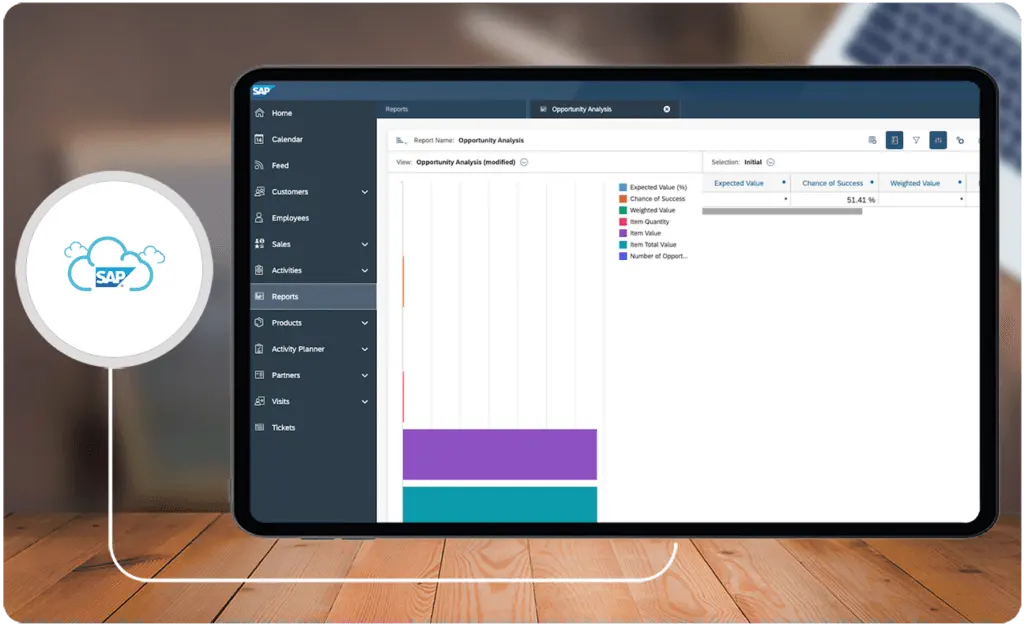
SAP Sales Cloud is a multifunctional sales CRM that helps organizations build better relationships, improve sales engagements, and increase sales. Designed for businesses of all sizes, the platform leverages AI and a diverse toolset to provide solutions for sales intelligence, pipeline flow and management, customizable sales journeys, lead prioritization, workflow and engagement automation, retail execution, and visit planning. The software also offers add-ons to expand its capabilities and provides specific solutions for at least nine industries.
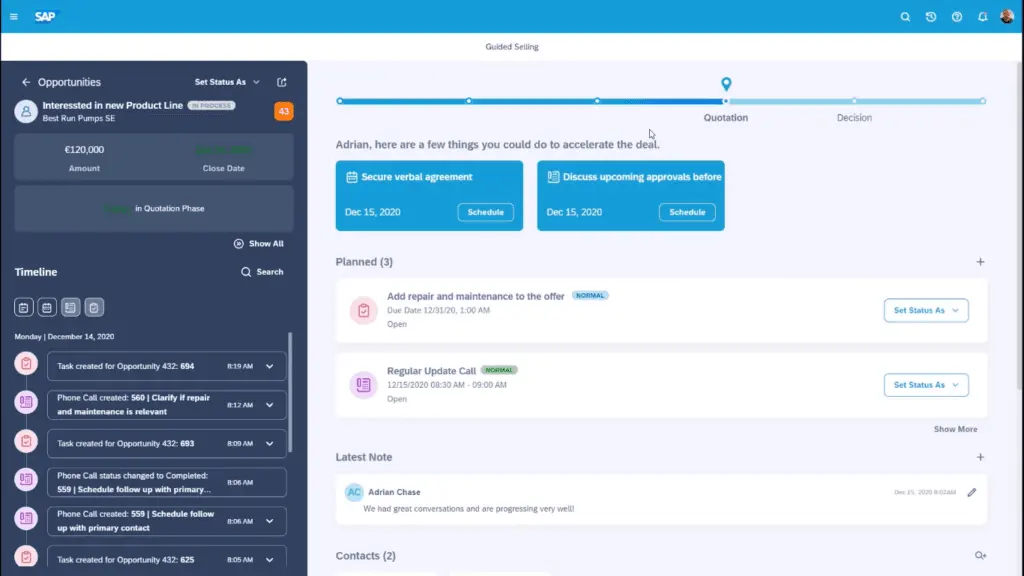
SAP Sales Cloud empowers sellers by recommending ideal actions, step-by-step, through the pipeline and providing pertinent information such as customer data, sales information, and accurate sales forecasts. By applying digital scoring and analyzing data, it can prioritize leads and opportunities and track pipeline health, leads, calls, quotes, and decisions. Moreover, it can automate custom workflows, perform digital tasks, route individual tasks to the right personnel, and send notifications.
SAP Sales Cloud's interface consolidates all the necessary information per screen to make sales procedures frictionless. It notes all tasks, opportunities, calendar entries, dashboard reports, key sales metrics, and pipeline influencers, among many others, so sales teams will know which activities to work on throughout the pipeline. In addition, it has an interactive map that plots an organization's every branch, the distance of a user to each, and the most ideal routes considering the traffic. Managers can configure a sales playbook so that the system knows which leads, activities, and opportunities to prioritize in line with a business's goals.
Who is SAP Sales Cloud for?
SAP Sales Cloud offers modules with custom solutions for nine industries, while its diverse toolset caters to even more. After all, the sales and communication intelligence it provides is beneficial for any sales-oriented organization and can inject order into complex workflows and operations. Equipped with a configurable sales playbook, the software can also recommend actions through each step of generating leads, initiating deals, and closing sales based on set parameters, which any industry will find useful. It also tracks numerous items, like leads, customers, opportunities, tasks, store branches, and sales performance.
SAP Sales Cloud is designed for businesses of all sizes, but its capabilities are fully leveraged by mid-sized firms and large enterprises, given their capacity to streamline complex operations. If you want to tap into that kind of power but are a small enterprise, you can look at SAP Sales Cloud alternatives. It also affords managers a 360-degree view of sales operations, leads, and an organization's customer base, on top of sophisticated AI, to yield informed decisions. Moreover, it integrates with other SAP products and provides task management tools that allow AI to recommend actions.
Key Benefits of SAP Sales Cloud
- Guided Sales. AI guides sales agents through each step of the sales pipeline, from making calls to documenting transactions.
- Prioritizes Leads and Sales Tasks. The AI used by SAP Sales Cloud scores leads and opportunities and prioritizes them accordingly on dashboards and recommendations.
- Unified Dashboard Information. Instead of simply populating reports, the dashboard of SAP Sales Cloud contains all the necessary information sales teams should have to progress company initiatives.
- Forecasts Sales and Pipeline Health. SAP Sales Cloud provides sales forecasts based on historical data or set parameters and provides insights on pipeline health.
- Customized Sales Journeys. SAP Sales Cloud enables sales teams to create unique journeys for each type of consumer, which raises sales engagement.
- Collaborations and Campaigns. SAP Sales Cloud provides tools for collaborations and creating digital campaigns to boost sales and enhance operational efficiency.
- Streamlines Store Visits. SAP Sales Cloud charts store branches on an interactive map, displays the distance of each to users, and offers the best routes. It also lists the opportunities for each branch.
Who are Oracle Siebel and SAP Sales Cloud best for?

Our Oracle Siebel vs SAP Sales Cloud analysis found that both platforms were designed with flexibility in mind, which is why businesses of all sizes find a lot of value in their features. However, given some differences in their core features, certain companies and industries would find one slightly more useful than the other.
Oracle Siebel
- Startups and Small Businesses. Oracle Siebel's vast array of features will fit right in with the relatively simple operations of proprietorships and small organizations. After all, the platform has solutions for basic necessities like product management, dynamic pricing, marketing management, and contact management. It also has an on-premise platform that allows users to conduct sales and CRM activities without an internet connection.
- Software Companies. One of Siebel's many USPs is its specific module for software development. It offers web tools and specialized solutions for parallel development, app/software usage tracking, automated testing, and software metrics monitoring.
- Businesses with Multiple Product Lines. Having different types of products sometimes means working with varied workflows, which suits the high level of customization Siebel affords its users. Its open API framework allows firms to customize business solutions. The platform also has multi-industry modules and solutions that can be leveraged for different types of products and services.
SAP Sales Cloud
- Larger Midsize Firms and Enterprises. Many large organizations have trouble dealing with sizable volumes of data, like business intelligence software vendors, which is a strong point of the AI-driven SAP Sales Cloud. It effectively consolidates all the useful time-sensitive data in one location, has the intelligence to guide sales agents through the entire pipeline, and prioritizes leads and business opportunities through a reliable scoring system.
- Retail and Sales-driven Companies. SAP Sales Cloud raises sales and engagement through a plethora of nifty functionalities. The features include solutions for multichannel engagement, customizable customer journeys, sales forecasting, pipeline analysis, campaign creation, and workflow automation. Making informed decisions becomes a norm with this platform.
- Organizations with Multiple Branches. Besides its sophisticated intelligence solutions, a foremost USP of SAP Sales Cloud is its ability to streamline logistics for multiple stores or branches. Using the app, sales managers can plot an organization's stores and offices on an interactive map, showing users their distance from each branch, the fastest routes to get to them, and the ETAs. In addition, the platform lists the opportunities for each branch, prioritizes branch visits, helps provide task surveys, and optimizes the logistics for multiple branch visits.
Oracle Siebel vs SAP Sales Cloud Feature Comparison
This Oracle Siebel vs SAP Sales Cloud comparison notes that the two systems have different core competencies, with the former being feature-heavy. At the same time, the latter offers far more sophisticated intelligence solutions. However, both are CRM systems and share several common features. Our software team sheds light on which application implements each functionality better.
Pipeline Management
Oracle Siebel has a comprehensive approach to sales pipelines, providing users with a 360-degree view of relevant contacts, possible opportunities, communication threads, and tasks to be performed. It also accounts for the sales territories of organizations, orders, and an organization's relationships with suppliers, distributors, and other partners. In a nutshell, it covers all the basic needs of an organization's sales initiatives.
SAP Sales Cloud offers slightly less comprehensive management features but more than makes up for this with its intelligence solutions. Using a configurable sales playbook, the platform recommends actions to members of a sales team through each stage of a pipeline while also itemizing all the activities per stage as well as all the relevant information needed when a user drills down tasks and activities. Every KPI and potential opportunity is accounted for.
SAP Sales Cloud has a clear advantage in this regard since it virtually eliminates confusion and considerably reduces the likelihood of human error as sales teams go through a sales pipeline. The application also routes and automates communication flows and provides tools for omnichannel communications when dealing with leads, customers, partners, and suppliers. This omnichannel communications feature is particularly useful when the platform is integrated with social customer service software to improve customer service levels.
Marketing Tools
Oracle Siebel has a plethora of marketing solutions for organizations from various industries. These include tools for campaign management, loyalty management, events marketing, marketing resource management, and digital marketing. It is designed to streamline every stage of a marketing funnel. In addition, it has prebuilt solutions for every customer touchpoint and accounts for different types of events, campaigns, and loyalty programs. Moreover, it seamlessly integrates with Oracle Marketing to expand its capabilities further.
Meanwhile, SAP Sales Cloud enables sales and marketing teams to create digital campaigns. It also optimizes communication flows and engagement and recommends actions to sales and marketing agents. To quantify the success of campaigns, the software leverages its analytics engine to produce a wide array of sales and marketing data, which sales and marketing teams can use to improve current plans.
Although SAP Sales Cloud has a more intuitive toolset, Oracle Siebel's comprehensive approach to streamlining marketing solutions appears superior. Its functionalities are not limited to digital marketing, as it provides tools for optimizing different types of campaigns, events, and loyalty programs, among others.
AI Solutions
We've also compared Oracle Siebel vs SAP Sales Cloud features when it comes to AI use. Oracle Siebel uses AI tools to automate marketing processes, partner relationship flows, service workflows, software testing, and business processes. The application's AI can also forecast sales, as it accounts for sales trends, revenue opportunities, and stock movement. In addition, it has a solution for sales methodology coaching.
The biggest selling point of SAP Sales Cloud is its array of AI solutions. It recommends actions through each stage of sales pipelines, analyzes pipeline health and workflows, generates insights based on customer interactions, tracks all KPIs, automatically routes team communications, scores and prioritizes leads and opportunities, and quantifies digital campaigns. Moreover, the Sales Cloud AI substantiates logistical activities, as it plots opportunities, calculates the distance of a company's other branches, and determines the best routes to get to each branch.
Since SAP Sales Cloud's AI is significantly more advanced than Oracle Siebel's, it has the advantage in this area.
Digital Selling
SAP Sales Cloud provides the intelligence to efficiently conduct sales and monitor web traffic. In contrast, Oracle Siebel provides the real estate for organizations to sell digitally, along with solutions for product pricing, catalog management, invoicing, order management, app development, and customer-facing portals. And this does not include Siebel's specialized tools for service businesses and UX design. Evidently, Oracle Siebel is the better e-commerce solution.
Reporting
Oracle Siebel produces a wide range of reports considering its massive roster of features, from sales and the performance of sales teams to the performance of marketing campaigns and pricing effectiveness. Interestingly, SAP Sales Cloud matches Siebel's report volume by drilling down to quantify sales pipelines, marketing campaigns, set KPIs, communications, opportunities, tasks, and other critical data.
What gives Sales Cloud an edge in this department is its dynamic reporting. It supplies sales and marketing teams with relevant information through each activity, contact, pipeline stage, or any other sales-related screen a user opens. Sales teams always have data on hand when communicating with contacts, fellow employees from other departments, and other team members.
Oracle Siebel vs SAP Sales Cloud Pricing
Oracle Siebel and SAP Sales Cloud offer quote-based plans. This means both companies can customize their plans according to the exact needs of subscribers, along with the features included and the corresponding subscription rates. Even though Oracle and SAP did not disclose the prices, it is safe to assume that there is a sizable difference between the rates paid by small business clients and large corporations.
To know more about the pricing of Siebel and Sales Cloud, interested parties should contact Oracle and SAP, respectively.
Oracle Siebel Pros and Cons

Oracle Siebel is a CRM application and a robust business process management system that can streamline sales, marketing, commerce, service, and app development operations. It can improve the operational efficiency of multiple industries, company departments, and the sale and distribution of multiple product lines. To understand its capabilities further, our software team points out the software's advantages and disadvantages.
Oracle Siebel Pros
- Multi-industry Solutions. Oracle Siebel has such a staggering number of features that it provides modules for over 20 industries. Any sales-driven organization, even those outside its prebuilt modules, can use the software's tools for product pricing, product management, campaign management, order management, account management, and similar tasks.
- Streamlines Entire Business Operations. Oracle Siebel's optimization toolbox covers sales, marketing, e-commerce, app development, customer relationship management, and service operations. It streamlines business processes, relationships, communications, marketing campaigns, and brand events, just to name a few of its capabilities.
- Intelligent eCommerce Tools. Oracle Siebel improves customer experiences on an organization's sales and business websites by providing solutions for customer-facing portals, invoicing, product and catalogue management, and product pricing. It also uses AI to analyze price points, forecast sales, track quotes and orders, and produce reports and insights that reflect business performance.
- Supports Customized Solutions. Customization is one of Siebel's strong points. Its open AI framework enables businesses to customize solutions and integrations according to their exact needs. Meanwhile, its existing feature set accounts for business processes, industries, workflows, and sales and marketing initiatives. The platform also supports mobile selling and carries tools for creating mobile apps.
- Flexible Deployment. Oracle Siebel can be deployed as a cloud-based and/or on-premise system. This enables users to fully leverage the platform, even if they are in a location without a stable connection. They can also harness the advantages of both cloud-based and on-premise platforms.
Oracle Siebel Cons
- Processing Lags and Gaps. Oracle Siebel tends to suffer from lags when handling large volumes of data. Moreover, some of its features are designed to handle limited amounts of data at a time, which can be time-consuming.
- Hard to Implement. Organizations without IT teams may encounter difficulty in implementing the system. Its interface also has a learning curve, possibly causing headaches to non-tech-savvy users. It may be easier to adopt the software with IT help desk solutions in place so issues can be fixed quickly.
- Dated Interface. Users have reported bugs in some of the software's features, coupled with the complexity of some functionalities that may alienate new users. The interface also appears to be from a previous generation of software solutions, which could turn off users.
SAP Sales Cloud Pros and Cons
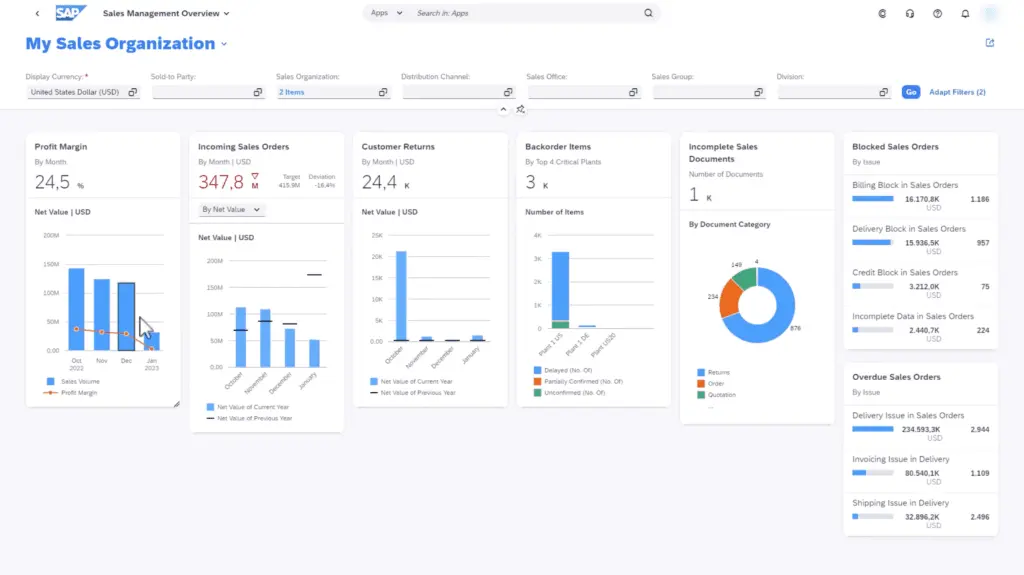
SAP Sales Cloud empowers CRM, sales, retail, marketing, and collaborative activities by providing business intelligence, which recommends pipeline activities, prioritizes leads and opportunities, and automates workflows. The system is ideal for complex operations and enterprises that routinely deal with large volumes of orders. Besides its AI-powered solutions, it deftly consolidates customer and sales data through every screen, enabling sales agents to perpetually perform the right actions. To understand more about how it works, our software team collated the advantages and disadvantages of using the platform.
SAP Sales Cloud Pros
- Guided Selling. Powered by a configurable sales playbook, SAP Sales Cloud recommends actions for each stage of a sales pipeline. It also itemizes all the details and activities per stage so sales agents can double-check if all the necessary sales activities have been performed. Moreover, it automates the pipeline, performing digital tasks, updating an interactive calendar, and intelligently routing members through each stage, including making calls, which can be performed on the platform.
- Smart Prioritization. SAP Sales Cloud leverages AI to score leads, opportunities, and branch visits, which can determine their prioritization in sales pipelines and other workflows. The AI would then recommend that sales teams serve high-priority clients and perform activities with high scores first.
- Comprehensive Data Consolidation. Sales Cloud has made it a norm to place all the relevant information per activity on each screen. Each stage of a deal pipeline drills down to the tasks, contacts, and plans involved, a timeline of activities, and pertinent notes. Meanwhile, its dashboard populates reports, daily and upcoming tasks, KPIs, deal win rates, and other relevant information, ensuring that sales teams perpetually make informed decisions.
- Reliable Predictive and Tracking Tools. Sales Cloud's AI detects sales patterns and correlates data like opportunity win rates, seller behavior, and other variables to reliably predict the future sales of an organization. Additionally, it analyzes pipeline health, details the nuances of pipeline flows over set periods, produces a report per KPI, generates interactive reports, and tracks leads, customers, communication, campaigns, deals, and opportunities.
- Digital Selling Solutions. SAP Sales Cloud has digital selling tools with which sales teams can create action plans and digital campaigns, leverage omnichannel communications, plan the logistics of branch or store visits, deploy task surveys, and plot retail execution activities. KPIs can be set, which the platform's AI can monitor and base reports on. Moreover, it has an interactive map showing the location, distance, and fastest routes to each branch or store. Sales Cloud can automate many of the aforementioned actions.
SAP Sales Cloud Cons
- Steep Learning Curve. It takes time for some users to learn how SAP Sales Cloud's functionalities work, possibly leading to extended onboarding periods that adversely affect operational efficiency. New users must get accustomed to the Sales Cloud's complex interface and functionalities to fully leverage its capabilities.
- Complex Setup. Setting up Sales Cloud can be time-consuming and labor-intensive for organizations without dedicated IT teams. It may require assistance from SAP or viewing informational videos.
- Difficult to Adapt. SAP Sales Cloud's intelligence solutions are laser-focused on an organization's sales and marketing operations. It may have difficulties catering to multiple organizations or vastly different product lines concurrently if an organization does not have a dedicated IT team.
Do Oracle Siebel and SAP Sales Cloud meet enterprise security and compliance requirements?
Both platforms implement robust security frameworks and adhere to international compliance standards, ensuring that sensitive business data remains protected. Oracle Siebel employs advanced encryption protocols and detailed role-based access controls to secure customer information. In parallel, SAP Sales Cloud is built with comprehensive data protection measures and regularly updated to meet regional regulations such as GDPR and other emerging industry standards. Each system undergoes external security audits and maintains transparent audit logs to verify compliance and operational integrity. For organizations that integrate critical external systems, including construction management software, these security features are instrumental in safeguarding both data and operational workflows.
What level of customer support do Oracle Siebel and SAP Sales Cloud provide?
When selecting a robust CRM like Oracle Siebel or SAP Sales Cloud, customer support and service offerings are crucial, especially for enterprises relying on extensive and complex CRM functionalities. Here’s an overview of the customer support provided by each platform:
- Oracle Siebel
- 24/7 Technical Support: Oracle Siebel offers 24/7 support for higher-tier plans, which is especially useful for large enterprises with critical operational needs.
- Comprehensive Knowledge Base: Oracle provides a robust online knowledge base, offering users articles, user guides, and troubleshooting tips, enabling quick self-service support.
- Dedicated Account Managers: For larger clients or premium plans, Oracle provides dedicated account managers to help with deployment, customization, and troubleshooting.
- Training and Certification: Oracle University provides training programs and Siebel certifications to help teams and IT professionals maximize the platform’s potential.
- Global Support Network: Oracle's global support network is equipped to handle queries in multiple languages and provides on-site support for specific enterprise contracts.
- SAP Sales Cloud
- 24/7 Global Support: SAP Sales Cloud also provides round-the-clock support to enterprise customers, ensuring constant availability for critical needs.
- SAP Help Portal and Community Forum: SAP’s Help Portal offers documentation, FAQs, and community forums where users can engage with peers and SAP experts.
- Success Managers for Enterprise Accounts: SAP assigns success managers for enterprise accounts to provide proactive support, account reviews, and strategic recommendations.
- Dedicated Implementation Partners: SAP works with certified partners worldwide, offering additional implementation support, making onboarding smoother.
- Training Hub and Certifications: SAP offers extensive training through the SAP Learning Hub, providing tailored programs, certifications, and virtual labs to help users and administrators master the system.
Industry-Specific Use Cases for Oracle Siebel and SAP Sales Cloud
Both Oracle Siebel and SAP Sales Cloud provide tailored industry-specific solutions, allowing businesses to leverage features optimized for their unique challenges. Understanding these applications within their specific use cases can help organizations make more informed decisions.
Oracle Siebel
Oracle Siebel has a well-established reputation for serving industries with complex operations and extensive customization needs. For instance:
- Public Sector: Governments and nonprofits can benefit from Siebel's time tracking and case management tools, which optimize resource allocation for public services.
- Healthcare: Oracle Siebel allows healthcare providers to manage patient records, maintain communication histories, and streamline operations by integrating CRM functionalities with regulatory compliance requirements.
- Financial Services: The detailed account management and transaction tracking capabilities are highly beneficial for banks and insurance companies, managing client portfolios efficiently.
SAP Sales Cloud
SAP Sales Cloud excels in industries where advanced AI-driven insights and sales forecasting are critical to success. Examples include:
- Retail: The platform's retail execution tools assist in ideal route planning and sales visit optimization. These features are particularly useful for retail businesses managing field sales teams and multiple locations.
- Technology: For tech firms, the dynamic reporting and pipeline analysis provide actionable insights, enabling teams to adapt to rapidly changing market conditions.
- Consumer Goods: AI-powered features such as lead scoring and opportunity prioritization streamline workflows, enhancing productivity for organizations with high transaction volumes.
Additionally, teams leveraging appointment scheduling tools integrated with their CRM can optimize their sales processes further. For a comprehensive list of the best scheduling software, businesses can explore curated options to find the ideal solution for aligning schedules efficiently across departments.
Verdict – Oracle Siebel vs SAP Sales Cloud: Which software is better?
This Oracle Siebel vs SAP Sales Cloud comparison notes that, despite both being sales CRMs, the two products are vastly different based on their core competencies. If one were to give an analogy, SAP Sales Cloud is the brains with its numerous intelligence and reporting solutions. At the same time, Oracle Siebel is the brawn with its staggering number of business modules and tools. As such, each platform caters to specific markets.
Small businesses, proprietorships, smaller midsize firms, and other small operations won't likely need all of the AI solutions of SAP Sales Cloud since their workflows are quite basic. After all, simple solutions can effectively streamline a small number of transactions, contacts, and product types. Oracle Siebel is a better fit for small operations. Its solutions cover nearly all pertinent business areas and can enforce transformative improvements, leading to higher returns and better operational efficiency.
It is a different story when talking about enterprises, large, midsize firms, and multinational companies. Given that they frequently receive many orders and inquiries and target a higher volume of leads, these organizations need effective data unification and business intelligence for their tech stack rather than a less intuitive but more functional system. Regardless of the volume of incoming data, SAP Sales Cloud can guide sales teams through each stage of any sales pipeline and perpetually provide data they can use for succeeding activities.
Furthermore, Sales Cloud's dynamic reporting enables managers to see how the team is performing for each account served with just a glance. They can also make timely adjustments to improve sales and the team's performance.
Key Insights
- Comprehensive CRM Solutions: Oracle Siebel provides a vast array of features that streamline sales, marketing, service, commerce, and app development operations, making it suitable for businesses of all sizes and various industries.
- AI-Driven Business Intelligence: Both Oracle Siebel and SAP Sales Cloud leverage AI to improve sales forecasting, pipeline management, and workflow automation, enhancing overall business efficiency.
- Customization and Flexibility: Oracle Siebel offers high-level customization through its open API framework and flexible deployment options (on-premise or cloud-based), allowing businesses to tailor solutions to their specific needs.
- Industry-Specific Solutions: Oracle Siebel has specialized modules for over 20 industries, including retail, communications, healthcare, and technology, providing tailored solutions for different business segments.
- Mobile and Integration Capabilities: Both platforms support mobile sales and integrate seamlessly with other products and widely used third-party applications, ensuring smooth operations across different platforms.
- User Experience and Interface: SAP Sales Cloud provides a unified dashboard and guided sales through AI, enhancing user experience and reducing human error in sales processes. Oracle Siebel's interface, however, may appear dated to some users.
- Dynamic Reporting and Analysis: SAP Sales Cloud excels in dynamic reporting and providing real-time insights into sales and marketing activities, while Oracle Siebel offers extensive reporting features covering various business aspects.
Other Things You Should Know About Oracle Siebel – SAP Sales Cloud Comparison
Oracle Siebel tends to lag when handling large volumes of data and can be complex to implement. Some features are designed to handle limited amounts of data at a time, which can be time-consuming. Additionally, its interface may appear dated compared to other modern CRMs.
Oracle Siebel and Salesforce cater to different organizational needs. Siebel offers a more extensive toolset with diverse business solutions covering sales, marketing, service, e-commerce, and app development. Salesforce, on the other hand, has superior and innovative intelligence solutions for improving sales and optimizing deal pipelines.
Oracle Siebel is an all-in-one business CRM that offers comprehensive solutions for enterprise resource planning (ERP), business process management, product management, contact management, sales pipelines, and campaign management. It is a CRM with one of the most complete sets of business tools on the market.
A worthwhile alternative to Oracle Siebel is SAP Sales Cloud, which optimizes sales operations with more sophisticated intelligence solutions. SAP Sales Cloud recommends ideal courses of action for sales teams through every stage of a deal pipeline, prioritizes leads and opportunities through a scoring system, automates omnichannel communications, and provides relevant information to users. This platform considerably reduces guesswork in sales and marketing activities.
Oracle Siebel is best suited for larger organizations due to its extensive feature set and customization capabilities. However, it is adaptable enough for smaller organizations, providing solutions that can help businesses grow and accommodate growth. It serves over 20 industries, including retail, communications, healthcare, and technology, making it a versatile choice for various business segments.


