2027 Is a Sports Management Online Degree Worth It?

Co-Founder and Chief Data Scientist
Online education is expanding rapidly, with over 40% of college students taking at least one online course. This growth makes an online sports management degree an appealing option for many seeking flexible learning paths in a competitive field. The sports industry continues to grow, with employment projected to rise over the next decade, attracting students interested in both business and athletics.
This article explores key factors influencing whether an online sports management degree is worth pursuing. It examines cost, scheduling flexibility, program accreditation, job-market trends, and how employers view online credentials to help students make an informed decision about their education and career goals.
Key Benefits of Online Sports Management Degree
- Online sports management programs offer flexible schedules and self-paced learning, ideal for working professionals balancing careers and education.
- Graduates enter diverse fields, marketing, event coordination, or team management, with the global sports industry projected to grow by 5% in 2026.
- Curricula often include practical internships or networking opportunities, enhancing job readiness and long-term career prospects in a competitive market.
Who Should Choose an Online Sports Management Degree Program?
Online learning has increasingly become a practical choice for many students due to its ability to fit diverse schedules and commitments. Its flexibility makes it especially attractive to individuals balancing personal and professional responsibilities.
The following groups are particularly well-suited for pursuing an online sports management degree program:
- Working Professionals: Many programs are designed to accommodate those currently employed, offering coursework that fits around busy work schedules and enables continued career growth without disruption.
- Career Changers and Adult Learners: Tailored for individuals returning to education or looking to shift their career paths, these programs often provide customizable pacing and course options to suit evolving goals.
- Parents and Caregivers: Online formats allow those with family duties to study from home, making it easier to balance education with caregiving responsibilities.
- Aspiring Sports Professionals in Remote Areas: By removing geographic limitations, online sports management degrees provide access to expert faculty and industry networks regardless of a student's location.
These categories benefit from the convenience, connection opportunities, and relevant experiences offered by well-structured online sports management programs.
What Are the Pros and Cons of an Online Sports Management Degree?
Online sports management programs have surged in popularity due to their affordability and the flexibility they offer working professionals and busy students. These programs make pursuing a degree more accessible without the logistical challenges of traditional on-campus courses.
Pros of an Online Sports Management Degree
- Financial Accessibility: The advantages of online sports management degree programs include significantly lower costs, often less than half the price of in-person degrees at private institutions. Students save thousands annually on housing and commuting, enabling them to balance work and studies while minimizing debt.
- Scheduling Flexibility: Online courses provide both synchronous and asynchronous options, allowing students to learn on their own schedule. Access to recorded lectures and archived discussions helps learners revisit material as needed, supporting varied learning paces.
- Broad Industry Exposure: Coursework covers diverse areas such as marketing, event planning, public relations, and operations within sports organizations. This broad exposure helps students clarify their specific career interests before entering the job market.
- Career Legitimacy: Accredited online degrees carry equal professional value to traditional degrees, with employers recognizing them as legitimate credentials in the sports management field.
Cons of an Online Sports Management Degree
- Limited Networking Opportunities: A key disadvantage of earning a sports management degree online is the reduced ability to build informal and spontaneous connections with peers and industry professionals. Online students may miss important networking moments that often lead to internships and job offers.
- Reduced Collaborative Engagement: Teamwork is crucial in sports management curricula, but virtual collaboration can lack the energy and immediacy of in-person group projects, potentially impacting learning quality and engagement.
- Self-Discipline Requirements: Online learning requires strong self-motivation and time management. Without in-person accountability, students risk procrastination, which can delay graduation.
- Intimidation for Beginners: Students with limited sports backgrounds may find it harder to seek help or mentorship online, where asking questions and engaging can feel more daunting compared to face-to-face settings.
For those considering accelerated options, the fastest online associates degree programs provide pathways to quickly upskill in sports management and related fields.
How Do AI-Enhanced Virtual Classrooms Work in Online Sports Management Programs?
AI technologies have become central to modern online education, significantly enhancing the learning experience for sports management students. These advances provide more personalized, engaging, and efficient instruction tailored to individual needs.
Below are key features that define AI-powered virtual classrooms in sports management programs:
- Adaptive Learning Tools: These platforms analyze student progress and adjust content delivery to fit each learner's pace and comprehension. This customization helps students grasp complex sports management concepts more effectively.
- AI-Driven Feedback: Students can build and test sports analytics models using tools like Teachable Machine or Weka, receiving immediate, data-driven feedback that improves project outcomes and understanding in real time.
- Collaborative AI Platforms: Virtual discussion boards and live forums powered by AI encourage networking and group problem-solving on real-world sports management challenges, enhancing teamwork skills.
- Intelligent Academic Support: Around-the-clock chatbots and virtual assistants answer questions, guide research, and schedule meetings, making support highly accessible and continuous.
- Automated Assessment: AI-based tools objectively evaluate assignments quickly, providing detailed, actionable feedback that helps students improve without delays common in traditional grading.
For those seeking flexible education options, exploring easy masters degrees online can complement AI-enhanced virtual classrooms effectively. Overall, AI-powered virtual classrooms in sports management create dynamic, supportive, and real-world-relevant learning experiences.
What Technology Do You Need for an Online Sports Management Degree?
Success in modern online sports management programs depends heavily on having the right technology setup. Proper equipment enables seamless participation in classes, timely assignment submission, and effective engagement with interactive learning tools.
Below is a list of essential tools, equipment, and software students should prepare before enrolling in an online sports management program:
- Reliable computer: A computer meeting recommended specs, such as an Intel Core i7 12th generation or AMD Ryzen 7 5000 series processor, with at least 16GB RAM and 512GB SSD storage, ensures smooth handling of coursework. High resolution displays (1920x1080 at 60Hz or better) improve visibility of detailed sports data, multimedia content, and simulations that are common in sports management curriculums.
- High-speed internet: Minimum download speeds of 5Mbps and upload speeds of 1Mbps with latency under 100ms are necessary for uninterrupted live lectures, group discussions, and video submissions. This helps avoid lag or dropped connections during collaborative projects and virtual classroom interactions.
- Microsoft Office 365: Free for many students, this software suite supports essential document creation, data analysis, and presentation tasks prevalent in sports business studies. Proficiency with these tools enhances project deliverables and research presentations.
- Webcam and microphone: Quality audio-visual hardware facilitates active participation in live sessions and team meetings. It supports frequent communication with instructors and peers, critical for collaborative assignments in online sports management education.
- Antivirus software: Strong security protects sensitive information when accessing university platforms and handling confidential sports data. Maintaining device security reduces the risk of disruptions caused by malware or cyber threats.
- Virtual desktop and simulation software: Some programs provide access to specialized applications through virtual environments, enabling use of expensive sports management tools without a personal software purchase. These simulations allow hands-on experience essential for data-driven decision-making coursework.
Understanding the computer specs for online sports management programs is vital before committing to your technology purchases. For those interested in advanced degrees, exploring options like the cheapest PhD pathways can provide additional educational opportunities with reliable technology requirements.
How Long Does It Take to Finish an Online Sports Management in 2027?
Program length is a key consideration for prospective students, especially those managing work or family responsibilities alongside their studies. Online sports management degree timelines vary widely due to flexible pacing and evolving course formats.
Below is an overview of common completion durations for these programs:
- Full-Time Online Track: Typically requires about four years and 120 credits, aligning with traditional campus schedules. Students usually follow semester-based calendars but benefit from online flexibility.
- Accelerated Pathways: Some programs offer faster completion in 2.5 to 3 years by taking heavier course loads or enrolling year-round. Accelerated formats often use shorter terms, such as 7½- or 8-week modules, which concentrate coursework for quicker progress.
- Flexible Start Dates and Pacing: Many schools provide multiple entry points annually and self-paced options, allowing students to tailor their studies to personal schedules. This can extend or shorten time to degree depending on commitment.
- Transfer Credits: Acceptance of previously earned credits can reduce total study time, giving eligible students a head start and potential early graduation.
Can You Work Full-Time While Completing an Online Sports Management Degree?
Balancing a full-time job with online study is a major concern for many prospective students, especially those juggling family and work responsibilities. Understanding key factors that impact this balance can help determine if pursuing an online sports management degree while working is feasible.
Several critical elements influence the ability to successfully manage full-time employment and online education:
- Flexible Scheduling: Many online sports management programs offer self-paced options, allowing students to complete coursework on their own schedules. This flexibility lets learners adjust study times around work commitments, making it easier to manage both.
- Asynchronous Courses: Most courses don't require real-time attendance, enabling students to engage with materials whenever it suits them. This eliminates conflicts with fixed class times and supports varied work hours.
- Workload Management: Students can often tailor their course load, choosing fewer classes at a time to avoid overwhelming stress. This helps maintain steady progress without sacrificing job performance.
- Employer Support: Having an understanding employer who may offer flexible hours or view education as professional development can ease the balancing act.
- Time Management Skills: Staying disciplined and organized is essential since online learning demands consistent effort and prioritization.
When asked about her experience, a student working full-time shared, "At first, managing deadlines alongside a 9-to-5 was stressful, but using detailed planners and carving out weekend study blocks made a huge difference." She described juggling project submissions with late-night work calls and appreciated the ability to pause and resume lectures as needed.
Her journey highlighted the realities and rewards of persisting through challenges with strong planning and motivation, ultimately proving that working full-time while completing an online sports management degree is achievable.
How Do Online Sports Management Degree Programs Help with Internships?
Internships are crucial for gaining practical experience and building the networks essential for a career in sports management. They provide real-world exposure that complements academic learning and prepares students for employment in the competitive sports industry.
Online sports management programs use various methods to assist students in securing and successfully completing these internships.
- Career Services Support: Programs often offer personalized guidance in identifying suitable internships, including access to curated lists of sports organizations. Advisors help with resume reviews, interview preparation, and tailored career planning to ensure alignment with students' goals.
- Virtual Placement Coordination: Some programs partner with sports industry executives to arrange live video interviews and informational sessions. This direct connection allows students to explore opportunities and build relationships with professionals without geographical constraints.
- Mentorship and Networking: Students gain access to mentors who provide insight into the sports industry and offer ongoing support. Networking groups and associations encouraged by programs expand students' professional circles beyond their immediate locations.
- Portfolio Development and Progress Tracking: Students create digital portfolios showcasing their internship projects, such as scouting reports or analytics work, which strengthen job applications. Online platforms enable monitoring of internship milestones and deliverables to ensure meaningful experience completion.
What Is the Average Tuition Cost of an Online Sports Management Program?
Understanding tuition costs is essential for anyone considering an online sports management degree, as it helps with budgeting and evaluating the true value of the program. Below are important factors to consider when assessing the financial commitment involved in pursuing this degree online:
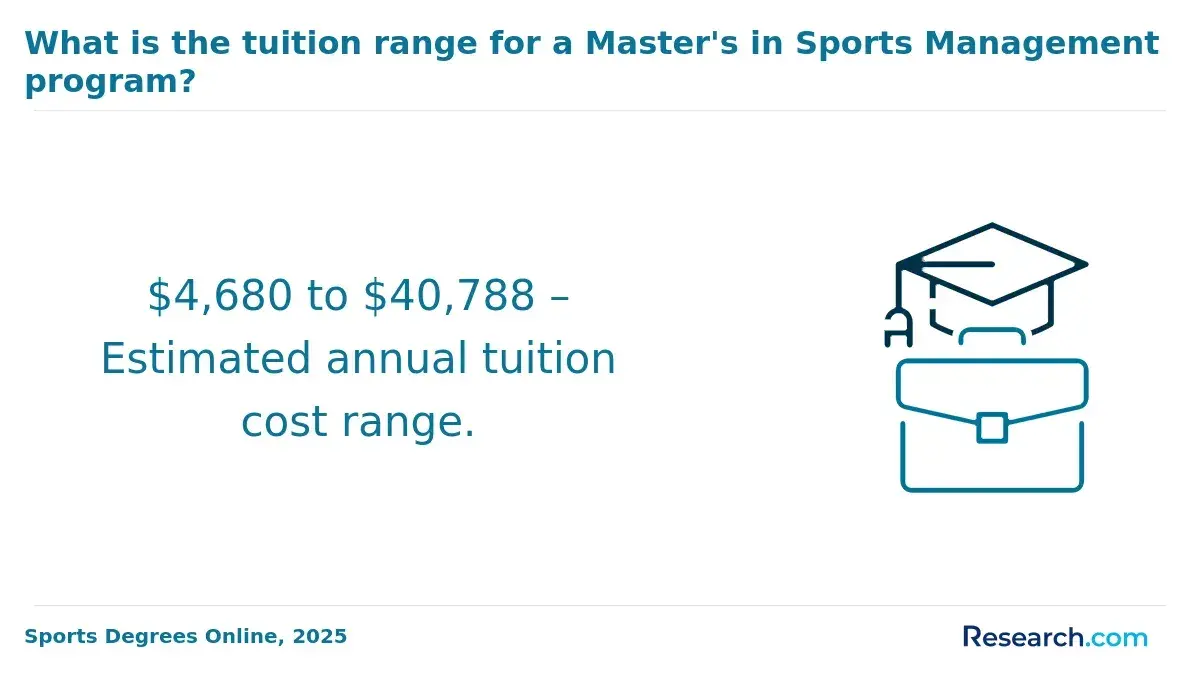
- Average Tuition Per Year: Public in-state programs usually cost about $7,470 annually, while private or out-of-state institutions may charge up to $32,000 per year. Typically, a four-year online bachelor's degree ranges from $39,000 to $57,000 in total tuition.
- Cost Per Credit: Many programs bill by the credit hour, with rates generally between $285 and $600. For instance, some universities charge $600 per credit, whereas others set their fees closer to $485.
- Public vs. Private Institutions: In-state public schools often offer the most affordable option, with some tuition as low as $4,477 per year, while private and out-of-state options can cost over four times that amount.
- Additional Fees: Beyond tuition, students should budget for costs like technology fees, course materials, and potential proctoring fees, which can add several hundred dollars annually to their expenses.
- Financial Aid Impact: Scholarships and grants frequently reduce the net cost, with many students paying closer to $23,600 for the entire program.
When I spoke with a student currently enrolled in an online sports management program, he described his experience managing tuition costs as a careful balancing act. "I had to compare multiple schools and look beyond just the sticker price," he shared.
Applying for scholarships and federal aid was critical in making the program affordable, but navigating the financial aid process took persistence and attention to detail. Despite the challenges, he felt the investment was worthwhile, noting that understanding all fees upfront helped him avoid surprises and stay on track financially throughout his education.
What Is the Average Salary for Someone with an Online Sports Management Degree in 2027?
Understanding the potential earnings with an online sports management degree is crucial when deciding whether to pursue this career path. Knowing the average salary can help students and professionals make informed decisions about their education and future prospects.
Below are key salary insights that highlight what graduates can expect in this field:
- Average Entry-Level Salary: Entry-level salaries for sports management graduates typically start around $38,000 per year. This base pay reflects roles that are often administrative or assistant positions, which provide foundational experience for career growth.
- Mid-Career Salary Growth: With experience, professionals commonly see their earnings rise significantly, often reaching between $65,000 and $85,000 annually. Positions like contract administrators, operations managers, and marketing consultants tend to fall within this range.
- Salary by Industry: Salaries vary by role within the sports management sector. For example, sports agents and business managers of athletes earn a median salary of about $84,900 per year, while event planners in sports management typically make around $59,440, according to BLS data.
- Top Specializations: Specialized roles such as sports marketing managers command higher salaries, averaging $156,580 annually. These positions often require a mix of experience and advanced skills in marketing and sports business.
- Sports Management Degree Salary by State 2025: Regional differences are significant. Professionals in New York, for instance, earn an average of $58,000, while those in Des Moines, Iowa, make closer to $37,000. States like California and New York offer higher salaries due to demand and living costs.
For those exploring options to study, it's important to consider accredited institutions. Many students benefit from accredited colleges online with free application options, making the process more accessible and affordable.
Which Industries Hire Graduates From Online Sports Management Programs?
An online sports management degree offers versatile skills that prepare graduates for a wide array of professional fields. This opens doors to various industries seeking expertise in marketing, operations, analytics, and leadership within sports and related sectors.
Below is an overview of key industries hiring graduates from online sports management programs:
- Professional sports organizations: Graduates often find careers with major and minor league franchises, including the NFL, NBA, MLB, NHL, and MLS, as well as college athletics departments. Roles such as sports agent, facilities manager, and corporate partnerships manager are common, reflecting the demand for specialization in sports operations and business development.
- Sports marketing and event management: Sports marketing agencies and event firms recruit for positions in promotions, sponsorships, and event coordination. This sector leverages strategic decision-making and communications skills emphasized in the degree.
- Sports technology and analytics: Startups and data analytics firms employ graduates as analysts and digital engagement specialists. The growth of sports tech companies highlights a shift toward data-driven decisions, making these roles increasingly valuable.
- Media and broadcasting: Media companies hire graduates for communications, social media management, and content production, aligning with the degree's focus on marketing and leadership. The evolving sports media landscape offers diverse career paths.
- Fitness and wellness organizations: Gyms, health clubs, and wellness centers seek professionals for operations and marketing roles. Graduates' expertise in business planning and customer engagement fits well in this expanding market.
The sports industry, valued at over $495.38 billion globally, will grow by 5% in 2026 and reach $521.4 billion, leading to strong career prospects for graduates. According to the Bureau of Labor Statistics, more than 4,000 new jobs are projected annually in sports and entertainment through 2034.
If you're wondering what can you do with a trade school diploma, the diverse careers in sports management present plenty of compelling options for graduates.
What Graduates of Online Sports Management Programs Say About Their Degree
- Jim: "Pursuing an online sports management degree allowed me to learn at my own pace, which was crucial while balancing a full-time job. The program's flexibility and practical curriculum gave me skills that directly translated into career advancement opportunities. Considering the cost, which was considerably less than traditional programs, it was absolutely worth the investment. "
- Rob: "The affordability of an online sports management degree made it accessible for me, and the experience exceeded expectations with comprehensive coursework tailored for real-world applications. Reflecting back, the knowledge I gained reshaped my approach to sports marketing and event coordination in my current role. It was a thoughtful choice that aligned well with my professional goals. "
- Greg: "What stood out in my online sports management program was the blend of self-paced learning and interactive projects, which kept me engaged despite the distance from campus. The career growth and networking possibilities post-graduation have been significant, making every dollar spent worth it given the moderate tuition fees compared to on-campus studies. This program has truly expanded my professional horizon. "
Other Things You Should Know About Sports Management Degrees
In 2027, networking remains crucial for success in sports management, even with an online degree. Virtual events, social media platforms, and virtual alumni networks can help students build connections needed to excel in the competitive sports industry.
Networking opportunities exist in many online sports management programs through virtual events, discussion forums, and alumni connections. Some schools partner with professional organizations and sports companies to facilitate networking and job placement. While in-person networking may be limited, active participation in online communities can still build professional contacts effectively.
References
- AI in Sports: Use Cases, Trends, Examples, and Challenges https://www.itransition.com/ai/sports
- How do people get sport management internships? https://onlinesportmanagement.ku.edu/community/sport-management-internships
- The role of artificial intelligence in enhancing sports education and public health in higher education: innovations in teaching models, evaluation systems, and personalized training https://pmc.ncbi.nlm.nih.gov/articles/PMC12075118/
- Employment Opportunities with a Degree in Sport Management | University of Florida Online https://ufonline.ufl.edu/gators-online-stories/sport-management-degree-employment-opportunities/
- The 54 Most Affordable Master’s in Sports Management Online https://www.geteducated.com/online-college-ratings-and-rankings/masters-in-sports-management-online/
- What can you do with a sports management degree? - AISTS https://aists.org/what-can-you-do-with-a-sports-management-degree/
- What are the salaries after studying sports management? https://www.monaco.edu/en/faq-all-the-answers-to-your-questions-3/what-are-the-salaries-after-studying-sports-management/
- Pros and Cons Of an Online Sports Management Degree - Sports Management Degrees https://sportsmanagementdegrees.net/pros-and-cons-of-an-online-sports-management-degree/
- AI and Sports: Making Event Organization Simple and Efficient https://www.htlinternationalschool.com/2025/09/17/ai-and-sports/
- Salary.com (2025). Sports Manager Salary in the United States. Retrieved from https://www.salary.com/research/salary/position/sports-manager-salary
- College Factual. (2025). 2025 Best Sports Management Schools. https://www.collegefactual.com/majors/parks-recreation-fitness/health-and-physical-education/sports-management/rankings/top-ranked/
- Sports Degrees Online. (2025). Sports Management Master's Programs Guide in 2025. https://sportsdegreesonline.org/masters/sport-management/
- The Business Research Company. (2025). Sports Market Report 2025. https://www.researchandmarkets.com/reports/5939106/sports-market-report
- Cost Estimator for 2024-2025 – United States Sports University https://ussu.edu/admissions/costs-aid/cost-estimator/