Student Loan Requirements: How to Qualify for a Student Loan for 2027

Student Finance & Loan Expert
The rising cost of higher education continues to be a major concern for students. In the U.S., public four-year institutions’ average tuition and fees increased by 2.5% from 2022–2023 to 2023–2024. According to the College Board (Ma & Pender, 2023), this growth is even more pronounced at private non-profit schools, where tuition rose by 4%.
With over a decade of experience as a career planning expert, I have seen firsthand how these escalating costs impact students. Many students seek ways to finance their education or reduce expenses, and a common solution is preparing student loan requirements and applying for student loans.
In this guide, I will explore the types of student loans, eligibility and qualification, and repayment options. Moreover, I’ll discuss the intricacies of student loan interest rates, the loan application process, and other strategies to help you choose the best financial aid.
Key Benefits of Getting Student Loans for 2027
- Student loans make higher education accessible to individuals who might otherwise be unable to afford it. By covering tuition, fees, and other related expenses, student loans enable students to pursue their academic goals without the immediate financial burden.
- With student loans, you can earn a degree, leading to better job opportunities, higher earning potential, and career advancement. A bachelor’s degree graduate can earn as much as $1,493 weekly (U.S. Bureau of Labor Statistics, 2023).
- Many student loans offer flexible repayment plans, from income-driven to graduated repayment plans, that allow graduates to choose a plan that fits their financial situation.
- What are the different types of student loans?
- How do federal student loans differ from private student loans?
- What are the different student loan requirements?
- What are the pros and cons of each type of student loan?
- How to apply for a student loan?
- How long does it take to get a student loan disbursement?
- How much is student loan interest?
- What is the best repayment plan?
- What strategies can help manage and reduce student loan debt?
- Where else can I get financial aid?
- Are there specialized loan options for unique career paths?
- Can Accelerated Degree Programs Reduce Student Loan Burdens?
- How do I compare student loan offers effectively?
- How to Use Student Loans for College Living Expenses
- What factors should I consider when comparing college affordability?
- What alternative career paths can help minimize student loan dependency?
- What are the tax implications of my student loans?
- What are the potential pitfalls to avoid with student loans?
- How will evolving policies and market trends affect my student loan options?
- How can online education help lower my student loan burden?
- Can Short-Term Certificate Programs Reduce My Student Loan Burden?
What are the different types of student loans?
Usually, when people talk about student loans, they refer to federal student loans. A federal student loan is borrowed money from the U.S. Department of Education to help students finance their education. The money comes from several sources, including federal government funds, banks, and other financial institutions. Because it is a loan, you must pay it back, along with the interest it acquires over time.
According to the Office of Federal Student Aid (FSA), there are four types of federal student loans:
- Direct Subsidized Loan: This loan is for undergraduate students with financial need. The government pays for your interest rates while you are still in school. Your chosen school typically sets the amount you can borrow based on your grade or dependency level.
- Direct Unsubsidized Loan: This loan is available to both undergraduate and graduate students, and you are required to pay the interest rates. You do not need to indicate financial need, but your school sets the amount you can borrow based on the cost of your attendance or other financial aid you are enrolled in.
- Direct PLUS Loan: This loan is open to graduate and professional students and parents borrowing for their dependent undergraduate learners. The institution usually decides on the amount borrowed.
- Direct Consolidation Loan: This type combines multiple federal student loans into a single loan with a fixed interest rate and lower monthly payment. This also helps you qualify for federal forgiveness programs.
In addition to these federal student loans, students can apply for institutional loans. These are offered by your chosen school and are typically used to supplement other forms of financial aid. Each institution has its policies regarding this loan.
In 2022, 36% of adults firmly believed that taking out student loans was a financial risk. In contrast, only 14% perceived it to be a good long-term investment (Statista, 2022). In the chart below, I’ve itemized the share of adults’ perceptions of student loans. Therefore, understanding the different types of loans is essential for selecting the right type of financial aid or completing the right student loan requirements.
How do federal student loans differ from private student loans?
A private student loan is a type of financial assistance offered by private lenders, such as banks, credit unions, and online lenders. Depending on the lender, you can borrow money that covers your tuition and any other expenses on a college fees list.
However, unlike federal student loans, private student loans may have variable interest rates. One of the main private student loan requirements is the borrower's credit score which is a huge factor in calculating the interest. Some lenders also require a credit check or cosigner, especially for students with limited credit.
Lastly, private lenders have limited repayment options and have few borrower protections. This limits the borrower’s access to loans and flexibility in payment. While private student loans can provide additional funding for education, it's essential for borrowers to carefully consider the terms and conditions of these loans before borrowing.
What are the different student loan requirements?
Student loan requirements vary by type and involve meeting specific criteria set by federal and private lenders. After comparing academic and industry sources, here’s a list of the eligibility requirements for federal and private student loans.
Federal Student Loans Qualifications and Requirements:
- U.S. citizen/eligible noncitizen
- Social Security Number
- Financial need (Subsidized Loans)
- Enrolled at least half-time in an eligible degree or certificate program
- Biological or adoptive parent of a dependent undergraduate student (Parent PLUS Loan)
- Good credit history (Parent and Graduate PLUS Loans)
- Maintain satisfactory academic progress
- Tax documents
- Personal and financial information
Private Student Loans Qualifications and Requirements:
- At least 18 years old
- U.S. citizen/resident or eligible noncitizen
- Social Security Number
- High school diploma/GED certificate or proof of enrollment
- Good credit score (670+) and history
- Co-signer (depending on lender)
- Income verification or proof of employment (if applicable)
- Tax forms
- Personal information
In a study by the Educational Credit Management Corporation Group (ECMC, 2023), Gen Zs were asked what their top factors were when deciding what to do after high school. Among them, 88% were concerned about the money they could make in the long run, while 80% were worried about the cost of tuition. The chart below expands on this. This suggests that financial considerations play a significant role in their decision-making process regarding post-secondary education and career paths.
What are the pros and cons of each type of student loan?
Different types of student loans offer various advantages and disadvantages. Before you send out your student loan requirements, know which loan benefits you most or aligns with your academic goals, personal timeline, and budget. Keep in mind that you can combine two or more student loans, so you should explore all available options to maximize your financial aid package.
| Type of Loan | Pros | Cons |
| Direct Subsidized Loan | For undergraduate students | Amount must not exceed your financial need |
| Financial need required | Annual and aggregate loan limits may be insufficient in some institutions/programs | |
| Government pays the interest while the student is enrolled/during deferment | ||
| Fixed interest rates | ||
| Flexible repayment | ||
| Direct Unsubsidized Loan | For undergraduate and graduate students | Borrower pays the interest |
| No financial need required | Interest accrues immediately until the life of the loan | |
| Larger loan limits vs. subsidized loans | Graduate student annual and aggregate loan limits may be insufficient in some institutions/programs | |
| Flexible repayment | ||
| Direct PLUS Loan | For graduate students and parents of dependent undergraduate students | Borrower/parent pays the interest |
| The full cost of attendance is the maximum loan amount | Requires a credit check | |
| Flexible repayment | Higher interest rates | |
| May be eligible for forgiveness programs | ||
| Direct Consolidation Loan | Fixed interest rate | Increased total interest for extended repayments |
| Single monthly payment for multiple federal loans | Only federal loans are eligible for consolidation | |
| Extension of repayment | ||
| Institutional Loan | May have larger limit amounts | Availability may be limited |
| May have lower interest rates vs. private loans | Stricter repayment terms and borrower protections for some schools | |
| Flexible repayment depending on school | Interest rates may be higher vs. federal loans | |
| Private Loan | Can cover the total cost of attendance | Higher interest rates vs. federal loans |
| Good credit scores merit larger amounts or more flexible repayment options | Requires a credit check | |
| Available to international students | May require a cosigner | |
| Available for refinancing loans | Less favorable repayment options and borrower protections |
How to apply for a student loan?
Applying for a student loan involves several steps. Federal student loans generally have a longer process than private loans, though this should not discourage you. Understanding both application processes can help you prepare the documents and other student loan requirements to secure the best financial aid.
Federal Student Loans:
- Create an FSA ID. Register a new Student Aid account to access information and options for student loans.
- Complete the FAFSA. After creating your account, fill out the Free Application for Federal Student Aid (FAFSA). This determines your eligibility for federal or state aid. You can choose up to 20 schools in your application.
- Review the FAFSA Submission Summary. Starting 2024–2025, there is a new step on how to continue FAFSA application. After submitting your form, you’ll receive a FAFSA Submission Summary with details on your Eligibility Overview, FAFSA Form Answers, School Information, and Next Steps. Here, you can review your form for corrections, compare the median debt per school upon completion, and read other comments about your form. While the FAFSA Submission Summary shows estimates of the amounts of federal student aid, it is not a financial aid offer.
- Determine the best financial aid offer. Your chosen schools will send you financial aid package offers based on your FAFSA Form. You may accept all, part, or none of the offered loans.
- Contact your chosen school. Connect with your chosen school’s financial aid office or financial counselor for questions or concerns.
- Complete other requirements. First-time borrowers must complete entrance counseling and sign a Master Promissory Note (MPN), a legal document outlining the terms and conditions of their loan.
Private Student Loans:
- Research lenders. Compare private lenders to find the best interest rates, terms, and borrower benefits.
- Check eligibility requirements. Ensure you meet the lender’s credit score and income requirements. Most undergraduate students will need a co-signer with a strong credit history.
- Gather financial documents. Prepare necessary documentation, such as proof of income, credit history, and information about your school and program.
- Submit a loan application. Apply directly through the lender’s website, providing personal, financial, and school information. Include your co-signer’s details if required.
- Review and accept loan terms. Once approved, review the loan terms carefully. Accept the loan and sign any required documents.
How long does it take to get a student loan disbursement?
For federal student loans, once your loan application is approved and you’re enrolled, the funds are typically disbursed directly to your school. This process usually takes several weeks to a few months from the time you submit your loan application. Once the funds are disbursed to your school, your school will apply them to your tuition, fees, and other educational expenses. Any remaining funds, if applicable, will then be issued back to you by the school.
However, each school may have its own disbursement schedule, and other factors, like the type of loan or service provider, can affect when you receive the funds. Some schools disburse funds at the beginning of each semester, while others may disburse them in multiple installments throughout the academic year.
For private student loans, the timeline for disbursement can vary depending on the lender’s processing times. Generally, once you have submitted all student loan requirements and your application is approved, the lender will send the funds directly to your school. Other lenders may send the money to your account. The disbursement timeline for private loans may be similar to federal loans, but it’s essential to check with your lender and school for specific details.
How much is student loan interest?
Student loan interest is the cost you incur for borrowing money to fund your education. It is calculated as a percentage of the unpaid principal amount and is added to your loan balance over time. Usually, federal student loans have fixed interest rates set by the government, while private student loan interest rates may be fixed or variable and determined by the lender’s policies.
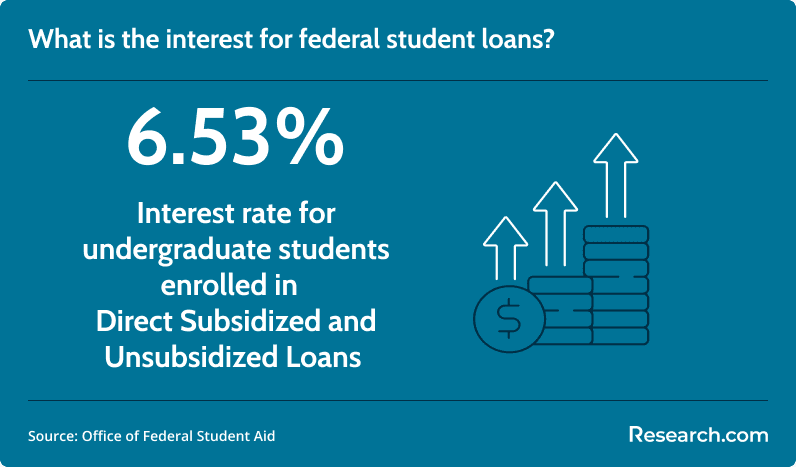
According to the FSA, the student loan interest rates per loan type are as follows (disbursed on or after July 1, 2024 and before July 1, 2025):
- Direct Subsidized Loan: 6.53%
- Direct Unsubsidized Loan: 6.53% (Undergraduate); 8.08% (Graduate)
- Direct PLUS Loan: 9.08% + a loan fee of 4.228%
- Direct Consolidated Loan: Weighted average of the interest rates of consolidated loans
- Institutional Loan: Varies per institution
- Private Student Loan: 5%–18% (Depends on lender policies and credit score)
Knowing these interest rates can help you plan not only your student loan requirements but also your budget more effectively. Lastly, it allows you to explore options and take control of your financial future.
What is the best repayment plan?
The best repayment plan is one that fits your financial situation, minimizes your total interest payments, and aligns with your long-term financial goals. Moreover, it should offer manageable and flexible payments.
Fixed Payment Repayment Plans require you to pay off your loans over a set number of years. You can choose among the following:
Standard Repayment Plan:
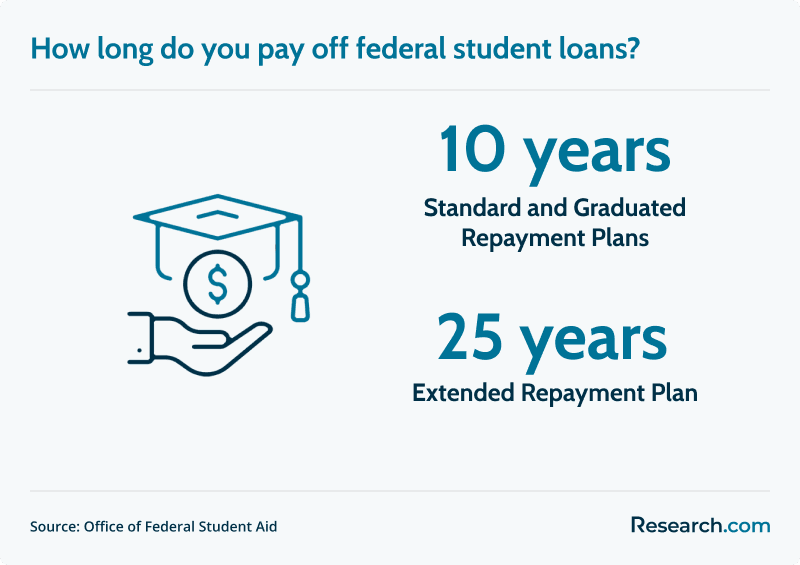
- Fixed monthly payments within a 10-year term (30 years for Consolidation Loan)
- Higher monthly payments but lower overall interest costs
- Suitable for borrowers who can afford higher monthly payments and want to repay their loans quickly
Graduated Repayment Plan:
- Payable within a 10-year term
- Payments start low and increase every two years
- Suitable for borrowers with an initial lower income and expect their income to increase over time
Extended Repayment Plan:
- Extends the repayment term to 25 years
- Lower monthly payments but higher overall interest costs
- Suitable for borrowers who need lower monthly payments but want to avoid Income-Driven Repayment (IDR) Plans
In IDR Plans, your monthly loan payments are calculated based on your income and family size. You can choose from the Saving on a Valuable Education (SAVE) Plan, Pay As You Earn (PAYE) Repayment Plan, Income-Based Repayment (IBR) Plan, and Income-Contingent Repayment (ICR) Plan. Each has different interest rates, ranging from 10% to 20%, and repayment periods last 20 or 25 years (30 years for Consolidation Loans).
Graduates under the IDR Plan can also be eligible for Student Loan Forgiveness after they reach a certain amount or repayment period. In many cases, they can opt for a Public Service Loan Forgiveness (PSLF) Program or the Teacher Loan Forgiveness (TLF) Program.
Alternatively, you can refinance your student loans. This means replacing your existing loans with a new loan from a private lender. The new loan has different terms, such as a lower interest rate, a different repayment period, or both. Ideally, this is used for private loans, but federal loans can also be refinanced. However, you may lose the benefits of federal student loans, like repayment relief or loan forgiveness.
Lastly, for institutional and private student loans, the repayment plan depends on the terms of the school or lender. Moreover, your credit score, eligibility, credit history, and interest can affect your repayment options. On average, these loans also take 10 to 25 years to pay (Consumer Financial Protection Bureau, 2024). Therefore, you should carefully review the student loan requirements and conditions for repayment programs to ensure you stay on top of your expenses.
What strategies can help manage and reduce student loan debt?
In the U.S., 43.2 million students have federal loan debt, with the average balance at $37,088 (Hanson, 2024). Moreover, among borrowers in 2023, 22% owed around $20,000 to $39,999 (Ma & Pender, 2023). The chart below further dives into the percentage of borrowers and debt during the second quarter of the 2023 fiscal year.
By implementing smart financial practices and taking advantage of available resources, you can minimize the impact of student loans on your long-term financial health. In my in-depth research, I’ve come across several tips that can help you avoid debt and repay your loans on time.
- Prepare early. Before selecting a school or gathering student loan requirements, look into the different financial aid sources as early as you can. Discuss your options with your parents and other key persons involved in your educational and financial decisions to help you make sound judgments.
- Prioritize payment-free aid. Consider looking into grants or scholarships first, as these do not require any repayment.
- Explore aid packages and repayment plans. Thoroughly compare financial aid packages and repayment options to pick out the best program for your financial needs.
- Create a budget. Track income and expenses to identify areas where you can reduce spending and allocate more funds towards loan payments.
- Assess your potential salary. Research the entry-level salary of your desired job to compute how much of your income can comfortably go towards student loan payments.
- Sign up for auto-pay. For private loan borrowers, consider setting up automatic payments to ensure your loans are paid on time.
- Make extra payments. Some private lenders provide incentives for borrowers who pay early or in extra. Be sure to consult with your lender for more details.
- Take advantage of employer benefits. If you’re employed, participate in employer-sponsored plans to maximize savings.
- Stay informed and seek support. Keep yourself updated on changes to student loan policies and consult with financial counselors/advisors, loan servicers, or nonprofit organizations specializing in student loan assistance to navigate repayment challenges and explore available resources.
Where else can I get financial aid?
In addition to student loans, several other sources of financial aid can help students cover the costs of higher education. Exploring these options can help reduce reliance on loans and minimize the overall debt burden. Below, we outline various forms of financial aid available to students, including grants, scholarships, work-study programs, and tuition assistance from employers or military benefits.
- Grant: Offered by federal and other institutions, this financial aid does not need to be repaid. It is based on financial need, academic achievement, or other criteria specified by the grant provider
- Scholarship: This option is awarded based on academic achievement, merit, talents, or demographic factors and also does not require repayment.
- State Aid Program: Many states offer grants, scholarships, or tuition assistance programs for residents attending in-state colleges or universities.
- Work-Study Program: This provides part-time employment opportunities for students with financial needs and is offered through federal, institutional, or employer programs.
- Employer Tuition Assistance: Some employers offer tuition reimbursement or assistance programs as an employee benefit. It may cover all or part of tuition costs for courses related to the employee’s job or career advancement.
- Assistantship: This is financial support provided to graduate students involving part-time work in teaching, research, or administrative roles in exchange for a stipend or salary and sometimes includes tuition remission or a reduction in fees.
- Education Savings Plan: This is a tax-advantaged investment designed to help you pay for your education.
- Military Benefit: Active-duty service members, veterans, and their dependents may qualify for various military education benefits.
Furthermore, if your FAFSA application is denied, it’s crucial to promptly address the situation and explore alternative avenues for financial assistance. Start by reviewing the reason for the denial, double-checking your student loan requirements, and contacting your school’s financial aid office for clarification. Then, consider appealing the decision if you believe it was made in error or if there are extenuating circumstances affecting your financial situation. Be prepared to provide documentation supporting your appeal and follow the procedures outlined by the financial aid office.
Are there specialized loan options for unique career paths?
For students pursuing specialized career paths, such as aviation, finding tailored financial solutions is often necessary due to the unique costs associated with their education. For example, aspiring pilots or aviation professionals typically face higher tuition rates and specialized training fees when attending flight schools or similar programs. In these cases, specialized financing options, like a flight training student loan can provide targeted support to help cover costs that go beyond traditional tuition.
Many lenders offer these specific loan products, which are designed to address the unique requirements of aviation schooling, including simulator hours, certifications, and other training expenses. Similar to other private student loans, eligibility for these loans may depend on credit checks, cosigner requirements, or proof of enrollment in a qualifying program. Exploring these specialized loan options can enable students to access critical resources while minimizing financial barriers to entering niche industries like aviation.
Can Accelerated Degree Programs Reduce Student Loan Burdens?
Accelerated degree programs offer a streamlined academic pathway that can significantly reduce both the duration of study and the overall amount borrowed. These programs, through condensed schedules and focused curricula, enable students to re-enter the workforce sooner, thereby lowering cumulative interest and long-term debt exposure. For example, pursuing the fastest online associate's degree can expedite career entry and promote quicker financial independence. Evaluating program accreditation, cost-per-credit, and industry relevance is essential to ensure that an accelerated pathway aligns effectively with both career goals and strategic financial planning.
How do I compare student loan offers effectively?
Evaluating various loan offers requires a careful assessment of interest rates, fees, repayment terms, and borrower protections. Analyze loan calculators and lender documentation to determine total borrowing costs, and be vigilant for any hidden fees or prepayment penalties. Leverage reputable reviews and expert analyses to compare different products, such as detailed insights provided by Citizens Bank student loans. Consider whether a lender’s flexible repayment options, refinancing opportunities, or potential loan forgiveness programs align with your long-term financial strategy.
How to Use Student Loans for College Living Expenses
Beyond tuition and mandatory fees, many students face the challenge of covering essential living expenses during their college years. Fortunately, student loans—both federal and private—can often be used to address these financial needs, such as housing, food, transportation, and even childcare.
When borrowing funds for living expenses, it's crucial to understand how disbursements work. Typically, your school will first allocate loan funds to your tuition and educational fees. Any remaining amount, known as the "refund," can be used for living costs. This approach ensures that your primary educational obligations are covered before addressing ancillary needs.
To manage these funds effectively, create a detailed budget that outlines your expected monthly expenses. This helps you avoid overspending and ensures the loan covers your essentials. It’s also wise to explore other funding sources, such as part-time work or scholarships, to minimize the amount you borrow for living expenses.
If you're wondering, "Can you take out a student loan for living expenses," the answer is yes—but it’s imperative to borrow responsibly. Remember that excessive borrowing could lead to higher monthly payments and accrued interest after graduation. By maintaining financial discipline and exploring alternative resources, students can meet their living expenses without taking on excessive debt. For further guidance, consult this comprehensive resource to better navigate this aspect of financial planning.
What factors should I consider when comparing college affordability?
When assessing college affordability, focus on a comprehensive evaluation that goes beyond just tuition fees. Consider additional expenses such as administrative fees, technology costs, and the overall cost of living associated with campus locations. Analyze net cost calculators, institutional financial aid packages, and the long-term return on investment of a degree program. Assess the quality of student resources, career services, and graduate placement rates as indicators of a college’s value and sustainability. For a detailed overview of cost-effective options, review cheapest online colleges that accept FAFSA to support a well-informed decision.
What alternative career paths can help minimize student loan dependency?
For some students, pursuing career paths that require minimal postsecondary financial investment may serve as a viable alternative to accumulating significant student loan debt. Evaluating vocational training, apprenticeships, or certification programs in fields that demand hands-on expertise can lead to competitive salaries without the lengthy and expensive route of a traditional four-year degree. In addition, certain sectors offer promising opportunities that sidestep the need for heavy educational investments. For example, exploring healthcare jobs no degree needed may provide immediate entry into a stable industry with lower upfront costs, thereby reducing reliance on student loans. This approach not only mitigates long-term debt burdens but also offers flexibility in career choice and financial planning.
What are the tax implications of my student loans?
Student loan interest may be deductible on your federal income tax return, reducing overall taxable income, provided you meet specific income and filing status criteria. However, if your loans are forgiven through repayment assistance or cancellation programs, the amount forgiven might be treated as taxable income unless overridden by current legislation. In addition, borrowers should keep precise documentation of interest payments and consult with a tax professional to ensure compliance with evolving tax laws. For instance, when comparing financial strategies, consider options provided by online colleges in Texas that accept financial aid that may offer streamlined expense tracking and resource planning.
What are the potential pitfalls to avoid with student loans?
Borrowers must carefully evaluate loan terms and budgeting strategies to avoid common pitfalls. Inadequate review of interest accrual, unclear repayment options, and miscalculations in affordability can lead to increased debt and financial stress. It is essential to understand all loan conditions, avoid overborrowing, and monitor lender communications for any updates or discrepancies. Additionally, exploring flexible funding options, such as the FAFSA loan part time student alternative, can offer a more manageable borrowing strategy while mitigating long-term risks.
How will evolving policies and market trends affect my student loan options?
Legislative reforms and market dynamics continually shape student loan eligibility, interest rates, and repayment structures. Borrowers must monitor policy updates that can redefine borrower protections, alter repayment plans, or adjust loan forgiveness provisions. Market trends may also influence private lending products, prompting shifts in credit evaluation methods and eligibility criteria. Stay informed on these changes by consulting reliable financial news and expert analyses, and explore options such as how to get a student loan from a bank for competitive alternatives. This vigilance ensures your borrowing strategy remains aligned with the most current regulatory and market conditions.
How can online education help lower my student loan burden?
Pursuing an online degree can significantly reduce overall costs by offering lower tuition fees and minimizing expenditures such as commuting and housing. These programs often provide flexible scheduling that allows students to work while studying, thereby easing the immediate financial impact and lowering the amount needed to borrow. Evaluating program accreditation, tuition structures, and support services is essential to ensure a cost-effective learning experience. For further exploration of affordable options, review affordable accredited online colleges.
Can Short-Term Certificate Programs Reduce My Student Loan Burden?
Short-term certificate programs offer a viable alternative by delivering focused, market-relevant skills without the extended time and higher costs associated with traditional degree programs. These accelerated tracks can significantly reduce the overall amount borrowed, as they often require less tuition and allow for a quicker entry into the workforce. Evaluating options such as 6 month courses that pay well is essential in determining whether a shorter, skill-based program aligns with your career objectives and financial planning, ultimately easing the student loan burden.
Key Findings
- In the U.S., 43.2 million students have federal loan debt, with the average balance at $37,088.
- In 2023, 22% of borrowers owed around $20,000 to $39,999 in federal loan debt.
- You can pay off your student loans within 10 years under the Standard Repayment Plan.
- Undergraduate students face a 6.53% student loan interest rate while graduate students are charged 8.08% for Direct Subsidized and Unsubsidized Loans.
- 80% of Gen Z high schoolers consider the cost of tuition as one of the top factors when considering what to do after graduation.
References:
- Hanson, M. (2024, March 3). Student debt loan statistics. Education Data Initiative. https://educationdata.org/student-loan-debt-statistics
- Ma, J., & Pender, M. (2023). Trends in college pricing and student aid 2023. College Board. https://research.collegeboard.org/media/pdf/Trends%20Report%202023%20Updated.pdf
- Office of Federal Student Aid. Types of Financial Aid: Loans, Grants, and Work-Study Programs. https://studentaid.gov/understand-aid/types
- Statista. (2022, September). Perception of taking out student loans in order to afford higher education in the United States in 2022. https://www.statista.com/statistics/1357112/perception-taking-out-student-loans-afford-higher-education-us
- U.S. Bureau of Labor Statistics. (2023, September 6). Earnings and unemployment rates by educational attainment, 2023. Education Pays. https://www.bls.gov/emp/chart-unemployment-earnings-education.htm
Other Things You Should Know About Student Loans
To qualify for a student loan in 2027, students typically need to be enrolled at least half-time in an eligible program. Maintaining satisfactory academic progress, as defined by your institution, is crucial. This usually involves meeting a minimum GPA and completing a certain percentage of attempted credits. **Question** Can a non-US citizen take a student loan? **Answer** Non-U.S. citizens can access student loans, but they typically need a co-signer or meet certain criteria such as being a permanent resident or having a valid Social Security number. Some private lenders offer loans to international students without a co-signer, but options may be limited compared to citizens.
To qualify for a student loan in 2027, you must be a U.S. citizen or an eligible non-citizen, such as a permanent resident. Make sure your citizenship status is confirmed on your FAFSA application to ensure eligibility.