
2027 Are Online Economics Master's Degrees Respected by Employers? Hiring Trends & Career Outcomes

Co-Founder and Chief Data Scientist
Consider a mid-career professional debating whether to pursue an online economics master's degree or attend an on-campus program. Despite the flexibility of online learning, concerns linger about employer perceptions and whether these degrees translate into competitive job opportunities. Recent data shows that 62% of hiring managers now view online graduate degrees in economics as equally credible to traditional ones, reflecting a notable shift in industry acceptance. This article explores accreditation standards, institutional prestige, hiring patterns, and alumni career outcomes to provide an evidence-based guide. It aims to help readers assess the real-world value of online economics master's degrees for career advancement.
Key Benefits of Knowing Whether Online Economics Master's Degrees Are Respected by Employers
- Employer perception of online economics master's graduates has improved significantly, with 68% of hiring managers expressing equal confidence in their workplace performance compared to traditional degree holders.
- Graduates of accredited online programs often access promotions and higher salaries, as skills-based hiring emphasizes competencies demonstrated through rigorous curricula and practical projects.
- alumni networks and real-world applications in online economics programs increasingly support diverse career prospects, including data analysis, policy advising, and financial consulting roles.
How Have Employer Perceptions of Online Economics Master's Degrees Changed Over the Past Decade?
Employer perceptions of online economics master's degrees in the U.S. have evolved notably over the past decade. In the early 2010s, skepticism was common, with many hiring managers associating online degrees with for-profit colleges known for questionable academic rigor and high debt burdens. Surveys from this era reflected widespread doubt regarding the value and credibility of online programs compared to traditional, campus-based degrees. This stigma shaped initial employer attitudes and hiring trends favoring conventional pathways.
The COVID-19 pandemic accelerated the adoption of remote learning across institutions, forcing employers to reassess their views on online credentials. This shift became especially relevant for graduates with online economics master's degrees, as the increased exposure to quality virtual education broke down many prior biases. Data from a 2023 Champlain College study shows 84% of employers are now more accepting of online education compared to the pre-pandemic period, highlighting a substantial change in hiring trends and employer openness.
Today, employers place greater emphasis on accreditation, institutional reputation, and program rigor than on the degree's mode of delivery. The reputation of the issuing school and the quality of the curriculum have become critical factors in evaluating candidates with online economics credentials. This adjustment aligns with a broader preference for skills-based hiring, reflecting a more nuanced approach to assessing graduate qualifications in the labor market.
Students exploring online economics master's programs should carefully review these factors along with alumni outcomes and career support to make informed decisions. For example, prospective social workers interested in affordable alternatives may consider researching specialized options like the cheapest CSWE-accredited online MSW programs as a model for understanding accreditation importance.
- Early Skepticism: In the early 2010s, online economics degrees were viewed with distrust due to the dominance of for-profit colleges and perceived lack of rigor in non-traditional education.
- Pandemic Acceleration: The COVID-19 pandemic expanded exposure to online learning, prompting many employers to reevaluate and become more accepting of virtual education credentials.
- Current Employer Acceptance: Recent surveys, including Champlain College's 2023 study, reveal that a majority of employers currently view online degrees more favorably than they did before the pandemic.
- Focus on Accreditation: Accreditation status and school reputation now serve as primary filters for hiring managers assessing online economics master's graduates.
- Shift to Skills-Based Hiring: Employers increasingly prioritize candidates' demonstrated skills and relevant knowledge over the delivery format or institution alone.
What Do Hiring Managers Actually Think About Online Economics Graduate Credentials?
Employer attitudes toward online economics master's degrees have significantly evolved, reflecting broader shifts in graduate credential recognition. Surveys from the National Association of Colleges and Employers (NACE) and the Society for Human Resource Management (SHRM) reveal that hiring managers today acknowledge online credentials' legitimacy, especially when degrees come from accredited and reputable institutions. However, attitudes differ among sectors, company sizes, and geographic areas, influencing how online economics degrees are perceived.
Recruiters in finance and consulting-fields that emphasize strong quantitative and analytical skills-tend to scrutinize online economics master's degree employer perceptions more closely, prioritizing program prestige and accreditation. Larger corporations often demand documented learning outcomes and verified program rigor, while smaller businesses and startups frequently emphasize candidate skills and portfolio evidence over the degree delivery format. Geographic location matters too; companies in competitive metro areas like New York and San Francisco generally apply greater skepticism compared to firms in less dense labor markets.
HR professionals interviewed highlight that skills and problem-solving abilities increasingly outweigh concerns about whether a candidate's economics degree was earned online or on campus. This aligns with the trend toward skills-based hiring, where applied competencies such as econometrics, statistical analysis, and real-world project experience drive recruitment decisions. Prospective students evaluating online economics options should weigh these factors, including accreditation status and alumni outcomes, to ensure strong career prospects and salary negotiations. Those interested in accelerated pathways might also explore options like an accelerated associate degree online programs that complement graduate-level credentials.
- Sector Variation: Finance and consulting sectors are more selective about online economics master's degree employer perceptions, emphasizing program reputation and rigorous accreditation.
- Company Size Differences: Larger firms require detailed proof of program quality, while smaller companies prioritize practical skills and demonstrated experience regardless of degree format.
- Geographic Influence: Employers in competitive urban markets scrutinize online credentials more than those in less saturated regions.
- Recruiter Perspectives: Hiring managers value problem-solving skills and economic modeling ability above whether a degree was completed online or in person.
- Skills Over Format: Applied knowledge, portfolio quality, and relevant experience are the main factors driving hiring decisions in economics fields today.
Does Accreditation Determine Whether an Online Economics Master's Degree Is Respected?
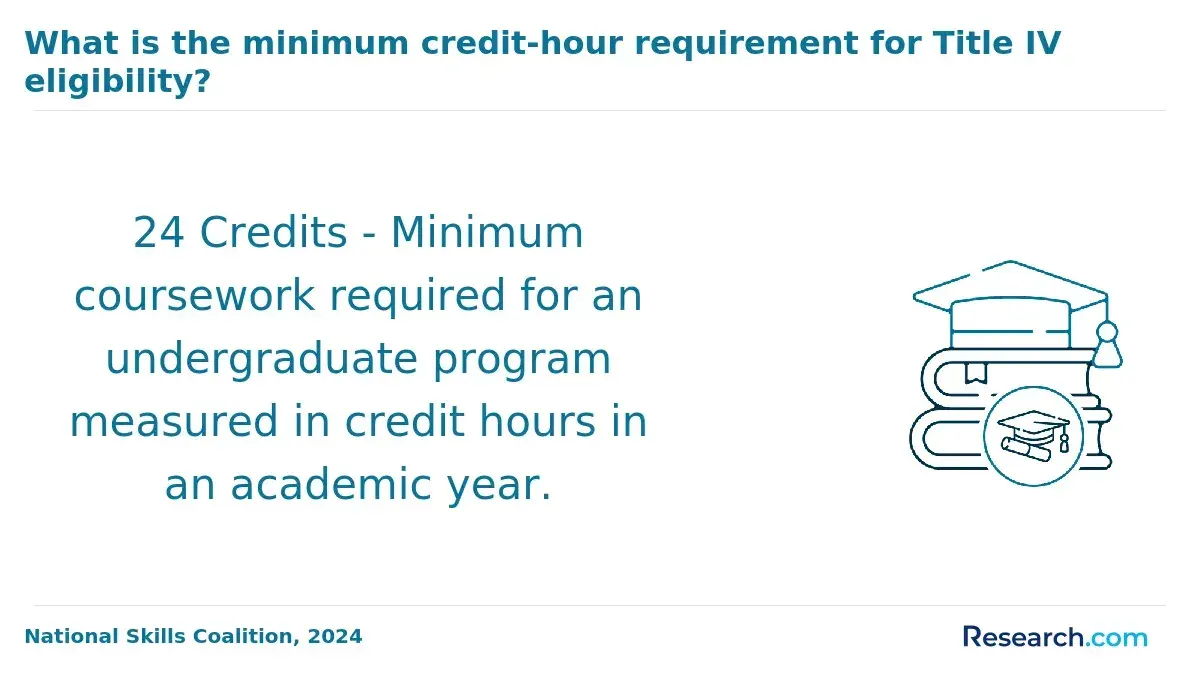
In evaluating an online economics master's degree, employers primarily distinguish between regional accreditation and programmatic or professional accreditation. Regional accreditation assesses the overall quality of the institution, ensuring it meets broad academic standards. In contrast, programmatic accreditation targets specific disciplines like economics or business, offering a more focused validation of program excellence. This distinction is often the first checkpoint for hiring managers and certification bodies.
Prospective students should confirm accreditation status through trusted resources such as the U.S. Department of Education's Database of Accredited Postsecondary Institutions and Programs (DAPIP) and the Council for Higher Education Accreditation (CHEA) directory. These platforms provide reliable, updated records that help avoid unaccredited institutions, which are generally disregarded in professional hiring processes.
While no single accrediting body exclusively governs economics programs nationwide, associations like the Accreditation Council for Business Schools and Programs (ACBSP) or the Association to Advance Collegiate Schools of Business (AACSB) frequently accredit departments that include economics curricula. Programmatic accreditation from such organizations can significantly bolster a graduate's credibility.
Recent data shows more than 70% of employers prioritize accreditation when assessing candidates' educational backgrounds, underscoring its role as a critical quality indicator.
- Regional vs. Programmatic Accreditation: Regional accreditation confirms schoolwide standards, whereas programmatic accreditation highlights specific economics or business program quality, enhancing reputation.
- Verification Tools: Using the Department of Education's DAPIP and the CHEA directory helps ensure chosen programs possess legitimate accreditation before enrollment.
- Discipline-Specific Accreditation: Bodies like AACSB and ACBSP provide focused accreditation that reflects academic rigor relevant to economics, boosting employer trust.
- Unaccredited Risks: Degrees lacking accreditation are generally dismissed by employers, limiting career progression and salary growth opportunities.
- Employer Preference: Over 70% of hiring managers now consider accreditation a key benchmark when evaluating graduate degree holders.
A professional who pursued an online economics master's degree to transition careers shared that navigating accreditation was a daunting yet vital step. "I spent hours cross-referencing schools with the Department of Education's database to avoid wasted time and money," he recalled. Despite initial apprehension about how employers would view an online degree, the program's accreditation provided confidence during job interviews. He emphasized that beyond accreditation, showcasing relevant skills learned was equally important, but having a credible degree opened many doors that might have otherwise remained closed.
How Does Institutional Reputation Affect the Value of an Online Economics Master's Degree in the Job Market?
Employer perception of online economics graduate programs in the US job market has evolved as universities with strong institutional reputation now offer online degrees maintaining identical faculty, curriculum, and academic rigor to their traditional campus options. For instance, prestigious institutions like Boston University and the University of Illinois Urbana-Champaign provide flagship online economics programs that benefit from the well-known brand premium. Published rankings and recruitment data, such as surveys from the National Association of Colleges and Employers (NACE), show that employer hiring pipelines favor graduates from universities with recognized names, regardless of whether the degree was earned online or in person.
However, prospective students should look beyond brand alone when choosing an online economics master's degree. Some mid-tier accredited programs with robust industry partnerships and proven alumni outcomes can outperform more prestigious schools lacking strong employer engagement. Accreditation remains a fundamental factor, as it assures program quality and enhances graduate employability. For those seeking specialized credentials, programs like a CACREP-accredited program demonstrate how accreditation and practical connections foster value in graduate education.
- Brand Premium Advantage: Degree recognition tied to institutional prestige signals academic excellence and boosts graduate employability across competitive job markets.
- Flagship Online Programs: Leading universities deliver online economics degrees that mirror campus offerings, ensuring consistency in faculty expertise and curriculum.
- Employer Hiring Data: Surveys by NACE confirm that recognizable school names heavily influence recruiters' candidate preferences.
- Beyond Prestige: Well-accredited mid-tier schools with strong industry collaborations often provide superior career outcomes compared to some higher-ranked institutions.
- Accreditation and Outcomes: Formal accreditation and measurable alumni success are critical in shaping employer confidence and salary negotiations.
What Salary Outcomes Can Online Economics Master's Graduates Realistically Expect?
The 2024 Education Pays report by the Bureau of Labor Statistics reveals that individuals with master's degrees consistently achieve higher median weekly wages and face lower unemployment rates than those holding only bachelor's degrees. Focusing on economics, data from the BLS Occupational Outlook Handbook highlights a substantial salary increase for master's-level graduates compared to bachelor's holders, reflecting the premium employers place on advanced expertise within this field.
Recent studies, including research from NYU School of Professional Studies, show minimal salary differences between graduates of online and traditional on-campus economics master's programs. When comparing accredited programs of similar reputation and rigor, the delivery method does not impact earnings significantly. This finding supports the growing acceptance of online degrees among employers, especially as skills-based hiring trends gain momentum.
Prospective students should carefully evaluate the return on investment by balancing tuition costs, program duration, and expected salary gains after graduation. For instance, an online economics master's program priced at $30,000 with a two-year completion timeline can yield a $10,000 to $15,000 annual salary increase, making the investment worthwhile within two to three years depending on career growth.
- Salary Advantage: Economics master's graduates earn notably higher median salaries than bachelor's degree holders, according to BLS data.
- No Delivery Penalty: Research indicates online and campus-based graduates receive comparable salaries if program quality is equal.
- Unemployment Benefits: Master's degree holders experience lower unemployment rates, enhancing job stability.
- Investment Insights: Calculating program cost against salary uplift helps determine financial feasibility.
- Employer Acceptance: Hiring trends show greater openness to online economics degrees over time.
A professional who built her career after completing an online economics master's shared that, initially, she worried about whether employers would value her degree. She found the experience rigorous, with a strong emphasis on analytical skills and real-world application. After graduation, she noticed employers focused more on her demonstrated competencies and internship accomplishments than on the degree's format. She reflected, "The flexibility allowed me to work while studying, and ultimately, my salary growth met or exceeded my expectations. The degree opened doors that might have remained closed otherwise."
Which Economics Industries and Employers Are Most Receptive to Online Master's Degree Holders?
The technology and consulting sectors lead in their openness to candidates holding online master's degrees in economics, embracing such qualifications due to their emphasis on applicable skills and proven experience. Healthcare and nonprofit organizations also increasingly accept online credentials, valuing the analytical and policy expertise these programs develop. Government agencies remain more cautious but have warmed to online degrees as accreditation standards improve and reputations strengthen.
Large Fortune 500 companies, once primarily focused on traditional campus degrees, are progressively shifting toward skills-based recruitment methods. According to NACE's Job Outlook 2026 survey, 70% of employers incorporate skill assessments in their hiring decisions. This approach allows online economics graduates to compete effectively alongside those with conventional credentials by demonstrating capabilities over pedigree.
Small businesses and startups are often the most flexible, frequently prioritizing hands-on results and proven knowledge rather than the degree format. Some firms explicitly target graduates from established online economics programs, especially those affiliated with reputable universities, further enhancing these candidates' prospects.
Prospective students should rely on clear, verified employer data and avoid unsubstantiated claims about recruitment preferences. Employer practices vary widely, and understanding the specific industries and organizations that value online master's degrees aids realistic career planning.
- Industry Acceptance Ranking: Tech and consulting industries exhibit highest acceptance for online master's degrees, followed by healthcare, nonprofit, and government sectors, reflecting sector-specific hiring cultures.
- Skills-Based Hiring Impact: With 70% of employers adopting skills-focused recruitment, online graduates can compete based on capability rather than degree origin.
- Company Size and Flexibility: Small businesses and startups prioritize demonstrable skills, while large firms are gradually adopting this mindset, expanding opportunities for online degree holders.
- Public vs. Private Sector: Public agencies remain cautious but increasingly trust accredited online programs as valid preparation for economics roles, especially in policy and analysis.
- Data-Backed Employer Claims: Prospective students should prioritize programs and employers offering verified recruitment information to avoid misguided expectations.
How Do Online Economics Master's Programs Compare to On-Campus Programs in Terms of Curriculum and Academic Rigor?
Many established universities ensure that their online economics master's programs maintain academic parity with on-campus offerings by using identical syllabi, faculty, and assessments. This approach guarantees that students face the same rigorous standards and learning outcomes regardless of whether they attend classes virtually or in person. Regional and programmatic accreditation bodies enforce quality thresholds that all programs must meet, whether online or on campus, giving employers confidence that an accredited online degree holds equal academic value.
Concerns about the lack of peer interaction in online learning are addressed through synchronous classes, virtual cohorts, and collaborative, project-based assignments. These features replicate the critical peer-learning environment traditionally associated with campus-based economics programs. However, some economics specializations involving practical components, like data labs or internships, require adaptable solutions. Reputable programs often offer virtual labs or local organizational partnerships to fulfill these hands-on experiences.
Trending data indicates that over 60% of graduate students in the U.S. now consider online education a viable option, signaling increased acceptance and trust among both students and employers. As employers grow more focused on skills and outcomes, the alignment of online program rigor with campus-based standards becomes a key factor in the value of an online economics credential.
- Curriculum Parity: Online economics master's programs frequently share syllabi and assessments with on-campus equivalents, ensuring consistent academic standards and outcomes.
- Accreditation Standards: Regional and programmatic accreditations mandate that online programs meet strict quality benchmarks, assuring employers of degree validity.
- Peer Collaboration: Synchronous sessions, virtual cohorts, and group projects in online formats recreate essential peer learning experiences of traditional economics courses.
- Practical Requirements: Hands-on elements like labs or internships are addressed through virtual resources or local partnerships to maintain practical learning standards.
- Growing Acceptance: Over 60% of U.S. graduate students now view online education positively, reflecting increased employer and student confidence in online economics degrees.
What Role Does the Online Learning Format Play in Developing Job-Ready Skills for Economics Careers?
The shift in employer perception toward online economics master's programs reflects the growing recognition that such formats effectively develop critical job-ready skills. According to the National Association of Colleges and Employers (NACE) career readiness competency framework, skills like critical thinking, digital literacy, communication, and time management are essential for workforce success. Online economics programs build these competencies through a blend of self-directed study, digital collaboration tools, and asynchronous communication, often replicating or exceeding traditional classroom experiences.
Students develop project management skills by managing deadlines independently without real-time supervision. The virtual environment fosters proficiency with digital platforms, equipping graduates for remote and technology-driven workplaces. Furthermore, asynchronous discussions and virtual group work cultivate communication skills across multiple time zones and cultural contexts, reflecting the realities of a globalized economics workforce. This transformation highlights the evolving impact of online learning on economics career skills.
Employer feedback and graduate outcome data show online economics graduates possess practical competencies comparable or sometimes superior to their campus-based peers. Nonetheless, online students must be proactive in networking and mentorship, as in-person career fairs and recruiting remain more prevalent in traditional settings. Prospective students should weigh these factors carefully when assessing programs.
- Self-Directed Learning: Programs encourage autonomy by requiring learners to manage their own schedules, fostering discipline and accountability highly valued by employers.
- Digital Collaboration: Use of virtual teamwork tools enhances remote communication, conflict resolution, and project coordination, mirroring modern workplace demands.
- Practical Competency Development: Curricula often integrate real-world data analysis and problem-solving aligned with employer expectations, ensuring job readiness.
- Workforce Relevance: Graduates typically gain advanced digital literacy and time management skills, aligned with NACE's career readiness model.
- Networking Challenges: While online students may miss traditional networking, many programs offer virtual career services and encourage proactive engagement to bridge this gap.
For those considering pathways including an associates degree or higher, the proven skills development in online economics master's programs is an important consideration for long-term career advancement.
What Do Graduate Employment Outcomes and Alumni Data Reveal About Online Economics Master's Degrees?
Graduate employment outcomes and alumni data provide critical insights into how online economics master's degrees are regarded by employers. Prospective students should request official placement rates, median salaries, and lists of employer partners directly from online economics programs to obtain a transparent and specific understanding of career outcomes for graduates of online economics programs before enrolling. Broad statistics alone do not convey this level of detail or precision.
External benchmarks such as the National Center for Education Statistics (NCES) Integrated Postsecondary Education Data System (IPEDS) graduation rate data and National Association of Colleges and Employers (NACE) graduate outcomes benchmarks offer useful comparison points. Students can use these frameworks to evaluate whether a particular program's published outcomes fall above, meet, or lag behind sector averages, providing clearer context for program quality and employer respect.
Many programs publish self-reported outcomes data, which can introduce bias or overstatement. Programs that undergo robust third-party verification-such as audits by independent accounting firms or validation through NACE's employer and graduate surveys-offer more reliable indicators of graduate success and program transparency. Such verification enhances trustworthiness for prospective students evaluating online economics master's degree employment statistics.
As employer acceptance of online economics degrees continues to grow, particularly for accredited institutions with strong reputations, alumni outcomes increasingly influence hiring decisions and salary negotiations. Students should prioritize verified data and transparent reporting to better assess a program's real-world value and how graduates fare long term.
- Official Placement Data: Requesting program-specific placement rates and median salaries helps reveal actual career outcomes beyond general statistics.
- Benchmark Comparisons: Using NCES IPEDS and NACE data provides context to assess whether an online economics master's program meets industry standards.
- Third-Party Validation: Programs verified by independent audits or NACE surveys offer more credible and trustworthy outcomes.
- Graduate Market Respect: Employers increasingly recognize quality online economics degrees as evidence of relevant skills and preparedness.
- Transparent Reporting: Clear, verifiable employment statistics support better decisions and realistic expectations for prospective students.
For professionals comparing degree options, exploring alternatives such as MFT programs alongside economics degrees may also offer insight into diverse career pathways.
What Are the Biggest Misconceptions Employers Have About Online Economics Master's Degrees?
Several outdated beliefs persist about online economics master's degrees, causing some employers to undervalue them. Contrary to the myth that online degrees imply lesser academic ability, a 2022 Excelsior College/Zogby survey showed that 83% of executives now consider online credentials as reputable as traditional ones. The misconception that these degrees lack accreditation is also false; many online programs meet the same rigorous regional and national standards as in-person offerings, especially with prestigious universities expanding their digital presence. Another frequent assumption is that online degrees are easier or faster; however, respected programs enforce strict curricula and assessments similar to on-campus degrees. Finally, the idea that online students lack commitment is being challenged by evolving workplace norms, where skills like self-discipline and time management, honed through online learning, are increasingly prized due to widespread remote and hybrid work environments.
- Academic Rigor: Employers overwhelmingly view online degrees as reflecting equivalent academic challenge, dispelling beliefs of inferior ability.
- Accreditation Standards: Online programs uphold the same quality assurances as traditional ones, bolstered by elite institutions entering the space.
- Program Demands: Flexibility does not reduce the complexity or depth of coursework and evaluations in reputable online economics degrees.
- Workplace Readiness: Online learners develop critical skills like self-motivation and adaptability, valued highly in modern remote work settings.
What Is the Long-Term Career Outlook for Professionals Who Hold an Online Economics Master's Degree?
Master's degree holders in economics-related fields such as economists, financial analysts, and market research analysts benefit from promising long-term career growth. According to the U.S. Bureau of Labor Statistics, these roles are expected to expand between 8% and 14% through 2032-2034, surpassing average employment increases. Median salaries for these occupations range from about $83,660 for market research analysts to $105,020 for economists, indicating strong earning prospects.
Data from the BLS Monthly Labor Review reveals that obtaining an advanced degree typically boosts annual earnings by roughly $24,588, increasing average salaries from around $69,459 before the degree to $94,047 afterward in related professions. This wage uplift underscores the substantial financial advantage graduate education provides.
Importantly, after professionals build a solid record of accomplishments, the delivery method of their master's degree-whether online or in person-usually ceases to factor into employer evaluations or promotion decisions.
Moreover, enrollment trends demonstrate the growing legitimacy of online graduate education. The National Center for Education Statistics reports that over 2.5 million graduate students were enrolled exclusively online during 2023-24, highlighting increased acceptance of online economics programs by both students and employers.
- Projected Job Growth: Economics-related careers requiring or benefiting from a master's are forecasted to grow 8%-14% by 2034, reflecting sustained demand.
- Salary Gain: Advanced degrees lead to an average increase of approximately $24,588 in annual earnings across related occupations.
- Degree Format Neutrality: Once established professionally, the distinction between online and traditional degrees becomes irrelevant to hiring and promotion.
- Rising Online Enrollment: More than 2.5 million graduate students studied exclusively online in 2023-24, evidencing growing mainstream acceptance.
What Graduates Say About Employer Reception to Their Online Economics Master's Degree
- Westin: "Completing my online economics master's degree was a decisive step for my career growth. I was initially unsure how my employer would view an online credential, but their positive reception reassured me that accredited programs are gaining solid recognition in the professional world. This degree truly enhanced my confidence in applying advanced economic concepts directly to my job."
- Peter: "Reflecting on my journey, pursuing an accredited online economics master's degree was crucial when I transitioned industries. My employer valued the rigorous curriculum and expertise I gained, which made the hiring process smoother than expected. The flexibility of the program allowed me to balance work and study without compromising quality."
- Andrew: "From a professional standpoint, the most significant impact of my online economics master's degree has been the increased respect it commands from my employer. They emphasized the importance of accreditation and relevance of the coursework, which gave me an edge in career advancement discussions. It's clear that the acceptance of online degrees is no longer a barrier but a welcomed asset."
Other Things You Should Know About Economics Degrees
In 2027, the rise of skills-based hiring places greater emphasis on practical expertise rather than just educational credentials. Employers value applicants with proven economic analysis skills, increasing the demand for online economics master's degrees that incorporate real-world applications and experiential learning experiences.
Graduates should emphasize the rigor of their online program, the accreditation status, and relevant projects or research completed during their studies. Highlighting practical skills like econometrics, statistical software proficiency, and experience with real-world data strengthens their candidacy. It is also useful to frame the online degree as a demonstration of self-motivation and adaptability, qualities prized by employers. Clear communication about how the program prepared them for economic analysis and decision-making roles is essential.
References
- 14 Common Myths About MBA Programs Explained https://www.spjain.org/blog/articles/mba-common-myths-explained
- Can You Really Get a Good Job with an Online Degree? https://www.nu.edu/blog/good-jobs-with-an-online-degree/
- What Global Employers Really Think About Online Degrees https://edutech.global/global-employer-view-on-online-degrees/
- How Do Employers View an Online Masters Degree? https://www.onlinembarankings.info/faq/employers-view-online-masters-degree/
- Online Vs On-Campus MA Economics: Which One is Right for You? https://www.careers360.com/courses-certifications/articles/online-vs-on-campus-ma-economics
- Lifelong Learning and the Role of Digital Skills in Career Advancement https://blogs.psico-smart.com/blog-lifelong-learning-and-the-role-of-digital-skills-in-career-advancement-166447
- Top 10 Economics Employers | INOMICS https://inomics.com/advice/top-10-economics-employers-750338
- Do employers care if your masters is online? https://www.continents.us/do-employers-care-if-your-masters-is-online/
- 6 Good Reasons to Earn Your Master’s Degree Online https://www.snhu.edu/about-us/newsroom/education/reasons-to-earn-your-masters-online
- Top Career Opportunities After an Online MA in Economics https://www.onlinecu.in/blog/cu/top-career-opportunities-to-grab-on-completion-of-online-ma-economics-program.php


