
2027 Economics Degree vs. Certificate: Which Should You Choose?

Co-Founder and Chief Data Scientist
Students and professionals today face crucial decisions when choosing between earning an economics degree or pursuing a certificate. Both options can enhance career prospects, yet they differ in time commitment, depth of study, and potential outcomes. For example, economics degrees often require years of study, while certificates can be completed in months, offering faster entry into the workforce.
Each path holds value depending on your goals: degrees provide comprehensive knowledge and greater access to advanced roles, while certificates focus on specific skills and practical applications. This article will explore key distinctions between these options to help you select the best fit for your career ambitions and lifestyle.
Key Points About Economics Degree vs. Certificate Programs
- An economics degree offers comprehensive theory and quantitative skills, enhancing salary potential by up to 25% compared to certificate holders.
- Certificate programs focus on practical, specialized skills, ideal for quick career shifts or supplementing existing qualifications.
- Degrees typically require 3-4 years, supporting broader professional growth; certificates take months, favoring professionals seeking flexible, fast skill development.
What Are the Differences Between Economics Degree and Certificate Programs?
Both economics degrees and certificate programs can open doors to valuable career paths, but they vary significantly in scope, depth, and commitment. Understanding these distinctions allows students to select the educational route that best aligns with their professional goals and preferred timelines.
Here are the key differences between pursuing an economics degree versus a certificate:
- Depth of Learning: An economics degree offers a comprehensive study of economic theories, quantitative methods, and related disciplines, suited for learners seeking in-depth knowledge and analytical skills. Certificates focus on specific topics or practical applications, ideal for those wanting targeted expertise without extensive academic commitment.
- Time Investment: Degree programs typically require several years to complete, providing a broad and structured education. Certificate programs can often be completed in a shorter timeframe, making them appealing to professionals needing quick upskilling or career shifts.
- Career Advancement: A degree generally serves as a stronger credential for long-term career growth and access to a wider range of roles. Certificates can boost specific skills and credentials for immediate job functions or specialties but may have limited impact on higher-level advancement.
- Cost and Accessibility: Certificates often cost less and offer more flexible formats like online options, which suit those balancing work or other responsibilities. Degrees may require more substantial financial and time resources, fitting learners ready for a full academic commitment.
How Long Does It Take to Complete a Economics Degree vs. a Certificate Program?
Completion time is one of the most important factors for students deciding between an economics degree vs. a certificate. Understanding how long each option takes can help learners balance their educational goals with personal and professional commitments.
- Typical Duration: A bachelor's degree in economics generally takes about four years of full-time study, covering both core economics courses and general education requirements. Associate degrees usually require two years. In contrast, an economics certificate program length is much shorter, often completed in a few months to one year, depending on pacing and program structure.
- Flexibility: Certificate programs typically offer more flexibility, with part-time, evening, or online options that let students move at their own pace. Degree programs may allow part-time enrollment, but this usually extends the time beyond the standard two to four years.
- Factors Affecting Timeline: The broader curriculum of degree programs requires more credits and general education, extending completion time. Certificate programs focus narrowly on economics topics and sometimes accept prior coursework or professional experience to reduce duration. Degree programs may allow transfer credits, but still require a substantial core curriculum.
For those wondering how long does it take to get an economics degree or curious about the economics certificate program length, speed and flexibility clearly favor certificate programs. To explore options that combine quick completion with earning potential, consider researching 6 month online certificate programs for high paying jobs.
Can You Complete a Economics Degree or Certificate Entirely Online?
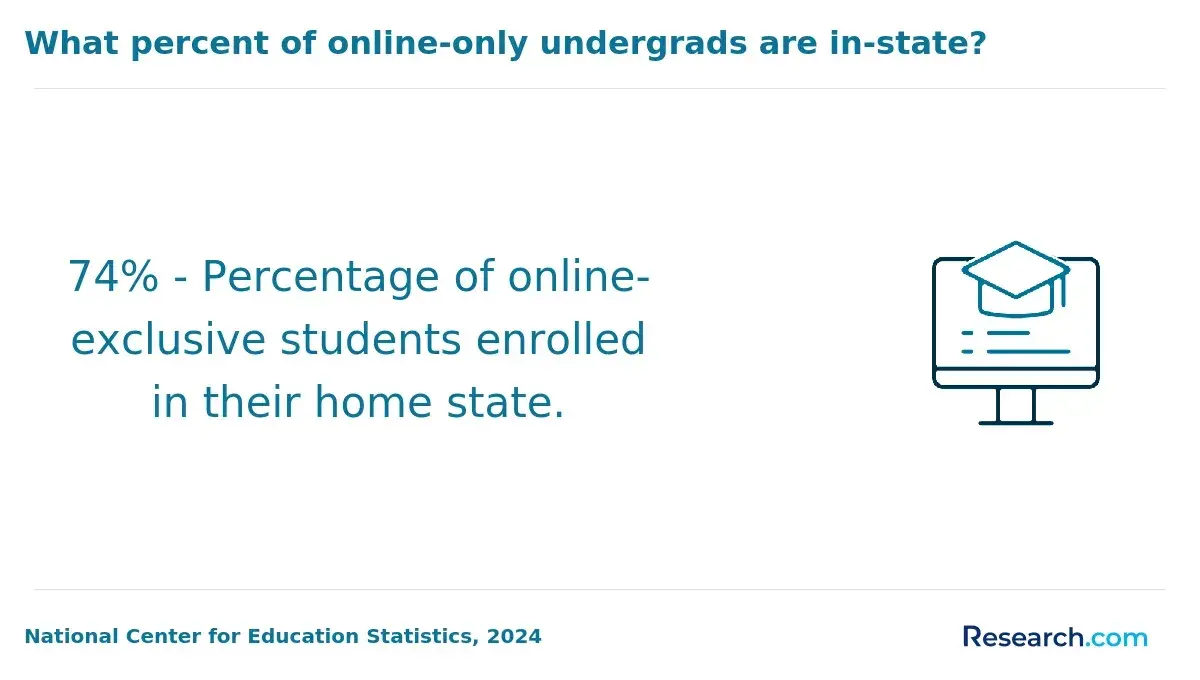
The rapid growth of online education now allows students to complete an economics degree entirely online at many reputable U.S. universities such as Arizona State University, Oregon State University, and San Diego State University. These institutions offer fully online bachelor's degrees in economics that match the quality and rigor of on-campus programs, enabling remote learners to finish all coursework without on-campus attendance.
Similarly, accredited online economics certificate programs are also widely available, typically focusing on specialized skills and requiring fewer courses and less time to complete compared to full degrees. This accessibility has made some of the top open admission colleges an attractive option for distance learners seeking economic expertise.
When choosing between an online economics degree or certificate, students should consider factors such as the absence of required hands-on training, lab work, or internships, which are often optional or pursued independently.
Also, since neither credential usually requires licensure, the decision hinges on personal goals: a degree offers broad career and graduate study opportunities, while a certificate provides targeted skill development faster. Prospective students should weigh program structure and flexibility to select the best online economics degree programs in the US or certificates aligned with their ambitions.
Breakdown of Public Fully Online Title IV Institutions

What Are the Admission Requirements for a Economics Degree vs. a Certificate Program?
Admission requirements are crucial when deciding between pursuing an economics degree or enrolling in a certificate program. They help determine your eligibility and indicate the academic preparation needed, allowing you to better assess your readiness and the commitment each option requires.
Below is a side-by-side comparison outlining typical admission requirements for economics degree programs versus certificate programs.
Admission Requirements for Economics Degree Programs
- Educational Background: Applicants usually need a high school diploma or equivalent for undergraduate degrees and a bachelor's degree for graduate-level programs.
- Prerequisite Courses: Completion of introductory economics courses such as microeconomics and macroeconomics with minimum grades is often required. For instance, Cornell demands at least a B- in ECON 1110 and 1120 and a C or better in calculus. Florida State University expects C grades or higher in ECO2013 and ECO2023 plus a 2.5 GPA between these courses.
- Mathematics Proficiency: Calculus is frequently mandated, with schools like Wisconsin and Cornell requiring at least one calculus course to be completed.
- General Education Requirements: Candidates must fulfill general education credits including English and math prior to admission to the major.
- Minimum GPA: A cumulative GPA between 2.0 and 3.4 is typically required, varying by institution and program competitiveness.
- Additional Materials: Some universities may require standardized test scores, personal statements, or letters of recommendation, especially for honors or competitive tracks.
Admission Requirements for Economics Certificate Programs
- Educational Background: A high school diploma or GED is generally sufficient, though some programs accept current undergraduates or working professionals without prior degrees.
- Prerequisite Courses: Most certificate programs do not demand previous economics coursework, though basic math and statistics knowledge may be recommended.
- Academic Performance: Unlike degree programs, certificate admissions rarely enforce minimum GPA or specific grade requirements.
- Professional Experience: Some graduate or professional-level certificates may ask for relevant work experience, but this is not universal.
- Application Materials: Requirements are often limited to an application form and proof of education; standardized tests and essays are typically not necessary.
These distinctions explain why economics degree admission requirements in the US are typically more structured and rigorous compared to economics certificate program eligibility criteria, which offer more accessible entry points.
For individuals exploring career pathways, considering the best majors to make money may also inform whether a degree or certificate better aligns with their goals.
How Many Credits Do You Need to Complete a Economics Degree vs. a Certificate?
Knowing the number of credits needed for an economics degree or certificate helps students plan their studies and manage their time effectively. Comparing credit requirements clarifies what to expect from each educational path.
The differences in credit expectations between an economics degree and certificate program are significant:
- Economics degree: Typically around 120 total credits are required, with 36 to 55 credits focused specifically on economics courses. These include general education, major requirements, and electives.
- Economics certificate: Usually requires just 12 to 18 credits concentrated on core economics topics, making it shorter and more focused than a full degree program.
What Is the Average Tuition for a Economics Degree vs. a Certificate?
Tuition costs are a crucial consideration when choosing between pursuing an economics degree or a certificate, as they significantly affect financial commitment and potential return on investment. Comparing the average tuition ranges of each option helps clarify the long-term affordability and value of these pathways.
Below is a detailed comparison to guide your decision-making process regarding the average tuition cost for economics degree programs versus certificate options.
Average Tuition for Economics Degree Programs
- Tuition Range: Undergraduate economics degrees in the US typically average about $11,102 per year for in-state students and $35,361 per year for out-of-state students based on recent data.
- Graduate Degree Costs: Master's degrees in economics generally cost around $13,031 per year for in-state and $29,734 per year for out-of-state students.
- Institution Type: Tuition tends to be higher at private universities, sometimes exceeding $43,000 annually, while public institutions usually have lower costs, especially for residents.
- Program Length: Bachelor's degrees in economics normally take four years of full-time study, resulting in a significant total tuition investment.
- Additional Costs: Expenses such as room, board, books, and fees can add between $10,000 and $20,000 or more yearly to the overall cost.
Average Tuition for Economics Certificate Programs
- Tuition Range: Economics certificate program tuition comparison shows these options are far more affordable, with most certificates costing between $4,000 and $9,000 for the entire program.
- Program Length: Certificates usually require 3 to 12 courses and can be completed within several months to one year, reducing overall tuition and opportunity costs.
- Delivery Format: Online certificate programs often cost less than on-campus versions, with some priced below $5,000.
- Institution Type: While costs vary by institution, certificate programs remain much less expensive than degree programs, even at well-regarded universities.
- Financial Aid: Fewer certificate programs qualify for federal financial aid compared to degree programs, which can influence out-of-pocket costs.
For those interested in cost-saving options that maintain financial aid eligibility, exploring the cheapest online schools that accept FAFSA can be a practical step toward affordable economics education.
Can You Transfer Certificate Credits Toward a Economics Degree Later On?
Certificate credits can sometimes be transferred toward an economics degree, but it depends on several factors. Key elements include the policies of the receiving institution, the accreditation status of the certificate program, and how closely the certificate courses align with the core economics curriculum. Many universities require that transfer courses match their degree requirements to qualify. For example, an introductory microeconomics course from a certificate might count if it fits their syllabus and comes from an accredited institution.
Additional factors to consider are transfer limits set by degree programs, often capping the number of units accepted from certificates or outside sources. Grade minimums, typically a "C" or better, are generally required for credit acceptance. It's crucial to confirm transfer eligibility before enrolling by consulting academic advisors or using official transfer tools like ASSIST.org. Taking these steps ensures that certificate coursework will effectively support progression toward an economics degree.
Are Certificate Programs Accredited the Same Way as Economics Degrees?
Certificate programs in economics are not accredited in the same manner as economics degree programs. Degree programs-such as associate, bachelor's, or master's degrees-are offered by regionally accredited colleges or universities, whose accreditation is managed by agencies recognized by the U.S. Department of Education or the Council for Higher Education Accreditation.
This institutional accreditation applies broadly to all degree offerings within the school. In contrast, economics certificate programs may be granted by these accredited institutions but typically lack independent accreditation themselves. Some certificates are even issued by non-accredited entities or online platforms that do not adhere to the same standards as traditional degree-granting institutions.
Accreditation plays a crucial role in confirming the program's academic quality, impacting the acceptance of credits for further education and eligibility for federal financial aid. Additionally, it provides assurance to employers and graduate schools about the program's credibility. Prospective students should verify whether the institution holds recognized regional or national accreditation and if credits from the program transfer to degree pathways.
They should also assess the certificate's reputation within the job market and academic community. It is important to avoid programs from unaccredited providers, as such credentials may lack recognition. Always confirm accreditation through established accrediting bodies before enrolling to ensure the value of your studies.
What Jobs Can You Get with a Economics Degree vs. a Certificate?
Both economics degrees and certificates can open career doors, but they typically prepare graduates for different roles and levels within the workforce. Understanding the distinctions between the two credentials can help clarify which career paths may be available.
Below is a comparison of jobs commonly associated with each credential.
Jobs You Can Get with an Economics Degree
- Economist: Conducts research and analyzes economic data to advise businesses or governments on economic policies and trends.
- Financial analyst: Evaluates financial information to guide investment decisions and assess market performance.
- Policy analyst: Examines and develops public policies by interpreting economic data to influence government or organizational strategies.
- Market research analyst: Studies market conditions to identify potential sales opportunities and consumer behavior.
- Management consultant: Provides expert advice to organizations on improving efficiency and solving business challenges using economic principles.
Jobs You Can Get with an Economics Certificate
- Economic research assistant: Supports economists by gathering and organizing data for analysis in academic or professional settings.
- Data technician: Manages and processes economic data sets to ensure accuracy for reports or studies.
- Junior analyst: Assists in analyzing economic and financial information, often supporting senior analysts with entry-level tasks.
- Business support roles: Provides foundational economic knowledge to departments like finance, marketing, or operations to help optimize business processes.
What Is the Average Starting Salary for a Certificate vs. Economics Degree Graduates?
Salary potential often differs significantly between holders of an economics certificate and graduates with an economics degree. Understanding these differences is important for prospective students weighing their education options.
Here is a side-by-side comparison of the average starting salaries and key factors influencing earnings for each program type.
- Typical Salary Range: Graduates with an economics degree typically start with salaries between $70,000 and $85,700 per year, reflecting strong demand in finance, consulting, and data analysis roles.
- Certificate Salary Range: Those with a certificate in economics generally earn between $40,000 and $55,000 annually. This aligns with U.S. data for individuals with some college or associate degrees.
- Influencing Factors: Industry, experience, and location heavily impact earnings. Degree holders in finance or tech sectors often see higher starting pay than certificate holders, especially in urban or high-cost-of-living areas.
- Career Outlook: An economics degree usually offers a stronger long-term career trajectory and advancement potential compared to certificates, which cater primarily to entry-level roles.
- Supplemental Options: For those seeking less time-intensive paths but competitive pay, exploring certification courses that pay well can provide valuable opportunities without committing to a full degree program.
Here's What Graduates of Economics Programs Say About Their Degree or Certificate
- Esteban: "Choosing the economics certificate program was perfect for me because the learning pace was much faster and more focused compared to a degree. It allowed me to gain essential skills without the hefty tuition fees of a full degree, which made a big difference for my budget. The knowledge I gained quickly improved my job prospects, and I felt confident making the investment."
- Alexis: "Pursuing the economics degree was a longer, more rigorous journey that deepened my understanding and prepared me well for a career in finance. I appreciated that the degree program offered more comprehensive coursework and networking opportunities, though it did come with a significant cost and time commitment. Reflecting back, I believe this level of commitment was crucial for the professional roles I now hold. "
- Eli: "Completing both the economics certificate and the degree gave me a unique perspective on how different learning paths serve different needs. The certificate was great for quick skill-building and affordability, while the degree provided a broader and deeper education that proved valuable for my career advancement. Balancing cost and coursework was challenging, but ultimately it allowed me to tailor my education to my goals."
Other Things You Should Know About Economics Degrees
In 2027, an economics degree typically offers more comprehensive knowledge and skill development, making it more beneficial for long-term career advancement. Degrees often provide deeper insights into economics, thus offering better prospects for roles requiring analytical and research skills.
Yes, economics degrees generally provide more opportunities for in-depth research and specialization. Degree programs include comprehensive coursework in various economic theories, econometrics, and related fields that support advanced study. Certificates often focus on practical skills without extensive research components.
Economics certificates offer a focused curriculum that enhances specific skills, allowing professionals to stay updated with industry trends in 2027. They serve as a stepping stone for further education and can supplement existing qualifications, helping individuals improve their expertise without committing to a full degree program.
In 2027, economics degrees typically offer a broader range of career advancement opportunities than certificates. Degrees often lead to roles requiring analytical and research skills, while certificates may serve as a complementary boost within existing careers or for those seeking targeted skills.
References
- Top Economics Careers To Power Your Future https://graduate.northeastern.edu/knowledge-hub/top-economics-careers/
- Transfer Credit https://econ.berkeley.edu/undergrad/transfercredit
- Transfer Credit | Department of Economics https://econ.uconn.edu/transfer/
- Certificates in Economics https://economics.rutgers.edu/academics/undergraduate/certificate-in-economics
- Economics vs. Finance Degree: Which Should You Choose? | NU https://www.nu.edu/blog/economics-vs-finance-degree/
- Online Degrees and Certificates https://www.northampton.edu/education-and-training/online-learning/online-degrees-and-certificates.html
- Transfers to SGH – Undergraduate Studies | SGH | Szkoła Główna Handlowa w Warszawie https://www.sgh.waw.pl/en/transfers-sgh-undergraduate-studies
- Applied Economics Graduate Certificate | Online or On-Campus https://und.edu/programs/applied-economics-certificate/index.html
- Graduate Certificate in Economics | UNSW Business School | UNSW Sydney https://www.unsw.edu.au/study/postgraduate/graduate-certificate-in-economics
- Top 15 Highest Paying Jobs for Economics Majors 2025 (Inc Salaries) | Nexford University https://www.nexford.edu/insights/highest-paying-jobs-for-economics-majors


