
2027 Are Online Professional Writing Degrees Respected by Employers?

Co-Founder and Chief Data Scientist
The popularity of online professional writing degrees has surged, reflecting a broader acceptance of digital education pathways. Recent studies reveal that over 60% of employers now regard online degrees as equal in value to traditional ones when evaluating candidates.
This article aims to clarify how employers currently perceive online professional writing programs and to identify key factors that influence their credibility in the job market. Understanding these perceptions is crucial for prospective students seeking careers in writing and communication fields.
The insights provided draw on expert analyses of hiring trends and educational standards to offer a balanced, evidence-based overview.
Key Benefits of Online Professional Writing Degrees Respected by Employers
- Graduates of respected online professional writing programs are viewed positively by 78% of employers who recognize these degrees as equivalent to traditional ones in terms of rigor and relevance.
- Students develop critical skills such as advanced communication, editing, and content strategy that directly align with the demands of today's digital workplace.
- Completing an online professional writing degree often leads to improved career outcomes with 64% of alumni reporting promotions or salary increases within two years of graduation.
Which Accrediting Bodies Make an Online Professional Writing Degree Legitimate?
Accreditation is essential for ensuring the quality and employer recognition of online professional writing degrees. It guarantees that a program meets established academic standards, has qualified faculty, and delivers meaningful educational outcomes.
For prospective students, attending an accredited institution is crucial to secure financial aid, transfer credits smoothly, and improve job prospects. The following outlines the main types of accreditation relevant to legitimate online writing degree accreditation.
Regional Accreditation
This is the most reputable form of institutional accreditation in the US. It is awarded by agencies such as the Southern Association of Colleges and Schools Commission on Colleges (SACSCOC) and the Higher Learning Commission (HLC).
Regional accreditation ensures rigorous academic standards and qualified faculty members, making degrees from such institutions widely accepted by employers and other universities.
Credits earned at regionally accredited schools, like Florida International University and University of Wisconsin-Superior, are typically transferable, which benefits students considering advanced study or transferring schools.
National Accreditation
Generally granted by agencies like the Distance Education Accrediting Commission (DEAC), national accreditation focuses more on career-oriented, technical, or vocational programs. While degrees from nationally accredited institutions can have value, they may be less recognized than regionally accredited degrees.
Credits might not transfer easily, and employer perception can vary. National accreditation is less frequently linked to professional writing programs at prominent universities.
Programmatic Accreditation
This type of accreditation applies to specific fields such as business or engineering. Currently, there is no major programmatic accreditor dedicated to professional writing degrees.
However, some programs may be part of larger accredited departments like English or communication studies, which can provide additional assurance of curriculum quality.
Choosing from accredited online professional writing programs ensures that your degree will hold credibility with employers and academic institutions alike. Graduates from these programs often enjoy stronger career outcomes, with median salaries demonstrating the value of legitimate online writing degree accreditation.
For more information about accelerated degree options, consider exploring a master's program online 1 year to advance your credentials efficiently.
Does University Reputation Affect Employer Views of Online Professional Writing Degrees?
University reputation plays a significant role in shaping employer perception of online degrees, particularly for an online professional writing degree reputation.
Employers often use the prestige and recognition of the awarding institution as a proxy for the quality and credibility of the credential. Degrees from well-known universities tend to be trusted more, regardless of whether the studies were completed online or on campus.
Several factors influence employer views regarding online professional writing degrees. Institutional prestige is key, as reputable universities usually do not differentiate between online and traditional degrees on transcripts, helping to normalize these qualifications.
Alumni success and employment outcomes also contribute; data shows that a majority of online program graduates experience positive return on investment, suggesting that employers value the skills these programs cultivate.
Additionally, accreditation status remains an important marker of rigor and credibility, with employers favoring programs with recognized regional or specialized accreditation. Universities that maintain strong industry partnerships or internship programs further enhance their online degree's credibility by demonstrating alignment with employer needs.
Nevertheless, while university reputation can significantly impact employer trust, practical skills and experience continue to be crucial in hiring decisions. Many employers prioritize demonstrated competencies such as writing samples, portfolios, internships, and relevant job experience over the mode of degree delivery.
This focus is especially prominent in technology-driven and creative sectors. For those exploring options, understanding what's the easiest online degree to get? can also provide useful perspective on navigating online education pathways.
Do Employers Treat Online and On-Campus Professional Writing Degrees Equally?
Employers' views on online professional writing degrees have changed markedly in recent years. With improvements in the quality and accessibility of online education, more hiring managers now acknowledge these credentials as legitimate and comparable to traditional, on-campus degrees.
A 2025 global survey reported that 83% of HR professionals regard accredited online degrees as equal to those earned in person, signaling growing acceptance within the professional workforce. However, while the overall trend is positive, some employers in the United States remain hesitant, with only 28% strongly agreeing that online and on-campus degrees hold equal value.
When assessing candidates, most employers prioritize the reputation and accreditation of the institution over the delivery format of the degree. Online degrees from well-established universities with physical campuses tend to be viewed similarly to their traditional counterparts, especially if the program includes rigorous coursework and practical writing projects.
Practical experience and a strong portfolio are also critical factors in employer evaluations. That said, some hiring managers still perceive graduates from traditional settings as having an edge in communication and leadership skills, partly due to more in-person interaction.
To maximize the credibility of an online professional writing degree, graduates should emphasize their program's accreditation, the university's standing, and any hands-on projects or internships completed during their studies.
Demonstrating effective writing skills, adaptability, and a commitment to ongoing learning continues to be essential regardless of how the degree was obtained.
Do Employers Trust Online Professional Writing Degrees from AI-Powered Virtual Classrooms?
AI technologies such as adaptive learning systems, virtual simulations, and AI tutors have significantly enhanced the quality and credibility of online professional writing programs. These tools provide personalized learning experiences by adjusting content to individual needs and pacing, which helps students engage more deeply with the material.
Virtual simulations create immersive environments where learners can practice writing skills in real-world scenarios, while AI tutors offer timely, targeted feedback that promotes continuous improvement.
Such innovations also prepare students to develop AI literacy by working hands-on with AI tools under expert guidance, ensuring they gain relevant digital skills. This integration of advanced technology not only elevates the educational experience but also assures that students graduate with up-to-date competencies aligned with industry demands.
Employer perceptions of online professional writing degrees earned through AI-powered virtual classrooms are becoming increasingly positive. As reputable institutions adopt these advanced technologies and offer accredited online programs, skepticism about the legitimacy of online degrees is decreasing.
Employers are recognizing valuable attributes cultivated through these programs, including adaptability, self-motivation, and proficiency in digital communication. Despite this progress, some doubts persist about whether online formats can fully replicate the depth of interaction and hands-on experience characteristic of traditional education.
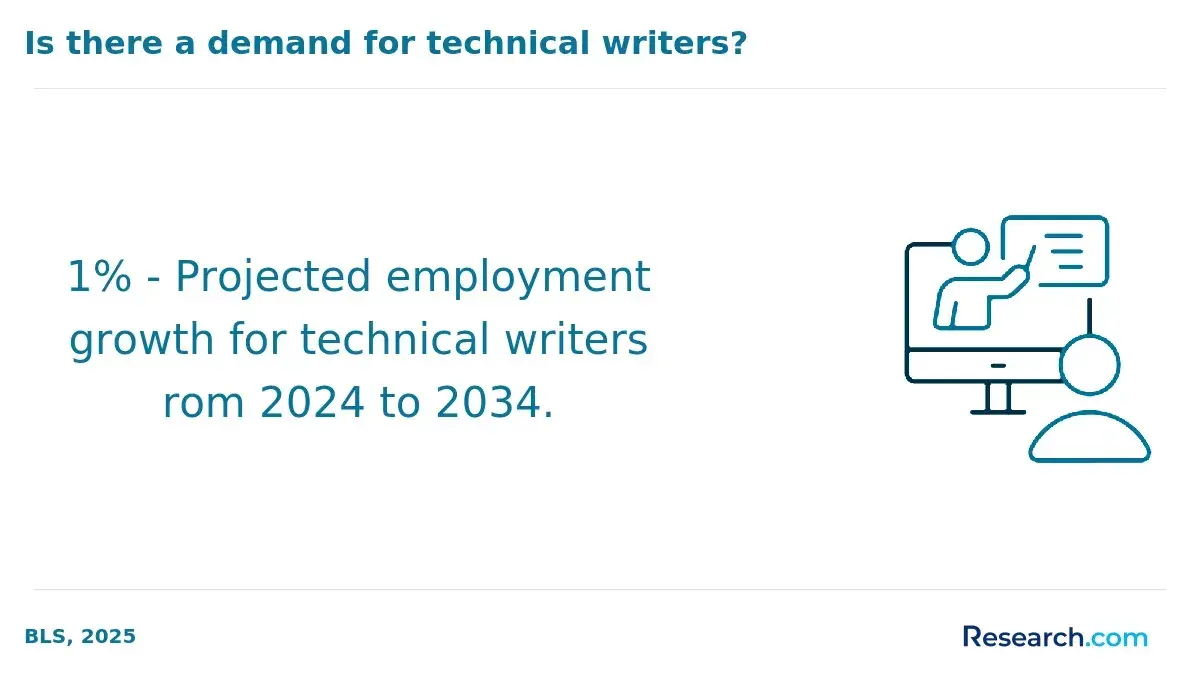
Nevertheless, the job market is expanding, with a projected 9% growth for professional writing careers over the next decade, and median salaries around $96,600, reflecting a growing acceptance and trust in the skills and readiness of online graduates.
What Skills Do Employers Value from Online Professional Writing Graduates?
Online professional writing graduates stand out in today's job market by combining advanced professional skills with essential soft skills like adaptability and collaboration. These capabilities enable them to deliver clear and effective messages across a variety of contexts and work efficiently in diverse, often virtual, teams.
The most in-demand skills employers seek from online professional writing degree graduates reflect both rigorous training and practical workplace needs, including:
- Clear Written Communication: Programs emphasize concise and purposeful writing across multiple genres, helping students develop effective communication skills. This emphasis on clear business writing abilities ranks highly among employers who prioritize clarity and precision in professional documents.
- Adaptability to Digital Platforms: Students gain hands-on experience producing content for blogs, social media, and email, learning to navigate various digital tools and formats. This versatility ensures graduates can meet the fast-paced demands of modern communication environments.
- Analytical Thinking and Research: Coursework requires students to perform thorough research and critically evaluate sources, producing evidence-based writing. Employers value this skill for roles involving content development, policy writing, and strategic communication.
- Editing and Attention to Detail: Frequent assignments and iterative feedback refine graduates' editing skills, leading to polished, error-free documents. Accuracy is essential for maintaining professionalism in all written communications.
- Collaboration and Remote Teamwork: Group projects and peer reviews in online settings build skills necessary for effective remote or hybrid teamwork, an increasingly common workplace arrangement.
- Persuasive and Audience-Aware Writing: Training focuses on tailoring messages to specific audiences and purposes, helping graduates influence, inform, or motivate readers in marketing, public relations, and business contexts with effective communication skills.
For those interested in pursuing such credentials affordably, there are options for low cost associate degrees online that can serve as a stepping stone toward developing these valued skills.
Do Professional Certifications Help Validate Online Professional Writing Degrees?
Earning professional certifications can significantly enhance the credibility of an online professional writing degree by demonstrating industry-specific competencies and a commitment to ongoing development.
These certifications offer concrete evidence that graduates possess specialized skills valued by employers beyond what their degree alone may convey. To understand the tangible benefits, it is helpful to explore how professional certifications strengthen the value of online professional writing degrees in the eyes of employers.
Here are the main ways professional certifications contribute to professional recognition:
- Professional Writing Certificates: Programs such as those offered by Penn LPS Online and Radford University deliver comprehensive training in diverse areas of professional communication. They equip graduates with expertise in writing for multiple media and audiences.
- Technical Writing Certifications: Specialized certificates like the Undergraduate Certificate in Professional & Technical Writing from the University of Arizona focus on document design and science communication. This targeted skill set aligns with the growing demand in technical writing fields.
- Portfolio Development: Many certification programs culminate in an ePortfolio capstone project, such as Radford University's approach. This hands-on experience is invaluable, offering graduates a professional portfolio that serves as concrete proof of abilities.
In conversations with a professional who pursued an online professional writing program, it became clear that the decision to earn a certification was transformative. Initially, he faced skepticism over the legitimacy of his online degree when applying for roles in competitive industries.
However, after obtaining a technical writing certification and completing an ePortfolio project, he noticed a significant shift in employer responses. "The certification made my skills tangible," he explained. "It wasn't just about having a degree anymore; I had specific projects and verifiable expertise to show."
Despite challenges balancing coursework with work and personal commitments, the extra effort provided a sense of achievement and confidence that directly helped him secure his current position.
He reflected that professional certifications do more than just validate an online degree-they illustrate dedication and readiness for demanding writing careers.
Do Online Professional Writing Graduates Earn the Same Salaries as On-campus Graduates?
Available industry data show there is no statistically significant salary difference between graduates with online professional writing degrees and those who completed their degrees on campus in the US.
Current trends suggest that employers prioritize skills and experience over the degree format, making the average salary for online professional writing graduates in the US comparable to that of their on-campus counterparts.
Several factors influence salary outcomes for graduates with online versus traditional professional writing degrees, and understanding these can clarify salary comparison online vs on-campus professional writing degree.
The primary factors include:
- Employer Perception: Many employers now regard accredited online professional writing degrees as equal to traditional ones, especially when programs have strong reputations and graduates demonstrate excellent writing skills and portfolios.
- Accreditation and Program Reputation: Graduates from reputable, accredited institutions-whether online or on-campus-typically secure more competitive salaries. Employers emphasize the program's quality over how the degree was delivered.
- Portfolio and Experience: Employers weigh practical experience, such as internships and published works, heavily. A strong portfolio often outweighs degree format in hiring decisions and salary offers.
- Geographic Location: Salary variations exist regionally across the US, with cities like Dallas and Seattle offering higher pay for technical writers. However, these differences affect all graduates regardless of how they earned their degree.
- Industry Demand: High-demand niches, including medical and technical writing, offer higher salaries independently of degree type, with senior roles paying up to $105,494 annually.
For individuals seeking quality education pathways, choosing among top accredited non profit colleges can be key to gaining the credentials and experience necessary for competitive salaries in professional writing fields.
How Do Online Professional Writing Degrees Impact Career Growth and Promotions?
Earning an online professional writing degree can significantly influence long-term career advancement and promotion opportunities across a broad range of industries.
These programs equip graduates with essential skills that make them valuable contributors in communication-focused roles, enhancing their potential for upward mobility.
Below are key ways in which online professional writing degrees support professional growth and help pave the way for career progression.
- Expanded Career Opportunities: Graduates qualify for diverse roles such as content strategist, technical writer, and public relations specialist, making them competitive candidates in fields where clear communication is critical. This broad eligibility opens doors to leadership positions in industries valuing strategic content delivery.
- Higher Earning Potential: Advanced writing degrees are often associated with access to senior-level and better-paying jobs. Employers recognize the expertise behind these credentials, which frequently leads to accelerated promotions and salary increases.
- Portfolio and Skill Development: Online programs emphasize creating real-world writing samples and digital portfolios that effectively showcase a graduate's versatility and mastery. This tangible evidence of skill supports candidates in securing advanced roles by demonstrating their practical value to employers.
- Networking and Alumni Resources: Many reputable programs provide access to extensive alumni networks and career services, fostering connections that facilitate mentorship and job referrals. Such relationships can be influential in advancing within competitive professional environments.
- Adaptability to Industry Trends: The curriculum often includes training on emerging tools like AI content software and contemporary digital platforms, enabling graduates to lead innovative communication strategies. This forward-thinking skillset is highly sought after for managerial and leadership roles.
When speaking with a professional who pursued an online professional writing degree, she shared how balancing work and study initially posed a challenge but ultimately proved rewarding.
She recalled, "Juggling deadlines was tough, but the program's flexible structure allowed me to keep my job while gaining skills that transformed how I approached my role."
After completing the degree, she was promoted to a senior communications specialist position within a year, attributing this success to her enhanced ability to craft strategic messaging and manage cross-functional projects.
She noted, "The real-world assignments helped me build a portfolio that impressed my employer, and alumni connections provided invaluable guidance during my job search." This firsthand experience underscores how an online professional writing degree can be a catalyst for meaningful career advancement.
What Companies Actively Hire Graduates from Online Professional Writing Programs?
Employers across a broad spectrum of industries are increasingly open to hiring candidates who hold online professional writing degrees, recognizing the rigorous skill development and adaptability these programs foster. More companies value these graduates for their ability to communicate effectively and produce content tailored to diverse audiences.
The following list highlights examples of companies and industry sectors that regularly seek out graduates from online professional writing programs for their specialized skills, reflecting growing demand for remote writing jobs for recent graduates.
- Marketing and Advertising Agencies: These organizations depend on professional writers for campaign strategies, social media content, web copy, and branding materials. Graduates are valued for creating persuasive messaging and adapting quickly to evolving digital platforms.
- Media and Publishing: News outlets, entertainment sites, and publishing houses employ graduates in roles such as content writing, editing, and digital journalism. The remote-ready nature of online programs prepares students well for both freelance and full-time opportunities in these dynamic environments.
- Technology Firms: These companies hire writers for technical documentation, instructional content, and product marketing. Graduates' skills in clear communication and simplifying complex technical information make them ideal for these roles.
- Educational and EdTech Companies: Online professional writing graduates contribute to curriculum materials, instructional guides, and educational articles, aligning closely with the needs of digital learning platforms and academic publishers.
- Corporate Communications and Public Relations: Large corporations and PR agencies value online graduates for internal communications, press releases, and stakeholder reporting. Their training in strategic and empathy-driven writing is highly sought after in these sectors.
- Nonprofits and Government Agencies: These sectors employ writers for grant proposals, reports, and outreach campaigns. The research and audience analysis expertise developed in online programs is especially important for mission-driven communications.
According to recent data, these industries reflect the types of companies hiring online professional writing graduates across roles that offer flexibility and remote opportunities, a trend supported by labor market forecasts.
Students interested in expanding their credentials can also explore joint degree programs undergraduate to enhance their career prospects in this evolving job market.
What Future Trends Will Shape Online Professional Writing Degrees' Credibility?
Technology, accreditation standards, and employer attitudes continue to evolve rapidly, fundamentally reshaping how online professional writing degrees are viewed in the job market. These changes are closing the gap between online and traditional programs, increasing employer confidence in digital credentials.
Several key trends are expected to further strengthen the legitimacy and recognition of online professional writing programs, enhancing both academic quality and employer trust.
Notable future trends include:
- AI-Driven Learning Validation: AI will enable more advanced assessments of student writing skills, offering transparent and measurable proof of competency. This technology allows employers to verify applicants' abilities beyond traditional transcripts, fostering greater trust in the quality of online degrees.
- Global Accreditation Collaboration: International cooperation on accreditation standards will establish consistent quality benchmarks across online professional writing programs worldwide. Such standardization ensures credentials are recognized globally, enabling graduates to compete equally in international job markets.
- Increased Employer Partnerships: Universities will strengthen ties with major corporations to integrate real-world projects into online curricula. With over 70% of organizations already hiring candidates with online degrees, these partnerships will help align programs with industry needs and normalize online credentials.
- Skill-Based Hiring Expansion: Employers are shifting focus from degree origin to demonstrated competencies, emphasizing portfolios and practical skills. This approach highlights graduates' expertise in areas like content strategy and digital communication, promoting the value of what candidates can do rather than where they studied.
Here's What Graduates of Respected Online Professional Writing Programs Have to Say About Their Degree
- Tariq: "Completing my online professional writing degree opened doors I never imagined. The flexibility of the program allowed me to balance full-time work and study, which was crucial for my transition into a communications role at a nonprofit. I've found that employers highly value the practical writing skills I honed, especially in grant writing and digital content creation. The degree truly accelerated my career growth and gave me the confidence to take on leadership opportunities within my organization."
- Luna: "Starting my career with an online professional writing degree gave me a competitive edge in the crowded publishing industry. The curriculum's focus on diverse writing styles and digital media prepared me to adapt quickly to changing trends. Beyond just skills, the program connected me to a supportive community of peers and mentors, making me feel part of something bigger even while studying remotely. This sense of belonging inspired me to contribute to literacy initiatives in underserved communities, which is deeply rewarding."
- Devon: "The professional writing program I completed online was a game-changer for my career advancement in corporate communications. The coursework emphasized strategic writing and project management, helping me transition from junior writer to content strategist in under two years. I appreciate how the online format challenged me to develop strong self-discipline and time-management skills, which employers recognize as key professional traits. This degree not only enhanced my resume but also my confidence to lead high-impact projects."
Other Things You Should Know About Respectable Online Professional Writing Degree Programs
In 2027, employers' perceptions of online Professional Writing degrees are influenced by accreditation, the reputation of the institution, and the quality of the curriculum. Industries prioritize skills demonstrated through a portfolio of work, making the degree's credibility increasingly dependent on these factors.
In 2027, industries such as publishing and journalism may lean towards traditional degrees, valuing hands-on experience and networking opportunities they often provide. However, many sectors are increasingly open to online degrees as they emphasize skills and adaptability.
In 2027, employers generally view online Professional Writing degrees as credible, especially when earned from accredited institutions. The respect for such degrees has grown with the increasing quality of online education, but credibility may still vary between industries and individual employers.
References
- The future of work and education in AI-driven innovative systems: A systematic literature review and lexicometric analysis - ScienceDirect https://www.sciencedirect.com/science/article/abs/pii/S1472811725000916
- U.S. Bureau of Labor Statistics. (2025). Technical writers. In Occupational Outlook Handbook. U.S. Department of Labor. Retrieved February 2, 2026, from https://www.bls.gov/ooh/media-and-communication/technical-writers.htm#tab-6
- Professional and Technical Writing (UGCERT) https://online.arizona.edu/programs/undergraduate-certificate/online-undergraduate-certificate-professional-and-technical
- Professional Writing Certificate https://www.smsu.edu/online/certificates/undergraduate/professional-writing.html
- Online vs In-Person Learning: Employers are Split on Value https://blog.efmdglobal.org/2023/11/15/employers-are-split-on-the-value-of-online-versus-in-person-degrees/
- Superagency in the workplace: Empowering people to unlock AI’s full potential https://www.mckinsey.com/capabilities/mckinsey-digital/our-insights/superagency-in-the-workplace-empowering-people-to-unlock-ais-full-potential-at-work
- Technical and Professional Writing Graduate Certificate https://outreach.missouristate.edu/Online/tech-pro-writing-grad-cert-online.htm
- How Employers View Online Degrees: Interviews with Nine Hiring Executives https://www.onlineeducation.com/features/how-employers-view-online-degrees
- 2025 Best Online Writing Degrees https://www.onlineu.com/degrees/writing
- Trends 2025: Insights in Tech Writing https://clickhelp.com/clickhelp-technical-writing-blog/tech-writing-trends-2025/
- Professional Writing Certificate Online | Penn LPS Online https://lpsonline.sas.upenn.edu/academics/certificates/professional-writing


