
2027 Can You Get Into a Nonprofit Management Program with a Low GPA? Admission Chances & Workarounds

Co-Founder and Chief Data Scientist
A low GPA can make nonprofit management admissions feel uncertain, especially when average admitted GPAs typically hover around 3.2. But GPA is only one part of the review. Many nonprofit management programs also look for evidence that an applicant can lead people, manage projects, communicate clearly, understand community needs, and handle graduate-level work.
This guide is for applicants whose grades are below a published cutoff, below a program’s average, or inconsistent across semesters. It explains how minimum GPA requirements usually work, how admissions committees review lower-GPA applicants, and which strategies can make an application stronger, including professional experience, prerequisite coursework, standardized tests, early applications, conditional admission, transfer pathways, scholarships, and advising.
The key takeaway: a low GPA is a serious admissions factor, but it is not always final. Your best path depends on how far below the requirement you are, whether your recent grades improved, and how clearly the rest of your application proves readiness for nonprofit leadership training.
Key Things to Know About Admission Chances Into a Nonprofit Management Program with a Low GPA
- Highlight relevant professional experience in nonprofit roles, as 62% of programs value work history equally or more than GPA.
- Complete additional coursework or certifications in nonprofit management or related fields to demonstrate academic commitment and skills beyond GPA.
- Submit strong letters of recommendation and a compelling personal statement emphasizing leadership, motivation, and goal alignment with nonprofit missions.
What Is the Minimum GPA Required to Apply for a Nonprofit Management Program?
The minimum GPA required to apply for a nonprofit management program generally falls between 2.5 and 3.0 on a 4.0 scale. Many programs use a 3.0 GPA as the standard benchmark because it suggests a reasonable level of academic preparation for graduate or advanced professional study.
More selective schools often prefer applicants with GPAs above 3.3. Less selective or more professionally focused programs may consider applicants below the stated average, particularly when the transcript shows stronger recent grades, solid performance in relevant courses, or meaningful work experience in nonprofits, public service, social services, fundraising, advocacy, or community programs.
Applicants should read GPA rules carefully because programs do not all calculate GPA the same way. Common policies include:
- Overall GPA minimums: Some programs use the cumulative GPA from all prior college coursework.
- Major or upper-division GPA review: A program may pay closer attention to later coursework if early academic performance was weak.
- Prerequisite or core-course expectations: Grades in statistics, finance, management, public administration, policy, writing, or research courses may matter more than unrelated electives.
- Transcript verification: Most accredited programs request official transcripts from every college previously attended.
- Separate review of graduate coursework: Strong grades in later graduate-level or post-baccalaureate courses can help show current readiness, even when the undergraduate GPA is lower.
If your GPA is close to the cutoff, contact the admissions office before applying. Ask whether the program uses a hard minimum, offers conditional admission, permits a written GPA explanation, or reviews recent coursework separately. If you need to rebuild your academic record before applying, accelerated adult degree programs online may help you complete additional coursework while balancing work or family responsibilities.
How Do Admissions Committees Evaluate Nonprofit Management Program Applicants with Low GPAs?
Admissions committees usually evaluate low-GPA applicants through a holistic review. That means they consider GPA alongside transcript patterns, professional history, recommendations, writing quality, mission fit, and evidence of leadership. The weaker the GPA, the stronger the rest of the application needs to be.
Committees commonly look at the following factors:
- Academic trend: A transcript that improves over time is more persuasive than one with repeated weak performance in recent courses. Stronger junior, senior, graduate, or post-baccalaureate grades can show maturity and better study habits.
- Course relevance and rigor: Grades in management, public administration, nonprofit finance, research methods, grant writing, economics, policy, or statistics may carry more weight than unrelated coursework.
- Explanation without excuses: A short, direct GPA statement can help if illness, family responsibilities, employment demands, or a major transition affected grades. The strongest explanations focus on what changed and why the problem is unlikely to continue.
- Professional and volunteer experience: Nonprofit management programs value applicants who have worked with communities, supervised volunteers, coordinated programs, supported fundraising, handled budgets, or contributed to advocacy efforts.
- Recommendations: Letters from supervisors, faculty, or nonprofit leaders should describe specific examples of reliability, leadership, judgment, writing ability, and readiness for advanced study.
- Statement of purpose: The essay should connect the applicant’s goals to nonprofit management, not simply express a general desire to “help people.” Strong essays name the problems the applicant wants to address and the skills they need to build.
According to the Council on Social Work Education and related data, nearly 40% of nonprofit management programs weigh these factors heavily when reviewing applicants with lower GPAs. That does not mean GPA is ignored; it means applicants have room to prove readiness through multiple forms of evidence.
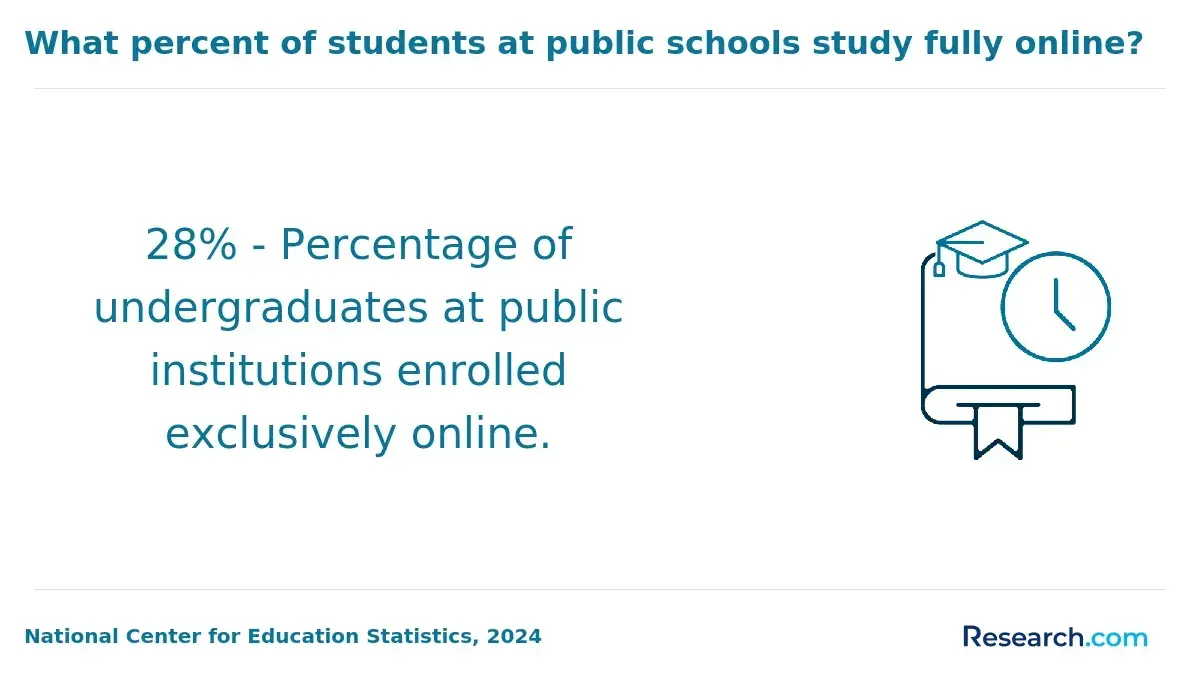
If your transcript is not competitive, consider adding targeted credentials that document current skills. For example, online certs that pay well can strengthen your resume when they align with budgeting, project management, data analysis, fundraising, leadership, or communication.
Can Professional Experience Offset a GPA Below the Nonprofit Management Program's Minimum?
Professional experience can help offset a low GPA, but it is most effective when it is directly relevant and well documented. Admissions committees are more likely to take work experience seriously when it shows leadership, accountability, measurable results, and exposure to nonprofit or public-service environments.
The strongest experience usually falls into these categories:
- Leadership experience: Supervising staff, coordinating volunteers, managing events, leading committees, or overseeing projects shows that you can handle responsibility and work with diverse groups.
- Nonprofit or social-sector work: Employment or sustained volunteering in nonprofits, public administration, schools, healthcare outreach, social services, advocacy groups, foundations, or community organizations connects directly to program goals.
- Fundraising and development: Experience with donor outreach, grant writing, campaigns, sponsorships, stewardship, or development operations is highly relevant because revenue strategy is central to nonprofit management.
- Program design and evaluation: Creating services, tracking outcomes, preparing reports, analyzing community needs, or improving operations can demonstrate readiness for applied coursework.
- Career progression: Promotions, increasing responsibility, or long-term service can show discipline and growth, especially when earlier academic performance was inconsistent.
To make experience count, do not simply list job titles. In your resume and statement, describe the scale and impact of your work. Include details such as the type of organization, size of the team or volunteer group, scope of the project, budget exposure if applicable, and outcomes you helped achieve. If you cannot share numbers, use concrete descriptions of responsibility and results.
Applicants below a stated minimum should ask whether the program allows an exception review. Some schools may still require a minimum GPA for institutional or graduate school policy reasons, even if the department values professional experience. In that case, experience can strengthen a petition, conditional admission request, or future reapplication, but it may not override a hard cutoff by itself.
Can Standardized Test Scores Help Offset a Low GPA for Nonprofit Management Admission?
Strong standardized test scores can help offset a low GPA when a nonprofit management program accepts or requires tests such as the GRE or GMAT. A high score gives admissions committees another measure of academic readiness, especially in verbal reasoning, quantitative reasoning, analytical writing, and problem-solving.
Test scores are most useful in these situations:
- Your GPA is slightly below the cutoff: A strong score may reassure the committee that you can handle graduate-level reading, writing, and analysis.
- Your transcript is old: If you completed your degree years ago, test performance may show more current academic ability.
- Your grades were uneven: A strong standardized score can help balance weak grades in unrelated or earlier coursework.
- The program uses optional testing: Submitting scores may be helpful if they are clearly stronger than the rest of your academic profile.
Admissions committees often look at several details:
- Score thresholds: Scores above a program’s minimum or average requirement, often near the 50th to 60th percentile or higher, can support an argument for readiness.
- Section relevance: Verbal and writing performance can matter for policy analysis, grant writing, leadership communication, and research-based coursework. Quantitative performance can matter for budgeting, evaluation, finance, and data-informed decision-making.
- Percentile rankings: Percentiles show how your score compares nationally, which can help contextualize a lower GPA.
- Consistency with the full file: Test scores are more persuasive when they align with strong recommendations, recent coursework, or professional accomplishments.
Do not assume that testing will solve every GPA problem. If your score is average or weak, submitting it may not help. Before paying for an exam, confirm whether the program requires, accepts, ignores, or waives standardized tests, and ask whether strong scores are considered in GPA exception decisions.
Can Completing Prerequisite Courses for a Nonprofit Management Program Improve Your Admission Chances with a Low GPA?
Yes. Completing prerequisite or related courses with strong grades is one of the clearest ways to show that your current academic ability is stronger than your old GPA suggests. This is especially useful if your low GPA came from earlier semesters, a different major, or circumstances that have since changed.
Additional coursework can help in three practical ways:
- It demonstrates current readiness: Recent A or B grades in relevant courses can show that you are prepared for graduate-level expectations.
- It strengthens weak areas: Courses in nonprofit finance, accounting, statistics, public administration, organizational leadership, program evaluation, research methods, grant writing, or policy analysis can fill gaps in your background.
- It gives admissions committees evidence beyond explanation: A GPA addendum can explain the past, but new coursework proves what you can do now.
Before enrolling, ask target programs which courses they value most and whether nondegree, community college, extension, graduate certificate, or post-baccalaureate credits will be considered. Not every course carries equal weight. A general elective may do little for your application, while a strong grade in nonprofit finance or research methods may directly address a committee’s concerns.
A graduate from a nonprofit management program described this path after applying with a GPA below the program’s usual threshold. She enrolled in several prerequisite courses to show readiness and said the process required steady focus and discipline.
“It wasn’t just about grades,” she reflected, “but about proving to myself and the admissions team that I was serious about this career path.” After completing the courses with improved marks, her application presented a stronger case for admission despite earlier academic setbacks.
Can Applying Early Improve Your Chances of Getting Into a Nonprofit Management Program If Your GPA Is Low?
Applying early can improve your chances in some nonprofit management programs, especially those with rolling admissions. Early applicants may be reviewed while more seats are available, and committees may have more time to consider context, experience, recommendations, and fit. However, early timing will not overcome a weak or incomplete application.
Early application is most helpful when:
- The program reviews applications as they arrive: Rolling admissions can favor prepared applicants who submit before the pool becomes more crowded.
- You are close to the GPA requirement: If your GPA is only slightly below the preferred range, early review may give the committee more flexibility to consider the rest of your file.
- Your professional background is strong: Relevant nonprofit work, leadership, volunteering, or community engagement should be clearly presented at the time you apply.
- Your materials are polished: Early does not mean rushed. A weak essay, generic recommendations, or missing transcripts can hurt more than timing helps.
The Council on Education for Public Health notes that nonprofit management programs often set minimum GPA thresholds around 2.8 to 3.0 but place strong emphasis on practical experience. For low-GPA applicants, this means early applications should highlight direct evidence of readiness: leadership roles, community impact, fundraising exposure, program coordination, budgeting, advocacy, or service delivery.
If you need more time to complete prerequisite courses, earn stronger grades, retake a test, or secure better recommendations, waiting for the next deadline may be wiser than submitting early. Applicants comparing degree paths and long-term career options can also review good majors that pay well to understand how nonprofit management fits with broader education and labor-market goals.
Can You Get Conditional Admission to a Nonprofit Management Program with a Low GPA?
Yes, some nonprofit management programs offer conditional admission to applicants who do not fully meet the standard GPA criteria, often set around 3.0. Conditional admission allows a student to begin the program under specific academic requirements before receiving full admission status.
Common conditions include:
- Bridge or prerequisite courses: Students may need to complete foundational coursework before moving into the full curriculum. These courses can strengthen preparation in writing, finance, management, research, or public administration.
- Minimum grades in initial coursework: Programs may require students to earn a specified GPA, often 3.0 or higher, during the first semester or first set of classes.
- Probationary periods: Students may be monitored for academic performance, attendance, professionalism, and engagement before the program grants full standing.
- Limited course load: Some programs may restrict the number of credits a conditionally admitted student can take until they prove they can manage the workload.
Conditional admission can be a useful option, but applicants should understand the risk. If you do not meet the required grades during the probationary period, you may be dismissed, delayed, or prevented from continuing in the program. Ask for the conditions in writing, including the required GPA, deadline, number of credits, financial aid implications, and whether completed courses will count toward the degree.
Research indicates that up to one-fifth of admits to nonprofit management and related social sector programs may enter through such conditional pathways, reflecting growing inclusivity while still preserving academic standards.
Can Starting in a Related Field and Transferring to the Nonprofit Management Program Help Low-GPA Applicants?
Starting in a related field can help low-GPA applicants build a stronger academic record before moving into nonprofit management. This route may work for students who are not admitted directly, need more time to prove academic readiness, or want to strengthen their foundation in leadership, policy, finance, or community practice.
Related fields that may support a later move include public administration, business administration, social work, public policy, organizational leadership, community development, human services, and related management programs. The goal is not to avoid nonprofit management; it is to create a transcript and skill base that makes a future transfer or reapplication more competitive.
This pathway can help by providing:
- Academic improvement: Strong grades in recent courses can reduce concern about an older low GPA.
- Relevant preparation: Courses in budgeting, organizational behavior, policy, research, ethics, leadership, and program planning may align well with nonprofit management curricula.
- Faculty support: Professors in related fields may later provide stronger recommendations if they see your current performance and commitment.
- Career clarity: Exposure to adjacent fields can help you decide whether nonprofit management, public administration, social work, or business-oriented leadership is the better fit.
Before choosing this route, confirm transfer rules. Ask whether credits will apply to the nonprofit management program, whether internal transfers are allowed, what GPA you must earn after enrolling, and whether changing programs affects tuition, aid, or time to completion.
A graduate described beginning in a business program while aiming to transfer into nonprofit management. He said, “It was a stressful balancing act because I knew transferring to nonprofit management depended on my grades.” He chose courses that strengthened both his transcript and nonprofit-related skills, sought faculty support, and added extracurricular nonprofit experience. After a year, he transferred successfully and said “the journey made me more confident and better prepared for the demands of the nonprofit sector.”
Are There Scholarships for Nonprofit Management Program Applicants to Help Improve Their GPA?
Scholarships usually do not improve a GPA directly. They can, however, make academic recovery more realistic by helping students pay for prerequisite courses, tutoring, academic support, reduced work hours, or preparatory programs. When researching scholarships for nonprofit management students 2027, focus on funding that supports both affordability and academic progress.
Useful funding options may include:
- Merit-recovery scholarships: These awards may support students who show academic improvement or have overcome earlier challenges. They can help pay for retaking required courses or completing preparatory coursework.
- Need-based grants: Grants based on financial need may reduce the pressure to work excessive hours while studying, making it easier to earn stronger grades.
- Program or institutional aid: Some schools offer aid for students entering public service, nonprofit leadership, community development, or related fields. Eligibility may depend on enrollment status, financial need, academic progress, or professional goals.
- Funding for academic support: Some resources can help cover writing support, study materials, workshops, coaching, or other services that improve performance.
Financial aid for low-GPA nonprofit applicants is not guaranteed. Some scholarships require a minimum GPA, and applicants below that threshold may need to demonstrate improvement before qualifying. If your GPA is low, ask financial aid offices whether they consider recent grades, conditional admission status, professional experience, financial need, or an academic improvement plan.
According to the Council on Education for Public Health (CEPH), some programs account for contextual factors during admissions, emphasizing the value of supported education. Applicants comparing flexible options can review top accredited non-profit online universities, especially if they need a format that supports continued work, family responsibilities, or academic rebuilding.
Can Mentorship or Academic Advising Help Overcome GPA Barriers for Nonprofit Management Program Applicants?
Mentorship and academic advising can help low-GPA applicants build a more credible admissions strategy. Advisors cannot erase a weak transcript, but they can help you choose the right courses, explain your record clearly, strengthen application materials, and avoid applying before you are ready.
Effective support usually includes:
- Transcript review: An advisor can identify whether your biggest issue is overall GPA, recent performance, prerequisite grades, repeated withdrawals, or weak grades in specific subjects.
- Course planning: Advisors can recommend courses that show readiness for nonprofit management, such as finance, statistics, public administration, leadership, policy, research methods, or grant writing.
- Application positioning: Mentors can help you connect your work, volunteering, leadership, and career goals to the program’s mission instead of focusing only on GPA.
- Recommendation strategy: A mentor can help you choose recommenders who can speak to current ability, not just personal character.
- Accountability: Regular check-ins can help you stay on track with coursework, deadlines, test preparation, and application revisions.
Research from educational consulting firms shows that nonprofit management programs often view mentorship benefits for nonprofit management admission and clear academic advising as positive factors during application reviews. This is especially relevant for applicants whose GPAs fall below the usual 3.0 cutoff, because holistic admissions reviews depend on clear evidence of readiness.
Professional mentors from the nonprofit sector can also help applicants turn experience into stronger evidence. For example, they may help you document leadership, program outcomes, fundraising work, board exposure, community partnerships, or volunteer coordination. According to the Council for Advancement and Support of Education (CASE), mentorship significantly increases graduate school enrollment rates, particularly when it includes application strategy and resource utilization.
Applicants who want to add career-relevant skills may also explore what are some certifications that pay well, especially if the credential strengthens their resume in management, data, finance, communication, or project coordination.
What Graduates Say About Getting Into a Nonprofit Management Program with a Low GPA
- Almira: "I was initially worried about my low GPA, but the nonprofit management program welcomed me with open arms after I demonstrated my passion through volunteering. The program's cost was surprisingly reasonable, making it easier for me to invest in my future without overwhelming debt. This degree has opened doors to leadership roles in nonprofit organizations that I never thought possible."
- Madeline: "With a less-than-ideal GPA, I knew I needed to prove myself beyond grades to enter a nonprofit management program. The cost was manageable, balancing both quality education and budget, which made the decision easier. Since graduating, the professional insights and strategic knowledge from the degree have significantly elevated my capacity to drive organizational success."
- Gilbert: "Despite my academic struggles early on, I sought out a nonprofit management degree because I believed in making a difference. The program's affordability really stood out compared to other degrees, which helped me commit fully without financial stress. Looking back, the skills and connections I gained have been indispensable in advancing my career and impacting communities positively."
Other Things You Should Know About Nonprofit Management Degrees
In 2027, professional achievements can significantly enhance your application to a nonprofit management program. Demonstrating leadership, impact, and initiative in your professional roles can compensate for a low GPA by showcasing practical skills and dedication relevant to the field.
Letters of recommendation are crucial for applicants with low GPAs, as they provide insight into the candidate's skills, character, and potential. In 2027, they may enhance an application by offering evidence of leadership and commitment to nonprofit work.
In 2027, extracurricular activities showcase leadership and interpersonal skills, enhancing your application. Active involvement in nonprofit or community initiatives can significantly bolster your profile, demonstrating a genuine commitment to the sector, thereby increasing your chances of admission despite a low GPA.
References
- Nonprofit Management How to apply https://online.missouri.edu/degrees-programs/mu/arts-and-sciences/nonprofit-management/grad-cert/admissions
- Online Bachelor of Science in Nonprofit Leadership and Management https://asuonline.asu.edu/online-degree-programs/undergraduate/bs-nonprofit-leadership-management/
- Business Management: Nonprofit Management Option (B.S.) https://cps.unh.edu/online/program/bs/business-management-nonprofit-management-option
- Bachelor's Degree in Nonprofit Management https://www.ccu.edu/ccu/nonprofit-management/
- Master of Science in Nonprofit Leadership & Management https://onlinedegrees.sandiego.edu/masters-nonprofit-leadership-management/
- Master of Business Administration in Nonprofit Management Online https://online.mountsaintvincent.edu/degrees/business/mba/nonprofit-management/


