
2027 Community College to Construction Management Bachelor's Degree Transfer Guide

Co-Founder and Chief Data Scientist
If you plan to start at community college and finish with a construction management bachelor’s degree, the central question is not simply whether you can transfer. It is whether your credits will apply to the right degree requirements, at the right time, without forcing you to repeat courses or delay graduation. Many students lose time because they choose classes that transfer as electives instead of prerequisites, miss application deadlines, or assume an associate degree automatically satisfies junior-level admission requirements.
The stakes are real. According to the National Student Clearinghouse, nearly 60% of community college students transfer, but less than half complete a bachelor’s degree within six years. For construction management students, careful planning matters even more because programs often combine general education, math, technical coursework, business, safety, estimating, scheduling, and project management requirements.
This guide explains who should consider transferring, what requirements to check, how credit evaluations work, which community college classes are usually most useful, when to apply, how costs and financial aid may change, and what problems commonly slow transfer students down.
Key Benefits of Community College to Construction Management Bachelor's Degree Transfer
- Transferring from community college improves academic accessibility by allowing students to build foundational skills in smaller classes before pursuing specialized construction management courses.
- Cost efficiency is significant, as students save up to 60% on tuition by completing general education credits at a community college before transferring.
- Smoother degree completion pathways result from articulation agreements and credit transfers, reducing redundant coursework and accelerating time to earn a bachelor's in construction management.
Who Should Consider Transferring to a Construction Management Bachelor's Degree?
Transferring to a construction management bachelor’s degree is often a strong option for students who want the affordability and flexibility of community college but need a four-year credential for broader management, estimating, scheduling, safety, or project coordination roles. Data from the National Student Clearinghouse Research Center shows that about 38% of community college students transfer to four-year institutions within six years, so this is a common route, but it works best when students plan early.
You should consider this pathway if your current credits, career goals, and academic readiness align with the bachelor’s program you want to enter.
- Associate degree completers: Students with an associate degree in construction technology, architecture, engineering, drafting, business, or a related field may be able to build on prior coursework instead of starting over. The key is whether those courses meet major requirements, not just whether the credits transfer.
- Students seeking management responsibilities: A bachelor’s program can add structured training in project oversight, contracts, cost control, safety, scheduling, and leadership. These areas are often important for students who want to move beyond field or technical support roles.
- Career changers: Students coming from another academic or work background may use transfer admission to enter construction management after completing foundational math, communication, business, or technical courses at community college.
- Cost-conscious students: Completing lower-division coursework at community college can reduce total tuition costs, especially when the receiving university accepts credits toward general education and program prerequisites.
- Working adults: Students already employed in construction may benefit from transfer-friendly formats, evening courses, hybrid options, or online programs that let them continue working while finishing the bachelor’s degree.
This path may not be ideal if you have many credits in unrelated subjects, a weak GPA, or coursework from a school whose credits the receiving institution does not commonly accept. Before committing, compare several programs and ask each school for a preliminary transfer review. Students who still need an associate credential before applying may also compare options such as an accelerated online associate degree, but speed should not come at the expense of transferability.
What Are the Transfer Requirements for a Construction Management Bachelor's Degree?
Transfer requirements for a construction management bachelor’s degree vary by institution, but most schools review the same core areas: your college GPA, completed credits, prerequisite courses, accreditation of prior coursework, official transcripts, and available space in the program. Meeting general university admission standards does not always guarantee direct entry into the construction management major.
Expect to verify the following before you apply:
- Minimum GPA: Most programs require a minimum college GPA for transfer admission. Competitive programs may look more closely at grades in math, science, technical, construction, and business-related courses.
- Completed college credits: Schools typically require a certain amount of completed postsecondary coursework before reviewing you as a transfer applicant. Some students apply after one year; others apply after completing an associate degree.
- Prerequisite coursework: Construction management programs may expect prior coursework in college algebra, trigonometry, physics, computer applications, drafting, construction materials, accounting, business, or technical communication. Exact requirements vary, so use the target school’s degree plan instead of guessing.
- General education requirements: English composition, oral communication, humanities, social science, math, and science courses often transfer well when they match statewide or institutional articulation rules.
- Official transcripts: You must submit official transcripts from every college attended, even if you withdrew, earned few credits, or do not want those credits evaluated.
- Application materials: Some programs require only the transfer application and transcripts. Others may request essays, resumes, recommendations, portfolios, or documentation of construction-related experience.
- Good academic and financial standing: Schools may check whether you are eligible to return to prior institutions and whether transcript holds or unpaid balances prevent document release.
When comparing schools, look for clear transfer maps, articulation agreements, ABET or construction-related accreditation information where applicable, and published course equivalency tools. If you need flexibility, an online bachelor degree option may be useful, but confirm that the delivery format still supports labs, software requirements, internships, or field experience expectations tied to construction management.
Can I Transfer All My Community College Credits to a Construction Management Bachelor's Degree?
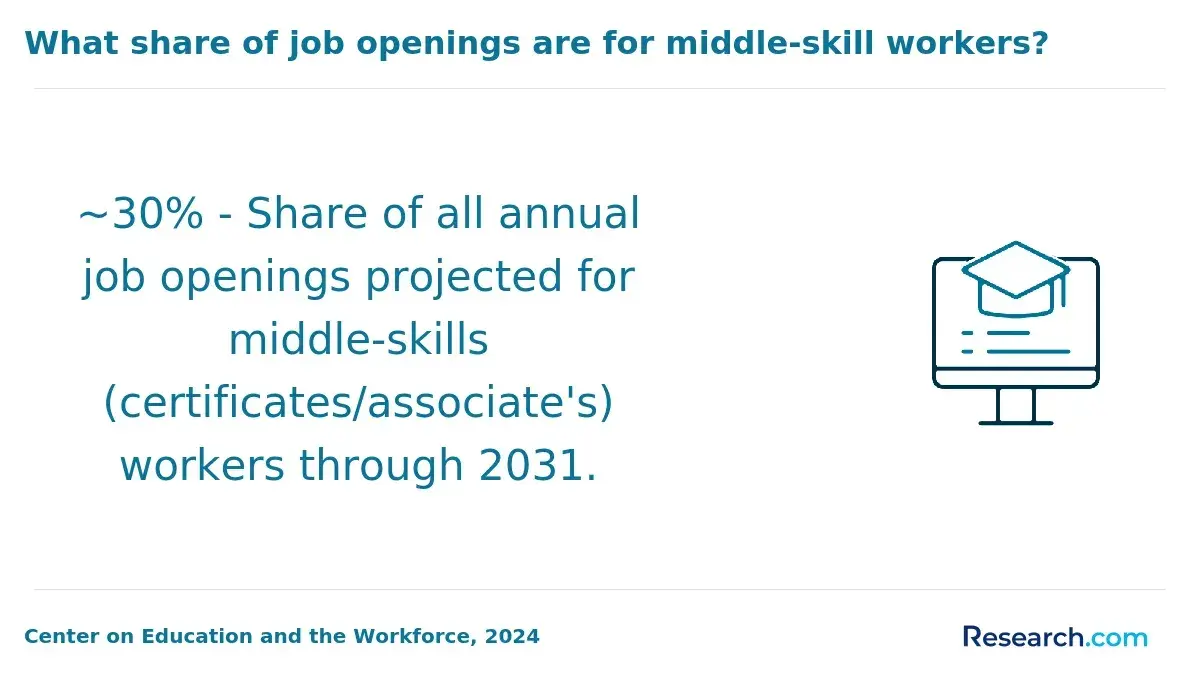
You may be able to transfer many community college credits, but transferring all credits is uncommon. The receiving university decides which courses apply to the bachelor’s degree after reviewing course content, level, grades, accreditation, and how each class fits the construction management curriculum. According to data from the National Student Clearinghouse Research Center, nearly two-thirds of community college students who move to four-year universities successfully apply some credits toward their degree, but full credit acceptance is rarely automatic.
The most important distinction is between credits that are accepted by the university and credits that apply to your major. A school might accept a course as elective credit, but if it does not satisfy general education, prerequisite, or construction management requirements, it may not shorten your time to graduation.
| Credit issue | What it means for transfer students | How to reduce the risk |
| Course equivalency | A class must match the receiving school’s course content closely enough to count for a specific requirement. | Use transfer equivalency tools and keep syllabi for construction, math, drafting, business, and science courses. |
| Major applicability | Credits may transfer but count only as electives, which may not advance you in the construction management sequence. | Ask whether each course applies to the degree audit, not just whether it transfers. |
| Accreditation | Credits from regionally accredited schools are often reviewed more favorably than credits from nationally accredited or unaccredited institutions. | Confirm the accreditation status of your current school and the transfer policies of your target school. |
| Grade requirements | Some programs require minimum grades for prerequisite or major courses. | Retake weak prerequisite courses only after an advisor confirms it is necessary. |
| Credit limits | Universities may cap the number of community college credits applied toward a bachelor’s degree. | Check maximum transfer credit rules before taking extra community college courses. |
A student who moved from community college into a construction management bachelor’s program described the process as both encouraging and frustrating: “I expected more of my credits to transfer seamlessly, but many had to be reviewed closely or didn’t apply directly to my major.” He said articulation agreements and advisor meetings helped, but the transcript evaluation “felt like a puzzle where some pieces fit and others didn’t.”
The practical takeaway is simple: do not rely on assumptions. Request a degree-specific transfer evaluation before enrolling, and ask for written confirmation of how your credits will apply.
What Classes Should I Take at Community College for a Construction Management Bachelor's Degree?
The best community college classes for a future construction management bachelor’s degree are the ones your target university has already approved as equivalents. Early course planning matters because studies show transfer students completing key preparatory courses are about 30% more likely to finish their degree on schedule. The safest approach is to choose courses that satisfy both lower-division general education and major prerequisites.
Prioritize these course areas, but verify the exact course numbers with your intended transfer school:
- College math: Algebra and trigonometry are commonly useful for estimating, measurements, surveying concepts, structural basics, and problem-solving. Some programs may expect additional math depending on the curriculum.
- English composition and technical communication: Construction managers write proposals, reports, change orders, meeting notes, safety documentation, and client updates. Strong writing courses can support both admission and career readiness.
- Oral communication: Public speaking or professional communication courses help prepare students for project meetings, contractor coordination, presentations, and conflict resolution.
- Physical science: Introductory physics or materials science can support later coursework involving building systems, materials behavior, loads, and construction methods.
- Drafting, CAD, or plan reading: These classes can be valuable if they transfer into the major or prepare you for software-heavy coursework.
- Construction fundamentals: If available, take approved courses in construction methods, building codes, safety, estimating, scheduling, or construction materials.
- Business and accounting: Management, accounting, business law, and economics may support construction courses involving budgets, contracts, procurement, and project administration.
- Computer applications: Spreadsheet, project management, and construction software skills can help with estimating, scheduling, and reporting assignments.
Students comparing program formats can review the curriculum patterns used by affordable construction management programs, including the best 2 year construction management degree online options. If you are planning a flexible transfer route, also compare online construction management degrees to see how lower-division credits, prerequisites, and completion timelines are handled.
Avoid filling your schedule with unrelated electives unless an advisor confirms they satisfy a requirement. Extra credits may feel productive, but they can raise costs without shortening the bachelor’s degree.
What Should I Do Before Transferring to a Construction Management Bachelor's Degree?
Before transferring, your goal is to remove uncertainty. Research indicates that students who engage in intentional planning and advising show retention rates approximately 20% higher than those who transfer without such preparation. For construction management students, preparation should cover academics, documents, finances, software readiness, and career expectations.
- Choose target programs early. Identify several construction management bachelor’s programs and compare admission requirements, transfer credit limits, course sequencing, internship expectations, program format, tuition, and accreditation information.
- Request a transfer credit review. Ask how each completed and planned course will apply to the degree. If possible, get the evaluation in writing and save emails from advisors or transfer offices.
- Meet with both advisors. Speak with your community college advisor and the receiving institution’s construction management or transfer advisor. General advising is helpful, but major-specific advising is essential.
- Collect syllabi and course descriptions. These documents can help if a construction, drafting, safety, estimating, or technical course needs individual review.
- Check prerequisite sequencing. Some upper-division courses must be taken in order. Missing one prerequisite can delay access to several major courses.
- Organize application materials. Prepare official transcripts, personal statements, recommendation letters, resumes, and any required supplemental forms before deadlines approach.
- Review financial aid timing. Update your FAFSA information if applicable, check scholarship deadlines, and ask whether aid changes after you move from community college to the university.
- Assess technical readiness. Construction management students may need comfort with spreadsheets, scheduling tools, blueprint reading, CAD, estimating software, or learning management systems.
A student pursuing a bachelor’s degree in construction management said uncertainty about credit acceptance was the most stressful part of the transition. Ongoing communication with advisors helped her understand which skills the bachelor’s program emphasized and which documents she needed to organize. She said that knowing the academic and administrative expectations before transferring made the move smoother and helped her feel prepared for upper-division coursework.
When Should I Apply for Transfer to a Construction Management Bachelor's Degree?
You should apply when you are close enough to completing key prerequisites for the university to evaluate your readiness, but early enough to meet admission, scholarship, housing, advising, and registration deadlines. Studies show students who submit their applications within recommended windows are 20% more likely to enroll on schedule without delays.
Use these timing factors to plan your application:
- Application cycle: Many schools admit transfer students for fall and spring terms. Some programs have priority deadlines, limited major entry points, or earlier scholarship deadlines.
- Prerequisite completion: Apply when required courses are completed or in progress, depending on the school’s policy. If you apply too early, the program may not have enough evidence that you are ready for upper-division work.
- Transcript availability: Order official transcripts from every college attended. If current courses are still in progress, ask whether the school needs an in-progress transcript, a final transcript, or both.
- Credit evaluation time: The earlier you apply, the more time the university has to evaluate credits, resolve course equivalency questions, and place you correctly in the curriculum.
- Course registration: Transfer students who are admitted late may find that required construction management courses are already full, which can delay progress by a term.
- Financial aid and scholarships: Aid deadlines may come before admission deadlines. Missing them can make an otherwise affordable transfer less manageable.
A practical timeline is to begin researching programs at least two terms before you plan to transfer, meet with advisors before your final community college registration period, and submit applications before priority deadlines whenever possible. Applying too soon without prerequisites or too late after deadlines can both create avoidable delays.
Is It Cheaper to Transfer to a Construction Management Bachelor's Degree From Community College?
Yes, transferring from community college to a construction management bachelor’s degree is often cheaper than spending all four years at a university, especially when lower-division credits transfer cleanly. Public community colleges often charge significantly lower tuition, with costs sometimes less than half the price per credit hour compared to four-year universities. The savings are strongest when students complete general education and prerequisites at community college without taking excess credits that do not apply to the bachelor’s degree.
The cost advantage usually comes from several areas:
- Lower tuition for the first two years: Community college courses often cost less per credit, making them a cost-effective place to complete general education, math, communication, and approved introductory construction courses.
- Shorter time at the university: If your credits apply properly, you can reserve higher university tuition for upper-division construction management courses.
- Reduced living costs: Many community college students live at home or commute locally, which can lower housing, meal, and transportation expenses.
- Flexible work options: Community college schedules may make it easier for students to keep working while completing lower-division coursework.
However, the cheaper route can become more expensive if credits do not transfer, if you miss prerequisites, or if you need extra semesters after transferring. The best financial strategy is not simply to take the cheapest classes available; it is to take the cheapest classes that the receiving construction management program will actually count toward graduation.
| Cost factor | Potential benefit | Risk to watch |
| Community college tuition | Lower cost for foundational courses | Credits may not apply to the major if courses are not approved |
| University tuition after transfer | Paid mainly for upper-division coursework | Extra semesters can reduce or erase savings |
| Housing and commuting | Local attendance may reduce living expenses | Relocation costs may begin after transfer |
| Course planning | Efficient transfer can lower total degree cost | Poor advising can lead to repeated or unused credits |
What Financial Aid Is Available for Construction Management Bachelor's Degree Transfer Students?
Construction management transfer students may qualify for federal aid, state aid, institutional grants, scholarships, loans, work-study, employer assistance, and industry-related funding. Nearly 60% of transfer students receive some form of federal financial aid, so students should not assume that aid ends when they leave community college.
Common options include:
- Federal grants and loans: Eligible students may use federal aid programs, including Pell Grants and federal student loans. Loan terms and repayment obligations should be reviewed carefully before borrowing.
- State grants: Some states offer transfer grants, need-based aid, or workforce-focused funding for students completing bachelor’s degrees in applied or technical fields.
- Institutional aid: Universities may offer transfer scholarships, need-based grants, tuition discounts, or program-specific awards for construction management students.
- Work-study: Eligible students may earn money through part-time work while enrolled. Construction-related campus jobs are not guaranteed, but any structured work can help reduce borrowing.
- Employer tuition assistance: Students already working in construction should ask employers about tuition reimbursement, apprenticeship-related funding, or professional development benefits.
- Industry and association funding: Construction, engineering, contractor, and project management organizations may offer scholarships to students preparing for careers in the field.
Transfer students should file required aid forms early, check whether aid packages change after transferring, and ask each university whether scholarships require full-time enrollment, a minimum GPA, or admission to the major. Students can also compare financial aid structures across different online and professional programs, including resources connected to online colleges for hospitality management, to better understand how institutions package aid for transfer and working adult students.
Are There Scholarships for Transfer Students in Construction Management Bachelor's Degree Programs?
Yes. Transfer students in construction management bachelor’s degree programs may qualify for scholarships from universities, community college transfer partnerships, construction industry groups, professional associations, employers, and private foundations. National data shows that nearly 60% of transfer students receive some form of scholarship or financial aid, reflecting the importance of funding for students continuing from two-year to four-year institutions.
Scholarship categories commonly available to transfer students include:
- Merit-based scholarships: Awards based on GPA, academic performance, leadership, or strong grades in construction-related coursework.
- Need-based scholarships: Awards that consider financial circumstances and may require aid forms or separate institutional applications.
- Transfer-specific scholarships: Funding reserved for students moving from community colleges into bachelor’s degree programs.
- Construction management program scholarships: Departmental awards for students admitted to the major or pursuing construction, safety, estimating, project management, or related coursework.
- Industry scholarships: Funding from contractors, builders’ associations, engineering-related groups, and construction professional organizations.
- Employer-sponsored awards: Tuition assistance or scholarships for employees who are advancing into supervisory, project coordination, or management responsibilities.
To improve your chances, start searching before you submit your transfer application. Many scholarships have early deadlines and may require transcripts, recommendation letters, resumes, essays, or proof of major intent. Keep a spreadsheet of award names, deadlines, eligibility rules, and renewal requirements. Students comparing affordability across fields may also review resources such as the best value online interdisciplinary studies degrees to understand how tuition, transfer credit, and scholarship planning affect total degree cost.
What Problems Do Students Face When Transferring to a Construction Management Bachelor's Degree?
The biggest transfer problems are usually not caused by lack of motivation. They come from unclear credit rules, missed prerequisites, late advising, financial gaps, and the academic jump from lower-division coursework to upper-division construction management classes. About 62% of transfer students struggle with retention during their first year, showing how important the first term after transfer can be.
- Lost or misapplied credits: Credits may transfer as electives instead of satisfying degree requirements. This can force students to take additional classes and delay graduation.
- Prerequisite gaps: Missing math, science, software, drafting, or introductory construction courses can block access to upper-division classes.
- Course sequencing delays: Some construction management courses are offered only once per year or must be taken in a set order. One missing course can affect an entire academic plan.
- Higher academic expectations: Bachelor’s-level coursework may require more complex estimating, scheduling, contracts, safety analysis, technical writing, and team-based project work.
- Administrative complexity: Transcript requests, course petitions, residency rules, financial aid forms, and department approvals can be confusing if students wait until the last minute.
- Financial pressure: Tuition often rises after transfer, and aid packages may change. Students who do not plan for the cost shift may need to reduce course loads or work more hours.
- Adjustment to a new institution: Transfer students may need to build new relationships with faculty, classmates, career services, and student support offices while already taking demanding major courses.
To avoid these problems, request a degree audit as soon as you are admitted, meet with a construction management advisor before registering, keep copies of all transfer evaluations, and map every remaining course through graduation. If a credit decision seems incorrect, ask about the appeal or course substitution process promptly.
What Graduates Say About Community College to Construction Management Bachelor's Degree Transfer
- Alfonso: "Transferring to a construction management bachelor's degree program was a pivotal decision for me. I was initially drawn by the opportunity to gain more specialized skills beyond what my community college offered, and the affordable tuition helped ease the financial burden. This move truly opened doors in my career, allowing me to step confidently into project management roles with a solid educational foundation."
- Eduardo: "After completing my community college courses, I realized that a focused degree in construction management would enhance my understanding of industry standards and leadership. The cost of transferring was actually quite reasonable compared to starting fresh elsewhere, making it a smart investment. This path has given me credibility and practical expertise that employers highly value in the competitive construction field."
- Thiago: "I transferred to a construction management bachelor's degree program to align my passion for building with stronger business and technical knowledge. Considering the cost difference from community college, it was a worthwhile step that balanced education quality and expense. Professionally, the transition elevated my career by expanding my network and giving me skills directly applied to managing larger, more complex projects."
Other Things You Should Know About Construction Management Degrees
Attending online construction management programs can broaden transfer options for community college students by providing greater flexibility and accessibility. However, it's crucial for students to verify that their credits from online programs are transferable and meet the prerequisites of the bachelor's program they are interested in.
Yes, some community colleges have formal articulation agreements with four-year universities offering construction management degrees. These agreements outline specific courses that guarantee transfer credit and can simplify the admission process. Students should consult academic advisors to determine if their community college has such agreements with target universities.
Accreditation of both the community college and the receiving institution plays a key role in credit transfer. Credits earned from regionally accredited colleges are more widely accepted by construction management bachelor's programs. Without proper accreditation, courses may not transfer, potentially extending time to graduation.
References
- Bachelor’s degree dreams of community college students get stymied by red tape — and it’s getting worse https://hechingerreport.org/bachelors-degree-dreams-of-community-college-students-get-stymied-by-red-tape-and-its-getting-worse/
- AAS Transfer Option - Department of Construction Management https://cet.ecu.edu/construction/aas-transfer-option/
- Construction Management A.A.S. (COM) - Lehigh Carbon Community College https://www.lccc.edu/academics/programs/construction-management-a-a-s-com/
- How to choose a bachelor's in construction management | edX https://www.edx.org/resources/how-to-choose-a-bachelors-in-construction-management
- Considering a bachelor's in construction management. Need advice... - RedFlagDeals.com Forums https://forums.redflagdeals.com/considering-bachelors-construction-management-need-advice-2092128/
- Construction Management (BS) https://wayne.edu/transfer/pathway/macomb-community-college-construction-management-bs
- MyCompass Patent pending https://www.transfervirginia.org/content/vt-bs-construction-and-engineering-management-transfer-guide
- Community college transfer processes discourage degree completion https://journalistsresource.org/education/community-college-transfer-bachelors-degree-barriers-research/
- Share On Social https://www.northampton.edu/news/how-to-become-a-construction-manager-northampton-community-college.html
- Top 10 Benefits of a Construction Management Degree and What You Can Do With It - NewSchool of Architecture & Design https://newschoolarch.edu/top-10-benefits-of-a-construction-management-degree-and-what-you-can-do-with-it/


