
2027 Is an Online Sports Management Bachelor's Degree Worth It?

Co-Founder and Chief Data Scientist
Consider a working professional aiming to break into the sports industry but lacking direct experience or a relevant degree. This individual wonders if pursuing an online sports management bachelor's degree can bridge the gap affordably while maintaining career flexibility. According to recent data, enrollment in online sports management programs has grown by over 25% in the last five years, reflecting increasing demand for accessible, specialized education.
This article examines the value of such degrees-evaluating career outcomes, cost-effectiveness, and industry recognition-to help readers determine whether this educational path aligns with their professional goals.
Key Things to Know About the Value of an Online Sports Management Bachelor's Degree
- Online sports management degrees offer flexible scheduling and transfer credit options, enabling working parents, veterans, and professionals to align studies with life goals efficiently.
- Military-friendly programs often provide reduced tuition and credit for service, increasing return on investment through lower debt and faster degree completion.
- Graduates typically access diverse careers in athletics administration and marketing, with accredited programs enhancing employer recognition and graduate school eligibility.
What Are the Real Costs of Earning an Online Sports Management Bachelor's Degree, and How Do They Compare to On-Campus Programs?
The cost comparison of online vs on-campus sports management bachelor's degrees reveals notable differences across several key expense categories. Tuition per credit hour for online programs typically ranges from $250 to $600, offering flexible payment options based solely on courses taken. On-campus tuition can be higher on average, partly due to added campus fees, with in-state and out-of-state tuition rate variations affecting the total cost. According to IPEDS data and the College Board's Trends in College Pricing report, while some on-campus programs may have lower base tuition, mandatory fees often increase overall expenses.
- Tuition Per Credit Hour: Online programs generally allow students to pay for exactly what they enroll in, unlike some on-campus options that apply broader fee structures affecting total costs.
- Fees: Technology or platform fees for online students typically range from $50 to $150 per term, whereas on-campus students face additional charges for health services, parking, and campus activities, cumulatively costing several hundred dollars more.
- Required Technology: A reliable computer and internet service are necessary for online students; some programs suggest webcams or specific software, which can amount to an upfront cost of $200 to $500.
- Indirect Costs: Campus-based learners may incur expenses from commuting, parking permits, and housing, while online students save these but might pay more for electricity and internet usage.
Among accredited online sports management bachelor's programs, the University of Florida, Missouri State University, Florida International University, and the University of Central Florida offer competitive tuition priced below the national average total program cost of approximately $35,000 to $45,000. These institutions combine affordability with regional accreditation and quality instruction, valuable for anyone considering the financial investment for earning a sports management degree online.
Distinguishing sticker price from net price is essential. Sticker price reflects published tuition and fees before financial aid. Most students benefit from federal aid, scholarships, or employer tuition reimbursement, significantly reducing out-of-pocket costs. Pell Grants and GI Bill benefits exemplify such financial support, sometimes lowering expenses by thousands annually. Prospective students should complete the FAFSA and explore eligibility for aid. For those interested in further exploring affordable degree options in healthcare fields, the PharmD online programs offer a comparable perspective on managing educational costs.
What Is the Return on Investment (ROI) of an Online Sports Management Bachelor's Degree Over a Career Lifetime?
Return on investment (ROI) in higher education measures the financial value gained from earning a degree relative to the total costs incurred. In the context of an online sports management bachelor's degree, ROI compares tuition, fees, and associated expenses against projected lifetime earnings in sports-related careers. The Georgetown University Center on Education and the Workforce provides a framework for this calculation by assessing cumulative degree costs against expected earnings over a designated timeframe, with adjustments for work experience and industry trends.
The PayScale College ROI Report offers discipline-specific benchmarks useful for prospective students evaluating the career earnings and ROI of sports management degree programs. Low-cost online options typically reduce upfront financial burdens, enhancing short-term ROI potential. For example, while the national average 10-year ROI for all bachelor's degrees falls between $100,000 and $150,000, graduates of affordable online sports management programs may start below this range but often achieve comparable or higher returns after 20 years as their careers advance.
- Cost Efficiency: Online formats eliminate relocation and commuting expenses, lowering total degree costs and improving early ROI.
- 10-Year ROI: Generally moderate initially, improving steadily as graduates enter mid-level sports industry positions.
- 20-Year ROI: Shows significant growth as professionals assume leadership, marketing, or management roles.
- National Average Comparison: Online sports management bachelor's degrees from budget-friendly schools may begin below average but align closely after two decades due to ongoing income growth and industry demand.
Beyond financial metrics, non-monetary benefits shape overall degree value. Job satisfaction in sports careers often enhances life quality despite salary variations. Career mobility improves with a recognized degree, opening opportunities in event management or athletic administration. Additionally, professional credibility increases employer confidence and networking potential within the field.
- Job Satisfaction: Many graduates find fulfilling careers related to their passion for sports, which adds personal value beyond financial gain.
- Career Mobility: Accredited degrees enable advancement, certificate acquisition, and sector transitions.
- Professional Credibility: Earning a bachelor's especially from an accredited online program establishes trust with employers and peers.
For working parents, military veterans, or mid-career professionals reentering education, considering both costs and these qualitative factors aids confident decision-making. Financial aid strategies and transfer credit policies should also be reviewed. For example, prospective students might explore affordable online RN to BSN programs at affordable RN to BSN websites to understand varying cost structures in online education before committing to a sports management path.
How Do the Salary Outcomes for Online Sports Management Bachelor's Graduates Compare to Those With Traditional Degrees?
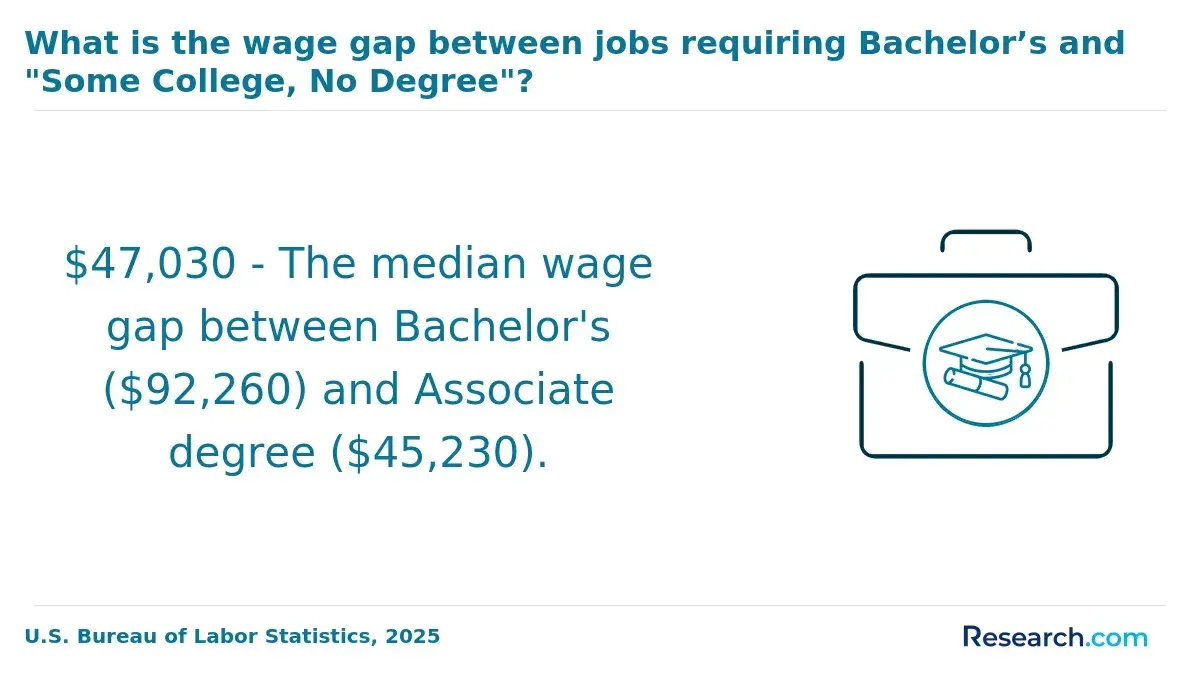
Salary outcomes for graduates can vary based on factors such as education format, industry demand, and individual experience. When comparing different learning pathways, it’s important to consider how employers perceive each option and how well programs prepare students for the workforce. Looking at these factors can provide a clearer picture of potential earnings and long-term career value.
- Median Starting Salary: Data from the Bureau of Labor Statistics and PayScale indicate that graduates holding an online sports management bachelor's degree typically begin their careers earning around $45,000 annually. This starting salary closely parallels entry-level earnings reported by graduates who completed similar programs on campus, suggesting that delivery format has minimal effect on initial pay.
- Mid-Career Earnings: According to LinkedIn Salary Insights, professionals with five to ten years of experience in sports management can expect salaries ranging between $65,000 and $85,000. Factors such as the institution's reputation, geographic location, and chosen specialty in the field tend to play a larger role in income differences than whether the degree was obtained online or in person.
- Experience and Networking: Beyond educational background, job experience and established industry relationships significantly impact earnings growth. Graduates who complete accredited online programs and participate in internships often find themselves financially competitive with their on-campus counterparts.
A professional who completed an online sports management bachelor's degree shared that balancing coursework with full-time work and family responsibilities was challenging but rewarding. He noted that thorough research into transfer credits and flexible scheduling was critical to his success. "I felt initially uncertain about how my online degree would be perceived, but my internships and network-building made a real difference in job offers," he said. Ultimately, he views his online degree as a practical and valuable step toward growth in a competitive industry.
What Career Paths and Job Opportunities Are Available to Online Sports Management Bachelor's Degree Graduates?
Graduates with an online sports management bachelor's degree pursue various roles within sports, recreation, and entertainment industries. Many positions require only a bachelor's degree, while others call for further certification or graduate education to qualify for advancement. Job prospects for online sports management bachelor's graduates include several high-demand careers.
- Sports Marketing Specialist: These professionals create promotional campaigns for teams and events, focusing on branding, sponsorships, and fan engagement. A bachelor's degree often suffices, though marketing certifications and internships improve employability.
- Athletic Director: Responsible for managing sports programs at educational and community organizations, athletic directors oversee budgets and staff compliance. While a bachelor's degree is the baseline, employers frequently prefer candidates with master's degrees or leadership certifications.
- Event Coordinator: Organizing sports events and handling logistics, this growing field requires only a bachelor's degree and offers strong opportunities in amateur and professional sectors.
- Sports Agent or Manager: Agents represent athletes in contract negotiations. Positions typically require a bachelor's plus specialized certification or licensure, with advanced degrees like law or business offering an edge.
- Facility Manager: Overseeing sports venues, facility managers ensure safety and efficient operations. A bachelor's degree is standard, but professional accreditation enhances hiring chances.
The Bureau of Labor Statistics projects faster-than-average growth in related sectors such as advertising, promotions, and public relations specialists-about 9% over ten years-highlighting steady demand for sports management expertise. Event coordinators and athletic trainers also exhibit positive job growth forecasts.
Choosing a concentration within an online sports management degree can tailor career opportunities, whether focusing on sports marketing, coaching, facility administration, or analytics. For those exploring accelerated pathways, accelerated programs offer efficient timelines for completion.
What Student Support Services Do Online Sports Management Bachelor's Programs Provide to Promote Success and Retention?
Online sports management bachelor's programs typically provide a range of student support services designed to bolster academic success and increase retention rates. Central to these services is Academic Advising in which advisors offer tailored guidance on course selection, transfer credits, and degree planning to keep students on a clear path toward graduation. Virtual Tutoring and Writing Labs offer accessible assistance for assignments, research, and challenging industry topics, often available asynchronously to fit diverse schedules.
- Academic Advising: Personalized support to help students select courses strategically, understand transfer credit policies, and align studies with career goals.
- Tutoring and Writing Labs: Flexible virtual resources offering help with coursework, research techniques, and sports-related material.
- Mental Health Counseling: Telehealth options address stress and anxiety, important for maintaining focus and resilience throughout the program.
- Career Services: Programs with strong employer connections provide internship matching, job search support, and partnerships that enhance career prospects within the sports industry.
- Alumni Mentorship Networks: These facilitate professional growth by linking current students with graduates who share insights and guidance from the field.
Studies like those from the National Survey of Student Engagement (NSSE) show that institutions offering comprehensive support see higher on-time graduation rates. Such infrastructure is an important indicator of student success, especially for learners balancing education with other life responsibilities.
One graduate who built his career through an online sports management program described how navigating course options while managing a full-time job was daunting at first. He appreciated having a dedicated advisor who helped tailor his schedule and clarify transfer credit use, which made the process smoother. Access to virtual tutoring was "a lifeline" during periods of intense coursework, and the alumni mentorship network offered invaluable real-world perspectives that kept him motivated. Overall, these supports transformed a potentially overwhelming experience into an achievable goal within his timeline and budget.
Is an Online Sports Management Bachelor's Degree Respected by Employers and Recognized Across Industries?
Recent survey data from the Society for Human Resource Management (SHRM) and Gallup indicate a growing acceptance of online sports management bachelor's degrees among employers, especially when these qualifications come from accredited programs. This shift reflects increased confidence in online education's ability to develop applicable skills, with reputable universities that maintain strong industry connections receiving particular recognition.
In areas such as sports marketing, event coordination, and facility management, online degrees are generally considered equal to their on-campus counterparts. Prominent employers like ESPN, NASCAR, and several professional sports teams actively seek graduates of accredited online programs, focusing on proven expertise and hands-on experience rather than the mode of instruction. Still, sectors that depend heavily on networking-such as collegiate athletic administration or elite sports agencies-may show a limited preference for candidates with traditional or hybrid educational backgrounds.
Prospective students need to examine the expectations within their intended career paths to make informed decisions. Many online programs enhance employability through dedicated career services and collaborations with industry leaders. Additionally, understanding transfer credit policies, military-friendly benefits, and financial aid options is essential for assessing the overall value and affordability of an online sports management degree.
- Employer Confidence: Data from SHRM and Gallup reveal increasing trust in accredited online sports management degrees, viewing them as comparable to traditional campus credentials across many roles.
- Field Equivalence: Online programs are largely equal in value within sports marketing and event management where skill application takes priority over delivery format.
- Recruiter Interest: Noteworthy employers such as ESPN and NASCAR recruit from online accredited programs, placing emphasis on demonstrated skills and practical experience.
- Networking-Dependent Niches: Some specialized sectors-like collegiate athletics administration-may still lean toward candidates with traditional or combined educational experiences for networking reasons.
- Strategic Evaluation: Students should align employer perceptions with program accreditation, career support, costs, and credit transfer policies for a well-rounded selection.
What Accreditation Standards Should an Online Sports Management Bachelor's Program Meet to Be Considered Legitimate?
Accreditation plays a crucial role in the value and recognition of an online sports management bachelor's degree. In the U.S., two main types of institutional accreditation exist-regional and national-with regional accreditation generally considered more prestigious. Regional accreditation offers greater benefits regarding credit transfer, employer acceptance, and eligibility for graduate studies in sports management and related fields.
The six regional accrediting bodies recognized by the U.S. Department of Education are:
- HLC (Higher Learning Commission): Covers institutions in the central United States.
- SACSCOC (Southern Association of Colleges and Schools Commission on Colleges): Accredits schools in the southern states.
- NECHE (New England Commission of Higher Education): Focuses on New England institutions.
- MSCHE (Middle States Commission on Higher Education): Oversees colleges in the mid-Atlantic region.
- NWCCU (Northwest Commission on Colleges and Universities): Covers the northwest U.S.
- WSCUC (WASC Senior College and University Commission): Accredits institutions primarily in California and Hawaii.
Prospective students can confirm accreditation status by consulting the Council for Higher Education Accreditation (CHEA) database or the U.S. Department of Education (ED) Database of Accredited Postsecondary Institutions and Programs. This step is essential to avoid unaccredited or lapsed-accreditation programs, which risk ineligibility for federal financial aid and lack of recognition for earned credits by employers or other schools.
No widely recognized specialized programmatic accreditation exists specifically for sports management bachelor's degrees. However, some schools hold business or hospitality-related accreditations that may enhance credibility. Institutional regional accreditation remains the primary benchmark for program legitimacy and quality.
Recent studies show that over 90% of employers in the sports and recreation sectors favor candidates who graduated from regionally accredited programs, highlighting how accreditation directly impacts career prospects.
How Long Does It Take to Complete an Online Sports Management Bachelor's Degree, and What Factors Affect the Timeline?
Online sports management bachelor's degrees typically require around 120 credits and follow a standard four-year timeline for full-time students. This aligns with most traditional undergraduate programs and offers a broad curriculum that includes business principles, sports law, marketing, and event management. However, factors influencing duration of online sports management degree programs vary and can either accelerate or extend this timeline based on individual circumstances and program flexibility.
Accelerated eight-week course formats paired with year-round enrollment options-such as taking courses during summer, winter, and intersession terms-can allow motivated students to finish their degrees in two to three years. Competency-based education (CBE) pathways, which assess mastery of skills instead of time spent in class, benefit learners with prior knowledge or experience. Institutions like Western Governors University and Southern New Hampshire University have notable CBE models, reporting average completion times around three years or less for sports management-related degrees.
Additionally, transfer credits from previous college work, military service, or professional certifications can significantly shorten the required coursework. This is particularly helpful for veterans or working adults reentering education. Completing the degree faster not only lowers tuition costs but also reduces the opportunity cost of delaying full-time employment in sports management roles, enabling students to begin their careers and improve their financial outlook sooner.
For those exploring financial aid and enrollment options, including working parents or mid-career professionals, understanding how to leverage these timeline accelerators is essential. Some may also consider programs like online medical assisting school alternatives when comparing costs and scheduling flexibility.
- Standard Timeline: Most sports management bachelor's degrees require 120 credits and take about four years for full-time students to complete.
- Accelerated Formats: Eight-week courses and year-round enrollment enable motivated students to graduate in two to three years.
- Competency-Based Education: CBE programs focus on mastery of skills, which helps students with prior knowledge finish more quickly.
- Transfer Credits: Recognizing previous college, military, or professional experience can significantly shorten program length.
- Cost and Opportunity: Faster completion reduces tuition expenses and allows earlier entry into the workforce, enhancing long-term financial benefits.
What Financial Aid, Scholarships, and Tuition Assistance Are Available for Online Sports Management Bachelor's Students?
Students pursuing an online sports management bachelor's degree have access to several types of financial aid to help offset tuition costs. Understanding these options is essential for minimizing debt and maximizing funding.
- Federal Pell Grants: These need-based grants do not require repayment and are available to eligible undergraduate students completing the Free Application for Federal Student Aid (FAFSA). Award amounts vary annually but can provide substantial support for qualifying students.
- Direct Subsidized and Unsubsidized Loans: Offered through the federal government, subsidized loans are based on financial need with no interest while in school, whereas unsubsidized loans accrue interest from disbursement. Both require FAFSA submission and have caps on annual borrowing limits.
- Institution-Specific Scholarships: Many colleges offer scholarships targeted to online sports management students based on merit, leadership, or financial need. Notable examples include the National Association of Sports Coaches Scholarship, granting up to $2,500 to students demonstrating academic excellence and community involvement in sports-related activities.
- State Grant Programs: Various state programs provide grants or scholarships for residents attending in-state schools, often including online learners. The State Sports Leadership Grant in Ohio, for example, offers up to $3,000 annually to students pursuing a sports management degree with a minimum GPA of 3.0.
The FAFSA process is the cornerstone of federal and many state aid programs. Students should complete the FAFSA as early as October 1 for the upcoming academic year to maximize eligibility, as many aid funds are awarded on a first-come, first-served basis. Accurate reporting of income and household information helps determine the Expected Family Contribution (EFC) and improves access to aid. For those weighing scholarship and tuition assistance for sports management bachelor's programs in the US, early FAFSA completion is a critical first step.
Combining multiple aid sources-including federal grants, institutional scholarships, employer tuition reimbursement, and Federal Work-Study programs-can significantly reduce out-of-pocket expenses. Planning to layer these forms of financial aid while adhering to eligibility rules is advised. For personalized guidance, students should engage their school's financial aid office. Additionally, prospective students may explore related fields such as an online exercise physiology degree to compare funding opportunities and career pathways.
What Are the Admission Requirements for Online Sports Management Bachelor's Degree Programs?
Admission standards for online sports management bachelor's programs differ based on the institution's selectivity. Competitive programs usually expect applicants to hold a solid academic record, often requiring a high school GPA near 3.0 or above. Nearly all programs mandate a high school diploma or GED as a foundational qualification. While some selective schools ask for SAT or ACT scores, many have embraced test-optional policies, broadening accessibility.
Open-enrollment institutions typically offer more lenient criteria, accepting applicants with a high school diploma or equivalent regardless of GPA or standardized test performance. This flexibility suits adult learners, working professionals, veterans, and those pursuing a career change.
- Minimum GPA: Competitive programs often set thresholds between 2.0 and 3.0, whereas open-access schools may have none.
- High School Diploma or GED: Required universally as a 6 prerequisite.
- Standardized Tests: Some require SAT/ACT scores; many use optional testing policies.
- Prerequisite Coursework: May include foundational classes in English, math, and social sciences, primarily for more selective programs.
- Application Timing: Rolling admissions prevail, allowing continuous application submissions and easing the process for nontraditional students.
- Improving Admission Chances: Applicants who don't meet minimum criteria can enhance their profiles by:Taking relevant community college coursesObtaining professional sports or management certificationsProviding robust letters of recommendation showcasing experience or skills
How Should Prospective Students Evaluate and Choose the Right Online Sports Management Bachelor's Degree Program for Their Goals?
Choosing the right online degree program requires careful consideration of multiple factors that align with a student’s personal, academic, and career goals. With so many options available, it’s important to assess each program’s structure, quality, and support offerings. Taking a thoughtful approach can help ensure a better fit and a more successful educational experience.
- Accreditation: Confirm that the online sports management program is accredited regionally or nationally by bodies recognized by the U.S. Department of Education. This validation guarantees academic rigor and acceptance by employers and graduate programs.
- Cost and ROI: Look beyond sticker tuition prices to uncover additional expenses such as technology fees, proctoring charges, textbooks, and any mandatory residency visits. Utilize net price calculators along with resources like the U.S. Department of Education's College Scorecard and the IPEDS Data Center for a realistic comparison of investment relative to expected career earnings.
- Program Format and Flexibility: Evaluate course delivery options, scheduling, and pacing. Consider asynchronous classes, part-time enrollment, or self-paced formats that accommodate work and family commitments without compromising academic progress.
- Career Outcomes Data: Seek comprehensive statistics on graduation rates, job placement success, relevant employer connections, and alumni achievements. Reliable outcome data helps set expectations and measure long-term professional benefits.
- Student Support Services: Investigate the availability of academic advising, technical assistance, tutoring, and career counseling designed specifically for online students. These services play a critical role in supporting completion and success.
- Transfer Credit Policies: Review how prior college coursework, military training, and certifications can be credited toward the degree. Transparent and generous transfer policies can shorten completion time and reduce costs.
- Schedule: Arrange conversations with admissions representatives to clarify program details and assess fit.
- Request: Obtain detailed net price estimates including all fees to understand the full financial commitment.
- Review: Track and meet financial aid and scholarship deadlines to maximize funding opportunities.
What Graduates Say About the Value of Their Online Sports Management Bachelor's Degree
- Benny: "Choosing the online sports management bachelor's degree program was a game-changer for me because it allowed me to balance work and study seamlessly. The cost was quite reasonable compared to traditional programs, and the return on investment became clear when I landed a management role at a major sports organization just months after graduating. The flexibility and practical curriculum truly prepared me for real-world challenges."
- Greyson: "Reflecting on my journey, the decision to pursue an online sports management degree was driven by my desire to advance my career without relocating. I appreciated the affordable tuition that didn't require taking on overwhelming debt. Most importantly, the program's comprehensive approach gave me the confidence and skills to move into leadership positions within the sports industry."
- Cooper: "From a professional perspective, earning my bachelor's degree in sports management online provided invaluable industry insights and networking opportunities that traditional paths don't always offer. The cost-efficiency of the program allowed me to study without financial strain, and the experience elevated my career by opening doors to roles I had only dreamed of before. I highly recommend this degree for anyone serious about making an impact in sports."
Other Things You Should Know About Sports Management Degrees
Online sports management bachelor's programs typically deliver coursework through video lectures, interactive modules, and discussion forums accessible via a learning management system. Students can often complete assignments on flexible schedules but must meet deadlines. Engagement can vary by program, with some offering live sessions and networking opportunities to simulate a traditional classroom experience.
Students can often specialize in areas such as sports marketing, athletic administration, event management, or sports analytics. These concentrations allow learners to tailor their education toward specific career paths within the sports industry. Program offerings differ, so students should review catalogues carefully to ensure the specializations align with their goals.
An accredited online sports management bachelor's degree is generally accepted by graduate programs in fields like sports administration, business, or kinesiology. Admissions committees focus on the accreditation status of the institution rather than the delivery format. Students from online programs may need to demonstrate strong academic performance and relevant internship or work experience to be competitive applicants.
References
- ROI in Higher Education - FREOPP https://freopp.org/roi-in-higher-education/
- 16 Sport Undergraduate Management Scholarships available https://www.hotcoursesabroad.com/study/international-scholarships/all/undergraduate/management/sport/all/cid/2/d6/1172/nty/scholarship.html
- Types of Sports Management Degrees https://www.allbusinessschools.com/sports-management/degrees/
- How long is a sports management degree? - Answers https://www.answers.com/education/How_long_is_a_sports_management_degree
- What Can I Do With a Sport Management Degree? https://www.origym.co.uk/blog/sports-management-degree-jobs/
- Sports Management Scholarships https://www.collegescholarships.com/major-degree/sports-management-scholarships
- How would someone choose the best Sports Management program? - Sports Management Degrees https://sportsmanagementdegrees.net/how-would-someone-choose-the-best-sports-management-program/
- Sports Management Degree: Career Prospects, Salaries & Opportunities | GoVersity https://goversity.de/en/bachelor/sports-management/career-prospects-and-salaries/
- Is a Bachelor’s in Sports Management Worth the ROI? https://allbachelordegrees.com/career-paths/is-a-bachelors-in-sports-management-worth-the-roi/
- Why study sports management? - INSEEC https://www.inseec.com/en/guides/orientation-guide/why-study-sports-management/


