
2027 Ultrasound Technology Degree vs. Certificate: Which Should You Choose?

Co-Founder and Chief Data Scientist
Today's students and professionals face important decisions when choosing between earning a degree or a certificate in ultrasound technology. Both credentials offer pathways to advance in this growing healthcare field, which is expected to see a 14% job growth over the next decade. However, the time commitment, depth of education, and potential career outcomes differ significantly between the two.
A degree program typically involves comprehensive training over two to four years, covering anatomy, patient care, and advanced imaging techniques. Certificates are shorter, focusing on specific skills for quicker entry into the workforce. This article will compare these key differences to help readers decide which fits best with their career goals and lifestyle.
Key Points About Ultrasound Technology Degree vs. Certificate Programs
- Degree programs typically offer comprehensive training and clinical experience, enhancing skills and opening doors to advanced positions with average salaries 10-20% higher than certificate holders.
- Certificate programs are shorter, cost-effective, and ideal for career changers, focusing on essential techniques but may limit specialization and long-term advancement opportunities.
- Graduates with degrees often meet certification requirements more easily, supporting professional growth, while certificates provide quicker entry into the workforce for immediate employment.
What Are the Differences Between Ultrasound Technology Degree and Certificate Programs?
Both ultrasound technology degree and certificate pathways offer valuable career opportunities, but they vary significantly in several aspects. Understanding these distinctions helps students select the educational approach that best fits their career goals and time constraints.
Here are some key differences between ultrasound technology degrees and certificate programs:
- Depth of Learning: Degree programs provide a comprehensive foundation covering anatomy, medical ethics, and advanced imaging techniques, suitable for those seeking thorough knowledge. Certificate programs tend to focus specifically on practical scanning skills, appealing to learners aiming for quicker entry into the field.
- Time Commitment: Degree paths generally require a longer duration, often spanning two years or more, which benefits students who want a broader educational experience. Certificate courses are typically shorter, ideal for those who wish to accelerate their training and start working sooner.
- Career Advancement: Holders of degrees often have access to a wider range of roles, including supervisory or specialized positions, thanks to their extensive training. Certificates may lead to entry-level roles, suitable for professionals prioritizing immediate employment over long-term advancement.
- Prerequisites and Background: Degree programs often accept students with limited healthcare experience, providing foundational coursework for beginners. Certificate programs frequently require prior healthcare qualifications or experience, focusing on skill enhancement rather than general education.
How Long Does It Take to Complete a Ultrasound Technology Degree vs. a Certificate Program?
Completion time is one of the most important factors for students choosing between an ultrasound technology degree vs. certificate program. Understanding how long each path takes helps individuals align their education with personal and professional goals.
- Typical Duration: Completing an ultrasound tech certificate program typically takes 12 months to two years, especially for those with prior healthcare experience. In contrast, an ultrasound technician degree program length usually spans two years for an associate degree and three to four years for a bachelor's degree, which includes broader general education coursework and extended clinical experience.
- Flexibility: Certificate programs often offer accelerated curricula, focusing tightly on sonography skills and allowing faster completion, particularly for students with prior education. Degree programs are commonly structured for full-time study but may offer part-time options, often extending duration significantly. Part-time enrollment in any program can roughly double the time needed to finish.
- Factors Affecting Timeline: The ultrasound technician degree program length is influenced by program structure, prior education, and specialization choices. Accredited certificate programs may include clinical internships that extend them to two or three years, while students with relevant college credits or healthcare backgrounds may qualify for bridge or accelerated programs. Pursuing additional sonography specialties typically increases total program length due to extra clinical or didactic requirements.
For those considering how long is an ultrasound tech certificate program, the fastest route is usually a certificate with prior experience, while degrees offer a more comprehensive education but require longer commitment. Students exploring options may find resources on a cheap accelerated bachelor's degree online to help streamline their path.

Can You Complete a Ultrasound Technology Degree or Certificate Entirely Online?
Online education has expanded rapidly, making it easier for students to pursue healthcare training from the comfort of home. When considering ultrasound technology programs, fully online ultrasound technology degree programs are rare; nearly all require some in-person components.
Both degree and certificate options typically follow a hybrid format, with online theory courses combined with on-campus labs and clinical internships at local healthcare facilities. Programs such as those offered by State Fair Community College, Jackson College, and Washburn University provide flexibility but still mandate hands-on clinical experience to meet accreditation standards.
Hands-on training is crucial in ultrasound technology because students must operate imaging equipment and gain patient interaction skills. Accredited programs, particularly those approved by CAAHEP, require 1,000 or more supervised clinical hours. This practical experience is essential for licensure and registry exams.
For those exploring hybrid online ultrasound certificate in diagnostic medical sonography programs, selecting the right format depends on career goals and scheduling needs. Students seeking maximum flexibility should verify that programs balance online coursework with local clinical placements and prepare them for national certification. For further insights on flexible degrees, see what's the easiest online degree to get.
What Are the Admission Requirements for a Ultrasound Technology Degree vs. a Certificate Program?
Admission requirements play a crucial role in deciding between an ultrasound technology degree and certificate program, as they affect eligibility and preparedness for advanced study or clinical training. Understanding these prerequisites helps prospective students choose the path that best suits their academic background and career ambitions. Below is a side-by-side comparison of typical admission criteria for both program types.
Admission Requirements for Ultrasound Technology Degree Programs
- Educational Background: Applicants usually must have completed 36 to 60 college credits, with a minimum GPA often between 2.5 and 2.85; some programs require an associate or bachelor's degree in science or related fields.
- Prerequisite Courses: Completion of courses such as college algebra, anatomy and physiology I & II, general physics, English composition, and medical terminology is standard, typically with grades from C to B-; some schools require up to 56 semester hours of prerequisites.
- Transcripts and Documentation: Official transcripts from accredited institutions, proof of health insurance, CPR certification, and occasionally proof of auto insurance are required.
- Standardized Testing: Some programs request standardized exams or assessments like the HESI or a specific ultrasound aptitude test to gauge readiness.
- Observation or Experience: Bachelor's degree tracks often require or recommend clinical observation hours or prior patient care experience.
- Other Materials: Letters of recommendation, a resume, and a completed application form are typical components of the application process.
Admission Requirements for Ultrasound Technology Certificate Programs
- Educational Background: A high school diploma or GED is generally the minimum requirement, though prior healthcare education or experience is sometimes preferred or required.
- Prerequisite Courses: Certificate tracks usually mandate fewer prerequisites but may require or encourage basic math, science, and patient care coursework.
- Transcripts: Submission of high school and, when applicable, college transcripts is typically necessary.
- Healthcare Experience: Patient care experience or certifications such as CNA or EMT are often strongly encouraged or required, especially for those without an allied health background.
- Additional Materials: Reference letters, proof of health and auto insurance, CPR certification, and a formal application are commonly requested.
- Observation Hours: Some programs require or recommend a minimum number of clinical observation hours, though less often than degree programs.
In the United States, applicants weighing ultrasound technology degree admission requirements in the US versus certificate program prerequisites for ultrasound technician roles can better evaluate which route fits their current qualifications and career goals. For those curious about career outcomes, exploring what college majors make the most money can also provide helpful context.
How Many Credits Do You Need to Complete a Ultrasound Technology Degree vs. a Certificate?
Knowing the number of credits required for ultrasound technology programs helps students realistically plan their academic journey and time commitment. Comparing degree and certificate paths reveals important differences in credit expectations that align with each option's depth of study.
Below is a summary of typical credit requirements for ultrasound technology degree and certificate programs:
- Associate Degree Credits: These programs usually demand between 60 and 83 credits, combining general education, science prerequisites, and specialized sonography courses to provide comprehensive training.
- Certificate Program Credits: Designed for those with prior college work or degrees, certificate programs often require around 36 to 60 credits completed before entry, with focused coursework mainly on sonography topics and fewer general education classes.
When I spoke with a student who chose to pursue a certificate rather than a degree, he shared that the program's streamlined credit requirements allowed him to accelerate his training while leveraging previous college experience. He described the experience as intensive but manageable, emphasizing that the targeted curriculum helped him gain practical skills quickly. "It was challenging balancing clinical hours and coursework," he reflected, "but knowing I didn't have to fulfill all the general education credits made the path clearer and less time-consuming." For him, the certificate offered a focused and efficient route into the ultrasound field without the broader commitment of a full associate degree.
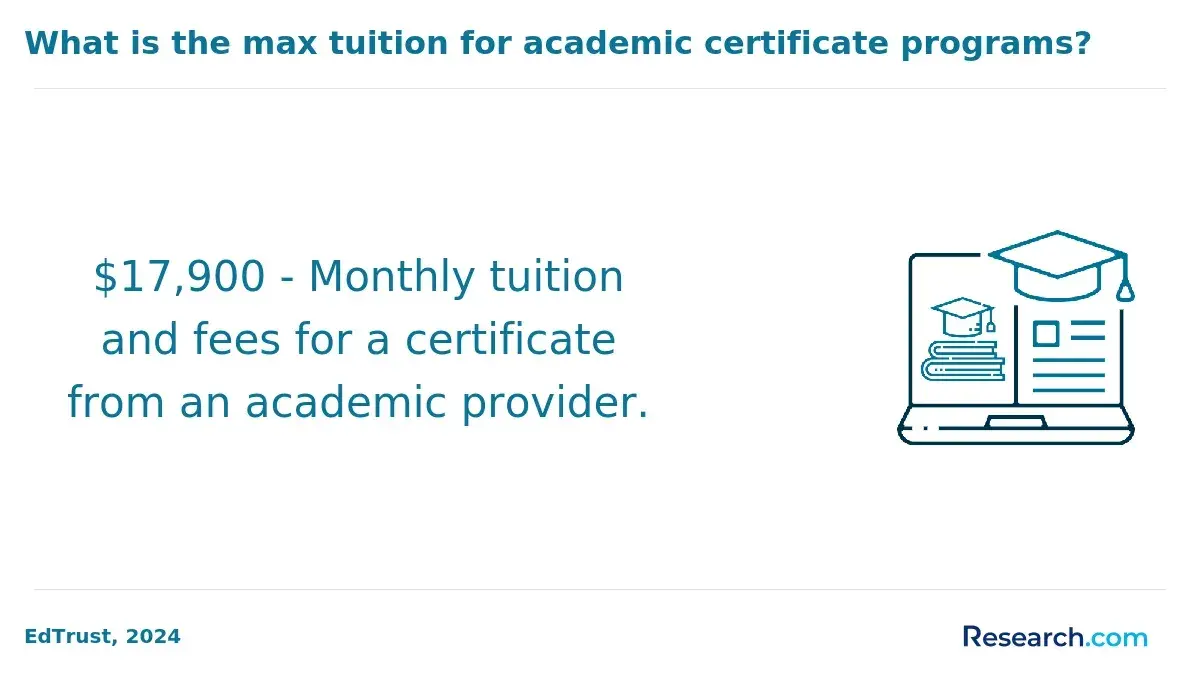
What Is the Average Tuition for a Ultrasound Technology Degree vs. a Certificate?
Tuition costs are a critical factor when deciding between pursuing an ultrasound technology degree or a certificate, as they directly impact your overall financial investment and potential returns in the healthcare field. Understanding the average costs can guide you toward the option that best fits your career goals and budget.
Below is a detailed comparison highlighting the average tuition ranges for both educational paths.
Average Tuition for Ultrasound Technology Degree Programs
- Tuition Range: The average cost of ultrasound technology degree program typically falls between $7,000 and $30,000 at public institutions, while private schools may charge $50,000 or more for the entire program.
- Public vs. Private: Public and community colleges often offer more affordable tuition (generally under $10,000 for in-state students), whereas private universities and specialized health schools tend to be significantly more expensive.
- Program Length: Degree programs usually require 2-4 years of study, which contributes to higher total tuition compared to shorter certificate programs.
- Additional Costs: Beyond tuition, expect expenses for textbooks, technology fees, and clinical placements that can add several thousand dollars to the overall cost.
- Online vs. On-Campus: Although some degree options are available online, most programs require on-campus clinical training, potentially increasing both tuition and related fees.
Average Tuition for Ultrasound Technology Certificate Programs
- Tuition Range: Ultrasound technician certificate tuition comparison shows these programs generally cost between $6,000 and $15,000, with some hospital-based certificates priced around $11,500.
- Program Length: Certificates are shorter, typically completed in 12-18 months, which reduces total tuition and related living expenses.
- Institution Type: Hospital-based and technical school certificates tend to be less expensive than those offered by private career colleges, which can sometimes approach degree-level costs.
- Financial Aid: Students attending non-degree-granting institutions for certificates may have limited access to federal financial aid, potentially increasing out-of-pocket expenses.
- Additional Fees: Be prepared for extra costs such as textbooks, uniforms, certification exams, and clinical fees, which often range from a few hundred to over a thousand dollars.
For those researching educational options, exploring the best ranked online colleges can provide more insights into affordable and reputable programs in ultrasound technology and related fields.
Can You Transfer Certificate Credits Toward a Ultrasound Technology Degree Later On?
Yes, you can often transfer certificate credits toward an ultrasound technology degree, but this depends on several factors. Generally, transfer eligibility requires that credits come from an accredited institution and align closely with the degree's curriculum. Many schools prefer courses completed within the last five years to ensure the knowledge is current. Additionally, only courses with a minimum grade-often a "B" or higher-qualify, and pass/no pass classes are typically excluded. Each institution sets its own policies, so transfer acceptance varies widely.
It's crucial to confirm limits on the number of transferable credits, as some programs cap how many can be applied toward a degree. Transfer credits usually help reduce tuition costs but do not affect cumulative GPA. For instance, some schools require official transcripts and may charge fees for credit evaluations. To avoid surprises, students should verify transfer policies with their target school before starting a certificate program to maximize their educational investment.
When I spoke with a student who transitioned from a certificate program to a degree in ultrasound technology, she shared that navigating credit transfers was initially stressful. "I wasn't sure which courses would count or how recent my credits needed to be," she explained. Official transcript requests and evaluation fees added extra steps. However, after confirmation from the degree program, she was relieved to find that most of her core courses transferred successfully, saving time and money. "It made me feel like my prior efforts really mattered," she reflected, encouraging others to thoroughly research transfer options early on.
Are Certificate Programs Accredited the Same Way as Ultrasound Technology Degrees?
Certificate programs in ultrasound technology are not accredited in exactly the same way as degree programs. Degree programs, especially associate and bachelor's, are usually part of colleges or universities with institutional accreditation, while certificate programs often come from technical or vocational schools that may follow different standards.
However, both types of programs must have CAAHEP accreditation to ensure graduates qualify for certification exams like ARDMS and CCI. Institutional accreditation alone does not guarantee eligibility for these certification exams. Without CAAHEP accreditation, gaining certification becomes more difficult and uncertain regardless of program type.
Accreditation is essential because it guarantees academic quality, sets curriculum standards including clinical experience, and impacts job prospects since most employers prefer credentialed sonographers. It also affects credit transfer and professional recognition.
Students should prioritize programs with current CAAHEP accreditation rather than relying on institutional accreditation or unconfirmed "pending" status. Always verify program accreditation directly through recognized bodies such as CAAHEP before enrolling to ensure smooth certification eligibility and better career outcomes.
What Jobs Can You Get with a Ultrasound Technology Degree vs. a Certificate?
Both ultrasound technology degrees and certificates provide pathways to careers in medical imaging, but they often prepare graduates for different levels and types of positions. Understanding the career options available with each credential can help you decide which educational route aligns best with your goals.
Below is a comparison of potential job roles for each credential type.
Jobs You Can Get with a Ultrasound Technology Degree
- Specialized sonographer: Performs advanced imaging in fields like pediatric, vascular, cardiac, or obstetric sonography, often requiring deeper clinical knowledge.
- Lead sonographer: Oversees sonography teams, ensuring quality imaging and mentoring junior staff in clinical settings.
- Clinical supervisor: Manages sonography departments or clinical operations, coordinating workflow and training.
- Ultrasound educator: Teaches aspiring sonographers, combining clinical expertise with instructional skills in academic or clinical programs.
- Department manager: Handles administrative tasks and strategic planning within imaging departments, typically in hospitals or large healthcare facilities.
Jobs You Can Get with a Ultrasound Technology Certificate
- Diagnostic medical sonographer: Conducts routine ultrasound imaging under supervision, assisting physicians in diagnosis.
- Ultrasound technician: Operates imaging equipment to capture standard sonographic images in clinical environments.
- Medical sonographer: Provides general sonography services, often supporting more specialized staff.
- Entry-level imaging assistant: Supports sonographers by preparing patients and managing basic imaging tasks.
What Is the Average Starting Salary for a Certificate vs. Ultrasound Technology Degree Graduates?
Salary potential often varies between ultrasound technology certificate holders and those with degrees, reflecting differences in training and market demand. Understanding these differences can help prospective students weigh the benefits of each educational path. Below is a side-by-side comparison of average starting salaries for graduates from each program type.
- Typical Salary Range: Graduates with a certificate in ultrasound technology typically start with salaries ranging from $50,000 to $65,000 per year. Those holding an associate or bachelor's degree usually begin higher, earning between $64,760 and $70,000 annually.
- Influencing Factors: Education level is a key determinant in salary disparities, with degree holders generally commanding higher pay due to more comprehensive training. Certification through the American Registry for Diagnostic Medical Sonography (ARDMS) can boost earnings regardless of education type. Additionally, specialization, geographic location, and type of facility-such as hospitals versus outpatient clinics-play significant roles in salary variations.
- Career Outlook: The job outlook for both certificate and degree holders remains strong, with sonography positions projected to grow 13% over the next decade. Degree graduates may find more opportunities for advancement and higher-paying roles over time.
- Average starting salary for ultrasound certificate holders: Career newcomers with certificates typically see lower starting salaries but often enter the workforce more quickly.
- Ultrasound technology degree vs certificate salary comparison: Degree holders tend to start at a higher salary level and benefit from longer-term growth prospects compared to certificate holders.
For prospective students exploring educational options, researching the best trade colleges online can provide insight into quality programs that suit their career goals and financial needs.
Here's What Graduates of Ultrasound Technology Programs Say About Their Degree or Certificate
- Kylian: "Choosing the ultrasound technology certificate program was a game-changer for me because I wanted to jump into the workforce quickly. The pace was intense but manageable, and the overall cost was much lower than a degree program, which really helped with my budget. I appreciate how the certificate gave me practical skills that employers value, and I feel confident advancing my career without the long time commitment of a degree."
- Dallas: "Enrolling in the ultrasound technology degree program offered a more comprehensive learning experience with deeper theoretical knowledge and clinical training. Although it took longer and was more expensive, around $40,000 on average compared to certificates, the degree has opened more doors for career advancement and specialization in my field. Reflecting on my journey, the investment was worth it for the personal growth and professional opportunities I have now."
- Ryan: "Having completed both the ultrasound technology certificate and degree programs, I have a unique perspective on the benefits of each path. The certificate was affordable and faster, allowing me to get hands-on quickly, but the degree expanded my expertise and credibility in the healthcare sector. For anyone deciding, consider your career goals and financial situation carefully, as the degree provides a solid foundation, while the certificate is ideal for immediate employment."
Other Things You Should Know About Ultrasound Technology Degrees
In 2027, clinical internships are more commonly required for degree programs, providing extensive hands-on experience. Certificate programs may or may not include internships, focusing instead on delivering core theoretical knowledge to prepare students for entry-level positions quicker.
In 2027, ultrasound technology degree programs typically offer more specialization options, such as vascular or pediatric sonography, compared to certificate programs. While degrees provide a broader education, certificates focus primarily on core skills, limiting specialization.
In 2027, ultrasound technology degrees generally require 60 to 120 credit hours for completion, while certificate programs typically require 30 to 50 credit hours. Degree programs often include general education and advanced courses, leading to a broader educational experience.
In 2027, both degree and certificate holders in ultrasound technology typically need to fulfill continuing education requirements to maintain certification. These requirements can include completing specific credit hours and staying updated on technological advancements to ensure the highest quality of patient care.
References
- Top 6 Online Ultrasound Tech Schools and Sonography Programs | DRSONO https://drsono.com/blogs/news/online-ultrasound-tech-schools/
- Tuition and Aid - Sonography Program (Florida and Minnesota) - Mayo Clinic College of Medicine & Science https://college.mayo.edu/academics/health-sciences-education/sonography-program-florida-and-minnesota/tuition-and-aid/
- Sonographer Certifications: ARRT vs ARDMS | CHCP https://www.chcp.edu/blog/sonographer-certifications-arrt-vs-ardms/
- Sonography School | How Long Is Sonography School and Is It Hard? https://www.cambridgehealth.edu/dms-diagnostic-medical-sonography/sonography-school/
- The 10 Highest-Paying Sonography Specialties in 2025 | Vivian Community Hub https://www.vivian.com/community/allied-health/highest-paying-sonography-specialties/
- Become A Certified Ultrasound Technician https://www.accreditedschoolsonline.org/healthcare/ultrasound-technician/certification/
- Ultrasound Technology AAS in Salinas, CA Central Coast College https://centralcoastcollege.edu/program/ultrasound-technician-associate-of-applied-science/
- How Long is Ultrasound Tech School? | Ultrasound Tech Schools in Chicago https://ultrasoundtechschoolschicago.com/how-long-is-ultrasound-tech-school/
- Diagnostic Medical Sonography (Ultrasound) Certificate | RIT https://www.rit.edu/study/diagnostic-medical-sonography-ultrasound-certificate


