
2027 Litigation Paralegal Careers: Skills, Education, Salary & Job Outlook

Co-Founder and Chief Data Scientist
Choosing a litigation paralegal career means deciding whether you want legal work that is practical, deadline-driven, and closely tied to real disputes. The role does not require law school, but it does require strong legal writing, research, technology, document management, and case organization skills. Many employers prefer candidates with an associate degree or higher, a paralegal certificate, certification, and hands-on experience through internships or entry-level legal roles.
The payoff can be worthwhile for people who like structured problem-solving and high-stakes teamwork. Litigation paralegal careers offer median salaries near $68,000, with opportunities to grow into senior paralegal, eDiscovery, litigation support, compliance, and legal operations roles. This guide, developed with insight from experts with over ten years advising legal professionals, explains what litigation paralegals do, what skills and credentials matter, how much they can earn, and how to decide if this career path fits your goals.
Key Things You Should Know About Litigation Paralegal Career
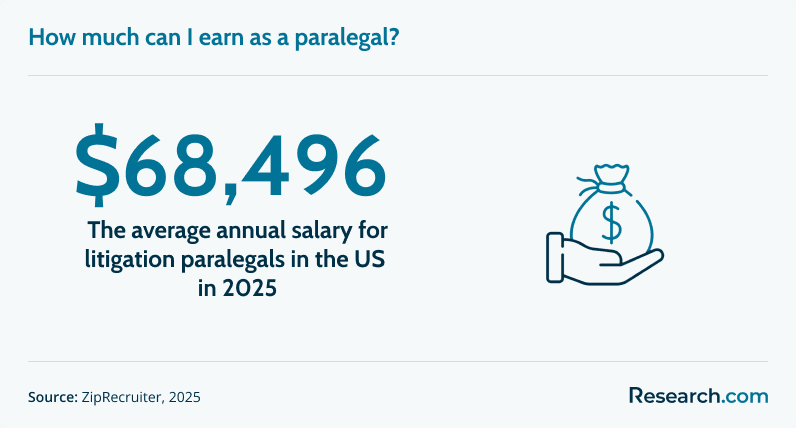
- The typical earning potential for a litigation paralegal ranges between $64,861 and $72,775 annually, with recent averages around $68,496, reflecting a competitive wage in the legal support field.
- Employment for paralegals and legal assistants is projected to grow 4% from 2022 to 2032, matching the average pace of all occupations and indicating steady job availability and stability.
- Most entry-level positions require at least an associate degree in paralegal studies or a bachelor's degree with a paralegal certificate, though some roles accept a certificate alone or on-the-job training.
- Strong organization, attention to detail, legal research, document management, clear communication, critical thinking, and familiarity with legal technology are essential skills for success as a litigation paralegal.
- Experience and further education open paths to senior or supervisory roles, specialization in complex litigation, or transitions into management positions like paralegal manager or law firm administrator.
What do Litigation Paralegals do?
Litigation paralegals support attorneys before, during, and after legal disputes. Their work helps legal teams manage evidence, meet court deadlines, prepare filings, organize discovery, communicate with clients and witnesses, and stay ready for hearings, mediation, settlement negotiations, and trial.
They do not give legal advice or represent clients in court. Instead, they handle the detailed legal support work that allows attorneys to build arguments, respond to opposing counsel, and keep cases moving. In many firms, a strong litigation paralegal is the person who knows where every document is, what deadline is next, and what information the attorney needs before making a strategic decision.
A Day in the Life of Litigation Paralegals
A typical day may include reviewing case files, drafting discovery requests, summarizing depositions, updating litigation calendars, preparing exhibits, communicating with court clerks, organizing electronic records, or helping attorneys prepare for a hearing. The work changes depending on the case stage. Early litigation often involves research and pleadings; discovery can involve large document productions; trial preparation requires tight coordination of witnesses, exhibits, deadlines, and courtroom logistics.
This career suits people who can stay calm under pressure, manage details without losing sight of the larger case, and communicate clearly with attorneys, clients, vendors, and court personnel.
What are the key responsibilities of Litigation Paralegals?
Litigation paralegals keep cases organized from intake through resolution. Their responsibilities vary by employer and jurisdiction, but most roles combine legal research, document preparation, deadline tracking, discovery management, and trial support.
Common responsibilities include:
- Preparing legal documents: Drafting, formatting, proofreading, and assembling motions, subpoenas, notices, discovery requests, deposition summaries, and trial materials for attorney review.
- Conducting legal and factual research: Finding case law, statutes, rules, records, timelines, and background information relevant to the dispute.
- Managing discovery: Organizing evidence, reviewing document productions, maintaining case databases, preparing privilege logs, and helping attorneys identify key facts.
- Maintaining case files: Keeping pleadings, correspondence, exhibits, transcripts, and attorney notes accessible and up to date.
- Tracking deadlines: Monitoring litigation calendars, court filing dates, discovery deadlines, hearing schedules, and trial preparation milestones.
- Coordinating communication: Contacting clients, witnesses, experts, court staff, vendors, and opposing counsel when appropriate and under attorney direction.
- Supporting trial preparation: Building trial notebooks, organizing exhibits, preparing witness files, coordinating logistics, and assisting the legal team during proceedings.
The Most Challenging vs. The Most Rewarding Tasks
The most challenging part of the job is often discovery. Litigation paralegals may need to manage thousands of documents, apply confidentiality rules, meet strict deadlines, and respond quickly when attorneys need specific records. Mistakes can delay filings, weaken a case, or create compliance problems, so accuracy matters.
The most rewarding part is seeing preparation turn into results. A well-organized exhibit set, clear deposition summary, or complete trial notebook can help an attorney argue more effectively and help a client move through a difficult dispute. If you are still comparing education options, reviewing college degrees that are worth it can help you evaluate whether paralegal studies, criminal justice, political science, business, or another major fits your long-term plans.
What are the key skills for Litigation Paralegals?
Strong litigation paralegals combine legal knowledge, technology fluency, writing accuracy, and professional judgment. Employers want candidates who can complete assignments correctly, protect confidential information, and anticipate what the legal team will need next.
Core hard skills
- Legal research: Using platforms like Westlaw or LexisNexis to locate case law, statutes, regulations, court rules, and secondary sources.
- Legal writing and document drafting: Preparing pleadings, motions, discovery requests, subpoenas, correspondence, and case summaries that follow attorney instructions and court formatting rules.
- Case and document management technology: Organizing case files, discovery, and e-discovery materials using systems such as Relativity or Clio.
- E-filing and court procedure compliance: Submitting documents correctly according to jurisdiction-specific filing rules, deadlines, and local court requirements.
- Discovery organization: Reviewing productions, coding documents, tracking requests and responses, and maintaining accurate records of evidence.
- Trial preparation: Creating exhibit lists, witness binders, trial notebooks, deposition designations, and courtroom support materials.
Essential soft skills
- Critical thinking: Connecting facts, spotting inconsistencies, and identifying issues that require attorney attention.
- Active listening: Understanding instructions from attorneys and concerns from clients without missing important details.
- Organization: Managing several matters, deadlines, versions, and document sets at once.
- Written and verbal communication: Explaining status updates clearly and professionally to legal teams, clients, courts, and vendors.
- Discretion: Protecting confidential and privileged information.
- Resilience: Staying accurate and composed when deadlines are tight or case priorities shift.
The One Overlooked Skill That Separates The Good From The Great
The skill that separates dependable litigation paralegals from exceptional ones is anticipation. Great paralegals do not wait until a deadline is urgent to check filing requirements, confirm exhibit formatting, test courtroom technology, or flag missing records. They look ahead, identify risks, and give attorneys enough time to respond.
For example, a paralegal who catches a formatting issue in a critical filing hours before submission may prevent rejection by the court. A paralegal who tests presentation equipment before a hearing can avoid delays that disrupt the attorney’s argument. These actions may seem small, but in litigation, small preparation gaps can become expensive problems.
Advanced skills can also support mobility into higher-paying settings, including the Federal Executive Branch. If you are comparing longer-term education options, resources on the easiest masters to get may help you weigh graduate study against faster, more targeted legal credentials.
Litigation Paralegal Careers: A Step-by-Step Guide to Getting Started
You can enter the litigation paralegal field through several routes, but the strongest candidates usually combine formal education, practical experience, technical skills, and a clear understanding of litigation procedure.
- Choose an education path. Start with a paralegal degree, legal studies degree, or paralegal certificate that teaches legal research, writing, civil procedure, ethics, and case management.
- Build litigation-specific skills. Focus on pleadings, discovery, court rules, e-filing, deposition preparation, trial organization, and document review.
- Gain hands-on experience. Look for internships, legal assistant roles, court clerk support roles, law firm administrative jobs, or volunteer legal service opportunities that expose you to real case workflows.
- Learn legal technology. Become comfortable with research databases, document management systems, eDiscovery platforms, PDF tools, spreadsheet tracking, calendaring software, and electronic filing systems.
- Consider certification. A respected credential can help demonstrate competence, especially if you are changing careers or competing for roles in larger firms.
- Apply strategically. Target litigation departments, insurance defense firms, personal injury firms, commercial litigation practices, government legal offices, and corporate legal teams.
- Plan your next step early. After gaining experience, you can move toward senior litigation paralegal work, eDiscovery, legal operations, compliance, or law school if becoming an attorney is your goal.
The most common mistake is waiting until after graduation to build experience. Even part-time legal office work can make your resume stronger because employers value candidates who understand deadlines, confidentiality, and legal team expectations.
What education, training, or certifications are required?
Common education options for litigation paralegals include an Associate of Applied Science in Paralegal Studies, a Bachelor of Science or Arts in Paralegal Studies, or a post-degree paralegal certificate. These programs typically cover legal research, writing, civil litigation, contracts, torts, ethics, technology, and law office procedures.
Some schools also offer focused credentials, such as a Paralegal Specialist Certificate in Litigation. These can be useful if you already have general legal training and want stronger preparation for discovery, trial support, and civil procedure.
Recognized certifications include the Certified Paralegal (CP) or Certified Legal Assistant (CLA), both issued by the National Association of Legal Assistants (NALA). Another recognized credential is the PACE-Registered Paralegal from the National Federation of Paralegal Associations (NFPA). Certification is not always legally required, but it can help signal professionalism, especially in competitive markets or larger legal organizations.
Are advanced degrees or niche certifications worth the investment?
For most entry-level candidates, the best return usually comes from a solid paralegal program, practical legal experience, and a nationally recognized certification. A master's in paralegal or legal studies may be useful for people pursuing management, compliance, legal operations, or specialized litigation roles, but it may not be necessary for standard litigation paralegal jobs.
Niche credentials can be valuable when they match a clear career goal. For example, litigation and eDiscovery training can help if you want to work on complex document-heavy cases. Before paying for any credential, compare the cost, time to completion, employer recognition, and whether job postings in your target market request it.
If your priority is faster workforce entry, accelerated associates programs may be worth comparing with traditional degree timelines. The right choice depends on your current education, budget, schedule, and local employer expectations.
What is the earning potential for Litigation Paralegals?
Career Earnings Potential for Litigation Paralegals starts with the median annual salary, which currently sits at $64,861. This figure is a useful midpoint, but actual pay can vary widely depending on experience, employer type, location, case complexity, and technical specialization.
The Litigation Paralegal Salary Range 2025 spans from entry-level salaries of around $46,610 for those with less than a year of experience, up to $88,000 for senior professionals at the peak of their career. New paralegals often earn less while they learn court procedures, document systems, and litigation workflows. More experienced paralegals can earn more when they manage complex cases, supervise junior staff, handle eDiscovery, or support high-value litigation.
Location is one of the biggest salary drivers. Metropolitan areas like New York, Houston, and Dallas tend to offer higher pay, although cost of living and workload expectations may also be higher. Certifications, advanced technology skills, and experience with litigation databases can also improve earning potential. When comparing offers, look beyond base pay and consider overtime rules, billable hour expectations, benefits, training support, remote or hybrid flexibility, and advancement paths.
What is the job outlook for Litigation Paralegals?
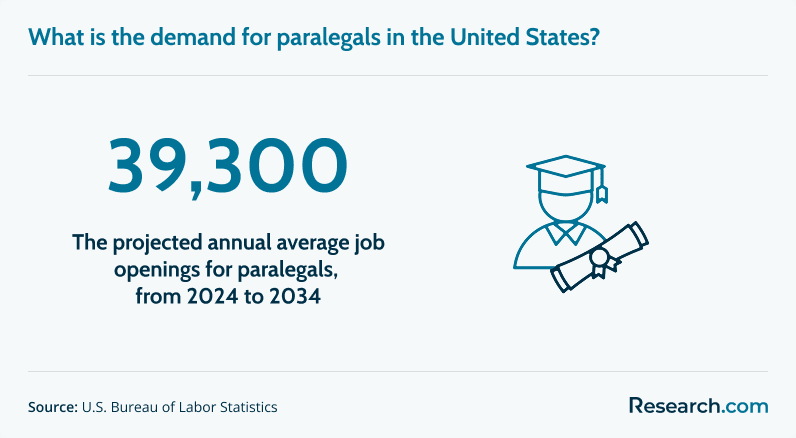
The employment outlook for litigation paralegals is projected to show little or no growth from 2024 to 2034, which is slower than the average 3% growth expected across all occupations. That does not mean the career is disappearing. It means job seekers should be strategic, technology-ready, and prepared to compete for the best roles. The field also remains stable with a low unemployment rate of 1.9%, reflecting ongoing demand for skilled legal support.
The Key Factors Shaping the Future Outlook
Legal technology is changing the work. Artificial intelligence, automated document review, e-filing systems, and eDiscovery platforms can reduce time spent on repetitive tasks. At the same time, they increase the need for paralegals who understand data, quality control, confidentiality, and litigation workflow.
Litigation remains a reliable practice area because disputes, lawsuits, investigations, and regulatory matters continue across industries. Specialized demand may be stronger in areas involving data privacy, cybersecurity, healthcare, finance, complex commercial litigation, and electronically stored information.
The best-positioned candidates will not rely only on traditional clerical skills. They will know civil procedure, discovery rules, legal research, document management, and technology-assisted review. If you are considering advanced academic options for a specialized legal or policy path, information on a one year phd can provide comparison context, though most litigation paralegal roles do not require doctoral study.
What is the typical work environment for Litigation Paralegals?
Litigation paralegals most often work in law firms, corporate legal departments, government agencies, insurance companies, and legal services organizations. The litigation paralegal office environment team collaboration model is common because case work requires frequent coordination with attorneys, other paralegals, legal assistants, clients, experts, court personnel, and vendors.
Nearly 73% are employed in legal services, so many litigation paralegals work in traditional law firm settings. Remote work is very limited in 2025, with only a few firms offering hybrid options. In-person work can be especially important during trial preparation, document review projects, client meetings, hearings, and urgent filing periods.
The litigation paralegal typical work schedule averages about 40 hours per week, but litigation is deadline-driven. Hours may extend during discovery cutoffs, major filings, depositions, settlement deadlines, arbitration, or trial preparation. Evening and weekend work may be necessary when a case requires it. Before accepting a role, ask how the employer handles overtime, after-hours expectations, trial support, and workload distribution.
What are the pros and cons of Litigation Paralegal careers?
Litigation paralegal work can be engaging and meaningful, but it is not a low-pressure career. The best fit is someone who likes detailed legal work, can manage deadlines, and wants to contribute to case outcomes without becoming an attorney.
Pros
- Direct involvement in legal disputes: You can work closely on cases from early investigation through resolution.
- Intellectually active work: Research, evidence review, writing, and problem-solving keep the role from becoming repetitive.
- Clear value to the legal team: Attorneys depend on paralegals for organization, preparation, and procedural accuracy.
- Transferable skills: Legal research, compliance awareness, document management, and project coordination can support moves into related careers.
- Room for specialization: eDiscovery, corporate litigation, intellectual property, healthcare, and complex commercial litigation can lead to more advanced work.
Cons
- High-pressure deadlines: Court dates and filing requirements can create urgent workloads.
- Long or unpredictable hours: Trial preparation and major filings may require evenings or weekends.
- Limited autonomy: Paralegals work under attorney supervision and cannot provide legal advice.
- Heavy document volume: Discovery can involve extensive review, coding, tracking, and quality control.
- Emotional stress: Clients may be facing serious disputes, financial risk, injury, employment issues, or family strain.
If you are exploring practical education routes into legal support, compare program outcomes, costs, and scheduling options carefully. Resources on top online vocational colleges can help you think through flexible training options, but always verify whether a program matches paralegal employer expectations in your state or region.
What are the opportunities for advancement for Litigation Paralegals?
Litigation paralegal career advancement opportunities usually come through experience, specialization, technology skills, and leadership responsibility. Advancement may mean a higher-level paralegal title, a move into litigation support, management of document review teams, or transition into adjacent legal careers.
Clear Steps for Career Growth
- Litigation Paralegal: Support attorneys through research, drafting, discovery, case organization, filing, and trial preparation.
- Senior Litigation Paralegal: Manage more complex cases, supervise junior staff, coordinate major discovery projects, lead eDiscovery workflows, and support trial teams with less day-to-day direction.
- Legal Operations Manager / Law Clerk / Policy Analyst: Move into legal department operations, judicial support, policy research, compliance, or other roles that use legal process knowledge. Some paralegals also pursue law school to become attorneys.
Exploring Litigation Paralegal Specialization Paths
- eDiscovery and Litigation Support: Work with electronic evidence, document review platforms, data processing, productions, and complex discovery workflows.
- Intellectual Property (IP) Litigation: Support patent, trademark, copyright, and technology disputes, often involving USPTO procedures and IP management software.
- Corporate Litigation and Mergers & Acquisitions (M&A): Assist with business disputes, contract review, SEC compliance, due diligence, and transaction-related litigation.
- Healthcare and Medical Malpractice Litigation: Work with medical records, expert witnesses, healthcare regulations, and claims involving patient care or provider liability.
To advance, document your results. Track major cases supported, platforms used, deadlines managed, trial preparation experience, discovery volume, and process improvements. These details make your resume stronger than a general list of duties.
What other careers should you consider?
If you like legal work but are unsure about litigation deadlines, several related careers use similar skills. These options may offer different levels of client contact, technology focus, routine, or advancement potential.
- Compliance Specialist: Applies legal and regulatory knowledge to help organizations follow rules, policies, and reporting requirements.
- Project Manager for Legal Support: Coordinates legal teams, timelines, vendors, and workflows on complex matters.
- Litigation Support Analyst: Focuses on data, eDiscovery platforms, document review systems, trial presentation tools, and case technology.
- Contracts Administrator: Manages contract preparation, tracking, review coordination, renewals, and compliance with agreement terms.
- E-Discovery Manager: Oversees electronic evidence collection, processing, review, production, and quality control.
When comparing these careers, ask yourself what type of work gives you energy. If you enjoy facts, deadlines, and case strategy, litigation paralegal work may fit. If you prefer systems, data, and technology, litigation support or eDiscovery may be stronger. If you prefer policy, risk, and organizational rules, compliance may be a better long-term path.
Here's What Professionals Say About Their Litigation Paralegal Careers
- Maya: "As a litigation paralegal, I'm deeply involved in every stage of the case. From managing discovery documents to coordinating with experts, I recognize that my work keeps the legal process on track. It's incredibly fulfilling to know that my attention to detail and organizational skills help guide clients through stressful moments and assist attorneys in achieving justice. Even though I don't stand in court, I feel the impact of the work I do every day."
- Darnell: "When I started as a litigation paralegal, I was overwhelmed by the sheer volume of files and deadlines thrown at me without much guidance. There were times I felt lost and even doubted my own abilities after some harsh feedback. What helped me was seeking mentorship, asking for feedback regularly, and holding myself accountable during chaotic days. Despite the pressure, I learned that perseverance and building strong relationships are what keep me effective in this demanding environment."
- Vivian: "Preparing for my first trial was one of the most intense experiences I've had-countless hours organizing exhibits and calendaring deadlines. When the verdict was finally in our favor, the relief and gratitude from the client made those nights of stress worth everything. It's powerful to see how my behind-the-scenes efforts in evidence management directly support a fair outcome. Moments like that remind me why I remain passionate about being a litigation paralegal."
Key Findings
- Litigation paralegals support attorneys throughout disputes by managing research, filings, discovery, deadlines, evidence, and trial preparation.
- The role commonly starts with an Associate of Applied Science in Paralegal Studies, a Bachelor of Science or Arts in Paralegal Studies, or a paralegal certificate, plus practical legal experience.
- Recognized credentials include the Certified Paralegal (CP), Certified Legal Assistant (CLA), and PACE-Registered Paralegal.
- The median annual salary currently sits at $64,861, with the Litigation Paralegal Salary Range 2025 spanning from around $46,610 for those with less than a year of experience up to $88,000 for senior professionals.
- The employment outlook is projected to show little or no growth from 2024 to 2034, but the field remains stable with a low unemployment rate of 1.9%.
- Technology skills matter. eDiscovery, AI-assisted research, document management, and litigation support tools are increasingly important for competitiveness.
- The typical schedule averages about 40 hours per week, but deadlines, filings, and trial preparation can require longer hours.
- This career is best for detail-oriented people who can manage pressure, protect confidential information, communicate professionally, and stay organized across multiple cases.
Other Things You Should Know About Litigation Paralegal
In 2027, the job outlook for litigation paralegals is positive. Job growth is expected to slightly exceed the national average for all professions. This demand stems from the ongoing need for legal services, particularly in litigation and legal documentation processes. Opportunities may increase in technology-enhanced legal environments.
A common misconception about the litigation paralegal profession in 2027 is that paralegals only perform clerical duties. In reality, they handle complex tasks such as legal research, drafting documents, and case management, requiring significant expertise and specialized skills.
References
- 2025 Career Goals for Paralegals - 12+ Goal Examples (Full Guide) https://www.tealhq.com/professional-goals/paralegal
- 7 Must-Have Skills for Litigation Paralegals https://paralegal-bootcamp.com/skills-for-litigation-paralegals/
- What a Litigation Paralegal Does in a Law Firm https://www.legalsoft.com/blog/litigation-paralegal
- Law-related career options https://www.lawcareers.net/MoreLaw/AlternativeCareers/Law-related-positions
- Earning Power: Navigating Salaries and Career Growth as a Paralegal https://masteroflegalstudies.com/resources/how-much-do-paralegals-make/
- 6 Litigation Paralegal Interview Questions | KAPLAN https://jobs.community.kaplan.com/interview-questions/litigation-paralegal
- Paralegal Interview Questions and Answers | Cestar College https://www.cestarcollege.com/blog/paralegal-interview-questions-answers/
- How to Become a Paralegal: 2025 Step-by-Step Guide | University of Cincinnati https://online.uc.edu/blog/how-to-become-paralegal/
- Paralegal Career Paths & Progression https://www.paralegaledu.org/careers/


