
2027 Is Biomedical Engineering a Hard Major? What Students Should Know

Co-Founder and Chief Data Scientist
Biomedical engineering is a strong choice for students who want to use engineering to solve medical and biological problems, but it is not an easy default STEM major. The degree asks you to move between calculus, physics, biology, chemistry, programming, design, lab work, and healthcare constraints—often in the same semester. That mix is what makes the major valuable and what makes it demanding.
Interest in the field has continued to rise. In the U.S., enrollment in biomedical engineering programs has grown by over 25% in the past decade, showing that more students are drawn to careers in medical devices, biotechnology, rehabilitation technology, diagnostics, and health-focused research. Higher interest, however, also means students should understand the academic expectations before committing.
This guide explains how hard biomedical engineering is compared with other majors, what makes the coursework difficult, who tends to succeed, how to manage the workload, and how factors such as admissions, online study, accelerated formats, part-time work, careers, and salaries should affect your decision.
Key Benefits of Biomedical Engineering as a Major
- Biomedical engineering develops problem-solving and interdisciplinary skills, vital for traditional undergraduates exploring specialized fields and career changers adapting to new challenges.
- The major offers flexible learning paths, supporting full-time workers returning to school through part-time and online options that accommodate their schedules.
- Students gain confidence by mastering complex coursework linked to real-world applications, enhancing academic resilience and professional readiness in this competitive field.
Where Does Biomedical Engineering Rank Among the Hardest College Majors?
Biomedical engineering is usually ranked among the harder college majors because it combines the expectations of an engineering degree with substantial life science coursework. Students are not only expected to solve quantitative problems; they must also understand biological systems, experimental methods, medical terminology, and how engineering decisions can affect patient safety.
National rankings often place biomedical engineering within the top ten most challenging majors, near fields such as architecture, chemistry, and aerospace engineering. These lists typically consider workload, technical complexity, lab requirements, project intensity, and the number of hours students spend outside class preparing for exams, reports, and design assignments.
A 2025 ranking from Campus Library points to the interdisciplinary nature of the major—engineering, biology, and medicine—as a major reason students find it challenging. Unlike a more narrowly focused program, biomedical engineering requires students to keep switching frameworks: one course may emphasize mechanics or circuits, while another may require physiology, biomaterials, or data analysis.
Compared with other engineering disciplines, biomedical engineering is difficult but not always ranked as the single hardest option. Chemical and aerospace engineering are frequently rated higher in difficulty rankings, while mechanical engineering is sometimes considered less intense. A 2022 study placed biomedical engineering as the eighth hardest engineering discipline based on millions of student and professor ratings.
That said, rankings should not be the only basis for your decision. Difficulty depends heavily on your strengths, the program’s curriculum, the amount of lab and design work required, the quality of advising, and how well you handle courses that blend math, biology, and applied engineering. A student who enjoys both quantitative problem-solving and biological systems may find the major demanding but manageable; a student who dislikes either side of the field may struggle more.
What Factors Make Biomedical Engineering a Hard Major?
Biomedical engineering is hard because it does not let students rely on one academic strength. You need mathematical fluency, scientific literacy, design judgment, technical writing, lab discipline, and the ability to learn unfamiliar tools quickly. The challenge comes less from one impossible class and more from the cumulative pressure of several demanding requirements at once.
- Interdisciplinary coursework: Students often take calculus, differential equations, statistics, physics, chemistry, biology, physiology, engineering design, and discipline-specific courses. The hard part is not just passing each subject; it is learning how to connect them in biomedical contexts.
- Strict academic expectations: Many programs use biomedical engineering critical tracking course requirements, minimum grade rules, and GPA standards to determine whether students can continue in the major. These policies raise the stakes in early math, science, and engineering courses.
- Technical and analytical complexity: Courses in biomechanics, bioinstrumentation, biomaterials, modeling, and design often require students to apply theory to open-ended problems. You may need to build prototypes, write code, analyze data, interpret experimental results, and justify design choices.
- Heavy lab and project workload: Lab reports, design reviews, group projects, and research assignments can take more time than standard lecture-based homework. Deadlines may overlap, especially near midterms and finals.
- Patient-safety and regulatory context: Biomedical engineering work often connects to devices, diagnostics, therapies, or systems that affect people’s health. Students must learn to think beyond technical performance and consider ethics, reliability, documentation, risk, and compliance.
- Less room for passive studying: Memorizing definitions is rarely enough. Students usually need to solve problems, explain mechanisms, interpret data, and defend design decisions in writing or presentations.
Prospective students should also review biomedical engineering minimum GPA admission standards and continuation policies before enrolling. A program may be open to first-year students but require strong grades in gateway courses before full admission to the major. If you are considering a shorter academic timeline, fast track college programs can reduce time in school, but they do not remove the underlying rigor of the subject.

Who Is a Good Fit for a Biomedical Engineering Major?
A good biomedical engineering student is not simply “good at science.” The best fit is someone who can handle quantitative work, stay curious about biology and medicine, and tolerate ambiguity when problems do not have one clean answer. The major rewards students who are persistent, organized, and willing to revise their ideas after testing them.
- Students comfortable with advanced mathematics: Calculus, algebra, statistics, and modeling appear throughout the curriculum. If you are willing to practice problem-solving regularly, you will be better prepared for upper-level courses.
- Students who like both engineering and biology: Biomedical engineering is a poor fit for students who want to avoid life sciences or who only want a traditional mechanical, electrical, or chemical engineering path. The strongest students are genuinely interested in both sides.
- Analytical problem-solvers: The major suits students who enjoy breaking complex systems into smaller parts, interpreting experimental data, troubleshooting errors, and asking why a design or method failed.
- Hands-on learners: Lab work, prototypes, design projects, and research can be central to the degree. Students who learn well by building, testing, measuring, and refining often find the work more engaging.
- Clear communicators: Biomedical engineering is collaborative. Students frequently work with classmates, faculty, clinicians, researchers, or industry partners. Explaining technical ideas clearly is a real academic and career advantage.
- Students motivated by healthcare innovation: A strong interest in improving patient care, medical technology, diagnostics, rehabilitation, or biotechnology can help sustain motivation during difficult semesters.
You may not be a good fit if you strongly dislike math-heavy courses, avoid lab work, struggle to manage long-term projects, or want a major with predictable weekly assignments and little collaboration. Students exploring interdisciplinary graduate routes may also compare preparation options, including an easy masters program in a related field, but biomedical engineering itself should still be treated as a rigorous technical path.
How Can You Make a Biomedical Engineering Major Easier?
You cannot make biomedical engineering easy, but you can make it much more manageable. The students who do well usually treat the major as a system: they plan course loads carefully, start assignments early, use support resources before they are in crisis, and build a strong base in math and science during the first year.
- Master the prerequisites early: Do not rush through calculus, physics, chemistry, biology, and introductory engineering just to earn credits. Weak foundations make later courses feel much harder, especially biomechanics, bioinstrumentation, and modeling.
- Use active study methods: Work problems without looking at solutions, explain concepts out loud, create practice exams, and review mistakes. Passive rereading is usually not enough for technical courses.
- Start lab reports and design work early: Biomedical engineering assignments often require data cleaning, calculations, figures, citations, and written interpretation. Waiting until the night before makes errors more likely and learning weaker.
- Plan around workload peaks: Midterms, lab deadlines, and group projects often cluster together. Use a semester calendar to identify heavy weeks before they arrive.
- Choose study partners carefully: A strong study group can help you test your understanding, divide review topics, and stay accountable. Avoid groups that become social time without solving problems.
- Go to office hours before you are lost: Faculty and teaching assistants can help you identify conceptual gaps early. Bring specific questions, attempted solutions, or confusing lab results.
- Connect coursework to real applications: Research, internships, design teams, and clinical exposure can make difficult theory feel more purposeful and easier to remember.
- Protect sleep and recovery: The major rewards consistency more than all-night studying. Burnout can make even familiar material feel unmanageable.
When I spoke with a graduate who majored in biomedical engineering, she described the first semesters as especially intimidating because lectures, labs, and reports seemed to demand different skills at the same time. “At first, everything seemed overwhelming, and I wasn’t sure how to keep up,” she said.
Her turning point was not studying more hours without a plan. It was forming a small peer study group, breaking assignments into smaller tasks, and using a planner to prevent last-minute work. She said the shift came from “working smarter—focusing on truly understanding material rather than just memorizing it.” That approach did not remove the challenge, but it made the workload more predictable and the learning more durable.
Are Admissions to Biomedical Engineering Programs Competitive?
Yes. Admissions to biomedical engineering programs can be very competitive, especially at institutions with strong engineering schools, research facilities, clinical partnerships, or limited lab capacity. The field attracts students interested in medicine, engineering, biotechnology, and medical devices, which can create a large applicant pool for a limited number of seats.
Some top universities admit fewer than 7% of applicants in recent years. Selectivity varies widely by school, but competitive programs often look for evidence that applicants can handle advanced math, biology, physics, chemistry, and sustained technical coursework. A strong GPA matters, and many competitive programs expect GPAs above 3.5 or even higher on weighted scales.
Admissions committees may also value STEM research, engineering projects, robotics, science competitions, healthcare exposure, programming experience, or strong essays that explain why biomedical engineering is the right fit. Activities do not need to be flashy, but they should show preparation for the major’s mix of technical and biological work.
Applicants should pay close attention to how each school structures admission. Some universities admit students directly to biomedical engineering as first-year students. Others admit students to a general engineering pathway and require them to meet prerequisite, GPA, or course-completion standards before entering the major. That difference can affect your risk and your planning.
When I spoke with a professional biomedical engineering major about his path, he described the application process as “intense but rewarding.” He spent months building a portfolio of summer research and STEM projects to strengthen his application. “I remember feeling nervous after submitting my application, knowing how few spots were available,” he said. He also noted that the pressure of applying prepared him for the discipline and persistence the major later required.
Is an Online Biomedical Engineering Major Harder Than an On-Campus Program?
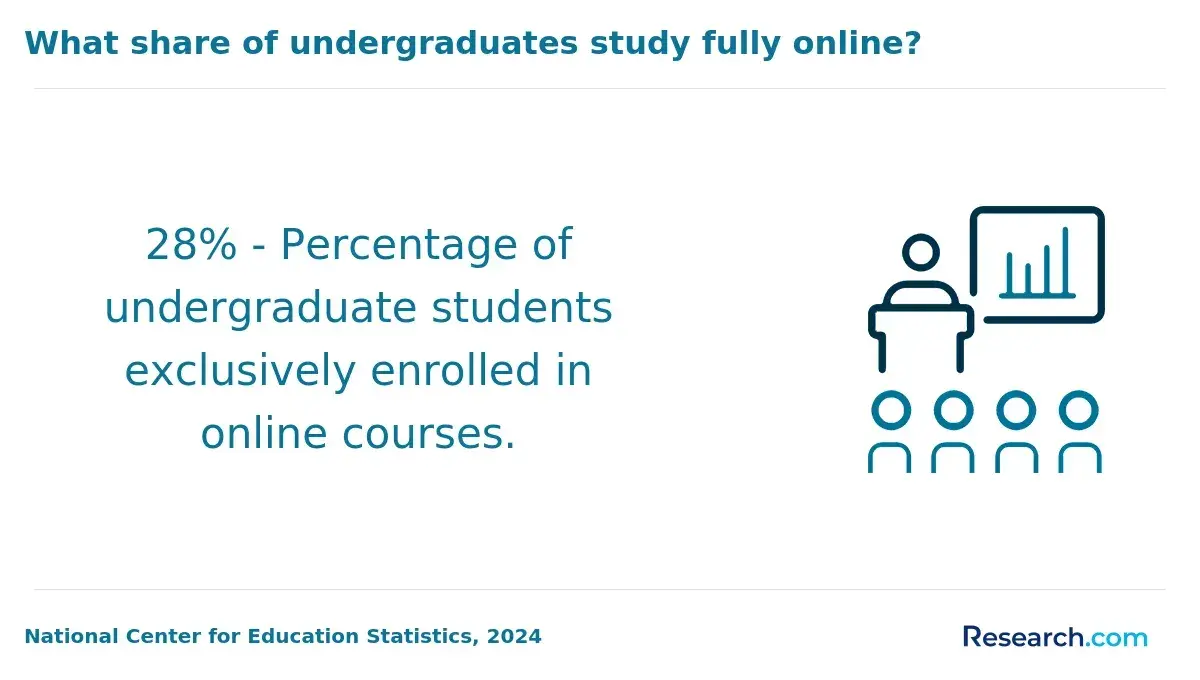
An online biomedical engineering major is not automatically harder than an on-campus program, but it can feel harder for students who need structure, immediate feedback, or hands-on lab access. The academic expectations may be similar, while the learning environment changes significantly.
The biggest issue is not whether online courses are legitimate; it is whether the program can deliver the lab, design, collaboration, and equipment-based experiences that biomedical engineering students need. Students should also verify accreditation, course sequencing, lab requirements, and whether any in-person sessions are required.
| Factor | Online format | On-campus format |
| Schedule | More flexible, but requires strong self-discipline | More structured, with fixed class and lab times |
| Labs | May rely on virtual labs, remote kits, simulations, or limited in-person sessions | Usually offers direct access to equipment, lab spaces, and supervised experiments |
| Peer interaction | Often planned through discussion boards, video meetings, or group platforms | More spontaneous collaboration before and after class or in labs |
| Instructor access | May involve delayed responses or scheduled virtual office hours | Often easier to ask quick questions in person |
| Best fit | Organized students who can learn independently and manage technology demands | Students who benefit from routine, face-to-face support, and hands-on environments |
A recent study reported that 57.5% of biomedical science students preferred open-book online exams for reduced stress and fairness, although paper-based exams promoted deeper learning and retention. That finding shows why format matters: online learning can reduce some pressures while creating different challenges for mastery and long-term recall.
Students considering online biomedical engineering should ask practical questions before enrolling: How are labs completed? Are there campus visits? What software and equipment are required? How are group design projects managed? Are faculty available for technical help? For those researching flexible doctoral pathways in related areas, resources such as easiest PhD without dissertation may be useful, but undergraduate and professional engineering preparation still requires careful attention to hands-on learning.
Are Accelerated Biomedical Engineering Programs Harder Than Traditional Formats?
Accelerated biomedical engineering programs are generally harder than traditional formats because they compress demanding material into a shorter timeline. The content is not necessarily different, but the pace leaves less time to recover from a poor exam, revisit difficult concepts, or balance labs, projects, and outside responsibilities.
Accelerated formats can be attractive for students who want to finish sooner, reduce time away from the workforce, or move quickly into graduate study or employment. They are a poor fit for students who need extra time to absorb technical material, work many hours, or manage heavy personal responsibilities.
- Course pacing and content density: Accelerated programs may compress the same rigorous curriculum—often requiring at least 30 graduate credits—into one to two years instead of the typical two to three years of traditional tracks.
- Workload intensity: Students may face continuous exams, lab deadlines, projects, and readings with limited downtime between major assignments.
- Retention pressure: The faster pace can reduce opportunities for review, reflection, and repeated practice, which are especially important in math-heavy and design-heavy courses.
- Scheduling limits: Accelerated programs may include evening or weekend classes and fewer open blocks for research, internships, student organizations, or recovery time.
- Higher need for preparation: Students entering accelerated programs should already be confident in prerequisite math, biology, engineering fundamentals, and technical writing.
Traditional programs are not easy, but they usually provide more time to sequence difficult courses, pursue internships, build research experience, and recover from challenging semesters. Accelerated programs reward students who are already disciplined, academically prepared, and able to focus intensely for a sustained period.
When comparing traditional vs accelerated biomedical engineering difficulty, focus less on the title and more on the weekly schedule, credit load, lab expectations, grading policies, and support services. For broader education options that combine quality and flexibility, see the best accredited non profit online colleges.
Can You Manage a Part-Time Job While Majoring in Biomedical Engineering?
You can manage a part-time job while majoring in biomedical engineering, but it requires careful limits. The major often includes lectures, labs, design meetings, reports, problem sets, and exams that do not fit neatly into a predictable schedule. Students may need 15 to 20 hours or more of study each week outside class, and peak project periods can demand even more.
The most workable jobs are usually flexible, close to campus, and limited in hours. Campus jobs, tutoring, lab assistant roles, research assistantships, or positions with supervisors who understand academic schedules tend to be more manageable than jobs with late nights, long shifts, or rigid scheduling.
- More manageable work options: Campus employment, research support, tutoring, library or office roles, and flexible weekend shifts.
- Riskier work options: Jobs with unpredictable shifts, long commutes, mandatory overtime, late-night hours, or inflexible attendance rules.
- Semesters to be cautious: Terms with multiple labs, senior design, intensive research, or difficult prerequisite sequences.
- Warning signs: Missing lab deadlines, skipping lectures to work, chronic sleep loss, declining grades, or no time to prepare for exams until the last minute.
Some students reduce their course load during heavier work periods, while others work only during summers or breaks. If you need employment for financial reasons, meet with an academic adviser early and map out course sequencing so that labs and major projects do not all stack in the same term.
The key question is not simply “Can I work?” It is “How many hours can I work without weakening the academic record, research experience, or internship preparation I need for my goals?” For many biomedical engineering students, a smaller, more flexible job is safer than a higher-hour role that competes directly with labs and design work.
What Jobs Do Biomedical Engineering Majors Get, and Are They as Hard as the Degree Itself?
Biomedical engineering graduates can enter several types of roles, and the difficulty of the job depends on the setting. Some positions are technically demanding in ways that resemble the major, especially research, design, and product development. Others are less theory-heavy but carry high responsibility, documentation demands, or operational pressure.
- Research & Development Engineer: Designs, tests, and improves medical technologies or related systems. This role can feel as demanding as the degree because it requires technical depth, creativity, data analysis, and persistence through failed prototypes.
- Clinical Engineer: Supports medical equipment and technology in healthcare settings. The challenge is often practical and time-sensitive: equipment must work reliably, and decisions can affect patient care.
- Product Development Engineer: Works across the product lifecycle, including design, testing, quality assurance, and preparation for launch. The job can become especially intense during testing cycles, design reviews, or regulatory milestones.
- Regulatory Affairs Specialist: Prepares documentation, supports compliance, and communicates with agencies like the FDA. This path may be less design-intensive but demands precision, strong writing, and careful interpretation of complex requirements.
- Biomanufacturing Specialist: Helps manage production processes for biotechnological products. The challenge is often operational, quality-focused, and process-oriented rather than primarily theoretical.
The degree’s difficulty can prepare graduates for these roles by building problem-solving habits, technical communication, and comfort with complex systems. Biomedical engineering is known for a heavy workload, and one study found these undergraduates averaged a 3.2 GPA, one of the lowest average GPAs among engineering majors.
Whether the job feels harder than the degree depends on what kind of pressure you find most difficult. School emphasizes exams, lab reports, and learning new material quickly. Work may emphasize deadlines, accountability, communication with non-engineers, documentation, safety, budgets, and regulatory expectations. Students comparing programs should also review a list of nationally accredited colleges when evaluating education options.
Do Biomedical Engineering Graduates Earn Higher Salaries Because the Major Is Harder?
Biomedical engineering graduates do not earn higher salaries simply because the major is hard. Employers pay for skills, experience, industry demand, location, education level, and the value of the work being performed. A difficult degree can help students build valuable abilities, but difficulty by itself does not guarantee higher pay.
The major can support strong earning potential because it prepares students for specialized work in medical devices, biotechnology, pharmaceuticals, research, product development, and health technology. Employers may value graduates who can understand both engineering systems and biological or clinical constraints.
Several factors influence salary outcomes:
- Industry: Pharmaceutical companies, medical device manufacturing, and research roles may offer higher wages than some other settings.
- Location: Areas such as California or Massachusetts often pay more because of biotech industry hubs and cost of living.
- Experience: Entry-level salaries typically start around $70,000, while experienced professionals or those with advanced degrees can earn over $100,000.
- Role type: Design, R&D, regulatory, clinical, manufacturing, and data-focused roles can have different compensation patterns.
- Graduate education and specialization: Advanced degrees may matter more for research-heavy or highly specialized positions.
According to recent data, the median annual salary for biomedical engineers reached $106,950 in 2024, surpassing many other occupations nationwide. That figure reflects labor-market value, not a direct reward for choosing a difficult major. Students should evaluate salary alongside job fit, graduate school plans, geographic preferences, and the type of biomedical work they actually want to do.
What Graduates Say About Biomedical Engineering as Their Major
- Theo: "Choosing biomedical engineering was definitely challenging but incredibly rewarding. The coursework pushed me to master both biology and engineering concepts, which was not easy given the steep learning curve. Although the cost of attendance was around $35,000 per year, the skills I gained opened doors to innovative healthcare careers that made the investment feel worthwhile."
- Aries: "Pursuing biomedical engineering helped me understand how closely technology and medicine can work together. It was tough balancing the high academic demands and nearly $30,000 in annual costs, but knowing my work could contribute to life-changing medical devices kept me motivated. Looking back, this major was difficult, but it shaped my professional goals in a meaningful way."
- Anthony: "Biomedical engineering is certainly a hard major because it brings together complex subjects from several fields. The financial commitment, often $28,000 to $40,000 per year, is significant, yet the career opportunities in research and development helped justify the investment for me. The experience was intensive, but it gave me a foundation that supported my work in biotech innovation."
Other Things You Should Know About Biomedical Engineering Degrees
In 2027, teamwork continues to be a crucial part of biomedical engineering studies. As projects often involve complex design and problem-solving tasks, students are encouraged to work in teams to simulate real-world engineering environments, enhance learning experiences, and cultivate essential collaboration skills.
In 2026, prerequisites for a biomedical engineering major typically include strong foundations in mathematics and science, particularly physics, chemistry, and biology. Some programs might also require specific high school courses or standardized test scores to ensure readiness for rigorous coursework.
References
- Am I setting myself for failure if I choose biomedical engineering? http://www.engineergirl.org/21343/-Am-I-setting-myself-for-failure-if-I-choose-biomedical-engineering
- is bioengineering the easiest engineering degree? - Engineering Majors - College Confidential Forums https://talk.collegeconfidential.com/t/is-bioengineering-the-easiest-engineering-degree/308434
- How to become a biomedical engineer: A comprehensive guide https://usic.sheffield.ac.uk/blog/how-to-become-a-biomedical-engineer
- What can you do with a major in Biomedical Engineering? https://www.marquette.edu/academics/majors/what-can-you-do-with-a-major-in-biomedical-engineering.php
- Top 10 Highest Paying Majors to Choose From - University of the Potomac https://potomac.edu/highest-paying-majors/
- How Important Is Biomedical Engineering Today? https://online-engineering.case.edu/blog/how-important-is-biomedical-engineering-today
- What do biomedical engineers do? – The University of Qld https://study.uq.edu.au/stories/what-do-biomedical-engineers-do
- Bioengineers and Biomedical Engineers : Occupational Outlook Handbook: : U.S. Bureau of Labor Statistics https://www.bls.gov/ooh/architecture-and-engineering/biomedical-engineers.htm
- Why Major in Biomedical Engineering? | Biomedical Engineering https://bme.udel.edu/about/why-biomedical-engineering/
- Why Biomed for Pre-Med? - School of Biomedical Engineering, Science and Health Systems https://drexel.edu/biomed/academics/undergraduate-programs/pre-med-and-pre-law/why-bme-for-pre-med/


