
2027 Is Demand for Business Administration Degree Graduates Growing or Declining?

Co-Founder and Chief Data Scientist
Choosing a business administration degree is partly a career decision: students want to know whether the credential will lead to real job options, not just broad business knowledge. That question is reasonable because business roles are changing as employers adopt analytics tools, automation, remote work models, and leaner staffing structures.
The outlook is not simply “good” or “bad.” According to the U. S. Bureau of Labor Statistics, employment in business and financial operations occupations is projected to grow 8% from 2022 to 2032, faster than the average for all occupations. However, demand varies by occupation, region, degree level, industry, and skill set. A graduate with strong data, communication, finance, or operations skills may see a very different job market from someone relying only on a general credential.
This guide explains where demand for business administration graduates is strongest, which occupations and industries are growing, how AI is changing entry-level and management work, and how to judge whether the degree fits your career goals.
Key Things to Know About the Demand for Business Administration Degree Graduates
- Employment for business administration graduates remains stable, with approximately 7% growth expected through 2030 according to the U.S. Bureau of Labor Statistics.
- Specializing in areas like data analytics or supply chain management significantly enhances long-term job prospects amid evolving industry demands.
- Digital transformation and remote work trends are reshaping employer needs, increasing opportunities in technology-driven business roles.
What Factors Are Driving Demand for Business Administration Degree Professionals?
Demand for business administration graduates is strongest where organizations need people who can manage resources, interpret data, improve processes, lead teams, and connect business goals with day-to-day execution. The degree remains useful because nearly every industry needs these functions, but employers increasingly expect graduates to bring practical, technology-aware skills.
- Growth in major service industries: Healthcare, finance, technology, retail, and professional services continue to need managers, analysts, coordinators, and operations staff. These sectors often value business graduates who understand budgeting, staffing, process improvement, and customer behavior.
- Technology-driven business change: Data analytics, digital marketing platforms, customer relationship management systems, automation, and AI tools have changed what business roles require. Graduates who can use technology to support decisions are more competitive than those with only general management knowledge.
- Compliance and risk management needs: Finance, healthcare, environmental policy, employment law, privacy rules, and corporate governance create ongoing demand for professionals who can help organizations follow requirements while still operating efficiently.
- More complex workforce management: Employers need people who can manage hybrid teams, multigenerational workforces, talent shortages, performance expectations, and changing employee needs. Human resources, training, and organizational development roles often benefit from business administration preparation.
- Employer demand for transferable skills: Communication, leadership, critical thinking, problem-solving, project coordination, and financial literacy are still central. These skills make business administration graduates useful across departments instead of limiting them to one narrow career track.
Students should also evaluate program quality, accreditation, internships, career services, and the strength of the curriculum. A degree is more valuable when it produces measurable skills employers can see in projects, work experience, certifications, or portfolio examples. Those comparing broader education pathways may also review options such as EdD degree programs when considering long-term leadership or administrative career goals outside traditional business roles.
Which Business Administration Occupations Are Seeing the Highest Growth Rates?
The fastest-growing roles for business administration graduates tend to combine business judgment with analytics, finance, operations, marketing, or organizational problem-solving. According to the U.S. Bureau of Labor Statistics, overall employment is expected to increase by 9% from 2020 to 2030, but some business-related occupations are projected to grow faster than others.
- Market Research Analysts: With 22% projected growth, this is one of the strongest paths for graduates who enjoy consumer behavior, data interpretation, surveys, competitive research, and marketing strategy. Employers increasingly want evidence-based decisions rather than guesswork.
- Financial Analysts: Projected to grow by 17%, this role suits students with strong quantitative skills, finance coursework, spreadsheet ability, and interest in investment, budgeting, forecasting, or corporate finance. A bachelor's degree is typically required.
- Management Analysts: Expected to grow by 14%, management analysts help organizations improve efficiency, control costs, redesign processes, and solve operational problems. This path often rewards experience, analytical thinking, and strong client communication.
- Human Resources Specialists: With a 10% growth rate, HR specialists are needed as organizations compete for talent, manage compliance, support employee relations, and improve workplace systems. A bachelor's degree and strong interpersonal judgment are important.
- Operations Managers: Growth of about 7% reflects the continuing need for leaders who can coordinate people, production, logistics, service delivery, and performance goals. These roles often require both a degree and relevant work experience.
Students should not choose a concentration based only on growth rates. They should also consider fit: finance and analytics roles may require stronger quantitative ability, while HR and operations roles may rely more heavily on communication, judgment, and people management. Students comparing business with technical fields can also examine affordable online engineering degree programs if they want a more engineering-centered career path.
Which Industries Hire the Most Business Administration Degree Graduates?
Business administration graduates are hired across many sectors because organizations need people who understand budgets, teams, customers, operations, and strategy. The best industry for a graduate depends on career interests, tolerance for regulation, desired work environment, and preferred specialization.
- Financial Services: Banks, investment firms, insurance companies, credit organizations, and fintech employers hire graduates for roles in analysis, lending, operations, compliance, client service, and risk management. This sector often rewards accuracy, ethics, quantitative ability, and regulatory awareness.
- Healthcare: Hospitals, clinics, insurers, care networks, and healthcare technology companies need business professionals to manage scheduling, budgets, supply chains, billing processes, staffing, and patient service operations. Healthcare can be a strong fit for students who want mission-driven work without becoming clinicians.
- Retail and Consumer Goods: Retailers and consumer brands hire business graduates for sales operations, merchandising, marketing, logistics, inventory planning, store management, and e-commerce support. This industry is closely tied to consumer behavior and can move quickly.
- Technology: Technology companies use business administration graduates in project coordination, product operations, sales operations, human resources, customer success, finance, and business development. Graduates who understand software tools and analytics may be especially competitive.
- Manufacturing: Manufacturers hire business professionals for production planning, procurement, logistics, quality management, vendor coordination, and operations supervision. This sector can be a good match for students interested in process improvement and measurable performance outcomes.
A practical way to compare industries is to look at the type of problem each one solves. Finance focuses on money and risk, healthcare on service delivery and compliance, retail on customers and supply chains, technology on scaling products and teams, and manufacturing on efficiency and production quality.
Breakdown of All 2-Year Online Title IV Institutions

How Do Business Administration Job Opportunities Vary by State or Region?
Location can significantly affect job options for business administration graduates. The same degree may lead to different opportunities depending on the region’s major employers, industry mix, cost of living, and remote-work access.
- High-demand states: California, Texas, and New York often have more openings because they include major corporate headquarters, financial centers, technology employers, healthcare systems, and professional services firms. These markets may also be more competitive, so internships, networking, and specialized skills matter.
- Industry clusters: Regions with a strong finance, healthcare, energy, technology, logistics, or manufacturing base tend to create more specialized business roles. Students should research local employers before choosing a concentration or relocating.
- Urban versus rural markets: Large metro areas usually offer more roles, stronger networking opportunities, and faster job switching. Rural areas may have fewer openings but can offer broader responsibilities in smaller organizations.
- Cost-of-living trade-offs: A higher salary in a major city may not always translate into better purchasing power. Graduates should compare rent, transportation, taxes, commuting time, and career growth potential before accepting an offer.
- Remote and hybrid work: Some business roles now allow graduates to apply beyond their immediate region. However, remote jobs can attract larger applicant pools, so candidates need strong digital communication, self-management, and measurable accomplishments.
According to the U.S. Bureau of Labor Statistics, employment in business and financial roles is expected to grow by 8% from 2022 to 2032, but that growth will not be distributed evenly across every state or region. Students should use national projections as a starting point, then research the local job market where they plan to work.
How Does Degree Level Affect Employability in Business Administration Fields?
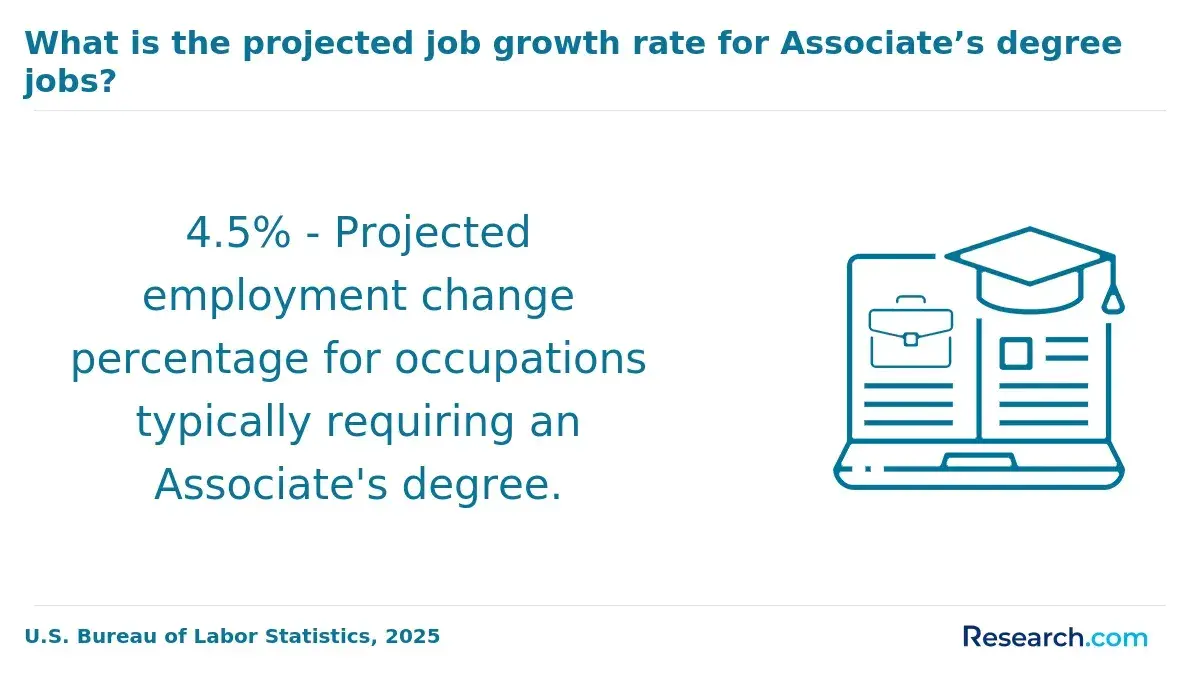
Degree level affects the kinds of business roles a graduate can reasonably target. An associate degree may open support or entry-level roles, a bachelor’s degree is the standard credential for many professional business jobs, and a master’s degree can strengthen access to leadership, consulting, finance, analytics, and specialized management roles.
| Degree level | Typical career positioning | Employability considerations |
| Associate Degree | Administrative support, sales support, customer service, office coordination, entry-level business roles | Can be useful for starting quickly, but advancement may depend on experience, certifications, or completing a bachelor’s degree later. |
| Bachelor's Degree | Business analyst, marketing coordinator, HR specialist, operations coordinator, management trainee, financial services roles | Often the most common credential for professional entry-level business roles. Internships, technical skills, and concentration choice strongly affect competitiveness. |
| Master's Degree | Project manager, financial manager, senior analyst, consultant, operations leader, specialized management roles | May improve advancement potential, especially for professionals with work experience. Return on investment depends on cost, reputation, career goals, and employer value. |
| Doctorate Degree | Faculty roles, research, executive consulting, advanced organizational leadership | Best suited for academic, research, or expert-level consulting paths rather than most general corporate roles. |
Students should not assume that more education automatically means better outcomes. A bachelor’s degree with strong internships and job-ready skills may outperform a more expensive credential with weak career alignment. Students comparing flexible and cost-conscious pathways can review online business degree programs as part of their planning.
For those considering graduate study outside business, programs such as an online master's in marriage and family therapy show how advanced degrees can lead to very different professional licensing and career structures.
What Skills Are Employers Seeking in Business Administration Graduates?
Employers look for business administration graduates who can do more than understand business terminology. They want candidates who can analyze information, communicate clearly, use common workplace technologies, manage priorities, and help teams make better decisions.
- Critical thinking: Graduates need to evaluate information, identify patterns, question assumptions, and recommend practical solutions. This is especially important in analyst, operations, finance, and management roles.
- Clear communication: Business professionals write reports, explain trade-offs, present recommendations, negotiate with stakeholders, and document decisions. Weak communication can limit advancement even when technical ability is strong.
- Project leadership: Employers value graduates who can organize tasks, track deadlines, coordinate people, manage risks, and keep work moving without constant supervision.
- Technological fluency: Business graduates should be comfortable with spreadsheets, presentation tools, databases, collaboration platforms, customer systems, analytics dashboards, and emerging automation tools.
- Collaboration and leadership: Most business problems involve multiple departments. Graduates who can work across teams, handle conflict professionally, and motivate others are more likely to earn responsibility.
- Financial and data literacy: Even non-finance roles often require comfort with budgets, performance metrics, forecasts, reports, and basic data interpretation.
One business administration graduate described the transition from school to work as a lesson in prioritization: “Balancing multiple projects simultaneously was overwhelming at first. But learning how to communicate setbacks transparently with supervisors and rally team support made a huge difference.” He also found that understanding workflow technology helped him become more efficient. His experience reflects a common employer expectation: graduates must combine technical knowledge with resilience, judgment, and strong interpersonal habits.
How Does Job Demand Affect Business Administration Graduate Salaries?
Job demand affects salaries by changing how much employers must compete for qualified candidates. When demand is strong and the supply of skilled applicants is limited, employers may offer better starting pay, faster raises, bonuses, or clearer promotion paths. When demand is weaker or applicants are plentiful, salary growth can slow.
For instance, the U.S. Bureau of Labor Statistics reports a 5% increase in median annual wages for management occupations from 2019 to 2022, underscoring strong demand in related fields. Salary outcomes, however, still depend on role, location, industry, degree level, experience, and specialization.
- Competitive starting offers: Employers may raise entry-level offers when they need graduates with finance, analytics, operations, sales, or project-management skills.
- Faster wage growth: Professionals who gain experience in high-demand areas can often negotiate raises, promotions, or lateral moves more effectively.
- Stagnant salaries in crowded roles: General business roles with low barriers to entry may attract many applicants, which can weaken salary leverage.
- Industry differences: Finance, technology, consulting, healthcare administration, and supply chain roles may follow different pay patterns because each sector has its own demand pressures and skill requirements.
- Skill-based salary leverage: Graduates who can demonstrate measurable results, such as cost savings, revenue growth, process improvements, or better reporting, usually have stronger compensation arguments than those who list only coursework.
Students should compare salary expectations with tuition, debt, time to completion, and likely career path. The strongest return usually comes when the degree is paired with internships, work experience, marketable software skills, and a clear occupational target.
How Is AI Changing Demand for Business Administration Professionals?
AI is not eliminating the need for business administration professionals, but it is changing what employers expect them to do. Routine administrative work is more vulnerable to automation, while roles involving judgment, analysis, implementation, communication, and change management are becoming more important.
A study by the World Economic Forum projects that by 2027, AI will automate or enhance about half of the tasks currently performed in business-related roles. For students, the key lesson is clear: business knowledge should be paired with technology fluency and the ability to apply AI responsibly.
- Automation of routine tasks: Data entry, scheduling, basic reporting, document drafting, and repetitive tracking can increasingly be handled or accelerated by software. Entry-level professionals may need to show they can move beyond clerical work.
- New AI-adjacent roles: Employers are creating or expanding roles in AI project coordination, business analytics, digital transformation, workflow automation, and data strategy. These positions often require both business understanding and comfort with technical teams.
- Higher expectations for analysis: Because AI tools can produce summaries and reports quickly, employers may expect graduates to interpret outputs, validate assumptions, identify risks, and turn information into decisions.
- Greater need for ethical judgment: Business professionals may help manage questions involving data privacy, bias, transparency, compliance, and responsible AI use.
- Changing industry demand: Finance, healthcare, consulting, and technology employers that invest heavily in AI may favor candidates who can support adoption, training, process redesign, and performance measurement.
One graduate described AI adoption as both challenging and useful: “Initially, it was overwhelming to keep up with the pace of technology changes. I had to proactively learn new software and analytical methods beyond what was covered in school.” Over time, she said AI tools freed her from routine work and helped her focus on strategic problem-solving. Her experience illustrates why adaptability is becoming one of the most important business administration skills.
Is Business Administration Considered a Stable Long-Term Career?
Business administration can be a stable long-term career path because its core functions—planning, budgeting, organizing people, improving operations, analyzing markets, and supporting decisions—exist in nearly every industry. The stability comes from versatility, not from one guaranteed job title.
- Broad employment base: Business graduates can work in finance, healthcare, technology, retail, manufacturing, nonprofit organizations, government, and professional services. This reduces dependence on a single sector.
- Transferable skills: Communication, leadership, analysis, project management, and financial literacy can be used across roles. These skills help professionals pivot when industries or technologies change.
- Ongoing need for management: Organizations still need people to coordinate teams, allocate resources, monitor performance, and make trade-offs, even as tools and workflows evolve.
- Risk of generic preparation: Stability is weaker for graduates who leave school without internships, technical skills, concentration-specific knowledge, or a clear job-search strategy.
- Importance of continuous learning: Professionals who keep up with analytics tools, AI applications, compliance requirements, and management practices are better positioned for long-term employability.
Students evaluating the degree should view it as a foundation rather than a final destination. Its long-term value depends on how well the graduate builds experience, chooses a specialization, and adapts to employer needs. Those comparing financial outcomes may also review how business-related credentials fit among the highest paying bachelor's degrees.
Is a Business Administration Degree Worth It Given the Current Job Demand?
A business administration degree can be worth it when it is aligned with a clear career goal, an affordable education plan, and skills that employers currently need. The degree is less valuable when pursued without a target role, without practical experience, or at a cost that is difficult to justify based on expected outcomes.
The demand for business administration degree graduates in the US has shown steady growth, mirroring broader labor market trends. According to projections from the U.S. Bureau of Labor Statistics, management-related occupations-which often require or benefit from business administration skills-are expected to grow about 7% from 2022 to 2032.
This growth rate aligns with the average for all occupations, reflecting consistent yet moderate hiring activity across industries such as finance, healthcare, technology, and retail. That means the degree remains relevant, but students should not treat it as automatic job security. Employers are increasingly selective about applied skills, internships, technical ability, and specialization.
The degree is more likely to be worth it for students who:
- want flexibility across industries rather than preparation for one narrow occupation;
- choose a concentration such as finance, analytics, supply chain, marketing, human resources, or operations;
- complete internships, projects, or part-time work related to business roles;
- develop spreadsheet, data, presentation, project-management, and communication skills;
- compare tuition and debt against realistic salary expectations.
It may be less ideal for students who want a heavily technical, clinical, licensed, or trade-specific career unless they combine business study with another credential or specialized training. For individuals unsure about their educational path, an associate degree pathway can provide a practical starting point while they clarify goals, costs, and transfer options.
What Graduates Say About the Demand for Their Business Administration Degree
- Andy: "Pursuing a business administration degree was a pivotal choice for me. The knowledge and skills I acquired translated directly into career advancement and a noticeable salary increase, proving the degree's strong ROI. This program empowered me to confidently take on leadership roles and understand complex business operations."
- Leona: "Reflecting on my journey, earning a business administration degree was more than just obtaining a credential; it was about building a foundation for lifelong professional growth. The investment paid off-not only financially but also in the diverse opportunities it opened in various industries. It truly reshaped my approach to problem-solving and strategic thinking."
- Eric: "From a pragmatic standpoint, my business administration degree was essential in elevating my career trajectory. The hands-on experience and theoretical frameworks blended seamlessly, preparing me for real-world challenges and innovations in the corporate landscape. The degree's return on investment became clear through consistent promotions and new responsibilities."
Other Things You Should Know About Business Administration Degrees
In 2027, demand for business administration graduates is influenced by technological advancements, economic shifts, and globalization. Companies increasingly seek individuals with skills in digital transformation, data analysis, and international business, highlighting a need for adaptability and innovation in the workforce.
Certifications like Project Management Professional (PMP) or Chartered Financial Analyst (CFA) are increasingly valued in 2027. They enhance a graduate's employability and make them attractive candidates, thereby potentially increasing demand for those with a business administration degree.
Students should focus on developing digital skills, understanding global business practices, and gaining certifications in specialized areas like data analytics and project management to enhance their career prospects in business administration in 2027. These areas are anticipated to be crucial due to the evolving technological and global market landscape.
References
- IS A DEGREE IN BUSINESS ADMINISTRATION STILL WORTH IT? https://urbeuniversity.edu/blog/is-a-degree-in-business-administration-still-worth-it
- 20 most popular jobs upon graduation for those with business administration / management majors - College Recruiter https://www.collegerecruiter.com/blog/2025/10/29/20-most-popular-jobs-upon-graduation-for-those-with-business-administration-management-majors
- Superagency in the workplace: Empowering people to unlock AI’s full potential https://www.mckinsey.com/capabilities/tech-and-ai/our-insights/superagency-in-the-workplace-empowering-people-to-unlock-ais-full-potential-at-work
- AI is increasing demand for managers — and changing their skill sets https://www.iese.edu/insight/articles/artificial-intelligence-demand-human-skills/
- 10 Essential Business Administration Skills Employers Are Looking For | SBC | Saskatoon Business College https://www.sbccollege.ca/blog/business-administration-skills-employers-want/
- 10 Surprising Business Administration Degree Career Paths https://ftccollege.edu/blog-post/10-surprising-business-administration-degree-career-paths/
- Business Administration Degree Salary | UE Amsterdam https://www.ue-amsterdam.com/blog/business-administration-degree-salary-how-much-can-you-earn
- why a Business Administration Degree is in high demand in France https://aura-group.com/why-is-a-business-administration-degree-in-high-demand-in-france/
- 5 best jobs after studying business administration - occupations with a future | hyrise https://www.hyrise.com/en-en/blog/5-best-jobs-after-studying-business-administration---occupations-with-a-future
- 8 Reasons Why You Should Study Business Administration I CBS https://www.cbs.de/en/blog/why-study-business-administration


