
2027 Is Demand for Healthcare Administration Degree Graduates Growing or Declining?

Co-Founder and Chief Data Scientist
Choosing a healthcare administration degree is a workforce decision as much as an academic one. The degree can lead to roles that keep hospitals, outpatient centers, long-term care facilities, insurers, and public health organizations running effectively, but the value depends on where you study, which skills you build, what degree level you earn, and which healthcare markets you target.
Demand is supported by long-running pressures in the U.S. healthcare system: an aging population, more complex reimbursement rules, wider use of digital health tools, and the need for leaders who can improve quality while controlling costs. According to the U. S. Bureau of Labor Statistics, employment for medical and health services managers is projected to grow 28% from 2021 to 2031, much faster than the average for all occupations.
This guide explains what is driving demand for healthcare administration graduates, which occupations and industries are growing, how location and degree level affect employability, what employers want from candidates, and whether the degree is likely to remain a stable long-term investment.
Key Things to Know About the Demand for Healthcare Administration Degree Graduates
- Employment for healthcare administration degree graduates is expected to grow 20% from 2022 to 2032, much faster than the average for all occupations, driven by an aging population and healthcare expansion.
- Job growth is strongest in outpatient care centers and healthcare consulting, reflecting shifts toward preventative and specialized care services.
- Specializing in areas like health informatics or policy enhances long-term career prospects, as evolving technology and regulations reshape healthcare administration.
What Factors Are Driving Demand for Healthcare Administration Degree Professionals?
Demand for healthcare administration professionals is rising because healthcare organizations need people who can manage growth, regulation, technology, staffing, budgets, and patient access at the same time. The strongest candidates are not just familiar with healthcare; they understand how operations, finance, compliance, and patient experience connect.
- Industry growth: The aging U.S. population, especially the Baby Boomer generation entering retirement, increases the need for healthcare services. More patients and more complex care settings create demand for administrators who can coordinate departments, manage capacity, and keep services financially sustainable.
- Technological advancement: Electronic health records, telemedicine, billing platforms, scheduling systems, and data analytics have changed how healthcare organizations operate. Employers need administrators who can support technology adoption, reduce workflow disruption, protect data, and help teams use digital tools correctly.
- Regulatory changes: Healthcare administrators must work within changing laws, payer rules, quality reporting expectations, and reimbursement models. Policies such as those under the Affordable Care Act and shifts in value-based care have made compliance and financial planning more important in management roles.
- Employer skill requirements: Healthcare employers increasingly look for leaders who can interpret data, manage teams, communicate across clinical and nonclinical departments, control costs, and respond quickly when operations change.
- Accreditation importance: Regional accreditation standards for healthcare administration degrees in the United States help signal that a program meets recognized academic quality expectations. For students, accreditation can affect transfer credit, graduate school eligibility, financial aid access, and employer confidence.
Students comparing programs should look beyond the degree title. A stronger program will include coursework in healthcare law, finance, quality improvement, health information systems, ethics, human resources, and strategic management. Practical experience through internships, capstones, or employer-connected projects can also make a major difference when applying for entry-level management or analyst roles.
Cost is another demand-related factor. If a student can earn a relevant credential without taking on unsustainable debt, the degree may offer more flexibility after graduation. Those comparing lower-cost options can review an affordable healthcare administration degree online as part of a broader program search.
Which Healthcare Administration Occupations Are Seeing the Highest Growth Rates?
The highest-growth healthcare administration occupations are concentrated in roles connected to facility operations, elder care, outpatient services, health information, and clinical department management. Employment in healthcare occupations is projected to grow 16% over the next decade, faster than the average for all sectors, which supports demand across both administrative and patient-care-adjacent career paths.
- Medical and Health Services Managers: Expected to grow by 28% from 2021 to 2031, these professionals oversee departments, facilities, service lines, budgets, staffing, compliance, and performance improvement. A bachelor's or master's degree is commonly expected, depending on the scope of the role.
- Nursing Home Administrators: Around 20% growth is projected as elder care needs rise. These roles typically require licensure plus a bachelor's degree and involve close attention to staffing, resident safety, state regulations, quality standards, and family communication.
- Health Information Managers: Growth near 22% reflects broader use of electronic health records and health IT systems. Employers often prefer candidates with health informatics, information governance, privacy, coding, analytics, or data security preparation.
- Outpatient Care Center Managers: Demand is increasing by approximately 19% as more services shift from inpatient hospitals to ambulatory surgery centers, urgent care clinics, imaging centers, and specialty practices. These managers focus on patient flow, staffing, scheduling, billing coordination, and service quality.
- Clinical Managers: Clinical managers oversee specific hospital departments or service areas. They typically need a bachelor's degree, healthcare experience, and the ability to work effectively with physicians, nurses, technicians, and administrative staff.
Students should match their education plan to the role they want. For example, a student interested in health information management may benefit from health informatics coursework, while someone targeting nursing home administration must understand state licensure expectations. Those who want a healthcare entry point tied to records, claims, and reimbursement may also compare medical billing and coding online schools.
Which Industries Hire the Most Healthcare Administration Degree Graduates?
Healthcare administration graduates are hired across several parts of the healthcare economy, but the largest opportunities often come from organizations with complex operations, large workforces, strict compliance requirements, and pressure to improve patient access. The best industry for a graduate depends on whether they prefer direct care environments, business operations, public health, insurance, or long-term care.
- Hospitals and Health Systems: Hospitals remain a major employer because they need administrators for finance, human resources, quality improvement, patient services, compliance, admissions, scheduling, facilities, and department operations. These settings can offer advancement, but they may also involve high pressure and irregular demands.
- Outpatient Care Centers: Ambulatory surgical centers, urgent care facilities, physician groups, imaging centers, and specialty clinics need administrators who can improve throughput, reduce wait times, coordinate staff, and manage billing processes. These roles may appeal to candidates who want operations work in a faster-growing care model.
- Long-Term Care and Assisted Living Facilities: Nursing homes, assisted living communities, rehabilitation centers, and similar organizations hire administrators to manage daily operations, staffing, compliance, resident services, and quality of care. These roles can be stable, but they often require strong regulatory knowledge and people-management skills.
- Health Insurance Providers: Insurers hire healthcare administration graduates for claims operations, provider relations, care management support, compliance, policy administration, and network management. These positions may involve less direct patient interaction and more work with data, regulations, contracts, and reimbursement systems.
- Government and Public Health Agencies: Public agencies employ administrators to manage health programs, budgets, community initiatives, compliance activity, emergency preparedness, and resource distribution. These roles may offer mission-driven work and stable employment structures, though hiring processes can be slower.
Graduates should consider the daily work environment before choosing a target industry. Hospital administration can provide broad exposure and upward mobility, while outpatient care may offer strong growth tied to changing care delivery models. Insurance and public health roles may be better fits for students who prefer policy, analytics, compliance, or program management over facility operations.
Breakdown of Public Fully Online Title IV Institutions

How Do Healthcare Administration Job Opportunities Vary by State or Region?
Healthcare administration opportunities vary widely by location. States and regions with larger populations, more hospitals, more outpatient networks, more aging residents, and larger insurance or public health systems usually offer more openings. However, a high number of jobs does not always mean an easier job search, because competitive metro areas can also attract more qualified applicants.
- High-demand states: California, Texas, and Florida consistently lead in healthcare administration job availability because of their large populations and extensive healthcare networks. These states often have many hospitals, outpatient facilities, long-term care organizations, and regional health systems.
- Regional industry concentration: Areas with medical research institutions, specialized treatment centers, academic medical centers, or major healthcare corporations, including the Northeast and parts of the Midwest, often provide more specialized administrative roles and stronger advancement pathways.
- Urban vs. rural differences: Urban areas usually have more openings because they contain more hospitals, clinics, specialty practices, and corporate offices. Rural areas may have fewer openings, but they can offer less competition and broader responsibilities for administrators who are comfortable working in smaller systems.
- Cost-of-living impact: Salary offers should be evaluated against housing, commuting, taxes, and general living expenses. A higher-paying role in a high-cost market may not provide better purchasing power than a lower-paying role in a more affordable region.
- Remote and hybrid work trends: Some administrative, analytics, billing, compliance, payer relations, and project management roles may support remote or hybrid work. These arrangements are more common in larger organizations and metropolitan markets, but they often require strong digital communication and self-management skills.
Students who can relocate may have more options, especially early in their careers. Those who cannot relocate should study their local employer base before enrolling: hospitals, county health departments, outpatient networks, insurers, long-term care facilities, and large physician groups can all indicate whether a region has enough demand to support job placement.
How Does Degree Level Affect Employability in Healthcare Administration Fields?
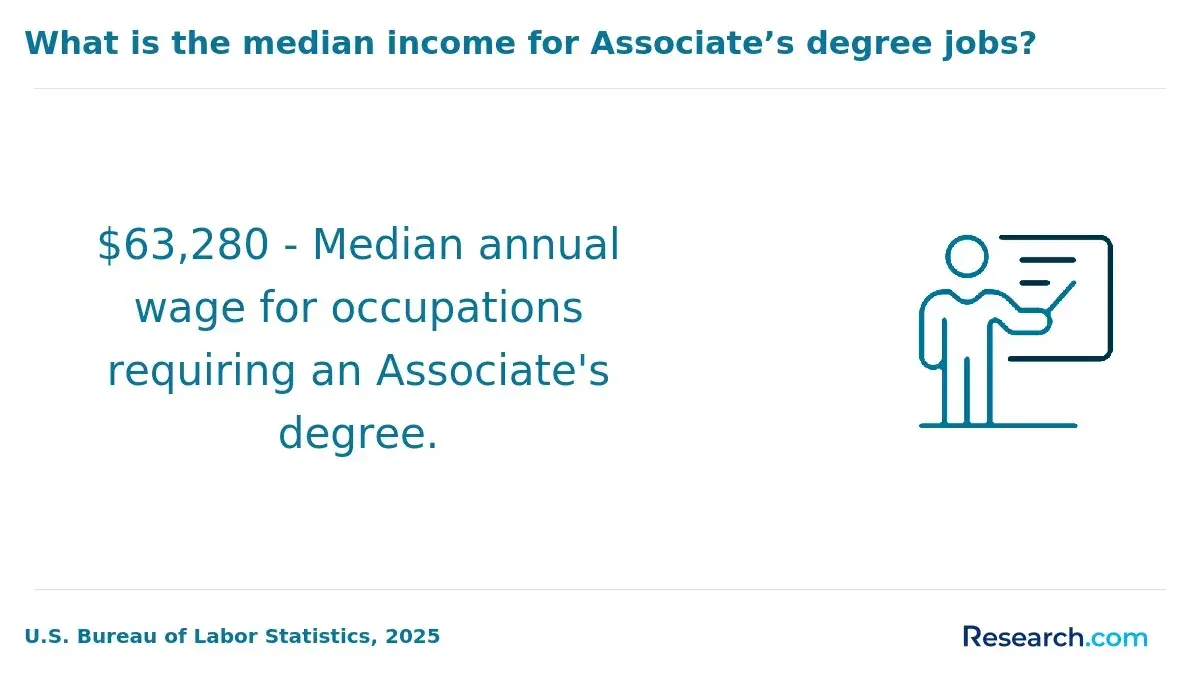
Degree level affects the kinds of healthcare administration jobs a graduate can realistically pursue. An associate degree may support administrative entry points, while a bachelor's degree is often the standard for coordinator and junior management roles. A master's degree can improve competitiveness for advanced management, and a doctorate is usually reserved for research, teaching, policy, or executive leadership paths.
- Associate Degree: Best suited for entry-level administrative support, medical office, patient services, records, or billing-related roles. It can help students enter the healthcare workplace, but it usually does not qualify graduates for higher management positions without experience or additional education.
- Bachelor's Degree: A common foundation for management trainee, department coordinator, operations analyst, practice management, and administrative specialist roles. It can improve promotion potential, especially when paired with internships, healthcare work experience, and strong technology skills.
- Master's Degree: Often preferred or required for advanced management, compliance, strategy, operations leadership, and executive-track positions. A graduate degree can be especially useful for candidates moving from clinical work into administration or from entry-level administration into leadership.
- Doctorate Degree: Most relevant for research, higher education, senior policy work, consulting, or high-level executive responsibilities. It is less common than a bachelor's or master's degree in the field, but it can strengthen authority in strategic decision-making and policy development.
The best degree level depends on the student's career target and current experience. Someone already working in healthcare may use a bachelor's or master's degree to move into management. A student with no healthcare background may need internships, entry-level healthcare work, or related credentials to compete effectively after graduation.
Students exploring shorter or lower-cost healthcare credentials may review the cheapest medical billing and coding program as one possible entry route into healthcare operations, especially if they want exposure to records, reimbursement, and claims processes before pursuing broader management roles.
What Skills Are Employers Seeking in Healthcare Administration Graduates?
Employers want healthcare administration graduates who can solve operational problems, communicate across departments, understand regulations, and use data without losing sight of patient experience. A degree may help a candidate qualify for consideration, but skills and experience often determine who gets hired.
- Effective Communication: Administrators work with clinicians, patients, vendors, executives, payers, regulators, and support staff. Clear communication helps prevent delays, reduce errors, manage conflict, and keep teams aligned.
- Analytical Thinking: Healthcare organizations use data to track patient flow, staffing, revenue cycle performance, quality measures, readmissions, scheduling efficiency, and costs. Graduates who can interpret data and turn it into practical decisions are more competitive.
- Leadership and Management: Even early-career administrators may coordinate projects, supervise staff, train employees, or lead process improvements. Employers value candidates who can organize work, motivate teams, and make decisions under pressure.
- Healthcare Technology Proficiency: Familiarity with electronic health records, billing software, scheduling systems, reporting dashboards, and digital collaboration tools is increasingly important. Graduates do not need to be software engineers, but they should be comfortable learning new systems quickly.
- Regulatory Knowledge: Compliance affects privacy, billing, accreditation, safety, reporting, and reimbursement. Administrators who understand health laws, policies, and ethical standards help organizations reduce risk and maintain trust.
- Adaptability: Healthcare changes quickly because of new policies, staffing shortages, technology updates, payer requirements, and patient expectations. Employers look for graduates who can adjust without losing focus or professionalism.
One healthcare administration graduate described the transition from coursework to an internship as a test of judgment, not just knowledge. Unexpected scheduling problems, software changes, and competing department priorities required staying calm and learning quickly. The graduate noted that employers valued a proactive approach: asking informed questions, documenting processes, and stepping into unfamiliar responsibilities instead of waiting for perfect instructions.
How Does Job Demand Affect Healthcare Administration Graduate Salaries?
Job demand can influence healthcare administration salaries, but it does not affect every graduate equally. Employers may pay more when they need qualified managers, analysts, compliance specialists, or operations leaders and cannot find enough candidates with the right mix of education and experience. Employment of medical and health services managers is projected to grow 28% from 2021 to 2031, a rate much faster than average, which supports a favorable hiring environment for well-prepared candidates.
- High demand, low supply: When employers cannot find enough qualified candidates, they may raise starting salaries, offer stronger benefits, or move faster in the hiring process. This tends to benefit graduates with internships, healthcare experience, technical skills, and relevant coursework.
- Wage growth outpacing inflation: In periods of strong sector growth, salary increases may exceed inflation rates for some roles, especially where healthcare organizations must retain experienced managers and specialists.
- Long-term career advancement: Sustained demand can create more promotion opportunities. Professionals who specialize in compliance, health information, revenue cycle, operations improvement, analytics, or executive leadership may improve their long-term earning potential.
- Oversaturation effects: Salary growth may slow in markets where many graduates compete for a limited number of entry-level roles. This is why location, degree level, practical experience, and specialization matter.
Graduates should avoid assuming that a degree alone guarantees a high salary. Starting pay can vary by employer type, region, degree level, prior healthcare experience, and the complexity of the role. A realistic salary strategy includes researching local job postings, comparing cost of living, building in-demand skills, and negotiating based on evidence rather than broad national trends.
How Is AI Changing Demand for Healthcare Administration Professionals?
AI is changing healthcare administration by automating routine tasks, increasing the value of data skills, and creating demand for professionals who can connect technology with operations. Employment is expected to grow 28% through 2032 as AI integration expands, but the strongest opportunities are likely to favor graduates who can use technology responsibly rather than avoid it.
- Task automation: AI tools can support scheduling, billing review, coding assistance, documentation workflows, forecasting, and routine reporting. This may reduce time spent on repetitive work, but it also raises expectations for administrators to focus on oversight, process improvement, and decision-making.
- Emerging specialized roles: Healthcare organizations need people who can help implement AI platforms, evaluate vendor tools, manage data quality, monitor workflow changes, and translate analytics into operational improvements.
- Skill evolution: Health informatics, data literacy, privacy awareness, AI-assisted reporting, and workflow analysis are becoming more important. Administrators do not need to become data scientists, but they should understand what AI tools can and cannot reliably do.
- Hiring shifts: Employers increasingly prefer candidates with a hybrid skill set: healthcare knowledge, technology comfort, communication ability, and ethical judgment. Graduates who can explain AI-driven insights to nontechnical staff may stand out.
A recent graduate described AI-assisted workflows as challenging at first because the role required learning new software and interpreting more detailed operational reports. Over time, the graduate found that using AI insights made the work more strategic: instead of only managing schedules, the role expanded into identifying bottlenecks, improving patient flow, and helping teams make better staffing decisions.
Is Healthcare Administration Considered a Stable Long-Term Career?
Healthcare administration is generally considered a stable long-term career because healthcare organizations need qualified leaders regardless of economic cycles. Demand is supported by demographic pressure, regulatory complexity, technology adoption, and the continuing need to coordinate care delivery. Stability, however, depends on staying current with the field and building skills that employers continue to need.
- Long-term employment trends: The aging population in the United States and ongoing healthcare reforms continue to increase demand for administrators who can manage larger, more complex healthcare systems.
- Industry reliance: Hospitals, clinics, insurers, long-term care facilities, and public health agencies rely on administrators for operations, compliance, finance, staffing, quality improvement, and patient services. These functions are difficult to eliminate because they support daily healthcare delivery.
- Adaptability to change: Electronic health records, telehealth, data analytics, and AI are reshaping administrative work. Professionals who update their skills are more likely to remain employable as job duties evolve.
- Career advancement opportunities: Additional certifications, graduate degrees, technical training, and specialization can help administrators move into more secure and higher-responsibility roles.
Healthcare administration may be especially stable for people who are willing to keep learning. A professional who understands compliance, technology, finance, and people management can move across multiple healthcare settings. Students comparing broader healthcare career options can also examine an online nursing school pathway, particularly if they are deciding between clinical and administrative routes.
Is a Healthcare Administration Degree Worth It Given the Current Job Demand?
A healthcare administration degree can be worth it for students who want to work in healthcare leadership, operations, compliance, finance, health information, or organizational management. The employment outlook remains favorable, with labor market projections forecasting employment growth for medical and health services managers well above the average for all occupations, nearing 28% through 2031. Demand is supported by an aging population, healthcare service expansion, regulatory pressure, and the need for better quality and operational efficiency.
The degree is most likely to pay off when students choose an accredited program, control education costs, gain practical experience, and build marketable skills before graduation. A bachelor's degree may support entry-level administrative and coordinator roles, while advanced leadership positions often favor candidates with a master's degree, relevant experience, or specialized preparation in health informatics, compliance, finance, or quality improvement.
The degree may be less valuable if a student enrolls without a clear career goal, ignores accreditation, graduates with limited practical experience, or expects immediate access to senior management. Healthcare administration is competitive at the entry level, and many employers prefer candidates who already understand healthcare workflows. Students comparing related healthcare routes may also review the cheapest BSN programs if they are weighing clinical education against administrative career preparation.
What Graduates Say About the Demand for Their Healthcare Administration Degree
- : "Pursuing a healthcare administration degree was a pivotal decision for me. The skills and knowledge I gained provided a strong return on investment, opening doors to leadership roles I had not imagined before. It transformed how I manage healthcare teams and think about patient outcomes. — Bernard"
- : "Earning a healthcare administration degree was as much about personal growth as career advancement. The ROI became evident through increased responsibilities and greater confidence in my role. The degree helped me understand complex healthcare systems in a more practical way. — Johnson"
- : "The healthcare administration degree gave me practical tools and strategic insight for a fast-moving healthcare sector. Its impact on my career has been clear, especially when navigating organizational challenges and supporting innovation in patient care. — Marie"
Other Things You Should Know About Healthcare Administration Degrees
In 2027, the demand for healthcare administration degree graduates is anticipated to grow due to the aging population and the expansion of healthcare services. Graduates can expect increased opportunities in hospitals, clinics, and outpatient care centers, as well as roles involving health informatics and policy development.
In 2027, healthcare administration graduates can explore opportunities in health informatics, policy analysis, healthcare consultancy, and pharmaceutical project management. These roles leverage administrative expertise in diverse sectors, broadening career prospects beyond typical hospital administration positions.
In 2027, essential skills for healthcare administration graduates include data analysis, leadership, and technological proficiency. Familiarity with healthcare regulations and effective communication are also crucial to navigate a rapidly changing healthcare landscape and meet emerging industry demands.
References
- What Long-Term Careers Are Available For Those With A Healthcare Administration Degree? - Healthcare Administration Degree Programs https://www.healthcare-administration-degree.net/faq/what-long-term-careers-are-available-for-those-with-a-healthcare-administration-degree/
- Top 15 Highest Paying Healthcare Admin Jobs UK (2025 Guide) https://apexlearning.org.uk/highest-paying-healthcare-administration-jobs-uk-2025/
- Top 10 Healthcare Administration Skills for Career Growth https://www.resumeprofessionalwriters.com/healthcare-administration-skills/
- What Can You Do With a Master’s in Healthcare Administration? https://www.mssu.edu/news/2025/04/healthcare-administration-degree-careers.php
- Welcome to Governors State University in Chicago's Southland https://www.govst.edu/BHA-Career-Outlook/
- MHA Career and Salary Outlook https://www.ahu.edu/blog/mha-career-and-salary-outlook
- Is a Healthcare Administration Degree Worth It? Jobs & Career Outlook https://www.cw.edu/news/is-a-healthcare-administration-degree-worth-it-jobs-growth-outlook/
- Health Care Administration Jobs: A Growing Career Path in High Demand https://www.columbiasouthern.edu/blog/blog-articles/2025/october/health-care-administration-jobs/
- The Benefits of Pursuing a Master of Healthcare Administration Degree | ACE Blog https://ace.edu/blog/the-benefits-of-pursuing-a-master-of-healthcare-administration-degree/
- Impact of AI on the healthcare workforce - Synplan https://www.synplan.ai/impact-of-ai-on-the-healthcare-workforce/


