
2027 Neuroscience vs. Psychology Degree: Explaining the Difference

Co-Founder and Chief Data Scientist
Choosing between a neuroscience degree and a psychology degree is really a choice between two ways of studying the mind. Neuroscience asks how the brain and nervous system work at the biological, chemical, and cellular levels. Psychology asks how people think, feel, behave, develop, relate to others, and respond to their environments. The fields overlap, but they train students for different kinds of coursework, research, and career preparation.
This guide is for students comparing majors, transfer options, graduate pathways, or career directions in brain and behavior fields. It explains what each program typically covers, where the degrees are similar, where they differ, which one may feel more difficult, what skills and career outcomes to expect, and how to decide which path fits your strengths and goals.
Key Points About Pursuing a Neuroscience vs. Psychology Degree
- Knowing the difference helps students choose the right path—psychology degrees often lead to roles like therapist, counselor, or HR specialist, while neuroscience degrees can lead to research, healthcare, or biotech positions.
- Psychology graduates earn a median salary of about $85,330 for clinical psychologists, while neuroscience-related roles, such as neuroscientists, have a median salary of around $99,000 per year (BLS, 2024).
- Understanding degree distinctions ensures you take the right prerequisites, certifications, and advanced degrees required for your chosen field.
- Many accredited schools now offer online psychology and neuroscience degrees, allowing students to study at their own pace, balance work commitments, and access programs nationwide.
What are Neuroscience Degree Programs?
Neuroscience degree programs study the nervous system, especially the brain, spinal cord, neurons, neural circuits, and biological processes that influence behavior, cognition, sensation, emotion, and disease. These programs are usually more closely connected to biology, chemistry, physiology, computer science, and biomedical research than to counseling or social-service practice.
At the undergraduate level, neuroscience programs typically take four years to complete. Some institutions also offer extended five-year tracks that combine undergraduate and graduate-level study. Students should expect a science-heavy curriculum with laboratory work, research methods, and quantitative analysis built into the degree plan.
Common coursework may include neurobiology, sensory systems, cognitive neuroscience, behavioral science, neuroanatomy, genetics, physiology, chemistry, statistics, and research design. Depending on the school, students may also study pharmacology, computational neuroscience, psychology, or pre-medical science requirements.
Who is a neuroscience degree best for?
A neuroscience degree is a strong fit for students who want to understand behavior through biology and who are comfortable with laboratory science. It may be especially appropriate for students interested in biomedical research, medicine, biotechnology, pharmaceutical research, neurology-related careers, or graduate study in neuroscience, cognitive science, or related health fields.
Applicants usually benefit from a solid high school background in biology, chemistry, mathematics, and other science courses. Competitive standardized test scores, including the SAT or ACT, are often required for admission when schools request them. Premier universities, including institutions like MIT and Yale, maintain highly selective acceptance standards for neuroscience aspirants.
What are Psychology Degree Programs?
Psychology degree programs focus on the scientific study of behavior, emotions, thought processes, development, personality, social interaction, and mental health. While psychology includes biological and cognitive science, it usually places more emphasis on how people behave, learn, communicate, cope, make decisions, and function in personal, social, educational, clinical, and workplace settings.
Most undergraduate psychology programs in the U.S. require about 120 semester credit hours and generally take four years of full-time study to finish. Students usually complete general education courses, psychology core courses, research and statistics requirements, electives, and sometimes a capstone, internship, or research project.
Typical coursework includes biological psychology, cognitive psychology, developmental psychology, abnormal psychology, personality theory, social psychology, research methods, statistics, and applied psychology. Some programs allow students to concentrate in areas such as clinical psychology, counseling, child development, industrial-organizational psychology, forensic psychology, or human services.
Who is a psychology degree best for?
A psychology degree is a practical option for students interested in people, behavior, communication, mental health, education, social services, research, or workplace performance. It can lead to entry-level roles in human services, case management, behavioral health support, research assistance, education support, and business settings. However, students who want to become licensed psychologists, therapists, or counselors should plan for graduate education and state-specific licensure requirements.
Applicants typically need a high school diploma or its equivalent. Some programs may ask for prerequisite classes in subjects like English or introductory psychology. Strong writing, reading comprehension, communication, and basic quantitative skills are helpful because psychology students must interpret research, evaluate evidence, and explain complex human behavior clearly.
What are the similarities between Neuroscience Degree Programs and Psychology Degree Programs?
Neuroscience and psychology degree programs both study the mind and behavior using scientific methods. The main similarity is that both fields ask evidence-based questions about how people think, feel, learn, perceive, act, and adapt. The difference is usually the level of analysis: neuroscience often starts with the brain and nervous system, while psychology often starts with behavior, cognition, emotion, and social context.
- Both examine human behavior and mental processes: Students in both fields may study memory, attention, perception, emotion, learning, motivation, decision-making, and development.
- Both require research literacy: Neuroscience and psychology students learn how to read studies, evaluate evidence, understand experimental design, and recognize the limits of research findings.
- Both use statistics: Students in both majors need quantitative skills to analyze data, interpret findings, and avoid unsupported conclusions.
- Both can include laboratory or research experience: Neuroscience labs may focus on biological systems, imaging, physiology, or molecular processes. Psychology labs may focus on cognition, behavior, surveys, experiments, or observational data.
- Both connect to healthcare and human services: Either degree can support preparation for graduate study, research roles, public health work, behavioral health support, education, or related professional paths.
- Both can be good preparation for advanced study: Many specialized careers in these fields require a master’s, doctoral, medical, or professional degree.
Students comparing the similarities between brain and behavior degrees should look closely at required courses, not just the major title. A neuroscience program housed in a biology department may feel very different from one housed in psychology or cognitive science. Likewise, a psychology program with strong biological psychology and research tracks may overlap substantially with neuroscience. Students interested in career advancement may also explore healthcare certifications that pay well as a way to add practical credentials to a broader academic foundation.
What are the differences between Neuroscience Degree Programs and Psychology Degree Programs?
The biggest difference is focus. Neuroscience degree programs usually investigate behavior through the brain, nervous system, cells, chemicals, and biological mechanisms. Psychology degree programs usually investigate behavior through cognition, emotion, development, personality, social influence, mental health, and human experience. That difference affects the courses you take, the methods you learn, and the jobs or graduate programs you may be prepared for.
| Comparison Area | Neuroscience Degree Programs | Psychology Degree Programs |
| Primary focus | Brain structure, neural activity, nervous system function, and biological mechanisms behind behavior | Behavior, thoughts, emotions, development, personality, mental health, and social interaction |
| Typical academic home | Biology, neuroscience, cognitive science, or interdisciplinary science departments | Psychology, social science, education, behavioral science, or health-related departments |
| Coursework style | More biology, chemistry, physiology, lab science, and technical research | More theory, human behavior, research methods, statistics, writing, and applied topics |
| Research methods | May involve MRI, EEG, laboratory experiments, programming, biological assays, or animal and human research models | May involve surveys, interviews, experiments, observation, psychometrics, behavioral studies, and statistical analysis |
| Common strengths needed | Science preparation, quantitative reasoning, lab discipline, attention to biological detail, and technical problem-solving | Communication, critical reading, writing, empathy, data interpretation, and understanding social or clinical contexts |
| Common career direction | Research, healthcare preparation, biotech, pharmaceutical work, neuroscience labs, or graduate science programs | Human services, behavioral health support, education, business, research, counseling pathways, or graduate psychology programs |
Neuroscience is often the better fit if you want to know how neurons, neurotransmitters, circuits, and brain systems produce behavior. Psychology is often the better fit if you want to understand people in real-world contexts, including relationships, schools, workplaces, communities, and clinical settings. Neither degree is automatically “better”; the stronger choice depends on whether you want your training centered more on biological mechanisms or behavioral interpretation and application.
What skills do you gain from Neuroscience Degree Programs vs Psychology Degree Programs?
Both degrees build research and analytical skills, but they develop different toolkits. Neuroscience students tend to gain more technical, laboratory, and biological science skills. Psychology students tend to gain stronger behavioral research, communication, assessment, writing, and people-focused analytical skills.
Skill outcomes for neuroscience degree programs
- Technical understanding of neural function: Students learn how brain structures, neural pathways, and biological systems relate to sensation, movement, cognition, emotion, and behavior.
- Natural science foundation: Neuroscience programs often require substantial study in biology, chemistry, physics, and mathematics, including calculus in some degree plans.
- Laboratory research skills: Students may learn experimental design, lab safety, sample preparation, measurement techniques, data collection, and research documentation.
- Data analysis and technical tools: Training may include EEG, fMRI techniques, and programming tools like Matlab, especially in research-focused programs.
- Scientific problem-solving: Students practice connecting biological evidence to behavior and interpreting complex results carefully rather than relying on simple explanations.
Skill outcomes for psychology degree programs
- Behavioral research design: Students learn to build studies around human behavior using surveys, questionnaires, experiments, interviews, observations, and behavioral measures.
- Statistical interpretation: Psychology students commonly learn statistical reasoning and may use software such as SPSS to analyze survey and experimental data.
- Communication and observation: Coursework and applied experiences may strengthen interviewing, active listening, focus group facilitation, role-play, empathy, and interpersonal judgment.
- Critical reading and writing: Psychology majors frequently evaluate theories, critique studies, synthesize evidence, and write research-based papers.
- Applied understanding of people and systems: Students learn to interpret behavior in clinical, developmental, educational, organizational, cultural, and social contexts.
The practical distinction is that neuroscience often trains you to ask, “What is happening in the nervous system?” Psychology often trains you to ask, “What does this behavior mean, what influences it, and how can it be measured or changed?” Students looking for flexible admissions options while comparing these pathways can review open admission universities.
Which is more difficult, Neuroscience Degree Programs or Psychology Degree Programs?
Neuroscience is often considered more technically difficult because it usually requires more advanced science, mathematics, laboratory work, and biological detail. Psychology can also be demanding, but the challenge is often different: students must read deeply, evaluate theories, write clearly, interpret research, and understand complex human behavior without oversimplifying it.
The question “is neuroscience harder than psychology?” depends on your strengths. Students who enjoy biology, chemistry, lab work, and quantitative problem-solving may find neuroscience challenging but manageable. Students who prefer writing, social science, communication, and applied human behavior may find psychology more natural. Conversely, a strong writer may struggle with neuroscience lab science, while a strong science student may underestimate psychology’s research, statistics, and writing expectations.
Neuroscience degree programs generally require mastering advanced topics in biology, chemistry, physics, and mathematics, often including calculus-based classes and numerous lab sessions. The work can include programming, experimental design, and sophisticated data analysis. Psychology programs usually involve research methods and statistics as well, but they often place more weight on theory, essays, critiques, behavioral studies, and applied interpretation.
Surveys rate neuroscience higher in statistical difficulty, with an 8/10 compared to psychology's 5/10, aligning with higher completion rates in psychology programs. That does not mean psychology is easy or neuroscience is impossible. It means students should choose based on the kind of difficulty they are prepared to handle. If graduate school is part of the plan, it is also worth comparing long-term return on education by reviewing the highest paying masters related to these fields.
What are the career outcomes for Neuroscience Degree Programs vs Psychology Degree Programs?
Career outcomes differ because the degrees prepare students for different kinds of work. Neuroscience graduates often move toward research, healthcare preparation, biotechnology, pharmaceutical settings, or graduate science programs. Psychology graduates often move toward human services, behavioral health support, education, business, research, or graduate training in counseling, clinical psychology, school psychology, or related fields.
For both majors, it is important to distinguish between entry-level jobs available with a bachelor’s degree and licensed or specialized careers that require advanced education. A bachelor’s degree in psychology does not by itself qualify someone to become a licensed psychologist. A neuroscience degree does not by itself qualify someone to become a physician, neurologist, or independent clinical provider. Graduate education, professional school, supervised experience, and licensure may be required depending on the role and state.
Career outcomes for neuroscience degree programs
Neuroscience professionals are in demand particularly within biomedical research and pharmaceutical development, with strong advancement potential for those pursuing graduate education. Median salaries vary widely, with entry-level research assistants earning around $48,000 and experienced neuroscientists earning $90,000 or more. Outcomes depend heavily on education level, research experience, technical skills, location, employer, and whether the graduate continues into a master’s, PhD, medical, or professional program.
- Research Assistant: Supports experimental studies in academic, hospital, government, or private research settings by collecting, organizing, and analyzing data.
- Lab Technician: Maintains equipment, follows research protocols, prepares materials, documents results, and supports laboratory operations.
- Health Educator: Develops educational programs related to brain health, neurological conditions, wellness, or public health awareness.
Career outcomes for psychology degree programs
Psychology graduates have broad employment options because behavioral knowledge is useful in healthcare, schools, social services, research, marketing, human resources, and community organizations. Psychology graduates enjoy steady career demand with a projected growth rate of 6% from 2022 to 2032, faster than average compared to other fields. Median salaries for psychologists were $85,330 in 2022, with related positions such as counselors and social workers earning between $47,000 and $60,000.
- Case Manager: Coordinates services, tracks client needs, communicates with providers, and helps clients navigate social service or healthcare systems.
- Mental Health Technician: Assists with patient care, observes behavior, supports treatment teams, and helps maintain safe clinical environments.
- School Counselor: Provides academic and emotional support to students in educational settings, subject to the education and licensure requirements for that role.
Both degree paths can lead to stronger career options with advanced credentials. Neuroscience graduates may pursue roles connected to biomedical research, medicine, neurotechnology, or pharmaceutical development. Psychology graduates may pursue graduate-level training for clinical, counseling, school, forensic, industrial-organizational, or research careers. Students comparing affordability and flexible study options can begin by reviewing the cheapest online colleges that accept financial aid.
How much does it cost to pursue Neuroscience Degree Programs vs Psychology Degree Programs?
The cost of a neuroscience or psychology degree depends on institution type, residency status, delivery format, financial aid, program level, and whether the student attends full time or part time. Private universities are often more expensive, while public institutions and online programs may offer lower tuition. Students should compare total cost of attendance, not tuition alone.
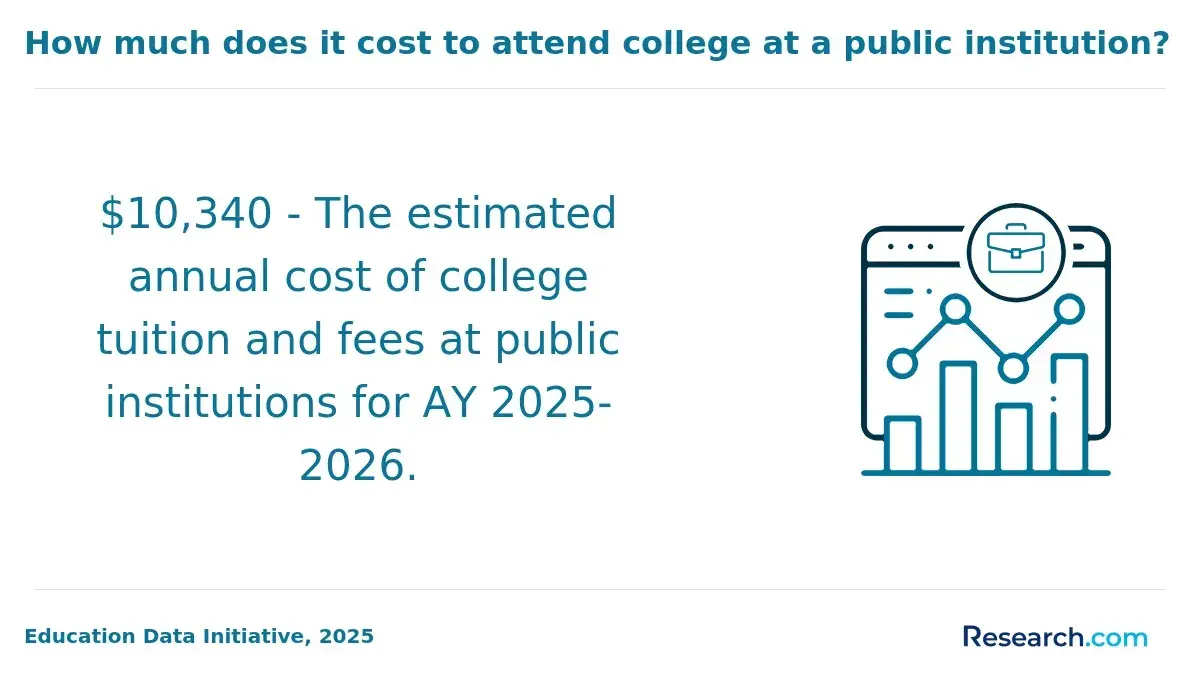
Undergraduate tuition for Neuroscience can range from as low as $2,522 to as high as $61,449 annually, with the average landing around $22,916 per year. Graduate-level Neuroscience programs generally fall between $5,467 and $61,449 per year, averaging about $16,148. Students should also consider additional expenses such as fees, textbooks, and living costs, which can add more than $17,000 annually to the total cost. Lab-based programs may also involve course fees, research materials, transportation to research sites, or summer research expenses, depending on the school.
Psychology degrees usually come at a lower cost in many cases, although tuition can still vary widely. Undergraduate tuition averages roughly $22,916 yearly but can be significantly less at public schools or through online courses, some of which charge as little as $8,480 annually. For graduate study, Psychology tuition ranges from approximately $4,500 up to $39,834 per year, with an average near $13,587. Like Neuroscience, related expenses for fees and living are comparable.
| Cost Factor | Neuroscience Degree Programs | Psychology Degree Programs |
| Undergraduate tuition | Ranges from $2,522 to $61,449 annually; average around $22,916 per year | Averages roughly $22,916 yearly; some online courses charge as little as $8,480 annually |
| Graduate tuition | Ranges from $5,467 to $61,449 per year; average about $16,148 | Ranges from approximately $4,500 up to $39,834 per year; average near $13,587 |
| Additional expenses | Fees, textbooks, living costs, and possible lab or research-related expenses | Fees, textbooks, living costs, and possible internship or practicum-related expenses |
| Cost-saving options | Public universities, in-state tuition, research assistant roles, scholarships, and online or hybrid general education courses | Public universities, online programs, transfer credits, scholarships, employer tuition support, and financial aid |
Financial aid is widely accessible for both fields, but the net price can differ substantially from the published tuition rate. Students should compare grants, scholarships, assistantships, transfer policies, online fees, lab fees, and whether the program’s outcomes justify the cost for their intended career path.
How to choose between Neuroscience Degree Programs and Psychology Degree Programs?
Choose neuroscience if you want a science-intensive degree focused on the brain and nervous system. Choose psychology if you want a behavior-focused degree with stronger connections to mental health, human development, social systems, education, communication, or workplace behavior. The right choice should match your academic strengths, career goals, and tolerance for the type of coursework each major requires.
Use these questions to decide
- Do you prefer biology or behavior as your starting point? Neuroscience begins with the nervous system. Psychology begins with behavior, thought, emotion, and experience.
- How much lab science do you want? Neuroscience usually requires more biology, chemistry, physiology, and lab work. Psychology usually requires more reading, writing, statistics, research interpretation, and applied behavioral analysis.
- Are you preparing for graduate or professional school? Neuroscience can support paths toward research, medicine, biotechnology, and health science. Psychology can support paths toward counseling, clinical psychology, school psychology, human services, research, and organizational roles.
- What entry-level jobs would you accept after graduation? Neuroscience graduates may pursue lab, research, health education, or technical support roles. Psychology graduates may pursue case management, behavioral health support, research assistance, human resources, education support, or social service roles.
- Does the program offer relevant experience? Compare research labs, internships, clinical exposure, faculty expertise, advising, graduate school placement, and employer connections.
- Can you afford the full pathway? If your target career requires graduate school or licensure, include those future costs and time commitments in your decision.
Quick decision guide
| If you want... | Consider... |
| More biology, chemistry, brain science, and lab research | Neuroscience |
| More human behavior, mental health, communication, and applied social science | Psychology |
| A path toward biomedical research, pharmaceutical work, or medical preparation | Neuroscience |
| A path toward counseling-related graduate study, human services, education, or organizational work | Psychology |
| A technical research environment with biological data | Neuroscience |
| A people-centered field with behavioral data and applied interpretation | Psychology |
For the best neuroscience programs vs psychology programs comparison, do not rely only on the major name. Review the course catalog, required labs, statistics sequence, internship options, undergraduate research opportunities, faculty areas, advising support, and graduate outcomes. If you are still uncertain, consider starting with shared courses such as introductory psychology, biology, statistics, cognitive psychology, or biological psychology before committing to a major.
Students who want to compare these degrees with nontraditional career routes can also explore trades that pay well as an alternative or complement to longer academic pathways.
What Graduates Say About Their Degrees in Neuroscience Degree Programs and Psychology Degree Programs
- : "The Neuroscience program challenged me to push my analytical skills to new heights while providing hands-on experience with cutting-edge lab techniques. This rigorous training has opened doors to advanced research positions in biomedical settings, significantly boosting my career prospects. I'm truly grateful for the blend of theory and practice it offered. — Shane"
- : "Studying Psychology introduced me to diverse perspectives on human behavior that I had never considered before. The unique internships available through the program allowed me to work directly in clinical environments, enriching my understanding beyond the classroom. Reflecting back, this was a pivotal step in shaping my professional path. — Emiliano"
- : "The comprehensive curriculum of the Neuroscience Degree equipped me with critical skills highly valued in both academic and industry contexts. Post-graduation, I secured a role in a prominent pharmaceutical company, where the salary and growth potential exceeded my expectations. The decision to pursue this field was truly a smart investment in my future. — Samuel"
Other Things You Should Know About Neuroscience Degree Programs & Psychology Degree Programs
Neuroscience degree prerequisites often include courses in biology and chemistry, whereas a Psychology degree may require introductory psychology courses. Both may need standardized test scores and transcripts, but specific criteria can vary by institution for the 2027 academic year.
In 2027, Neuroscience graduates often find roles in research, pharmaceuticals, and healthcare technology, focusing on brain and nervous system functions. Psychology graduates typically pursue careers in counseling, social work, human resources, and academia, addressing mental and behavioral processes. Both paths offer diverse opportunities tailored to their unique focuses.
References
- What Is a Psychology Degree? | ECU Online https://onlineprograms.ecu.edu/blog/what-is-a-psychology-degree/
- Psychology vs neuroscience major | Student Doctor Network https://forums.studentdoctor.net/threads/psychology-vs-neuroscience-major.1492929/
- Navigating the neuroscience of workplace stress - The European Magazine https://the-european.eu/story-32706/navigating-the-neuroscience-of-workplace-stress.html
- Psychology - SWPS University https://english.swps.pl/academics/warsaw/ma-programs/psychology
- What Can You Do with a Psychology Degree? https://www.wgu.edu/blog/what-can-you-do-with-psychology-degree2402.html
- Characterizing the Undergraduate Neuroscience Major in the U.S.: An Examination of Course Requirements and Institution-Program Associations https://pmc.ncbi.nlm.nih.gov/articles/PMC5777840/
- Psychology versus Neuroscience: Undergraduate: Psychological and Brain Sciences: Indiana University Bloomington https://psych.indiana.edu/undergraduate/compare.html
- change career into clinical psychology from neuroscience | ClinPsy https://clinpsy.com/threads/change-career-into-clinical-psychology-from-neuroscience.20989/
- 9 Jobs for Neuroscience Majors – BigFuture | College Board https://bigfuture.collegeboard.org/explore-careers/get-started/career-paths-for-popular-majors/9-jobs-neuroscience-majors


