2027 Online BA in Psychology - General Psychology vs. a BS in Public Health: Compare Curriculum, Cost, and Career Fit
Audited and Verified:
Our Editorial and Data Verification Process
Research.com uses government datasets, official education statistics and primary institutional information to support its career and degree guides. Our review process checks factual accuracy, occupational definitions, source dates and the requirements associated with the credentials discussed.
How This Article Was Fact-Checked
Our editorial team verifies salary estimates, employment projections, education requirements and program information against original data providers and official organizations. Salary figures are checked against the relevant occupational definitions and reporting periods. Information about licensure, accreditation and required in-person training is reviewed separately.
Fact-checked and verified on:

Co-Founder and Chief Data Scientist
An online BA in general psychology and a BS in public health can both lead to community-focused work, but they prepare students to solve different problems. Psychology emphasizes behavior and research about individuals and groups; public health emphasizes prevention and outcomes across populations.
For students choosing a major or returning to finish a bachelor's degree, that difference affects course selection, field experience, cost, and the jobs worth pursuing. This comparison shows how to evaluate both degrees against a specific career goal rather than choosing by title alone.
Key Things You Should Know
- Choose general psychology for deeper study of behavior and flexible psychology electives; choose public health for population-level prevention, epidemiology, and program planning.
- Neither bachelor's degree independently qualifies a graduate to diagnose or provide psychotherapy. Compare the actual degree audit and any required placement before assuming an online program is cheaper or more flexible.
- For one relevant occupation, the US Bureau of Labor Statistics reports a May 2024 median annual wage of $51,030 for community health workers. That occupation-wide figure is not an expected salary for graduates of either major.
What Is the Difference Between an Online BA in General Psychology and a BS in Public Health?
A general psychology BA studies behavior, cognition, development, social relationships, and the methods used to investigate them. A public health BS studies how to assess and improve health across communities or populations through prevention, policy, education, and program evaluation. BA and BS labels can suggest different general-education or science requirements, but the institution's curriculum determines what a student learns.
Consider substance-use prevention. A psychology student might examine motivation, learning, or stigma; a public health student might examine which groups a program reaches and how its outcomes are measured. Both perspectives can contribute to addiction recovery career paths, but neither degree alone establishes eligibility for a regulated counseling role.
How Do Psychology and Public Health Curricula Compare?
The clearest curricular distinction is the unit of analysis: psychology typically gives more sustained attention to people and behavior, while public health emphasizes populations, systems, and prevention. This comparison describes common patterns, not requirements at every school.
| Area | General psychology BA | Public health BS |
| Foundations | Psychological theory, development, cognition, and social behavior | Population health, health systems, and determinants of health |
| Methods | Psychological research design and statistics | Epidemiology, biostatistics, and health-data interpretation |
| Application | Behavioral research or selected psychology electives | Prevention planning, health communication, or program evaluation |
| Experience | Possible research project, internship, or capstone | Possible community project, practicum, or capstone |
Electives can narrow the gap, but they do not turn one major into the other. For example, a student considering legal-system work should compare the actual methods courses and opportunities for supervised experience, not merely a forensic elective; comparing forensic psychology curricula and career fit illustrates why a specialized interest calls for a closer program-level review.
Which Degree Costs More: an Online Psychology BA or a Public Health BS?
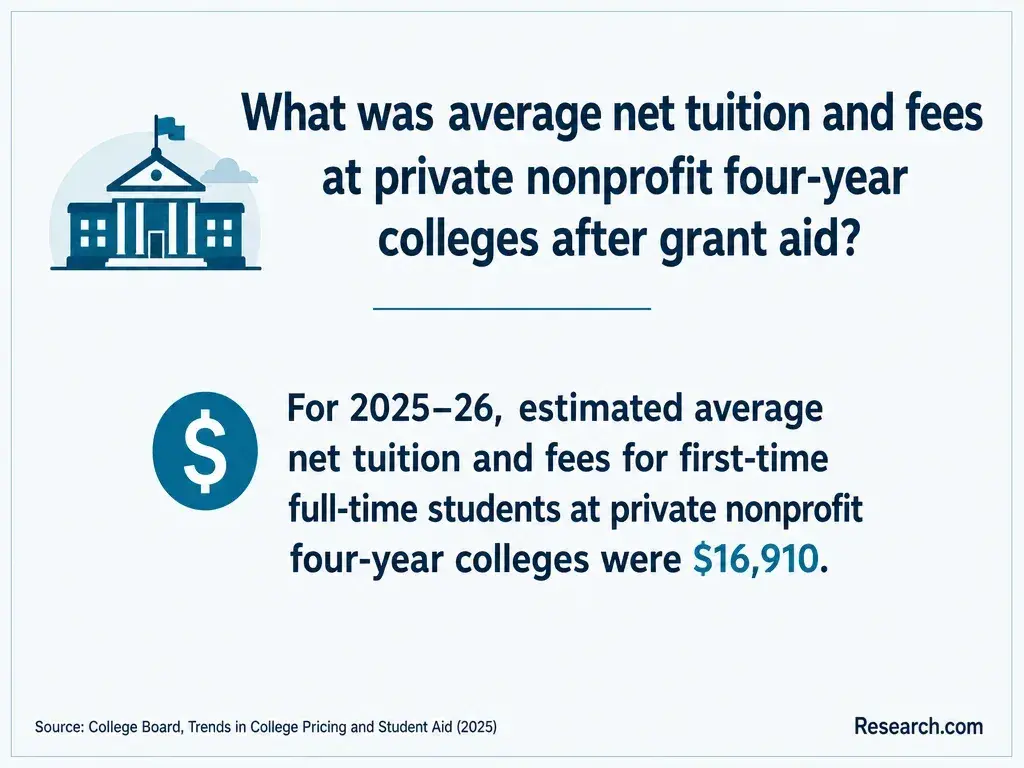
Neither degree is inherently more expensive. The school's tuition policy, credits remaining, fees, and experience requirements matter more than the major's name. A lower per-credit rate can still produce a higher bill if fewer transfer courses apply to the degree or a required course delays graduation.
Request a term-by-term estimate for each option that includes tuition, mandatory online fees, textbooks or software, any placement travel, and the cost of credits that must be taken at the institution. If considering a substance-use counseling program as a third option, compare its credential purpose as well as its price.
Guidance on aid eligibility for online substance use counseling study can help frame questions about that distinct pathway. Confirm each school's financial-aid eligibility and your personal award before subtracting aid from an estimated cost.
Employer Confidence in Online vs. In-Person Degree Skills, Global 2024

A general psychology major commonly combines introductory psychology, statistics, research methods, and upper-level study in areas such as development, social behavior, cognition, and biological or abnormal psychology.
Students also complete the institution's general-education and elective requirements. Some programs require a senior research project or capstone; others offer one as an option.
Check whether statistics must precede research methods and whether desired electives are offered often enough for your schedule. If a specialized forensic major rather than general psychology is your goal, compare its required courses and sequencing directly.
Advertised online forensic psychology bachelor's programs in three years or less are not evidence that a general psychology BA will follow the same timeline.
Typical foundations include introductory public health, epidemiology, biostatistics, environmental health, health policy, and the social determinants of health. Programs may add health communication, program planning, evaluation, or a community-based capstone. Science and mathematics requirements can differ substantially across schools, so inspect the catalog rather than assuming every public health BS has the same laboratory sequence.
A prevention or outreach course is not professional training to treat substance-use disorders. Students aiming specifically for counseling should compare degree pathways for substance use counseling work against their state's education, supervised-experience, and credential rules before choosing public health for that purpose.
A full-time bachelor's path is often planned around four academic years, but an individual timeline depends on accepted credits, course sequencing, enrollment pace, and whether required experiences are available when needed. Online delivery does not necessarily make a practicum, group project, or scheduled class meeting asynchronous.
Ask each school for a personalized course plan showing when every remaining requirement is offered. If the ultimate goal also requires graduate study, assess the whole education timeline rather than choosing a bachelor's program solely because it appears faster. Options for planning a faster psychology master's degree may inform that longer-range comparison, but an accelerated nonclinical master's does not replace a qualifying clinical degree.
First-year applicants generally submit evidence of secondary-school completion; transfer applicants generally submit prior college transcripts. Schools may set additional GPA, prerequisite, or major-entry rules.
Admission to a university is not necessarily admission to a particular major, and acceptance of transfer credits does not mean those credits satisfy its statistics, science, or major requirements.
Returning students should obtain a written degree audit from each institution before estimating time or cost. Ask which courses satisfy major requirements, which count only as electives, and how many credits must be completed at the school. Resources on finding psychology colleges that consider prior credits can help identify programs to ask, but the receiving institution makes the final equivalency decision.
Both majors can support applications for nonclinical community and service roles, but employers hire for demonstrated tasks as well as degrees. A psychology graduate might pursue research support, human-services coordination, or behavioral-health program support.
A public health graduate might pursue outreach, community health work, prevention-program support, or entry-level health-program coordination. Job titles and minimum qualifications vary by employer and state.
For a career changer, the useful comparison is between the target job description and existing experience. Someone who already manages community partnerships may need health-data and evaluation skills more than another broad degree.
Someone preparing for licensed therapy needs to investigate a qualifying graduate pathway instead; planning the time and cost of a counseling master's addresses a different credential decision. Neither bachelor's degree alone authorizes psychotherapy, diagnosis, or independent psychological assessment.
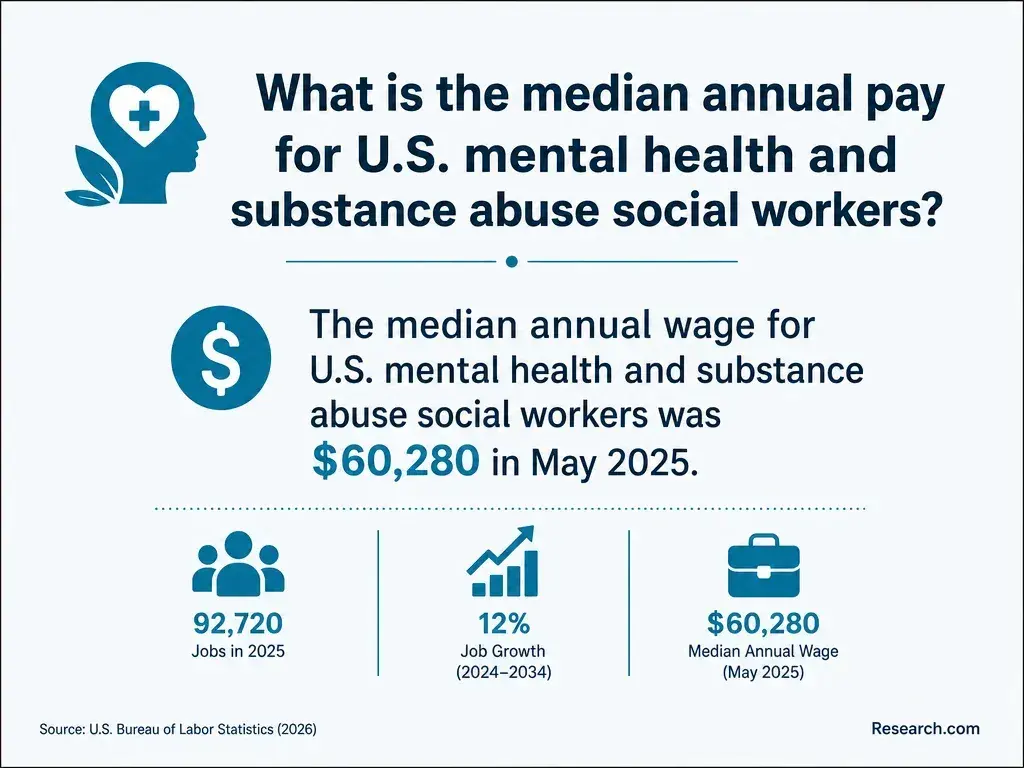
Neither major has a single salary or growth rate. Occupational data describe jobs, not the earnings of everyone with a particular degree. The US Bureau of Labor Statistics reports a May 2024 median annual wage of $51,030 for community health workers. That benchmark may be useful for someone targeting that occupation, but it is not a starting-salary estimate or evidence that a public health BS pays more than a psychology BA.
Compare the current Bureau of Labor Statistics outlook and local postings for the same target occupation, then check required credentials, experience, and pay in your area. If substance-use services are the goal, include the education required for the exact role when assessing return on investment; budget-friendly substance abuse counseling bachelor's study is a separate comparison, not a salary forecast for either major discussed here.
How Can You Choose an Accredited Program That Fits Your Career Goals?
Confirm that the institution holds recognized institutional accreditation, then examine the actual degree requirements, online schedule, faculty-supported projects, career services, and placement rules.
Do not expect APA accreditation for a general psychology BA: APA's program accreditation applies to specified professional psychology training, not general undergraduate majors. Public health programs may also have program-level recognition; verify its scope rather than assuming it applies to every degree at an institution.
Before enrolling, ask for a degree audit, an all-in cost estimate, and a sample schedule through graduation. If graduate study is likely, compare the proposed bachelor's courses with the prerequisites of specific future programs.
A student interested in forensic research, for example, should evaluate methods preparation and eventual graduate requirements rather than assume that faster routes through forensic psychology graduate coursework will remedy missing preparation or lead to clinical licensure.
Other Things You Should Know About Psychology Programs
Often, yes. Check whether your school offers a minor, relevant electives, or an approved interdisciplinary project. Confirm how those courses apply to graduation requirements before adding them.
Not necessarily. Master of public health programs set their own admission requirements. Check specific programs for any required quantitative preparation or experience.
Not necessarily. Confirm the exact credential shown in the school's catalog and ask how, if at all, the delivery format appears on the transcript or diploma.
Not always. A supervised project, relevant job, research role, or volunteer experience can demonstrate skills. If an internship is required for graduation, however, the program must approve how you meet that requirement.
- Accreditation in the U.S. | ed.gov http://www.ed.gov/laws-and-policy/higher-education-laws-and-policy/college-accreditation/accreditation-in-the-us
- Cost of Attendance (Budget) | 2026-2027 Federal Student Aid Handbook https://fsapartners.ed.gov/knowledge-center/fsa-handbook/2026-2027/vol3/ch2-cost-attendance-budget
- How to Choose Between a BS and a BA in Psychology | Walden University https://www.waldenu.edu/online-bachelors-programs/bs-in-psychology/resource/bs-vs-ba-in-psychology
- Online Bachelor's Degree in Psychology | Purdue Global https://www.purdueglobal.edu/degree-programs/psychology/bachelor-degree-psychology-online/
- Public Health (A.S.) - BMCC - CUNY https://www.bmcc.cuny.edu/academics/departments/health-studies/public-health/
- Admission Standards & Transferring Credit | University of Denver https://www.du.edu/admission-aid/undergraduate/transfer-applicants/admission-standards
- Psychology subfields | apa.org https://www.apa.org/education-career/guide/subfields
- What can you do with a psychology degree? Explore career paths | Psychology | Capella University Blog https://www.capella.edu/blog/psychology/what-can-you-do-with-a-psychology-degree-explore-career-paths/
- Cost of Attendance | Financial Aid - Georgia Tech https://finaid.gatech.edu/current-cost-overview
- What is Public Health? | gsu.edu https://publichealth.gsu.edu/academics-admissions/what-is-public-health/