
2027 Different Types of Journalism Degrees and Their Salaries

Co-Founder and Chief Data Scientist
The demand for skilled professionals in journalism continues to rise as the media landscape evolves rapidly. According to recent data, employment in media and communication roles is projected to grow steadily over the next decade, reflecting a sustained need for well-prepared graduates.
Selecting the right educational path plays a crucial role in shaping career opportunities and earning potential within this dynamic field. This article will provide a detailed overview of the various types of journalism degrees available and offer insights into the salary expectations for graduates across these specializations, guiding aspiring professionals towards informed decisions about their academic and career trajectories.
Key Points About Different Types of Journalism Degrees and Their Salaries
- Associate degrees in journalism typically prepare students for entry-level roles such as reporters or editorial assistants, with average starting salaries around $35,000 to $40,000 annually.
- Bachelor's degrees in journalism open up broader career opportunities including multimedia journalism and communications roles, with median salaries near $48,000 to $55,000 per year.
- Master's degrees in journalism are associated with specialized roles like investigative reporter, editor, or communications strategist, where average salaries commonly exceed $70,000 annually.
What Are the Different Types of Journalism Degrees Available?
Understanding the different types and levels of journalism degrees is crucial before choosing a program because each option serves distinct educational backgrounds and career goals. By knowing what each degree offers, students can tailor their academic journey to best fit their professional aspirations and personal interests.
Below is an overview of the main types of journalism degrees:
- Associate Degree in Journalism: Provides a broad introduction to journalism principles including basic reporting, news writing, and media ethics. Coursework typically covers foundational communication skills that prepare students for entry-level media roles or further education.
- Bachelor's Degree in Journalism (B.A. or B.S.): Offers comprehensive studies in reporting, writing, editing, and multimedia storytelling. Students engage in hands-on classes involving digital, print, and broadcast media, with additional focus on journalism law and ethics.
- Master's Degree in Journalism: Focuses on advanced topics such as investigative techniques, data journalism, and media theory. It builds on undergraduate knowledge through research methods, critical analysis, and practical projects within specialized journalism fields.
- Doctorate in Journalism or Mass Communication: A research-intensive degree emphasizing media studies, communication theory, and journalism education. Students conduct original research, participate in advanced seminars, and often contribute to academic publications or teach at the university level.
When researching your options, it's also helpful to consider easy certifications to get that pay well, which can complement your degree and enhance career prospects.
What Specializations Are Available in Journalism Degrees?
Specialization plays a crucial role when choosing a journalism degree. This alignment helps students develop relevant skills and prepares them for particular job roles in a competitive media environment.
Here are some common journalism specializations to consider, each offering distinct training and career paths:
- Broadcast Journalism: This specialization focuses on reporting, writing, and producing news for television, radio, and digital video platforms. Students gain skills in video editing, on-air presentation, and field reporting, leading to careers such as news anchor, producer, and videographer.
- Digital Journalism: Emphasizing storytelling through online platforms, this area covers web writing, multimedia production, and social media engagement. Key skills include SEO, audience analytics, and interactive content creation, preparing graduates for roles like digital reporters, web editors, and social media specialists.
- Investigative Journalism: Students learn in-depth reporting techniques, data analysis, and methods for uncovering complex issues such as corruption or social injustice. Training in FOIA requests and data scraping equips graduates for positions as investigative reporters or data journalists.
- Photojournalism: Combining photography with reporting, this specialization covers camera operation, visual storytelling, and editing. Graduates often work as photojournalists, documentary photographers, or visual editors documenting important events visually.
- Sports Journalism: Focused on covering sporting events, teams, and athletes, this path develops skills in live reporting, interviewing, and multimedia production. Career options include sports reporter, broadcaster, and commentator.
- Science and Environmental Journalism: This field trains students to translate complex scientific concepts for public understanding, emphasizing research, expert interviews, and explanatory writing. Graduates work as science writers, environmental correspondents, or editors.
For those looking into education options, exploring colleges offering open admissions can broaden access to programs where students can specialize according to their interests and career aspirations.
How Long Does It Take to Complete Each Type of Journalism Degree?
Understanding the duration of journalism degree programs is crucial for students as it helps them plan their education and career timelines effectively. Knowing how long each type of degree typically takes can assist in making informed decisions about enrollment and balancing other life commitments.
Here is a breakdown of the main journalism degree types and their usual completion times.
- Associate Degree in Journalism: This program generally takes about two years of full-time study to complete. Part-time enrollment or lack of transfer credits can extend this timeframe, while some community colleges offer accelerated courses or online classes that may shorten it.
- Bachelor's Degree in Journalism: Typically requiring four years of full-time study, this degree is the most common path for aspiring journalists. Options for accelerated programs or credit transfers from associate degrees can reduce the length, whereas part-time attendance may extend it.
- Master's Degree in Journalism: Usually completed within one to two years, this advanced degree duration depends on program structure and enrollment status. Many schools offer online and accelerated tracks designed for working professionals, which can impact the length of study.
- Doctorate in Journalism: Time to completion varies widely, generally ranging from three to six years. Factors include dissertation research demands, part-time enrollment, and whether the candidate has already earned related graduate credits. Some programs allow for online coursework, but the research component often requires on-campus presence.
Are There Accelerated Journalism Degree Programs?
Accelerated journalism degree programs are available at several universities in the United States, offering students the opportunity to earn both their undergraduate and graduate degrees in a shorter timeframe than usual.
These programs typically reduce the total completion time to about five years, compared to the traditional six or more years if the degrees are pursued separately. Common formats include condensed courses that cover material at a faster pace, year-round academic terms to avoid extended breaks, and shared credits where graduate-level courses taken during the senior undergraduate year count toward both degrees.
For instance, some schools use a "3+1" model, allowing students to finish their bachelor's degree in three years and then complete their master's in just one year. Others permit a certain number of credits to be double-counted, which further shortens the time and can reduce tuition expenses.
However, these accelerated programs come with important considerations. The workload is significantly more intense than in traditional programs because students must handle demanding graduate coursework alongside completing their undergraduate requirements, often including substantial projects like research papers and capstone assignments.
Eligibility is usually selective, requiring a strong academic record-commonly a GPA of 3.3 or higher-junior standing, and sometimes faculty recommendations or interviews. Some programs offer financial incentives such as scholarships or allow the use of undergraduate financial aid during the first year of graduate study.
While accelerated programs can reduce overall costs and enable earlier entry into journalism careers, where median salaries were around $55,960 in 2022, they demand excellent time management skills and a clear dedication to the field.
When talking with a graduate of an accelerated journalism degree program, he reflected on the intense but rewarding journey. He described balancing senior-level undergraduate classes with graduate coursework as "a constant mental marathon," often requiring late nights and weekend study sessions. Still, he appreciated how the overlap of credits allowed him to save time and money, enabling him to begin his professional career sooner than his peers.
He remembered moments of doubt during particularly demanding semesters but found motivation in the support of faculty and fellow students facing the same challenges. "Looking back," he said, "the intensity shaped my work ethic and confidence, preparing me well for the fast-paced nature of journalism." His experience highlights that, while accelerated journalism programs are far from easy, they offer a valuable path for those ready to commit fully to their education and future in the field.
Are Online Journalism Degrees as Credible as Traditional Ones?
Online journalism degree programs maintain academic standards by closely mirroring the curricula, faculty qualifications, and accreditation requirements found in traditional, on-campus programs. Leading universities make sure their online journalism degrees are accredited by recognized bodies such as the Accrediting Council on Education in Journalism and Mass Communications (ACEJMC).
This ensures that coursework, assessments, and outcomes meet rigorous industry standards. Both traditional and online formats emphasize essential journalism skills like ethical reporting, fact-checking, multimedia storytelling, and data analysis. However, online programs often offer greater flexibility and incorporate more digital media tools to reflect the evolving demands of the news industry.
Importantly, salary data from the U.S. Bureau of Labor Statistics shows that median annual wages-around $55,960 in 2024 for journalists, reporters, and news analysts-do not differ significantly based on whether the degree was earned online or in person.
Recent trends highlight growing employer acceptance of online journalism degrees, especially when the degree comes from reputable, accredited institutions. Research shows that the perceived credibility of a journalism degree depends much more on the reputation of the institution than the learning format.
Employers increasingly recognize that online programs from established universities uphold the same editorial standards and professional expectations as traditional ones. Although some skepticism may persist regarding lesser-known or unaccredited online programs, most hiring managers prioritize the skills and competencies graduates demonstrate rather than the mode of their education.
Ultimately, what shapes the credibility of a journalism degree is primarily the quality and reputation of the granting institution-not whether it was earned online or on campus.
How Much Does Each Type of Journalism Degree Typically Cost?
Understanding tuition differences across journalism degree levels is crucial for effective budgeting and long-term financial planning. Knowing the typical costs associated with each degree helps prospective students make informed decisions about their education investments.
Below is an overview of the typical tuition ranges for each type of journalism degree:
- Associate Degree in Journalism: Tuition for these programs at community colleges generally ranges from $3,000 to $10,000 per year for in-state students, with out-of-state attendees paying more. They represent the most affordable pathway into journalism, especially through public schools.
- Bachelor's Degree in Journalism: The average cost at public universities is approximately $10,730 annually for in-state students and $31,651 for out-of-state students. Online bachelor's programs may offer even more economical options, with some starting as low as $6,577 per year.
- Master's in Journalism: Graduate tuition tends to be higher, averaging $11,861 per year for in-state students and $27,911 for out-of-state students at public schools, while private programs often have costs around $20,500 annually. More affordable online master's programs also exist, starting near $6,577 per year.
- Doctorate in Journalism or Communication: These programs are less prevalent and typically cost between $15,000 and $40,000 per year. However, many top research universities provide tuition remission and stipends through assistantships, fellowships, and grants, making doctoral studies more financially feasible for qualified candidates focused on research.
A graduate of a journalism degree program I spoke with reflected on her own financial journey through college. She shared that balancing part-time work with scholarships was essential to keeping costs manageable, especially when unexpected expenses arose. "I was fortunate to find a combination of merit scholarships and community grants that significantly eased my tuition burden," she said.
This approach allowed her to graduate without excessive debt, enabling her to pursue opportunities in journalism that matched her passions rather than being limited by financial pressures. She emphasized how understanding tuition options early helped her plan more confidently and highlighted the long-term value of her degree not just in earnings but in career fulfillment.
What Jobs Can You Get with Each Type of Journalism Degree?
The level of a journalism degree significantly influences the range of career opportunities and the types of roles graduates are qualified to pursue. Higher degree levels typically lead to more specialized or leadership positions, while entry-level degrees prepare students for supporting roles.
Below is an outline of common jobs associated with each journalism degree level to help guide prospective students in their career planning.
- Associate Degree in journalism: Graduates commonly qualify for entry-level roles such as newsroom assistants, junior reporters, or production assistants at local news outlets, community papers, and small digital platforms. These jobs emphasize supporting senior journalists through fact-checking and content preparation. Some may also find opportunities as social media coordinators or editorial aides, especially when pursuing a fast paced associates degree.
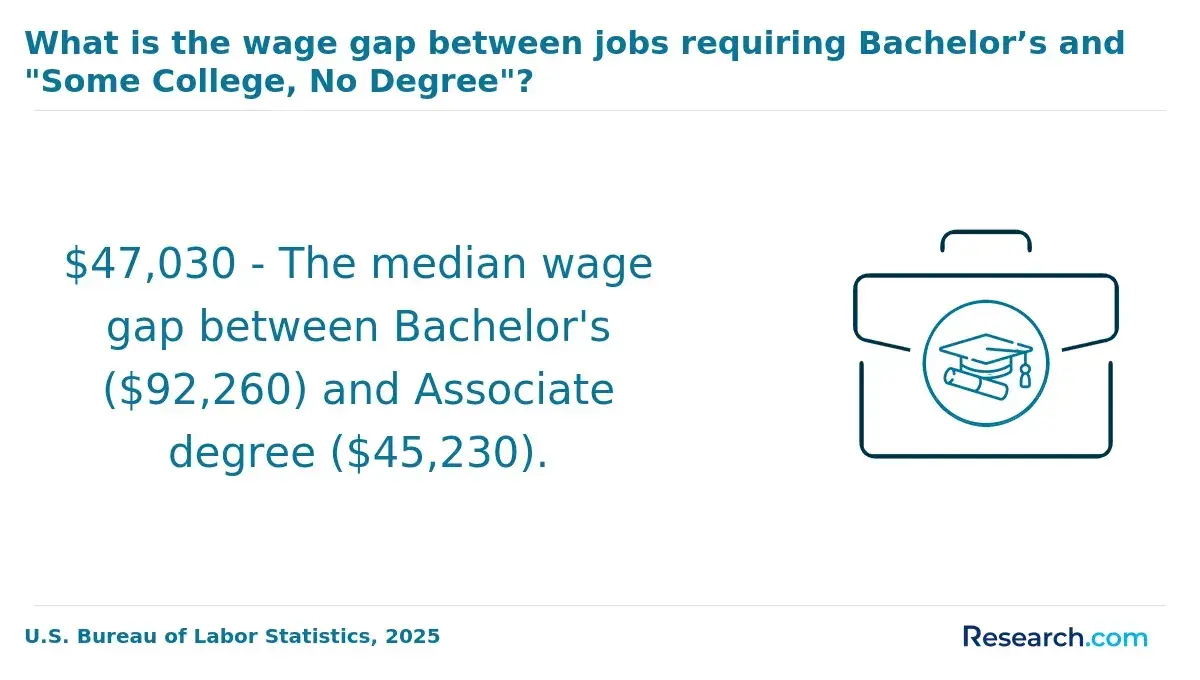
- Bachelor's Degree in journalism: This degree is the standard for many professional journalism careers including staff reporter, multimedia journalist, photojournalist, and news producer. Graduates work across media platforms, engaging in news writing, interviewing, and media production. Median salaries vary widely, with photojournalists earning around $50,210 and writers reaching up to $91,560, according to the U.S. Bureau of Labor Statistics.
- Master's Degree in journalism: A master's degree opens pathways to senior editorial roles such as newsroom managers, investigative reporters, and specialized writers in fields like science or business journalism. Graduates often take on editorial leadership, production management, or public relations and may also teach journalism at the collegiate level.
- Doctoral Degree (PhD) in journalism or mass communication: Doctoral graduates generally pursue academic or high-level research careers as university professors, research fellows, or policy analysts. They focus on areas like media studies, journalism ethics, or communication theory, contributing through teaching, scholarly publishing, and industry influence.
How Do Salaries Differ by Journalism Degree Type?
Degree level often influences earning potential in journalism, with higher degrees generally leading to better-paying roles and opportunities for advancement. Understanding how salaries vary by journalism degree type can help students make informed educational and career decisions.
Below is an overview of typical salary ranges for each major journalism degree type.
- Associate Degree in Journalism: Entry-level positions for those holding an associate degree usually offer starting salaries between $20,000 and $30,000 per year. These roles tend to be support-oriented or located in smaller local outlets, with limited advancement potential unless combined with work experience or further education.
- Bachelor's Degree in Journalism: Graduates with a bachelor's degree typically earn median starting salaries between $27,000 and $45,000, with national averages around $29,000. Pay can vary widely depending on location and the size of the newsroom, with larger markets or national media sometimes offering starting salaries above $60,000. Long-term income improves with specialization and experience, with senior journalists or editors earning from $75,000 to $100,000 annually.
- Master's Degree in Journalism: Those holding a master's degree often qualify for advanced roles such as editors, producers, or news analysts, with median salaries ranging from $65,000 to $85,000. Senior editors at national outlets frequently exceed $100,000 per year.
- Doctoral Degree in Journalism: While uncommon, a doctorate in journalism leads primarily to academic or high-level research careers, with salaries from $70,000 to $120,000 depending on the role and institution. Earnings reflect teaching responsibilities, research output, and opportunities in consulting or publication.
Factors such as geographic location, industry sector, and proficiency in technical skills like digital media significantly influence salaries across all degree types. Prospective students considering degree options might also explore options from affordable online schools that accept FAFSA to balance educational costs with long-term earning potential.
Is There High Demand for Journalism Degree Holders in the Job Market?
The demand for journalism degree holders in the US job market is influenced by several key factors. While traditional roles such as news analysts, reporters, and journalists are projected by the Bureau of Labor Statistics to decline by 4% from 2024 to 2034, workforce turnover still generates about 4,100 annual job openings.
Emerging technologies have significantly reshaped the field, with digital news platforms, podcasts, video streaming, and social media creating new career paths. Graduates skilled in digital content creation, multimedia reporting, and social media management are increasingly in demand by online platforms, marketing agencies, and public relations firms.
Regional differences also matter: metropolitan areas and major media markets tend to offer higher demand, whereas smaller markets and freelance opportunities cater more to entry-level professionals or those with niche expertise in fields like science or technology. Salary ranges vary, with median earnings for reporters around $60,280 and technical writers, who often share similar skills, earning an average of $91,670 annually.
For journalism graduates adapting to these changes, the outlook involves leveraging versatile communication skills and technological proficiency. Opportunities increasingly exist outside traditional newsrooms in digital media, communications, and marketing sectors.
Freelance writing and staff positions may offer less stability but still represent avenues for gaining experience. Career flexibility is vital given the competitive nature of the market.
For students weighing their options, exploring the best careers for introverts can provide insight into roles that align with journalism skills in less conventional formats. Overall, the ability to pivot toward related fields remains a key advantage for journalism degree holders navigating this evolving and complex employment landscape.
What Factors Should You Consider When Picking a Type of Journalism Degree?
Choosing the right journalism degree level is a critical decision that shapes your future career opportunities and ensures your education fits your personal circumstances. Below are key factors to evaluate when deciding which journalism degree best suits you:
- Career Goals: Your desired role in journalism largely determines the degree level needed. Entry-level jobs typically require a bachelor's degree, while advanced positions in academia or specialized reporting may call for a master's or doctorate. Consider how each degree can impact your earning potential and career progression.
- Specialization and Interests: Different degrees offer varying opportunities to specialize in fields like broadcast, sports, or investigative journalism. Graduate programs often provide niche specializations that can enhance your competitive edge, while undergraduate degrees focus on foundational skills.
- Time Commitment: Degree length varies significantly-associate degrees usually take two years, bachelor's four, master's one to two, and doctorates four to five years or more. Assess how much time you can realistically dedicate to your studies alongside other responsibilities.
- Program Accreditation and Reputation: Accreditation ensures quality education and industry recognition. A school's reputation and network can influence job placement and internship opportunities, which are vital in journalism careers.
- Flexibility and Delivery Format: Many programs now offer online or part-time formats, allowing working professionals or those with other commitments to pursue their degree without sacrificing flexibility.
- Cost and Financial Aid: Tuition costs vary by degree and institution. Consider your budget, potential debt, and available financial aid, balancing these against expected salary outcomes to ensure a worthwhile investment.
- Faculty and Facilities: Experienced faculty and access to quality facilities, such as studios and newsrooms, can greatly enhance practical learning and career readiness in journalism.
What Journalism Graduates Say About Their Degree and Salary
- Kaycee: "Completing my broadcast journalism degree was transformative both professionally and personally. The hands-on training with live reporting and multimedia production gave me the confidence to thrive in high-pressure newsrooms. I've been able to connect deeply with my audience by telling stories that matter and adapting quickly to new technologies. This program didn't just prepare me for a job; it instilled a passion for truth and impact that fuels my every report."
- Morris: "My print journalism degree opened doors in investigative reporting that I never imagined. The rigorous research and writing skills I developed have been invaluable in uncovering stories that influence policy and public opinion. Beyond the technical skills, my degree enhanced my sense of responsibility to hold power accountable and give voice to the underserved. This career path has challenged me to grow as a storyteller and as a person devoted to meaningful change."
- Finn: "The community journalism program was more than just a degree; it was a call to make a difference where I grew up. Focusing on local news gave me the unique chance to uplift voices often ignored by mainstream media. Professionally, it prepared me to collaborate with diverse groups and forge strong relationships, which are essential for grassroots impact. The most rewarding part is knowing my work strengthens community bonds and supports young people in finding their narrative and confidence."
Other Things You Should Know About Journalism Degree Programs & Salaries
In 2027, journalism graduates see varying salaries based on their degree level. Bachelor's degree holders earn around $45,000 annually, while master's degree graduates typically earn $55,000 to $70,000. Doctoral degree holders may expect salaries reaching $80,000 or more, reflecting their advanced expertise and often academic positions.
In 2027, journalism salaries can vary significantly by media platform. Traditional print journalism often offers lower salaries compared to digital media roles. Broadcast journalism typically pays well due to its reach and impact. Specialized platforms like investigative journalism or data journalism may also offer competitive salaries.
In 2027, journalism degrees include Bachelor's in Journalism, Master's in Journalism, and specialized fields like Digital Journalism. Salaries vary: entry-level reporters with a Bachelor's earn around $40,000 annually, while those with a Master's can start at $55,000. Specialized fields like Data Journalism can see salaries reaching $75,000.
References
- Bachelor of Science in Journalism https://catalog.ufl.edu/UGRD/colleges-schools/UGJRC/JM_BSJ/JM_BSJ_BSJ/
- Online journalism degrees: What you need to know https://journalism.uiowa.edu/explore/online-journalism-degrees
- News Analysts, Reporters, and Journalists : Occupational Outlook Handbook: U.S. Bureau of Labor Statistics https://www.bls.gov/ooh/media-and-communication/reporters-correspondents-and-broadcast-news-analysts.htm
- Bachelor of Journalism https://moody.utexas.edu/academics/degree-programs/bachelor-journalism
- Elevate Your Career with Our Master’s Program in Journalism and Strategic Media https://www.memphis.edu/jrsm/graduate_program/









![2027 Best Advanced Standing Online MSW Programs [CSWE Accredited] thumbnail](/uploads/Online_Advanced_Standing_MSW_301dbd5368.jpg)


