
2027 Can You Complete an Online Accounting Degree Program While Working Full-Time?

Co-Founder and Chief Data Scientist
Earning an online accounting degree while working full-time is possible, but it is not a casual side project. Accounting programs usually require steady weekly work, frequent deadlines, problem sets, exams, spreadsheet assignments, and careful attention to detail. For adults already managing a job, family obligations, and limited study time, the real question is not only whether the degree is flexible, but whether the program format fits their life.
Nearly 60% of online adult learners in the U.S. juggle work and study, so the challenge is common. The difference between finishing and stopping out often comes down to choosing the right schedule, understanding workload expectations before enrolling, using employer and financial aid options, and building a realistic weekly routine.
This guide explains how long an online accounting degree may take for full-time workers, which course formats are easier to manage, what technology and support you need, how internships may work, and how to evaluate whether the degree is likely to improve your career and salary prospects.
Key Benefits of Completing an Online Accounting Degree Program While Working Full-Time
- Flexible scheduling allows full-time employees to balance accounting coursework with daily job responsibilities, enabling consistent academic progress without putting their careers on hold.
- Access to digital learning tools and asynchronous classes supports working professionals by offering convenient study times, essential for understanding financial reporting, taxation, and accounting technologies.
- Practical, skills-based assignments help students apply accounting concepts directly to their current roles, improving accuracy, analytical abilities, and long-term career advancement.
How Long Does It Take to Complete an Online Accounting Degree While Working Full-Time?
Most full-time workers should expect an online accounting degree to take longer than it would for a student who is studying full-time and not working. A standard online accounting bachelor’s degree is commonly completed in about four years by full-time students. Working adults who enroll part-time often take five or six years because they reduce their course load to protect their work schedule, income, and personal responsibilities.
The timeline is not fixed. Your actual completion time depends on how many credits you bring in, how many courses you can handle each term, and whether the program uses accelerated, self-paced, or traditional semester formats.
- Enrollment status: Full-time enrollment can keep students on a four-year path, but it may be difficult for employees with long hours or seasonal workloads. Part-time enrollment is slower, but it is often more sustainable.
- Course format: Asynchronous courses usually give working adults more control over when they study. Accelerated or synchronous formats may shorten completion time, sometimes reducing duration to 2.5-3.5 years, but they can require heavier weekly commitment.
- Prior academic credits: Transfer credits, associate degrees, military training, or prior college coursework can reduce the number of courses still required. Some degree-completion options may allow qualified students with substantial previous coursework to finish in as little as one year.
- Weekly study capacity: A student who can consistently study several evenings each week and one weekend block may progress faster than a student limited to irregular study time. Accounting courses reward consistency because concepts build on one another.
- Program requirements: Capstones, internships, practicums, proctored exams, or required accounting labs can affect the schedule. Any local or in-person requirement should be confirmed before enrolling.
If speed matters, compare the total credits required, transfer-credit policy, term length, and maximum course load before applying. Students with strong prior credits may also want to review options such as an accelerated online bachelor's degree, but faster is not always better if it increases the risk of burnout or lower grades.
Is an Asynchronous or Synchronous Online Accounting Program Easier for Students Working Full-Time?
For most full-time workers, an asynchronous online accounting program is easier to manage because it does not require students to log in for live classes at set times. Students can watch lectures, complete readings, work through accounting problems, and submit assignments around job shifts, overtime, childcare, and other responsibilities.
That flexibility is especially useful in accounting-related jobs with busy cycles, such as tax season, payroll deadlines, month-end close, or audit preparation. A student who works late unexpectedly can catch up on recorded instruction instead of missing a required live session.
Synchronous programs can still be a strong fit for some students. Live online classes provide structure, immediate instructor interaction, peer discussion, and built-in accountability. They may work well for students with predictable schedules or those who learn better through real-time explanation. The trade-off is less control over your calendar.
- Choose asynchronous if: your work hours change, you travel for work, you need maximum scheduling control, or you prefer studying early mornings, nights, or weekends.
- Choose synchronous if: you need live discussion to stay motivated, want direct access to instructors during class, or have a consistent weekly schedule.
- Be cautious with accelerated synchronous courses: they may move quickly and can be difficult during peak work periods.
Students comparing accounting degrees with other career-focused credentials may also want to understand how flexible learning formats support certifications that can lead to higher-paying jobs. The best format is the one you can follow consistently for the full length of the program.
What Time Management Strategies Help Online Accounting Students Working Full-Time?
Online accounting students who work full-time need a system, not just motivation. Accounting courses often include weekly problem sets, spreadsheet work, quizzes, discussion posts, exams, and cumulative concepts. Falling behind for even one week can make later assignments harder.
- Build fixed study blocks before the term starts: Reserve specific times each week for coursework, such as two weeknights and one weekend block. Treat those hours like work meetings, not optional free time.
- Start accounting assignments early: Accounting problems often take longer than expected because one error can affect an entire worksheet or financial statement. Begin before the deadline so you have time to troubleshoot.
- Break large tasks into stages: Separate reading, lecture review, practice problems, spreadsheet work, and final submission. Smaller steps make demanding assignments easier to fit around work.
- Use a priority system: Identify deadlines that affect grades most, such as exams, major projects, and required discussions. A simple urgency-and-importance framework can help you decide what to complete first.
- Batch similar work: Complete readings together, then practice problems, then discussion posts. Switching constantly between work email, lectures, and assignments wastes mental energy.
- Use digital tools deliberately: Calendar reminders, task lists, timers, and focus methods such as the Pomodoro Technique can help you make progress during short study windows.
- Communicate before conflicts happen: Tell family members when you are unavailable for study. If an exam week overlaps with a major work deadline, contact your instructor early rather than after missing work.
A practical weekly rhythm is to preview the week’s assignments on the first day of the module, complete readings and lectures early, reserve the middle of the week for practice problems, and use the final study block for review and submission. This reduces last-minute work and gives you time to ask questions.
What Are the Biggest Challenges Full-Time Workers Face in Online Accounting Programs?
The biggest challenge is not simply being busy. It is managing sustained cognitive work after a full workday. Accounting requires accuracy, patience, and repeated practice, which can be difficult when students are tired or distracted.
- Limited time for deep work: Accounting assignments are not always easy to complete in short fragments. Students may need uninterrupted time to understand journal entries, reconciliations, financial statements, taxation topics, or audit concepts.
- Burnout and stress: Full-time work plus coursework can reduce rest, exercise, and personal time. Over time, this can affect concentration, work performance, and academic quality.
- Deadline conflicts: Work deadlines may overlap with exams, group projects, or major assignments. This is especially difficult for employees in finance, payroll, tax, or operations roles with predictable busy periods.
- Delayed support: Online students may not receive immediate answers from instructors or classmates. In accounting, a small misunderstanding can block progress on an entire assignment.
- Group project coordination: Team assignments can be frustrating when classmates have different schedules or time zones.
- Technology and workspace issues: Unreliable internet, outdated computers, or lack of a quiet study area can turn ordinary coursework into a recurring obstacle.
The best way to reduce these risks is to choose a program designed for working adults, confirm support hours, review the academic calendar against your work cycle, and avoid taking too many courses in the first term. The first term is often the best test of what course load is realistic.
How Do Online Accounting Programs Handle Internships for Full-Time Workers?
Online accounting programs handle internships in different ways, so working students should ask about this requirement before enrolling. Some programs require an internship or field experience, while others make it optional or allow an alternative project. For full-time employees, the key issue is whether the requirement can be completed without leaving or reducing current employment.
- Remote internships: Some programs allow virtual internships involving bookkeeping tasks, financial analysis, tax support, audit preparation, or accounting research. This can reduce travel and make scheduling easier.
- Flexible scheduling: Internships may be completed during evenings, weekends, or over a longer term. This arrangement can help students who cannot take time away from weekday employment.
- Credit for relevant employment: Students already working in accounting, finance, payroll, bookkeeping, or related roles may be able to use their current job to satisfy internship outcomes if the work aligns with program requirements.
- Local placement support: Some online programs help students identify approved placements near where they live. This is important because online students may be far from the main campus.
- Alternative academic projects: If a traditional internship is not possible, some schools allow simulations, case studies, research projects, or capstone work that demonstrates applied accounting skills.
Before choosing a program, ask three direct questions: Is an internship required? Can current employment count? What happens if a student cannot complete an onsite placement? Get the answer in writing from an advisor or program representative, because internship rules can affect both graduation timing and work stability.
What Technology Do You Need for an Online Accounting Degree While Working Full-Time?
Working students need reliable technology because they often study during limited windows. A slow laptop, unstable internet connection, or missing software can waste the only study time available after work. Accounting programs also tend to use spreadsheet, database, tax, bookkeeping, and collaboration tools, so basic access is not enough.
- High-speed internet: A stable connection is necessary for lectures, discussion boards, assignment uploads, virtual meetings, exams, and group projects. If your connection is unreliable, identify a backup location before the term begins.
- Modern computer or laptop: Many accounting tasks require multitasking across spreadsheets, learning platforms, PDFs, video lectures, and accounting software. A computer less than four years old with sufficient memory and processing power is commonly expected.
- Spreadsheet software: Microsoft Excel is especially important because accounting coursework often involves formulas, tables, financial statements, budgets, and data analysis. Students should be comfortable learning advanced spreadsheet functions.
- Accounting software: Programs may use QuickBooks, Sage, Xero, or other accounting platforms. Some schools provide student licenses, while others require students to purchase or access software independently.
- Video and collaboration tools: Zoom, Microsoft Teams, and similar platforms are used for live sessions, office hours, presentations, and group projects.
- Cloud storage and backup: Google Drive, Dropbox, or another secure backup system can protect assignments, spreadsheets, and project files from device failure or accidental deletion.
- Security basics: Use strong passwords, update software, and avoid storing sensitive work or school documents on unsecured public devices.
Students planning to continue beyond the bachelor’s level can also compare affordable online master's degree options to understand whether their current technology setup will support more advanced coursework.
Can You Qualify for Financial Aid If You Study Online and Work Full-Time?
Yes, working full-time does not automatically disqualify a student from financial aid. Eligibility depends on the school, program accreditation, enrollment status, income, household information, and the type of aid. Online students can often qualify for federal, state, institutional, employer, and private aid if they meet the applicable requirements.
- Accreditation of the institution: Federal financial aid generally requires enrollment at an accredited college or university that participates in eligible aid programs. Students should verify accreditation before applying, especially when comparing online schools. A starting point for research is a list of the best accredited nonprofit online universities.
- FAFSA application: The Free Application for Federal Student Aid (FAFSA) is used to determine eligibility for federal aid and may also be used by states and schools. Full-time workers should still apply because income alone does not tell the whole financial picture.
- Enrollment status: Many aid programs require at least half-time enrollment. Part-time students may still qualify for some aid, but the amount can change based on course load.
- Employer tuition assistance: Some employers provide reimbursement, direct payment, or tuition discounts for job-related degrees. Purdue Global, for example, collaborates with corporations to provide tuition reductions to employees pursuing relevant degrees.
- Private scholarships and grants: Some awards are designed for working adults, online learners, career changers, or students in business-related fields. These can help reduce borrowing.
Before enrolling, ask the school’s financial aid office how online status, part-time enrollment, transfer credits, and employer reimbursement affect your aid package. Also ask whether aid is disbursed by semester, term, or course, because this can affect cash flow for working students.
Do Employers Support Employees Pursuing Online Accounting Degrees in 2027?
Many employers support employees pursuing online accounting degrees, but the level of support varies widely. Some organizations actively fund education because accounting skills improve reporting, budgeting, compliance, auditing, payroll, and financial decision-making. Others may be supportive in principle but cautious about schedule conflicts or productivity during busy periods.
- Tuition assistance programs: Employers may offer tuition reimbursement or direct payments. Because online accounting degrees can cost between $5,000 and $25,000 annually, employer support can make a major difference in affordability.
- Flexible work arrangements: Some companies allow adjusted hours, remote work, compressed workweeks, or temporary schedule changes during exams and major projects.
- Career advancement pathways: Employers may connect degree completion to eligibility for promotion, new finance responsibilities, or movement into accounting-related roles.
- Certification support: Some organizations help with CPA or CMA exam fees, review courses, or study materials when those credentials align with business needs.
- Performance expectations: Employers may worry that school will interfere with work. Clear communication about deadlines, availability, and workload is essential.
Before asking for support, prepare a short business case. Explain how the degree connects to your current role, what skills you will gain, how your schedule will be managed, and what the employer receives in return. If tuition cost is a concern, comparing lower-cost programs such as those discussed in a guide to the cheapest online university for a bachelor's degree can also help you make a more practical plan.
Does Completing an Online Accounting Degree While Working Full-Time Improve Your Salary?
Completing an online accounting degree while working full-time can improve salary potential, but it does not guarantee a raise by itself. Earnings depend on degree level, experience, industry, location, employer policies, certifications, and whether the new credential qualifies you for a higher-level role.
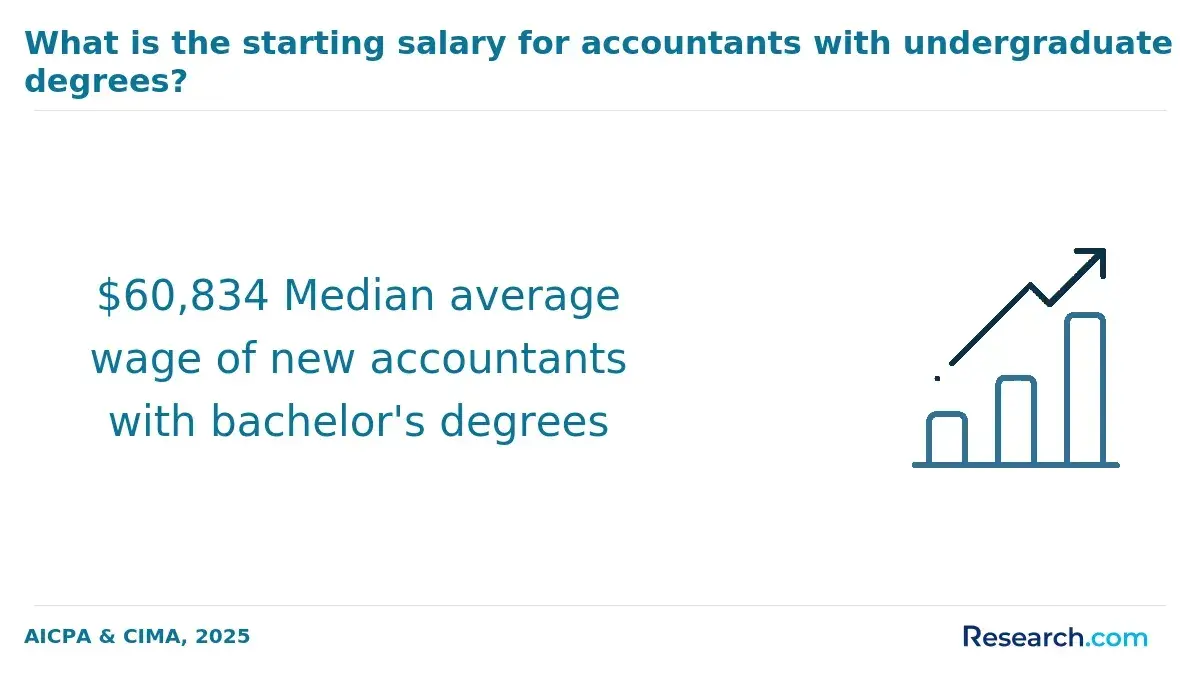
The available data shows a difference by degree level: holding a master's degree in accounting increases median salaries to about $67,750, compared to $60,834 for bachelor's holders. Professionals in technology and finance may earn more than those in government roles, depending on job responsibilities and market conditions. The accounting sector's expected 4.6% job growth through 2034 may also support demand for qualified candidates, though competition and employer preferences still matter.
Working full-time while studying can strengthen the salary case because students can apply new accounting skills immediately. For example, an employee may use coursework in financial reporting, budgeting, auditing, taxation, or data analysis to take on more advanced duties before graduation. That work record can help during performance reviews or internal promotion discussions.
However, students should be realistic. Some employers do not automatically increase pay for degree completion. Others may require a role change, certification, or additional experience. To maximize the return, identify target roles before enrolling, compare required qualifications, and ask your employer how the degree will be evaluated for promotion or salary review.
What Should Full-Time Workers Look for When Choosing an Online Accounting Program?
Full-time workers should choose an online accounting program based on fit, not just reputation or tuition. The right program should be accredited, flexible enough for your schedule, transparent about workload, and aligned with your career goal, whether that is entry-level accounting, advancement in a current finance role, CPA preparation, or graduate study.
- Accreditation and academic credibility: Verify that the institution is properly accredited. If you plan to pursue CPA eligibility, confirm whether the program’s credits meet the educational requirements relevant to your state or jurisdiction.
- Flexible course delivery: Look for asynchronous classes, evening options, multiple start dates, part-time pathways, and clear policies for stopping out or reducing course load if work demands increase.
- Transfer-credit policy: A generous and transparent transfer policy can shorten your timeline and reduce cost, especially if you already have prior college credits.
- Accounting curriculum fit: Review whether the program covers financial accounting, managerial accounting, auditing, taxation, accounting information systems, business law, and data or analytics topics relevant to your goals.
- Faculty and instructor access: Working students need timely answers. Check office hours, response-time expectations, tutoring availability, and whether support is available outside standard business hours.
- Student support services: Advising, technical support, library access, career services, and internship guidance are especially important for online learners who cannot easily visit campus.
- Internship or capstone requirements: Confirm whether any required experience can be completed remotely, locally, or through current employment.
- Total cost and aid options: Compare tuition, fees, books, software, transfer credits, employer reimbursement, and financial aid. Students focused on affordability may want to compare programs for an accounting degree online before committing.
A strong program should make it clear how long the degree will take, how courses are delivered, what support is available, and how the curriculum connects to real accounting work. If admissions staff cannot answer those questions clearly, keep comparing options.
What Graduates Say About Completing an Online Accounting Degree While Working Full-Time
- Ryker: "Balancing a full-time job with an online accounting degree was challenging but incredibly rewarding. The self-paced format allowed me to fit studies around my work schedule, making it manageable without sacrificing performance. Considering the average cost of an online accounting degree, I found it to be a worthwhile investment for advancing my career and increasing my earning potential."
- Eden: "Pursuing an online accounting degree while working full-time gave me the flexibility I needed, though it required a lot of discipline. The knowledge I gained has been instrumental in transitioning to a more finance-focused role, proving the degree's practical value. I appreciated that the cost stayed relatively affordable compared to traditional programs, which eased my financial concerns."
- Benjamin: "Enrolling in an online accounting degree program as a full-time professional was a strategic decision to enhance my credentials. The learning experience was rigorous but adapted well to my busy lifestyle, allowing me to stay consistent without burnout. Given the reasonable tuition fees, investing in this degree significantly boosted my confidence and opened new career opportunities."
Other Things You Should Know About Accounting Degrees
Yes, many online accounting degree programs are offered by accredited institutions. Accreditation ensures that the program meets certain quality standards, which can be crucial for securing employment post-graduation. Prospective students should verify a program's accreditation status before enrolling.
Employers increasingly recognize the legitimacy of online accounting degrees, especially if obtained from accredited institutions. Completing a degree while working full-time can signal strong time-management skills and dedication. However, it is beneficial to verify that the program is reputable and well-regarded within the industry.
Focusing on intensive review sessions during weekends and using short study periods during breaks can optimize exam preparation. Many online accounting programs provide access to recorded lectures and practice exams, which can help students revise efficiently. Prioritizing critical accounting topics and consistent study habits support successful exam outcomes despite a full work schedule.
Networking while completing an online accounting degree in 2027 provides invaluable connections with industry professionals, enhancing career prospects. It offers insights into real-world practices and potential job opportunities, supporting academic knowledge with practical experiences. Engaging in professional networks can also facilitate mentorship relationships and collaborative learning environments.
References
- 4 Reasons Online Classes Can Benefit Working Adults https://online.hbs.edu/blog/post/best-online-degree-programs-for-working-adults
- Best Online Accounting Degrees of 2025 | Accounting.com https://www.accounting.com/degrees/accounting/bachelors/best-online-programs/
- A 6-Step Guide on How to Transition From Accounting to Tech https://blog.qwasar.io/blog/a-6-step-guide-on-how-to-transition-from-accounting-to-tech
- Synchronous Vs. Asynchronous Classes: What's The Difference? https://thebestschools.org/resources/synchronous-vs-asynchronous-programs-courses/
- 10 Tips for Choosing the Right Accounting Degree Program https://www.aiu.edu/blog/choosing-accounting-degree-program/
- Top 10 Challenges of Remote Work in the Accounting Industry https://developergang.com/challenges-of-remote-work-in-the-accounting-industry
- Accounting Major Online Degree | SUNY Plattsburgh https://www.plattsburgh.edu/programs/accounting-major-online.html
- The Most Valuable Skills You'll Develop in an Online Accounting Program https://www.ucumberlands.edu/blog/most-valuable-skills-youll-develop-online-accounting-program
- Remote Accounting Internships | The Intern Group https://theinterngroup.com/featured-roles/remote-accounting-internships/
- Scholarships for Online Accounting Degrees https://www.oedb.org/scholarships/accounting/
- AICPA & CIMA. (2025). MAP survey executive summary. https://www.aicpa-cima.com/resources/download/map-survey-executive-summary
- BLS. (2024). May 2024 OEWS Profiles 13-2011 Accountants and Auditors. Occupational Employment and Wage Statistics (OEWS) Profiles. Retrieved January 2026, from https://data.bls.gov/oesprofile
- AICPA. (2025). AICPA 2025 Trends Report. https://www.aicpa-cima.com/professional-insights/download/2025-trends-report


